Results by title
2284 books match the query 'Women' and 165 start with a

A Spell on the Water
Marjorie Kowalski Cole
University of Michigan Press, 2011
"I couldn't put it down."
---Barbara Kingsolver
In 1955, Mary and Jim Leader have the American dream: careers in medicine; a young and healthy family; and even a vacation home---a shabby resort far from bustling Chicago. But one hot afternoon changes everything. Mary, now a widow, must find a path out of her grief into a future for herself and five small children.
In Michigan to sell the resort, Mary sees seven hawks riding the storm winds over the lake. This place, she thinks, can heal them with its wild beauty, so she moves her family to the northern lakeshore.
But Mary has forgotten what it's like to live in a tiny rural community, where almost everyone has a stake in maintaining the status quo. Secrets are kept at great cost as Mary's children often struggle to raise themselves. A coming-of-age story for each member of the family, this is a novel of quiet heroism and the power of personal freedom.
Praise for Marjorie Kowalski Cole and her previous novel, Correcting the Landscape:
". . . her writing is simple, vivid and gorgeous."
---Eugene Register-Guard
". . . a remarkable new talent. Critics have lined up to praise the book."
---Tucson Citizen
"Cole's style is subtle but engrossing . . . It is quite a debut."
---Booklist
Cover illustration: ©iStockphoto.com/ImagineGolf
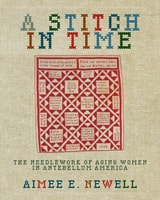
A Stitch in Time
The Needlework of Aging Women in Antebellum AmericaAimee E. Newell
Ohio University Press, 2014
Drawing from 167 examples of decorative needlework—primarily samplers and quilts from 114 collections across the United States—made by individual women aged forty years and over between 1820 and 1860, this exquisitely illustrated book explores how women experienced social and cultural change in antebellum America.
The book is filled with individual examples, stories, and over eighty fine color photographs that illuminate the role that samplers and needlework played in the culture of the time. For example, in October 1852, Amy Fiske (1785–1859) of Sturbridge, Massachusetts, stitched a sampler. But she was not a schoolgirl making a sampler to learn her letters. Instead, as she explained, “The above is what I have taken from my sampler that I wrought when I was nine years old. It was w[rough]t on fine cloth [and] it tattered to pieces. My age at this time is 66 years.”
Situated at the intersection of women’s history, material culture study, and the history of aging, this book brings together objects, diaries, letters, portraits, and prescriptive literature to consider how middle-class American women experienced the aging process. Chapters explore the physical and mental effects of “old age” on antebellum women and their needlework, technological developments related to needlework during the antebellum period and the tensions that arose from the increased mechanization of textile production, and how gift needlework functioned among friends and family members. Far from being solely decorative ornaments or functional household textiles, these samplers and quilts served their own ends. They offered aging women a means of coping, of sharing and of expressing themselves. These “threads of time” provide a valuable and revealing source for the lives of mature antebellum women.
Publication of this book was made possible in part through generous funding from the Coby Foundation, Ltd and from the Quilters Guild of Dallas, Helena Hibbs Endowment Fund.
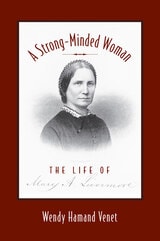
A Strong-Minded Woman
The Life of Mary LivermoreWendy Hamand Venet
University of Massachusetts Press, 2005
When Mary Livermore died in 1905 at age 84, a Boston newspaper praised her as “America's foremost woman.” A leading figure in the struggle for woman's rights as well as in the temperance movement, she was as widely recognized during her lifetime as Susan B. Anthony, and for a time the most popular and highly paid female orator in the country. Yet aside from Civil War historians familiar with her service as a wartime nurse, few today remember even her name.
In this book, Wendy Hamand Venet reconstructs Mary Livermore's remarkable story and explores how and why she became so renowned in her day. Born and raised in Boston, Livermore left home at age eighteen to become the private schoolteacher to a wealthy tobacco planter's children in Virginia, an experience that afforded her an intimate look at slave-based society in the 1840s. Returning to New England, she married and lived a conventional life as the wife of a minister and mother of three daughters. With the coming of the Civil War, however, Livermore's life changed dramatically when she became active with the United States Sanitary Commission, an organization that would propel her into the public limelight and cause her to challenge society's traditional view of the role of women.
After the war Livermore became deeply involved in the woman's rights movement, serving as editor of the newspaper Woman's Journal and later as president of three major suffrage organizations—the American, New England, and Massachusetts Woman Suffrage Associations. She was also founder and president of the Massachusetts Women's Christian Temperance Union, and became active in the Society of Christian Socialists in Boston. Her frequent speaking appearances on behalf of these causes eventually earned her the nickname “Queen of the Platform.” Although she may not have been as radical as some other early feminists, Livermore's ideas resonated with thousands of middle-class women whose experiences paralleled her own. For that reason alone, Venet shows, her life and legacy are worthy of our attention.
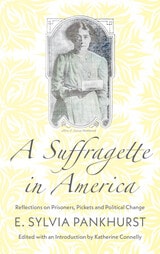
A Suffragette in America
Reflections on Prisoners, Pickets and Political ChangeSylvia Pankhurst
Pluto Press, 2019
This book gathers Pankhurst’s writings from the year-long visit, in which she reveals her shock at the darkness hidden in American life, and draws parallels to her experiences of imprisonment and misogyny in her own country. Never before published, these writings mark an important stage in the development of the suffragette's thought, which she brought back to Britain to inform the burgeoning suffrage campaign there.
A Thousand Steps to Parliament
Constructing Electable Women in MongoliaManduhai Buyandelger
University of Chicago Press, 2022
Mongolia has often been deemed an “island of democracy,” commended for its rapid adoption of free democratic elections in the wake of totalitarian socialism. The democratizing era, however, brought alongside it a phenomenon that Manduhai Buyandelger terms “electionization”—a restructuring of elections from time-grounded events into a continuous neoliberal force that governs everyday life beyond the electoral period. In this way, electoral campaigns have come to substitute for the functions of governing, from social welfare to the private sector, requiring an accumulation of wealth and power beyond the reach of most women candidates. In A Thousand Steps to Parliament, Buyandelger shows how successful women candidates instead use strategies of self-polishing to cultivate charisma and a reputation for being oyunlag, or intellectful. This carefully crafted identity can be called the “electable self”: treating their bodies and minds as pliable and renewable, women candidates draw from the same practices of neoliberalism that have unsustainably commercialized elections. By tracing the complicated, contradictory paths to representation that women in Mongolia must walk, A Thousand Steps to Parliament holds a mirror up to democracies the world over, revealing an urgent need to grapple with the encroaching effects of neoliberalism in our global political systems.
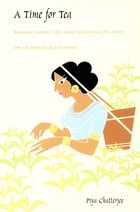
A Time for Tea
Women, Labor, and Post/Colonial Politics on an Indian PlantationPiya Chatterjee
Duke University Press, 2001
Allowing personal, scholarly, and artistic voices to speak in turn and in tandem, Chatterjee discusses the fetishization of women who labor under colonial, postcolonial, and now neofeudal conditions. In telling the overarching story of commodity and empire, A Time for Tea demonstrates that at the heart of these narratives of travel, conquest, and settlement are compelling stories of women workers. While exploring the global and political dimensions of local practices of gendered labor, Chatterjee also reflects on the privileges and paradoxes of her own “decolonization” as a Third World feminist anthropologist. The book concludes with an extended reflection on the cultures of hierarchy, power, and difference in the plantation’s villages. It explores the overlapping processes by which gender, caste, and ethnicity constitute the interlocked patronage system of villages and their fields of labor. The tropes of coercion, consent, and resistance are threaded through the discussion.
A Time for Tea will appeal to anthropologists and historians, South Asianists, and those interested in colonialism, postcolonialism, labor studies, and comparative or international feminism.
Designated a John Hope Franklin Center book by the John Hope Franklin Seminar Group on Race, Religion, and Globalization.
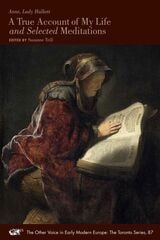
A True Account of My Life and Selected Meditations
Lady Anne Halkett
Iter Press, 2022
Born in the early 1620s, Anne, Lady Halkett (née Murray) grew up on the fringes of the English court during a period of increasing political tension. From 1644 to 1699, Halkett recorded her personal and political experiences in both England and Scotland in a series of manuscript meditations and an autobiographical narrative called A True Account of My Life. Royalism, romance, and contemporary religious debates are central to Halkett’s vivid portrayal of her life as a single woman, wife, mother, and widow. Collectively, the materials edited here offer the opportunity to explore how Halkett’s meditational practice informed her life writing in the only version of her writings to date available in a fully modernized edition. The forty-four meditations in this volume redefine the importance of Halkett’s contribution to seventeenth-century life writing.
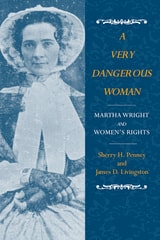
A Very Dangerous Woman
Martha Wright and Women's RightsSharon H. Penney
University of Massachusetts Press, 2004
In telling Wright's story, the authors make good use of her lively letters to her family, friends, and colleagues, including Susan B. Anthony and Elizabeth Cady Stanton. These letters reveal Wright's engaging wit and offer an insider's view of nineteenth-century reform and family life. Her correspondence with slaveholding relatives in the South grew increasingly contentious with the approach of the Civil War. One nephew became a hero of the Confederacy with his exploits at the Battle of Fredericksburg, and her son in the Union artillery was seriously wounded at Gettysburg while repelling Pickett's Charge.
Wright's life never lacked for drama. She survived a shipwreck, spent time at a frontier fort, experienced the trauma of the deaths of a fiancé, her first husband, and three of her seven children, and navigated intense conflicts within the women's rights and abolition movements. Throughout her tumultuous career, she drew on a reservoir of humor to promote her ideas and overcome the many challenges she faced. This accessible biography, written with the general reader in mind, does justice to her remarkable life.

A Very Serious Thing
Women’s Humor and American CultureNancy A. Walker
University of Minnesota Press, 1988
A Very Serious Thing was first published in 1988. Minnesota Archive Editions uses digital technology to make long-unavailable books once again accessible, and are published unaltered from the original University of Minnesota Press editions.
"It is a very serious thing to be a funny woman." –Frances Miriam Berry Whitcher
A Very Serious Thing is the first book-length study of a part of American literature that has been consistently neglected by scholars and underrepresented in anthologies—American women's humorous writing. Nancy Walker proposes that the American humorous tradition to be redefined to include women's humor as well as men's, because, contrary to popular opinion, women do have a sense of humor.
Her book draws on history, sociology, anthropology, literature, and psychology to posit that the reasons for neglect of women's humorous expression are rooted in a male-dominated culture that has officially denied women the freedom and self-confidence essential to the humorist. Rather than a study of individual writers, the book is an exploration of relationships between cultural realities—including expectations of "true womanhood"—and women's humorous response to those realities.
Humorous expression, Walker maintains, is at odds with the culturally sanctioned ideal of the "lady," and much of women's humor seems to accept, while actually denying, this ideal. In fact, most of American women's humorous writing has been a feminist critique of American culture and its attitudes toward women, according to the author.
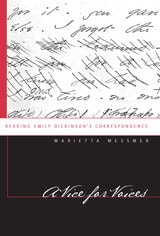
A Vice for Voices
Reading Emily Dickinson's CorrespondenceMarietta Messmer
University of Massachusetts Press, 2009
Concentrating on Dickinson's exchanges with childhood friends, as well as with Susan Gilbert Dickinson, Elizabeth Holland, Austin Dickinson, Thomas Wentworth Higginson, and the mysterious "Master," Marietta Messmer explores the poet's gradual shift from writing confessional letters to developing her unique "vice for voices" by creating fictionalized epistolary personae. While radically challenging nineteenth-century letter-writing conventions, these personae also subvert the narrowly circumscribed roles available to women at that time. Messmer shows how Dickinson used this double-voiced mode of correspondence to manipulate and interrogate a variety of male-dominated, "authorized" literary, religious, and sociocultural discourses.
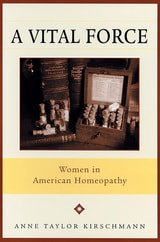
A Vital Force
Women in American HomeopathyKirschmann, Anne Taylor
Rutgers University Press, 2003
Homeopathy, as a medical system, presented a significant institutional and economic challenge to conventional medicine in the nineteenth century. Although contemporary critics portrayed homeopathic physicians as part of a sect whose treatment of disease was beyond the pale of acceptable medical practice, homeopathy was in many ways similar to established medicine. Anne Taylor Kirschmann explores the strategic choices and consequences for women practitioners. Not only were female homeopaths respected within their communities, they also enjoyed considerable professional advantages not available to women within regular medicine.
A Vital Force: Women in American Homeopathy offers a new interpretation of women’s roles in modern medicine. Kirschmann strengthens and clarifies the history of homeopathic women physicians and creates a framework of comparison to “regular,” or orthodox, physicians. Women medical practitioners chose homeopathy in dramatic numbers from the mid-nineteenth through the early twentieth centuries, although the reasons for this preference varied over time. Linked to social reform movements in the nineteenth century, anti-modernism in the late nineteenth and early twentieth, and countercultural ideals of the 1960s and 1970s, women's advocacy of homeopathy has been intertwined with broad social and cultural issues in American society.
A Voice Of Their Own
The Woman Suffrage Press, 1840-1910Martha Solomon
University of Alabama Press, 1991
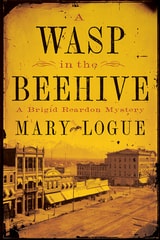
A Wasp in the Beehive
A Brigid Reardon MysteryMary Logue
University of Minnesota Press, 2026
Salt Lake City, 1881: Brigid Reardon is again on the case when her new employer—a leader in the Church of Latter-day Saints—is murdered in his home
Still reeling from the violence she encountered in Cheyenne, Wyoming, Brigid Reardon presses on alone to Salt Lake City, where she decides to settle down in what she hopes is a safe community. Things look promising when she’s hired to work at the Deseret Bookstore and offered a room in the home of her employer, Mr. Cutter, a high-ranking member of the Church of Latter-day Saints, and his five wives.
Despite Brigid’s conflicting feelings about polygamy, she finds the Cutter wives warm and welcoming, and she thinks she may finally be happy here. As she settles in, Brigid learns that Mr. Cutter wants yet another wife, and he is set on Amelia, the daughter of one of his wives from a previous marriage. When Mr. Cutter is found apparently murdered in the women’s sewing room, each of the wives (plus Amelia and Mr. Cutter’s son) is a suspect, and Brigid knows it’s up to her to figure out just who did it. As she continues to work in the bookstore and live with the grieving family, Brigid teams up with the local coroner to investigate—and with her undeniable knack for detection, it’s not long before she discovers a telltale clue.
A Wasp in the Beehive continues Brigid’s trek west in the United States after immigrating from Ireland with her brother, following her time in Deadwood, South Dakota, in The Streel and in Cheyenne in The Big Sugar. But with everything that has happened, will she stay in Salt Lake City, or will she move on again?
Retail e-book files for this title are screen-reader friendly.
A Weak Woman in a Strong Battle
Women and Public Execution in Early Modern EnglandJennifer Lillian Lodine-Chaffey
University of Alabama Press, 2022
A scholarly study of how women’s executions were staged, interpreted, and recorded in Renaissance England
A Weak Woman in a Strong Battle: Women and Public Execution in Early Modern England provides critical insights on representations of women on the scaffold, focusing on how female victims and those writing about them constructed meaning from the ritual. Jennifer Lodine-Chaffey draws on a wide range of genres, from accounts of martyrdom to dramatic works, to explore not only the words of women executed in Tudor and Stuart England, but also the ways that writers represented female bodies as markers of penitence or deviance.
A significant part of the execution spectacle—one used to assess the victim’s proper acceptance of death and godly repentance—was the final speech offered at the foot of the gallows or before the pyre. To ensure their final words held value for audiences, women adopted conventionally gendered language and positioned themselves as subservient and modest. The reception of women’s speeches, Lodine-Chaffey argues, depended on their performances of accepted female behaviors and language as well as physical signs of interior regeneration. Indeed, when women presented themselves or were represented as behaving in stereotypically feminine and virtuous ways, they were able to offer limited critiques of their fraught positions in society.
Just as important as their words, though, were the depictions of women’s bodies. The executed woman’s body, Lodine-Chaffey contends, functioned as a text, scrutinized by witnesses and readers for markers of innocence or guilt. The intense focus on the words and bodies of women facing execution during this period, Lodine-Chaffey argues, became a catalyst for a more thorough interest in and understanding of women’s roles not just as criminals but as subjects
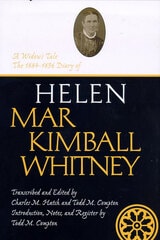
A Widow's Tale
1884-1896 Diary of Helen Mar Kimball WhitneyCharles M. Hatch and Todd Compton
Utah State University Press, 2003
Mormon culture has produced during its history an unusual number of historically valuable personal writings. Few such diaries, journals, and memoirs published have provided as rich and well rounded a window into their authors' lives and worlds as the diary of Helen Mar Kimball Whitney. Because it provides a rare account of the widely experienced situations and problems faced by widows, her record has relevance far beyond Mormon history though.
As a teenager Helen Kimball had been a polygamous wife of Mormon founder Joseph Smith. She subsequently married Horace Whitney. Her children included the noted Mormon author, religious authority, and politician Orson F. Whitney. She herself was a leading woman in her church and society and a writer known especially for her defense of plural marriage. Upon Horace's death, she began keeping a diary. In it, she recorded her economic, physical, and psychological struggles to meet the challenges of widowhood. Her writing was introspective and revelatory. She also commented on the changing society around her, as Salt Lake City in the last decades of the nineteenth century underwent rapid transformation, modernizing and opening up from its pioneer beginnings. She remained a well-connected member of an elite group of leading Latter-day Saint women, and prominent Utah and Mormon historical figures appear frequently in her daily entries. Above all, though, her diary is an unusual record of difficulties faced in many times and places by women, of all classes, whose husbands died and left them without sufficient means to carry on the types of lives to which they had been accustomed.
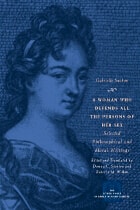
A Woman Who Defends All the Persons of Her Sex
Selected Philosophical and Moral WritingsGabrielle Suchon
University of Chicago Press, 2010
During the oppressive reign of Louis XIV, Gabrielle Suchon (1632–1703) was the most forceful female voice in France, advocating women’s freedom and self-determination, access to knowledge, and assertion of authority. This volume collects Suchon’s writing from two works—Treatise on Ethics and Politics (1693) and On the Celibate Life Freely Chosen; or, Life without Commitments (1700)—and demonstrates her to be an original philosophical and moral thinker and writer.
Suchon argues that both women and men have inherently similar intellectual, corporeal, and spiritual capacities, which entitle them equally to essentially human prerogatives, and she displays her breadth of knowledge as she harnesses evidence from biblical, classical, patristic, and contemporary secular sources to bolster her claim. Forgotten over the centuries, these writings have been gaining increasing attention from feminist historians, students of philosophy, and scholars of seventeenth-century French literature and culture. This translation, from Domna C. Stanton and Rebecca M. Wilkin, marks the first time these works will appear in English.
A Woman of the Times
Journalism, Feminism, and the Career of Charlotte CurtisMarilyn S. Greenwald
Ohio University Press, 1999
For twenty-five years, Charlotte Curtis was a society/women's reporter and editor and an op-ed editor at the New York Times. As the first woman section editor at the Times, Curtis was a pioneering journalist and one of the first nationwide to change the nature and content of the women's pages from fluffy wedding announcements and recipes to the more newsy, issue-oriented stories that characterize them today. In this riveting biography, Marilyn Greenwald describes how a woman reporter from Columbus, Ohio, broke into the ranks of the male-dominated upper echelon at the New York Times. It documents what she did to succeed and what she had to sacrifice.
Charlotte Curtis paved the way for the journalists who followed her. A Woman of the Times offers a chronicle of her hard-won journey as she invents her own brand of feminism during the 1960s and 1970s. In the telling of this remarkable woman’s life is the story, as well, of a critical era in the nation’s social history.
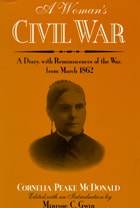
A Woman's Civil War
A Diary with Reminiscences of the War, from March 1862Cornelia Peake McDonald; Edited, with an Introduction by Minrose C. Gwin
University of Wisconsin Press, 1992
McDonald’s story of the Civil War records a personal and distinctly female battle of her own—a southern woman’s lonely struggle in the midst of chaos to provide safety and shelter for herself and her children. For McDonald, history is what happens “inside the house.” She relates the trauma that occurs when the safety of the home is disrupted and destroyed by the forces of war—when women and children are put out of their houses and have nowhere to go.
Whether she is describing a Union soldier’s theft of her Christmas cakes, the discovery of a human foot in her garden, or the death of her baby daughter, McDonald’s story of the Civil War at home is compelling and disturbing. Her tremendous determination and unyielding spirit in the face of the final collapse of her world is testimony to a woman’s will to preserve her family and her own sense of purpose as a “rebel” against all that she regarded as tyrannical and brutal in war itself.
A Woman's Concise Guide to Common Medical Tests
Moore, M.D., Michele C
Rutgers University Press, 2005
Every year, millions of healthy women undergo a variety of screening tests without understanding why or the meaning of the outcome. If you are among those women, overwhelmed by information and baffled by results, this is the book you've been waiting for. In straightforward, personable prose, A Woman's Concise Guide to Common Medical Tests surveys a wide variety of standard tests commonly suggested by doctors.
Using the recommendations of the U.S. Preventative Health Services Task Force as a starting point, physicians Michele C. Moore and Caroline M. de Costa describe and explain screening tests for STDs and other communicable diseases, diabetes, thyroid disease, bone loss, various genetic tests, pregnancy, and cancer (including breast, colon, and skin). A section on common blood tests demystifies the numerical results that can be virtually impossible to interpret for women outside the medical profession. The authors detail what is considered "normal" as well as what's not-to help women make sense of their results.
As practicing physicians, both authors have fielded patients' questions about standard screening tests and understand what women should know but often feel afraid to ask about. For each test, there is an explanation of why it may be ordered, how it is done, what sort of preparation may be involved, and what risks may be incurred.
As the health-care industry continues to evolve, the amount of medical information available to women about their health can be overwhelming and confusing. Without being encyclopedic or intimidating, A Woman's Concise Guide to Common Medical Tests offers all the facts you need about screening tests, all in one place.
A Woman's Place Is in the House
Campaigning for Congress in the Feminist EraBarbara Burrell
University of Michigan Press, 1994
A Woman's Story of Pioneer Illinois
Christiana Holmes Tillson
Southern Illinois University Press, 1995
Christiana and John Tillson moved from Massachusetts to central Illinois in 1822. Upon arriving in Montgomery County near what would soon be Hillsboro, they set up a general store and real estate business and began to raise a family.
A half century later, Christiana Tillson wrote about her early days in Illinois in a memoir published by R. R. Donnelley in 1919. In it she describes her husband’s rise to wealth through the speculative land boom during the 1820s and 1830s and his loss of fortune when the land business went bust after the Specie Circular was issued in 1836.
The Tillsons lived quite ordinary lives in extraordinary times, notes Kay J. Carr, introducing this edition. Their views and sensibilities, Carr says, might seem strange to us, but they were entirely normal to people in the early nineteenth century. Thus Tillson’s memoir provides vignettes of ordinary nineteenth-century American life.
A World Apart and Other Stories
Czech Women Writers at the Fin de SiècleEdited and Translated by Kathleen Hayes
Karolinum Press, 2021
A World Apart brings together translations of eight stories by Czech women from the turn of the twentieth century—a period of female political emancipation and impressive literary development in Czechoslovakia. Though they’re little known to an English-language public today, all of the writers featured in the book were recognized in their own day and constitute a cross-section of the literary styles of the period. Anna Maria Tilschová’s “A Sad Time” is written in a naturalist style, while Růžena Jesenská’s “A World Apart” presents themes and motifs that appealed to the Decadents. Helena Malířová’s “The Sylph” is both diaristic and satirical, whereas Růžena Svobodová’s ironical “A Great Passion,” with its rural setting and folklore motifs, calls to mind the writings of Karel Jaromír Erben. Gabriela Preissová’s short story “Eva” may be read as a celebration of folk culture, and Božena Benešová’s “Friends” is interesting for its psychological presentation of a child’s point of view and its implicit criticism of anti-Semitism. The book is accompanied by the biographies of each author and an introduction by editor and translator Kathleen Hayes.
ANATOMY ERRATA
Judith Hall
The Ohio State University Press, 1998

Abandoned Women
Rewriting the Classics in Dante, Boccaccio, and ChaucerSuzanne Hagedorn
University of Michigan Press, 2003
Abigail Field Mott’s The Life and Adventures of Olaudah Equiano
A Scholarly EditionEric D. Lamore
University of Delaware Press, 0
By reissuing Mott’s neglected adaptation with contextualizing scholarly apparatus, Eric D. Lamore disrupts the editorial tradition of selecting a London edition of Equiano’s Interesting Narrative, and positions Equiano in the United States instead of Great Britain. Lamore’s volume contains Mott’s children’s book, which includes a series of illustrations, in a facsimile edition; instructive notes on Life and Adventures; a provocative essay on the adaptation; and selections from relevant texts on the New York African Free Schools and other related topics. With its focus on the intersections of early Black Atlantic and American studies, children’s literature, history of education, life writing, and book history, this edition offers a fresh take on Equiano and his autobiography for a variety of twenty-first-century audiences.

Abortion Pills
US History and PoliticsCarrie Baker
Amherst College Press, 2024
This is the first book to offer a comprehensive history of abortion pills in the United States. Public intellectual and lawyer Carrie N. Baker shows how courageous activists waged a decades-long campaign to establish, expand, and maintain access to abortion pills. Weaving their voices throughout her book, Baker recounts both dramatic and everyday acts of their resistance. These activists battled anti-abortion forces, overly cautious policymakers, medical gatekeepers, and fearful allies in their four-decade-long fight to free abortion pills. In post-Roe America, abortion pills are currently playing a critically important role in providing safe abortion access to tens of thousands of people living in states that now ban and restrict abortion. Understanding this struggle will help to ensure continued access into the future.
Accidental Immigrants and the Search for Home
Women, Cultural Identity, and CommunityCarol E. Kelley
Temple University Press, 2013
The intimate stories of these "accidental" immigrants broaden conventional notions of home. From a Maori woman who moves to Norway to the daughter of an Iranian diplomat now living in France, Kelley weaves together these stories of the personal and emotional effects of immigration with interdisciplinary discussions drawn from anthropology and psychology. Ultimately, she reveals how the lifelong process of immigration affects each woman's sense of identity and belonging and contributes to better understanding today's globalized society.
Activist Rhetorics and American Higher Education, 1885-1937
Susan Kates
Southern Illinois University Press, 2000
In this study of the history of rhetoric education, Susan Kates focuses on the writing and speaking instruction developed at three academic institutions founded to serve three groups of students most often excluded from traditional institutions of higher education in late-nineteenth-and early-twentieth-century America: white middle-class women, African Americans, and members of the working class.
Kates provides a detailed look at the work of those students and teachers ostracized from rhetorical study at traditional colleges and universities. She explores the pedagogies of educators Mary Augusta Jordan of Smith College in Northhampton, Massachusetts; Hallie Quinn Brown of Wilberforce University in Wilberforce, Ohio; and Josephine Colby, Helen Norton, and Louise Budenz of Brookwood Labor College in Katonah, New York.
These teachers sought to enact forms of writing and speaking instruction incorporating social and political concerns in the very essence of their pedagogies. They designed rhetoric courses characterized by three important pedagogical features: a profound respect for and awareness of the relationship between language and identity and a desire to integrate this awareness into the curriculum; politicized writing and speaking assignments designed to help students interrogate their marginalized standing within the larger culture in terms of their gender, race, or social class; and an emphasis on service and social responsibility.
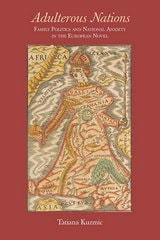
Adulterous Nations
Family Politics and National Anxiety in the European NovelTatiana Kuzmic
Northwestern University Press, 2016
In Adulterous Nations, Tatiana Kuzmic enlarges our perspective on the nineteenth-century novel of adultery, showing how it often served as a metaphor for relationships between the imperialistic and the colonized. In the context of the long-standing practice of gendering nations as female, the novels under discussion here—George Eliot’s Middlemarch, Theodor Fontane’s Effi Briest, and Leo Tolstoy’s Anna Karenina, along with August Šenoa’s The Goldsmith’s Gold and Henryk Sienkiewicz’s Quo Vadis—can be understood as depicting international crises on the scale of the nuclear family. In each example, an outsider figure is responsible for the disruption experienced by the family. Kuzmic deftly argues that the hopes, anxieties, and interests of European nations during this period can be discerned in the destabilizing force of adultery. Reading the work of Šenoa and Sienkiewicz, from Croatia and Poland, respectively, Kuzmic illuminates the relationship between the literature of dominant nations and that of the semicolonized territories that posed a threat to them. Ultimately, Kuzmic’s study enhances our understanding of not only these five novels but nineteenth-century European literature more generally.
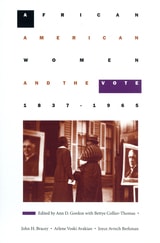
African American Women and the Vote, 1837–1965
Ann D. Gordon
University of Massachusetts Press, 1997
Written by leading scholars of African American and women's history, the essays in this volume seek to reconceptualize the political history of black women in the United States by placing them “at the center of our thinking.” The book explores how slavery, racial discrimination, and gender shaped the goals that African American women set for themselves, their families, and their race and looks at the political tools at their disposal. By identifying key turning points for black women, the essays create a new chronology and a new paradigm for historical analysis. The chronology begins in 1837 with the interracial meeting of antislavery women in New York City and concludes with the civil rights movement of the 1960s.
The contributors focus on specific examples of women pursuing a dual ambition: to gain full civil and political rights and to improve the social conditions of African Americans. Together, the essays challenge us to rethink common generalizations that govern much of our historical thinking about the experience of African American women.
Contributors include Bettina Aptheker, Elsa Barkley Brown, Willi Coleman, Gerald R. Gill, Ann D. Gordon, Evelyn Brooks Higginbotham, Cynthia Neverdon-Morton, Martha Prescod Norman, Janice Sumler-Edmond, Rosalyn Terborg-Penn, and Bettye Collier-Thomas.

African Encounters with Domesticity
Karen Tranberg Hansen
Rutgers University Press, 1992
Anthropologists usually think of domesticity as the activities related to the home and the family. Such activities have complex meanings associated with the sense of space, work, gender, and power. The contributors to this interdisciplinary collection of papers examine how indigenous African notions of domesticity interact with Western notions to transform the meaning of such activities. They explore the interactions of notions of domesticity in a number of settings in the twentieth century and the kinds of personal troubles and public issues these interactions have provoked. They also demonstrate that domesticity, as it emerged in Africa through the colonial encounter, was culturally constructed, and they show how ideologies of work, space, and gender interact with broader political-economic processes.
In her introduction, Hansen explains how the meaning of domesticity has changed and been contested in the West, specifies which of these shifting meanings are relevant in the African context, and summarizes the historical processes that have affected African ideologies of domesticity.
African Womanhood in Colonial Kenya, 1900–1950
1900-1950Tabitha Kanogo
Ohio University Press, 2000
This book explores the history of African womanhood in colonial Kenya. By focussing on key sociocultural institutions and practices around which the lives of women were organized, and on the protracted debates that surrounded these institutions and practices during the colonial period, it investigates the nature of indigenous, mission, and colonial control of African women.
The pertinent institutions and practices include the legal and cultural status of women, clitoridectomy, dowry, marriage, maternity and motherhood, and formal education. By following the effects of the all-pervasive ideological shifts that colonialism produced in the lives of women, the study investigates the diverse ways in which a woman’s personhood was enhanced, diminished, or placed in ambiguous predicaments by the consequences, intended and unintended, of colonial rule as administered by both the colonizers and the colonized. The study thus tries to historicize the reworkings of women’s lives under colonial rule. The transformations that resulted from these reworkings involved the negotiation and redefinition of the meaning of individual liberties and of women’s agency, along with the reconceptualization of kinship relations and of community.
These changes resulted in—and often resulted from—increased mobility for Kenyan women, who were enabled to cross physical, cultural, economic, social, and psychological frontiers that had been closed to them prior to colonial rule. The conclusion to which the experiences of women in colonial Kenya points again and again is that for these women, the exercise of individual agency, whether it was newly acquired or repeatedly thwarted, depended in large measure on the unleashing of forces over which no one involved had control. Over and over, women found opportunities to act amid the conflicting policies, unintended consequences, and inconsistent compromises that characterized colonial rule.
African Women Playwrights
Edited and with an Introduction by Kathy A. Perkins. Foreword by Amandina Lihamb
University of Illinois Press, 2008
This anthology consists of nine plays by a diverse group of women from throughout the African continent. The plays focus on a wide range of issues, such as cultural differences, AIDS, female circumcision, women's rights to higher education, racial and skin color identity, prostitution as a form of survival for young girls, and nonconformist women resisting old traditions. In addition to the plays themselves, this collection includes commentaries by the playwrights on their own plays, and editor Kathy A. Perkins provides additional commentary and a bibliography of published and unpublished plays by African women.
The playwrights featured are Ama Ata Aidoo, Violet R. Barungi, Tsitsi Dangarembga, Nathalie Etoke, Dania Gurira, Andiah Kisia, Sindiwe Magona, Malika Ndlovu (Lueen Conning), Juliana Okoh, and Nikkole Salter.
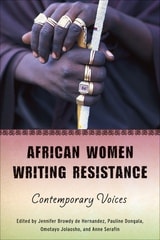
African Women Writing Resistance
An Anthology of Contemporary VoicesJennifer Browdy de Hernandez
University of Wisconsin Press, 2010
Contributors include internationally recognized authors and activists such as Wangari Maathai and Nawal El Saadawi, as well as a host of vibrant new voices from all over the African continent and from the African diaspora. Interdisciplinary in scope, this collection provides an excellent introduction to contemporary African women’s literature and highlights social issues that are particular to Africa but are also of worldwide concern. It is an essential reference for students of African studies, world literature, anthropology, cultural studies, postcolonial studies, and women’s studies.
Outstanding Book, selected by the Public Library Association
Best Books for High Schools, Best Books for Special Interests, and Best Books for Professional Use, selected by the American Association of School Libraries
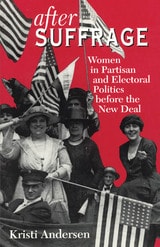
After Suffrage
Women in Partisan and Electoral Politics before the New DealKristi Andersen
University of Chicago Press, 1996
Andersen shows how women's participation was based on a conception of women's citizenship as indirect and disinterested. Gaining the right to vote, campaign, and run for office transformed women's citizenship; at the same time, women's independent partisan stance, their focus on social welfare concerns, and their use of new political techniques such as lobbying all helped to redefine politics.
This fresh, nuanced analysis of women voters, activists, candidates, and officeholders will interest scholars in political science and women's studies.
"In this rich and engaging book, Kristi Anderson presents a convincing argument that woman suffrage deserves greater scrutiny as a social, cultural, and political force in the development of American electoral and party politics."—Jane Junn, Political Science Quarterly
"Anderson's innovation in this book is to change the dominant question asked about American women's suffrage. . . . This book offers a much-needed corrective to the conventional conception that the enfranchisement of women had no significant effect on American society."—Inderjeet Parmar, Political Studies
"Anderson's book is an excellent treatment . . . and a sterling example of the value of using multiple research methods—also steeped within a deep understanding of context, culture, and historic trends—to explain something as complicated and nuanced as the impact of women's votes after suffrage."—Laura R. Woliver, Journal of Politics
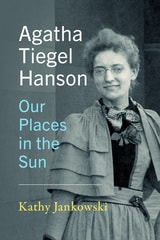
Agatha Tiegel Hanson
Our Places in the SunKathy Jankowski
Gallaudet University Press, 2023
Throughout her life, Agatha Tiegel Hanson worked to advance the rights of Deaf people and women, and she was a passionate advocate of sign language rights. Her contributions include creative written works as well as influential treatises. She served in leadership positions at several Deaf organizations and, along with her husband, noted Deaf architect Olof Hanson, she played a vital role in the Deaf cultural life of the time. In Agatha Tiegel Hanson: Our Places in the Sun, author Kathy Jankowski presents a portrait of this trailblazer, and celebrates her impact on the Deaf community and beyond. This biography will be of interest to those already familiar with Tiegel Hanson’s legacy as well as to readers who are discovering her extraordinary life for the first time.
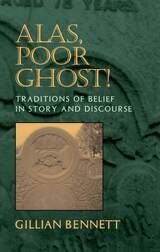
Alas Poor Ghost
Gillian Bennett
Utah State University Press, 1999
In the rational modern world, belief in the supernatural seemingly has been consigned to the worlds of entertainment and fantasy. Yet belief in other worldly phenomena, from poltergeists to telepathy, remains strong, as Gillian Bennett's research shows. Especially common is belief in continuing contact with, or the continuing presence of, dead family members. Bennett interviewed women in Manchester, England, asking them questions about ghosts and other aspects of the supernatural. (Her discussion of how her research methods and interview techniques evolved is in itself valuable.) She first published the results of the study in the well-received Traditions of Belief: Women and the Supernatural, which has been widely used in folklore and women's studies courses. "Alas, Poor Ghost!" extensively revises and expands that work. In addition to a fuller presentation and analysis of the original field research and other added material, the author, assisted by Kate Bennett, a gerontological psychologist, presents and discusses new research with a group of women in Leicester, England.
Bennett is interested in more than measuring the extent of belief in other worldly manifestations. Her work explores the relationship between narrative and belief. She anticipated that her questions would elicit from her interviewees not just yes or no replies but stories about their experiences that confirmed or denied notions of the supernatural. The more controversial the subject matter, the more likely individuals were to tell stories, especially if their answers to questions of belief were positive. These were most commonly individualized narratives of personal experience, but they contained many of the traditional motifs and other content, including belief in the supernatural, of legends. Bennett calls them memorates and discusses the cultural processes, including ideas of what is a "proper" experience of the supernatural and a "proper" telling of the story, that make them communal as well as individual. These memorates provide direct and vivid examples of what the storytellers actually believe and disbelieve. In a final section, Bennett places her work in historical context through a discussion of case studies in the history of supernatural belief.
Alice Morse Earle and the Domestic History of Early America
Susan Reynolds Williams
University of Massachusetts Press, 2013
Author, collector, and historian Alice Morse Earle (1851–1911) was among the most important and prolific writers of her day. Between 1890 and 1904, she produced seventeen books as well as numerous articles, pamphlets, and speeches about the life, manners, customs, and material culture of colonial New England. Earle's work coincided with a surge of interest in early American history, genealogy, and antique collecting, and more than a century after the publication of her first book, her contributions still resonate with readers interested in the nation's colonial past.
An intensely private woman, Earle lived in Brooklyn, New York, with her husband and four children and conducted much of her research either by mail or at the newly established Long Island Historical Society. She began writing on the eve of her fortieth birthday, and the impressive body of scholarship she generated over the next fifteen years stimulated new interest in early American social customs, domestic routines, foodways, clothing, and childrearing patterns.
Written in a style calculated to appeal to a wide readership, Earle's richly illustrated books recorded the intimate details of what she described as colonial “home life.” These works reflected her belief that women had played a key historical role, helping to nurture communities by constructing households that both served and shaped their families. It was a vision that spoke eloquently to her contemporaries, who were busily creating exhibitions of early American life in museums, staging historical pageants and other forms of patriotic celebration, and furnishing their own domestic interiors.
Alice Paul and the American Suffrage Campaign
Katharine H. Adams and Michael L. Keene
University of Illinois Press, 2007
Past biographies, histories, and government documents have ignored Alice Paul's contribution to the women's suffrage movement, but this groundbreaking study scrupulously fills the gap in the historical record. Masterfully framed by an analysis of Paul's nonviolent and visual rhetorical strategies, Alice Paul and the American Suffrage Campaign narrates the remarkable story of the first person to picket the White House, the first to attempt a national political boycott, the first to burn the president in effigy, and the first to lead a successful campaign of nonviolence.
Katherine H. Adams and Michael L. Keene also chronicle other dramatic techniques that Paul deftly used to gain publicity for the suffrage movement. Stunningly woven into the narrative are accounts of many instances in which women were in physical danger. Rather than avoid discussion of Paul's imprisonment, hunger strikes, and forced feeding, the authors divulge the strategies she employed in her campaign. Paul's controversial approach, the authors assert, was essential in changing American attitudes toward suffrage.

Alien Heart
The Life and Work of Margaret LaurenceLyall Powers
University of Manitoba Press, 2005
Lyall Powers is both a respected scholar of literature and a lifelong friend of Laurence's, having met her when they were students together at Winnipeg's United College in the 1940s. Alien Heart is the first full-length biography of Margaret that combines personal knowledge and insights about Laurence with a study of her work, which often paralleled the events and concerns in her own life.
Drawing on letters, personal correspondence, journals, and interviews, Lyall Powers discusses the struggles and triumphs Laurence experienced in her efforts to understand herself in the roles of writer, wife, mother, and public figure. He portrays a deeply compassionate and courageous woman, who yet felt troubled by conflicting demands. While Laurence's work is not directly autobiographical, Powers illustrates how her writing expressed many of the same dilemmas, and how the resolution her characters achieved in the novels and stories had an impact on Laurence's own life.
Powers provides an in-depth analysis of all Laurence's work, including the early African essays, fiction, and translations, and her books for children, as well as the beloved Manawaka fiction. The study clearly shows the progression and expression of Laurence as a writer of great humanity and conscience.
All Anybody Ever Wanted of Me Was to Work
The Memoirs of Edith Bradley RendlemanEdith Bradley Rendleman. Edited by Jane Adams
Southern Illinois University Press, 1996
From All Anybody Ever Wanted of Me Was to Work...
"Starting around 1950, people stopped raising chickens, milking cows, and raising hogs. They just buy it at the store, ready to eat. A lot buy a steer and have it processed in Dongola and put it in their freezer. What a difference! Girls have got it so easy now. They don't even know what it was like to start out. And I guess my mother's life, when she started out, was as hard again as mine, because they had to make everything by hand. I don't know if it could get any easier for these girls. But they don't know what it was like, and they never will. Everything is packaged. All you do is go to the store and buy you a package and cook it. Automatic washers and dryers. I'm glad they don't have to work like I did. Very glad."
Edith Bradley Rendleman's story of her life in southern Illinois is remarkable in many ways. Recalling the first half of the twentieth century in great detail, she vividly cites vignettes from her childhood as her family moved from farm to farm until settling in 1909 in the Mississippi bottoms of Wolf Lake. She recounts the lives and times of her family and neighbors during an era gone forever.
Remarkable for the vivid details that evoke the past, Rendleman's account is rare in another respect: memoirs of the time—usually written by people from elite or urban families—often reek of nostalgia. But Rendleman's memoir differs from the norm. Born poor in rural southern Illinois, she tells an unvarnished tale of what it was really like growing up on a tenant farm early this century.
All Our Trials
Prisons, Policing, and the Feminist Fight to End ViolenceEmily L. Thuma
University of Illinois Press, 2019
All Our Trials explores the organizing, ideas, and influence of those who placed criminalized and marginalized women at the heart of their antiviolence mobilizations. This activism confronted a "tough on crime" political agenda and clashed with the mainstream women’s movement’s strategy of resorting to the criminal legal system as a solution to sexual and domestic violence. Drawing on extensive archival research and first-person narratives, Thuma weaves together the stories of mass defense campaigns, prisoner uprisings, broad-based local coalitions, national gatherings, and radical print cultures that cut through prison walls. In the process, she illuminates a crucial chapter in an unfinished struggle––one that continues in today’s movements against mass incarceration and in support of transformative justice.
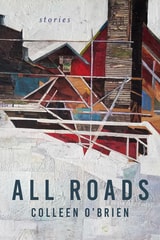
All Roads
StoriesColleen O'Brien
Northwestern University Press, 2022
In “Charlie,” a new mother tells the story of her confusing attachment to a former mentor, uncovering the deep pain that has largely defined her life. In “The Fathers,” an awkward bachelor party leads to an unexpected moment of overdue connection between the bride’s father and brothers. The title story tracks the drunken monologue of a nihilistic middle-aged man attempting to seduce a young woman into a threesome, while “The Deal” alternates perspectives between a cynical divorced woman and her adult son, the only person with whom she’s been able to sustain a lasting relationship. Relentlessly self-revealing, these characters vacillate between vulnerability and self-protection, exposing the necessity of both. Dark, comic, and altogether unforgettable, All Roads introduces an original voice attuned to the docility of the stingray as well as the ancient spear of its tail.
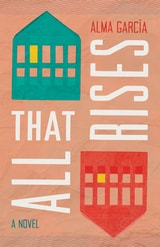
All That Rises
A NovelAlma García
University of Arizona Press, 2023
What follows is a story in which mysteries are unraveled, odd alliances are forged, and the boundaries between lives blur in destiny-changing ways—all in a place where the physical border between two countries is as palpable as it is porous, and the legacies of history are never far away. There are no easy solutions to the issues the characters face in this story, and their various realities—as undocumented workers, Border Patrol agents, the American supervisor of a Mexican factory employing an impoverished workforce—never play out against a black-and-white moral canvas. Instead, they are complex human beings with sometimes messy lives who struggle to create a place for themselves in a part of the world like no other, even as they are forced to confront the lives they have made.
All That Rises is about secrets, lies, border politics, and discovering where you belong—within a family, as well as in the world beyond. It is a novel for the times we live in, set in a place many people know only from the news.
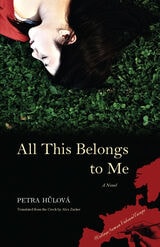
All This Belongs to Me
A NovelPetra Hulova
Northwestern University Press, 2009
Winner of the American Literary Translators Association 2010 National Translation Award
Petra Hůlová became an overnight sensation when All This Belongs to Me was originally published in Czech in 2002, when the author was just twenty-three years old. She has since established herself as one of the most exciting young novelists in Europe today. Writings from an Unbound Europe is proud to publish the first translation of her work in English.
All This Belongs to Me chronicles the lives of three generations of women in a Mongolian family. Told from the point of view of a mother, three sisters, and the daughter of one of the sisters, this story of secrets and betrayals takes us from the daily rhythms of nomadic life on the steppe to the harsh realities of urban alcoholism and prostitution in the capital, Ulaanbaatar. All This Belongs to Me is a sweeping family saga that showcases Hůlová's genius.
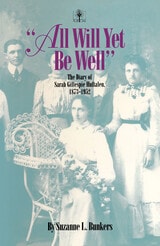
All Will Yet Be Well
The Diary of Sarah Gillespie Huftalen, 1873-1952Suzanne L. Bunkers
University of Iowa Press, 1993
Sarah Gillespie Huftalen led an unconventional life for a rural midwestern woman of her time. Born in 1865 near Manchester, Iowa, she was a farm girl who became a highly regarded country school and college teacher; she married a man older than either of her parents, received a college degree later in life, and was committed to both family and career. A gifted writer, she crafted essays, teacher-training guides, and poetry while continuing to write lengthy, introspective entries in her diary, which spans the years from 1873 to 1952. In addition, she gathered extensive information about the quietly tragic life of her mother, Emily, and worked to preserve Emily's own detailed diary.
In more than 3,500 pages, Sarah writes about her multiple roles as daughter, sister, wife, teacher, family historian, and public figure. Her diary reflects the process by which she was socialized into these roles and her growing consciousness of the ways in which these roles intersected. Not only does her diary embody the diverse strategies used by one woman to chart her life's course and to preserve her life's story for future generations, it also offers ample evidence of the diary as a primary form of private autobiography for individuals whose lives do not lend themselves to traditional definitions of autobiography.
Taken together, Emily's and Sarah's extraordinary diaries span nearly a century and thus form a unique mother/daughter chronicle of daily work and thoughts, interactions with neighbors and friends and colleagues, and the destructive family dynamics that dominated the Gillespies. Sarah's consciousness of the abusive relationship between her mother and father haunts her diary, and this dramatic relationship is duplicated in Sarah's relationship with her brother, Henry, Suzanne Bunkers' skillful editing and analysis of Sarah's diary reveal the legacy of a caring, loving mother reflected in her daughter's work as family member, teacher, and citizen.
The rich entries in Sarah Gillespie Huftalen's diary offer us brilliant insights into the importance of female kinship networks in American life, the valued status of many women as family chroniclers, and the fine art of selecting, piecing, stitching, and quilting that characterizes the many shapes of women's autobiographies. Read Sarah's dairy to discover why "all will yet be well."
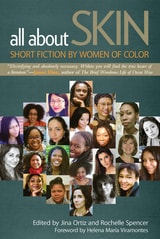
All about Skin
Short Fiction by Women of ColorEdited by Jina Ortiz and Rochelle Spencer, Foreword by Helena María Viramontes
University of Wisconsin Press, 2014
The stories are by American writers Aracelis González Asendorf, Jacqueline Bishop, Glendaliz Camacho, Learkana Chong, Jennine Capó Crucet, Ramola D., Patricia Engel, Amina Gautier, Manjula Menon, ZZ Packer, Princess Joy L. Perry, Toni Margarita Plummer, Emily Raboteau, Ivelisse Rodriguez, Metta Sáma, Joshunda Sanders, Renee Simms, Mecca Jamilah Sullivan, Hope Wabuke, and Ashley Young; Nigerian writers Unoma Azuah and Chinelo Okparanta; and Chinese writer Xu Xi.
Best Books for General Audiences, selected by the American Association of School Librarians
Best Books for General Audiences, selected by the Public Library Reviewers
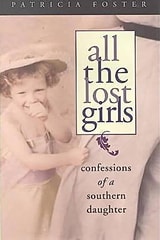
All the Lost Girls
Confessions of a Southern DaughterPatricia Foster
University of Alabama Press, 2002
Patricia Foster’s lyrical yet often painful memoir explores the life of a white middle-class girl who grew up in rural south Alabama in the 1950s and 1960s, a time and place that did not tolerate deviation from traditional gender roles. Her mother raised Foster and her sister as “honorary boys,” girls with the ambition of men but the temperament of women.
An unhappy, intelligent woman who kept a heartbreaking secret from everyone close to her, Foster's mother was driven by a repressed rage that fed her obsession for middle-class respectability. By the time Foster reached age fifteen, her efforts to reconcile the contradictory expectations that she be at once ambitious and restrained had left her nervous and needy inside even while she tried to cultivate the appearance of the model student, sister, and daughter. It was only a psychological and physical breakdown that helped her to realize that she couldn't save her driven, complicated mother and must struggle instead for both understanding and autonomy.
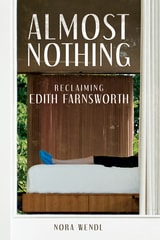
Almost Nothing
Reclaiming Edith FarnsworthNora Wendl
University of Illinois Press, 2025
Nora Wendl’s audacious work of creative nonfiction explodes the sex-and-real-estate myth surrounding the Edith Farnsworth House and its two central figures. An eminent physician and woman of letters, Farnsworth left a rich trove of correspondence, memoirs, and photographs that Wendl uses to reconstruct her voice. Farnsworth’s memories and experiences alternate with Wendl’s thoughts on topics like misogyny and professional ambition to fashion a lyrical examination of love, loneliness, beauty, and the search for the divine.
Eloquent and confessional, Almost Nothing restores Edith Farnsworth to her place in architectural history and the masterpiece that bears her name.
Alternative Alcott
Showalter, Elaine
Rutgers University Press, 1988
Alternative Alcott includes works never before reprinted, including "How I Went Out to Service," "My Contraband," and "Psyche's Art." It also contains Behind a Mask, her most important sensation story; the full and correct text of her last unfinished novel, Diana and Persis; "Transcendental Wild Oats"; Hospital Sketches; and Alcott's other important texts on nineteenth-century social history. This anthology brings together for the first time a variety of Louisa May Alcott's journalistic, satiric, feminist, and sensation texts. Elaine Showalter has provided an excellent introduction and notes to the collection.