Results by title
1296 books match the query 'Women authors' and 106 start with a
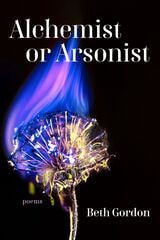
Alchemist or Arsonist
PoemsBeth Gordon
Acre Books, 2027
A feminist poetry collection re-examining the figure of the crone and upending the patriarchal expectations she embodies.
In Alchemist or Arsonist, her second full-length collection, Beth Gordon supercharges the term crone, demonstrating in image-rich poems the magical strength of older women. The Crone is frank about the realities of aging—including plucking chin hairs—yet she also surprises, warning the reader: “The tiger has always been there. . . . She is right in front of you.” Taking afternoon shots of mescal and waiting in line for Mexican street corn, she contemplates Captcha pictures, AI, and tattoos.
The book expands its concerns in several long poems and sequences, encompassing the full range of human experience. “The Secret Fate of All Life,” a series of golden shovels based on quotes from the HBO show True Detective, moves into the surreal to represent language’s failure to describe the death of an infant, and how time can be displaced by grief. Other works explore the transformation that can come from tragedy, the perils of marriage and other relationships, and the complicated conversation older and younger versions of the self would have with each other.
Gordon’s candid, wry, uncompromising voice is both refreshing and bracing, and the poems perform alchemy as they set fire to traditional expectations. With an undercurrent of violence and murder, the book reveals the ultimate consequences of patriarchy. “Alchemist or arsonist: the end is the same,” The Crone tells us. “Something becomes something else.”
Alibi Lullaby
Norma Cole
Omnidawn, 2025
Alibi, in Latin, meant “elsewhere,” and “lullaby”—from lull, to soothe, and bye, near, close by—has elements linguistic elements that appear across cultures. Music, from ancient songs recorded on tables to contemporary compositions, share related framing elements that have persisted across time: formal patterns and rhythms, peaceful and hypnotic movements, and elements of terror arising from the moving frontier of “thrill, dread, certainty.”
In this collection, Norma Cole considers the ancient and transcendent patterns of music, finding them through nature, heart sounds, the spectral elegance of blood flow, the murmur of melody, and many diverse patterns and beats. Sounds of summer, massacres, “empathy through distress,” unknowing, energy, suspense, and fragility echo throughout the poems and other writings. Drawing on a poetics that embraces formal freefall and looks forward while holding up the shifting mirror of memory, Alibi Lullaby is a lyrical montage at the edges of musicality.
Alienated Women
A Study on Polish Women's Writing, 1845 -1918Grazyna Borkowska
Central European University Press, 2001
All Blue So Late
PoemsLaura Swearingen-Steadwell
Northwestern University Press, 2018
The skeleton of this fine collection is a series of direct addresses to the author’s fourteen-year-old self, caught at the moment between girlhood and womanhood, when her perspective on everything suddenly changes. Swearingen-Steadwell’s poetic adventures through worlds within and without reveal the restlessness of the seeker. They offer unabashed tenderness to anyone who reckons with solitude, and chases joy.
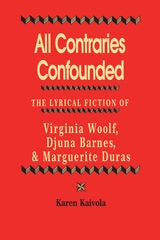
All Contraries Confounded
The Lyrical FictionKaren Kaivola
University of Iowa Press, 1991
Kaivola has worked out a strikingly original means of reading difference—and reading differently—in order to account for what has been inexplicable in different literary texts by women. All Contraries Confounded seeks to problematize feminist theory that celebrates resistance in fiction by women, for it questions the ability of dominant modes of feminist critical theory to recognize and address fully the forms of contradiction and ambivalence that riddle women's writings—and women's lives.
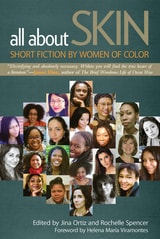
All about Skin
Short Fiction by Women of ColorEdited by Jina Ortiz and Rochelle Spencer, Foreword by Helena María Viramontes
University of Wisconsin Press, 2014
The stories are by American writers Aracelis González Asendorf, Jacqueline Bishop, Glendaliz Camacho, Learkana Chong, Jennine Capó Crucet, Ramola D., Patricia Engel, Amina Gautier, Manjula Menon, ZZ Packer, Princess Joy L. Perry, Toni Margarita Plummer, Emily Raboteau, Ivelisse Rodriguez, Metta Sáma, Joshunda Sanders, Renee Simms, Mecca Jamilah Sullivan, Hope Wabuke, and Ashley Young; Nigerian writers Unoma Azuah and Chinelo Okparanta; and Chinese writer Xu Xi.
Best Books for General Audiences, selected by the American Association of School Librarians
Best Books for General Audiences, selected by the Public Library Reviewers
All that We Ask of You Is to Always Be Happy
Bridget Bell
CavanKerry Press, 2025
Maternal mental illness is an ongoing health crisis and deserves awareness, not only in the medical world but in the poetry world, too. Bridget Bell’s All that We Ask of You Is to Always Be Happy offers support to current mothers, mothers-to-be, family members of people suffering from perinatal mental illnesses, OB-GYNs, nurses, and any other healthcare providers. Bell uses various poetic forms to shed light on the challenges that come with motherhood, including the physical and emotional challenges of childbirth while celebrating the beauty of women’s strength and resilience. Written with deep care and fearlessness, Bell’s debut collection is both an educational tool and a powerful component of recovery in that shares others’ similar stories.
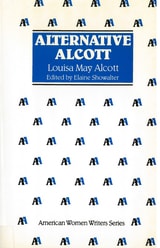
Alternative Alcott
Showalter, Elaine
Rutgers University Press, 1988
Alternative Alcott includes works never before reprinted, including "How I Went Out to Service," "My Contraband," and "Psyche's Art." It also contains Behind a Mask, her most important sensation story; the full and correct text of her last unfinished novel, Diana and Persis; "Transcendental Wild Oats"; Hospital Sketches; and Alcott's other important texts on nineteenth-century social history. This anthology brings together for the first time a variety of Louisa May Alcott's journalistic, satiric, feminist, and sensation texts. Elaine Showalter has provided an excellent introduction and notes to the collection.
Ambiguity and Gender in the New Novel of Brazil and Spanish America
A Comparative AssessmentPayne, Judith A.
University of Iowa Press, 1993
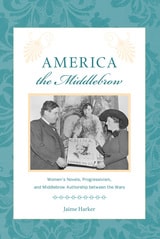
America the Middlebrow
Women's Novels, Progressivism, and Middlebrow Authorship between the WarsJaime Harker
University of Massachusetts Press, 2007
Between the two world wars, American publishing entered a “golden age” characterized by an explosion of new publishers, authors, audiences, distribution strategies, and marketing techniques. The period was distinguished by a diverse literary culture, ranging from modern cultural rebels to working-class laborers, political radicals, and progressive housewives. In America the Middlebrow, Jaime Harker focuses on one neglected mode of authorship in the interwar period—women's middlebrow authorship and its intersection with progressive politics.
With the rise of middlebrow institutions and readers came the need for the creation of the new category of authorship. Harker contends that these new writers appropriated and adapted a larger tradition of women's activism and literary activity to their own needs and practices. Like sentimental women writers and readers of the 1850s, these authors saw fiction as a means of reforming and transforming society. Like their Progressive Era forebears, they replaced religious icons with nationalistic images of progress and pragmatic ideology. In the interwar period, this mode of authorship was informed by Deweyan pragmatist aesthetics, which insisted that art provided vicarious experience that could help create humane, democratic societies.
Drawing on letters from publishers, editors, agents, and authors, America the Middlebrow traces four key moments in this distinctive culture of letters through the careers of Dorothy Canfield, Jessie Fauset, Pearl Buck, and Josephine Herbst. Both an exploration of a virtually invisible culture of letters and a challenge to monolithic paradigms of modernism, the book offers fresh insight into the ongoing tradition of political domestic fiction that flourished between the wars.
American Culture, Canons, and the Case of Elizabeth Stoddard
Robert McClure Smith
University of Alabama Press, 2003
Elizabeth Stoddard was a gifted writer of fiction, poetry, and journalism; successfully published within her own lifetime; esteemed by such writers as William Dean Howells and Nathaniel Hawthorne; and situated at the epicenter of New York’s literary world. Nonetheless, she has been almost excluded from literary memory and importance. This book seeks to understand why. By reconsidering Stoddard’s life and work and her current marginal status in the evolving canon of American literary studies, it raises important questions about women’s writing in the 19th century and canon formation in the 20th century.
Essays in this study locate Stoddard in the context of her contemporaries, such as Dickinson and Hawthorne, while others situate her work in the context of major 19th-century cultural forces and issues, among them the Civil War and Reconstruction, race and ethnicity, anorexia and female invalidism, nationalism and localism, and incest. One essay examines the development of Stoddard’s work in the light of her biography, and others probe her stylistic and philosophic originality, the journalistic roots of her voice, and the elliptical themes of her short fiction. Stoddard’s lifelong project to articulate the nature and dynamics of woman’s subjectivity, her challenging treatment of female appetite and will, and her depiction of the complex and often ambivalent relationships that white middle-class women had to their domestic spaces are also thoughtfully considered.
The editors argue that the neglect of Elizabeth Stoddard’s contribution to American literature is a compelling example of the contingency of critical values and the instability of literary history. This study asks the question, “Will Stoddard endure?” Will she continue to drift into oblivion or will a new generation of readers and critics secure her tenuous legacy?
American Hybrid Poetics
Gender, Mass Culture, and FormAmy Moorman Robbins
Rutgers University Press, 2014

American Sex Tape
Jameka Williams
University of Wisconsin Press, 2022
Fiercely feminist, Black, American, and powerful, Williams speaks for a generation of obsessive social media influencers and consumers, revealing the complex ways in which we are all actors, witnesses, and victims in our public and private performances. Though we may be permanent residents of this soulless cultural landscape, this stunning collection refuses to let it define us.
off the conveyor belt, hugging the bolts & wires
spilling from her vivisection. I’m last year’s model
with a sleeker, softer system of cool disdain for
my Internet addictions.
—Excerpt from "I Intend to Outlast"
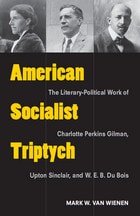
American Socialist Triptych
The Literary-Political Work of Charlotte Perkins Gilman, Upton Sinclair, and W. E. B. Du BoisMark W. Van Wienen
University of Michigan Press, 2014
"A meticulously researched, highly informed, carefully argued, and very accessible account of American socialism, socialists, and socialistic thinking, from the late nineteenth century through the 1960s . . . challenges the intellectual and political legacy of Werner Sombart's Why Is There No Socialism in the United States?, whose spirit still hovers over animated discussions about the 'failures' of socialism in the United States."
---James A. Miller, George Washington University
"A valuable rethinking and reframing of the traditions of leftist literary scholarship in the U.S."
---Sylvia Cook, University of Missouri, St. Louis
American Socialist Triptych: The Literary-Political Work of Charlotte Perkins Gilman, Upton Sinclair, and W. E. B. Du Bois explores the contributions of three writers to the development of American socialism over a fifty--year period and asserts the vitality of socialism in modern American literature and culture.
Drawing upon a wide range of texts including archival sources, Mark W. Van Wienen demonstrates the influence of reform-oriented, democratic socialism both in the careers of these writers and in U.S. politics between 1890 and 1940. While offering unprecedented in-depth analysis of modern American socialist literature, this book charts the path by which the supposedly impossible, dangerous ideals of a cooperative commonwealth were realized, in part, by the New Deal.
American Socialist Triptych provides in-depth, innovative readings of the featured writers and their engagement with socialist thought and action. Upton Sinclair represents the movement's most visible manifestation, the Socialist Party of America, founded in 1901; Charlotte Perkins Gilman reflects the socialist elements in both feminism and 1890s reform movements, and W. E. B. Du Bois illuminates social democratic aspirations within the NAACP. Van Wienen's book seeks to re-energize studies of Sinclair by treating him as a serious cultural figure whose career peaked not in the early success of The Jungle but in his nearly successful 1934 run for the California governorship. It also demonstrates as never before the centrality of socialism throughout Gilman's and Du Bois's literary and political careers.
More broadly, American Socialist Triptych challenges previous scholarship on American radical literature, which has focused almost exclusively on the 1930s and Communist writers. Van Wienen argues that radical democracy was not the phenomenon of a decade or of a single group but a sustained tradition dispersed within the culture, providing a useful genealogical explanation for how socialist ideas were actually implemented through the New Deal.
American Socialist Triptych also revises modern American literary history, arguing for the endurance of realist and utopian literary modes at the height of modernist literary experimentation and showing the importance of socialism not only to the three featured writers but also to their peers, including Edward Bellamy, Hamlin Garland, Jack London, Edna St. Vincent Millay, and Claude McKay. Further, by demonstrating the importance of social democratic thought to feminist and African American campaigns for equality, the book dialogues with recent theories of radical egalitarianism. Readers interested in American literature, U.S. history, political theory, and race, gender, and class studies will all find in American Socialist Triptych a valuable and provocative resource.
American Women Poets of the Nineteenth Century
Edited by Cheryl Walker
Rutgers University Press, 1992

American Women Report World War I
Chris Dubbs
University of North Texas Press, 2021
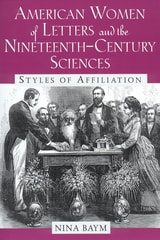
American Women of Letters and the Nineteenth-Century Sciences
Styles of AffiliationBaym, Nina
Rutgers University Press, 2001
Choice Outstanding Academic Title
During the nineteenth century, the content and institutional organization of the sciences evolved dramatically, altering the public's understanding of knowledge. As science grew in importance, many women of letters tried to incorporate it into a female worldview. Nina Baym explores the responses to science displayed in a range of writings by American women. Conceding that they could not become scientists, women insisted, however, that they were capable of understanding science and participating in its discourse. They used their access to publishing to advocate the study and transmission of scientific information to the general public.
Bayms book includes biographies and a full exploration of these women's works. Among those considered are:
• Almira Phelps, author of Familiar Lectures on Botany (it sold 350,000 copies)
• Sarah Hale, who filled Godey's Lady's Book with science articles
• Catharine Esther Beecher, who based her domestic advice on scientific information
• Elizabeth Cary Agassiz, the actual ghostwriter of her husband's popular science essays
• Emily Dickinson, whose poetry is replete with scientific images.
Baym also investigates science in women's novels, writing by and about women doctors, and the scientific claims advanced by women's spiritualist movements. This book truly breaks new ground, outlining a field of inquiry that few have noted exists.
Amherst Suite
Emily Dickinson, Spanish Translation & Poetic TranscreationBy Alberto Blanco, Translated and Edited by Jennifer Rathbun, with an Introduction by Ilan Stavans
Amherst College Press, 2026
Opening with a creative essay by renowned author Ilan Stavans, the volume also includes a conversation between Blanco and scholar Ronald J. Friis; Blanco’s own essay on Dickinson, translated into English by Jennifer Rathbun; as well as an introduction by Rathbun that helpfully situates this interlinguistic, intercultural, and inter-generational network. Amherst Suite is a fascinating and unique look into the work and worlds of poets and their translators and will be an invaluable text for students, scholars, and all readers of Emily Dickinson.
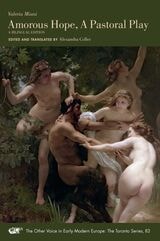
Amorous Hope, A Pastoral Play
A Bilingual EditionValeria Miani
Iter Press, 2020
Valeria Miani’s Amorous Hope is a play of remarkable richness, subtlety, and verve. It presents a scathing exposure of society’s double-standards and it champions women’s dramatic agency by centering on the bleak reality they often faced, a reality that attempted to harm and silence its victims. The play’s salient episodes reflect realities modern women still face today.
Miani’s literary achievements attest to her emergence as a cultural protagonist alongside Europe’s most talented women writers, such as Isabella Andreini, and she challenged the premodern notion that a woman’s eloquence is an indication of her sexual promiscuity.
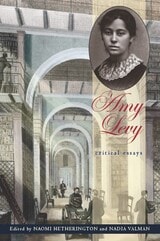
Amy Levy
Critical EssaysNaomi Hetherington
Ohio University Press, 2010
Amy Levy has risen to prominence in recent years as one of the most innovative and perplexing writers of her generation. Embraced by feminist scholars for her radical experimentation with queer poetic voice and her witty journalistic pieces on female independence, she remains controversial for her representations of London Jewry that draw unmistakably on contemporary antisemitic discourse.
Amy Levy: Critical Essays brings together scholars working in the fields of Victorian cultural history, women’s poetry and fiction, and the history of Anglo-Jewry. The essays trace the social, intellectual, and political contexts of Levy’s writing and its contemporary reception. Working from close analyses of Levy’s texts, the collection aims to rethink her engagement with Jewish identity, to consider her literary and political identifications, to assess her representations of modern consumer society and popular culture, and to place her life and work within late-Victorian cultural debate.
This book is essential reading for undergraduate and postgraduate students offering both a comprehensive literature review of scholarship-to-date and a range of new critical perspectives.
Contributors:
Susan David Bernstein,University of Wisconsin-Madison
Gail Cunningham,Kingston University
Elizabeth F. Evans,Pennslyvania State University–DuBois
Emma Francis,Warwick University
Alex Goody,Oxford Brookes University
T. D. Olverson,University of Newcastle upon Tyne
Lyssa Randolph,University of Wales, Newport
Meri-Jane Rochelson,Florida International University

An Anthology of Contemporary Russian Women Poets
Valentina Polukhina
University of Iowa Press, 2005
Focusing on the middle generation, with major figures such as Olga Sedakova, Svetlana Kekova, Vera Pavlova, and Tatyana Shcherbina, the collection also includes work by the youngest generation—born after 1970 and not yet known outside of Russia—as well as senior poets such as Bella Akhmadulina and Natalya Gorbanevskaya. Translators include such poets as Elaine Feinstein, Ruth Fainlight, Carol Rumens, and Daniel Weissbort as well as Russianists and scholars Peter France, Catriona Kelly, Robert Reid, and Stephanie Sandler.
A significant and extensive bibliography lists the major works of prominent Russian women poets. A preface by Stephanie Sandler, a concluding note by Dmitry Kuzmin on the online Vavilon project, a postface by Elena Fanailova, and biographical notes on the poets and translators complete the anthology, which is sure to be of great interest to students and scholars of Russian literature.
An Exodus of Sparks
Allisa Cherry
Michigan State University Press, 2025
This collection is for anyone exploring how loss reshapes identity. The book is structured around a crown of sonnets in which the speaker assumes the story of Moses and resituates it in the American Southwest. The book itself is an elegy composed of several smaller elegies; a fallible history; and most of all, a love letter to the family, culture, and geography that shaped the poet and her work.
Ancient Light
PoemsKimberly Blaeser
University of Arizona Press, 2024
With vision and resilience, Kimberly Blaeser’s poetry layers together past, present, and futures. Against a backdrop of pandemic loss and injustice, MMIW (Missing and Murdered Indigenous Women), hidden graves at Native American boarding schools, and destructive environmental practices, Blaeser’s innovative poems trace pathways of kinship, healing, and renewal. They celebrate the solace of natural spaces through sense-laden geo-poetry and picto-poems. With an Anishinaabe sensibility, her words and images invoke an ancient belonging and voice the deep relatedness she experiences in her familiar watery regions of Minnesota.
The collection invites readers to see with a new intimacy the worlds they inhabit. Blaeser brings readers to the brink, immerses them in the darkest regions of the Anthropocene, in the dangerous fallacies of capitalism, and then seeds hope. Ultimately, as the poems enact survivance, they reclaim Indigenous stories and lifeways.

And Then There Were Nine. . .
More Women of MysteryUniversity of Wisconsin Press, 1985
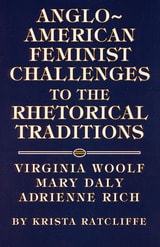
Anglo-American Feminist Challenges to the Rhetorical Traditions
Virginia Woolf, Mary Daly, Adrienne RichKrista Ratcliffe
Southern Illinois University Press, 1996
Although women and men have different relationships to language and to each other, traditional theories of rhetoric do not foreground such gender differences. Krista Ratcliffe argues that because feminists generally have not conceptualized their language theories from the perspective of rhetoric and composition studies, rhetoric and composition scholars must construct feminist theories of rhetoric by employing a variety of interwoven strategies: recovering lost or marginalized texts; rereading traditional rhetoric texts; extrapolating rhetorical theories from such nonrhetoric texts as letters, diaries, essays, cookbooks, and other sources; and constructing their own theories of rhetoric.
Focusing on the third option, Ratcliffe explores ways in which the rhetorical theories of Virginia Woolf, Mary Daly, and Adrienne Rich may be extrapolated from their Anglo-American feminist texts through examination of the interrelationship between what these authors write and how they write. In other words, she extrapolates feminist theories of rhetoric from interwoven claims and textual strategies. By inviting Woolf, Daly, and Rich into the rhetorical traditions and by modeling the extrapolation strategy/methodology on their writings, Ratcliffe shows how feminist texts about women, language, and culture may be reread from the vantage point of rhetoric to construct feminist theories of rhetoric. She also outlines the pedagogical implications of these three feminist theories of rhetoric, thus contributing to ongoing discussions of feminist pedagogies.
Traditional rhetorical theories are gender-blind, ignoring the reality that women and men occupy different cultural spaces and that these spaces are further complicated by race and class, Ratcliffe explains. Arguing that issues such as who can talk, where one can talk, and how one can talk emerge in daily life but are often disregarded in rhetorical theories, Ratcliffe rereads Roland Barthes’ "The Old Rhetoric" to show the limitations of classical rhetorical theories for women and feminists. Discovering spaces for feminist theories of rhetoric in the rhetorical traditions, Ratcliffe invites readers not only to question how women have been located as a part of— and apart from—these traditions but also to explore the implications for rhetorical history, theory, and pedagogy.
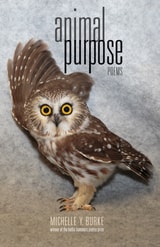
Animal Purpose
PoemsMichelle Y. Burke
Ohio University Press, 2016
In Animal Purpose, Michelle Y. Burke explores the lives of men and women as they stand poised between the desire to love and the compulsion to harm. In one poem, a woman teaches a farmhand the proper way to slaughter a truckload of chickens. In another, a couple confronts the recent loss of a loved one when a stranger makes an unexpected confession in a crowded restaurant. Set in both rural and urban spaces, these poems challenge received ideas about work, gender, and place. Danger blurs into beauty and back again. Burke scours the hard edges of the world to find “fleeting softness,” which she wishes “into the world like pollen that covers everything.”
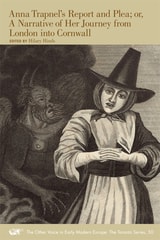
Anna Trapnel’s Report and Plea; or, A Narrative of Her Journey from London into Cornwall
Anna Trapnel
Iter Press, 2016
In 1654, Anna Trapnel — a Baptist, Fifth Monarchist, millenarian, and visionary from London — fell into a trance during which she prophesied passionately and at length against Oliver Cromwell and his government. The prophecies attracted widespread public attention, and resulted in an invitation to travel to Cornwall. Her Report and Plea, republished here for the first time, is a lively and engaging firsthand account of the visit, which concluded in her arrest, a court hearing, and imprisonment. Part memoir, part travelogue, and part impassioned defense of her beliefs and actions, the Report and Plea offers vivid and fascinating insight into the life and times of an early modern woman claiming her place at the center of the tumultuous political events of mid-seventeenth-century England.
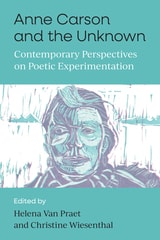
Anne Carson and the Unknown
Contemporary Perspectives on Poetic ExperimentationEdited by Helena Van Praet and Christine Wiesenthal
University of Michigan Press, 2026
Making art relies on a process of intuitive discovery that begins prior to knowing and overrides intention. Anne Carson and the Unknown delves into the varied ways the contemporary poet and classicist Anne Carson engages with the unknown, both as a philosophical concept and as a method of creative practice. Bringing together various contemporary perspectives, ranging from the world of quantum physics to feminist literary criticism and media studies, this volume considers how contemporary poets like Anne Carson continue to show the relevance of the unknown in our turbulent times of global upheaval.
It covers Carson’s unusual travelogue about the collapse of civilizations and knowledge, positions her oeuvre in the context of a wider debate on post-critique, and reads her work as an engagement with a radically formalist Classics that goes back to ancient Greek’s etymological complexity. Taking an interdisciplinary approach, the volume dives into her work’s ambiguous relationships with trans experience and religion, the centrality of the psychoanalytical concept of the caesura, and her use of figures like Helen of Troy and Herakles. It also discusses the unknown as a visual mechanism in her recent creative collaboration with comics creator Rosanna Bruno. In this way, Carson provides a necessary counter to both Western scientific knowledge’s goals of predictability and rationality, and to the algorithmic certitudes sought by the engineering culture of technologists who prevail today.
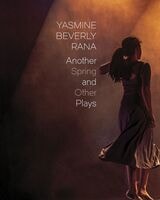
Another Spring
and Other PlaysYasmine Beverly Rana
Seagull Books, 2025
In Another Spring and Other Plays, Yasmine Beverly Rana crafts an intricate tapestry of survival and memory in the wake of war and displacement. Spanning years and continents, these five plays trace the intimate wounds of conflict as they echo through generations. In The Fallen and Another Spring, the ghosts of war haunt the living, forcing them to navigate love, loss, and the shifting landscapes of post-war existence. At the Barre and Icarus and Amina depict the power of art as both sanctuary and rebellion against the forces of migration and exile. The collection concludes with After Rome, where two childhood friends reunite on the eve of the 25th anniversary of the siege of Sarajevo, confronting the long shadows of history.
With poetic and unwavering dialogue, Rana’s plays display the universally resonant struggles of those shaped by war. Another Spring is not just a collection of plays—it is a reflection on resilience and how trauma and art become intertwined in the search for meaning.
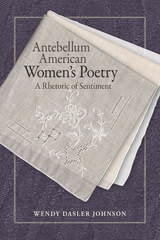
Antebellum American Women's Poetry
A Rhetoric of SentimentWendy Dasler Johnson
Southern Illinois University Press, 2016
Considering the logos, ethos, and pathos—aims, writing personae, and audience appeal—of poems by African American abolitionist Frances Watkins Harper, working-class prophet Lydia Huntley Sigourney, and feminist socialite Julia Ward Howe, Wendy Dasler Johnson demonstrates that sentimental poetry was an inportant component of antebellum social activism. She articulates the ethos of the poems of Harper, who presents herself as a properly domestic black woman, nevertheless stepping boldly into Northern pulpits to insist slavery be abolished; the poetry of Sigourney, whose speaker is a feisty, working-class, ambiguously gendered prophet; and the works of Howe, who juggles her fame as the reformist “Battle Hymn” lyricist and motherhood of five children with an erotic Continental sentimentalism.
Antebellum American Women's Poetry makes a strong case for restoration of a compelling system of persuasion through poetry usually dismissed from studies of rhetoric. This remarkable book will change the way we think about women’s rhetoric in the nineteenth century, inviting readers to hear and respond to urgent, muffled appeals for justice in our own day.
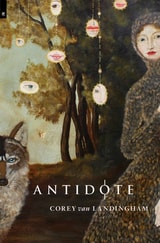
Antidote
Corey Van Landingham
The Ohio State University Press, 2013
In Antidote—the award-winning debut from Guggenheim Fellow and Levis Reading Prize winner Corey Van Landingham—love equates with disease, valediction becomes a contact sport, the moon turns lunatic, and someone is always watching. Here, the uncanny presses up against the intimate, so each poem undergoes a simultaneous making and unmaking, born and bound in exquisite strangeness.
Van Landingham reinvents elegy through a speaker both transgressive and tender, revealing how grief destabilizes the self and reorders perception. She tips the world upside down, shakes loose the debris, and says, I can make something with this.
Wild and surreal, driven by loss, Antidote embraces the beautiful and the brutal in equal measure, offering startling claims about love—its likeness to hibernation, a car crash, a parasite. Time, landscape, and geography dissolve, leaving behind the raw terrains of departure. Ultimately, the book insists there is no cure for heartbreak, that love can mirror violence, and that goodbye never becomes easier.

Antisatire
In Defense of Women, against Francesco BuoninsegniArcangela Tarabotti
Iter Press, 2020
The Other Voice in Early Modern Women: The Toronto Series volume 70
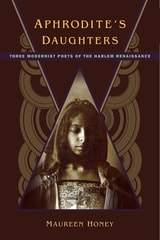
Aphrodite's Daughters
Three Modernist Poets of the Harlem RenaissanceHoney, Maureen
Rutgers University Press, 2016
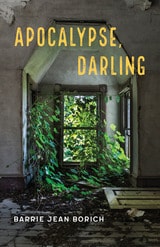
Apocalypse, Darling
Barrie Jean Borich
The Ohio State University Press, 2018
From award-winning author Barrie Jean Borich comes Apocalypse, Darling, a narrative, lyric exploration of the clash between old and new. Set in the steel mill regions of Chicago and in Northwest Indiana, the story centers on Borich’s return to a decimated landscape for a misbegotten wedding in which her spouse’s father marries his high school sweetheart. The book is a lilting journey into an ill-fated moment, where families attempt to find communion in tense gathering spaces and across their most formative disappointments. Borich tells the story of the industrial heartland that produced the steel that made American cities, but also one of the most toxic environmental sites in the world.
As concise as a poem and as sweeping as an epic novel, Apocalypse, Darling explores the intersection of American traditional and self-invented social identities and the destruction and re-greening of industrial cityscapes. Borich asks: can toxic landscapes actually be remediated and can patriarchal fathers ever really be forgiven? In a political climate where Borich is forced to daily re-enter the toxic wastelands she thought she’d long left behind, Apocalypse, Darling is an urgent collision of broken spaces, dysfunctional affections, and the reach toward familial and environmental repair.
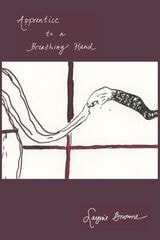
Apprentice to a Breathing Hand
Laynie Browne
Omnidawn, 2025
The poetry of Laynie Browne’s Apprentice to a Breathing Hand explores alchemy, connectivity, and perception. Throughout the collection, Browne considers the formation and limits of personhood, the experience of a body moving through time, and the imperative to continually learn and unlearn. Browne looks to alchemy as a practice for cultivating the impossible, positioning it as a fitting model for our current moment. In the material of language, meaning must be unmade and remade endlessly, and in this continual regeneration, Browne considers the alchemy of how a poem can in turn transform the poet. Moving through methods of making and unmaking, the collection centers on the figure of an apprentice working in a space of indeterminacy, lack, breath, and constant shifting.
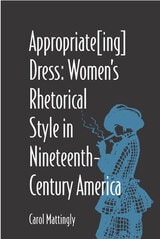
Appropriate[Ing] Dress
Women's Rhetorical Style in Nineteenth-Century AmericaCarol Mattingly
Southern Illinois University Press, 2002
Carol Mattingly examines the importance of dress and appearance for nineteenth-century women speakers and explores how women appropriated gendered conceptions of dress and appearance to define the struggle for representation and power that is rhetoric. Although crucial to women’s effectiveness as speakers, Mattingly notes, appearance has been ignored because it was taken for granted by men.
Because women rarely spoke in public before the nineteenth century, no guidelines existed regarding appropriate dress when they began to speak to audiences. Dress evoked immediate images of gender, an essential consideration for women speakers because of its strong association with place, locating women in the domestic sphere and creating a primary image that women speakers would work with—and against—throughout the century. Opposition to conspicuous change for women often necessitated the subtle transfer of comforting images when women sought to inhabit traditionally masculine spaces. The most successful women speakers carefully negotiated expectations by highlighting some conventions even as they broke others.
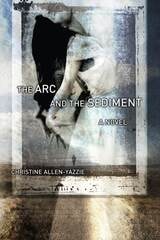
Arc and the Sediment
a NovelChristine Allen-Yazzie
Utah State University Press, 2007
This tale, though dark and difficult, is infused with tart, twisted humor. Confused, disheveled, self-deprecating, and self-destructive, Gretta is also sharp and funny. Here, first-time novelist Christine Allen-Yazzie breaks apart her own narrative arc but with gritty reality seals it near-shut again, if in rearrangement, drawing us into Gretta's wrestling match with herself, her husband, her addiction, and the road.
The Arc and the Sediment received an honorable mention from the James Jones First Novel Competition, and it won the Utah Arts Council Annual Writing Competiton Publishing Prize.

Architect
Alison Thumel
University of Arkansas Press, 2024
Finalist, 2025 Kate Tufts Discovery Award
“When he died, my brother became the architect of the rest of my life,” writes Alison Thumel in Architect, which interweaves poems, lyric essays, and visual art to great emotional effect. In this debut collection, the buildings of Frank Lloyd Wright become a blueprint for elegy, as Thumel overlays the language of architecture with the language of grief to raze and reconstruct memories, metaphors, and myths. With obsessive and exacting focus, the poet leads us through room after room in a search to answer whether it is possible to rebuild in the wake of loss. Meanwhile, the midwestern landscape beyond these rooms—the same landscape that infuses the low, horizontal forms of Wright’s Prairie Style buildings—shapes the figures in Architect as well as their fates: “For years after my brother’s death, I collected news articles on people who died young and tragically in landlocked states. Prairie Style deaths—boys sucked down into grain silos or swept up by tornadoes or fallen through a frozen pond. The boys I didn’t know, but the landscape I did. The dread of it. How many miles you can look ahead. For how long you see what is coming.”
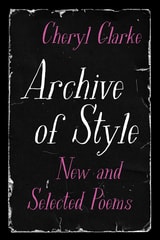
Archive of Style
New and Selected PoemsCheryl Clarke
Northwestern University Press, 2024
Award-winning poet and essayist Cheryl Clarke’s illustrious career has spanned more than four decades and culminates in Archive of Style: New and Selected Poems, a long-awaited retrospective of the indelible work of a Black feminist, community and LGBTQ activist, and educator. This collection features carefully curated poems from Narratives: Poems in the Tradition of Black Women (1982), Living as a Lesbian (1986), The Days of Good Looks: Prose and Poetry 1980-2005 (2006), By My Precise Haircut (2016), and Targets (2019). Together these works show a brilliant thinker who has profoundly impacted generations of writers and activists.
Clarke’s poetry and essays, centered around the Black, lesbian, feminist experience, have attracted an audience around the world. Her essays, “Lesbianism: an Act of Resistance” and “The Failure to Transform: Homophobia in the Black Community” revolutionized the thinking about lesbians of color and the struggle against homophobia. Her poetry and non-fiction have been reprinted in numerous anthologies and assigned in women and sexuality courses globally. Having published since 1977, Clarke and her work have become a foundational part of LGBTQ literature and activism. Archive of Style is a celebration and homage to one of American literature’s Black Women literary warriors.
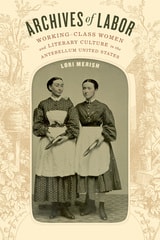
Archives of Labor
Working-Class Women and Literary Culture in the Antebellum United StatesLori Merish
Duke University Press, 2017
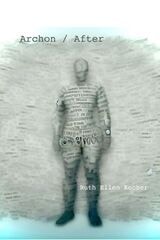
Archon / After
Ruth Ellen Kocher
Omnidawn, 2024
In Ruth Ellen Kocher’s Archon / After, the archive is revealed as both a form of violence and of memory, of site and of event. As keeper of the archive, Kocher’s archon determines what pieces of the past may be preserved, housed, documented, ordered, and reviewed. Through these poems, the archon dives deep into memories and into the mysteries of daily life, and, in governance over the future, determines what will be and should be forgotten. The act of forgetting becomes archival violence, with the archon not only serving as the guardian of what remains in the archive but also as an eradicator who decides what is purged.
The imagistic and surreal language of this collection invites us to explore a non-logical terrain as we follow the protagonist into her darkest memories and find a path for our own journey of self-discovery.

Are Girls Necessary?
Lesbian Writing and Modern HistoriesJulie Abraham
University of Minnesota Press, 2008
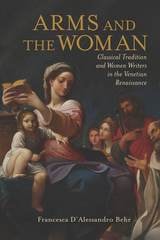
Arms and the Woman
Classical Tradition and Women Writers in the Venetian RenaissanceFrancesca D'Alessandro Behr
The Ohio State University Press, 2018
Arms and the Woman: Classical Tradition and Women Writers in the Venetian Renaissance by Francesca D’Alessandro Behr focuses on the classical reception in the works of female authors active in Venice during the Early Modern Age. Even in this relatively liberal city, women had restricted access to education and were subject to deep-seated cultural prejudices, but those who read and wrote were able, in part, to overcome those limitations.
In this study, Behr explores the work of Moderata Fonte and Lucrezia Marinella and demonstrates how they used knowledge of texts by Virgil, Ovid, and Aristotle to systematically reanalyze the biased patterns apparent both in the romance epic genre and contemporary society. Whereas these classical texts were normally used to bolster the belief in female inferiority and the status quo, Fonte and Marinella used them to envision societies structured according to new, egalitarian ethics. Reflecting on the humanist representation of virtue, Fonte and Marinella insisted on the importance of peace, mercy, and education for women. These authors took up the theme of the equality of genders and participated in the Renaissance querelle des femmes, promoting women’s capabilities and nature.
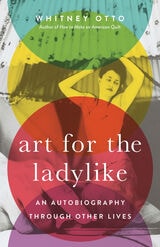
Art for the Ladylike
An Autobiography through Other LivesWhitney Otto
The Ohio State University Press, 2021
In Art for the Ladylike, Whitney Otto limns the lives of eight pioneering women photographers—Sally Mann, Imogen Cunningham, Judy Dater, Ruth Orkin, Tina Modotti, Lee Miller, Madame Yvonne, and Grete Stern—to in turn excavate her own writer’s life. The result is an affecting exploration of what it means to be a woman, what it means to be an artist, and the perils and rewards of being both at once. In considering how feminism, career, and motherhood were entangled throughout her subjects’ lives as they tirelessly sought to render their visions and paved the way for others creating within the bounds of domesticity, Otto assesses her own struggles with balancing writing and the pulls of home life. Ultimately, she ponders the persistent question that artistic women face in a world that devalues women’s ambition: If what we love is what we are, how do those of us with multiple loves forge lives with room for everything?
As Told By Herself
Women’s Childhood Autobiography, 1845-1969Lorna Martens
University of Wisconsin Press, 2022
Stopping just before second-wave feminism brought an explosion in women's childhood autobiographical writing, As Told by Herself explores the genre's roots and development from the mid-nineteenth century, and recovers many works that have been neglected or forgotten. The result illustrates how previous generations of women—in a variety of places and circumstances—understood themselves and their upbringing, and how they thought to present themselves to contemporary and future readers.
Asian American Women's Popular Literature
Feminizing Genres and Neoliberal BelongingPamela Thoma
Temple University Press, 2013
A volume in the American Literatures Initiative.
Asphodel
(Hilda Doolittle) H.D.
Duke University Press, 1992
A sequel to the author's HERmione, Asphodel takes the reader into the bohemian drawing rooms of pre-World War I London and Paris, a milieu populated by such thinly disguised versions of Ezra Pound, Richard Aldington, May Sinclair, Brigit Patmore, and Margaret Cravens; on the other side of what H.D. calls "the chasm," the novel documents the war's devastating effect on the men and women who considered themselves guardians of beauty. Against this riven backdrop, Asphodel plays out the story of Hermione Gart, a young American newly arrived in Europe and testing for the first time the limits of her sexual and artistic identities. Following Hermione through the frustrations of a literary world dominated by men, the failures of an attempted lesbian relationship and a marriage riddled with infidelity, the birth of an illegitimate child, and, finally, happiness with a female companion, Asphodel describes with moving lyricism and striking candor the emergence of a young and gifted woman from her self-exile.
Editor Robert Spoo's introduction carefully places Asphodel in the context of H.D.'s life and work. In an appendix featuring capsule biographies of the real figures behind the novel's fictional characters, Spoo provides keys to this roman à clef.
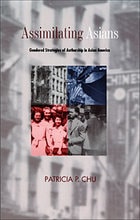
Assimilating Asians
Gendered Strategies of Authorship in Asian AmericaPatricia P. Chu
Duke University Press, 2000
Chu further demonstrates that Asian American male and female writers engage different strategies in the struggle to adapt, reflecting their particular, gender-based relationships to immigration, work, and cultural representation. While offering fresh perspectives on the well-known writings—both fiction and memoir—of Maxine Hong Kingston, Amy Tan, Bharati Mukherjee, Frank Chin, and David Mura, Assimilating Asians also provides new insight into the work of less recognized but nevertheless important writers like Carlos Bulosan, Edith Eaton, Younghill Kang, Milton Murayama, and John Okada. As she explores this expansive range of texts—published over the course of the last century by authors of Chinese, Japanese, Korean, Filipino, and Indian origin or descent—Chu is able to illuminate her argument by linking it to key historical and cultural events.
Assimilating Asians makes an important contribution to the fields of Asian American, American, and women’s studies. Scholars of Asian American literature and culture, as well as of ethnicity and assimilation, will find particular interest and value in this book.
Asterism
Ae Hee Lee
Tupelo Press, 2024
At times personal, at others political, slipping back and forth between lyric and narrative and drawing on various languages and geographies, Asterism is a collection of grace and grit, the work of a mind at work—in, and on, a world that is simultaneously expanding and contracting. Both accessible and legitimately experimental, these poems invite and challenge the reader, moving between registers and modes with ease.
Asylum in the Grasslands
Diane Glancy
University of Arizona Press, 2007
In her new collection of poems, Glancy explores the history of loss that has marked the Cherokee community. In a voice that is as economical as it is eloquent and as sophisticated as it is exhilarating, she describes the loss of family, the loss of cultural heritage, and the loss of old worlds as new ones encroach. In one poem, a farm auction becomes an auction of culture, of heritage, of the past. In others, ancestors meet in a twenty-four-hour café, lunch is shared with a great-grandmother who has been traveling the universe, Christ appears as a cowboy in an apocalyptic vision, and Clytemnestra is discovered in a snakeskin. Some of the poems are as campy as a duck-decoy Custer in a shooting gallery. Some glitter with dime-store glue. Others speak with the reflection of sunlight off a stream. Sometimes the verse produces a shortstop language on the baseline of experience. In whatever form they take, Glancy’s poems stimulate and challenge the reader with their unfettered, unadorned, and unpretty purity. This collection is not only a spirited ride across the Great Plains, it is also an important addition to the literature of white–Native American cultural relationships.