Results by title
22279 books match the query 'Social Science' and 1819 start with a
An Archive of Feelings
Trauma, Sexuality, and Lesbian Public CulturesAnn Cvetkovich
Duke University Press, 2003
An Archive of Feelings brings together oral histories from lesbian activists involved in act up/New York; readings of literature by Dorothy Allison, Leslie Feinberg, Cherríe Moraga, and Shani Mootoo; videos by Jean Carlomusto and Pratibha Parmar; and performances by Lisa Kron, Carmelita Tropicana, and the bands Le Tigre and Tribe 8. Cvetkovich reveals how activism, performance, and literature give rise to public cultures that work through trauma and transform the conditions producing it. By looking closely at connections between sexuality, trauma, and the creation of lesbian public cultures, Cvetkovich makes those experiences that have been pushed to the peripheries of trauma culture the defining principles of a new construction of sexual trauma—one in which trauma catalyzes the creation of cultural archives and political communities.
An Archive of Possibilities
Healing and Repair in Democratic Republic of CongoRachel Marie Niehuus
Duke University Press, 2024
An Archive of Taste
Race and Eating in the Early United StatesLauren F. Klein
University of Minnesota Press, 2020
A groundbreaking synthesis of food studies, archival theory, and early American literature
There is no eating in the archive. This is not only a practical admonition to any would-be researcher but also a methodological challenge, in that there is no eating—or, at least, no food—preserved among the printed records of the early United States. Synthesizing a range of textual artifacts with accounts (both real and imagined) of foods harvested, dishes prepared, and meals consumed, An Archive of Taste reveals how a focus on eating allows us to rethink the nature and significance of aesthetics in early America, as well as of its archive.
Lauren F. Klein considers eating and early American aesthetics together, reframing the philosophical work of food and its meaning for the people who prepare, serve, and consume it. She tells the story of how eating emerged as an aesthetic activity over the course of the eighteenth century and how it subsequently transformed into a means of expressing both allegiance and resistance to the dominant Enlightenment worldview. Klein offers richly layered accounts of the enslaved men and women who cooked the meals of the nation’s founders and, in doing so, directly affected the development of our national culture—from Thomas Jefferson’s emancipation agreement with his enslaved chef to Malinda Russell’s Domestic Cookbook, the first African American–authored culinary text.
The first book to examine the gustatory origins of aesthetic taste in early American literature, An Archive of Taste shows how thinking about eating can help to tell new stories about the range of people who worked to establish a cultural foundation for the United States.
An Arkansas Folklore Sourcebook
W.K. McNeil
University of Arkansas Press, 1992
Arkansas’s rich folk tradition is shown by the variety of its manifestations: a 250-year-old ballad, an archaic method of hewing railroad crossties with a broadax, the use of poultices and toddies to treat the common cold, and swamps of evil repute are all parts of the tradition that constitutes Arkansas folklore. In fact, as the essays selected by W.K. McNeil and William M. Clements show, these few examples only begin to tell the story.
Starting with a working description of folklore as “cultural material that is traditional and unofficial” and characterized by a pattern of oral transmission, variation, formulaic structures, and usually uncertain origin, the authors survey in detail a wide array of folk objects, activities, beliefs, and customs. Among the rich offerings in this sourcebook are a discussion of the history of folklore research in Arkansas, an examination of some of the traditional songs and music still being preformed, a thoughtful exploration of the serious side of “tall tales” and “windies,” an investigation of folk architecture in Arkansas and what it reveals about our cultural origins, a study of many traditional foods and there preparation methods, an analysis of superstitions and beliefs, and a description of festivals and celebrations that are observed to this day.
Complemented by biographies of reference works and audio and video recordings of the state’s folk materials, An Arkansas Folklore Sourcebook is the first complete guide to the study of one state’s “unofficial culture.”
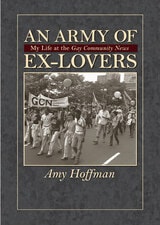
An Army of Ex-Lovers
My life at the Gay Community NewsAmy Hoffman
University of Massachusetts Press, 2007
Boston's weekly Gay Community News was “the center of the universe” during the late 1970s, writes Amy Hoffman in this memoir of gay liberation before AIDS, before gay weddings, and before The L Word. Provocative, informative, inspiring, and absurd, with a small circulation but a huge influence, Gay Community News produced a generation of leaders, writers, and friends. In addition to capturing the heady atmosphere of the times—the victories, controversies, and tragedies—Hoffman's memoir is also her personal story, written with wit and insight, of growing up in a political movement; of her deepening relationships with charismatic, talented, and sometimes utterly weird coworkers; and of trying to explain it all to her large Jewish family.
An Artificial History of Natural Intelligence
Thinking with Machines from Descartes to the Digital AgeDavid W. Bates
University of Chicago Press, 2024
We imagine that we are both in control of and controlled by our bodies—autonomous and yet automatic. This entanglement, according to David W. Bates, emerged in the seventeenth century when humans first built and compared themselves with machines. Reading varied thinkers from Descartes to Kant to Turing, Bates reveals how time and time again technological developments offered new ways to imagine how the body’s automaticity worked alongside the mind’s autonomy. Tracing these evolving lines of thought, An Artificial History of Natural Intelligence offers a new theorization of the human as a being that is dependent on technology and produces itself as an artificial automaton without a natural, outside origin.
An Asian American Theology of Liberation
Tian An Wong
Lever Press, 2023
Providing an intersectional frame that considers the breadth and diversity of Asian American experiences alongside those of Black, Indigenous, and Latinx thinkers in the United States and across the globe, An Asian American Theology of Liberation puts Asian American theology in dialogue with theories from psychoanalysis, Afro-pessimism, Black Marxism, postcolonial studies, and queer theology. In this groundbreaking work, Wong Tian An combines archival research uncovering a much overlooked theology of liberation — born in the 1970s out of Asian Americans’ struggles for political recognition and civil rights in the United States — with powerful analyses drawing from the theological, intellectual, and political developments of the last half century.
This wide-ranging study connects urgent themes such as protest movements in Hong Kong, anti-Asian violence in the United States, and Indigenous struggles everywhere, while building on Asian theologies such as Dalit theology in India, theology of struggle in the Philippines, and Minjung theology in Korea. Drawing deeply and broadly across disciplines, the book altogether revives and renews an Asian American theology of liberation for a new generation.
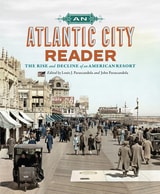
An Atlantic City Reader
The Rise and Decline of an American ResortLouis J. Parascandola
Rutgers University Press, 2026
As Atlantic City grew to become one of the largest tourist destinations on the East Coast, it loomed ever larger in the imaginations of American writers. Generation upon generation of novelists, journalists, musicians, and poets visited Atlantic City and left with vivid impressions of its kaleidoscopic delights and its seedy underbelly.
This new reader collects all of these diverse perspectives on the city in one place, including accounts of Atlantic City by such famous visitors as Walt Whitman, William Carlos Williams, Fanny Hurst, Arthur Conan Doyle, Damon Runyon, Langston Hughes, Elmore Leonard, and Bruce Springsteen. Arranged chronologically, the anthology traces the city’s history from its humble beginnings as a quiet health resort to its rapid ascent to the world’s playground, its gradual decline, and its hopeful if tenuous future. Together, the pieces in this collection take us inside the city’s glitz, glamor, and gambling palaces, but they also don’t shy away from its troubling histories of racial discrimination, political corruption, and urban decay. Compiling fiction, poetry, drama, memoirs, newspaper stories, and magazine reports, The Atlantic City Reader presents an engaging and multifaceted portrait of this iconic resort town.
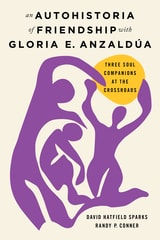
An Autohistoria of Friendship with Gloria E. Anzaldúa
Three Soul Companions at the CrossroadsDavid Hatfield Sparks and Randy P. Conner
University of Illinois Press, 2027
Beginning their story in a large Noe Valley flat, Sparks and Conner trace how a collective of artists and activists shaped a shared life across lines of race, gender, and sexuality while forging a community linked through prejudice, illness, and loss. The authors mix personal stories with history and cultural memory. They also discuss Anzaldúa’s idea of spiritual mestizaje, a practice for healing and growth that joins Indigenous, African, Latino, European, and Queer traditions. Their idea of El Mundo Zurdo imagines an inclusive world that values diversity and the power of difference to create connections among human beings.
Merging spirituality with activism, An Autohistoria of Friendship with Gloria E. Anzaldúa shares a vision of a more just and caring future.
An Early Town on the Deh Luran Plain
Excavations at Tepe FarukhabadEdited by Henry T. Wright
University of Michigan Press, 1981

An Early Woodland Community at the Schultz Site 20SA2 in the Saginaw Valley and the Nature of the Early Woodland Adaptation in the Great Lakes Region
Doreen Ozker
University of Michigan Press, 1982
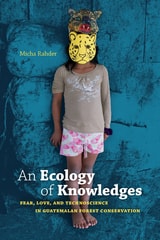
An Ecology of Knowledges
Fear, Love, and Technoscience in Guatemalan Forest ConservationMicha Rahder
Duke University Press, 2020

An Efficient Womanhood
Women and the Making of the Universal Negro Improvement AssociationNatanya Duncan
University of Illinois Press, 2023
Founded in 1914 by Amy Ashwood and Marcus Garvey, the Universal Negro Improvement Association and African Communities League (commonly called the UNIA) grew into one of the largest social justice organizations of the twentieth century. Natanya Duncan’s collective biography explores women’s role in building the UNIA and how Ashwood’s strategy of efficient womanhood equipped them to confront political and social issues--even when it meant defying gender norms. Efficient womanhood took a three-tiered approach that asked UNIA women to seek equitable partners, take on roles as mentors, and connect resources and people to their communities and Black people at large. Strong believers in the necessity of their presence and voices, UNIA women developed leadership skills within and beyond the organization and used these skills in service to their communities.
Enlightening and in-depth, An Efficient Womanhood tells the story of the women who shaped a framework for leadership and engagement that remains a blueprint for activists today.
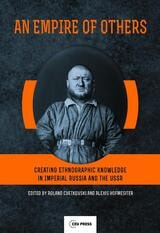
An Empire of Others
Creating Ethnographic Knowledge in Imperial Russia and the USSRAlexis Hofmeister
Central European University Press, 2014
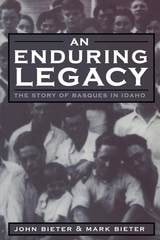
An Enduring Legacy
The Story Of Basques In IdahoMark Bieter
University of Nevada Press, 2003
In this volume, brothers Mark and John Bieter chronicle three generations of Basque presence in Idaho from 1890 to the present, resulting in an engaging story that begins with a few solitary sheepherders and follows their evolution into the prominent ethnic community of today.
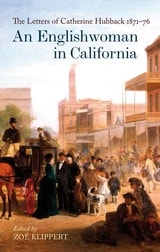
An Englishwoman in California
The Letters of Catherine Hubback, 1871-76Edited by Zoë Klippert
Bodleian Library Publishing, 2010
A niece of Jane Austen and a novelist herself, Catherine Hubback was fifty-two years old when she left England for America. She travelled to California on the Transcontinental Railroad and settled in Oakland, on the eastern shore of San Francisco Bay. Her son Edward shared her household and commuted by ferryboat to a wheat brokerage in the City.
In letters to her eldest son John and his wife Mary in Liverpool, Catherine conveys her delight – and her exasperation – at her new environment. She portrays her neighbours with a novelist's wry wit and brings her English sensibility to bear on gardening with unfamiliar plants and maintaining a proper wardrobe in a dry climate. She writes vividly of her adventures as she moves about a landscape recognizable to present-day residents, at a time when boats rather than bridges spanned the bay, and hot springs were the main attraction in the Napa Valley. In an atmosphere of financial unrest, she writes freely of her anxieties, while supplementing Edward's declining income by making lace and teaching the craft to other women. She recalls her 'prosperous days' in England, but finds pleasure in small things and assuredly takes her place in a society marked by great disparities in wealth.
In addition to transcriptions of the letters, this highly readable edition offers pertinent information on many of the people and places mentioned, explanatory notes, and striking illustrations. The introduction places the letters in context and tells the story of Catherine Hubback, whose life evolved in ways unprecedented in the Austen family.
An Epidemic among My People
Religion, Politics, and COVID-19 in the United StatesEdited by Paul A. Djupe and Amanda Friesen
Temple University Press, 2023
The pandemic presented religion as a paradox: faith is often crucial for helping people weather life’s troubles and make difficult decisions, but how can religion continue to deliver these benefits and provide societal structure without social contact? The topical volume, An Epidemic among My People explains how the COVID-19 pandemic stress tested American religious communities and created a new politics of religion centered on public health.
The editors and contributorsconsider how the virus and government policy affected religion in America. Chapters examine the link between the prosperity gospel and conspiracy theories, the increased purchase of firearms by evangelicals, the politics of challenging public health orders as religious freedom claims, and the reactions of Christian nationalists, racial groups, and female clergy to the pandemic (and pandemic politics). As sharp lines were drawn between people and their governments during this uncertain time, An Epidemic among My People provides a comprehensive portrait of religion in American public life.
An Epidemic of Uncertainty
Navigating HIV and Young Adulthood in MalawiJenny Trinitapoli
University of Chicago Press, 2023
An Epidemic of Uncertainty advances a new framework for studying social life by emphasizing something social scientists routinely omit from their theories, models, and measures–what people know they don’t know. Taking Malawi’s ongoing AIDS epidemic as an entry point, Jenny Trinitapoli shows that despite admirable declines in new HIV infections and AIDS-related mortality, an epidemic of uncertainty persists; at any given point in time, fully half of Malawian young adults don’t know their HIV status. Reckoning with the impact of this uncertainty within the bustling trading town of Balaka, Trinitapoli argues that HIV-related uncertainty is measurable, pervasive, and impervious to biomedical solutions, with consequences that expand into multiple domains of life, including relationship stability, fertility, and health. Over the duration of a groundbreaking decade-long longitudinal study, rich survey data and poignant ethnographic vignettes vividly depict how individual lives and population patterns unfold against the backdrop of an ever-evolving epidemic. Even as HIV is transformed from a progressive, fatal disease to a chronic and manageable condition, the accompanying epidemic of uncertainty remains fundamental to understanding social life in this part of the world.
Insisting that known unknowns can and should be integrated into social-scientific models of human behavior, An Epidemic of Uncertainty treats uncertainty as an enduring aspect, a central feature, and a powerful force in everyday life.
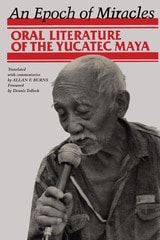
An Epoch of Miracles
Oral Literature of the Yucatec MayaTranslated with Commentaries by Allan F. Burns
University of Texas Press, 1983
“Mr. Allan Burns, I am here to tell you an example, the example of the Hunchbacks.” So said Paulino Yamá, traditionalist and storyteller, to Allan Burns, anthropologist and linguist, as he began one story that found its way into this book.
Paulino Yamá was just one of several master storytellers from the Yucatán Peninsula of Mexico from whom Burns learned not only the Mayan language but also the style and performance of myths, stories, riddles, prayers, and other forms of speech of their people. The result is An Epoch of Miracles, a wonderfully readable yet thoroughly scholarly set of translations from the oral literature of the Yucatec Maya, an important New World tradition never before systematically described.
An Epoch of Miracles brings us over thirty-five long narratives of things large, small, strange, and “regular” and as many delightful short pieces, such as bird lore, riddles, and definitions of anteaters, rainbows, and other commonplaces of the Mayan world. Here are profound narratives of the Feathered Serpent, the mighty Rain God Chac and his helpers, and the mysterious cult of the Speaking Cross. But because these are modern, “Petroleum Age” Maya, here too are a discussion with Cuba’s Fidel Castro and a greeting to former president Richard Nixon.
All pieces are translated ethnopoetically; examples of several genres are presented bilingually. An especially valuable feature is the indication of performance style, such as pauses and voice quality, given with each piece.

An Era of Disruption and Violence
The FBI and the Shattering of the Sixties New LeftAaron J. Leonard
Rutgers University Press, 2027
Throughout the decade of the sixties, the FBI and other elements of the government undertook a massive effort to contain the movement against the American apartheid system and the war in Vietnam. The prime focus of these increasingly repressive efforts was the young radicals of the New Left, residing in the Students for a Democratic Society. Utilizing thousands of pages of unexamined FBI files, voluminous reports from Congress, and the author’s files obtained through Freedom of Information filings, this book will tell the story of the massive repression set loose against SDS, the group’s breakup due to internecine factionalism, and how this was encouraged and amplified at every turn by secret measures deployed by the FBI.
An Erotic Philology of Golden Age Spain
Adrienne Laskier Martin
Vanderbilt University Press, 2007
By utilizing theories of deviance, sexuality, and gender; the rhetoric of eroticism; and textual criticism, An Erotic Philology of Golden Age Spain historicizes and analyzes the particular ways in which classical Spanish writers assign symbolic meaning to non-normative sexual practices and their practitioners. It shows how prostitutes, homosexuals, transvestites, women warriors, and female tricksters were stigmatized and marginalized as part of an ordering principle in the law, society, and in literature. It is against these sexual outlaws that early modern orthodoxy establishes and identifies itself during the Golden Age of Spanish letters.
These eroticized figures are recurring objects of contemplation and fascination for Spain's most canonical as well as lesser known writers of the period, in a variety of poetic, prose and dramatic genres. They ultimately reveal attitudes towards sexual behavior that are far more complex than was previously thought. An Erotic Philology of Golden Age Spain thoughtfully anatomizes the interdisciplinary systems at the heart of the varied sexual behaviors depicted in early modern Spanish literature.
An Essay for Ezra
Racial Terror in AmericaGrant Farred
University of Minnesota Press, 2021
An intensely personal, and philosophical, account of why white America’s racial unconscious is not so unconscious
An Essay for Ezra is a critique of terror that begins but by no means ends with the presidency of Donald J. Trump. A father addresses his son and a boy shares his observations in a dynamic dialogistic exchange that is a commentary of and for its time, taking the measure of racial terror and of white supremacy both in our moment and as a historical phenomenon.
Framed through the experiences of the author’s biracial son, An Essay for Ezra is intensely personal while also powerfully universal. Drawing on the social and political thought of James Baldwin and Martin Luther King, Grant Farred examines the temptation and the perils of essentialism and the need to discriminate—to engage the black mind as much as the black body. With that dialectic as his starting point, Farred engages the ideas of Jameson, Barthes, Derrida, Adorno, Kant, and other thinkers to derive an ethics of being in our time of social peril. His antiessentialist racial analysis is salient, especially when he deploys Dave Chappelle as a counterpoint to Baldwin—and Chappelle’s brilliant comic philosophic voice jabs at both racial and gender identity.
Standing apart for its willingness to explore terror in all its ambivalence, this theoretical reflection on racism, knowledge, ethics, and being in our neofascist present brings to bear the full weight of philosophical inquiry and popular cultural critique on black life in the United States.

An Eye for an I
Growing up with Blindness, Bigotry, and Family Mental IllnessJames Francisco Bonilla
University of Minnesota Press, 2025
The personal story of a blind Puerto Rican boy in New York who transcends a harrowing childhood to become a lifelong advocate for social justice
“Jovencito, it’s going to be lonely being different and yet strong in this world,” James Francisco Bonilla’s grandmother told him when he was ten. He had come home after defending himself against a bully who had threatened him with violence, making it clear that he didn’t care that James was blind. But despite the isolation James felt in childhood, he would come to commit his life to leveraging his differences and strengths toward a collective fight for justice. James’s memoir, An Eye for an I, is an inspiring account of how he found a path through his own suffering to make a difference for others.
Born with congenital cataracts, James had limited vision in his right eye and none in his left. At age nine, after a classmate hurled a horseshoe at his face in a racially motivated assault, James’s right eye was injured and he became legally blind. At home, too, he feared physical violence, experiencing the unpredictable outbursts of a single mother suffering from severe mental illness. Throughout his youth as a Puerto Rican New Yorker, James was continually failed by educational systems that exposed him to one abuse after another. Searching for relief and inspiration, he discovered an unexpected solace in the natural world, spiritual encounters with Mother Earth that led him toward both personal healing and advocacy.
At nineteen, a breakthrough in medical technology restored the sight in his right eye, and James recognized his unique perspective on the struggles of the disabled and marginalized in American life—and his intense will to make a difference. He seeks to understand generational trauma, and in documenting his growth—physically, mentally, and spiritually—his memoir exemplifies the introspection necessary to participate in truly equitable and effective movement building. An Eye for an I presents both James and his aggressors with refreshing nuance and humility, inviting readers to empathize, be inspired, and consider their own potential to be of service in a broken, yet beautiful, world.
Retail e-book files for this title are screen-reader friendly with images accompanied by short alt text and/or extended descriptions.
An Illini Place
Building the University of Illinois CampusIncoronata Inserra
University of Illinois Press, 2017
An Immigrant Neighborhood
Interethnic and Interracial Encounters in New York before 1930Shirley Yee
Temple University Press, 2011
Examining race and ethnic relations through an intersectional lens, Shirley Yee's An Immigrant Neighborhoodinvestigates the ways that race, class, and gender together shaped concepts of integration and assimilation as well as whiteness and citizenship in lower Manhattan during the late nineteenth and early twentieth-centuries.
In contrast to accounts of insulated neighborhoods and ethnic enclaves, Yee unearths the story of working class urban dwellers of various ethnic groups—Chinese, Jews, Italians, and Irish—routinely interacting in social and economic settings.
Yee's numerous, fascinating anecdotes—such as one about an Irishman who served as the only funeral director for Chinese for many years—recount the lived experiences of these neighborhoods, detailing friendships, business relationships, and sexual relationships that vividly counter the prevailing idea that different ethnic groups did not mix except in ways marked by violence and hostility.
An Impossible Living in a Transborder World
Culture, Confianza, and Economy of Mexican-Origin PopulationsCarlos G. Vélez-Ibáñez
University of Arizona Press, 2010
Central to the ROSCA is the cultural concept of mutual trust, or confianza. This is the cultural glue that holds the reciprocal relationship together. As Vélez-Ibáñez explains, confianza “shapes the expectations for relationships within broad networks of interpersonal links, in which intimacies, favors, goods, services, emotion, power, or information are exchanged.” In a border region where migration, class movement, economic changes, and institutional inaccessibility produce a great deal of uncertainty, Mexican-origin populations rely on confianza and ROSCAs to maintain a sense of security in daily life. How do transborder people adapt these common practices to meet the demands of a global economy? That is precisely what Vélez-Ibáñez investigates.
An Improper Profession
Women, Gender, and Journalism in Late Imperial RussiaBarbara T. Norton and Jehanne M Gheith, eds.
Duke University Press, 2001
In this collection, contributors explore how early women journalists contributed to changing cultural understandings of women’s roles, as well as how class and gender politics meshed in the work of particular individuals. They also examine how female journalists adapted to—or challenged—censorship as political structures in Russia shifted. Over the course of this volume, contributors discuss the attitudes of female Russian journalists toward socialism, Russian nationalism, anti-Semitism, women’s rights, and suffrage. Covering the period from the early 1800s to 1917, this collection includes essays that draw from archival as well as published materials and that range from biography to literary and historical analysis of journalistic diaries.
By disrupting conventional ideas about journalism and gender in late Imperial Russia, An Improper Profession should be of vital interest to scholars of women’s history, journalism, and Russian history.
Contributors. Linda Harriet Edmondson, June Pachuta Farris, Jehanne M Gheith, Adele Lindenmeyr, Carolyn Marks, Barbara T. Norton, Miranda Beaven Remnek, Christine Ruane, Rochelle Ruthchild, Mary Zirin
An Inca Account of the Conquest of Peru
Titu Cusi Yupanqui
University Press of Colorado, 2005
Titu Cusi tells of his father's maltreatment at the hands of the conquerors; his father's ensuing military campaigns, withdrawal, and murder; and his own succession as ruler. Although he continued to resist Spanish attempts at "pacification," Titu Cusi entertained Spanish missionaries, converted to Christianity, and then, most importantly, narrated his story of the conquest to enlighten Emperor Phillip II about the behavior of the emperor's subjects in Peru. This vivid narrative illuminates the Incan view of the Spanish invaders and offers an important account of indigenous resistance, accommodation, change, and survival in the face of the European conquest.
Informed by literary, historical, and anthropological scholarship, Bauer's introduction points out the hybrid elements of Titu Cusi's account, revealing how it merges native Andean and Spanish rhetorical and cultural practices. Supported in part by the Colorado Endowment for the Humanities.

An Independent Woman
The Autobiography of Edith GuerrierEdith Guerrier
University of Massachusetts Press, 0
An Index to Reproductions of Paintings by Twentieth-Century Chinese Artists
Ellen Johnston Laing
University of Michigan Press, 1998
An Indispensable Liberty
The Fight for Free Speech in Nineteenth-Century AmericaEdited by Mary M. Cronin
Southern Illinois University Press, 2016
The eleven essays that make up this collection show how, despite judicial, political, and public proclamations of support for freedom of expression, factors like tradition, gender stereotypes, religion, and fear of social unrest often led to narrow judicial and political protection for freedom of expression by people whose views upset the status quo. These views, expressed by abolitionists, suffragists, and labor leaders, challenged rigid cultural mores of the day, and many political and cultural leaders feared that extending freedom of expression to agitators would undermine society. The Civil War intensified questions about the duties and privileges of citizenship. After the war, key conflicts over freedom of expression were triggered by Reconstruction, suffrage, the Comstock Act, and questions about libel.
The volume’s contributors blend social, cultural, and intellectual history to untangle the complicated strands of nineteenth-century legal thought. By chronicling the development of modern-day notions of free speech, this timely collection offers both a valuable exploration of the First Amendment in nineteenth-century America and a useful perspective on the challenges we face today.
An Interpretation of Desire
Essays in the Study of SexualityJohn Gagnon
University of Chicago Press, 2003
Gagnon may be best known as the coauthor of Sexual Conduct—a book that introduced the seminal concept of sexual scripting—and as one of the coauthors of The Social Organization of Sexuality, a foundational work that is widely considered to be the most important study of human sexual behavior since the Kinsey report. The essays collected here first trace the influence of scripting theory on Gagnon, outlining the radical departure he took from the dominant biological and psychiatric models of sex research. The volume then turns to more recent essays that consider such vexed issues as homosexuality, the theories of Sigmund Freud, HIV, hazardous sex, and the social aspects of sexually transmitted diseases.
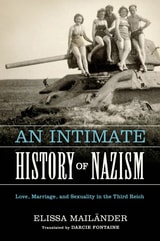
An Intimate History of Nazism
Love, Marriage, and Sexuality in the Third ReichElissa Mailänder
University of Wisconsin Press, 2027
Published to great acclaim in French and now available for the first time in English, this groundbreaking book explores how the Nazi regime used sexuality to promote political loyalty, conformity, and cohesion among “ordinary” Germans. Beginning before the collapse of the Weimar Republic and continuing through the postwar American occupation of Germany, Elissa Mailänder’s study highlights the complex and conflicted ways that sexual “liberation,” repression, and violence were used and experienced in the everyday lives of citizens of the Reich. Her analysis draws on a vast array of sources, from legal dossiers to private photographs and letters, as well as public archives, magazines, and movies. Mailänder’s findings are often uncomfortable; she demonstrates, for example, that a significant number of women who were not persecuted by the regime saw shifts in gender and sexual norms as positive developments—ones that some felt were lost under the American occupation, with its own routines of military sexual exploitation. What emerges is a portrait of a regime that was less interested in repressing sexuality than in reinventing it according to a racist, elitist, and homophobic agenda.
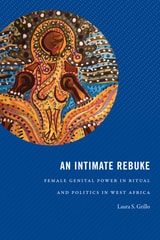
An Intimate Rebuke
Female Genital Power in Ritual and Politics in West AfricaLaura S. Grillo
Duke University Press, 2018
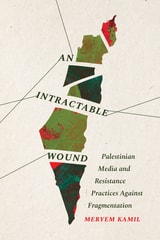
An Intractable Wound
Palestinian Media and Resistance Practices Against FragmentationMeryem Kamil
Rutgers University Press, 2027
An Intractable Wound explores Palestinian resistance to colonial fragmentation that originated as territorial fracture, as proposed through the United Nations partition plan that split the land between the state of Israel and Arab territories. The resulting fragmentation of geography, sovereignty, and populations spurred multiple other schisms that manifest culturally, politically, and developmentally across the West Bank, Gaza, refugee camps, exiled and diasporic Palestinians, and Arab citizens of Israel.
An Intractable Wound considers the various tactics Palestinians deploy to combat these multiple, intersecting iterations of fracture. In particular, this text considers Palestinian media technologies and practices that manage, subvert, and overcome fragmentation. Each chapter centers projects that elaborate on these fractures and combat them, including virtual reality representations, online archives, digital mapping platforms, and video games that imagine and construct an intact Palestinian community. Together, these case studies provide a capacious reading of the Palestinian condition as structured by fragmentation, and Palestinian resistance as struggling in opposition to that geographic, sociopolitical, and cultural disillusion.
An Introduction to Greek Epigraphy of the Hellenistic and Roman Periods from Alexander the Great down to the Reign of Constantine
B. H. McLean
University of Michigan Press, 2011
“In short, this is a reference work of the best kind. For the beginner, it is indispensable. And for those who already know something about its subject matter, the book is in many ways useful, informative, and interesting. We all owe a debt to [the author] for undertaking this significant project, and for completing it so well.”
—Michael Peachin, Classical World
“. . . provides invaluable road maps for non-epigraphers faced with passages of inscribed Greek.”
—Graham Shipley, Bryn Mawr Classical Review
Greek inscriptions form a valuable resource for the study of all aspects of the Greco-Roman world. They are primary witnesses to society's laws and institutions, religious habits, and language. This volume provides students with the tools to take advantage of the historical value of these treasures. It examines letter forms, ancient names, and ancient calendars, knowledge of which is essential in reading inscriptions of all kinds.
B. H. McLean discusses the classification of inscriptions into their various categories and analyzes particular types of inscriptions, including decrees, honorary inscriptions, dedications, funerary inscriptions, and manumissions. Finally, McLean includes special topics that bear upon the interpretation of specific features of inscriptions, such as Greek and Roman administrative titles and functions.

An Introduction to Tree-Ring Dating
Marvin A. Stokes
University of Arizona Press, 1996
Authors Stokes and Smiley first explain the basic principles of tree-ring dating, then describe details of the process, step by step, from the time a sample is collected until it is incorporated into a master chronology.
The book focuses on coniferous evergreens of the Southwest, particularly piñons, because they have wide geographic distribution, constitute a large population, and show excellent growth response to certain controlling factors. The book is specifically concerned with the task of establishing a calendar date for a wood or charcoal specimen.
This concise but thorough explication of an important discipline will make dendrochonology more meaningful to students and professionals in archaeology, forestry, hydrology, and global change.

An Introduction to the Detective Story
Leroy Lad Panek
University of Wisconsin Press, 1987
This book is a no-apologies introduction to Detective Fiction. It's written in an aggressive, modern English well-suited to a genre which has traditionally broken ground in terms of aggressive writing, contemporary scenarios, and tough dialogue.
An Investigation of Ethnographic and Archaeological Specimens of Mescalbeans (Sophora secundiflora) in American Museums
William L. Merrill
University of Michigan Press, 1977
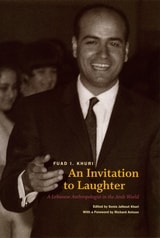
An Invitation to Laughter
A Lebanese Anthropologist in the Arab WorldFuad I. Khuri
University of Chicago Press, 2007
For the late Fuad I. Khuri, a distinguished career as an anthropologist began not because of typical concerns like accessibility, money, or status, but because the very idea of an occupation that baffled his countrymen made them—and him—laugh. “When I tell them that ‘anthropology’ is my profession . . . they think I am either speaking a strange language or referring to a new medicine.” This profound appreciation for humor, especially in the contradictions inherent in the study of cultures, is a distinctive theme of An Invitation to Laughter, Khuri’s astute memoir of life as an anthropologist in the Middle East.
A Christian Lebanese, Khuri offers up in this unusual autobiography both an insider’s and an outsider’s perspective on life in Lebanon, elsewhere in the Middle East, and in West Africa. Khuri entertains and informs with clever insights into such issues as the mentality of Arabs toward women, eating habits of the Arab world, the impact of Islam on West Africa, and the extravagant lifestyles of wealthy Arabs, and even offers a vision for a type of democracy that could succeed in the Middle East. In his life and work, as these astonishing essays make evident, Khuri demonstrated how the discipline of anthropology continues to make a difference in bridging dangerous divides.
An Invitation to Reflexive Sociology
Pierre Bourdieu and Loïc J. D. Wacquant
University of Chicago Press, 1992
Over the last three decades, the French sociologist Pierre Bourdieu has produced one of the most imaginative and subtle bodies of social theory and research of the postwar era. Yet, despite the influence of his work, no single introduction to his wide-ranging oeuvre is available. This book, intended for an English-speaking audience, offers a systematic and accessible overview, providing interpretive keys to the internal logic of Bourdieu's work by explicating thematic and methodological principles underlying his work.
The structure of Bourdieu's theory of knowledge, practice, and society is first dissected by Loic Wacquant; he then collaborates with Bourdieu in a dialogue in which they discuss central concepts of Bourdieu's work, confront the main objections and criticisms his work has met, and outline Bourdieu's views of the relation of sociology to philosophy, economics, history, and politics. The final section captures Bourdieu in action in the seminar room as he addresses the topic of how to practice the craft of reflexive sociology. Throughout, they stress Bourdieu's emphasis on reflexivity—his inclusion of a theory of intellectual practice as an integral component of a theory of society—and on method—particularly his manner of posing problems that permits a transfer of knowledge from one area of inquiry into another.
Amplified by notes and an extensive bibliography, this synthetic view is essential reading for both students and advanced scholars.
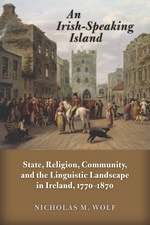
An Irish-Speaking Island
State, Religion, Community, and the Linguistic Landscape in Ireland, 1770–1870Nicholas M. Wolf
University of Wisconsin Press, 2014
As late as 1840, Ireland had as many as four million Irish speakers—a significant proportion of the total population—who could be found in every county of the island and in all social classes and religious persuasions. Their impact on the modern history of Ireland and the United Kingdom cannot be captured by a simple conclusion that they became anglicized. Rather, Nicholas M. Wolf explores the complex ways in which the transition from Irish to English placed a premium on adaptive bilingualism and shaped beliefs and behavior in the domestic sphere, religious life, and oral culture within the community. An Irish-Speaking Island will interest not only historians but also scholars of linguistics, folklore, politics, literature, and religion.
Winner, Michael J. Durkan Prize for Books on Language and Culture, American Conference for Irish Studies
Winner, Donald Murphy Prize for Distinguished First Books, American Conference for Irish Studies
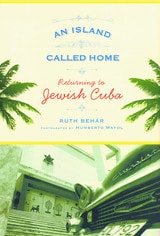
An Island Called Home
Returning to Jewish CubaRuth Behar, Photographs by Humberto Mayol
Rutgers University Press, 2007
Yiddish-speaking Jews thought Cuba was supposed to be a mere layover on the journey to the United States when they arrived in the island country in the 1920s. They even called it “Hotel Cuba.” But then the years passed, and the many Jews who came there from Turkey, Poland, and war-torn Europe stayed in Cuba. The beloved island ceased to be a hotel, and Cuba eventually became “home.” But after Fidel Castro came to power in 1959, the majority of the Jews opposed his communist regime and left in a mass exodus. Though they remade their lives in the United States, they mourned the loss of the Jewish community they had built on the island.
As a child of five, Ruth Behar was caught up in the Jewish exodus from Cuba. Growing up in the United States, she wondered about the Jews who stayed behind. Who were they and why had they stayed? What traces were left of the Jewish presence, of the cemeteries, synagogues, and Torahs? Who was taking care of this legacy? What Jewish memories had managed to survive the years of revolutionary atheism?
An Island Called Home is the story of Behar’s journey back to the island to find answers to these questions. Unlike the exotic image projected by the American media, Behar uncovers a side of Cuban Jews that is poignant and personal. Her moving vignettes of the individuals she meets are coupled with the sensitive photographs of Havana-based photographer Humberto Mayol, who traveled with her.
Together, Behar’s poetic and compassionate prose and Mayol’s shadowy and riveting photographs create an unforgettable portrait of a community that many have seen though few have understood. This book is the first to show both the vitality and the heartbreak that lie behind the project of keeping alive the flame of Jewish memory in Cuba.
Reader Guide (http://rutgerspress.rutgers.
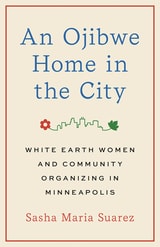
An Ojibwe Home in the City
White Earth Women and Community Organizing in MinneapolisSasha Maria Suarez
University of Minnesota Press, 2026
The story of generations of Ojibwe women who built a thriving Indigenous home in the urban heart of Minneapolis
Minneapolis became home to White Earth Ojibwe people not through a centralized movement but through generations of determined, behind-the-scenes work by Ojibwe women. These women were organizing not in the streets, but in sewing clubs, churches, classrooms, and kitchens to bring people together and form interconnected communities. Rooted in care, tradition, and persistence, their labor laid the foundation for a thriving urban Indigenous population that continues to shape the city today.
An Ojibwe Home in the City tells the histories of Louise and Emily Peake, Winnie Jourdain, Ignatia Broker, and other Ojibwe women who endeavored to make space for Native families in South Minneapolis. From the 1930s through the 1970s, these women built institutions, secured services, and fought for culturally grounded education—all while working inside systems never intended for them. Their efforts led to the creation of vital community hubs such as the Division of Indian Work and the Minneapolis American Indian Center and helped ensure that future generations would stay connected to their culture, even in an urban setting.
Far broader than a local history, this book challenges what we think we know about Native activism in the twentieth century, shifting the focus from protest to perseverance and steady commitment. Intimate, compelling, and deeply grounded in community, An Ojibwe Home in the City is both a tribute and a revelation—an essential and personal account of how Indigenous women made a place for their people in a changing world.
Retail e-book files for this title are screen-reader friendly with images accompanied by short alt text and/or extended descriptions.
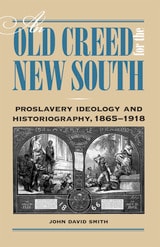
An Old Creed for the New South
Proslavery Ideology and Historiography, 1865-1918John David Smith, With a New Preface by the Author
Southern Illinois University Press, 1985
An Old Creed for the New South:Proslavery Ideology and Historiography, 1865–1918 details the slavery debate from the Civil War through World War I. Award-winning historian John David Smith argues that African American slavery remained a salient metaphor for how Americans interpreted contemporary race relations decades after the Civil War.
Smith draws extensively on postwar articles, books, diaries, manuscripts, newspapers, and speeches to counter the belief that debates over slavery ended with emancipation. After the Civil War, Americans in both the North and the South continued to debate slavery’s merits as a labor, legal, and educational system and as a mode of racial control. The study details how white Southerners continued to tout slavery as beneficial for both races long after Confederate defeat. During Reconstruction and after Redemption, Southerners continued to refine proslavery ideas while subjecting blacks to new legal, extralegal, and social controls.
An Old Creed for the New South links pre– and post–Civil War racial thought, showing historical continuity, and treats the Black Codes and the Jim Crow laws in new ways, connecting these important racial and legal themes to intellectual and social history. Although many blacks and some whites denounced slavery as the source of the contemporary “Negro problem,” most whites, including late nineteenth-century historians, championed a “new” proslavery argument. The study also traces how historian Ulrich B. Phillips and Progressive Era scholars looked at slavery as a golden age of American race relations and shows how a broad range of African Americans, including Booker T. Washington and W. E. B. Du Bois, responded to the proslavery argument. Such ideas, Smith posits, provided a powerful racial creed for the New South.
This examination of black slavery in the American public mind—which includes the arguments of former slaves, slaveholders, Freedmen's Bureau agents, novelists, and essayists—demonstrates that proslavery ideology dominated racial thought among white southerners, and most white northerners, in the five decades following the Civil War.
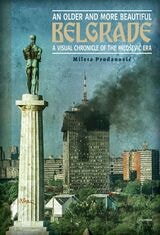
An Older and More Beautiful Belgrade
A Visual Chronicle of the Milo.evic EraMileta Prodanovic
Central European University Press, 2023
This substantial essay depicts urban collapse in an exceptionally difficult period of the Serbian capital. The author has marshalled facts, reflections, photographs and other imagesto demonstrate the transformation of Belgrade during the Milošević years. With the theoretical grounding of cultural anthropology, history studies, culture of memory, history of art, and urbanism, Mileta Prodanović considers changes to the built environment and urban landscape in the city in the 1990s. He covers many visual aspects of life with great ingenuity: shopping centers, unregulated construction and “wild” modifications of buildings, new buildings (broadcasting studios, shops, homes) that do not fit the surroundings, bad taste in home furnishings (camp, kitsch), boondoggles such as the international art center, problematic historical markers like the obelisk of the eternal flame, billboards, store displays, electoral propaganda, graffiti, grave-markers and cemetery memorials, coins and paper money, calendars, beer labels, and even religious icons (and more). All this information is provided with some critique and much implied comparison to past standards.
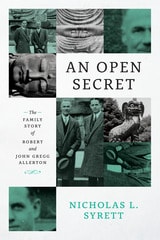
An Open Secret
The Family Story of Robert and John Gregg AllertonNicholas L. Syrett
University of Chicago Press, 2021
An Open Secret tells the striking story of these two iconoclasts, locating them among their queer contemporaries and exploring why becoming father and son made a surprising kind of sense for a twentieth-century couple who had every monetary advantage but one glaring problem: they wanted to be together publicly in a society that did not tolerate their love. Deftly exploring the nature of their design, domestic, and philanthropic projects, Nicholas L. Syrett illuminates how viewing the Allertons as both a same-sex couple and an adopted family is crucial to understanding their relationship’s profound queerness. By digging deep into the lives of two men who operated largely as ciphers in their own time, he opens up provocative new lanes to consider the diversity of kinship ties in modern US history.
An Open Secret
The Family Story of Robert and John Gregg AllertonNicholas L. Syrett
University of Chicago Press, 2021
This is an auto-narrated audiobook edition of this book.
In 1922 Robert Allerton—described by the Chicago Tribune as the “richest bachelor in Chicago”—met a twenty-two-year-old University of Illinois architecture student named John Gregg, who was twenty-six years his junior. Virtually inseparable from then on, they began publicly referring to one another as father and son within a couple years of meeting. In 1960, after nearly four decades together, and with Robert Allerton nearing ninety, they embarked on a daringly nonconformist move: Allerton legally adopted the sixty-year-old Gregg as his son, the first such adoption of an adult in Illinois history.
An Open Secret tells the striking story of these two iconoclasts, locating them among their queer contemporaries and exploring why becoming father and son made a surprising kind of sense for a twentieth-century couple who had every monetary advantage but one glaring problem: they wanted to be together publicly in a society that did not tolerate their love. Deftly exploring the nature of their design, domestic, and philanthropic projects, Nicholas L. Syrett illuminates how viewing the Allertons as both a same-sex couple and an adopted family is crucial to understanding their relationship’s profound queerness. By digging deep into the lives of two men who operated largely as ciphers in their own time, he opens up provocative new lanes to consider the diversity of kinship ties in modern US history.
An Open Secret
The History of Unwanted Pregnancy and Abortion in Modern BoliviaNatalie L. Kimball
Rutgers University Press, 2020
An Ordinary Landscape of Violence
Women Loving Women in GuyanaPreity R. Kumar
Rutgers University Press, 2024