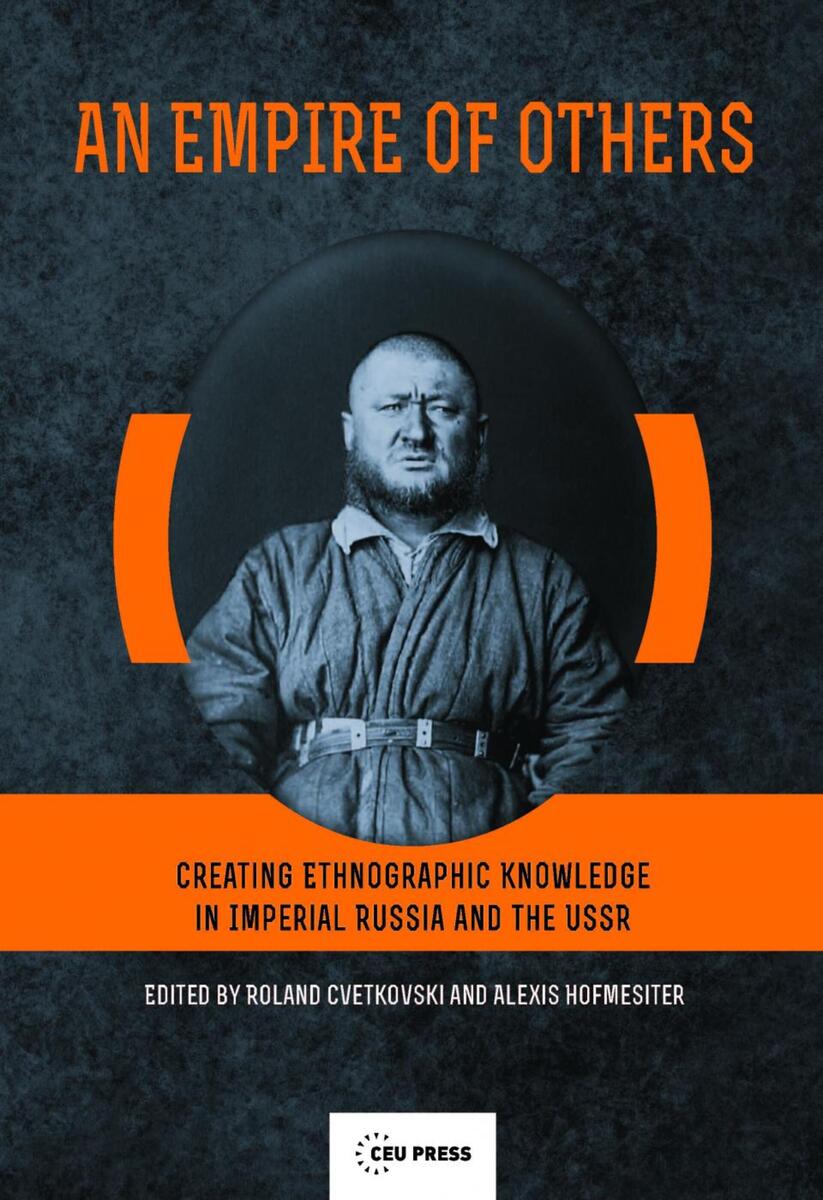
An Empire of Others: Creating Ethnographic Knowledge in Imperial Russia and the USSR
Central European University Press, 2014
Cloth: 978-615-5225-76-5 | eISBN: 978-963-386-242-1 (ePub) | eISBN: 978-615-5225-77-2 (PDF)
Library of Congress Classification GN308.3.R8E47 2013
Dewey Decimal Classification 305.800947
Cloth: 978-615-5225-76-5 | eISBN: 978-963-386-242-1 (ePub) | eISBN: 978-615-5225-77-2 (PDF)
Library of Congress Classification GN308.3.R8E47 2013
Dewey Decimal Classification 305.800947
ABOUT THIS BOOK | AUTHOR BIOGRAPHY | TOC
ABOUT THIS BOOK
Ethnographers helped to perceive, to understand and also to shape imperial as well as Soviet Russia's cultural diversity. This volume focuses on the contexts in which ethnographic knowledge was created. Usually, ethnographic findings were superseded by imperial discourse: Defining regions, connecting them with ethnic origins and conceiving national entities necessarily implied the mapping of political and historical hierarchies. But beyond these spatial conceptualizations the essays particularly address the specific conditions in which ethnographic knowledge appeared and changed. On the one hand, they turn to the several fields into which ethnographic knowledge poured and materialized, i.e., history, historiography, anthropology or ideology. On the other, they equally consider the impact of the specific formats, i.e., pictures, maps, atlases, lectures, songs, museums, and exhibitions, on academic as well as non-academic manifestations.
See other books on: Empire | Ethnology | Imperial Russia | Others | USSR
See other titles from Central European University Press