Results by title
18284 books match the query 'United States' and 1653 start with a
An Appeal to Justice
Litigated Reform of Texas PrisonsBy Ben M. Crouch and James W. Marquart
University of Texas Press, 1989
How does a prison achieve institutional order while safeguarding prisoners' rights? Since the early 1960s, prison reform advocates have aggressively used the courts to extend rights and improve life for inmates, while prison administrators have been slow to alter the status quo. Litigated reform has been the most significant force in obtaining change.
An Appeal to Justice is a critical tudy of how the Texas Department of Corrections was transformed by Ruiz v. Estelle, the most sweeping class-action suit in correctional law history. Orders from federal judge William W. Justice rapidly moved the Texas system from one of the most autonomous, isolated, and paternalistic system to a more constitutional bureaucracy. In many respects the Texas experience is a microcosm of the transformation of American corrections over the second half of the twentieth century.
This is a careful account of TDC's fearful past as a plantation system, its tumultuous litigated reform, and its subsequent efforts to balance prisoner rights and prison order. Of major importance is the detailed examination of the broad stages of the reform process (and its costs and benefits) and an intimate look at prison brutality and humanity. The authors examine the terror tactics of the inmate guards, the development of prisoner gangs and widespread violence during the reforms, and the stability that eventually emerged. They also detail the change of the guard force from a relatively small, cohesive cadre dependent on discretion, personal loyalty, and physical dominance to a larger and more fragmented security staff controlled by formal procedures.
Drawing on years of research in archival sources and on hundreds of interviews with prisoners, administrators, and staff, An Appeal to Justice is a unique basis for assessing the course and consequences of prison litigation and will be valuable reading for legislators, lawyers, judges, prison administrators, and concerned citizens, as well as prison and public policy scholars.
An Appraisal of Tree-Ring Dated Pottery in the Southwest
David A. Breternitz
University of Arizona Press, 1966
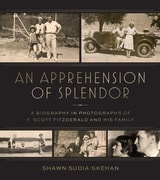
An Apprehension of Splendor
A Biography in Photographs of F. Scott Fitzgerald and His FamilyShawn Sudia-Skehan; Foreword by Jackson R. Bryer; Introduction by Eleanor Lanahan
University of Alabama Press, 2025
A unique collection of Fitzgerald family photographs, many never before published, hand selected by a curator of the Scott and Zelda Fitzgerald Museum.
Enter the Jazz Age glamour of F. Scott and Zelda Fitzgerald and their daughter, Scottie. An Apprehension of Splendor is a rich pictorial biography that illuminates the lives of this brilliant literary family in 344 rare photographs, 180 of which have never been published.
The Fitzgeralds are chiefly known from a small number of iconic, posed images, but the dashing couple and their daughter amassed hundreds of candid snapshots now housed in archives and university library collections throughout North America. These rare photos reveal the full, vivid lives behind the icons—a Buffalo boy cradling a velvety puppy, a jaunty southern gamine in the shade of a loblolly pine laughing at a secret, the stoic gloom of an enlistee in a scratchy woolen uniform, a plot taking shape in the mind of a fledgling writer with bed-tousled hair, an amorous young couple struggling to light a cigarette in the chiaroscuro of a Riviera beach, an unhappy baby tugged through the snow in a laundry basket lashed to a sled, and a myriad of other images that will rekindle fascination with the Fitzgeralds and their time.
With unparalleled access to the family’s personal papers and photographs, Shawn Sudia-Skehan, former director of acquisitions at the Scott and Zelda Fitzgerald Museum, handpicked and annotated this collection of images that brings readers closer to the Fitzgeralds than any other work. Readers of Tender Is the Night, The Beautiful and Damned, and many other works by F. Scott and Zelda will recognize some of the places and experiences that inspired their unforgettable fictions.
A captivating portrait of Jazz Age celebrity, young passion, and artistic ambition, An Apprehension of Splendor returns the perfume to the luminous flower of the Fitzgeralds.
An Archive of Taste
Race and Eating in the Early United StatesLauren F. Klein
University of Minnesota Press, 2020
A groundbreaking synthesis of food studies, archival theory, and early American literature
There is no eating in the archive. This is not only a practical admonition to any would-be researcher but also a methodological challenge, in that there is no eating—or, at least, no food—preserved among the printed records of the early United States. Synthesizing a range of textual artifacts with accounts (both real and imagined) of foods harvested, dishes prepared, and meals consumed, An Archive of Taste reveals how a focus on eating allows us to rethink the nature and significance of aesthetics in early America, as well as of its archive.
Lauren F. Klein considers eating and early American aesthetics together, reframing the philosophical work of food and its meaning for the people who prepare, serve, and consume it. She tells the story of how eating emerged as an aesthetic activity over the course of the eighteenth century and how it subsequently transformed into a means of expressing both allegiance and resistance to the dominant Enlightenment worldview. Klein offers richly layered accounts of the enslaved men and women who cooked the meals of the nation’s founders and, in doing so, directly affected the development of our national culture—from Thomas Jefferson’s emancipation agreement with his enslaved chef to Malinda Russell’s Domestic Cookbook, the first African American–authored culinary text.
The first book to examine the gustatory origins of aesthetic taste in early American literature, An Archive of Taste shows how thinking about eating can help to tell new stories about the range of people who worked to establish a cultural foundation for the United States.
An Arizona Chronology
Statehood, 1913–1936Douglas D. Martin; Edited by Patricia Paylore
University of Arizona Press, 1966
Here were the years in which Arizona’s “bad men” virtually dropped out of sight, and the trigger-blast was displaced by the gavel-thumping sound of law and order as a Territory grew up and became a state. The problem of the Apache was no more, and the problem of water began to loom large. Depression and prohibition were the counter-themes. And Arizona’s three C's—Copper, Cattle, and Cotton—were about to strike for their place in the national limelight.
It was a time of conversion. The vital currents of frontier energy were turned into the channels of modern agriculture, finance, and urban growth. As this volume’s editor, Patricia Paylore, points out, the transformation reaffirms Douglas Martin’s view of Arizona history as the “persistence of the pioneer spirit of the nineteenth century” in terms of “the strength and optimism of a young people determined to take its place in the Union.”
An Arizona Chronology
The Territorial Years, 1846–1912Douglas D. Martin
University of Arizona Press, 1963
Who better to choose news items giving a key to the times than Douglas D. Martin, who first set newspaper type when he was 15, filled news and magazine columns and book pages galore, and today at 75 is still writing for print? He knows newspapers from the composing room to the editor's desk—Detroit Free Press—not excepting reportorial beats, having received the Pulitzer Prize for reporting on his own.
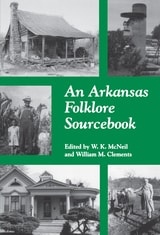
An Arkansas Folklore Sourcebook
W.K. McNeil
University of Arkansas Press, 1992
Arkansas’s rich folk tradition is shown by the variety of its manifestations: a 250-year-old ballad, an archaic method of hewing railroad crossties with a broadax, the use of poultices and toddies to treat the common cold, and swamps of evil repute are all parts of the tradition that constitutes Arkansas folklore. In fact, as the essays selected by W.K. McNeil and William M. Clements show, these few examples only begin to tell the story.
Starting with a working description of folklore as “cultural material that is traditional and unofficial” and characterized by a pattern of oral transmission, variation, formulaic structures, and usually uncertain origin, the authors survey in detail a wide array of folk objects, activities, beliefs, and customs. Among the rich offerings in this sourcebook are a discussion of the history of folklore research in Arkansas, an examination of some of the traditional songs and music still being preformed, a thoughtful exploration of the serious side of “tall tales” and “windies,” an investigation of folk architecture in Arkansas and what it reveals about our cultural origins, a study of many traditional foods and there preparation methods, an analysis of superstitions and beliefs, and a description of festivals and celebrations that are observed to this day.
Complemented by biographies of reference works and audio and video recordings of the state’s folk materials, An Arkansas Folklore Sourcebook is the first complete guide to the study of one state’s “unofficial culture.”
An Arkansas History for Young People
Fourth EditionShay E. Hopper
University of Arkansas Press, 2008
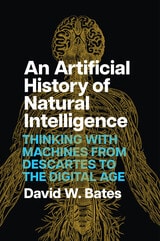
An Artificial History of Natural Intelligence
Thinking with Machines from Descartes to the Digital AgeDavid W. Bates
University of Chicago Press, 2024
We imagine that we are both in control of and controlled by our bodies—autonomous and yet automatic. This entanglement, according to David W. Bates, emerged in the seventeenth century when humans first built and compared themselves with machines. Reading varied thinkers from Descartes to Kant to Turing, Bates reveals how time and time again technological developments offered new ways to imagine how the body’s automaticity worked alongside the mind’s autonomy. Tracing these evolving lines of thought, An Artificial History of Natural Intelligence offers a new theorization of the human as a being that is dependent on technology and produces itself as an artificial automaton without a natural, outside origin.
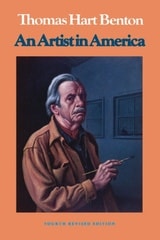
An Artist in America 4th Revised Edition
Thomas Hart Benton
University of Missouri Press, 1983
Controversial, flamboyant, contentious, brilliant--Thomas Hart Benton (1889-1975) was certainly all of those. Few American artists have stirred so much love and hatred as he did in a career that lasted almost seventy years. Although his painting aroused much controversy, perhaps equally as much was created by his words, for his piercing wit, profane sarcasms, and insightful condemnations were fired off without restraint. In this fiery and provocative autobiography, Benton presents an intriguing records of American art and society during his lifetime.
The first installment of this work was published in 1937, but Benton continued his life story in chapters added to editions published in 1951 and 1968. This new edition includes seventy-six drawings that add much to his narrative, plus a foreword discussing Benton's place in American art and an afterword covering his career after 1968, both written by art historian Matthew Baigell.
Although Benton is most famous as a regionalist painter and muralist, his complex and fascinating career brought him into contact with many of the most important artists and thinkers of the century, including Jackson Pollock, Grant Wood, Julian Huxley, Felix Frankfurter, Eugene Debbs, John Reed, and Harry Truman. While living in New York and on Martha's Vineyard in the 1920s and 1930s, Benton often associated with leading intellectuals and radicals. However, when his evolving principles of art led him away from an interest in Marxism, he was bitterly attacked by many of his former friends, and his account of that time reveals strikingly the fierce critical battles he faced in trying to establish his own artistic vision.
Critics on the Left were not his only opponents, however, and equally revealing are his responses to the moral condemnations heaped on his murals done for the states of Indiana and Missouri and on his realistic nudes of the late 1930s.
Throughout his account, from descriptions of his boyhood in southwest Missouri, his travels, and his career to discussions of specific works of art and other artists, Benton portrays people and events as vividly in words as he does in his paintings.
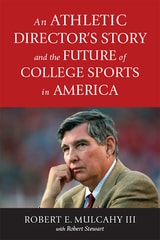
An Athletic Director’s Story and the Future of College Sports in America
Robert E. Mulcahy
Rutgers University Press, 2020
His words and actions were prominent during a nationally-reported incident involving student athletes. When the Rutgers Women’s Basketball team players were slandered by racist remarks from a popular radio talk show host, Mulcahy met it head on. With the coach and players, he set an inspiring example for defending character and values.
Though Mr. Mulcahy left Rutgers in 2009, his memoir reflects continued devotion to intercollegiate athletics and student athletes. His insights for addressing several leading issues confronting Division I sports today offer guidelines for present and future athletic directors to follow.
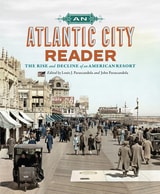
An Atlantic City Reader
The Rise and Decline of an American ResortLouis J. Parascandola
Rutgers University Press, 2026
As Atlantic City grew to become one of the largest tourist destinations on the East Coast, it loomed ever larger in the imaginations of American writers. Generation upon generation of novelists, journalists, musicians, and poets visited Atlantic City and left with vivid impressions of its kaleidoscopic delights and its seedy underbelly.
This new reader collects all of these diverse perspectives on the city in one place, including accounts of Atlantic City by such famous visitors as Walt Whitman, William Carlos Williams, Fanny Hurst, Arthur Conan Doyle, Damon Runyon, Langston Hughes, Elmore Leonard, and Bruce Springsteen. Arranged chronologically, the anthology traces the city’s history from its humble beginnings as a quiet health resort to its rapid ascent to the world’s playground, its gradual decline, and its hopeful if tenuous future. Together, the pieces in this collection take us inside the city’s glitz, glamor, and gambling palaces, but they also don’t shy away from its troubling histories of racial discrimination, political corruption, and urban decay. Compiling fiction, poetry, drama, memoirs, newspaper stories, and magazine reports, The Atlantic City Reader presents an engaging and multifaceted portrait of this iconic resort town.
An Early Woodland Community at the Schultz Site 20SA2 in the Saginaw Valley and the Nature of the Early Woodland Adaptation in the Great Lakes Region
Doreen Ozker
University of Michigan Press, 1982
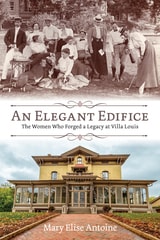
An Elegant Edifice
The Women Who Forged a Legacy at Villa LouisMary Elise Antoine
Wisconsin Historical Society Press, 2026
On the banks of the upper Mississippi River at Prairie du Chien, Wisconsin, stands Villa Louis, the majestic Italianate-style mansion and estate built by the prosperous Dousman family in 1871. An Elegant Edifice tells the stories of the women of the Dousman residence. Jane, who outlived her husband by fourteen years, oversaw the estate and maintained the family’s presence in Prairie du Chien. Jane’s daughter-in-law, Nina, managed the property and assumed the role of head of the family following her husband’s death, ensuring stability for her children during times of tragedy. Finally, Nina’s daughters Violet and Virginia helped to restore the family home in the 1930s, secure its future as a historic site, and record the Dousmans’ history for posterity.
An Elegant Edifice illustrates the broad strokes of American expansionism through the backgrounds and activities of these influential women, complete with marriages and separations, births and deaths, business disputes, lawsuits, and reconciliations. With stories of St. Louis and St. Paul society, the stylish shops of New York City, and the prominence of Prairie du Chien in the nineteenth century, this book reveals the leisure activities and extravagant lifestyle afforded to the family by their wealth—Tiffany jewelry and housewares, William Morris wallpaper and fabrics, Jaccard silver, and a fine art collection to rival the public museums of the era.
Thanks to the women’s fortitude and shared conviction in the importance of family, Villa Louis has been preserved and restored to its 1890s splendor and is today considered one of the most authentically restored Italianate villas in the United States. While previous histories have focused on the Dousman patriarchs, public historian Mary Elise Antoine offers a new perspective on the Dousman family history by bringing into focus Jane, Nina, Violet, and Virginia. These women’s lives—historically less well-documented than the lives of their husbands, fathers, and sons—contributed greatly to the preservation of Villa Louis and to our understanding of an important chapter in American history.
An Elusive Science
The Troubling History of Education ResearchEllen Condliffe Lagemann
University of Chicago Press, 2000
"[C]andid and incisive. . . . A stark yet enlightening look at American education."—Library Journal
"[A]n account of the search, over the past hundred or so years, to try and discover how educational research might provide reliable prescriptions for the improvement of education. Through extensive use of contemporary reference material, [Lagemann] shows that the search for ways of producing high-quality research has been, in effect, a search for secure disciplinary foundations."—Dylan William, Times Higher Education Supplement
An Emotional Gauntlet
From Life in Peacetime America to the War in European SkiesStuart J. Wright
University of Wisconsin Press, 2008
In recounting the harrowing conditions and horrors of bombing missions over Europe, An Emotional Gauntlet emphasizes the interpersonal relationships within the crew and the spirit these men shared. Corky's crew served under Operations Officer Major James Stewart (the Hollywood movie star.) They often returned from arduous bombing missions to sleep in half-empty huts—their friends in other planes had not been so lucky. Pilot Jack Nortridge regularly assured his crew, "If you fly with me, I'm going to bring you home." This book is a testament to their strength and determination.
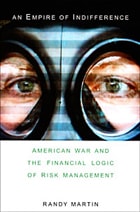
An Empire of Indifference
American War and the Financial Logic of Risk ManagementRandy Martin
Duke University Press, 2007
Drawing on theorists including Michel Foucault, Giorgio Agamben, Michael Hardt, Antonio Negri, and Achille Mbembe, Martin illuminates a frightening financial logic that must be understood in order to be countered. Martin maintains that finance divides the world between those able to avail themselves of wealth opportunities through risk taking (investors) and those who cannot do so, who are considered “at risk.” He contends that modern-day American imperialism differs from previous models of imperialism, in which the occupiers engaged with the occupied to “civilize” them, siphon off wealth, or both. American imperialism, by contrast, is an empire of indifference: a massive flight from engagement. The United States urges an embrace of risk and self-management on the occupied and then ignores or dispossesses those who cannot make the grade.
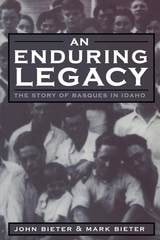
An Enduring Legacy
The Story Of Basques In IdahoMark Bieter
University of Nevada Press, 2003
In this volume, brothers Mark and John Bieter chronicle three generations of Basque presence in Idaho from 1890 to the present, resulting in an engaging story that begins with a few solitary sheepherders and follows their evolution into the prominent ethnic community of today.
An Entangled Bank
The Origins of Ecosystem EcologyJoel B. Hagen
Rutgers University Press, 1992
His breadth of knowledge, his discerning inclusiveness, his clarity of thought, all make _An Entangled Bank_ a stimulating read. Very often in science courses we are presented only with the canonical "state of the science," having to swallow its agglomerated whole free of context. Hagen reveals the wisdom of understanding intellectual foundations. Through study of the origins and development of a science, we may better grasp the received tenets of current scientific understanding. As a young science, ecosystem ecology has a historical context that is relatively accessible to us, if less romantic than a tale of the origins of astronomy might be.
A peek into the labs and offices of botanists, limnologists, and biogeochemists might not seem like the acme of excitement. Hagen inspires us with his insights. He makes his subject meaningful to us. Though it is not pleasure reading by any stretch, its clear-sighted intellectual vigor makes _An Entangled Bank_ pure enjoyment.

An Epidemic among My People
Religion, Politics, and COVID-19 in the United StatesEdited by Paul A. Djupe and Amanda Friesen
Temple University Press, 2023
The pandemic presented religion as a paradox: faith is often crucial for helping people weather life’s troubles and make difficult decisions, but how can religion continue to deliver these benefits and provide societal structure without social contact? The topical volume, An Epidemic among My People explains how the COVID-19 pandemic stress tested American religious communities and created a new politics of religion centered on public health.
The editors and contributorsconsider how the virus and government policy affected religion in America. Chapters examine the link between the prosperity gospel and conspiracy theories, the increased purchase of firearms by evangelicals, the politics of challenging public health orders as religious freedom claims, and the reactions of Christian nationalists, racial groups, and female clergy to the pandemic (and pandemic politics). As sharp lines were drawn between people and their governments during this uncertain time, An Epidemic among My People provides a comprehensive portrait of religion in American public life.
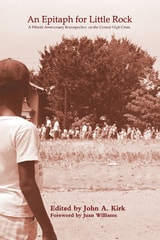
An Epitaph for Little Rock
A Fiftieth Anniversary Retrospective on the Central High CrisisJohn A. Kirk
University of Arkansas Press, 2008
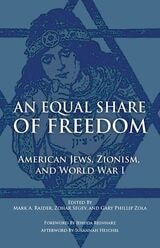
An Equal Share of Freedom
American Jews, Zionism, and World War IEdited by Mark Raider, Zohar Segev, and Gary Phillip Zola
University of Minnesota Press, 2024
An Equal Share of Freedom sheds new light on several important and interrelated dimensions of American, Jewish, and world history in the World War I era. Paying close attention to the Balfour Declaration as a hub around which to explore the period’s unfolding and turbulent social, cultural, and political developments, this collection of essays covers a diverse range of topics including Jewish doughboys, Zionist women authors, and political elites such as Golda Meir and Woodrow Wilson. The volume demonstrates the complex nature of Jewish ethnonational consciousness in the American setting and the impact of Zionism on US wartime and postwar activity.
The essays in this volume overturn timeworn assumptions that have long shaped the fields of American history and modern Jewish history. Taken as a whole, they demonstrate the war’s profound impact on American Jewish life and the transformation of American Jewry’s relationship with wider American society. These essays also illustrate the centrality of Zionism to the American Jewish experience and the extent to which American Jewry’s national consciousness and the future direction of the Zionist project were forged in the crucible of the Great War. An Equal Share of Freedom is the first volume in the Jacob Rader Marcus Series on the American Jewish Experience. In this series, Raider, Segev, and Zola highlight the myriad possibilities for expanding and deepening scholarly understanding of American Jews and the shared history of American society and the Jewish people in the twentieth century, starting with a look at World War I.

An Era of Disruption and Violence
The FBI and the Shattering of the Sixties New LeftAaron J. Leonard
Rutgers University Press, 2027
Throughout the decade of the sixties, the FBI and other elements of the government undertook a massive effort to contain the movement against the American apartheid system and the war in Vietnam. The prime focus of these increasingly repressive efforts was the young radicals of the New Left, residing in the Students for a Democratic Society. Utilizing thousands of pages of unexamined FBI files, voluminous reports from Congress, and the author’s files obtained through Freedom of Information filings, this book will tell the story of the massive repression set loose against SDS, the group’s breakup due to internecine factionalism, and how this was encouraged and amplified at every turn by secret measures deployed by the FBI.

An Essay for Ezra
Racial Terror in AmericaGrant Farred
University of Minnesota Press, 2021
An intensely personal, and philosophical, account of why white America’s racial unconscious is not so unconscious
An Essay for Ezra is a critique of terror that begins but by no means ends with the presidency of Donald J. Trump. A father addresses his son and a boy shares his observations in a dynamic dialogistic exchange that is a commentary of and for its time, taking the measure of racial terror and of white supremacy both in our moment and as a historical phenomenon.
Framed through the experiences of the author’s biracial son, An Essay for Ezra is intensely personal while also powerfully universal. Drawing on the social and political thought of James Baldwin and Martin Luther King, Grant Farred examines the temptation and the perils of essentialism and the need to discriminate—to engage the black mind as much as the black body. With that dialectic as his starting point, Farred engages the ideas of Jameson, Barthes, Derrida, Adorno, Kant, and other thinkers to derive an ethics of being in our time of social peril. His antiessentialist racial analysis is salient, especially when he deploys Dave Chappelle as a counterpoint to Baldwin—and Chappelle’s brilliant comic philosophic voice jabs at both racial and gender identity.
Standing apart for its willingness to explore terror in all its ambivalence, this theoretical reflection on racism, knowledge, ethics, and being in our neofascist present brings to bear the full weight of philosophical inquiry and popular cultural critique on black life in the United States.
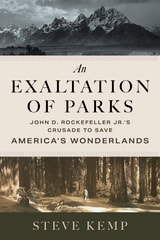
An Exaltation of Parks
John D. Rockefeller Jr.'s Crusade to Save America's WonderlandsSteve Kemp
University of Utah Press, 2025
America’s national parks are facing unprecedented challenges. With visitation pressures mounting and the National Park Service struggling to keep up, author and former park ranger Steve Kemp looks toward one exceptionally effective historical example of conservation philanthropy and park building—the collaboration between John D. Rockefeller Jr. and NPS legends Stephen Mather, Horace Albright, and Arno Cammerer.
An Exaltation of Parks reveals the inspiring story of this collaboration, showing how the partnership transformed some of America's most cherished national parks, including Acadia, Grand Teton, Great Smoky Mountains, Yellowstone, and Yosemite. It recounts Rockefeller’s lifelong dedication to conservation, digging into his own pockets and toiling as a volunteer to achieve his goals for converting private land into public use. Bringing to life the history and significance of America’s most magnificent landscapes, this volume is both a tribute to past conservation victories and a call to action for the future, emphasizing the need for continued vigilance to preserve these national treasures for generations to come.
An Extraordinary Year of Ordinary Days
By Susan Wittig Albert
University of Texas Press, 2010
From Eudora Welty's memoir of childhood to May Sarton's reflections on her seventieth year, writers' journals offer an irresistible opportunity to join a creative thinker in musing on the events—whether in daily life or on a global scale—that shape our lives. In An Extraordinary Year of Ordinary Days, best-selling mystery novelist Susan Wittig Albert invites us to revisit one of the most tumultuous years in recent memory, 2008, through the lens of 365 ordinary days in which her reading, writing, and thinking about issues in the wider world—from wars and economic recession to climate change—caused her to reconsider and reshape daily practices in her personal life.
Albert's journal provides an engaging account of how the business of being a successful working writer blends with her rural life in the Texas Hill Country and the Sangre de Cristo Mountains of New Mexico. As her eclectic daily reading ranges across topics from economics, food production, and oil and energy policy to poetry, place, and the writing life, Albert becomes increasingly concerned about the natural world and the threats facing it, especially climate change and resource depletion. Asking herself, "What does it mean? And what ought I do about it?", she determines practical steps to take, such as growing more food in her garden, and also helps us as readers make sense of these issues and consider what our own responses might be.
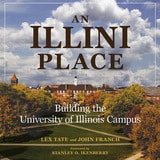
An Illini Place
Building the University of Illinois CampusIncoronata Inserra
University of Illinois Press, 2017
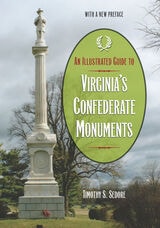
An Illustrated Guide to Virginia's Confederate Monuments
Timothy S. Sedore
Southern Illinois University Press, 2011
From well-known battlefields, such as Manassas, Fredericksburg, and Appomattox, to lesser-known sites, such as Sinking Spring Cemetery and Rude’s Hill, Sedore leads readers on a vivid journey through Virginia’s Confederate history. Tablets, monoliths, courthouses, cemeteries, town squares, battlefields, and more are cataloged in detail and accompanied by photographs and meticulous commentary. Each entry contains descriptions, fascinating historical information, and location, providing a complete portrait of each site.
Much more than a visual tapestry or a tourist’s handbook, An Illustrated Guide to Virginia’s Confederate Monuments draws on scholarly and field research to reveal these sites as public efforts to reconcile mourning with Southern postwar ideologies. Sedore analyzes in depth the nature of these attempts to publicly explain Virginia’s sense of grief after the war, delving deep into the psychology of a traumatized area. From commemorations of famous generals to memories of unknown soldiers, the dead speak from the pages of this sweeping companion to history.
An Image of God
The Catholic Struggle with EugenicsSharon M. Leon
University of Chicago Press, 2013
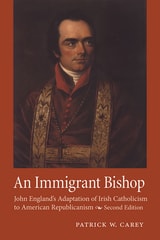
An Immigrant Bishop
John England's Adaptation of Irish Catholicism to American Republicanism, Second EditionPatrick W. Carey
Catholic University of America Press, 2022
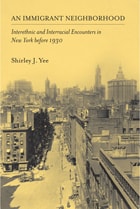
An Immigrant Neighborhood
Interethnic and Interracial Encounters in New York before 1930Shirley Yee
Temple University Press, 2011
Examining race and ethnic relations through an intersectional lens, Shirley Yee's An Immigrant Neighborhoodinvestigates the ways that race, class, and gender together shaped concepts of integration and assimilation as well as whiteness and citizenship in lower Manhattan during the late nineteenth and early twentieth-centuries.
In contrast to accounts of insulated neighborhoods and ethnic enclaves, Yee unearths the story of working class urban dwellers of various ethnic groups—Chinese, Jews, Italians, and Irish—routinely interacting in social and economic settings.
Yee's numerous, fascinating anecdotes—such as one about an Irishman who served as the only funeral director for Chinese for many years—recount the lived experiences of these neighborhoods, detailing friendships, business relationships, and sexual relationships that vividly counter the prevailing idea that different ethnic groups did not mix except in ways marked by violence and hostility.
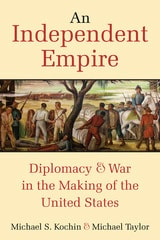
An Independent Empire
Diplomacy & War in the Making of the United StatesMichael S. Kochin and Michael Taylor
University of Michigan Press, 2020
Foreign policies and diplomatic missions, combined with military action, were the driving forces behind the growth of the early United States. In an era when the Old and New Worlds were subject to British, French, and Spanish imperial ambitions, the new republic had limited diplomatic presence and minimal public credit. It was vulnerable to hostile forces in every direction. The United States could not have survived, grown, or flourished without the adoption of prescient foreign policies, or without skillful diplomatic operations.
An Independent Empire shows how foreign policy and diplomacy constitute a truly national story, necessary for understanding the history of the United States. In this lively and well-written book, episodes in American history—such as the writing and ratification of the Constitution, Henry Clay’s advocacy of an American System, Pinckney’s Treaty with Spain, and the visionary but absurd Congress of Panama—are recast as elemental aspects of United States foreign and security policy.
An Independent Empire tells the stories of the people who defined the early history of America’s international relationships. Throughout the book are brief, entertaining vignettes of often-overlooked intellectuals, spies, diplomats, and statesmen whose actions and decisions shaped the first fifty years of the United States. More than a dozen bespoke maps illustrate that the growth of the early United States was as much a geographical as a political or military phenomenon.
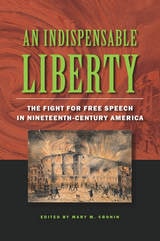
An Indispensable Liberty
The Fight for Free Speech in Nineteenth-Century AmericaEdited by Mary M. Cronin
Southern Illinois University Press, 2016
The eleven essays that make up this collection show how, despite judicial, political, and public proclamations of support for freedom of expression, factors like tradition, gender stereotypes, religion, and fear of social unrest often led to narrow judicial and political protection for freedom of expression by people whose views upset the status quo. These views, expressed by abolitionists, suffragists, and labor leaders, challenged rigid cultural mores of the day, and many political and cultural leaders feared that extending freedom of expression to agitators would undermine society. The Civil War intensified questions about the duties and privileges of citizenship. After the war, key conflicts over freedom of expression were triggered by Reconstruction, suffrage, the Comstock Act, and questions about libel.
The volume’s contributors blend social, cultural, and intellectual history to untangle the complicated strands of nineteenth-century legal thought. By chronicling the development of modern-day notions of free speech, this timely collection offers both a valuable exploration of the First Amendment in nineteenth-century America and a useful perspective on the challenges we face today.
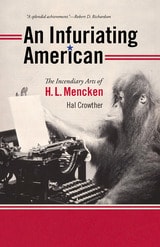
An Infuriating American
The Incendiary Arts of H. L. MenckenHal Crowther
University of Iowa Press, 2014
Nearly 60 years after his death, Mencken’s memory and monumental verbal legacy rest largely in the hands of literary scholars and historians, to whom he will always be a curious figure, unchecked and alien and not a little distasteful. No faculty would have voted him tenure. Hal Crowther, who followed in many of Mencken’s footsteps as a reporter, magazine editor, literary critic, and political columnist, focuses on Mencken the creator, the observer who turned his impressions and prejudices into an inimitable group portrait of America, painted in prose that charms and glowers and endures. Crowther, himself a working polemicist who was awarded the Baltimore Sun’s Mencken prize for truculent commentary, examines the origin of Mencken’s thunderbolts—where and how they were manufactured, rather than where and on whom they landed.
Mencken was such an outrageous original that contemporary writers have made him a political shuttlecock, defaming or defending him according to modern conventions he never encountered. Crowther argues that loving or hating him, admiring or despising him are scarcely relevant. Mencken can inspire and he can appall. The point is that he mattered, at one time enormously, and had a lasting effect on the national conversation. No writer can afford to ignore his craftsmanship or success, or fail to be fascinated by his strange mind and the world that produced it. This book is a tribute—though by no means a loving one—to a giant from one of his bastard sons.
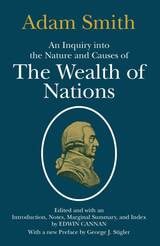
An Inquiry into the Nature and Causes of the Wealth of Nations
Adam Smith
University of Chicago Press, 1977
Adam Smith's The Wealth of Nations was recognized as a landmark of immediately upon publication in 1776. As the first serious, data-driven argument for the principles of political economy, it is the point of departure for all subsequent economic thought. Smith's argument that human self-interest is the primary driver of economic activity, and that in aggregate that self-interest--acting through a market freed from government intervention-guides markets and economies toward the best outcomes for business and society, remains foundational for contemporary free-market economics.
This edition presents the definitive 1904 version of The Wealth of Nations, painstakingly edited by Edwin Cannan and featuring Cannan's illuminating introduction, and notes, as well as a a full index. An additional preface by distinguished economist George J. Stigler places Smith's book and thought in a contemporary context. The result is the best edition of this classic for students and general readers alike.

An Inquiry into the Nature and Causes of the Wealth of Nations
The Definitive EditionAdam Smith
University of Chicago Press, 0
The book that made the modern world, reissued in its definitive scholarly form and featuring a new foreword from Nobel Prize winner Amartya Sen.
First published in 1776, Adam Smith’s masterwork The Wealth of Nations formalized the first unified theory of modern economies—how human nature, public institutions, and private interests can coalesce in a society greater than the sum of its parts. More than 250 years later, it remains one of humanity’s most defining and lasting literary works.
This definitive edition includes Edwin Cannan’s famous annotations of the original text, accounting for both Smith’s early drafts and his lectures at the University of Glasgow, where he originated the book’s concepts. The result is the most complete edition of the work to date, maintaining unprecedented fidelity to Smith’s ideas and packaging them in fluent and elevating terms.
In a new foreword, Nobel laureate Amartya Sen offers context and contemporary incision for twenty-first-century readers, discussing the uses—and occasional misuses—of Smith’s ideas for the advancement of political agendas. The Wealth of Nations, Sen makes clear, is a book about societies, not just economies. “Smith’s economics accommodated his values,” he writes. As readers of The Wealth of Nations will discover and rediscover, those values prioritized the lives of everyday working people above all else.
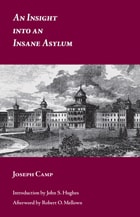
An Insight into an Insane Asylum
Joseph Camp
University of Alabama Press, 2011
A rare 19th‑century voice revealing what asylum life felt like from the inside.
In 1881, Joseph Camp, an elderly and self-trained Methodist minister from Talladega County in eastern Alabama, was brought by his family to Bryce Hospital, an insane asylum in Tuscaloosa, where he remained for over five months. Camp, misled by relatives concerning the purpose of the trip, was shocked and angered at his loss of freedom and his treatment in the hospital. After his release, he composed an account of his stay and published it at his own expense, providing a rare glimpse of 19th century mental health care from a patient’s viewpoint. Camp’s account reveals his naive trust in others, but also a sharp and retentive memory. Camp is remarkably accurate in his account of the details of his treatment and the operation and staff of the hospital, although his emotional assessments reflect his unhappiness with his situation. Adding to the importance of Camp’s account is the fact that in the 19th century Bryce was considered a remarkably humane institution focused on recovery. Camp provides a glimpse into how treatment for the insane felt to the recipient.
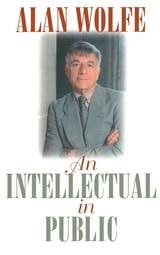
An Intellectual in Public
Alan Wolfe
University of Michigan Press, 2004
". . . proof that the spirit of the free-ranging public intellectual is still very much alive."
-Newsday
"Alan Wolfe is one of liberalism's last and most loyal sons. His mind is naturally decent and diversified; large enough and fair enough to contain both conviction and doubt. His profound respect for real people does not interfere with his profound respect for real thought. The criticism that he practices is, I fear, a dying art, but it is also one of the glories of American democracy."
-Leon Wieseltier, New Republic
"Alan Wolfe is one of America's indispensable essayists. On a broad range of topics-race, religion, politics, the marketplace, the university, and more-he combines a scholar's erudition with a historian's feel for the past and a journalist's keen attunement to the shifting patterns of the current scene. Above all he is a true writer, graceful but fearless, who ponders the deep questions so often ignored in the clamor of our ongoing civic conversation. Anyone who wonders what the term 'public intellectual' really means will find the answer-in fact many answers-in this scintillating collection."
-Sam Tanenhaus, Vanity Fair

An Introduction to Collection Development for School Librarians
Mona Kerby
American Library Association, 2019
An Introduction to Legal Reasoning
Edward H. Levi
University of Chicago Press, 1962
An Introduction to Legal Reasoning
Edward H. Levi
University of Chicago Press, 2013
For this edition, the book includes a substantial new foreword by leading contemporary legal scholar Frederick Schauer that helpfully places this foundational book into its historical and legal contexts, explaining its continuing value and relevance to understanding the role of analogical reasoning in the law. This volume will continue to be of great value to students of logic, ethics, and political philosophy, as well as to members of the legal profession and everyone concerned with problems of government and jurisprudence.
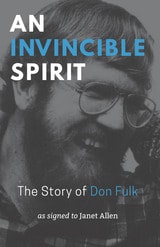
An Invincible Spirit
The Story of Don FulkDon Fulk, as signed to Janet Allen
Gallaudet University Press, 2019
—Kathleen Kleinman, Executive Director, TRPIL (Transitional Paths to Independent Living)
Profoundly deafened as an infant, Don Fulk didn’t learn his name or go to school until the age of ten. When he was eighteen years old and a budding superstar on his football and basketball teams, he broke his neck in a swimming accident, and became paralyzed. After his injury, he was confined to a bed in his parents’ home for eight years, unable to move and barely able to communicate. After his family could no longer care for him, he spent nine years in a nursing home where he suffered from abuse and neglect.
Yet through a life marred by isolation and frustration, Fulk endured with strength, humor, and grace. He never gave up pursuing his dreams for independence and self-worth, and improving the lives of others. He fought a system that was unfair and discriminatory, and helped pave the way for people with disabilities to live independently. Don Fulk signed his story to author Janet Allen, describing his difficult home life, the incredible friends who changed his life, and his dramatic escape from an abusive nursing home. An Invincible Spirit is a story of hope, empowerment, and the battles people with disabilities have fought—and continue to fight—to improve the quality of their lives.
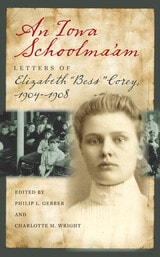
An Iowa Schoolma’am
Letters of Elizabeth “Bess” Corey, 1904–1908Philip L. Gerber
University of Iowa Press, 2011
An Irish-American Odyssey
The Remarkable Rise of the O'Shaughnessy BrothersColum Kenny
University of Missouri Press, 2014
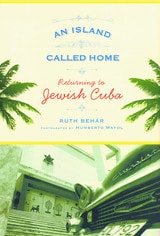
An Island Called Home
Returning to Jewish CubaRuth Behar, Photographs by Humberto Mayol
Rutgers University Press, 2007
Yiddish-speaking Jews thought Cuba was supposed to be a mere layover on the journey to the United States when they arrived in the island country in the 1920s. They even called it “Hotel Cuba.” But then the years passed, and the many Jews who came there from Turkey, Poland, and war-torn Europe stayed in Cuba. The beloved island ceased to be a hotel, and Cuba eventually became “home.” But after Fidel Castro came to power in 1959, the majority of the Jews opposed his communist regime and left in a mass exodus. Though they remade their lives in the United States, they mourned the loss of the Jewish community they had built on the island.
As a child of five, Ruth Behar was caught up in the Jewish exodus from Cuba. Growing up in the United States, she wondered about the Jews who stayed behind. Who were they and why had they stayed? What traces were left of the Jewish presence, of the cemeteries, synagogues, and Torahs? Who was taking care of this legacy? What Jewish memories had managed to survive the years of revolutionary atheism?
An Island Called Home is the story of Behar’s journey back to the island to find answers to these questions. Unlike the exotic image projected by the American media, Behar uncovers a side of Cuban Jews that is poignant and personal. Her moving vignettes of the individuals she meets are coupled with the sensitive photographs of Havana-based photographer Humberto Mayol, who traveled with her.
Together, Behar’s poetic and compassionate prose and Mayol’s shadowy and riveting photographs create an unforgettable portrait of a community that many have seen though few have understood. This book is the first to show both the vitality and the heartbreak that lie behind the project of keeping alive the flame of Jewish memory in Cuba.
Reader Guide (http://rutgerspress.rutgers.
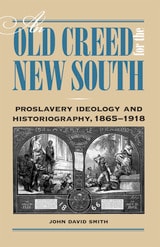
An Old Creed for the New South
Proslavery Ideology and Historiography, 1865-1918John David Smith, With a New Preface by the Author
Southern Illinois University Press, 1985
An Old Creed for the New South:Proslavery Ideology and Historiography, 1865–1918 details the slavery debate from the Civil War through World War I. Award-winning historian John David Smith argues that African American slavery remained a salient metaphor for how Americans interpreted contemporary race relations decades after the Civil War.
Smith draws extensively on postwar articles, books, diaries, manuscripts, newspapers, and speeches to counter the belief that debates over slavery ended with emancipation. After the Civil War, Americans in both the North and the South continued to debate slavery’s merits as a labor, legal, and educational system and as a mode of racial control. The study details how white Southerners continued to tout slavery as beneficial for both races long after Confederate defeat. During Reconstruction and after Redemption, Southerners continued to refine proslavery ideas while subjecting blacks to new legal, extralegal, and social controls.
An Old Creed for the New South links pre– and post–Civil War racial thought, showing historical continuity, and treats the Black Codes and the Jim Crow laws in new ways, connecting these important racial and legal themes to intellectual and social history. Although many blacks and some whites denounced slavery as the source of the contemporary “Negro problem,” most whites, including late nineteenth-century historians, championed a “new” proslavery argument. The study also traces how historian Ulrich B. Phillips and Progressive Era scholars looked at slavery as a golden age of American race relations and shows how a broad range of African Americans, including Booker T. Washington and W. E. B. Du Bois, responded to the proslavery argument. Such ideas, Smith posits, provided a powerful racial creed for the New South.
This examination of black slavery in the American public mind—which includes the arguments of former slaves, slaveholders, Freedmen's Bureau agents, novelists, and essayists—demonstrates that proslavery ideology dominated racial thought among white southerners, and most white northerners, in the five decades following the Civil War.
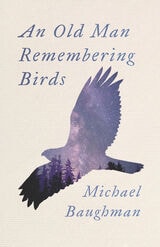
An Old Man Remembering Birds
Michael Baughman
Oregon State University Press, 2021
Birders are dedicated and passionate, and, like anglers, they all have their stories. But Baughman tells more than simple accounts of birds spotted in the field. He reflects on human-animal relations, why humans seek closeness with nature, how a dedicated birder can also be a dedicated hunter. He explores how environmental change has altered the rhythms of bird life: the ospreys that resurged after DDT was banned, the waxwings and juncos that appear rarely now as climate change takes a toll on bird populations. Baughman also describes encounters with wildfires and smoke and discusses how they shape the landscape and wildlife of contemporary Oregon.
In his eighty-plus years around birds, Michael Baughman has learned one immutable lesson: as long as you remain alive and human, the closer you get to birds, and the more time you spend among them, the more you love them.
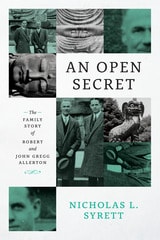
An Open Secret
The Family Story of Robert and John Gregg AllertonNicholas L. Syrett
University of Chicago Press, 2021
An Open Secret tells the striking story of these two iconoclasts, locating them among their queer contemporaries and exploring why becoming father and son made a surprising kind of sense for a twentieth-century couple who had every monetary advantage but one glaring problem: they wanted to be together publicly in a society that did not tolerate their love. Deftly exploring the nature of their design, domestic, and philanthropic projects, Nicholas L. Syrett illuminates how viewing the Allertons as both a same-sex couple and an adopted family is crucial to understanding their relationship’s profound queerness. By digging deep into the lives of two men who operated largely as ciphers in their own time, he opens up provocative new lanes to consider the diversity of kinship ties in modern US history.
An Open Secret
The Family Story of Robert and John Gregg AllertonNicholas L. Syrett
University of Chicago Press, 2021
This is an auto-narrated audiobook edition of this book.
In 1922 Robert Allerton—described by the Chicago Tribune as the “richest bachelor in Chicago”—met a twenty-two-year-old University of Illinois architecture student named John Gregg, who was twenty-six years his junior. Virtually inseparable from then on, they began publicly referring to one another as father and son within a couple years of meeting. In 1960, after nearly four decades together, and with Robert Allerton nearing ninety, they embarked on a daringly nonconformist move: Allerton legally adopted the sixty-year-old Gregg as his son, the first such adoption of an adult in Illinois history.
An Open Secret tells the striking story of these two iconoclasts, locating them among their queer contemporaries and exploring why becoming father and son made a surprising kind of sense for a twentieth-century couple who had every monetary advantage but one glaring problem: they wanted to be together publicly in a society that did not tolerate their love. Deftly exploring the nature of their design, domestic, and philanthropic projects, Nicholas L. Syrett illuminates how viewing the Allertons as both a same-sex couple and an adopted family is crucial to understanding their relationship’s profound queerness. By digging deep into the lives of two men who operated largely as ciphers in their own time, he opens up provocative new lanes to consider the diversity of kinship ties in modern US history.
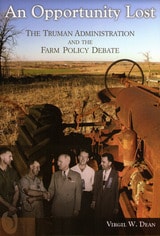
An Opportunity Lost
The Truman Administration and the Farm Policy DebateVirgil W. Dean
University of Missouri Press, 2006