Results by title
1218 books match the query 'African Americans' and 119 start with a
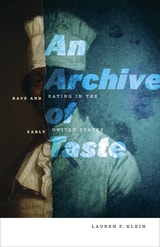
An Archive of Taste
Race and Eating in the Early United StatesLauren F. Klein
University of Minnesota Press, 2020
A groundbreaking synthesis of food studies, archival theory, and early American literature
There is no eating in the archive. This is not only a practical admonition to any would-be researcher but also a methodological challenge, in that there is no eating—or, at least, no food—preserved among the printed records of the early United States. Synthesizing a range of textual artifacts with accounts (both real and imagined) of foods harvested, dishes prepared, and meals consumed, An Archive of Taste reveals how a focus on eating allows us to rethink the nature and significance of aesthetics in early America, as well as of its archive.
Lauren F. Klein considers eating and early American aesthetics together, reframing the philosophical work of food and its meaning for the people who prepare, serve, and consume it. She tells the story of how eating emerged as an aesthetic activity over the course of the eighteenth century and how it subsequently transformed into a means of expressing both allegiance and resistance to the dominant Enlightenment worldview. Klein offers richly layered accounts of the enslaved men and women who cooked the meals of the nation’s founders and, in doing so, directly affected the development of our national culture—from Thomas Jefferson’s emancipation agreement with his enslaved chef to Malinda Russell’s Domestic Cookbook, the first African American–authored culinary text.
The first book to examine the gustatory origins of aesthetic taste in early American literature, An Archive of Taste shows how thinking about eating can help to tell new stories about the range of people who worked to establish a cultural foundation for the United States.
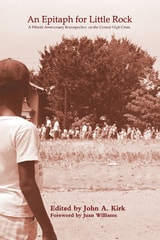
An Epitaph for Little Rock
A Fiftieth Anniversary Retrospective on the Central High CrisisJohn A. Kirk
University of Arkansas Press, 2008

Anagnorisis
PoemsKyle Dargan
Northwestern University Press, 2018
Winner of the 2019 Academy of American Poets Lenore Marshall Poetry Prize
In Anagnorisis, award-winning poet Kyle Dargan ignites a reckoning. From the depths of his rapidly changing home of Washington, D.C., the poet is both enthralled and provoked, having witnessed-on a digital loop running in the background of Barack Obama's unlikely presidency—the rampant state-sanctioned murder of fellow African Americans. He is pushed toward the same recognition articulated by James Baldwin decades earlier: that an African American may never be considered an equal in citizenship or humanity.
This recognition—the moment at which a tragic hero realizes the true nature of his own character, condition, or relationship with an antagonistic entity—is what Aristotle called anagnorisis. Not concerned with placatory gratitude nor with coddling the sensibilities of the country's racial majority, Dargan challenges America: "You, friends- / you peckish for a peek / at my cloistered, incandescent / revelry-were you as earnest / about my frostbite, my burns, / I would have opened / these hands, sated you all."
At a time when U.S. politics are heavily invested in the purported vulnerability of working-class and rural white Americans, these poems allow readers to examine themselves and the nation through the eyes of those who have been burned for centuries.
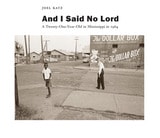
And I Said No Lord
A Twenty-One-Year-Old in Mississippi in 1964Joel Katz
University of Alabama Press, 2014
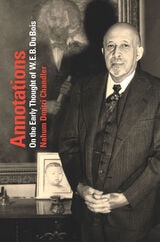
Annotations
On the Early Thought of W. E. B. Du BoisNahum Dimitri Chandler
Duke University Press, 2022

Anyplace But Here
Arna Bontemps & Jack Conroy
University of Missouri Press, 1997
Originally published in 1945 as They Seek a City, this classic was revised and expanded in 1966 to include chapters on Marcus Garvey, the Black Muslims, Malcolm X, and the racial disturbances in Detroit, Chicago, and Watts. Filled with stories about real men and women who sought a new life in the North, Anyplace But Here depicts the theme of hope, undercut by disappointment, and hope renewed as it details the African American's search for a home.
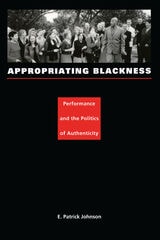
Appropriating Blackness
Performance and the Politics of AuthenticityE. Patrick Johnson
Duke University Press, 2003
Johnson looks at various sites of performed blackness, including Marlon Riggs’s influential documentary Black Is . . . Black Ain’t and comedic routines by Eddie Murphy, David Alan Grier, and Damon Wayans. He analyzes nationalist writings by Amiri Baraka and Eldridge Cleaver, the vernacular of black gay culture, an oral history of his grandmother’s experience as a domestic worker in the South, gospel music as performed by a white Australian choir, and pedagogy in a performance studies classroom. By exploring the divergent aims and effects of these performances—ranging from resisting racism, sexism, and homophobia to excluding sexual dissidents from the black community—Johnson deftly analyzes the multiple significations of blackness and their myriad political implications. His reflexive account considers his own complicity, as ethnographer and teacher, in authenticating narratives of blackness.
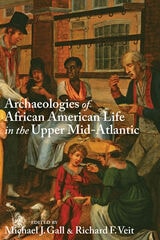
Archaeologies of African American Life in the Upper Mid-Atlantic
Edited by Michael J. Gall and Richard F. Veit
University of Alabama Press, 2017
A 2018 CHOICE OUTSTANDING ACADEMIC TITLE
New scholarship provides insights into the archaeology and cultural history of African American life from a collection of sites in the Mid-Atlantic
This groundbreaking volume explores the archaeology of African American life and cultures in the Upper Mid-Atlantic region, using sites dating from the eighteenth through the twentieth centuries. Sites in Delaware, Pennsylvania, New Jersey, and New York are all examined, highlighting the potential for historical archaeology to illuminate the often overlooked contributions and experiences of the region’s free and enslaved African American settlers.
Archaeologies of African American Life in the Upper Mid-Atlantic brings together cutting-edge scholarship from both emerging and established scholars. Analyzing the research through sophisticated theoretical lenses and employing up-to-date methodologies, the essays reveal the diverse ways in which African Americans reacted to and resisted the challenges posed by life in a borderland between the North and South through the transition from slavery to freedom. In addition to extensive archival research, contributors synthesize the material finds of archaeological work in slave quarter sites, tenant farms, communities, and graveyards.
Editors Michael J. Gall and Richard F. Veit have gathered new and nuanced perspectives on the important role free and enslaved African Americans played in the region’s cultural history. This collection provides scholars of the Mid-Atlantic and Northeast regions, African American studies, material culture studies, religious studies, slavery, the African diaspora, and historical archaeologists with a well-balanced array of rural archaeological sites that represent cultural traditions and developments among African Americans in the region. Collectively, these sites illustrate African Americans’ formation of fluid cultural and racial identities, communities, religious traditions, and modes of navigating complex cultural landscapes in the region under harsh and disenfranchising circumstances.
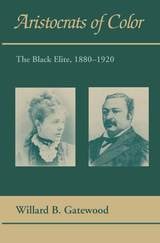
Aristocrats of Color
The Black Elite, 1880–1920Willard B. Gatewood
University of Arkansas Press, 2000
Every American city had a small, self-aware, and active black elite, who felt it was their duty to set the standard for the less fortunate members of their race and to lead their communities by example. Rank within this black upper class rested on such issues as the status of one’s forebears as either house servants or field hands, the darkness of one’s skin, and the level of one’s manners and education.
Professor Gatewood’s study examines this class of African Americans by looking at the genealogies and occupations of specific families and individuals throughout the United States and their roles in their various communities. The resulting narrative is a full and illuminating account of a most influential segment of the African-American population. It explores fully the distinctive background, prestige, attitudes, behavior, power, and culture of this class. The Black Community Studies series from the University of Arkansas Press, edited by Professor Gatewood, continues to examine many of the same themes first explored in this important study.
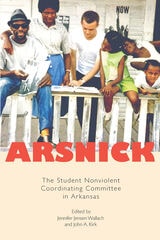
Arsnick
The Student Nonviolent Coordinating Committee in ArkansasJennifer Jensen Wallach
University of Arkansas Press, 2011
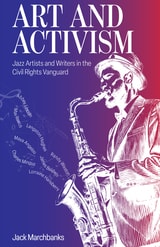
Art and Activism
Jazz Artists and Writers in the Civil Rights VanguardJack Marchbanks
Ohio University Press, 2026
Explore how jazz legends and literary icons united art and activism, shaping the civil rights movement and transforming American culture during the pivotal period between 1955 and 1965.
Art and Activism explores the powerful, symbiotic relationships among artists such as Nina Simone, Abbey Lincoln, and Lena Horne and their literary counterparts—Lorraine Hansberry, Maya Angelou, and Langston Hughes. These creative figures positioned themselves as cultural thought leaders within the evolving civil rights movement. While the Jim Crow South was the movement’s operational front, Jack Marchbanks argues that New York City’s intellectual, cultural, and fundraising communities functioned as its strategic command center.
Readers who admire jazz legends like Duke Ellington, Dave Brubeck, Miles Davis, and Charles Mingus—and those fascinated by prominent African American writers like James Baldwin and Ralph Ellison—will discover how these artists intertwined their work with the civil rights struggle. The book examines their involvement in pivotal confrontations and their connections with key leaders such as the Reverend Dr. Martin Luther King Jr., Daisy Bates, Ella Baker, and Malcolm X.
By illuminating the intersection of art and activism, this study offers a fresh perspective on the pivotal decade from 1955 to 1965. It is an essential resource for undergraduate courses and an engaging read for anyone seeking to understand the civil rights era through a cultural lens.
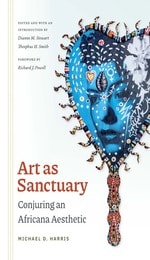
Art as Sanctuary
Conjuring an Africana AestheticMichael D. Harris. Edited and with an introduction by Dianne M. Stewart and Theophus H. Smith. Foreword by Richard J. Powell.
Duke University Press, 2026
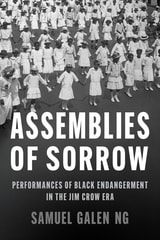
Assemblies of Sorrow
Performances of Black Endangerment in the Jim Crow EraSamuel Galen Ng
University of Illinois Press, 2026
Samuel Galen Ng illuminates this Black consciousness as it emanated from feelings of collective endangerment. The dissemination and intensification of such feelings became a pivotal way of solidifying a national Black consciousness on the eve of the Civil Rights Movement. Ng examines how performances of Black endangerment performed political work that provided Black people with important means of political organizing and insurgency. As Ng shows, the grief and mourning that took place at the performances provided public spaces for individuals and communities to observe specific losses capable of impacting Americans across the country.
Ambitious and interdisciplinary, Assemblies of Sorrow explores an overlooked facet of Black organizing and protest and traces how activists shaped fear and grief into political action.
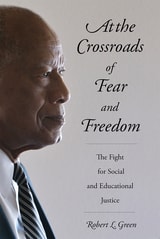
At the Crossroads of Fear and Freedom
The Fight for Social and Educational JusticeRobert L. Green
Michigan State University Press, 2016
This memoir relates previously untold stories about major Civil Rights campaigns that helped put an end to voting rights violations and Jim Crow education; explains how Green has helped urban school districts improve academic achievement levels; and explains why this history should inform our choices as we attempt to reform and improve American education. Green’s quest began when he helped the Kennedy Administration resolve a catastrophic education-related impasse and has continued through his service as one of the participants at an Obama administration summit on a current academic crisis.
It is commonly said that education is the new Civil Rights battlefield. Green’s memoir, At the Crossroads of Fear and Freedom: The Fight for Social and Educational Justice, helps us understand that educational equity has always been a central objective of the Civil Rights movement.
Atlanta Life Insurance
Guardian of Black Economic DignityAlexa Benson Henderson
University of Alabama Press, 1990
Efforts to develop an economic base within the Black community began even before the Civil War. These efforts gained new meaning in the post-Reconstruction period as Blacks strove to adapt to radically changing economic circumstances and the emergence of the Jim Crow South. In Atlanta, shortly after the turn of the century, Alonzo Franklin Herndon, a former slave, joined a long line of Black entrepreneurs by creating Atlanta Life Insurance Company. More than three-quarters of a century later, it remains an important enterprise that is the nation’s largest Black-controlled shareholder insurance company. The firm is today a significant example of the efforts of Black Americans to achieve economic independence and dignity in America.
Atlanta
Race, Class And Urban ExpansionLarry Keating
Temple University Press, 2001
Despite African American success in winning the mayor's office and control of the City Council, development plans have remained in the control of private business interests. Keating tells a number of troubling stories. The development of the Underground Atlanta, the construction of the rapid rail system (MARTA), the building of a new stadium for the Braves, the redevelopment of public housing, and the arrangements for the Olympic Games all share a lack of democratic process. Business and political elites ignored protests from neighborhood groups, the interests of the poor, and the advice of planners.
Authentic Blackness
The Folk in the New Negro RenaissanceJ. Martin Favor
Duke University Press, 1999
Authentic Blackness looks at the place of the “folk”—those African Americans “furthest down,” in the words of Alain Locke—and how the representation of the folk and the black middle class both spurred the New Negro Movement and became one of its most serious points of contention. Drawing on vernacular theories of African American literature from such figures as Henry Louis Gates Jr. and Houston Baker as well as theorists Judith Butler and Stuart Hall, Favor looks closely at the work of four Harlem Renaissance fiction writers: James Weldon Johnson, Nella Larsen, George Schuyler, and Jean Toomer. Arguing that each of these writers had, at best, an ambiguous relationship to African American folk culture, Favor demonstrates how they each sought to redress the notion of a fixed black identity. Authentic Blackness illustrates how “race” has functioned as a type of performative discourse, a subjectivity that simultaneously builds and conceals its connections with such factors as class, gender, sexuality, and geography.
Awakening to Equality
A Young White Pastor at the Dawn of Civil RightsKarl E. Lutze
University of Missouri Press, 2006
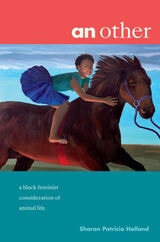
an other
a black feminist consideration of animal lifeSharon Patricia Holland
Duke University Press, 2023