Results by title
1566 books match the query 'Christianity' and 132 start with a
Angels, Devils
The Supernatural and Its Visual RepresentationGerhard Jaritz
Central European University Press, 2011
Anglicans in Canada
Controversies and Identity in Historical PerspectiveAlan L. Hayes
University of Illinois Press, 2004
With writing that conveys a strong sense of place and people, Hayes ultimately finds such an identity not in the relatively few agreements within Anglicanism but within the disagreements themselves. Including hard-to-find historical documents, Anglicans in Canada is ideal for research, classroom use, and as a resource for church groups.
Animal Theology
Andrew Linzey
University of Illinois Press, 1995
In Linzey’s view, animal rights is synonymous with animal theology. Linzey argues that historical theology, creatively defined, must reject humanocentricity. Questioning the assumption that if theology is to speak on this issue, “it must only do so on the side of the oppressors,” Linzey investigates not only the abstractions of theory, but also the realities of hunting, animal experimentation, and genetic engineering. His is a pioneering, vital, and unequivocally Christian voice advocating on behalf of the countless creatures who share our world and our lives but cannot speak for themselves.

Animals on the Agenda
Questions about Animals for Theology and EthicsEdited by Andrew Linzey and Dorothy Yamamoto
University of Illinois Press, 1998
Renowned animal rights intellectual Andrew Linzey and Dorothy Yamamoto edit the now-classic collection of works examining religious and ethical thought on humanity's relationship to animals. The contributors address issues within the context of scriptural perspectives, the Christian tradition, historical disputes, and our obligations to animals. In addition, many of the authors provide guidance on how to put humane, progressive ideas into practice. Throughout, the contributors challenge mainstream Christianity's propagation of ideas that negative impact animals' lives and well-being.
Anna Trapnel’s Report and Plea; or, A Narrative of Her Journey from London into Cornwall
Anna Trapnel
Iter Press, 2016
In 1654, Anna Trapnel — a Baptist, Fifth Monarchist, millenarian, and visionary from London — fell into a trance during which she prophesied passionately and at length against Oliver Cromwell and his government. The prophecies attracted widespread public attention, and resulted in an invitation to travel to Cornwall. Her Report and Plea, republished here for the first time, is a lively and engaging firsthand account of the visit, which concluded in her arrest, a court hearing, and imprisonment. Part memoir, part travelogue, and part impassioned defense of her beliefs and actions, the Report and Plea offers vivid and fascinating insight into the life and times of an early modern woman claiming her place at the center of the tumultuous political events of mid-seventeenth-century England.
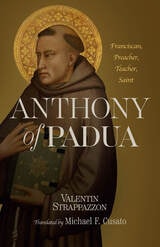
Anthony of Padua
Franciscan, Preacher, Teacher, SaintValentin Strappazzon, Valentin
Catholic University of America Press, 2024
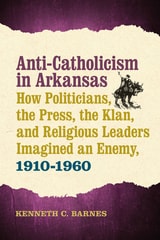
Anti-Catholicism in Arkansas
How Politicians, the Press, the Klan, and Religious Leaders Imagined an Enemy, 1910–1960Kenneth C. Barnes
University of Arkansas Press, 2016
Winner, 2017 Ragsdale Award
A timely study that puts current issues—religious intolerance, immigration, the separation of church and state, race relations, and politics—in historical context.
The masthead of the Liberator, an anti-Catholic newspaper published in Magnolia, Arkansas, displayed from 1912 to 1915 an image of the Whore of Babylon. She was an immoral woman sitting on a seven-headed beast, holding a golden cup “full of her abominations,” and intended to represent the Catholic Church.
Propaganda of this type was common during a nationwide surge in antipathy to Catholicism in the early twentieth century. This hostility was especially intense in largely Protestant Arkansas, where for example a 1915 law required the inspection of convents to ensure that priests could not keep nuns as sexual slaves.
Later in the decade, anti-Catholic prejudice attached itself to the campaign against liquor, and when the United States went to war in 1917, suspicion arose against German speakers—most of whom, in Arkansas, were Roman Catholics.
In the 1920s the Ku Klux Klan portrayed Catholics as “inauthentic” Americans and claimed that the Roman church was trying to take over the country’s public schools, institutions, and the government itself. In 1928 a Methodist senator from Arkansas, Joe T. Robinson, was chosen as the running mate to balance the ticket in the presidential campaign of Al Smith, a Catholic, which brought further attention.
Although public expressions of anti-Catholicism eventually lessened, prejudice was once again visible with the 1960 presidential campaign, won by John F. Kennedy.
Anti-Catholicism in Arkansas illustrates how the dominant Protestant majority portrayed Catholics as a feared or despised “other,” a phenomenon that was particularly strong in Arkansas.
Anti-Judaism and Christian Orthodoxy
Ephrem's Hymns in Fourth-century Syria (Patristic Monograph Series)Christine Shepardson
Catholic University of America Press, 2008
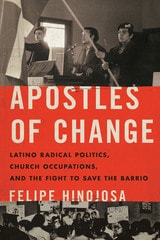
Apostles of Change
Latino Radical Politics, Church Occupations, and the Fight to Save the BarrioBy Felipe Hinojosa
University of Texas Press, 2021
2021 Finalist Raul Yzaguirre Best Political/Current Affairs Book, International Latino Book Awards
Winner of the Texas Association of Chicanos in Higher Education Inaugural Book Award
Unraveling the intertwined histories of Latino radicalism and religion in urban America, this book examines how Latino activists transformed churches into staging grounds for protest against urban renewal and displacement.
In the late 1960s, the American city found itself in steep decline. An urban crisis fueled by federal policy wreaked destruction and displacement on poor and working-class families. The urban drama included religious institutions, themselves undergoing fundamental change, that debated whether to stay in the city or move to the suburbs. Against the backdrop of the Black and Brown Power movements, which challenged economic inequality and white supremacy, young Latino radicals began occupying churches and disrupting services to compel church communities to join their protests against urban renewal, poverty, police brutality, and racism.
Apostles of Change tells the story of these occupations and establishes their context within the urban crisis; relates the tensions they created; and articulates the activists' bold, new vision for the church and the world. Through case studies from Chicago, Los Angeles, New York City, and Houston, Felipe Hinojosa reveals how Latino freedom movements frequently crossed boundaries between faith and politics and argues that understanding the history of these radical politics is essential to understanding the dynamic changes in Latino religious groups from the late 1960s to the early 1980s.
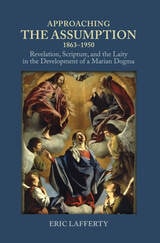
Approaching the Assumption, 1863-1950
Revelation, Scripture, and the Laity in the Development of a Marian DogmaEric Lafferty
Catholic University of America Press, 2026
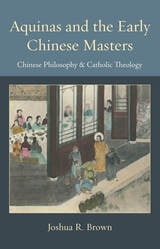
Aquinas and the Early Chinese Masters
Chinese Philosophy and Catholic TheologyJoshua Brown
Catholic University of America Press, 2025

Aquinas at 800
Commemorative Studies 1225-2025, Volume 1David Cory
Catholic University of America Press, 2025
Aquinas at 800
Commemorative Studies 1225-2025, Volume 2David Cory
Catholic University of America Press, 2025
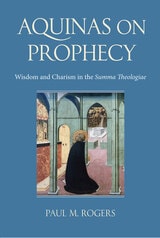
Aquinas on Prophecy
Wisdom and Charism in the <i>Summa Theologiae</i>Paul M. Rogers
Catholic University of America Press, 2023
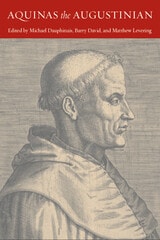
Aquinas the Augustinian
Michael Dauphinais
Catholic University of America Press, 2007
Aquinas' Cruciform Theology of the Natural Law
Kevin E. O'Reilly
Catholic University of America Press, 2026
Aquinas's <i>Summa</i> and Jesuit Ethics
A Call for RessourcementJustin M. Anderson
Catholic University of America Press, 2026
Aquinas, Wittgenstein, and the Riddle of Spiritual Pedagogy
Matthew Dunch
Catholic University of America Press, 2027
Archiving Heaven and Earth
The Historian's Office and the Making of MormonismRobin Scott Jensen
University of Illinois Press, 2027
Robin Scott Jensen explores the Church Historian’s Office against the backdrop of how writing and archiving what was written shaped the growth, faith, and identity of the nineteenth-century Latter Day Saint movement. As Jensen shows, records simultaneously created and preserved history. Journal keeping and letter writing stood alongside official documents as an essential means for Saints to understand their mission and place in American society. Over time, the Church Historian’s Office evolved into a powerful institution that guided memory and authority by deciding what to collect, copy, or destroy. Jensen tells the stories of the forgotten archivists, many of them women, who built the Church Historian’s Office, while revealing the choices and conflicts that led to Native and other voices being marginalized or erased.
Detailed and candid, Archiving Heaven and Earth provides a rare look at a foundational organization.
Armenian Apocrypha
The Short Questionnaire from Adam to MosesMichael E. Stone
SBL Press, 2025
At Ease in Zion
Social History of Southern Baptists, 1865-1900Rufus B. Spain
University of Alabama Press, 2003
First published in 1967, Rufus Spain’s thorough investigation into Southern Baptist attitudes set the stage for research on religion in the American South. In At Ease in Zion, Spain questions the titular “ease” with society that Southern Baptists seemed to maintain following the Civil War. His analysis of denominational newspapers, as well as reports from the Southern Baptist Convention and state conventions, paint a compelling picture of the subjects’ complacency with their social existence, even as they criticized personal and recreational ethics.
While the South faced significant social, economic, and political changes after the Civil War, religion remained the primary moral influence. As the Southern Baptist denomination made up a significant majority of the population at that time, its leaders and attitudes had a clear and undeniable impact on social norms. Rufus Spain was one of the first writers to actively demonstrate the relationship between Southern religion and Southern society, and his work displays meticulous attention to the ways in which we are affected by complacency. He asserts that Southern Baptists viewed the American South as a version of God’s ideal society; any issues they wished to address were caused by individuals (such as those who did not conform to societal norms) or external attitudes (such as those in differing religions or regions).
At Ease in Zion is a critical part of the scholarly discussion on religion in society. Spain’s research offers a bold analysis of the American South and its citizens during one of the most tumultuous times in its history while providing a basis for arguments on “social Christianity” and its ever-shifting role in the world.
At Last She Said It
Honest Conversations About Faith, Church, and Everything in BetweenSusan Hinckley and Cynthia Winward
Signature Books, 2025
“Women of faith, discussing complicated things.” That’s how authors Susan Hinckley and Cynthia Winward describe At Last She Said It, and they don’t expect the knots to untangle themselves. Even with two very different personalities and a decade or so between them, as their friendship developed they kept stumbling onto what felt like an uncanny amount of common ground in their church experiences. Often their conversations ended with, “Why isn’t anyone talking about this? Someone should do a podcast!” So they did. They had a hunch they weren’t the only women wishing they had a place to discuss the things they were thinking about, a lot of which they’d never said—or heard—out loud. That hunch was right. Their 200-and-counting recorded conversations have been downloaded some two million times. Hinckley and Winward have learned, right along with their listeners, that there’s no power quite like finding out you’re not alone.
Their book now asks Latter-day Saints to think about old ideas in new ways. Stretching can be uncomfortable, but the willingness to consider diverse perspectives—even on the things we hold most dear—feels essential in an evolving world. So does being open to changing our minds, including how we think about ourselves. Faith is alive when it’s growing, and growing means change. Hopefully, these conversations will be the beginning of thousands more.
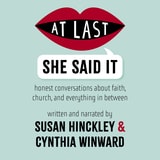
At Last She Said It
Honest Conversations About Faith, Church, and Everything in BetweenSusan Hinckley and Cynthia Winward
Signature Books, 2025
“Women of faith, discussing complicated things.” That’s how authors Susan Hinckley and Cynthia Winward describe At Last She Said It, and they don’t expect the knots to untangle themselves. Even with two very different personalities and a decade or so between them, as their friendship developed they kept stumbling onto what felt like an uncanny amount of common ground in their church experiences. Often their conversations ended with, “Why isn’t anyone talking about this? Someone should do a podcast!” So they did. They had a hunch they weren’t the only women wishing they had a place to discuss the things they were thinking about, a lot of which they’d never said—or heard—out loud. That hunch was right. Their 200-and-counting recorded conversations have been downloaded some two million times. Hinckley and Winward have learned, right along with their listeners, that there’s no power quite like finding out you’re not alone.
Their book now asks Latter-day Saints to think about old ideas in new ways. Stretching can be uncomfortable, but the willingness to consider diverse perspectives—even on the things we hold most dear—feels essential in an evolving world. So does being open to changing our minds, including how we think about ourselves. Faith is alive when it’s growing, and growing means change. Hopefully, these conversations will be the beginning of thousands more.
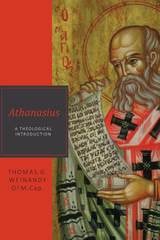
Athansius
A Theological IntroductionThomas G. Weinandy, OFM, Cap.
Catholic University of America Press, 2018
"A reliable, concise introduction to the theology of Athanasius." - International Journal of Systematic Theology
"A sustained and intelligent introduction to Athanasius and his literature, and will rightly appear on all undergraduate patristic bibliographies." - The Journal of Theological Studies
"A very fine theological (as its subtitle emphasizes) introduction to the Alexandrian bishop…[an] accessible, intelligent, and worthy volume, which offers the reader an overview of Athanasius's thought within the context of his full, if at times harried, ecclesiastical life." - Nova et Vetera
"Weinandy offers a summary of Athanasius' central works and a balanced assessment of his theology's merits and contemporary significance…No student of Athanasius should overlook this reliable guidebook to the little Alexandrian's great life and works." - Religious Studies Review
"Weinandy's introduction to Athanasius is an important work, familiarizing the reader with Athanasius' life, writings, and fundamental concerns. Throughout, the centrality of soteriology clearly emerges, whether the topic is the doctrine of the Trinity or the life of Antony. Hopefully this book will serve to bring Athanasius' soteriology more prominently into contemporary discussions alongside the other great masterpieces on this doctrine." - Themelios
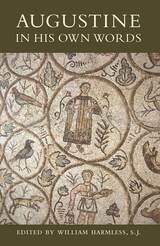
Augustine in His Own Words
William Harmless
Catholic University of America Press, 2010
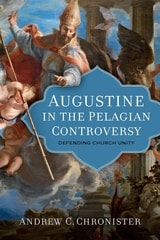
Augustine in the Pelagian Controversy
Defending Church UnityAndrew Chronister
Catholic University of America Press, 2024
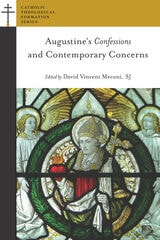
Augustine's Confessions and Contemporary Concerns
David Vincent Meconi, SJ
Saint Paul Seminary Press, 2022
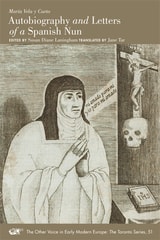
Autobiography and Letters of a Spanish Nun
María Vela y Cueto
Iter Press, 2016
When María Vela y Cueto (1561–1617) declared that God had personally ordered her to take only the Eucharist as food and to restore primitive dress and public penance in her aristocratic convent, the entire religious community, according to her confessor, “rose up in wrath.” Yet, when Vela died, her peers joined with the populace to declare her a saint. In her autobiography and personal letters, Vela speaks candidly of the obstacles, perils, and rewards of re-negotiating piety in a convent where devotion to God was no longer expressed through rigorous asceticism. Vela’s experience, told in her own words, reveals her shrewd understanding of the persuasive power of a woman’s body.
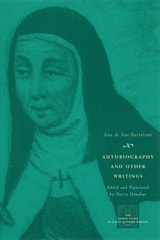
Autobiography and Other Writings
Ana de San Bartolomé
University of Chicago Press, 2008
Her autobiography, clearly inseparable from her religious vocation, expresses the tensions and conflicts that often accompanied the lives of women whose relationship to the divine endowed them with an authority at odds with the temporary powers of church and state. Last translated into English in 1916, Ana’s writings give modern readers fascinating insights into the nature of monastic life during the highly charged religious and political climate of late-sixteenth- and early-seventeenth-century Spain.
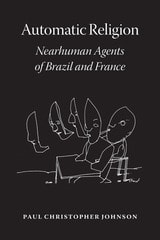
Automatic Religion
Nearhuman Agents of Brazil and FrancePaul Christopher Johnson
University of Chicago Press, 2021
Automatic Religion explores an unlikely series of episodes from the end of the nineteenth century, when crucial ideas related to automatism and, in a different realm, the study of religion were both being born. Paul Christopher Johnson draws on years of archival and ethnographic research in Brazil and France to explore the crucial boundaries being drawn at the time between humans, “nearhumans,” and automata. As agency came to take on a more central place in the philosophical, moral, and legal traditions of the West, certain classes of people were excluded as less-than-human. Tracking the circulation of ideas across the Atlantic, Johnson tests those boundaries, revealing how they were constructed on largely gendered and racial foundations. In the process, he reanimates one of the most mysterious and yet foundational questions in trans-Atlantic thought: what is agency?
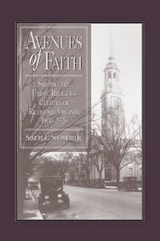
Avenues of Faith
Shaping the Urban Religious Culture of Richmond, Virginia, 1900–1929Samuel C. Shepherd Jr
University of Alabama Press, 2001
By examining six mainline white denominations—Episcopalians, Methodists, Presbyterians, Baptists, Disciples of Christ, and Lutherans—Samuel C. Shepherd Jr. emphasizes the extent to which the city fostered religious diversity, even as “blind spots” remained regarding Catholics, African Americans, Mormons, and Jews. Shepherd explores such topics as evangelism, interdenominational cooperation, the temperance campaign, the Sunday school movement, the international peace initiatives, and the expanding role of lay people of both sexes. He also notes the community’s widespread rejection of fundamentalism, a religious phenomenon almost automatically associated with the South, and shows how it nurtured social reform to combat a host of urban problems associated with public health, education, housing, women’s suffrage, prohibition, children, and prisons.
In lucid prose and with excellent use of primary sources, Shepherd delivers a fresh portrait of Richmond Protestants who embraced change and transformed their community, making it an active, progressive religious center of the New South.
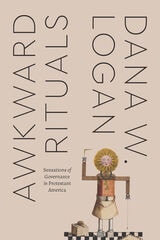
Awkward Rituals
Sensations of Governance in Protestant AmericaDana W. Logan
University of Chicago Press, 2022
In the years between the American Revolution and the Civil War, there was an awkward persistence of sovereign rituals, vestiges of a monarchical past that were not easy to shed. In Awkward Rituals, Dana Logan focuses our attention on these performances, revealing the ways in which governance in the early republic was characterized by white Protestants reenacting the hierarchical authority of a seemingly rejected king. With her unique focus on embodied action, rather than the more common focus on discourse or law, Logan makes an original contribution to debates about the relative completeness of America’s Revolution.
Awkward Rituals theorizes an under-examined form of action: rituals that do not feel natural even if they sometimes feel good. This account challenges common notions of ritual as a force that binds society and synthesizes the self. Ranging from Freemason initiations to evangelical societies to missionaries posing as sailors, Logan shows how white Protestants promoted a class-based society while simultaneously trumpeting egalitarianism. She thus redescribes ritual as a box to check, a chore to complete, an embarrassing display of theatrical verve. In Awkward Rituals, Logan emphasizes how ritual distinctively captures what does not change through revolution.