Results by title
21 books match the query 'Flesh'
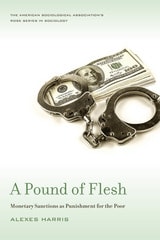
A Pound of Flesh
Monetary Sanctions as Punishment for the PoorAlexes Harris
Russell Sage Foundation, 2016
Over seven million Americans are either incarcerated, on probation, or on parole, with their criminal records often following them for life and affecting access to higher education, jobs, and housing. Court-ordered monetary sanctions that compel criminal defendants to pay fines, fees, surcharges, and restitution further inhibit their ability to reenter society. In A Pound of Flesh, sociologist Alexes Harris analyzes the rise of monetary sanctions in the criminal justice system and shows how they permanently penalize and marginalize the poor. She exposes the damaging effects of a little-understood component of criminal sentencing and shows how it further perpetuates racial and economic inequality.
Harris draws from extensive sentencing data, legal documents, observations of court hearings, and interviews with defendants, judges, prosecutors, and other court officials. She documents how low-income defendants are affected by monetary sanctions, which include fees for public defenders and a variety of processing charges. Until these debts are paid in full, individuals remain under judicial supervision, subject to court summons, warrants, and jail stays. As a result of interest and surcharges that accumulate on unpaid financial penalties, these monetary sanctions often become insurmountable legal debts which many offenders carry for the remainder of their lives. Harris finds that such fiscal sentences, which are imposed disproportionately on low-income minorities, help create a permanent economic underclass and deepen social stratification.
A Pound of Flesh delves into the court practices of five counties in Washington State to illustrate the ways in which subjective sentencing shapes the practice of monetary sanctions. Judges and court clerks hold a considerable degree of discretion in the sentencing and monitoring of monetary sanctions and rely on individual values—such as personal responsibility, meritocracy, and paternalism—to determine how much and when offenders should pay. Harris shows that monetary sanctions are imposed at different rates across jurisdictions, with little or no state government oversight. Local officials’ reliance on their own values and beliefs can also push offenders further into debt—for example, when judges charge defendants who lack the means to pay their fines with contempt of court and penalize them with additional fines or jail time.
A Pound of Flesh provides a timely examination of how monetary sanctions permanently bind poor offenders to the judicial system. Harris concludes that in letting monetary sanctions go unchecked, we have created a two-tiered legal system that imposes additional burdens on already-marginalized groups.
Beyond the Flesh
Alexander Blok, Zinaida Gippius, and the Symbolist Sublimation of SexJenifer Presto
University of Wisconsin Press, 2008
Black Bourgeois
Class and Sex in the FleshCandice M. Jenkins
University of Minnesota Press, 2019
Exploring the forces that keep black people vulnerable even amid economically privileged lives
At a moment in U.S. history with repeated reminders of the vulnerability of African Americans to state and extralegal violence, Black Bourgeois is the first book to consider the contradiction of privileged, presumably protected black bodies that nonetheless remain racially vulnerable. Examining disruptions around race and class status in literary texts, Candice M. Jenkins reminds us that the conflicted relation of the black subject to privilege is not, solely, a recent phenomenon.
Focusing on works by Toni Morrison, Spike Lee, Danzy Senna, Rebecca Walker, Reginald McKnight, Percival Everett, Colson Whitehead, and Michael Thomas, Jenkins shows that the seemingly abrupt discursive shift from post–Civil Rights to Black Lives Matter, from an emphasis on privilege and progress to an emphasis on vulnerability and precariousness, suggests a pendulum swing between two interrelated positions still in tension. By analyzing how these narratives stage the fraught interaction between the black and the bourgeois, Jenkins offers renewed attention to class as a framework for the study of black life—a necessary shift in an age of rapidly increasing income inequality and societal stratification.
Black Bourgeois thus challenges the assumed link between blackness and poverty that has become so ingrained in the United States, reminding us that privileged subjects, too, are “classed.” This book offers, finally, a rigorous and nuanced grasp of how African Americans live within complex, intersecting identities.
Fictions of Land and Flesh
Blackness, Indigeneity, SpeculationMark Rifkin
Duke University Press, 2019
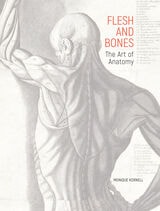
Flesh and Bones
The Art of AnatomyMonique Kornell
J. Paul Getty Trust, The, 2022
This illustrated volume examines the different methods artists and anatomists used to reveal the inner workings of the human body and evoke wonder in its form.
For centuries, anatomy was a fundamental component of artistic training, as artists such as Leonardo da Vinci and Michelangelo sought to skillfully portray the human form. In Europe, illustrations that captured the complex structure of the body—spectacularly realized by anatomists, artists, and printmakers in early atlases such as Andreas Vesalius’s De humani corporis fabrica libri septem of 1543—found an audience with both medical practitioners and artists.
Flesh and Bones examines the inventive ways anatomy has been presented from the sixteenth through the twenty-first century, including an animated corpse displaying its own body for study, anatomized antique sculpture, spectacular life-size prints, delicate paper flaps, and 3-D stereoscopic photographs. Drawn primarily from the vast holdings of the Getty Research Institute, the over 150 striking images, which range in media from woodcut to neon, reveal the uncanny beauty of the human body under the skin.
This volume is published to accompany an exhibition on view at the Getty Research Institute at the Getty Center from February 22 to July 10, 2022.
From Stone to Flesh
A Short History of the BuddhaDonald S. Lopez Jr.
University of Chicago Press, 2013
Futures of the Flesh
An Experiment in Film WritingDomietta Torlasco
Northwestern University Press, 2026
Exploring alternative possibilities of viewpoint through cinematic experimentation
In this boldly multidimensional work, Domietta Torlasco alternates between theoretical writings, film essays, and fragmented excerpts from an original screenplay to construct a temporal as well as spatial architecture for her critical intervention. Futures of the Flesh posits that cinematic experimentation holds the strongest potential to reimagine life—its forms, rhythms, and affects—beyond the division between subject and object, human and animal, animate and inanimate. Such potential cannot be clearly located in either space or time but, on the contrary, requires that we think according to momentum, diffraction, and difference.
As a novel notion and the formative medium of both subject and object, the flesh affirms the openness and indefinite generativity of being, allowing for the appearance of new perceptual relations and forms of kinship. Torlasco stages a dialogue between thinkers including Hortense Spillers and Maurice Merleau-Ponty and turns to canonical films, including Blade Runner and Solaris, classic sci-fi literature, such as Octavia Butler’s Kindred, and contemporary video art to elucidate how these media imaginatively rework the distinction between categories of being. This book endeavors to redefine the relation between theory and practice, analysis and creation, to name the primary relations that, under specific techno-aesthetic conditions, enable the emergence of porous, un-bordered forms of life.
God, the Flesh, and the Other
From Irenaeus to Duns ScotusEmmanuel Falque Translated from the French by William Christian Hackett
Northwestern University Press, 2015
In God, the Flesh, and the Other, the philosopher Emmanuel Falque joins the ongoing debate about the role of theology in phenomenology. An important voice in the second generation of French philosophy’s “theological turn,” Falque examines philosophically the fathers of the Church and the medieval theologians on the nature of theology and the objects comprising it. Falque works phenomenology itself into the corpus of theology. Theological concepts thus translate into philosophical terms that phenomenology should legitimately question: concepts from contemporary phenomenology such as onto-theology, appearance, reduction, body/flesh, inter-corporeity, the genesis of community, intersubjectivity, and the singularity of the other find penetrating analogues in patristic and medieval thought forged through millennia of Christological and Trinitarian debate, mystical discourses, and speculative reflection. Through Falque’s wide-ranging interpretive path, phenomenology finds itself interrogated—and renewed.
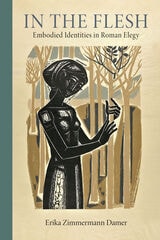
In the Flesh
Embodied Identities in Roman ElegyErika Zimmermann Damer
University of Wisconsin Press, 2022
Recognizing this power of material flesh to shape elegiac poetry, she asserts, grants figures at the margins of this poetic discourse—mistresses, rivals, enslaved characters, overlooked members of households—their own identities, even when they do not speak. She demonstrates how the three poets create a prominent aesthetic of corporeal abjection and imperfection, associating the body as much with blood, wounds, and corporeal disintegration as with elegance, refinement, and sensuality.
Incarnation
A Philosophy of FleshMichel Henry; Translated from the French by Karl Hefty
Northwestern University Press, 2015
After having placed the difficult problem of the incarnation in an historical perspective going back to the thought of the Fathers of the Church, he makes in this book a critical review of the phenomenological tradition that leads to the reversal of phenomenology. He then proposes to elaborate a phenomenology of the flesh which leads to the notion of a not constituted original flesh given in the "Arch-revelation" of Life, as well as a phenomenology of Incarnation.
Although the flesh is traditionally understood as the place of sin, it is also in Christianity the place of salvation, which consists in the deification of man, that’s to say in the fact of becoming Son of God, to come back to the eternal and absolute Life we had forgotten getting lost in the world, caring only about things and ourselves. In the fault, we make the tragic experience of our powerlessness to do the good we would like to do and of our inability to avoid the evil. In this way in front of the magic body of the other, that’s the anguished desire to meet the life in it that leads to the fault. In the night of the lovers, the sexual act couples two impulsive movements, but the erotic desire fails to reach the pleasure of the other where it is experienced, in a total loving fusion. The erotic relation is however doubled by a pure affective relation, foreign to the carnal coupling, a relation made of mutual gratitude or of love. That’s this affective dimension that is denied in this way of violence that is pornography, which extracts the erotic relation from the pathos of life to abandon it to the world, and which consists in a real profanation of life.
Introduction to Sacramental Theology
Signs of Christ in the FleshJose Granados
Catholic University of America Press, 2021
Involuntary Confessions of the Flesh in Early Modern France
Nora Martin Peterson
University of Delaware Press, 2017
Involuntary Confessions of the Flesh in Early Modern France was inspired by the observation that small slips of the flesh (involuntary confessions of the flesh) are omnipresent in early modern texts of many kinds. These slips (which bear similarities to what we would today call the Freudian slip) disrupt and destabilize readings of body, self, and text—three categories whose mutual boundaries this book seeks to soften—but also, in their very messiness, participate in defining them. Involuntary Confessions capitalizes on the uncertainty of such volatile moments, arguing that it is instability itself that provides the tools to navigate and understand the complexity of the early modern world. Rather than locate the body within any one discourse (Foucauldian, psychoanalytic), this book argues that slips of the flesh create a liminal space not exactly outside of discourse, but not necessarily subject to it, either. Involuntary confessions of the flesh reveal the perpetual and urgent challenge of early modern thinkers to textually confront and define the often tenuous relationship between the body and the self. By eluding and frustrating attempts to contain it, the early modern body reveals that truth is as much about surfaces as it is about interior depth, and that the self is fruitfully perpetuated by the conflict that proceeds from seemingly irreconcilable narratives.
Interdisciplinary in its scope, Involuntary Confessions of the Flesh in Early Modern France pairs major French literary works of the sixteenth and seventeenth centuries (by Marguerite de Navarre, Montaigne, Madame de Lafayette) with cultural documents (confession manuals, legal documents about the application of torture, and courtly handbooks). It is the first study of its kind to bring these discourses into thematic (rather than linear or chronological) dialog. In so doing, it emphasizes the shared struggle of many different early modern conversations to come to terms with the body’s volatility.
Published by University of Delaware Press. Distributed worldwide by Rutgers University Press.
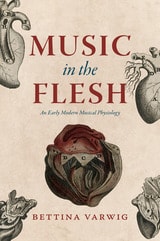
Music in the Flesh
An Early Modern Musical PhysiologyBettina Varwig
University of Chicago Press, 2023
Music in the Flesh reimagines the lived experiences of music-making subjects—composers, performers, listeners—in the long seventeenth century. There are countless historical testimonies of the powerful effects of music upon the early modern body; it is described as moving, ravishing, painful, dangerous, curative, and miraculous while affecting “the circulation of the humors, the purification of the blood, the dilation of the vessels and pores.”
How were these early modern European bodies constituted that music generated such potent bodily-spiritual effects? Bettina Varwig argues that early modern music-making practices challenge our modern understanding of human nature as a mind-body dichotomy. Instead, they persistently affirm a more integrated anthropology, in which body, soul, and spirit remain inextricably entangled. Moving with ease across repertories and regions, sacred and vernacular musics, and domestic and public settings, Varwig sketches a “musical physiology” that is as historically illuminating as it is relevant for present-day performance. This book makes a significant contribution not just to the history of music, but also to the history of the body, the senses, and the emotions, revealing music as a unique access point for reimagining early modern modes of being-in-the-world.
Philology of the Flesh
John T. Hamilton
University of Chicago Press, 2018
In Philology of the Flesh, John T. Hamilton explores writing and reading practices that engage this notion in a range of poetic enterprises and theoretical reflections. By pressing the notion of philology as “love” (philia) for the “word” (logos), Hamilton’s readings investigate the breadth, depth, and limits of verbal styles that are irreducible to mere information. While a philologist of the body might understand words as corporeal vessels of core meaning, the philologist of the flesh, by focusing on the carnal qualities of language, resists taking words as mere containers.
By examining a series of intellectual episodes—from the fifteenth-century Humanism of Lorenzo Valla to the poetry of Emily Dickinson, from Immanuel Kant and Johann Georg Hamann to Friedrich Nietzsche, Franz Kafka, and Paul Celan—Philology of the Flesh considers the far-reaching ramifications of the incarnational metaphor, insisting on the inseparability of form and content, an insistence that allows us to rethink our relation to the concrete languages in which we think and live.
Poetics of the Flesh
Mayra Rivera
Duke University Press, 2015

Rite, Flesh, and Stone
The Matter of Death in Contemporary Spanish CultureAntonio Córdoba
Vanderbilt University Press, 2021
Materials analyzed here—ranging from cinematic and literary fictions, to historical archives and anthropological and ethnographic sources—make explicit a dynamic scenario where actors embody a variety of positions toward death and dying, the political production of mortality, and the commemoration of the dead. Ultimately, the goal of this volume is to chart the complex network in which the disenchantment of death and its reenchantment coexist, and biopolitical control over secularized bodies overlaps with new avatars of the religious and non-theistic desires for memorialization and transcendence.
Spirit, Structure, and Flesh
Gender and Power in Yoruba African Instituted ChurchesDeidre Helen Crumbley
University of Wisconsin Press, 2008
The Flesh of Animation
Bodily Sensations in Film and Digital MediaSandra Annett
University of Minnesota Press, 2024
How animation can reconnect us with bodily experiences
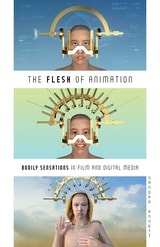
Film and media studies scholarship has often argued that digital cinema and CGI provoke a sense of disembodiment in viewers; they are seen as merely fantastic or unreal. In her in-depth exploration of the phenomenology of animation, Sandra Annett offers a new perspective: that animated films and digital media in fact evoke vivid embodied sensations in viewers and connect them with the lifeworld of experience.
Starting with the emergence of digital technologies in filmmaking in the 1980s, Annett argues that contemporary digital media is indebted to the longer history of animation. She looks at a wide range of animation—from Disney films to anime, electro swing music videos to Vocaloids—to explore how animation, through its material forms and visual styles, can evoke bodily sensations of touch, weight, and orientation in space. Each chapter discusses well-known forms of animation from the United States, France, Japan, South Korea, and China, examining how they provoke different sensations in viewers, such as floating and falling in Howl’s Moving Castle and My Beautiful Girl Mari, and how the body is mediated in films that combine animation and live action, as seen in Who Framed Roger Rabbit and Song of the South. These films set the stage for an exploration of how animation and embodiment manifest in contemporary global media, from CGI and motion capture in Disney’s “live action remakes” to new media installations by artists like Lu Yang.
Leveraging an array of case studies through a new approach to film phenomenology, The Flesh of Animation offers an enlightening discussion of why animation provides a sensational experience for viewers not replicable through other media forms.
The Flesh of the Matter
A Critical Forum on Hortense SpillersEdited by Margo Natalie Crawford and C. Riley Snorton
Vanderbilt University Press, 2024
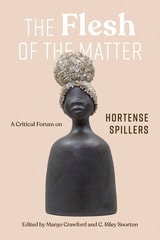
Hortense Spillers is one of the most important literary critics and Black feminist scholars of the last fifty years. Her 1987 scholarly article “Mama’s Baby, Papa’s Maybe: An American Grammar Book” is one of the most-cited essays in African American literary studies.
Edited by Margo Natalie Crawford and C. Riley Snorton, The Flesh of the Matter: A Critical Forum on Hortense Spillers is the first collection to take up directly how Spillers’s writing on literature, culture, and theory have been signal posts to the varied and universal threads of Black thought, as well as countless other areas of the academy. Interspersed with archival fragments from Spillers’s papers kept at the Pembroke Center for Feminist Thought at Brown University, the fourteen essays in this collection demonstrate a fidelity to the ways of reading Spillers has taught us, the nomenclature of enslavement keyed into the American lexicon, and the ways that history permeates our cultural boundaries today.
The World, the Flesh, and the Devil
A History of Colonial St. LouisPatricia Cleary
University of Missouri Press, 2018
Topologies of the Flesh
A Multidimensional Exploration of the LifeworldSteven M. Rosen
Ohio University Press, 2006
The concept of “flesh” in philosophical terms derives from the writings of Maurice Merleau-Ponty. This was the word he used to name the concrete realm of sentient bodies and life processes that has been eclipsed by the abstractions of science, technology, and modern culture. Topology, to conventional understanding, is the branch of mathematics that concerns itself with the properties of geometric figures that stay the same when the figures are stretched or deformed.
Topologies of the Flesh is an original blend of continental thought and mathematical imagination. Steven M. Rosen opens up a new area of philosophical inquiry: topological phenomenology. Through his unique application of qualitative mathematics, he extends the approaches of Merleau-Ponty and Heidegger so as to offer a detailed exploration of previously uncharted dimensions of human experience and the natural world.
Rosen’s unprecedented marriage of topology and phenomenology is motivated by the desire to help overcome the pervasive dualism of contemporary philosophy and Western culture at large. To carry this to completion, he must address his own dualistic stance as author. Challenging the author’s traditional posture of detachment and anonymity, Rosen makes his presence vividly felt in his final chapter, and his philosophical analysis is transformed into a living reality.