Results by title
4030 books match the query 'Language Arts & Disciplines' and 351 start with a
AI Tips and Traps
Patrick Barry
Michigan Publishing Services, 2026
Based on a series of popular courses and workshops that Professor Patrick Barry has created for students, professionals, and anyone else interested in taking a skills-based approach to artificial intelligence, this book gives you a chance to engage with important AI concepts, experiment with exploratory AI exercises, and then ultimately develop your own customized list of AI traps to try as well as AI traps to avoid.

ALA Filing Rules
American Library Association, 1980
ALA Glossary of Library and Information Science
Michael Levine-Clark
American Library Association, 2013
ALA Guide To Medical & Health Science
American Library Association, 2011
ALA Guide to Economics and Business Reference
American Library Association, 2011
ALA Guide to Sociology and Psychology Reference
Denise Beaubien Bennett
American Library Association, 2011
ALA-APA Salary Survey
Librarian--Public and AcademicAmerican Library Association, 2010
ALSC's Popular Picks for Young Readers
Diane Foote
American Library Association, 2014
Aazheyaadizi
Worldview, Language, and the Logics of DecolonizationMark D. Freeland
Michigan State University Press, 2020
Abducting Writing Studies
Edited by Sidney I. Dobrin and Kyle Jensen
Southern Illinois University Press, 2017
Each of the twelve essays that comprise this collection sparks new insights about the phenomenon of writing. A must-read for rhetoric and composition scholars and students, Abducting Writing Studies is sure to foster vibrant discussions about what is possible in writing research and instruction.
Abductive Reasoning
Douglas Walton
University of Alabama Press, 2005
Examines three areas in which abductive reasoning is especially important: medicine, science, and law. The reader is introduced to abduction and shown how it has evolved historically into the framework of conventional wisdom in logic. Discussions draw upon recent techniques used in artificial intelligence, particularly in the areas of multi-agent systems and plan recognition, to develop a dialogue model of explanation. Cases of causal explanations in law are analyzed using abductive reasoning, and all the components are finally brought together to build a new account of abductive reasoning.
By clarifying the notion of abduction as a common and significant type of reasoning in everyday argumentation, Abductive Reasoning will be useful to scholars and students in many fields, including argumentation, computing and artificial intelligence, psychology and cognitive science, law, philosophy, linguistics, and speech communication and rhetoric.
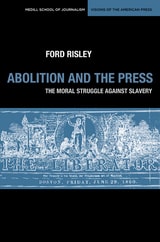
Abolition and the Press
The Moral Struggle Against SlaveryFord Risley
Northwestern University Press, 2008
This examination of nineteenth-century journalism explores the specific actions and practices of the publications that provided a true picture of slavery to the general public. From Boston's strident <i>Liberator</i> to Frederick Douglass' <i>North Star</i>, the decades before the Civil War saw more than forty newspapers founded with the specific aim of promoting emancipation. Not only did these sheets provide a platform for discourse, but they also gave slavery a face for a wider audience. The reach of the abolitionist press only grew as the fiery publications became objects of controversy and targets of violence in both South and North. These works kept the issue of slavery in the public eye even as mainstream publications took up the call for emancipation, as the nation went to war, up to the end of slavery. Their legacy has endured, as dedicated reform writers and editors continue to view the press as a vital tool in the fight for equality.
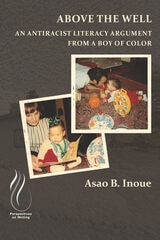
Above the Well
An Antiracist Literacy Argument from a Boy of ColorAsao B. Inoue
University Press of Colorado, 2021

Absinthe
World Literature in Translation: Vol. 24: World HellenismsAli Bolcakan, Will Stroebel and Peter Vorissis
Michigan Publishing Services, 2018
Absinthe 24 pushes and prods Hellenism beyond its geographic and cultural comfort zones, and sets it tumbling off beyond both internal and external borders of its nation-state, in a wide-ranging but always site-specific and localized itinerary. At each stop along the way, this Greekness finds its plurals—hence the “Hellenisms” of the title. While they present no unified topography, tongue or even topic, these Hellenisms map out the contours of a shared conversation. Today’s Hellenism isn’t limited to Hellas, nor to the Hellenic language. The selected texts in this volume explore Greece from the perspective of visitors, displaced persons, and marginalized people looking in, or, conversely, from the perspective of locals striving to break out.
Absinthe: A Journal of World Literature in Translation publishes foreign literature in English translation, with a particular focus on previously untranslated contemporary fiction, poetry, and creative non-fiction by living authors. The magazine has its home in the Department of Comparative Literature at the University of Michigan and is edited by graduate students in the Department, as well as by occasional guest editors.
Academic Archives
Managing the Next Generation of College and University Archives, Records, and Special CollectionsAaron D. Purcell
American Library Association, 2012
Academic English
Skills for Success, Third EditionMiranda Legg, et al.
Hong Kong University Press, 2025
This book features five theme-based units on cross-disciplinary academic English skills, focusing on the needs of first-year undergraduate students. Each unit covers academic writing, reading, and speaking skills. The units progressively take students through the steps needed to complete three common academic assignments: the essay, report, and tutorial discussion. These steps include searching for quality sources, note-taking, establishing a critical stance, formulating evidence-based arguments, synthesizing information from multiple sources, and structuring academic texts. Each unit also provides opportunities for students to analyze texts, apply their critical thinking skills, practice what they have learned in productive tasks, and reflect upon their progress.
This book is aimed at first-time university students. Many of the readings are related to China and a broader Asian context. As such, it appeals to first-year university students in Hong Kong, Mainland China, and Taiwan.
Academic Librarian Burnout
Causes and ResponsesChristina Holm
Assoc of College & Research Libraries, 2022
Academic Librarian Burnout can help librarians develop the agency to challenge the assumptions and practices that have led to so much professional burnout. In five thorough parts, it offers ways to discuss burnout in our work environments, studies burnout’s nature and causes, and provides preventative intervention and mitigation strategies:
- Reframing Burnout
- Conditions that Promote Burnout
- Lived Experiences
- Individual Responses to Burnout
- Organizational Responses to Burnout
Academic Librarian Faculty Status
CLIPP #47Edgar Bailey
Assoc of College & Research Libraries, 2022
Academic Librarian Faculty Status: CLIPP #47 contains a thorough literature review and bibliography, analysis and discussion of survey results, and sample criteria, policies, and guidelines for appointment, promotion, and tenure for librarians with and without faculty status.
No other group of employees in higher education has occupied quite the same ambivalent status on campus as librarians. The debate over granting librarians the same rights and responsibilities as faculty has generated a substantial body of literature over the years. Most of this research has tended to focus on either a mix of institutional sizes or on large universities, with a surprising dearth of studies of smaller institutions. The results of the survey reported in CLIPP #47 fills this gap, as well as offering practical information and sample tenure and promotion documents and policies.
Academic Librarianship
G. Edward Evans
American Library Association, 2018
Ideal for practitioners looking to advance their careers and for use in LIS programs, this "comprehensive overview" (Journal of Access Services) has been thoroughly revised and updated to provide a timely exploration of the characteristics of academic librarianship and its place in the ever-changing environment of higher education. Evans and new coauthor Greenwell guide readers towards understanding what is required to have a successful career in academic librarianship, explaining why academic libraries are distinct from other types of libraries and lending practical insight into their unique political and operational characteristics. The text offers comprehensive coverage of such key issues as
- teaching faculty roles and the status of the academic librarian;
- governance and the growing tension on some campuses between faculty and administration;
- curriculum, with a discussion of the balance between general education requirements and applied courses;
- the student body;
- collections, data management, digitization, and metadata;
- scholarly communication, plus alternative models such as open educational resources (OERs);
- providing quality service, and the role of user experience (UX) in assessment;
- ACRL's Information Literacy Framework;
- funding, including how and where to find detailed higher education expenditure data;
- classrooms, common learning spaces, and other facilities;
- staffing and professional development;
- technology and IT support;
- career development, with advice on preparing a vita and undergoing a successful interview; and
- the future of academic librarianship.
This updated edition enables readers to understand how academic libraries deliver information, offer services, and provide learning spaces in new ways to better meet the needs of today's students, faculty, and other communities of academic library users.
Academic Librarianship
Camila Alire
American Library Association, 2010

Academic Libraries And The Academy Vol 2
Marwin Britto
Assoc of College & Research Libraries, 2018
Academic Libraries And The Academy
Vol 1Marwin Britto
American Library Association, 2018
Academic Libraries and the Academy (2 VOLUME SET)
Strategies and Approaches to Demonstrate Your Value, Impact, and Return on InvestmentMarwin Britto
Assoc of College & Research Libraries, 2018
Academic Libraries for Commuter Students
Research-Based StrategiesMariana Regalado
American Library Association, 2018
Academic Library Impact
Improving Practice AndLynn Silipigni Connaway
Assoc of College & Research Libraries, 2017
Academic Library Job Descriptions
CLIPP #46Kathleen Baril
Assoc of College & Research Libraries, 2021

Academic Library Management
Case StudiesTammy Nickelson Dearie
American Library Association, 2017
Academic Library Mentoring
Fostering Growth and Renewal: Three Volume SetLeila June Rod-Welch
Assoc of College & Research Libraries, 2021
Academic Library Mentoring: Fostering Growth and Renewal presents a cross-section of mentoring thought and practice in college and university libraries, including mentoring definitions, practice fundamentals, models, program development, surveys, and analysis. Across three volumes, it explores library mentoring programs and the lived experiences of library faculty, librarians, library staff members, graduate library and information science students, and library student employees.
Volume 1, Fundamentals and Controversies, details effective mentoring skills and behaviors, mentoring models, dysfunctional mentoring relationships, conflicts of interest in mentoring, and, through a feminist lens, power differentials in mentoring. Chapters on diversity, equity, and inclusion call for library personnel to understand the exclusion some experience in the profession and to implement more inclusive mentoring practices.
Mentoring of Library Faculty and Librarians, Volume 2, explores mentorship skills, models, purposes and issues, and program development. Mentoring purposes include support for the pursuit of tenure and promotion, other career goals, and psychosocial concerns. Issues incorporate understanding and addressing diversity, equity, and inclusion in mentoring. Chapter methodologies include surveys, program assessments, analysis of practices against standards, case studies of mentor and mentee lived experiences, and case studies of libraries and affiliated entities.
In Volume 3, Mentoring of Students and Staff, we hear the voices of library science students and library student employees as they describe their library school and library employment mentoring experiences. Also presented are mentoring programs for recruiting individuals to the profession, practices supporting all library employees regardless of formal employee classification, and methods for enhancing the skills of consortial members. The volume ends with a look to the future of mentoring and organizational development and with a tool any library employee at any career stage can use in forming their own mentoring constellation.
Intentional, effective, committed mentorships can help mentees understand their roles and develop their identities as librarians, library workers, or library science students. Mentorships also help mentees understand and meet performance standards, broaden their skills, shift to new specializations, and discern options for contributing to the larger institution and the profession. Through mentoring, mentors may be invigorated by contributing to the growth of mentees and by encountering ideas and approaches different from their own. Academic Library Mentoring: Fostering Growth and Renewal addresses the many dimensions of contemporary academic library mentoring and how best to engage in inclusive, effective mentoring.
Academic Library Mentoring
Fostering Growth and Renewal: Volume 1: Fundamentals and ControversiesLeila June Rod-Welch
Assoc of College & Research Libraries, 2021
Academic Library Mentoring: Fostering Growth and Renewal presents a cross-section of mentoring thought and practice in college and university libraries, including mentoring definitions, practice fundamentals, models, program development, surveys, and analysis. Across three volumes, it explores library mentoring programs and the lived experiences of library faculty, librarians, library staff members, graduate library and information science students, and library student employees.
Volume 1, Fundamentals and Controversies, details effective mentoring skills and behaviors, mentoring models, dysfunctional mentoring relationships, conflicts of interest in mentoring, and, through a feminist lens, power differentials in mentoring. Chapters on diversity, equity, and inclusion call for library personnel to understand the exclusion some experience in the profession and to implement more inclusive mentoring practices.
Mentoring of Library Faculty and Librarians, Volume 2, explores mentorship skills, models, purposes and issues, and program development. Mentoring purposes include support for the pursuit of tenure and promotion, other career goals, and psychosocial concerns. Issues incorporate understanding and addressing diversity, equity, and inclusion in mentoring. Chapter methodologies include surveys, program assessments, analysis of practices against standards, case studies of mentor and mentee lived experiences, and case studies of libraries and affiliated entities.
In Volume 3, Mentoring of Students and Staff, we hear the voices of library science students and library student employees as they describe their library school and library employment mentoring experiences. Also presented are mentoring programs for recruiting individuals to the profession, practices supporting all library employees regardless of formal employee classification, and methods for enhancing the skills of consortial members. The volume ends with a look to the future of mentoring and organizational development and with a tool any library employee at any career stage can use in forming their own mentoring constellation.
Intentional, effective, committed mentorships can help mentees understand their roles and develop their identities as librarians, library workers, or library science students. Mentorships also help mentees understand and meet performance standards, broaden their skills, shift to new specializations, and discern options for contributing to the larger institution and the profession. Through mentoring, mentors may be invigorated by contributing to the growth of mentees and by encountering ideas and approaches different from their own. Academic Library Mentoring: Fostering Growth and Renewal addresses the many dimensions of contemporary academic library mentoring and how best to engage in inclusive, effective mentoring.
Academic Library Mentoring
Fostering Growth and Renewal: Volume 2: Mentoring of Library Faculty and LibrariansLeila June Rod-Welch
Assoc of College & Research Libraries, 2021
Academic Library Mentoring: Fostering Growth and Renewal presents a cross-section of mentoring thought and practice in college and university libraries, including mentoring definitions, practice fundamentals, models, program development, surveys, and analysis. Across three volumes, it explores library mentoring programs and the lived experiences of library faculty, librarians, library staff members, graduate library and information science students, and library student employees.
Volume 1, Fundamentals and Controversies, details effective mentoring skills and behaviors, mentoring models, dysfunctional mentoring relationships, conflicts of interest in mentoring, and, through a feminist lens, power differentials in mentoring. Chapters on diversity, equity, and inclusion call for library personnel to understand the exclusion some experience in the profession and to implement more inclusive mentoring practices.
Mentoring of Library Faculty and Librarians, Volume 2, explores mentorship skills, models, purposes and issues, and program development. Mentoring purposes include support for the pursuit of tenure and promotion, other career goals, and psychosocial concerns. Issues incorporate understanding and addressing diversity, equity, and inclusion in mentoring. Chapter methodologies include surveys, program assessments, analysis of practices against standards, case studies of mentor and mentee lived experiences, and case studies of libraries and affiliated entities.
In Volume 3, Mentoring of Students and Staff, we hear the voices of library science students and library student employees as they describe their library school and library employment mentoring experiences. Also presented are mentoring programs for recruiting individuals to the profession, practices supporting all library employees regardless of formal employee classification, and methods for enhancing the skills of consortial members. The volume ends with a look to the future of mentoring and organizational development and with a tool any library employee at any career stage can use in forming their own mentoring constellation.
Intentional, effective, committed mentorships can help mentees understand their roles and develop their identities as librarians, library workers, or library science students. Mentorships also help mentees understand and meet performance standards, broaden their skills, shift to new specializations, and discern options for contributing to the larger institution and the profession. Through mentoring, mentors may be invigorated by contributing to the growth of mentees and by encountering ideas and approaches different from their own. Academic Library Mentoring: Fostering Growth and Renewal addresses the many dimensions of contemporary academic library mentoring and how best to engage in inclusive, effective mentoring.
Academic Library Mentoring
Fostering Growth and Renewal: Volume 3: Mentoring of Students and StaffLeila June Rod-Welch
Assoc of College & Research Libraries, 2021
Academic Library Mentoring: Fostering Growth and Renewal presents a cross-section of mentoring thought and practice in college and university libraries, including mentoring definitions, practice fundamentals, models, program development, surveys, and analysis. Across three volumes, it explores library mentoring programs and the lived experiences of library faculty, librarians, library staff members, graduate library and information science students, and library student employees.
Volume 1, Fundamentals and Controversies, details effective mentoring skills and behaviors, mentoring models, dysfunctional mentoring relationships, conflicts of interest in mentoring, and, through a feminist lens, power differentials in mentoring. Chapters on diversity, equity, and inclusion call for library personnel to understand the exclusion some experience in the profession and to implement more inclusive mentoring practices.
Mentoring of Library Faculty and Librarians, Volume 2, explores mentorship skills, models, purposes and issues, and program development. Mentoring purposes include support for the pursuit of tenure and promotion, other career goals, and psychosocial concerns. Issues incorporate understanding and addressing diversity, equity, and inclusion in mentoring. Chapter methodologies include surveys, program assessments, analysis of practices against standards, case studies of mentor and mentee lived experiences, and case studies of libraries and affiliated entities.
In Volume 3, Mentoring of Students and Staff, we hear the voices of library science students and library student employees as they describe their library school and library employment mentoring experiences. Also presented are mentoring programs for recruiting individuals to the profession, practices supporting all library employees regardless of formal employee classification, and methods for enhancing the skills of consortial members. The volume ends with a look to the future of mentoring and organizational development and with a tool any library employee at any career stage can use in forming their own mentoring constellation.
Intentional, effective, committed mentorships can help mentees understand their roles and develop their identities as librarians, library workers, or library science students. Mentorships also help mentees understand and meet performance standards, broaden their skills, shift to new specializations, and discern options for contributing to the larger institution and the profession. Through mentoring, mentors may be invigorated by contributing to the growth of mentees and by encountering ideas and approaches different from their own. Academic Library Mentoring: Fostering Growth and Renewal addresses the many dimensions of contemporary academic library mentoring and how best to engage in inclusive, effective mentoring.
Academic Library Research
Perspectives and Current TrendsMarie L. Radford
Assoc of College & Research Libraries, 2011
Academic Library Research
Perspectives and Current TrendsMarie L. Radford
Assoc of College & Research Libraries, 2011
Academic Library Value
The Impact Starter KitMegan Oakleaf
American Library Association, 2017
Academic Speaking and the Boundaries of Routinized Lexical Phrases
Susan M. Barone and Summer Dickinson
University of Michigan Press, 2022
Academic Vocabulary Building in English, Intermediate
Volume 2Betsy Davis, Alan Juffs, Dawn E. McCormick, Greg Mizera, M. Christine O'Neill, Stacy Ranson, Missy Slaathaug, Dorolyn Smith
University of Michigan Press, 2015
Each unit contains sections that emphasize various components of word learning. First, each chapter opens with a chart of target words and their various morphological forms. The next step establishes form-meaning mappings: Each word is listed with a definition and two example sentences. The lists and definitions are followed by exercises that concentrate students’ attention on establishing form-meaning links. These exercises consist of practice opportunities that require multiple retrievals in order to promote label-to-concept links and begin awareness of derivational and inflectional variations. Follow-up exercises focus on collocations related to the unit’s theme. Each chapter closes with exercises that can be used as quizzes. By the time students have finished a unit, they should have had both receptive and productive practice with the form, meaning, morphosyntax, and collocational properties of each lexical item.
Academic Word Lists
What Every Teacher Needs to KnowKeith S. Folse
University of Michigan Press, 2020
Academic and Professional Writing in an Age of Accountability
Edited by Shirley Wilson Logan and Wayne H. Slater, with an Afterword by Jessica Enoch and Scott Wible
Southern Illinois University Press, 2018
The first two essays in the book provide a history of the academic and professional writing program at the University of Maryland. Subsequent essays explore successes and challenges in the establishment and development of writing programs at four other major institutions, identify the features of language that facilitate academic and professional communication, look at the ways digital practices in academic and professional writing have shaped how writers compose and respond to texts, and examine the role of assessment in curriculum and pedagogy. An afterword by distinguished rhetoric and composition scholars Jessica Enoch and Scott Wible offers perspectives on the future of academic and professional writing.
This collection takes stock of the historical, rhetorical, linguistic, digital, and evaluative aspects of the teaching of writing in higher education. Among the critical issues addressed are how university writing programs were first established and what early challenges they faced, where writing programs were housed and who administered them, how the language backgrounds of composition students inform the way writing is taught, the ways in which current writing technologies create new digital environments, and how student learning and programmatic outcomes should be assessed.
Accessibility & Publishing
Stephanie S. Rosen
Against the Grain, LLC, 2018
Accessibility is about equitable access to resources for all people, regardless of physical ability. Scholarly publishing is about quality and impact — quality of content and impact of research.
Accessibility & Publishing addresses the intersections between scholarly publishing and equitable access for users. This briefing explores how the practices that promote accessibility in publishing can also advance — and potentially transform — publishing itself.
This briefing traces the diversity of activities that currently go into making publications accessible to readers with print disabilities — from retroactive conversion of print into braille and recorded sound, to the more radical incorporation of accessibility standards directly into digital publishing platforms. As scholarly communication is transformed by the shift to digital publishing, building accessible practices directly into the flow of publishing has the potential to become the industry norm.
Accessibility & Publishing offers an essential orientation to a complex landscape for anyone interested in the scholarly publishing ecosystem.
Achieving National Board Certification for School Library Media Specialists
A Study GuideGail Dickinson
American Library Association, 2005
Acknowledging Writing Partners
Laura Micciche
University Press of Colorado, 2017
Acquisitions
Core Concepts and PracticesJesse Holden
American Library Association, 2016
Across Canons
Language, Latin American Immigrant Literature, and the Making of Latinx NarrativesThania Muñoz D.
University of Arizona Press, 2026
Author Thania Muñoz D. looks at immigrant experiences impacted by a prism of social and political factors, including free trade agreements, drug trafficking, political violence, massive foreign debt, and economic dependency. The author examines why these writers refuse to identify as immigrants and reject stereotypical portrayals. Throughout, Muñoz D. makes the case for a new field within Latinx literature: Latin American immigrant writing in Spanish. She explains why this type of literary work is critical across Latin American, Latinx, and U.S. literature.
This book highlights the benefits of comparative, interdisciplinary interpretations that allow readers and scholars to grapple with the realities of a multilingual Latin American–origin literary present and future of the United States.
Across Property Lines
Textual Ownership in Writing GroupsCandace Spigelman
Southern Illinois University Press, 2000
Candace Spigelman investigates the dynamics of ownership in small group writing workshops, basing her findings on case studies involving two groups: a five-member creative writing group meeting monthly at a local Philadelphia coffee bar and a four-member college-level writing group meeting in their composition classroom. She explores the relationship between particular notions of intellectual property within each group as well as the effectiveness of writing groups that embrace these notions. Addressing the negotiations between the public and private domains of writing within these groups, she discovers that for both the committed writers and the novices, “values associated with textual ownership play a crucial role in writing group performance.”
Spigelman discusses textual ownership, intellectual property, and writing group processes and then reviews theories relating to authorship and knowledge making. After introducing the participants in each group, discussing their texts, and describing their workshop sessions, she examines the writers’ avowed and implied beliefs about exchanging ideas and protecting individual property rights.
Spigelman stresses the necessary tension between individual and social aspects of writing practices: She argues for the need to foster more collaborative activity among student writers by replicating the processes of writers working in nonacademic settings but also contends that all writers must be allowed to imagine their individual agency and authority as they compose.
Action Plan for Outcomes Assessment in Your Library
Peter Hernon
American Library Association, 2002
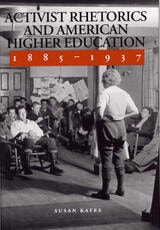
Activist Rhetorics and American Higher Education, 1885-1937
Susan Kates
Southern Illinois University Press, 2000
In this study of the history of rhetoric education, Susan Kates focuses on the writing and speaking instruction developed at three academic institutions founded to serve three groups of students most often excluded from traditional institutions of higher education in late-nineteenth-and early-twentieth-century America: white middle-class women, African Americans, and members of the working class.
Kates provides a detailed look at the work of those students and teachers ostracized from rhetorical study at traditional colleges and universities. She explores the pedagogies of educators Mary Augusta Jordan of Smith College in Northhampton, Massachusetts; Hallie Quinn Brown of Wilberforce University in Wilberforce, Ohio; and Josephine Colby, Helen Norton, and Louise Budenz of Brookwood Labor College in Katonah, New York.
These teachers sought to enact forms of writing and speaking instruction incorporating social and political concerns in the very essence of their pedagogies. They designed rhetoric courses characterized by three important pedagogical features: a profound respect for and awareness of the relationship between language and identity and a desire to integrate this awareness into the curriculum; politicized writing and speaking assignments designed to help students interrogate their marginalized standing within the larger culture in terms of their gender, race, or social class; and an emphasis on service and social responsibility.
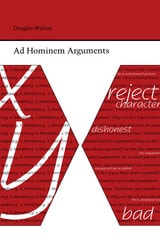
Ad Hominem Arguments
Douglas Walton
University of Alabama Press, 2009
A vital contribution to legal theory and media and civic discourse
In the 1860s, northern newspapers attacked Abraham Lincoln's policies by attacking his character, using the terms "drunk," "baboon," "too slow," "foolish," and "dishonest." Steadily on the increase in political argumentation since then, the argumentum ad hominem, or personal attack argument, has now been carefully refined as an instrument of "oppo tactics" and "going negative" by the public relations experts who craft political campaigns at the national level. In this definitive treatment of one of the most important concepts in argumentation theory and informal logic, Douglas Walton presents a normative framework for identifying and evaluating ad hominem or personal attack arguments.
Personal attack arguments have often proved to be so effective, in election campaigns, for example, that even while condemning them, politicians have not stopped using them. In the media, in the courtroom, and in everyday confrontation, ad hominem arguments are easy to put forward as accusations, are difficult to refute, and often have an extremely powerful effect on persuading an audience.
Walton gives a clear method for analyzing and evaluating cases of ad hominem arguments found in everyday argumentation. His analysis classifies the ad hominem argument into five clearly defined subtypes—abusive (direct), circumstantial, bias, "poisoning the well," and tu quoque ("you're just as bad") arguments—and gives methods for evaluating each type. Each subtype is given a well-defined form as a recognizable type of argument. The numerous case studies show in concrete terms many practical aspects of how to use textual evidence to identify and analyze fallacies and to evaluate argumentation as fallacious or not in particular cases.
Adam Smith
The Rhetoric of ProprietyStephen J. McKenna
Southern Illinois University Press, 2006
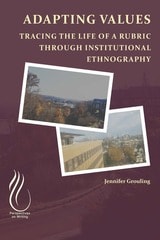
Adapting VALUEs
Tracing the Life of a Rubric through Institutional EthnographyJennifer Grouling
University Press of Colorado, 2023
Adapting the Past to Reimagine Possible Futures
Celebrating and Critiquing WAC at 50Megan J. Kelly
University Press of Colorado, 2024