Results by title
1787 books match the query 'Literary Collections' and 169 start with a

Alms for Oblivion
Edward DahlbergForeword by Sir Herbert Read
University of Minnesota Press, 1967
Alms for Oblivion was first published in 1967. Minnesota Archive Editions uses digital technology to make long-unavailable books once again accessible, and are published unaltered from the original University of Minnesota Press editions.
This volume makes available in book form a collection of seventeen essays by Edward Dahlberg, who has been called one of the great unrecognized writers of our time. Some of the selections have never been published before; others have appeared previously only in magazines of limited circulation. There is a foreword by Sir Herbert Read.
The individual essays are on a wide range of subjects: literary, historical, philosophical, personal. The longest is a discussion of Herman Melville's work entitled "Moby-Dick - A Hamitic Dream." The fate of authors at the hands of reviewers is the subject of the essay called "For Sale." In "No Love and No Thanks" the author draws a characterization of our time. He presents a critique of the poet William Carlos Williams in "Word-Sick and Place- Crazy," and a discussion of F. Scott Fitzgerald in "Peopleless Fiction." In "My Friends Stieglitz, Anderson, and Dreiser" he discusses not only Alfred Stieglitz, Sherwood Anderson, and Theodore Dreiser but other personalities as well. He also writes of Sherwood Anderson in "Midwestern Fable." In "Cutpurse Philosopher" the subject is William James. "Florentine Codex" is about the conquistadores. Other essays in the collection are the following: "Randolph Bourne," "Our Vanishing Cooperative Colonies," "Chivers and Poe," "Domestic Manners of Americans," "Robert McAlmon: A Memoir," "The Expatriates: A Memoir," and an essay on Allen Tate.
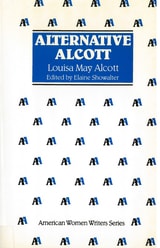
Alternative Alcott
Showalter, Elaine
Rutgers University Press, 1988
Alternative Alcott includes works never before reprinted, including "How I Went Out to Service," "My Contraband," and "Psyche's Art." It also contains Behind a Mask, her most important sensation story; the full and correct text of her last unfinished novel, Diana and Persis; "Transcendental Wild Oats"; Hospital Sketches; and Alcott's other important texts on nineteenth-century social history. This anthology brings together for the first time a variety of Louisa May Alcott's journalistic, satiric, feminist, and sensation texts. Elaine Showalter has provided an excellent introduction and notes to the collection.
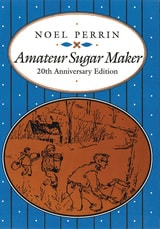
Amateur Sugar Maker
Noel Perrin
Brandeis University Press, 1992
American Examples, Vol 1
New Conversations about ReligionEdited by Michael J. Altman
University of Alabama Press, 2022
Rethinking Religion in America Through Contemporary Case and Conversation.
American Examples: New Conversations about Religion, Volume One is the first in a series of annual anthologies published in partnership with the Department of Religious Studies at The University of Alabama. The American Examples initiative gathers scholars from around the world for a series of workshops designed to generate big questions about the study of religion in America. Bypassing traditional white Protestant narratives in favor of new perspectives on belief, social formation, and identity, American Examples fellows offer dynamic perspectives on American faith that challenge our understandings of both America and religion as categories.
In the first volume of this exciting academic project, five topically and methodologically diverse scholars vividly reimagine the potential applications of religious history. The five chapters of this inaugural volume use case studies from America, broadly conceived, to ask larger theoretical questions that are of interest to scholars beyond the subfield of American religious history.
Prea Persaud’s chapter explores the place of Hinduism among the “creole religions” of the Caribbean, while Hannah Scheidt captures what atheist parents say to each other about value systems. Travis Warren Cooper explains how the modernist church architecture of Columbus, Indiana, became central to that city’s identity. Samah Choudhury dissects how Muslim American comedians navigate Western ideas of knowledge and self to make their jokes, and their own selves legible, and Emily D. Crews uses ethnographic fieldwork to read the female reproductive body among Nigerian Pentecostal congregations. Editor Michael J. Altman also provides a brief, rich introduction assessing the state of the discipline of religious history and how the American Examples project can lead the field forward.
Visit americanexamples.ua.edu for more information on the group and news about upcoming projects.
American Examples, Vol 2
New Conversations about ReligionEdited by Samah Choudhury, Prea Persaud, and Michael J. Altman
University of Alabama Press, 2022
Fresh new perspectives on the study of religion, ranging from SoulCycle to Mark Twain
American Examples: New Conversations about Religion, Volume Two, is the second in a series of annual anthologies produced by the American Examples workshop hosted by the Department of Religious Studies at The University of Alabama. In the latest volume from this dynamic academic project, nine scholars with diverse topics and methodologies vividly reimagine the meaning of all three words in the phrase “American religious history.” The essays use case studies from America, broadly conceived, to ask trenchant theoretical questions that are of interest to scholars and students beyond the subfield of American religious history.
Cody Musselman uses a Weberian analysis to explore questions of identity, authority, and authenticity in the world of SoulCycle while Zachary T. Smith finds commonality between the rhetoric and practices of scholarship and mixed martial arts. Erik Kline provides a new perspective on the psychedelic mysticism of the 1960s, and Brook Wilensky-Lanford takes stock of the cultural power of parody in Mark Twain’s last work of fiction. Christopher Cannon Jones examines the reciprocal relationship between religious texts and cultural contexts by comparing early Mormon missions to Hawai‘i and Jamaica and Lindsey Jackson explores what debates over circumcision can tell us about gender stereotypes and motherhood. Dana Lloyd uses the 1988 Supreme Court decision in Lyng v. Northwest Indian Cemetery Protective Association as a case study in order to consider how Indigenous religion and sovereignty have been understood and adjudicated in the American legal system. Matt Sheedy studies the identity categories of “atheist” and “ex-Muslim” and Brad Stoddard uses ethnographic fieldwork to evaluate the role of religious pluralism in regulating and policing correctional institutions. Editors Samah Choudhury and Prea Persaud provide an introduction that reconsiders the trajectory of the American Examples project in light of the siege on the US Capitol in January 2021 and the continuing COVID pandemic.
Visit americanexamples.ua.edu for more information on upcoming workshop dates and future projects.
CONTRIBUTORS
Michael J. Altman / Samah Choudhury / Lindsey Jackson / Christopher Cannon Jones / / Erik Kline / Dana Lloyd / Cody Musselman / Prea Persaud / Matt Sheedy / Zachary T. Smith / Brad Stoddard / Brook Wilensky-Lanford
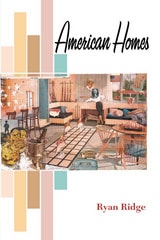
American Homes
Ryan Ridge
University of Michigan Press, 2014
From the nostalgia of front porches to the hidden mysteries of basements, Ridge turns ordinary spaces into insightful meditations on homeownership, personal identity, and cultural expectations. American Homes is as much an architectural guidebook as it is a critique of consumerism, presenting a vivid portrait of how we live and the structures that define us. The result is a thought-provoking, humorous, and occasionally surreal commentary on what it means to call a place "home" in America.
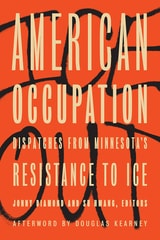
American Occupation
Dispatches from Minnesota's Resistance to ICEJonny Diamond
University of Minnesota Press, 2027
A collection of intimate writings first published by Literary Hub in the Letters From Minnesota series that recounts the lived community experience of facing—and resisting—ICE violence during Operation Metro Surge
The history of America is a history of occupations. But what happens when an imperial nation, defined by endless expansion, runs out of frontier? It turns inward. It occupies itself.
American Occupation is an urgent compilation of reflections and accounts that emerged during the shocking, months-long ICE operation in Minnesota. In December 2025, the Department of Homeland Security launched Operation Metro Surge, and thousands of ICE and border patrol agents in paramilitary costumes descended on the Twin Cities. Their brutal, unconstitutional campaign resulted in the terrorization and disappearance of countless US citizens and immigrants, the murders of legal observers Renee Good and Alex Pretti, and the mobilization of vast, intricate mutual aid networks, massive protests, and staggering acts of courage during one of the coldest Minnesota winters in a decade.
Two days after Alex Pretti was killed on January 24, 2026, Literary Hub published the first of forty-four Letters From Minnesota, an online rapid response series that invited novelists, journalists, poets, and memoirists to document their experiences under occupation. An immigrant mother makes a plan with her young children in case she’s detained by ICE. A Powderhorn Park resident witnesses the traumatic abduction of two neighbors at a bus stop. A professor chronicles the relentless federal violence throughout her family’s journey from Mexico to California to Minnesota, among other harrowing stories and accounts.
With twelve new contributions, American Occupation offers a mosaic of deeply personal and defiant testimonies detailing the creative solidarity and resolve of Minnesotans confronting fascist cruelty. Contextualized in the history of the US government’s abuse of power against its own civilians, American Occupation reveals the grim reality of yet another American administration in thrall to its own mythologies—and the long arc of resistance and compassion of ordinary people.
Contributors: Angela Ajayi, Anonymous, Charles Baxter, Victoria Blanco, Jennifer Eli Bowen, Katherine Packert Burke, Zeke Caligiuri, David Aiona Chang, Dana Chiueh, Heid E. Erdrich, Nick Estes, Nimo Farah, V. V. Ganeshananthan, Shannon Gibney, Dobby Gibson, Sarah Green, Molly Beth Griffin, Dara Moskowitz Grumdahl, Marian Hassan, Hedgiee, Laurie Hertzel, Carolyn Holbrook, Siri Hustvedt, Đenise Hạnh Huỳnh, Andrea Jenkins, Michael Kleber-Diggs, Ed Bok Lee, Josina Manu Maltzman, Will McGrath, Jim Moore, David Mura, Nia Navarro, Sahra Noor, Kara Olson, Peter Pearson, Angela Pelster, Bao Phi, Kaia Preus, Susan Raffo, Marcie Rendon, Kate Romero and Gustavo Romero, Sean Sherman, Sun Yung Shin, Gabriela Spears-Rico, Michael Torres, Kawai Strong Washburn, Sana Wazwaz, chaun webster, Diane Wilson, A. E. Wynter, Kao Kalia Yang, Ahmed Ismail Yusuf, Michelle Zamanian.
Retail e-book files for this title are screen-reader friendly.
American Political Plays after 9/11
Edited by Allan Havis
Southern Illinois University Press, 2010
American Political Plays after 9/11 is a diverse collection of bold, urgent, and provocative plays that respond to the highly charged, post 9/11 political landscape. Sparked by the terrorist attacks of September 11, 2001, and subsequently fueled by a series of controversial events—the Iraq war, the passing and enforcement of the U.S.A. Patriot Act, and the revelation of torture and other scandals at the Abu Ghraib prison—American political theater is currently experiencing a surge in activity. The plays in this collection include The Guys by Anne Nelson, At the Vanishing Point by Naomi Iizuka, The Venus de Milo Is Armed by Kia Corthron, Back of the Throat by Yusseff El Guindi, Three Nights in Prague by Allan Havis, and Question 27, Question 28 by Chay Yew.
The characters range from a New York City fire captain trying to respectfully memorialize eight of his lost comrades, to the citizens of a hog-killing Louisville neighborhood who poignantly exemplify the underside of the economic crisis, to an Arab American citizen being harshly (and possibly unfairly) interrogated by two officers as a “person of interest.” Though not all of the plays deal explicitly with the Al Qaeda attacks, they collectively reveal themes of sorrow and anxiety, moral indignation, alarmist self-preservation, and economic and social insecurity stemming from the United States’ fairly sudden shift from cold war superpower to vulnerable target.
The lively introduction by Allan Havis includes a brief history of political theater in the United States, an extensive discussion about how theater communities responded to 9/11, and an informative analysis of the six plays in the book. A collection of dramatic material framed by this significant historical event, AmericanPolitical Plays after 9/11 will be indispensable for theater and cultural studies scholars and students.
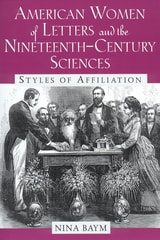
American Women of Letters and the Nineteenth-Century Sciences
Styles of AffiliationBaym, Nina
Rutgers University Press, 2001
Choice Outstanding Academic Title
During the nineteenth century, the content and institutional organization of the sciences evolved dramatically, altering the public's understanding of knowledge. As science grew in importance, many women of letters tried to incorporate it into a female worldview. Nina Baym explores the responses to science displayed in a range of writings by American women. Conceding that they could not become scientists, women insisted, however, that they were capable of understanding science and participating in its discourse. They used their access to publishing to advocate the study and transmission of scientific information to the general public.
Bayms book includes biographies and a full exploration of these women's works. Among those considered are:
• Almira Phelps, author of Familiar Lectures on Botany (it sold 350,000 copies)
• Sarah Hale, who filled Godey's Lady's Book with science articles
• Catharine Esther Beecher, who based her domestic advice on scientific information
• Elizabeth Cary Agassiz, the actual ghostwriter of her husband's popular science essays
• Emily Dickinson, whose poetry is replete with scientific images.
Baym also investigates science in women's novels, writing by and about women doctors, and the scientific claims advanced by women's spiritualist movements. This book truly breaks new ground, outlining a field of inquiry that few have noted exists.
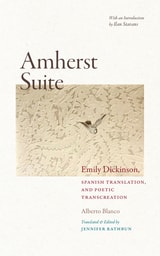
Amherst Suite
Emily Dickinson, Spanish Translation & Poetic TranscreationBy Alberto Blanco, Translated and Edited by Jennifer Rathbun, with an Introduction by Ilan Stavans
Amherst College Press, 2026
Opening with a creative essay by renowned author Ilan Stavans, the volume also includes a conversation between Blanco and scholar Ronald J. Friis; Blanco’s own essay on Dickinson, translated into English by Jennifer Rathbun; as well as an introduction by Rathbun that helpfully situates this interlinguistic, intercultural, and inter-generational network. Amherst Suite is a fascinating and unique look into the work and worlds of poets and their translators and will be an invaluable text for students, scholars, and all readers of Emily Dickinson.
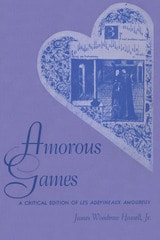
Amorous Games
A Critical Edition of Les adevineaux amoureuxBy James Woodrow Hassell
University of Texas Press, 1974
Among the more interesting incunabula preserved in the Salle de la Réserve of the Bibliothèque National in Paris are the apparently unique copies of two editions, very similar in content, of a work entitled Les Adevineaux amoureux. In much more comprehensive form Les Adevineaux amoureux is preserved in a manuscript belonging to the Musée Conde at Chantilly. All three texts, in medieval French, appear to date from the 1470s. The present work, Amorous Games, is a critical edition of Les Adevineaux amoureux.
Amorous Games is a miscellany whose principal unifying force is the compiler's aim to provide a manual of conversation and entertainment for polite society. Included are series of questions and answers belonging to the well-established medieval tradition of the "Demandes amoureuses"; a very large number of riddles, mainly folk riddles; and "venditions en amours," little poems that apparently came into bing as part of a social game.
Students of medieval French literature, particularly those with a penchant for some of the minor genres, will find new material in the Amorous Games. Folklorists will discover what is probably the largest collection of riddles bequeathed to us by medieval France and also much that is of value to specialists in the proverb and folk tale.
For this critical edition of Les Adevineaux amoureux Professor Hassell has selected the Chantilly manuscript, because it is the most complete and also because it had not yet been published. The Appendix contains the text of the more complete of the two incunabula and the significant variants appearing in the other fifteenth-century printed edition. The manuscript text has been collated with that of the incunabula, and copious notes and an index to the riddles have been supplied. In his introduction Professor Hassell discusses in detail the major classes and subclasses of the riddle, drawing on the work of Petsch, Taylor, Abrahams, and other scholars of the genre.
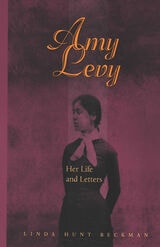
Amy Levy
Critical EssaysLinda Hunt Beckman
Ohio University Press, 2000
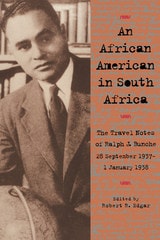
An African American in South Africa
The Travel Notes of Ralph J. Bunche 28 September 1937–1 January 1938Ralph Bunche
Ohio University Press, 2001
Ralph Bunche, who received the Nobel Peace Prize in 1950, traveled to South Africa for three months in 1937. His notes, which have been skillfully compiled and annotated by historian Robert R. Edgar, provide unique insights on a segregated society.
An American in the Making
The Life Story of an ImmigrantKellman, Steven G
Rutgers University Press, 2009
Steven G. Kellman brings Ravage's story to life again in this new edition, providing a brief biography and introduction that place the memoir within historical and literary contexts. An American in the Making contributes to a broader understanding of the global notion of "America" and remains timely, especially in an era when massive immigration, now from Latin America and Asia, challenges ideas of national identity.
An Anchor in the Sea of Time
EssaysStephen Harrigan
University of Texas Press, 2025
A new collection of essays grappling with identity and memory, from a master of the form.
The author of the New York Times bestselling novel The Gates of the Alamo, the sweeping Texas history Big Wonderful Thing, and decades of incisive journalism, Stephen Harrigan is an adept writer skilled in crafting memorable characters. From this singular voice now comes a collection of essays tackling the most personal, and yet most expansive, themes of all: identity, memory, and time itself.
An Anchor in the Sea of Time unfolds individual stories but also a larger narrative about the development and distortions of history. In one essay, a painting on his grandparents’ wall is seared in Harrigan’s young mind. In another, a group trip to Vietnam stirs up a sobering confrontation with class privilege among Americans who fought there and others, like Harrigan, who did their best not to. The award-winning essay “Off Course” reflects on the father Harrigan never met. And Harrigan’s reporting about the Karankawas, an Indigenous group from the Texas coast once thought to be extinct, takes readers deep into the recesses of collective forgetting and offers glimpses of the possibility of recovery. A vivid encounter with lost selves, vanished worlds, and futures yet unrealized, An Anchor in the Sea of Time is perhaps the most personal book yet from this beloved writer.
An Atlantic City Reader
The Rise and Decline of an American ResortLouis J. Parascandola
Rutgers University Press, 2026
As Atlantic City grew to become one of the largest tourist destinations on the East Coast, it loomed ever larger in the imaginations of American writers. Generation upon generation of novelists, journalists, musicians, and poets visited Atlantic City and left with vivid impressions of its kaleidoscopic delights and its seedy underbelly.
This new reader collects all of these diverse perspectives on the city in one place, including accounts of Atlantic City by such famous visitors as Walt Whitman, William Carlos Williams, Fanny Hurst, Arthur Conan Doyle, Damon Runyon, Langston Hughes, Elmore Leonard, and Bruce Springsteen. Arranged chronologically, the anthology traces the city’s history from its humble beginnings as a quiet health resort to its rapid ascent to the world’s playground, its gradual decline, and its hopeful if tenuous future. Together, the pieces in this collection take us inside the city’s glitz, glamor, and gambling palaces, but they also don’t shy away from its troubling histories of racial discrimination, political corruption, and urban decay. Compiling fiction, poetry, drama, memoirs, newspaper stories, and magazine reports, The Atlantic City Reader presents an engaging and multifaceted portrait of this iconic resort town.
An Odyssey Reader
Selections from Homer's Odyssey, Books 1-12P. A. Draper
University of Michigan Press, 2012
Homer's Odyssey has captivated readers and influenced writers and artists for more than 2,000 years. Reading the poem in its original language provides an experience as challenging as it is rewarding. Most students encountering Homeric Greek for the first time need considerable help, especially with vocabulary and constructions that differ from the more familiar Attic forms. For anyone who has completed studies in elementary Greek, this edition provides the assistance necessary to read, understand, and appreciate the first book of the Odyssey in its original language.
Structured to maximize reading ease, P. A. Draper's volume stands out among introductions to the Greek Odyssey. Readers of this edition will appreciate the positioning of all notes facing the Greek text; the frequent vocabulary entries; the complete glossary; the appendix on basic Homeric forms and grammar; and the copious annotations on vocabulary, grammar, meter, historical and mythological allusions, and literary interpretation.
Primarily designed as a textbook, this volume will be an effective classroom tool and a useful acquisition for any library supporting a classics program. The book will find readers among high school and college Greek students, advanced students in Homer or epic poetry classes, graduate students working on reading-list requirements, and anyone interested in maintaining Greek reading skills.
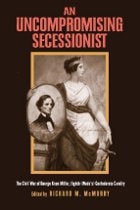
An Uncompromising Secessionist
The Civil War of George Knox Miller, Eighth (Wade's) Confederate CavalryGeorge Knox Miller, edited by Richard M. McMurry
University of Alabama Press, 2006
Offers significant insight into the life, heart, mind, and attitudes of an intelligent, educated, young mid-19th-century white Southerner
This book contains the letters of George Knox Miller who served as a line officer in the Confederate cavalry and participated in almost all of the major campaigns of the Army of Tennessee. He was, clearly, a very well-educated young man. Born in 1836 in Talladega, Alabama, he developed a great love for reading and the theater and set his sights upon getting an education that would lead to a career in law or medicine; meanwhile he worked as an apprentice in a painting firm to earn tuition. Miller then enrolled in the University of Virginia, where he excelled in his studies.
Eloquent, bordering on the lyrical, the letters provide riveting first-hand accounts of cavalry raids, the monotony of camp life, and the horror of battlefield carnage. Miller gives detailed descriptions of military uniforms, cavalry tactics, and prison conditions. He conveys a deep commitment to the Confederacy, but he was also critical of Confederate policies that he felt hindered the army's efforts. Dispersed among these war-related topics is the story of Miller's budding relationship with Celestine “Cellie” McCann, the love of his life, whom he would eventually marry.
And Here
100 Years of Upper Peninsula Writing, 1917–2017Ronald Riekki
Michigan State University Press, 2017
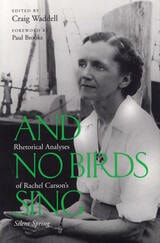
And No Birds Sing
Rhetorical Analyses of Rachel Carson's Silent SpringEdited by Craig Waddell. Foreword by Paul Brooks. Afterword by Linda Lear
Southern Illinois University Press, 2000
Craig Waddell presents essays investigating Rachel Carson’s influential 1962 book, Silent Spring. In his foreword, Paul Brooks, Carson’s editor at Houghton Mifflin, describes the process that resulted in Silent Spring. In an afterword, Linda Lear, Carson’s recent biographer, recalls the end of Carson’s life and outlines the attention that Carson’s book and Carson herself received from scholars and biographers, attention that focused so minutely on her life that it detracted from a focus on her work. The foreword by Brooks and the afterword by Lear frame this exploration within the context of Carson’s life and work.
Contributors are Edward P. J. Corbett, Carol B, Gartner, Cheryll Glotfelty, Randy Harris, M. Jimmie Killingsworth, Linda Lear, Ralph H. Lutts, Christine Oravec, Jacqueline S. Palmer, Markus J. Peterson, Tarla Rai Peterson, and Craig Waddell. Together, these essays explore Silent Spring’seffectiveness in conveying its disturbing message and the rhetorical strategies that helped create its wide influence.
And the Garden Is You
Essays on Fieldwork, Writingwork, and ReadingworkMichael Taussig
University of Chicago Press, 2024
Michael Taussig’s work is known for its critical insights and bold, experimental style. In the eleven essays in this new collection, Taussig reflects on the act of writing itself, demonstrating its importance for anthropological practice and calling for the discipline to keep experiential knowledge from being extinguished as fieldnotes become scholarship.
Setting out to show how this can be done, And the Garden Is You exemplifies a form of exploratory writing that preserves the spontaneity of notes scribbled down in haste. In these essays, the author’s reflections take us from his childhood in Sydney to trips to Afghanistan, Colombia, Finland, Italy, Turkey, and Syria. Along the way, Taussig explores themes of fabulation and provocation that are central to his life’s work, in addition to the thinkers dearest to him—Bataille, Benjamin, Burroughs, and Nietzsche, among others. This collection is vintage Taussig, bound to interest longtime readers and newcomers alike.

Andre Malraux
An Age of OppressionRoberta Newnham
Intellect Books, 2013
Anecdotal Theory
Jane Gallop
Duke University Press, 2002
Published during the 1990s, these essays are united through a common methodological engagement—writing that recounts a personal anecdote and then attempts to read that anecdote for the theoretical insights it affords. Gallop addresses many of the major questions of feminist theory, regularly revisiting not only ‘70s feminism, but also poststructuralism and the academy, for, as Gallop explains, the practice of anecdotal theory derives from psychoanalysis, deconstruction, and feminism. Whether addressing issues of pedagogy, the sexual position one occupies when on the academic job-market, bad-girl feminists, or the notion of sisterhood, these essays exemplify theory grappling with its own erotics, theory connected to the real. They are bold, illuminating, and—dare we say—fun.
Angeleno Days
An Arab American Writer on Family, Place, and PoliticsGregory Orfalea
University of Arizona Press, 2009
Populated with fascinating characters—the Angelenos of Orfalea’s life—these essays tell the story of the author’s trials. He returns to Los Angeles to teach, trying to reconcile the LA of his childhood with the city he now faces. He takes on progressively more difficult and painful subjects, finally confronting the memories of the shocking tragedy that took the lives of his father and sister.
With more than 400,000 Arab Americans in Los Angeles—probably surpassing Detroit as the largest contingent in America—Orfalea also explores his own community and its political and social concerns. He agonizes over another destruction of Lebanon and examines in searing detail a massacre of civilians in Iraq.
Angeleno Days takes the memoir and personal essay to rare heights. Orfalea is a deeply human writer who reveals not only what it means to be human in America now, but also what it will take to remain human in the days to come. These essays soar, confound, reveal, and strike at our senses and sensibilities, forcing us to think and feel in new ways.
Angelic Airs, Subversive Songs
Music as Social Discourse in the Victorian NovelAlisa Clapp-Itnyre
Ohio University Press, 2027
Music was at once one of the most idealized and one of the most contested art forms of the Victorian period. Yet this vitally important nineteenth-century cultural form has been studied by literary critics mainly as a system of thematic motifs. Angelic Airs, Subversive Songs positions music as a charged site of cultural struggle, promoted concurrently as a transcendent corrective to social ills and as a subversive cause of those ills. Alisa Clapp-Itnyre examines Victorian constructions of music to advance patriotism, Christianity, culture, and domestic harmony, and suggests that often these goals were undermined by political tensions in song texts or “immoral sensuality” in the “spectacle” of live music-making. Clapp-Itnyre turns her focus to the novels of Elizabeth Gaskell, George Eliot, and Thomas Hardy, who present complex engagements with those musical genres most privileged by Victorian society: folk songs, religious hymns, and concert music. Angelic Airs, Subversive Songs recovers the pervasive ambiguities of the Victorian musical period, ambiguities typically overlooked by both literary scholars and musicologists. To the literary critic and cultural historian, Clapp-Itnyre demonstrates the necessity of further exploring the complete aesthetic climate behind some of the Victorian period’s most powerful literary works. And to the feminist scholar and the musicologist, Clapp-Itnyre reveals the complexities of music as both an oppressive cultural force and an expressive, creative outlet for women.
Anger, Mercy, Revenge
Lucius Annaeus Seneca
University of Chicago Press, 2010
Lucius Annaeus Seneca (4 BCE–65 CE) was a Roman Stoic philosopher, dramatist, statesman, and adviser to the emperor Nero, all during the Silver Age of Latin literature. The Complete Works of Lucius Annaeus Seneca is a fresh and compelling series of new English-language translations of his works in seven accessible volumes. Edited by world-renowned classicists Elizabeth Asmis, Shadi Bartsch, and Martha C. Nussbaum, this engaging collection restores Seneca—whose works have been highly praised by modern authors from Desiderius Erasmus to Ralph Waldo Emerson—to his rightful place among the classical writers most widely studied in the humanities.
Anger, Mercy, Revenge comprises three key writings: the moral essays On Anger and On Clemency—which were penned as advice for the then young emperor, Nero—and the Apocolocyntosis, a brilliant satire lampooning the end of the reign of Claudius. Friend and tutor, as well as philosopher, Seneca welcomed the age of Nero in tones alternately serious, poetic, and comic—making Anger, Mercy, Revenge a work just as complicated, astute, and ambitious as its author.
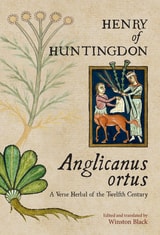
Anglicanus ortus
A Verse Herbal of the Twelfth CenturyHenry of Huntingdon
Bodleian Library Publishing, 2012
Anglo-American Feminist Challenges to the Rhetorical Traditions
Virginia Woolf, Mary Daly, Adrienne RichKrista Ratcliffe
Southern Illinois University Press, 1996
Although women and men have different relationships to language and to each other, traditional theories of rhetoric do not foreground such gender differences. Krista Ratcliffe argues that because feminists generally have not conceptualized their language theories from the perspective of rhetoric and composition studies, rhetoric and composition scholars must construct feminist theories of rhetoric by employing a variety of interwoven strategies: recovering lost or marginalized texts; rereading traditional rhetoric texts; extrapolating rhetorical theories from such nonrhetoric texts as letters, diaries, essays, cookbooks, and other sources; and constructing their own theories of rhetoric.
Focusing on the third option, Ratcliffe explores ways in which the rhetorical theories of Virginia Woolf, Mary Daly, and Adrienne Rich may be extrapolated from their Anglo-American feminist texts through examination of the interrelationship between what these authors write and how they write. In other words, she extrapolates feminist theories of rhetoric from interwoven claims and textual strategies. By inviting Woolf, Daly, and Rich into the rhetorical traditions and by modeling the extrapolation strategy/methodology on their writings, Ratcliffe shows how feminist texts about women, language, and culture may be reread from the vantage point of rhetoric to construct feminist theories of rhetoric. She also outlines the pedagogical implications of these three feminist theories of rhetoric, thus contributing to ongoing discussions of feminist pedagogies.
Traditional rhetorical theories are gender-blind, ignoring the reality that women and men occupy different cultural spaces and that these spaces are further complicated by race and class, Ratcliffe explains. Arguing that issues such as who can talk, where one can talk, and how one can talk emerge in daily life but are often disregarded in rhetorical theories, Ratcliffe rereads Roland Barthes’ "The Old Rhetoric" to show the limitations of classical rhetorical theories for women and feminists. Discovering spaces for feminist theories of rhetoric in the rhetorical traditions, Ratcliffe invites readers not only to question how women have been located as a part of— and apart from—these traditions but also to explore the implications for rhetorical history, theory, and pedagogy.
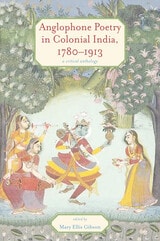
Anglophone Poetry in Colonial India, 1780–1913
A Critical AnthologyMary Ellis Gibson
Ohio University Press, 2011
Anglophone Poetry in Colonial India, 1780–1913: A Critical Anthology makes accessible for the first time the entire range of poems written in English on the subcontinent from their beginnings in 1780 to the watershed moment in 1913 when Rabindranath Tagore won the Nobel Prize in Literature.Mary Ellis Gibson establishes accurate texts for such well-known poets as Toru Dutt and the early nineteenth-century poet Kasiprasad Ghosh. The anthology brings together poets who were in fact colleagues, competitors, and influences on each other. The historical scope of the anthology, beginning with the famous Orientalist Sir William Jones and the anonymous “Anna Maria” and ending with Indian poets publishing in fin-de-siècle London, will enable teachers and students to understand what brought Kipling early fame and why at the same time Tagore’s Gitanjali became a global phenomenon. Anglophone Poetry in Colonial India, 1780–1913 puts all parties to the poetic conversation back together and makes their work accessible to American audiences.With accurate and reliable texts, detailed notes on vocabulary, historical and cultural references, and biographical introductions to more than thirty poets, this collection significantly reshapes the understanding of English language literary culture in India. It allows scholars to experience the diversity of poetic forms created in this period and to understand the complex religious, cultural, political, and gendered divides that shaped them.
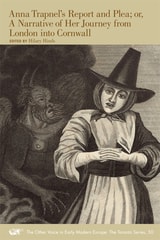
Anna Trapnel’s Report and Plea; or, A Narrative of Her Journey from London into Cornwall
Anna Trapnel
Iter Press, 2016
In 1654, Anna Trapnel — a Baptist, Fifth Monarchist, millenarian, and visionary from London — fell into a trance during which she prophesied passionately and at length against Oliver Cromwell and his government. The prophecies attracted widespread public attention, and resulted in an invitation to travel to Cornwall. Her Report and Plea, republished here for the first time, is a lively and engaging firsthand account of the visit, which concluded in her arrest, a court hearing, and imprisonment. Part memoir, part travelogue, and part impassioned defense of her beliefs and actions, the Report and Plea offers vivid and fascinating insight into the life and times of an early modern woman claiming her place at the center of the tumultuous political events of mid-seventeenth-century England.
Annali d'Italianistica
The New Italy and the Jews from Massimo d'Azeglio to Primo Levidruker
Arizona Center for Medieval and Renaissance Studies, 2018
Annali d’Italianistica
Violence Resistance Tolerance Sacrifice in Italy's Literary & Cultural HistoryChiara Ferrari
Arizona Center for Medieval and Renaissance Studies, 2017
Anne Carson and the Unknown
Contemporary Perspectives on Poetic ExperimentationEdited by Helena Van Praet and Christine Wiesenthal
University of Michigan Press, 2026
Making art relies on a process of intuitive discovery that begins prior to knowing and overrides intention. Anne Carson and the Unknown delves into the varied ways the contemporary poet and classicist Anne Carson engages with the unknown, both as a philosophical concept and as a method of creative practice. Bringing together various contemporary perspectives, ranging from the world of quantum physics to feminist literary criticism and media studies, this volume considers how contemporary poets like Anne Carson continue to show the relevance of the unknown in our turbulent times of global upheaval.
It covers Carson’s unusual travelogue about the collapse of civilizations and knowledge, positions her oeuvre in the context of a wider debate on post-critique, and reads her work as an engagement with a radically formalist Classics that goes back to ancient Greek’s etymological complexity. Taking an interdisciplinary approach, the volume dives into her work’s ambiguous relationships with trans experience and religion, the centrality of the psychoanalytical concept of the caesura, and her use of figures like Helen of Troy and Herakles. It also discusses the unknown as a visual mechanism in her recent creative collaboration with comics creator Rosanna Bruno. In this way, Carson provides a necessary counter to both Western scientific knowledge’s goals of predictability and rationality, and to the algorithmic certitudes sought by the engineering culture of technologists who prevail today.
Anonymus and Master Roger
Martyn Rady
Central European University Press, 2010
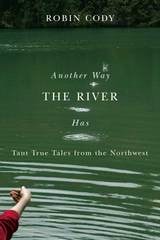
Another Way the River Has
Taut True Tales from the NorthwestRobin Cody
Oregon State University Press, 2010
Another Way the River Has collects Robin Cody’s finest nonfiction writings, many appearing for the first time in print. Cody’s prose rings with a sense of place. He is a native speaker who probes the streams and woods and salmon that run to the heart of what it means to live and love, to work and play, in Oregon.
His characters—from loggers to fishers to cowboys to the kids on his school bus—are smart and curious, often off-beat, always vivid. Cody brings the ear of a novelist and the eye of a reporter to the people and places that make the Northwest, and Northwest literature, distinctive.
“A rock, you know, will sink like a stone in water. But a flat rock, slung spinningly near the water surface and at an angel parallel to it, will go skipping across the water in defiance of gravity and common sense. How cool is that?! The first time a boy pulls this off ranks just short of first-time sex on the scale of things he will want to do over and over whenever he can and as long as he lives.”
-from “The Clackamas River”
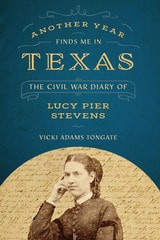
Another Year Finds Me in Texas
The Civil War Diary of Lucy Pier StevensBy Vicki Adams Tongate
University of Texas Press, 2016
Lucy Pier Stevens, a twenty-one-year-old woman from Ohio, began a visit to her aunt’s family near Bellville, Texas, on Christmas Day, 1859. Little did she know how drastically her life would change on April 4, 1861, when the outbreak of the Civil War made returning home impossible. Stranded in enemy territory for the duration of the war, how would she reconcile her Northern upbringing with the Southern sentiments surrounding her?
Lucy Stevens’s diary—one of few women’s diaries from Civil War–era Texas and the only one written by a Northerner—offers a unique perspective on daily life at the fringes of America’s bloodiest conflict. An articulate, educated, and keen observer, Stevens took note seemingly of everything—the weather, illnesses, food shortages, parties, church attendance, chores, schools, childbirth, death, the family’s slaves, and political and military news. As she confided her private thoughts to her journal, she unwittingly revealed how her love for her Texas family and the Confederate soldier boys she came to care for blurred her loyalties, even as she continued to long for her home in Ohio. Showing how the ties of heritage, kinship, friendship, and community transcended the sharpest division in US history, this rare diary and Vicki Adams Tongate’s insightful historical commentary on it provide a trove of information on women’s history, Texas history, and Civil War history.
Anthropology without Informants
Collected Works in Paleoanthropology by L.G. FreemanL. G. Freeman
University Press of Colorado, 2009
A socio-cultural anthropologist who became a behavioral paleoanthropologist late in his career, Freeman took a unique approach, employing statistical or mathematical techniques in his analysis of archaeological data. All the papers in this collection blend theoretical statements with the archeological facts they are intended to help the reader understand.
Although he taught at the University of Chicago for the span of his 40-year career, Freeman is not well-known among Anglophone scholars, because his primary fieldwork and publishing occurred in Cantabrian, Spain. However, he has been a major player in Paleolithic prehistory, and this volume will introduce his work to more American Archaeologists.
This collection brings the work of an expert scholar, to a broad audience, and will be of interest to archaeologists, their students, and lay readers interested in the Paleolithic era.
Anti-modernism
Radical Revisions of Collective IdentityAhmet Ersoy
Central European University Press, 2014
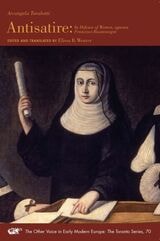
Antisatire
In Defense of Women, against Francesco BuoninsegniArcangela Tarabotti
Iter Press, 2020
The Other Voice in Early Modern Women: The Toronto Series volume 70
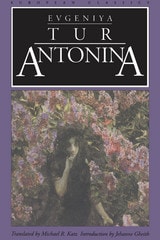
Antonina
Evgeniya Tur
Northwestern University Press, 1995
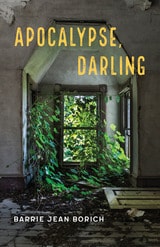
Apocalypse, Darling
Barrie Jean Borich
The Ohio State University Press, 2018
From award-winning author Barrie Jean Borich comes Apocalypse, Darling, a narrative, lyric exploration of the clash between old and new. Set in the steel mill regions of Chicago and in Northwest Indiana, the story centers on Borich’s return to a decimated landscape for a misbegotten wedding in which her spouse’s father marries his high school sweetheart. The book is a lilting journey into an ill-fated moment, where families attempt to find communion in tense gathering spaces and across their most formative disappointments. Borich tells the story of the industrial heartland that produced the steel that made American cities, but also one of the most toxic environmental sites in the world.
As concise as a poem and as sweeping as an epic novel, Apocalypse, Darling explores the intersection of American traditional and self-invented social identities and the destruction and re-greening of industrial cityscapes. Borich asks: can toxic landscapes actually be remediated and can patriarchal fathers ever really be forgiven? In a political climate where Borich is forced to daily re-enter the toxic wastelands she thought she’d long left behind, Apocalypse, Darling is an urgent collision of broken spaces, dysfunctional affections, and the reach toward familial and environmental repair.
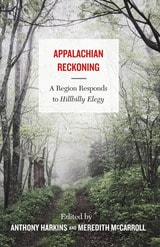
Appalachian Reckoning
A Region Responds to Hillbilly ElegyAnthony Harkins
West Virginia University Press, 2019
2020 American Book Award winner, Walter & Lillian Lowenfels Criticism Award
2019 Weatherford Award winner, nonfiction
With hundreds of thousands of copies sold, a Ron Howard movie in the works, and the rise of its author as a media personality, J. D. Vance’s Hillbilly Elegy: A Memoir of a Family and Culture in Crisis has defined Appalachia for much of the nation. What about Hillbilly Elegy accounts for this explosion of interest during this period of political turmoil? Why have its ideas raised so much controversy? And how can debates about the book catalyze new, more inclusive political agendas for the region’s future?
Appalachian Reckoning is a retort, at turns rigorous, critical, angry, and hopeful, to the long shadow Hillbilly Elegy has cast over the region and its imagining. But it also moves beyond Hillbilly Elegy to allow Appalachians from varied backgrounds to tell their own diverse and complex stories through an imaginative blend of scholarship, prose, poetry, and photography. The essays and creative work collected in Appalachian Reckoning provide a deeply personal portrait of a place that is at once culturally rich and economically distressed, unique and typically American. Complicating simplistic visions that associate the region almost exclusively with death and decay, Appalachian Reckoning makes clear Appalachia’s intellectual vitality, spiritual richness, and progressive possibilities.
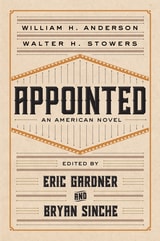
Appointed
An American NovelEric Gardner
University of Delaware Press, 0
As a coauthored novel of frustrated ambition, cross-racial friendship, and the tragedy of lynching, Appointed represents a unique contribution to African American literary history. This is the first scholarly edition of Appointed, and it includes a collection of writings from the Plaindealer, the authors’ short story “A Strange Freak of Fate,” and an introduction that locates Appointed and its authors within the journalistic and literary currents of the United States in the late nineteenth century.
Aramaic Literature from Egypt and the Levant
Tawny L. Holm
SBL Press, 2026
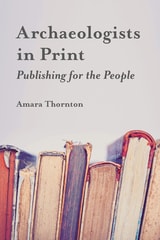
Archaeologists in Print
Publishing for the PeopleAmara Thornton
University College London, 2018
The image of the archaeologist as adventurous explorer of foreign lands, part spy, part foreigner, eternally alluring, solidified during this period. That legacy continues, undimmed, today.
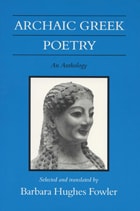
Archaic Greek Poetry
An AnthologySelected and translated by Barbara Hughes Fowler
University of Wisconsin Press, 1992
In addition to its breadth, Archaic Greek Poetry stands alone as the only volume of its kind translated by a contemporary published poet. Perhaps the most elegant translator of ancient Greek poetry into modern English, Barbara Hughes Fowler offers translations true to the original Greek while providing modern readers with superb examples of the beauty of lyric poetry. Students and scholars of classical and comparative literature, ancient history, and art history, as well as lovers of lyric poetry, will enthusiastically welcome this volume.
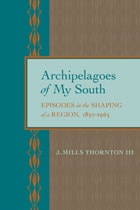
Archipelagoes of My South
Episodes in the Shaping of a Region, 1830–1965J. Mills Thornton III
University of Alabama Press, 2016
A collection of essays representing forty-five years of reflection on the central problems of southern history bound together by a common concern with defining the crucial interaction of race and class in the formation of southern politics and life
“The tourist archipelagoes of my South / are prisons, too, corruptible” writes the poet Derek Walcott. While Walcott refers to the islands of the Caribbean, the analogous idea of a land made into solitary islands by an imprisoned and inherited corruption is historian J. Mills Thornton III’s American South. The captivating essays in Archipelagoes of My South: Episodes in the Shaping of a Region, 1830–1965 address this overarching and underlying narrative of Alabama politics and the history of the South.
Highlighting events as significant as the role of social and economic conflict in the southern secession movement, various aspects of Reconstruction, and the role of the Ku Klux Klan in the politics of the 1920s, Thornton draws from various points in the southern past in an effort to identify and understand the sources of the region’s power. Moreover, each essay investigates its subject matter and peels back layers with an aim to clarify why the enormous diversity of the southern experience makes that power so great, all the while allowing the reader to see connections that would not otherwise be apparent.
Archipelagoes of My South gathers previously uncollected essays into a single volume covering the entire length and breadth of Thornton’s career. The author’s principal concerns have always been the arc of regional evolution and the significance of the local. Thus, the mechanisms of political and social change and the interrelationships across eras and generations are recurring themes in many of these essays.
Even those who have spent their entire lives in the South may be unaware of the fractured layers of history that lie beneath the landscape they inhabit. For those southern residents who seek to comprehend more of their own past, this landmark compilation of essays on Alabama and southern history endeavors to provide illumination and enlightenment.
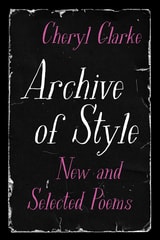
Archive of Style
New and Selected PoemsCheryl Clarke
Northwestern University Press, 2024
Award-winning poet and essayist Cheryl Clarke’s illustrious career has spanned more than four decades and culminates in Archive of Style: New and Selected Poems, a long-awaited retrospective of the indelible work of a Black feminist, community and LGBTQ activist, and educator. This collection features carefully curated poems from Narratives: Poems in the Tradition of Black Women (1982), Living as a Lesbian (1986), The Days of Good Looks: Prose and Poetry 1980-2005 (2006), By My Precise Haircut (2016), and Targets (2019). Together these works show a brilliant thinker who has profoundly impacted generations of writers and activists.
Clarke’s poetry and essays, centered around the Black, lesbian, feminist experience, have attracted an audience around the world. Her essays, “Lesbianism: an Act of Resistance” and “The Failure to Transform: Homophobia in the Black Community” revolutionized the thinking about lesbians of color and the struggle against homophobia. Her poetry and non-fiction have been reprinted in numerous anthologies and assigned in women and sexuality courses globally. Having published since 1977, Clarke and her work have become a foundational part of LGBTQ literature and activism. Archive of Style is a celebration and homage to one of American literature’s Black Women literary warriors.
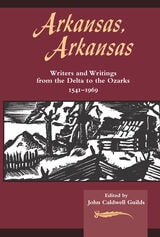
Arkansas, Arkansas Volume 1
Writers and Writings from the Delta to the Ozarks, 1541-1969John C. Guilds
University of Arkansas Press, 1999
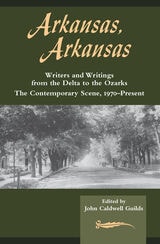
Arkansas, Arkansas Volume 2
Writers and Writings from the Delta to the Ozarks,The Contemporary Scene, 1970–presentjohn Guilds
University of Arkansas Press, 1999