Results by title
3064 books match the query 'Social conditions' and 248 start with a
Affective Circuits
African Migrations to Europe and the Pursuit of Social RegenerationEdited by Jennifer Cole and Christian Groes
University of Chicago Press, 2016
The contributors point to the intersecting streams of goods, people, ideas, and money as they circulate between African migrants and their kin who remain back home. They also show the complex ways that emotions become entangled in these exchanges. Examining how these circuits operate in domains of social life ranging from child fosterage to binational marriages, from coming-of-age to healing and religious rituals, the book also registers the tremendous impact of state officials, laws, and policies on migrant experience. Together these essays paint an especially vivid portrait of new forms of kinship at a time of both intense mobility and ever-tightening borders.
Affective Intellectuals and the Space of Catastrophe in the Americas
Judith Sierra-Rivera
The Ohio State University Press, 2018
Pursuing this argument, Sierra-Rivera examines print, radio, and web materials by authors whose emotional discourses have also had a measurable impact on the formation of communities that demand their full political inclusion in society. This book therefore fills a significant gap in the study of the relationship between materiality (space and bodies), emotions, and the political imagination. Affective Intellectuals demonstrates that writers and intellectuals themselves are vital in reshaping their communities and fighting for social justice in the Hemispheric Americas.
Africa in America
Slave Acculturation and Resistance in the American South and the British Caribbean, 1736-1831Michael Mullin
University of Illinois Press, 1992
African American Females
Addressing Challenges and Nurturing the FutureEdited by Eboni M. Zamani-Gallaher and Vernon C. Polite
Michigan State University Press, 2013
African American Females: Addressing Challenges and Nurturing the Future illustrates that across education, health, and other areas of social life, opportunities are stratified along gender as well as race lines. The unequal distribution of wealth, power, and privilege between men and women intersects with race and class to create multiple levels of disadvantage. This book is one result of a unique forum intended to bring into focus the K–12 and postsecondary schooling issues and challenges affecting African American girls and women. Focusing on the historical antecedents of African American female participation and the contemporary context of access and opportunity for black girls and women, the contributors to this collection pay particular attention to the interaction of gender with race/ethnicity, class, age, and health, with the central aim of encouraging thoughtful reading, critical thinking, and informed conversations about the necessity of exploring the lives of African American females. Additionally, the book frames important implications for recommended changes in policy and practice regarding a number of critical matters presently affecting African American females in schools and communities across the state of Michigan and nationwide.

African American Jeremiad Rev
Appeals For Justice In AmericaDavid Howard-Pitney
Temple University Press, 2005
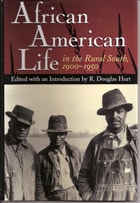
African American Life in the Rural South, 1900-1950
Edited with an introduction by R. Douglas Hurt
University of Missouri Press, 2003
African American Organized Crime
A Social HistorySchatzberg, Rufus
Rutgers University Press, 1997
While stories of organized crime most often dwell on groups like the Mafia and Chinese Triad or Tongs, African Americans also have a long history of organized crime. Why have scholars and journalists paid so little attention to African American organized crime? What can a history of these criminal networks teach us about the social, political, and economic challenges that face African Americans today? What is specific to African American organized crime, and how do these networks differ from the criminal organizations of other racial and ethnic groups? How can a historical study of African American organized crime enrich our understanding of all criminal activity?
Rufus Schatzberg and Robert Kelly take us through almost a century of African American organized crime. Chapters focus on the numbers gambling that took place in New York City from 1920 to 1940, the criminal groups that operated in ghettos from the 1940s to the 1970s, and the gang activities that began in the 1970s and continues today. While providing a compelling analysis of African American organized crime, the authors also challenge existing stereotypes of African Americans and demonstrate the importance of studying any criminal activity within its historical and social context.
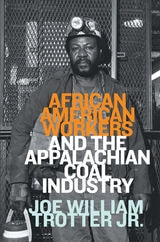
African American Workers and the Appalachian Coal Industry
Joe William Trotter
West Virginia University Press, 2024
This collection brings together nearly three decades of research on the African American experience, class, and race relations in the Appalachian coal industry. It shows how, with deep roots in the antebellum era of chattel slavery, West Virginia’s Black working class gradually picked up steam during the emancipation years following the Civil War and dramatically expanded during the late nineteenth and early twentieth centuries.
From there, African American Workers and the Appalachian Coal Industry highlights the decline of the region’s Black industrial proletariat under the impact of rapid technological, social, and political changes following World War II. It underscores how all miners suffered unemployment and outmigration from the region as global transformations took their toll on the coal industry, but emphasizes the disproportionately painful impact of declining bituminous coal production on African American workers, their families, and their communities. Joe Trotter not only reiterates the contributions of proletarianization to our knowledge of US labor and working-class history but also draws attention to the gender limits of studies of Black life that focus on class formation, while calling for new transnational perspectives on the subject. Equally important, this volume illuminates the intellectual journey of a noted labor historian with deep family roots in the southern Appalachian coalfields.
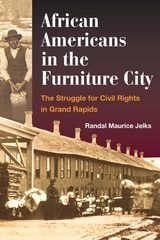
African Americans in the Furniture City
The Struggle for Civil Rights in Grand RapidsRandal Maurice Jelks
University of Illinois Press, 2006
Focusing on the intersection of African Americans' nineteenth-century cultural values and the changing social and political conditions in the first half of the twentieth century, Jelks pays particularly close attention to the religious community's influence during their struggle toward a respectable social identity and fair treatment under the law. He explores how these competing values defined the community's politics as it struggled to expand its freedoms and change its status as a subjugated racial minority.
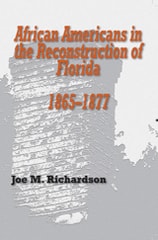
African Americans in the Reconstruction of Florida, 1865-1877
Joe M. Richardson
University of Alabama Press, 2008
Exploration of African American contributions to the state of Florida during the era of Reconstruction
Despite their shortcomings, “radical” politicians, including African Americans, made worthy contributions to the state of Florida during the era of Reconstruction. Joe Richardson disputes many of the misconceptions about the state’s debt and corruption by exploring how some African American politicians were quite capable and learned their duties quickly. Even more remarkable was the rapidity with which the unlettered ex-slaves absorbed education and adjusted to their status as free men. African Americans in the Reconstruction of Florida delves into the problems encountered by the freed men and traces their successes and failures during the first decade after emancipation.

African Encounters with Domesticity
Karen Tranberg Hansen
Rutgers University Press, 1992
Anthropologists usually think of domesticity as the activities related to the home and the family. Such activities have complex meanings associated with the sense of space, work, gender, and power. The contributors to this interdisciplinary collection of papers examine how indigenous African notions of domesticity interact with Western notions to transform the meaning of such activities. They explore the interactions of notions of domesticity in a number of settings in the twentieth century and the kinds of personal troubles and public issues these interactions have provoked. They also demonstrate that domesticity, as it emerged in Africa through the colonial encounter, was culturally constructed, and they show how ideologies of work, space, and gender interact with broader political-economic processes.
In her introduction, Hansen explains how the meaning of domesticity has changed and been contested in the West, specifies which of these shifting meanings are relevant in the African context, and summarizes the historical processes that have affected African ideologies of domesticity.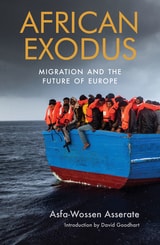
African Exodus
Migration and the Future of EuropeAsfa-Wossen Asserate
Haus Publishing, 2018
Asfa-Wossen Asserate argues here that building higher fences or finding more effective methods of integration will only, in the long term, perpetuate rather than solve the problems associated with these large numbers of displaced refugees. We need to realize that we are only treating the symptoms of an oncoming catastrophe and that, if we are to respond to mass migration, we will ultimately have to understand its causes. African Exodus places its emphasis firmly on the causes of the refugee crisis, which are to be found not least in Europe itself, and charts ways in which we might deal with it effectively in the long term.
In the course of this analysis, Asserate asks why our view of Africa—a troubled continent, but rich in so many ways—is so distorted. How can we combat the corrupt, authoritarian regimes that stymie progress and development? Why are millions fleeing to Europe? How is the EU complicit in the migration crisis? And finally, in practical terms: what can be done, and what prospects does the future hold?
African Futures
Essays on Crisis, Emergence, and PossibilityEdited by Brian Goldstone and Juan Obarrio
University of Chicago Press, 2017
The experts in this book address Africa’s future as it is embedded within various social and cultural forms emerging on the continent today: the reconfiguration of the urban, the efflorescence of signs and wonders and gospels of prosperity, the assorted techniques of legality and illegality, lotteries and Ponzi schemes, apocalyptic visions, a yearning for exile, and many other phenomena. Bringing together social, political, religious, and economic viewpoints, the book reveals not one but multiple prospects for the future of Africa. In doing so, it offers a pathbreaking model of pluralistic and open-ended thinking and a powerful tool for addressing the vexing uncertainties that underlie so many futures around the world.
African Underclass
Urbanization, Crime & Colonial Order in Dar es Salaam 1919-61Andrew Burton
Ohio University Press, 2005
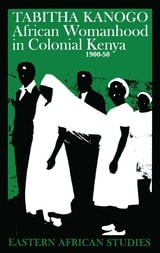
African Womanhood in Colonial Kenya, 1900–1950
1900-1950Tabitha Kanogo
Ohio University Press, 2000
This book explores the history of African womanhood in colonial Kenya. By focussing on key sociocultural institutions and practices around which the lives of women were organized, and on the protracted debates that surrounded these institutions and practices during the colonial period, it investigates the nature of indigenous, mission, and colonial control of African women.
The pertinent institutions and practices include the legal and cultural status of women, clitoridectomy, dowry, marriage, maternity and motherhood, and formal education. By following the effects of the all-pervasive ideological shifts that colonialism produced in the lives of women, the study investigates the diverse ways in which a woman’s personhood was enhanced, diminished, or placed in ambiguous predicaments by the consequences, intended and unintended, of colonial rule as administered by both the colonizers and the colonized. The study thus tries to historicize the reworkings of women’s lives under colonial rule. The transformations that resulted from these reworkings involved the negotiation and redefinition of the meaning of individual liberties and of women’s agency, along with the reconceptualization of kinship relations and of community.
These changes resulted in—and often resulted from—increased mobility for Kenyan women, who were enabled to cross physical, cultural, economic, social, and psychological frontiers that had been closed to them prior to colonial rule. The conclusion to which the experiences of women in colonial Kenya points again and again is that for these women, the exercise of individual agency, whether it was newly acquired or repeatedly thwarted, depended in large measure on the unleashing of forces over which no one involved had control. Over and over, women found opportunities to act amid the conflicting policies, unintended consequences, and inconsistent compromises that characterized colonial rule.
African Women Writing Resistance
An Anthology of Contemporary VoicesJennifer Browdy de Hernandez
University of Wisconsin Press, 2010
Contributors include internationally recognized authors and activists such as Wangari Maathai and Nawal El Saadawi, as well as a host of vibrant new voices from all over the African continent and from the African diaspora. Interdisciplinary in scope, this collection provides an excellent introduction to contemporary African women’s literature and highlights social issues that are particular to Africa but are also of worldwide concern. It is an essential reference for students of African studies, world literature, anthropology, cultural studies, postcolonial studies, and women’s studies.
Outstanding Book, selected by the Public Library Association
Best Books for High Schools, Best Books for Special Interests, and Best Books for Professional Use, selected by the American Association of School Libraries
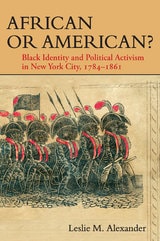
African or American?
Black Identity and Political Activism in New York City, 1784-1861Leslie M. ALexander
University of Illinois Press, 2012
During the early national and antebellum eras, black leaders in New York City confronted the tenuous nature of Northern emancipation. Despite the hope of freedom, black New Yorkers faced a series of sociopolitical issues including the persistence of Southern slavery, the threat of forced removal, racial violence, and the denial of American citizenship. Even efforts to create community space within the urban landscape, such as the African Burial Ground and Seneca Village, were eventually demolished to make way for the city's rapid development. In this illuminating history, Leslie M. Alexander chronicles the growth and development of black activism in New York from the formation of the first black organization, the African Society, in 1784 to the eve of the Civil War in 1861. In this critical period, black activists sought to formulate an effective response to their unequal freedom. Examining black newspapers, speeches, and organizational records, this study documents the creation of mutual relief, religious, and political associations, which black men and women infused with African cultural traditions and values.
As Alexander reveals, conflicts over early black political strategy foreshadowed critical ideological struggles that would bedevil the black leadership for generations to come. Initially, black leaders advocated racial uplift through a sense of communalism and connection to their African heritage. Yet by the antebellum era, black activists struggled to reconcile their African identity with a growing desire to gain American citizenship. Ultimately, this battle resulted in competing agendas; while some leaders argued that the black community should dedicate themselves to moral improvement and American citizenship, others began to consider emigrating to Africa or Haiti. In the end, the black leadership resolved to assert an American identity and to expand their mission for full equality and citizenship in the United States. This decision marked a crucial turning point in black political strategy, for it signaled a new phase in the quest for racial advancement and fostered the creation of a nascent Black Nationalism.
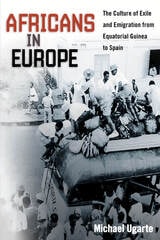
Africans in Europe
The Culture of Exile and Emigration from Equatorial Guinea to SpainMichael Ugarte
University of Illinois Press, 2013
Based on personal stories of people forced to leave and those who left of their own accord, Africans in Europe captures the nuanced realities and widespread impact of mobile populations. By focusing on the geographical, emotional, and intellectual dynamics of Equatorial Guinea's human movements, readers gain an inroad to "the consciousness of an age" and an understanding of the global realities that will define the cultural, economic, and political currents of the twenty-first century.
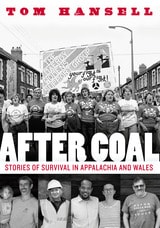
After Coal
Stories of Survival in Appalachia and WalesTom Hansell
West Virginia University Press, 2018
What happens when fossil fuels run out? How do communities and cultures survive?
Central Appalachia and south Wales were built to extract coal, and faced with coal’s decline, both regions have experienced economic depression, labor unrest, and out-migration. After Coal focuses on coalfield residents who chose not to leave, but instead remained in their communities and worked to build a diverse and sustainable economy. It tells the story of four decades of exchange between two mining communities on opposite sides of the Atlantic, and profiles individuals and organizations that are undertaking the critical work of regeneration.
The stories in this book are told through interviews and photographs collected during the making of After Coal, a documentary film produced by the Center for Appalachian Studies at Appalachian State University and directed by Tom Hansell. Considering resonances between Appalachia and Wales in the realms of labor, environment, and movements for social justice, the book approaches the transition from coal as an opportunity for marginalized people around the world to work toward safer and more egalitarian futures.
After Freedom
A Cultural Study In The Deep SouthHortense Powdermaker
University of Wisconsin Press, 1993
After Grenfell
Violence, Resistance and ResponseEdited by Dan Bulley, Jenny Edkins and Nadine El-Enany
Pluto Press, 2019
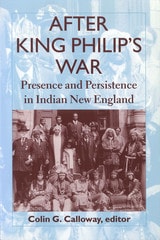
After King Philip’s War
Presence and Persistence in Indian New EnglandEdited by Colin G. Calloway
Dartmouth College Press, 1997

After Life
An Ethnographic NovelTobias Hecht
Duke University Press, 2006
Hecht had originally intended to write a biography of Veríssimo. But with interviews ultimately spanning a decade, he couldn't ignore that much of what he had been told wasn’t, strictly speaking, true. In Veríssimo’s recounting of her life, a sister who had never been born died tragically, while the very same rape that shattered the body and mind of an acquaintance occurred a second time, only with a different victim and several years later. At night, with the anthropologist’s tape recorder in hand, she became her own ethnographer, inventing informants, interviewing herself, and answering in distinct voices.
With truth impossible to disentangle from invention, Hecht followed the lead of Veríssimo, his would-be informant, creating characters, rendering a tale that didn’t happen but that might have, probing at what it means to translate a life into words.
A call and response of truth and invention, mental illness and yearning, After Life is a tribute to and reinterpretation of the Latin American testimonio genre. Desire, melancholy, longing, regret, and the hunger to live beyond the confines of past and future meet in this debut novel by Tobias Hecht.
After War Times
An African American Childhood in Reconstruction-Era FloridaT. Thomas Fortune
University of Alabama Press, 2014
A firsthand account of African American childhood, freedom, and resilience in Reconstruction-era Florida.
T. Thomas Fortune was a leading African American publisher, editor, and journalist of the late nineteenth and early twentieth centuries, who was born a slave in antebellum Florida, lived through emancipation, and rose to become a literary lion of his generation. In T. Thomas Fortune's “After War Times,” Daniel R. Weinfeld brings together a series of twenty-three autobiographical articles Fortune wrote about his formative childhood during Reconstruction and subsequent move to Washington, DC.
By 1890, Fortune had founded a predecessor organization to the National Association for the Advancement of Colored People, known as the National Afro-American League, but his voice found its most powerful expression and influence in poetry, prose, and journalism. It was as a journalist that Fortune stirred national controversy by issuing a passionate appeal to African American southerners: “I propose to start a crusade,” he proclaimed in June 1900, “to have the negroes of the South leave that section and to come north or go elsewhere. It is useless to remain in the South and cry Peace! Peace! When there is no peace.” The movement he helped propel became known as “the Great Migration.”
By focusing on Thomas’s ruminations about his disillusion with post–Civil War Florida, Weinfeld highlights the sources of Fortune’s deep disenchantment with the South, which intensified when the Reconstruction order gave way to Jim Crow–era racial discrimination and violence. Decades after he left the South, Fortune’s vivid memories of incidents and personalities in his past informed his political opinions and writings. Scholars and readers interested in Southern history in the aftermath of the Civil War, especially the experiences of African Americans, will find much of interest in this vital collection of primary writings.
Against Exclusion
Disrupting Anti-Chinese Violence in the Nineteenth CenturyAudrey Wu Clark
The Ohio State University Press, 2024
In Against Exclusion, Audrey Wu Clark dramatically reframes Asian American resistance via the lives of five early Chinese American public figures. In contrast to later activists who sought to defy stereotypes, Ah Toy, Mary Tape, Wong Chin Foo, Yan Phou Lee, and Yung Wing deployed the model minority and yellow peril tropes to make themselves visible during a period of rampant anti-Chinese violence and legal exclusion. In making themselves visible, they sought to expose and dismantle the contradictory exceptionalism of nineteenth-century US liberalism that both required and “disavowed” the deaths of Chinese Americans. In examining these figures and the ways in which they fought their exclusion as Chinese Americans—via court cases, autobiographical writings, journalism, and other forms of activism—Clark contributes to prevailing scholarly conversations about stereotypes of Asian Americans but contextualizes them in the nineteenth century. She traces the twinned emergences of the model minority and the yellow peril, excavating the exceptionalism with which Chinese Americans were racialized and subject to death—whether by lynching, other forms of driving out, or loss of citizenship or rights—and mapping its reverberations into the present day.
Against the Tide
Immigrants, Day Laborers, and Community in Jupiter, FloridaSandra Lazo de la Vega and Timothy J. Steigenga
University of Wisconsin Press, 2013
At the beginning of the twenty-first century, Jupiter was in the throes of immigration debates. A decade earlier, this small town had experienced an influx of migrants from Mexico and Guatemala. Immigrants seeking work gathered daily on one of the city’s main streets, creating an ad-hoc, open-air labor market that generated complaints and health and human safety concerns. What began as a local debate rapidly escalated as Jupiter’s situation was thrust into the media spotlight and attracted the attention of state and national anti-immigrant groups. But then something unexpected happened: immigrants, neighborhood residents, university faculty and students, and town representatives joined together to mediate community tensions and successfully moved the informal labor market to the new El Sol Neighborhood Resource Center.
Timothy J. Steigenga, who helped found the center, and Lazo de la Vega, who organized students in support of its mission, describe how El Sol engaged the residents of Jupiter in a two-way process of immigrant integration and helped build trust on both sides. By examining one city’s search for a positive public policy solution, Against the Tide offers valuable practical lessons for other communities confronting similar challenges.
Age of Concrete
Housing and the Shape of Aspiration in the Capital of MozambiqueDavid Morton
Ohio University Press, 2019
Age of Concrete is a history of the making of houses and homes in the subúrbios of Maputo (Lourenço Marques), Mozambique, from the late 1940s to the present. Often dismissed as undifferentiated, ahistorical “slums,” these neighborhoods are in fact an open-air archive that reveals some of people’s highest aspirations. At first people built in reeds. Then they built in wood and zinc panels. And finally, even when it was illegal, they risked building in concrete block, making permanent homes in a place where their presence was often excruciatingly precarious.
Unlike many histories of the built environment in African cities, Age of Concrete focuses on ordinary homebuilders and dwellers. David Morton thus models a different way of thinking about urban politics during the era of decolonization, when one of the central dramas was the construction of the urban stage itself. It shaped how people related not only to each other but also to the colonial state and later to the independent state as it stumbled into being.
Original, deeply researched, and beautifully composed, this book speaks in innovative ways to scholarship on urban history, colonialism and decolonization, and the postcolonial state. Replete with rare photographs and other materials from private collections, Age of Concrete establishes Morton as one of a handful of scholars breaking new ground on how we understand Africa’s cities.
Aged by Culture
Margaret Morganroth Gullette
University of Chicago Press, 2003
In this illuminating book, Margaret Morganroth Gullette reveals that aging doesn't start in our chromosomes, but in midlife downsizing, the erosion of workplace seniority, threats to Social Security, or media portrayals of "aging Xers" and "greedy" Baby Boomers. To combat the forces aging us prematurely, Gullette invites us to change our attitudes, our life storytelling, and our society. Part intimate autobiography, part startling cultural expose, this book does for age what gender and race studies have done for their categories. Aged by Culture is an impassioned manifesto against the pernicious ideologies that steal hope from every stage of our lives.

Ageing with Smartphones in Japan
Care in a Visual Digital AgeLaura Haapio-Kirk
University College London, 2024
Ageing with Smartphones in Japan examines sixteen months of ethnographic research following older adults, age fifty and up, in urban Kyoto and rural Kochi Prefecture, Japan as they navigate social and personal shifts post-retirement in the age of the smartphone. It attempts to answer what this transition means for friendship, gendered labor, multigenerational living, internal migration, health, as well as life purpose for older adults. This book closely investigates how the smartphone challenges gender-based norms and how older adults creatively navigate them. Using comics, drawings, and fieldwork sketches it also explores how they use digital visual communication to socialize with friends and family.
Agewise
Fighting the New Ageism in AmericaMargaret Morganroth Gullette
University of Chicago Press, 2011
Let’s face it: almost everyone fears growing older. We worry about losing our looks, our health, our jobs, our self-esteem—and being supplanted in work and love by younger people. It feels like the natural, inevitable consequence of the passing years, But what if it’s not? What if nearly everything that we think of as the “natural” process of aging is anything but?
In Agewise, renowned cultural critic Margaret Morganroth Gullette reveals that much of what we dread about aging is actually the result of ageism—which we can, and should, battle as strongly as we do racism, sexism, and other forms of bigotry. Drawing on provocative and under-reported evidence from biomedicine, literature, economics, and personal stories, Gullette probes the ageism thatdrives discontent with our bodies, our selves, and our accomplishments—and makes us easy prey for marketers who want to sell us an illusory vision of youthful perfection. Even worse, rampant ageism causes society to discount, and at times completely discard, the wisdom and experience acquired by people over the course of adulthood. The costs—both collective and personal—of this culture of decline are almost incalculable, diminishing our workforce, robbing younger people of hope for a decent later life, and eroding the satisfactions and sense of productivity that should animate our later years.
Once we open our eyes to the pervasiveness of ageism, however, we can begin to fight it—and Gullette lays out ambitious plans for the whole life course, from teaching children anti-ageism to fortifying the social safety nets, and thus finally making possible the real pleasures and opportunities promised by the new longevity. A bracing, controversial call to arms, Agewise will surprise, enlighten, and, perhaps most important, bring hope to readers of all ages.
Aging Nationally in Contemporary Poland
Memory, Kinship, and PersonhoodJessica C. Robbins
Rutgers University Press, 2021
Aging and Old Age
Richard A. Posner
University of Chicago Press, 1995
Aging and Old Age offers fresh insight into a wide range of social and political issues relating to the elderly, such as health care, crime, social security, and discrimination. From the dread of death to the inordinate law-abidingness of the old, from their loquacity to their penny-pinching, Posner paints a surprisingly rich, revealing, and unsentimental portrait of the millions of elderly people in the United States. He explores issues such as age discrimination in employment, creativity and leadership as functions of age, and the changing social status of the elderly. Why are old people, presumably with less to lose, more unwilling to take risks than young people? Why don't the elderly in the United States command the respect and affection they once did and still do in other countries? How does aging affect driving and criminal records? And how does aging relate to creativity across different careers?
Aging in the United States and Japan
Economic TrendsEdited by Yukio Noguchi and David A. Wise
University of Chicago Press, 1994
With essays on labor force participation and retirement, housing equity and the economic status of the elderly, budget implications of an aging population, and financing social security and health care in the 1990s, this volume covers a broad spectrum of issues related to the economics of aging. Among the book's findings are that workers are retiring at an increasingly earlier age in both countries and that, as the populations age, baby boomers in the United States will face diminishing financial resources as the ratio of retirees to workers sharply increases.
The result of a joint venture between the National Bureau of Economic Research and the Japan Center for Economic Research, this book complements Housing Markets in the United States and Japan (1994) by integrating research on housing markets with economic issues of the aged in the United States and Japan.
Agrarian Crisis in India
The Case of BiharBy F. Tomasson Jannuzi
University of Texas Press, 1974
Although much has been written on agrarian reforms in India, there are few in-depth studies of specific states and none concerning the relevance of agrarian reforms to the economic development and political stability of Bihar— a state containing one-tenth of the people of India, a population comparable in magnitude to that of the United Kingdom or France. F. Tomasson Jannuzi's field research in Bihar, beginning with village-level surveys and interviews in 1956 and extending through repeated visits through August 1970, has enabled him to provide a unique perspective on events and issues associated with the continuing struggle to transform Bihar's agrarian structure.
Agrarian Crisis in India is at once a history of post-independence agrarian reforms in an important state of India, a detailed critique of the statutory loopholes that have frustrated successive land-reform measures, and a penetrating analysis of the economic, political, and social implications of the failure of agrarian reforms to be implemented in twentieth-century Bihar. The author's analysis of the case of Bihar provides insights not only into the agrarian crisis in Bihar but also into other agrarian societies in the midst of social and economic transformation.
Experts in the field of economic development traditionally have held that the goals of increased production and distributive justice must be approached in sequence. It has been considered almost axiomatic that economic growth will result initially in growing inequalities among classes within a region and among regions within a country. Professor Jannuzi suggests that in Bihar a compelling alternative to this conventional wisdom is an economic-development strategy based on the recognition that the agricultural-production and distributive-justice goals are inseparable and must be addressed simultaneously. He suggests that economic growth in rural Bihar may become impossible if distributive justice continues to be denied to significant sections of the peasantry and, conversely, that distributive justice will prove an illusory target unless economic growth can be assured. Professor Jannuzi recommends the implementation of specified agrarian reforms in Bihar as the prerequisite for meeting the agricultural-production and distributive-justice goals.

AlabamaNorth
African-American Migrants, Community, and Working-Class Activism in Cleveland, 1915-45Kimberley L. Phillips
University of Illinois Press, 1999
Langston Hughes called it "a great dark tide from the South": the unprecedented influx of blacks into Cleveland that gave the city the nickname "Alabama North." Kimberley L. Phillips reveals the breadth of working class black experiences and activities in Cleveland and the extent to which these were shaped by traditions and values brought from the South.
Migrants' moves north established complex networks of kin and friends and infused Cleveland with a highly visible southern African American culture. Phillips examines the variety of black fraternal, benevolent, social, and church-based organizations that working class migrants created and demonstrates how these groups prepared the way for new forms of individual and collective activism in workplaces and the city. Giving special consideration to the experiences of working class black women, AlabamaNorth reveals how migrants' expressions of tradition and community gave them a new consciousness of themselves as organized workers and created the underpinning for new forms of black labor activism.
Alaska Native Cultures and Issues
Responses to Frequently Asked QuestionsEdited by Libby Roderick
University of Alaska Press, 2010

Alaska at 50
The Past, Present, and Future of Alaska StatehoodEdited by Gregory W. Kimura
University of Alaska Press, 2009
In 2009 Alaska celebrates its fiftieth anniversary of U.S. statehood. To commemorate that milestone, Alaska at 50 brings together some of today’s most noteworthy and recognizable writers and researchers to address the past, present, and future of Alaska. Divided into three overarching sections—art, culture, and humanities; law, economy, and politics; and environment, people, and place—Alaska at 50 is written in highly accessible prose. Illustrations and photographs of significant artefacts of Alaska history enliven the text. Each contributor brings a strong voice and prescription for the next fifty years, and the resulting work presents Alaskans and the nation with an overview of Alaska statehood and ideas for future development.
Alaska's Daughter
An Eskimo Memoir of the Early Twentieth CenturyElizabeth Pinson
Utah State University Press, 2004
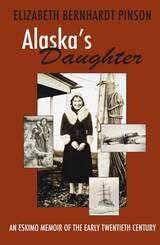
Elizabeth B. Pinson shares with us her memories of Alaska's emergence into a new and modern era, bearing witness to history in the early twentieth century as she recalls it. She draws us into her world as a young girl of mixed ethnicity, with a mother whose Eskimo family had resided on the Seward Peninsula for generations and a father of German heritage. Growing up in and near the tiny village of Teller on the Bering Strait, Elizabeth at the age of six, despite a harrowing, long midwinter sled ride to rescue her, lost both her legs to frostbite when her grandparents, with whom she was spending the winter in their traditional Eskimo home, died in the 1918 influenza epidemic.
Fitted with artificial legs financed by an eastern benefactor, Elizabeth kept journals of her struggles, triumphs, and adventures, recording her impressions of the changing world around her and experiences with the motley characters she met. These included Roald Amundsen, whose dirigible landed in Teller after crossing the Arctic Circle; the ill-fated 1921 British colonists of Wrangel Island in the Arctic; trading ship captains and crews; prospectors; doomed aviators; and native reindeer herders. Elizabeth moved on to boarding school, marriage, and the state of Washington, where she compiled her records into this memoir and where, now in her 90s, she lives.

Alchemy in the Rain Forest
Politics, Ecology, and Resilience in a New Guinea Mining AreaJerry K. Jacka
Duke University Press, 2015
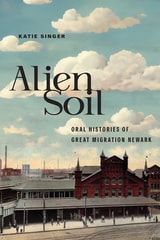
Alien Soil
Oral Histories of Great Migration NewarkKatie Singer
Rutgers University Press, 2024
The book begins with the Krueger-Scott Mansion’s deep history, followed by the sequence of events surrounding the proposed Cultural Center. Last owned by African-American millionaire and beauty-culture entrepreneur Louise Scott, the Victorian Krueger-Scott Mansion was built by beer baron Gottfried Krueger in 1888. Through the history of the Mansion, and the ultimately failed Cultural Center project, one learns about the Newark that African Americans migrated to, what they found when they got there, how living in the city changed them, and how they, individually and collectively, changed Newark.
After the Cultural Center project was officially halted in 2000, the cassette tapes of the oral history interviews were stored away at the Newark Public Library. Ten years later they were unearthed, and ultimately digitized. As of yet, no one has applied these sources directly to their research. Deeply committed to these rich, insightful stories, Singer calls for a more thoughtful consideration of all cities, reminding us that Newark is much more than its 1967 rebellion.
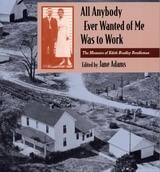
All Anybody Ever Wanted of Me Was to Work
The Memoirs of Edith Bradley RendlemanEdith Bradley Rendleman. Edited by Jane Adams
Southern Illinois University Press, 1996
From All Anybody Ever Wanted of Me Was to Work...
"Starting around 1950, people stopped raising chickens, milking cows, and raising hogs. They just buy it at the store, ready to eat. A lot buy a steer and have it processed in Dongola and put it in their freezer. What a difference! Girls have got it so easy now. They don't even know what it was like to start out. And I guess my mother's life, when she started out, was as hard again as mine, because they had to make everything by hand. I don't know if it could get any easier for these girls. But they don't know what it was like, and they never will. Everything is packaged. All you do is go to the store and buy you a package and cook it. Automatic washers and dryers. I'm glad they don't have to work like I did. Very glad."
Edith Bradley Rendleman's story of her life in southern Illinois is remarkable in many ways. Recalling the first half of the twentieth century in great detail, she vividly cites vignettes from her childhood as her family moved from farm to farm until settling in 1909 in the Mississippi bottoms of Wolf Lake. She recounts the lives and times of her family and neighbors during an era gone forever.
Remarkable for the vivid details that evoke the past, Rendleman's account is rare in another respect: memoirs of the time—usually written by people from elite or urban families—often reek of nostalgia. But Rendleman's memoir differs from the norm. Born poor in rural southern Illinois, she tells an unvarnished tale of what it was really like growing up on a tenant farm early this century.
All They Will Call You
Tim Z. Hernandez
University of Arizona Press, 2017
All They Will Call You is the harrowing account of “the worst airplane disaster in California’s history,” which claimed the lives of thirty-two passengers, including twenty-eight Mexican citizens—farmworkers who were being deported by the U.S. government. Outraged that media reports omitted only the names of the Mexican passengers, American folk icon Woody Guthrie penned a poem that went on to become one of the most important protest songs of the twentieth century, “Plane Wreck at Los Gatos (Deportee).” It was an attempt to restore the dignity of the anonymous lives whose unidentified remains were buried in an unmarked mass grave in California’s Central Valley. For nearly seven decades, the song’s message would be carried on by the greatest artists of our time, including Pete Seeger, Dolly Parton, Bruce Springsteen, Bob Dylan, and Joan Baez, yet the question posed in Guthrie’s lyrics, “Who are these friends all scattered like dry leaves?” would remain unanswered—until now.
Combining years of painstaking investigative research and masterful storytelling, award-winning author Tim Z. Hernandez weaves a captivating narrative from testimony, historical records, and eyewitness accounts, reconstructing the incident and the lives behind the legendary song. This singularly original account pushes narrative boundaries, while challenging perceptions of what it means to be an immigrant in America, but more importantly, it renders intimate portraits of the individual souls who, despite social status, race, or nationality, shared a common fate one frigid morning in January 1948.
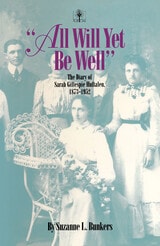
All Will Yet Be Well
The Diary of Sarah Gillespie Huftalen, 1873-1952Suzanne L. Bunkers
University of Iowa Press, 1993
Sarah Gillespie Huftalen led an unconventional life for a rural midwestern woman of her time. Born in 1865 near Manchester, Iowa, she was a farm girl who became a highly regarded country school and college teacher; she married a man older than either of her parents, received a college degree later in life, and was committed to both family and career. A gifted writer, she crafted essays, teacher-training guides, and poetry while continuing to write lengthy, introspective entries in her diary, which spans the years from 1873 to 1952. In addition, she gathered extensive information about the quietly tragic life of her mother, Emily, and worked to preserve Emily's own detailed diary.
In more than 3,500 pages, Sarah writes about her multiple roles as daughter, sister, wife, teacher, family historian, and public figure. Her diary reflects the process by which she was socialized into these roles and her growing consciousness of the ways in which these roles intersected. Not only does her diary embody the diverse strategies used by one woman to chart her life's course and to preserve her life's story for future generations, it also offers ample evidence of the diary as a primary form of private autobiography for individuals whose lives do not lend themselves to traditional definitions of autobiography.
Taken together, Emily's and Sarah's extraordinary diaries span nearly a century and thus form a unique mother/daughter chronicle of daily work and thoughts, interactions with neighbors and friends and colleagues, and the destructive family dynamics that dominated the Gillespies. Sarah's consciousness of the abusive relationship between her mother and father haunts her diary, and this dramatic relationship is duplicated in Sarah's relationship with her brother, Henry, Suzanne Bunkers' skillful editing and analysis of Sarah's diary reveal the legacy of a caring, loving mother reflected in her daughter's work as family member, teacher, and citizen.
The rich entries in Sarah Gillespie Huftalen's diary offer us brilliant insights into the importance of female kinship networks in American life, the valued status of many women as family chroniclers, and the fine art of selecting, piecing, stitching, and quilting that characterizes the many shapes of women's autobiographies. Read Sarah's dairy to discover why "all will yet be well."

All-American Massacre
The Tragic Role of American Culture and Society in Mass ShootingsEdited by Eric Madfis and Adam Lankford
Temple University Press, 2023
With a specific focus on exploring how American culture, institutions, and social structures influence the circumstances, frequency, and severity of mass shootings in the United States, All-American Massacre advances emerging theoretical perspectives and forges fresh approaches, new research questions, and innovative data and conclusions.
Bringing together pioneering scholars, this groundbreaking compilation of research and analysis identifies the social roots of this insidious threat and prompts new reflections on how we can stop the seemingly endless cycle of horror and death.All-American Massacre helps clarify the unique nature and salience of mass shootings in American life.
Contributors: Melanie Brazzell, Tristan Bridges, Ryan Broll, F. Chris Curran, Sarah E. Daly, Salvatore D’Angelo, James Densley, Tom Diaz, Scott Duxbury, Benjamin W. Fisher, Betsy Friauf, Emma E. Fridel, Celene Fuller, Daniel Gascón, Patrick J. Gauding, Brooke Miller Gialopsos, Simon Gottschalk, Donald P. Haider-Markel, Stephanie Howells, Cheryl Lero Jonson, Mark R. Joslyn, Jessie Klein, Aaron Kupchik, Alison J. Marganski, Melissa M. Moon, Kristen J. Neville, Jaimee Nix, Daniel Okamura, Patrick F. Parnaby, Jillian Peterson, Michael Phillips, Paul Reeping, Jason R. Silva, William A. Stadler, Lindsay Steenberg, Tara Leigh Tober, Jillian J. Turanovic, Abigail Vegter, Stanislav Vysotsky, Lacey N. Wallace and the editors

Alley Life in Washington
Family, Community, Religion, and Folklife in the City, 1850-1970James Borchert
University of Illinois Press, 1980
Allies and Obstacles
Disability Activism and Parents of Children with DisabilitiesAllison C. Carey, Pamela Block, and Richard K. Scotch
Temple University Press, 2020
Parents of children with disabilities often situate their activism as a means of improving the world for their child. However, some disabled activists perceive parental activism as working against the independence and dignity of people with disabilities. This thorny relationship is at the heart of the groundbreaking Allies and Obstacles.
The authors chronicle parents’ path-breaking advocacy in arenas such as the right to education and to liberty via deinstitutionalization as well as how they engaged in legal and political advocacy. Allies and Obstacles provides a macro analysis of parent activism using a social movement perspective to reveal and analyze the complex—and often tense—relationship of parents to disability rights organizations and activism.
The authors look at organizational and individual narratives using four case studies that focus on intellectual disability, psychiatric diagnoses, autism, and a broad range of physical disabilities including cerebral palsy and muscular dystrophy. These cases explore the specific ways in which activism developed among parents and people with disabilities, as well as the points of alliance and the key points of contestation. Ultimately, Allies and Obstacles develops new insights into disability activism, policy, and the family.
Altering States
Ethnographies of Transition in Eastern Europe and the Former Soviet UnionDaphne Berdahl, Matti Bunzl, and Martha Lampland, Editors
University of Michigan Press, 2000
Alutiiq Villages under Russian and U.S. Rule
Sonja Luehrmann
University of Alaska Press, 2009
Always an Academic Immigrant
A Collective MemoirDafna Lemish
Rutgers University Press, 2025
Always an Academic Immigrant is a collective memoir that gives voice to eighty-one academics who immigrated from thirty-seven countries for a career in an institution of higher education, in either the United States or one of ten other countries. Through in-depth interviews and observations from her own experiences as an immigrant scholar, Dafna Lemish shares the highs and the lows that academic immigrants feel as they search for both a country and an institution they can call home. She discovers the formative events that led these scholars to pursue careers outside their native lands and details the challenges they faced adapting to unspoken expectations in their new countries and workplaces. Ultimately, this book reveals the strategies that immigrant professors use to bridge their native and adoptive cultures while highlighting the vital contributions they have made to academia as scholars, teachers, and leaders.
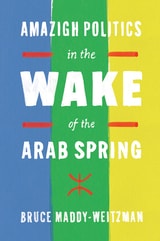
Amazigh Politics in the Wake of the Arab Spring
Bruce Maddy-Weitzman
University of Texas Press, 2022
On television, the Arab Spring took place in Cairo, Tunis, and the city-states of the Persian Gulf. Yet the drama of 2010, and the decade of subsequent activism, extended beyond the cities—indeed, beyond Arabs. Bruce Maddy-Weitzman brings to light the sustained post–Arab Spring political movement of North Africa’s Amazigh people.
The Amazigh movement did not begin with the Arab Spring, but it has changed significantly since then. Amazigh Politics in the Wake of the Arab Spring details the increasingly material goals of Amazigh activism, as protest has shifted from the arena of ethnocultural recognition to that of legal and socioeconomic equality. Amazigh communities responded to the struggles for freedom around them by pressing territorial and constitutional claims while rejecting official discrimination and neglect. Arab activists, steeped in postcolonial nationalism and protective of their hegemonic position, largely refused their support, yet flailing regimes were forced to respond to sharpening Amazigh demands or else jeopardize their threadbare legitimacy. Today the Amazigh question looms larger than ever, as North African governments find they can no longer ignore the movement’s interests.