Results by title
22279 books match the query 'Social Science' and 1819 start with a
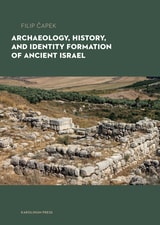
Archaeology, History, and Formation of Identity in Ancient Israel
Filip Capek
Karolinum Press, 2023
When did Israel begin? The origins of ancient Israel are shrouded in mystery, and those hoping to explore the issue must utilize resources from three different fields—archaeology, epigraphy, and biblical texts—and then examine their interrelations while keeping in mind that the name Israel was not used to describe just one state but referred to numerous entities at different times.
Archaeology, History, and Formation of Identity in Ancient Israel provides a critical reading of Israel’s history. It is neither a harmonizing reading, which takes the picture painted by texts as a given fact, nor a reading supporting biblical texts with archaeological and epigraphic data; instead, it offers the reader multiple options to understand biblical narratives on a historical and theological level. In addition to presenting the main currents in the field, the book draws upon the latest discoveries from Czech-Israeli excavations to offer new hypotheses and reconstructions based on the interdisciplinary dialogue between biblical studies, archaeology, and history.
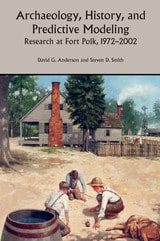
Archaeology, History, and Predictive Modeling
Research at Fort Polk, 1972-2002David G. Anderson and Steven D. Smith
University of Alabama Press, 2003
Fort Polk Military Reservation encompasses approximately 139,000 acres in western Louisiana 40 miles southwest of Alexandria. As a result of federal mandates for cultural resource investigation, more archaeological work has been undertaken there, beginning in the 1970s, than has occurred at any other comparably sized area in Louisiana or at most other localities in the southeastern United States. The extensive program of survey, excavation, testing, and large-scale data and artifact recovery, as well as historic and archival research, has yielded a massive amount of information. While superbly curated by the U.S. Army, the material has been difficult to examine and comprehend in its totality.
With this volume, Anderson and Smith collate and synthesize all the information into a comprehensive whole. Included are previous investigations, an overview of local environmental conditions, base military history and architecture, and the prehistoric and historic cultural sequence. An analysis of location, environmental, and assemblage data employing a sample of more than 2,800 sites and isolated finds was used to develop a predictive model that identifies areas where significant cultural resources are likely to occur. Developed in 1995, this model has already proven to be highly accurate and easy to use.
Archaeology, History, and Predictive Modeling will allow scholars to more easily examine the record of human activity over the past 13,000 or more years in this part of western Louisiana and adjacent portions of east Texas. It will be useful to southeastern archaeologists and anthropologists, both professional and amateur.
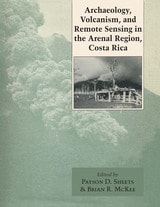
Archaeology, Volcanism, and Remote Sensing in the Arenal Region, Costa Rica
Edited by Payson D. Sheets and Brian R. McKee
University of Texas Press, 1994
How humans adapt to life in an area prone to natural disasters is an intriguing study for the social sciences. In this volume, experts from several disciplines explore the adaptation process of prehistoric societies in the volcanic Arenal region of Costa Rica from about 2000 BC to the Spanish Conquest at about AD 1500.
The data in this volume come from a survey of the region conducted with the latest remote sensing technology. Sheets and his coauthors have compiled a detailed record of human settlements in the area, including dozens of archaeological sites and a network of prehistoric footpaths that reveals patterns of travel and communication across the region. The Arenal peoples prospered in their precarious environment apparently by taking advantage of food and lithic resources, keeping population levels low, and avoiding environmental degradation. These findings will interest a wide interdisciplinary audience in anthropology and archaeology, earth sciences, technology, geography, and human ecology.

Archaeomagnetic Dating
Edited by Jeffrey L. Eighmy and Robert S. Sternberg
University of Arizona Press, 1990
The sixteen original papers in many cases represent the work of individuals who have been intimately involved with the development and refinement of archaeomagnetic dating techniques. They discuss the geophysical underpinnings of archaeomagnetism; general methodological problems associated with present archaeomagnetic studies, such as sample collection, data measurement and analysis, and experimental control; and advances in experimental archaeology.
Case histories consider both successful and unsuccessful applications of the technique in New World fieldwork. Raw data is provided in an appendix. While the volume deals specifically with problems of archaeomagnetic direction dating in the Americas, it should prove useful in constructing exact chronologies in other archaeological sites as well and in the geologic record at large. As the only single volume devoted to the subject, it will serve as the standard reference in the field.
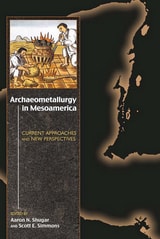
Archaeometallurgy in Mesoamerica
Current Approaches and New PerspectivesAaron N. Shugar
University Press of Colorado, 2013
The chapters are organized following the cyclical nature of metals--beginning with extracting and mining ore, moving to smelting and casting of finished objects, and ending with recycling and deterioration back to the original state once the object is no longer in use. Data obtained from archaeological investigations, ethnohistoric sources, ethnographic studies, along with materials science analyses, are brought to bear on questions related to the integration of metallurgy into local and regional economies, the sacred connotations of copper objects, metallurgy as specialized crafting, and the nature of mining, alloy technology, and metal fabrication.

Archaism and Actuality
Japan and the Global Fascist ImaginaryHarry Harootunian
Duke University Press, 2023
Archeological Excavations in Beef Basin, Utah
UUAP 20Jack R. Rudy
University of Utah Press, 1955
Archeological Survey of the La Sal Mountain Area, Utah
UUAP 14Alice Hunt
University of Utah Press, 1953
Archeology and Volcanism in Central America
The Zapotitán Valley of El SalvadorEdited by Payson D. Sheets
University of Texas Press, 1983
Scientists have long speculated on the impact of extreme natural catastrophes on human societies. Archeology and Volcanism in Central America provides dramatic evidence of the effects of several volcanic disasters on a major civilization of the Western Hemisphere, that of the Maya.
During the past 2,000 years, four volcanic eruptions have taken place in the Zapotitán Valley of southern El Salvador. One, the devastating eruption of Ilopango around A.D. 300, forced a major migration, pushing the Mayan people north to the Yucatán Peninsula. Although later eruptions did not have long-range implications for cultural change, one of the subsequent eruptions preserved the Cerén site—a Mesoamerican Pompeii where the bodies of the villagers, the palm-thatched roofs of their houses, the pots of food in their pantries, even the corn plants in their fields were preserved with remarkable fidelity.
Throughout 1978, a multidisciplinary team of anthropologists, archeologists, geologists, biologists, and others sponsored by the University of Colorado's Protoclassic Project researched and excavated the results of volcanism in the Zapotitan Valley—a key Mesoamerican site that contemporary political strife has since rendered inaccessible.
The result is an outstanding contribution to our understanding of the impact of volcanic eruptions on early Mayan civilization. These investigations clearly demonstrate that the Maya inhabited this volcanically hazardous valley in order to reap the short-term benefits that the volcanic ash produced—fertile soil, fine clays, and obsidian deposits.

Archeology in the Adirondacks
The Last FrontierDavid R. Starbuck
University Press of New England, 2018
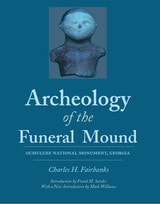
Archeology of the Funeral Mound
Ocmulgee National Monument, GeorgiaCharles H. Fairbanks, with a new introduction by Mark Williams
University of Alabama Press, 2003
The largest prehistoric mound site in Georgia is located in modern-day Macon and is known as Ocmulgee. It was first recorded in August 1739 by General James Oglethorpe’s rangers during an expedition to the territory of the Lower Creeks. The botanist William Bartram wrote extensively of the ecology of the area during his visit in 1773, but the 1873 volume by Charles C. Jones, Antiquities of the Southern Indians, Particularly of the Georgia Tribes, was the first to treat the archaeological significance of the site.
Professional excavations began at Ocmulgee in 1933 under the auspices of the Smithsonian Institution, using Civil Works Administration labor. Investigations continued under a variety of sponsorships until December 1936, when the locality was formally named a national monument. Excavation of the mounds, village sites, earth lodge, and funeral mound revealed an occupation of the Macon Plateau spanning more than 7,000 years. The funeral mound was found to contain log tombs, bundles of disarticulated bones, flexed burials, and cremations. Grave goods included uniquely patterned copper sun disks that were found at only one other site in the Southeast—the Bessemer site in Alabama—so the two ceremonial centers were established as contemporaries.
In this classic work of archaeological research and analysis, Charles Fairbanks has not only offered a full treatment of the cultural development and lifeways of the builders of Ocmulgee but has also related them effectively to other known cultures of the prehistoric Southeast.

Archibald Motley Jr. and Racial Reinvention
The Old Negro in New Negro ArtPhoebe Wolfskill
University of Illinois Press, 2017
Phoebe Wolfskill demonstrates how Motley's art embodied the tenuous nature of the Black Renaissance and the wide range of ideas that structured it. Focusing on key works in Motley's oeuvre, Wolfskill reveals the artist's complexity and the variety of influences that informed his work. Motley’s paintings suggest that the racist, problematic image of the Old Negro was not a relic of the past but an influence that pervaded the Black Renaissance. Exploring Motley in relation to works by notable black and non-black contemporaries, Wolfskill reinterprets Motley's oeuvre as part of a broad effort to define American cultural identity through race, class, gender, religion, and regional affiliation.

Archie Green
The Making of a Working-Class HeroSean Burns
University of Illinois Press, 2011
Archipelagic American Studies
Brian Russell Roberts and Michelle Ann Stephens, editors
Duke University Press, 2017
Birte Blascheck, J. Michael Dash, Paul Giles, Susan Gillman, Matthew Pratt Guterl, Hsinya Huang, Allan Punzalan Isaac, Joseph Keith, Yolanda Martínez-San Miguel, Brandy Nālani McDougall, Ifeoma Kiddoe Nwankwo, Craig Santos Perez, Brian Russell Roberts, John Carlos Rowe, Cherene Sherrard-Johnson, Ramón E. Soto-Crespo, Michelle Ann Stephens, Elaine Stratford, Etsuko Taketani, Alice Te Punga Somerville, Teresia Teaiwa, Lanny Thompson, Nicole A. Waligora-Davis
Archipelagoes of My South
Episodes in the Shaping of a Region, 1830–1965J. Mills Thornton III
University of Alabama Press, 2016
A collection of essays representing forty-five years of reflection on the central problems of southern history bound together by a common concern with defining the crucial interaction of race and class in the formation of southern politics and life
“The tourist archipelagoes of my South / are prisons, too, corruptible” writes the poet Derek Walcott. While Walcott refers to the islands of the Caribbean, the analogous idea of a land made into solitary islands by an imprisoned and inherited corruption is historian J. Mills Thornton III’s American South. The captivating essays in Archipelagoes of My South: Episodes in the Shaping of a Region, 1830–1965 address this overarching and underlying narrative of Alabama politics and the history of the South.
Highlighting events as significant as the role of social and economic conflict in the southern secession movement, various aspects of Reconstruction, and the role of the Ku Klux Klan in the politics of the 1920s, Thornton draws from various points in the southern past in an effort to identify and understand the sources of the region’s power. Moreover, each essay investigates its subject matter and peels back layers with an aim to clarify why the enormous diversity of the southern experience makes that power so great, all the while allowing the reader to see connections that would not otherwise be apparent.
Archipelagoes of My South gathers previously uncollected essays into a single volume covering the entire length and breadth of Thornton’s career. The author’s principal concerns have always been the arc of regional evolution and the significance of the local. Thus, the mechanisms of political and social change and the interrelationships across eras and generations are recurring themes in many of these essays.
Even those who have spent their entire lives in the South may be unaware of the fractured layers of history that lie beneath the landscape they inhabit. For those southern residents who seek to comprehend more of their own past, this landmark compilation of essays on Alabama and southern history endeavors to provide illumination and enlightenment.
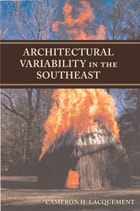
Architectural Variability in the Southeast
Edited by Cameron H. Lacquement
University of Alabama Press, 2007
Some of the most visible expressions of human culture are illustrated architecturally. Unfortunately for archaeologists, the architecture being studied is not always visible and must be inferred from soil inconsistencies or charred remains. This study deals with research into roughly a millennium of Native American architecture in the Southeast and includes research on the variation of construction techniques employed both above and below ground. Most of the architecture discussed is that of domestic houses with some emphasis on large public buildings and sweat lodges. The authors use an array of methods and techniques in examining native architecture including experimental archaeology, ethnohistory, ethnography, multi-variant analysis, structural engineering, and wood science technology. A major portion of the work, and probably the most important in terms of overall significance, is that it addresses the debate of early Mississippian houses and what they looked like above ground and the changes that occurred both before and after the arrival of Europeans.
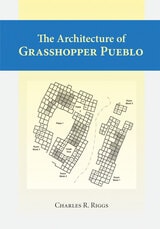
Architecture Of Grasshopper Pueblo, The
Charles Riggs
University of Utah Press, 2011
The long history of field research at Grasshopper, a massive, 500-room pueblo in an isolated mountain meadow in east-central Arizona, has produced a wealth of architectural information. Drawing on this extensive research, Charles Riggs reconstructs the pueblo, and provides a glimpse into the everyday life of the community at a critical time in Southwest prehistory.
Between AD 1300 and 1330, a group consisting mainly of newcomers to the area established and then enlarged Grasshopper. From the architectural remnants excavated by the University of Arizona Archaeological Field School it is possible to determine that the earliest arrivals settled Grasshopper relatively quickly and that subsequent groups from the region and the Colorado Plateau built their houses next to kinsmen. The houses of locals and immigrants remained separate in discrete room blocks despite their occupants’ participation in communal groups.
Ultimately short-lived, by AD 1330 the influx of immigrants tapered and the architecture came to reflect a more seasonal, less intensive use of the area. Eventually the community was abandoned and the walls were left to crumble. In The Architecture of Grasshopper Pueblo, Riggs gives us a new view of community life at this ancient Puebloan site.
Architecture and the Right to Heal
Resettler Nationalism in the Aftermath of Conflict and DisasterEsra Akcan
Duke University Press, 2025
Architecture for the Poor
An Experiment in Rural EgyptHassan Fathy
University of Chicago Press, 1976
Architecture of Memory
Exploring (Post-) Jewish Spaces in Eastern EuropeNatalia Romik
University College London, 2025
Using archival, architectural, and artistic methods, Architecture of Memory investigates the spectral architecture of former shtetls, predominantly Jewish towns in Central and Eastern Europe before World War II. Through architectural designs, art, and theoretical discussions mapping the historical legacy and present condition of shtetls, author Natalia Romik explores themes of architectural disappearance, urban remembrance, and functional change amid social upheaval. Romik’s unique design research of synagogue ruins, burial grounds, former ritual baths, and other “difficult heritage” contributes to discussions about the protection of Jewish heritage in places where there is no longer any Jewish population.
Architecture of Migration
The Dadaab Refugee Camps and Humanitarian SettlementAnooradha Iyer Siddiqi
Duke University Press, 2024
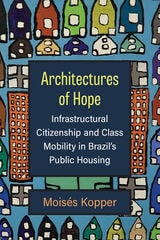
Architectures of Hope
Infrastructural Citizenship and Class Mobility in Brazil's Public HousingMoisés Kopper
University of Michigan Press, 2022
Architectures of Hope examines how communal idealism, electoral politics, and low-income consumer markets made first-time homeownership a reality for millions of low-income Brazilians over the last ten years.
Drawing on a five-year-long ethnography among city planners, architects, street-level bureaucrats, politicians, market and bank representatives, community leaders, and past, present, and future beneficiaries, Moisés Kopper tells the story of how a group of grassroots housing activists rose from oblivion to build a model community. He explores the strategies set forth by housing activists as they waited and hoped for—and eventually secured—homeownership through Minha Casa Minha Vida’s public-private infrastructure. By showing how these efforts coalesced in Porto Alegre—Brazil’s once progressive hotspot—he interrogates the value systems and novel arrangements of power and market that underlie the country’s post-neoliberal project of modern and inclusive development.
By chronicling the making and remaking of material hope in the aftermath of Minha Casa Minha Vida, Architectures of Hope reopens the future as a powerful venue for ethnographic inquiry and urban development.

Architectures of Illusion
From Motion Picutres to Navigable Interactuve EnvironmentsEdited by François Penz and Maureen Thomas
Intellect Books, 2003
This profile of the work of the Cambridge University Moving Image Studio (CUMIS), presents a strong argument that new developments in digital media are absolutely dependent on an understanding of traditional excellence. The book stands alone in placing equal emphasis on theoretical and practical aspects of its subject matter and avoids jargon so as to be easily understood by the general reader as well as the specialist.
Chapters discuss:
• animation • navigable architectural environments • moving image narrativity
• questions of truth and representation • virtuality/reality • synthetic imaging
• interactivity
This broad analysis of current research, teaching and media production contains essential information for all those working or studying in the areas of multimedia, architecture, film and television.
The book is designed as a core text for the Cambridge University 1 year MPhil Degree in Architecture and the Moving Image.
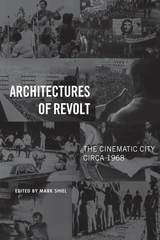
Architectures of Revolt
The Cinematic City circa 1968Mark Shiel
Temple University Press, 2018
Coinciding with the fiftieth anniversary of the worldwide mass protest movements of 1968—against war, imperialism, racism, poverty, misogyny, and homophobia—the exciting anthology Architectures of Revolt explores the degree to which the real events of political revolt in the urban landscape in 1968 drove change in the attitudes and practices of filmmakers and architects alike.
In and around 1968, as activists and filmmakers took to the streets, commandeering public space, buildings, and media attention, they sought to re-make the urban landscape as an expression of utopian longing or as a dystopian critique of the established order. In Architectures of Revolt, the editor and contributors chronicle city-specific case studies from Paris, Berlin, Milan, and Chicago to New York, Los Angeles, Mexico City, and Tokyo. The films discussed range from avant-garde and agitprop shorts to mainstream narrative feature films. All of them share a focus on the city and, often, particular streets and buildings as places of political contestation and sometimes violence, which the medium of cinema was uniquely equipped to capture.
Contributors include: Stephen Barber, Stanley Corkin, Jesse Lerner, Jon Lewis, Gaetana Marrone, Jennifer Stob, Andrew Webber, and the editor.
Archival Entanglements
Edited by Puja Batra-Wells and Harmony Bench
The Ohio State University Press, 2026
Archival Entanglements arrives in the wake of the archival turn in the arts and humanities. What humanists call “the archive” has been challenged, deconstructed, and reinvented, but, as editors Puja Batra-Wells and Harmony Bench show, the conversation about the archive is far from over. In this interdisciplinary collection, contributors from digital humanities, performance studies, labor studies, race and ethnic studies, and more come together to shed new light on how objects, knowledges, environments, bodily practices, and identities are entangled with the archive. Showcasing a range of approaches from traditional essays to artistic engagements, the works in this collection complicate questions of archival memory; raise issues of accessibility, erasure, latency, and surveillance; and ask if we should forge new spaces of remembrance that reach beyond the limits of the archive. Archival Entanglements posits the archive as both a generative site of knowledge production and a constricted force of consolidation around dominant narratives—essentially, as a complex web of theories and practices with which the arts and humanities are fundamentally entangled.
Contributors:
Anurima Banerji, Franco Barchiesi, Puja Batra-Wells, Harmony Bench, Johannah Bird, Leigh Bonds, Iñaki Bonillas, Melissa Anne-Marie Curley, Eric Gonzaba, Brian Harnetty, Brian Eugenio Herrera, Kelly Kivland, Tanya Lukin Linklater, Mariah E. Marsden, Mimi ?n??ha, Martin Joseph Ponce, Rebecca Schneider, Amy Shuman, Michelle Wibbelsman, Nicole Wood

Archival Fictions
Materiality, Form, and Media History in Contemporary LiteraturePaul Benzon
University of Massachusetts Press, 2021
Taking up works from Andy Warhol, Kevin Young, Don DeLillo, and Hari Kunzru, Archival Fictions considers how these writers have constructed a speculative history of media technology through formal experimentation. Although media technologies have determined the extent of what can be written, recorded, and remembered in the immediate aftermath of print's hegemony, Paul Benzon argues that literary form provides a vital means for critical engagement with the larger contours of media history. Drawing on approaches from media poetics, film studies, and the digital humanities, this interdisciplinary study demonstrates how authors who engage technology through form continue to imagine new roles for print literature across the late twentieth and early twenty-first centuries.
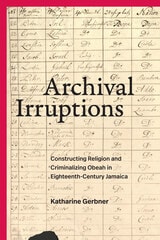
Archival Irruptions
Constructing Religion and Criminalizing Obeah in Eighteenth-Century JamaicaKatharine Gerbner
Duke University Press, 2025
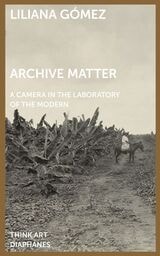
Archive Matter
A Camera in the Laboratory of the ModernLiliana Gómez
Diaphanes, 2023
A journey through the United Fruit Company’s photo archive and its documentation of corporate expansion into the Caribbean.
The establishment of the United Fruit Company as a global political agent with its banana plantations was met with considerable resistance. Now the company’s photographic records are the focal point of Archive Matter as it examines photography’s historical and political impact through the argument that this overlooked, but important, archive made capitalist expansion into the Caribbean possible.
Author Liliana Gómez examines the images from within their “optical unconscious” and via the archive’s silences and omissions. The implication of these silences, Gómez argues, is the attempt to conceal the violence embedded within the realities of the plantations’ daily operations and corporate efforts to “modernize” the Caribbean.
Archive of Aurelius Isidorus
in the Egyptian Museum, Cairo, and the University of MichiganArthur E. R. Boak and Herbert Chayyim Youtie, Editors
University of Michigan Press, 1960

Archive of Tongues
An Intimate History of BrownnessMoon Charania
Duke University Press, 2023

Archives
Andrew Lison
University of Minnesota Press, 2019
How digital networks and services bring the issues of archives out of the realm of institutions and into the lives of everyday users
Archives have become a nexus in the wake of the digital turn. Electronic files, search engines, video sites, and media player libraries make the concepts of “archival” and “retrieval” practically synonymous with the experience of interconnected computing. Archives today are the center of much attention but few agendas. Can archives inform the redistribution of power and resources when the concept of the public library as an institution makes knowledge and culture accessible to all members of society regardless of social or economic status? This book sets out to show that archives need our active support and continuing engagement.
This volume offers three distinct perspectives on the present status of archives that are at once in disagreement and solidarity with each other, from contributors whose backgrounds cut across the theory–practice divide. Is the increasing digital storage of knowledge pushing us toward a turning point in its democratization? Can archives fulfill their paradoxical potential as utopian sites in which the analog and the digital, the past and future, and remembrance and forgetting commingle? Is there a downside to the present-day impulse toward total preservation?
Archives and Archiving
K. J. Rawso and Aaron Devor, special issue editors
Duke University Press, 0
Archives of the Anthropocene
Visual Grammars of Deep TimeYuriko Furuhata
Duke University Press, 2026
Archives of the Insensible
Of War, Photopolitics, and Dead MemoryAllen Feldman
University of Chicago Press, 2015
Excavating a scenography of trials—formal or covert, orchestrated or improvised, criminalizing or criminal—Feldman shows how the will to truth disappears into the very violence it interrogates. He maps the sensory inscriptions and erasures of war, highlighting war as a media that severs factuality from actuality to render violence just. He proposes that war promotes an anesthesiology that interdicts the witness of a sensory and affective commons that has the capacity to speak truth to war. Feldman uses layered deconstructive description to decelerate the ballistical tempo of war to salvage the embodied actualities and material histories that war reduces to the ashes of collateral damage, the automatism of drones, and the opacities of black sites. The result is a penetrating work that marries critical visual theory, political philosophy, anthropology, and media archeology into a trenchant dissection of emerging forms of sovereignty and state power that war now makes possible.
Archiving Medical Violence
Consent and the Carceral StateChristopher Perreira
University of Minnesota Press, 2023
A major new reading of a U.S. public health system shaped by fraught perceptions of culture, race, and criminality
At the heart of Archiving Medical Violence is an interrogation of the notions of national and scientific progress, marking an advance in scholarship that shows how such violence is both an engine of medical progress and, more broadly, the production of empire. It reads the medical archive through a lens that centers how it is produced, remembered, and contested within cultural production and critical memory.
In this innovative and interdisciplinary book, Christopher Perreira argues that it is in the contradictions of settler colonialism and racial capitalism that we find how medical violence is narrated as a public good. He presents case studies from across a range of locations—Hawai‘i, California, Louisiana, Guatemala—and historical periods from the nineteenth century on. Examining national and scientific conceptions of progress through the lens of medicine and public health, he places official archives in dialogue with visual and literary works, patient writing, and more.
Archiving Medical Violence explores the contested public terrains for narrating value and vulnerabilities, bodies and geographical locations. Ultimately, Perreira reveals for us a medical imaginary built on racialized criminality driving contemporary politics of citizenship, memory, and identity.
Retail e-book files for this title are screen-reader friendly with images accompanied by short alt text and/or extended descriptions.

Archiving Mexican Masculinities in Diaspora
Nicole M. Guidotti-Hernández
Duke University Press, 2021
Archiving Sovereignty
Law, History, ViolenceStewart Motha
University of Michigan Press, 2018
Sovereignty is often cast as a limit-concept, constituent force, determining the boundary of law. Archiving Sovereignty reverses this to explain how judicial pronouncements inscribe and sustain extravagant claims to exceptionality and sovereign solitude. This wide-ranging, critical work distinguishes between myths that sustain neocolonial orders and fictions that generate new forms of political and ethical life.
Arctic Adaptations
Native Whalers and Reindeer Herders of Northern EurasiaIgor Krupnik
Dartmouth College Press, 2002

Arctic Madness
The Anthropology of a DelusionPierre Déléage
HAU, 2020

Arctic Wars, Animal Rights, Endangered Peoples
Finn. Lynge
Dartmouth College Press, 2002
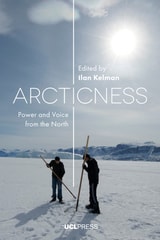
Arcticness
Power and Voice from the NorthIlan Kelman
University College London, 2017

Are We One?
Jewish Identity in the United States and IsraelAuerbach, Jerold S
Rutgers University Press, 2001
What binds together Jews of Israel and the United States? Amid the hope and frustration generated by the Middle East peace process, the meaning of Jewish statehood is more vigorously contested than ever before. A secular democratic Israel, responsive to Western liberal values, is prepared to make peace with the Palestinians by sacrificing its own historic homeland. But a covenantal Israel, which draws its Jewish identity from divine promise and the biblical narrative, refuses to surrender to modern imperatives. As the very nature of Jewish statehood has become ever more polarized, American Jewish life has been profoundly affected by this fateful Zionist contradiction.
In Are We One? Jerold S. Auerbach presents a surprising new interpretation of this contemporary Jewish dilemma. The modern Jewish impulse to embrace Western values, he writes, exacts a terrible price. He offers a critical reassessment of Zionism, a challenging analysis of the sources of the identification of American Jews with Israel—and a gloomy prognosis of the future of Jewish life, both in Israel and the United States.
In a ringing indictment that is sure to spark controversy, he states that the eagerness of secular Israelis to import American culture reflects their sweeping rejection of Jewish and Zionist values. Indeed, the diminishing number of Israelis who actually remain faithful to Jewish religious and historical imperatives are denigrated as fundamentalist zealots by Israeli and American Jews alike. Present-day Israel now exhibits such Jewish self-loathing, he states, that it has depleted its own ability to inspire world Jewry.
In a groundbreaking book that draws upon original historical analysis and extensive personal experience in Israel, Auerbach invites readers to consider the debilitating consequences of an adulterated Jewish identity in Israel and in the United States for the very future of Judaism.
Are We There Yet?
The Myths and Realities of Autonomous VehiclesEdited by Michael A. Pagano
University of Illinois Press, 2020
The new volume in the Urban Agenda series examines the technological questions still surrounding autonomous vehicles and the uncertain societal and legislative impact of widespread AV adoption. Assessing both short- and long-term concerns, the authors probe how autonomous vehicles might change transportation but also land use, energy consumption, mass transit, commuter habits, traffic safety, job markets, the freight industry, and supply chains. At the same time, the essays discuss opportunities for industry, researchers, and policymakers to make the autonomous future safer, more efficient, and more mobile.
Contributors: Austin Brown, Stan Caldwell, Chris Hendrickson, Kazuya Kawamura, Taylor Long, and P. S. Srira.
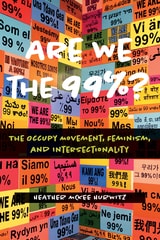
Are We the 99%?
The Occupy Movement, Feminism, and IntersectionalityHeather McKee Hurwitz
Temple University Press, 2021
The protestors that comprised the Occupy Wall Street movement came from diverse backgrounds. But how were these activists—who sought radical social change through many ideologies—able to break down oppressions and obstacles within the movement? And in what ways did the movement perpetuate status-quo structures of inequality?
Are We the 99%? is the first comprehensive feminist and intersectional analysis of the Occupy movement. Heather McKee Hurwitz considers how women, people of color, and genderqueer activists struggled to be heard and understood. Despite cries of “We are the 99%,” signaling solidarity, certain groups were unwelcome or unable to participate. Moreover, problems with racism, sexism, and discrimination due to sexuality and class persisted within the movement.
Using immersive first-hand accounts of activists’ experiences, online communications, and media coverage of the movement, Hurwitz reveals lessons gleaned from the conflicts within the Occupy movement. She compares her findings to those of other contemporary protest movements—nationally and globally—so that future movements can avoid infighting and deploy an “intersectional imperative” to embrace both diversity and inclusivity.
Are You Entertained?
Black Popular Culture in the Twenty-First CenturySimone C. Drake and Dwan Henderson Simmons, editors
Duke University Press, 2020
Contributors. Takiyah Nur Amin, Patricia Hill Collins, Kelly Jo Fulkerson-Dikuua, Simone C. Drake, Dwan K. Henderson, Imani Kai Johnson, Ralina L. Joseph, David J. Leonard, Emily J. Lordi, Nina Angela Mercer, Mark Anthony Neal, H. Ike Okafor-Newsum, Kinohi Nishikawa, Eric Darnell Pritchard, Richard Schur, Tracy Sharpley-Whiting, Vincent Stephens, Lisa B. Thompson, Sheneese Thompson
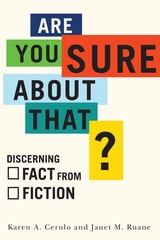
Are You Sure About That?
Discerning Fact from FictionKaren A. Cerulo
Rutgers University Press, 2027
Phone in hand, TV on, we wake up and fall asleep to endless information. There’s no escape—we are drowning in a sea of breaking news, notifications, and popular beliefs and claims. Every day, we encounter hundreds of posts and podcasts on politics, celebrities, or current events. People share links to “expert” recommendations on Instagram or Reddit. YouTube and TikTok bring us those who want to instruct us on the realities of the world or pass on longstanding conventional wisdom, all in the hopes of influencing our decisions and actions.
The information overload of the constant news and information cycle is exhausting and extremely frustrating. You may ask: Just what or whom should we believe? Are You Sure About That? Discerning Fact from Fiction helps readers navigate the perilous informational terrain of contemporary life. We provide a game plan of strategies and guidance for easily and reliably assessing the accuracy of any claim, helping readers to cut through the noise and adjust what they know.

Are You Two Sisters?
The Journey of a Lesbian CoupleSusan Krieger
Temple University Press, 2022
Authored by one of the most respected figures in the field of personal ethnographic narrative, this book serves as both a memoir and a sociological study, telling the story of one lesbian couple’s lifelong journey together.
Are You Two Sisters? is Susan Krieger’s candid, revealing, and engrossing memoir about the intimacies of a lesbian couple. Krieger explores how she and her partner confront both the inner challenges of their relationship and the invisibility of lesbian identity in the larger world.
Using a lively novelistic and autoethnographic approach that toggles back and forth in time, Krieger reflects on the evolution of her forty-year relationship. She describes building a life together, from sharing pets and travels to getting married. Are You Two Sisters? addresses not only questions of gender and sexuality, but also of disability, as Krieger explores how the couple adapts to her increasing blindness.
Krieger’s title comes from a question asked by a stranger outside a remote desert bar as she and her partner traveled in the Southwest. Her apprehension about answering that question suggests how, even after the legalization of gay marriage, lesbianism often remains hidden—an observation that makes Krieger’s poignant narrative all the more moving.
Are the Kids All Right?
Representations of LGBTQ Characters in Children's and Young Adult LiteratureB.J. Epstein
Intellect Books, 2013
Uses ideas from queer theory and other research to interrogate the ways LGBTQ characters are portrayed in books for children and young people, and to analyse what messages readers of such books might receive.
Includes detailed analysis of over 60 picture books, middle-grade books and young adult novels by authors such as Nancy Garden, Julie Ann Peters, Alex Sanchez, David Levithan, Lesléa Newman, Marcus Ewart, Cris Beam and many others.
This book brings together literary studies, sociology, queer studies and other academic fields in an accessible manner, where the research supports the detailed analyses of over 50 books for children and young adults. Epstein looks at a range of topics, such as the lack of diversity in many of these works, how same-sex marriage is portrayed, the relative absence of bisexual and transgender characters, the way that many of these books are marketed and intended as 'issue books', and more.
A practical and informative book to inspire writers and publishers to produce better LGBTQ literature for young readers.

Area Impossible
The Geopolitics of Queer StudiesAnjali Arondekar and Geeta Patel, special issue editors
Duke University Press, 0
Staging a much-needed conversation between two often-segregated fields, this issue addresses the promising future of queer and area studies as collaborative formations. Within queer studies, the turn to geopolitics has challenged the field's logics of time, space, and culture, which have routinely been rooted in the United States. For area studies, the focus on diaspora, forced migration, and other transnational trajectories has unmoored the geopolitical from the stability of nations as organizing concepts. The contributors to this issue seek to imagine and broker conversations between the two fields in which "area" becomes the form through which epistemologies of empire and market are critiqued. Histories of debt bondage; sexuality, and indentured labor; Afro-pessimism in African studies; trans theater facing obdurate transits; religion and the politics of Dalit modernity; the biopolitics of maiming: these are some of the conduits through which the authors approach a queer geopolitics.
Contributors: Anjali Arondekar, Ashley Currier, Aliyah Khan, Keguro Macharia, Thérèse Migraine-George, Maya Mikdashi, Geeta Patel, Jasbir K. Puar, Lucinda Ramberg, Neferti Tadiar, Diana Taylor, Ronaldo Wilson
Argentina and the Jews
A History of Jewish ImmigrationHaim Avni
University of Alabama Press, 1991
Traces the shifting patterns of Jewish immigration and Argentine immigration policy.
Argentina is home to the largest Jewish community in the Hispanic world, the second largest in the Western hemisphere. During successive political and social regimes, Argentina alternately barred Jews from entering the country and recruited them to immigrate, persecuted Jews as heretics or worse and welcomed them as productive settlers, restricted Jews by law and invested them with the fullest rights of citizenship. This volume traces the shifting patterns of Jewish immigration and Argentine immigration policy, both as manifestations of cultural and historical processes and as forces shaping the emergence of a large and energetic Jewish community.
Within Argentina, many Jews followed traditional immigration strategies by consolidating communities and institutions in Buenos Aires and other cities. But many others settled on the land, in agricultural colonies sponsored by Baron Maurice de Hirsch’s Jewish Colonization Association, a group with far-reaching impact that is examined closely in this book. The Israeli kibbutz movement drew strength from the Argentine farming colonies, when beginning in 1949 groups of Argentine Jews immigrated to Israel to found kibbutzes. Eventually, in the face of political and economic upheavals with anti-Semitic undercurrents, almost 40,000 Jews left Argentina for Israel. A country of absorption became a country of exodus, and Zionism became a central focus of Argentine Jewry, interlocking families and fates separated by oceans and continents.