Results by title
28167 books match the query 'History' and 2536 start with a
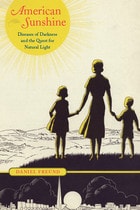
American Sunshine
Diseases of Darkness and the Quest for Natural LightDaniel Freund
University of Chicago Press, 2012
In the second half of the nineteenth century, American cities began to go dark. Hulking new buildings overspread blocks, pollution obscured the skies, and glass and smog screened out the health-giving rays of the sun. Doctors fed anxities about these new conditions with claims about a rising tide of the "diseases of darkness," especially rickets and tuberculosis.
In American Sunshine, Daniel Freund tracks the obsession with sunlight from those bleak days into the twentieth century. Before long, social reformers, medical professionals, scientists, and a growing nudist movement proffered remedies for America’s new dark age. Architects, city planners, and politicians made access to sunlight central to public housing and public health. and entrepreneurs, dairymen, and tourism boosters transformed the pursuit of sunlight and its effects into a commodity. Within this historical context, Freund sheds light on important questions about the commodification of health and nature and makes an original contribution to the histories of cities, consumerism, the environment, and medicine.
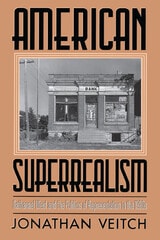
American Superrealism
Nathanael West and the Politics of Representation in the 1930sJonathan Veitch
University of Wisconsin Press, 1997
Nathanael West has been hailed as “an apocalyptic writer,” “a writer on the left,” and “a precursor to postmodernism.” But until now no critic has succeeded in fully engaging West’s distinctive method of negation. In American Superrealism, Jonathan Veitch examines West’s letters, short stories, screenplays and novels—some of which are discussed here for the first time—as well as West’s collaboration with William Carlos Williams during their tenure as the editors of Contact. Locating West in a lively, American avant-garde tradition that stretches from Marcel Duchamp to Andy Warhol, Veitch explores the possibilities and limitations of dada and surrealism—the use of readymades, scatalogical humor, human machines, “exquisite corpses”—as modes of social criticism. American Superrealism offers what is surely the definitive study of West, as well as a provocative analysis that reveals the issue of representation as the central concern of Depression-era America.
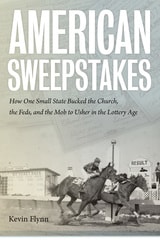
American Sweepstakes
How One Small State Bucked the Church, the Feds, and the Mob to Usher in the Lottery AgeKevin Flynn
University Press of New England, 2015
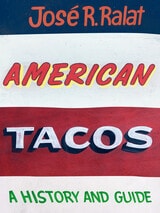
American Tacos
A History and GuideBy José R. Ralat
University of Texas Press, 2020
2021 Best Travel Book, International Latino Book Awards
Tacos may have been created south of the border, but Americans have made this Mexican food their own, with each style reflective of a time and a place. American Tacos explores them all, taking us on a detailed and delicious journey through the evolution of this dish.In search of every taco variety from California to Texas and beyond, Ralat traveled from coast to coast and border to border, visiting thirty-eight cities across the country. He examines the pervasive crunchy taco and the new Alta California tacos from chefs Wes Avila, Christine Rivera, and Carlos Salgado. He tastes famous Tex-Mex tacos like the puffy taco and breakfast taco, then tracks down the fry bread taco and the kosher taco. And he searches for the regional hybrid tacos of the American South and the modern, chef-driven tacos of restaurants everywhere. Throughout, he tells the story of how each style of taco came to be, creating a rich look at the diverse taco landscape north of the border. Featuring interviews with taqueros and details on taco paraphernalia and the trappings of taco culture, American Tacos is a book no taco fan will want to take a bite without.
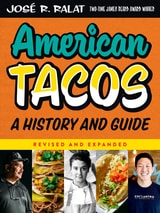
American Tacos
A History and GuideJosé R. Ralat
University of Texas Press, 2024
The first history of tacos developed in the United States, now revised and expanded, this book is the definitive survey that American taco lovers must have for their own taco explorations.
“Everything a food history book should be: illuminating, well-written, crusading, and inspiring a taco run afterwards. You’ll gain five pounds reading it, but don’t worry—most of that will go to your brain.”—Gustavo Arellano, Los Angeles Times
“[Ralat] gives an in-depth look at each taco’s history and showcases other aspects of taco culture that has solidified it as a go-to dish on dinner tables throughout the nation.”—Smithsonian Magazine
“A fascinating look at America’s many regional tacos. . . . From California’s locavore tacos to Korean ‘K-Mex’ tacos to Jewish ‘deli-Mex’ to Southern-drawl ‘Sur-Mex’ tacos to American-Indian-inspired fry bread tacos to chef-driven ‘moderno’ tacos, Ralat lays out a captivating landscape.”—Houston Chronicle
“You’ll learn an enormous and entertaining amount about [tacos] in . . . American Tacos. . . . The book literally covers the map of American tacos, from Texas and the South to New York, Chicago, Kansas City and California.”—Forbes
“An impressively reported new book . . . a fast-paced cultural survey and travel guide . . . American Tacos is an exceptional book.”—Taste
American Taxation, American Slavery
Robin L. Einhorn
University of Chicago Press, 2006
For all the recent attention to the slaveholding of the founding fathers, we still know remarkably little about the influence of slavery on American politics. American Taxation, American Slavery tackles this problem in a new way. Rather than parsing the ideological pronouncements of charismatic slaveholders, it examines the concrete policy decisions that slaveholders and non-slaveholders made in the critical realm of taxation. The result is surprising—that the enduring power of antigovernment rhetoric in the United States stems from the nation’s history of slavery rather than its history of liberty.
We are all familiar with the states’ rights arguments of proslavery politicians who wanted to keep the federal government weak and decentralized. But here Robin Einhorn shows the deep, broad, and continuous influence of slavery on this idea in American politics. From the earliest colonial times right up to the Civil War, slaveholding elites feared strong democratic government as a threat to the institution of slavery. American Taxation, American Slavery shows how their heated battles over taxation, the power to tax, and the distribution of tax burdens were rooted not in debates over personal liberty but rather in the rights of slaveholders to hold human beings as property. Along the way, Einhorn exposes the antidemocratic origins of the popular Jeffersonian rhetoric about weak government by showing that governments were actually more democratic—and stronger—where most people were free.
A strikingly original look at the role of slavery in the making of the United States, American Taxation, American Slavery will prove essential to anyone interested in the history of American government and politics.
American Theater in the Culture of the Cold War
Producing and Contesting Containment, 1947-1962Bruce A. Mcconachie
University of Iowa Press, 2003
McConachie reconstructs these cognitive processes by relying on scripts, set designs, reviews, memoirs, and other evidence. After establishing his theoretical framework, he focuses on three archtypal figures of containment significant in Cold War culture, Empty Boys, Family Circles, and Fragmented Heroes. McConachie uses a range of plays, musicals, and modern dances from the dominant culture of the Cold War to discuss these figures, including The Seven Year Itch, Cat on a Hot Tin Roof; The King and I,A Raisin in the Sun, Night Journey, and The Crucible. In an epilogue, he discusses the legacy of Cold War theater from 1962 to 1992.

American Theatrical Film
Stages of DevelopmentUniversity of Wisconsin Press, 1985
American Tomboys, 1850-1915
Renée M. Sentilles
University of Massachusetts Press, 2018
American Tropics
Articulating Filipino AmericaAllan Punzalan Isaac
University of Minnesota Press, 2006
American Unemployment
Past, Present, and FutureFrank Stricker
University of Illinois Press, 2020
- Workers do not normally choose to be unemployed.
- In our current system, persistent unemployment is not an aberration. It is much more common than full employment, and the outcome of elite policy choices.
- Labor surpluses propped up by flawed unemployment numbers have helped to keep real wages stagnant for more than forty years.
- Prior to the New Deal and the era of big government, laissez-faire policies repeatedly led to depressions with heavy, even catastrophic, job losses.
- Undercounting the unemployed sabotages the creation of government job programs that can lead to more high-paying jobs and full employment.
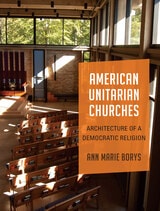
American Unitarian Churches
Architecture of a Democratic ReligionAnn Marie Borys
University of Massachusetts Press, 2021
In American Unitarian Churches, Ann Marie Borys argues that the progressive values and identity of the Unitarian religion are intimately intertwined with ideals of American democracy and visibly expressed in the architecture of its churches. Over time, church architecture has continued to evolve in response to developments within the faith, and many contemporary projects are built to serve religious, practical, and civic functions simultaneously. Focusing primarily on churches of the nineteenth and twentieth centuries, including Frank Lloyd Wright's Unity Temple and Louis Kahn's First Unitarian Church, Borys explores building histories, biographies of leaders, and broader sociohistorical contexts. As this essential study makes clear, to examine Unitarianism through its churches is to see American architecture anew, and to find an authentic architectural expression of American democratic identity.
American Values, Religious Voices
100 Days. 100 LettersAndrea L. Weiss and Lisa M. Weinberger
University of Minnesota Press, 2018
American Values, Religious Voices: 100 Days, 100 Letters is a collection of letters written by some of America’s most accomplished and thoughtful scholars of religion during the first 100 days of the Trump presidency. While the letters are addressed to the president, vice president, and members of the 115th Congress and Trump administration, they speak to a broad audience of Americans looking for wisdom and encouragement at this tumultuous time in our nation’s history.
This unique volume assembles the 100 letters, plus four new supplemental essays and many of the graphic illustrations that enhanced the campaign.
Published near the midway point of the Trump presidency, this book showcases a wide range of ancient sacred texts that pertain to our most pressing contemporary issues. At a time of great division in our country, this post-election project models how people of different backgrounds can listen to and learn from one another. The letters offer insight and inspiration, reminding us of the enduring values that make our nation great.
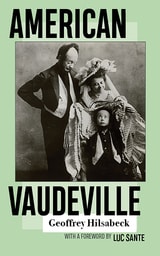
American Vaudeville
Geoffrey Hilsabeck
West Virginia University Press, 2021
At the heart of American Vaudeville is one strange, unsettling fact: for nearly fifty years, from the late nineteenth century to the 1930s, vaudeville was everywhere—then, suddenly, it was nowhere. This book tells the story of what was once the most popular form of entertainment in the country using lists, creation myths, thumbnail biographies, dreams, and obituaries. A lyric history—part social history, part song—American Vaudeville sits at the nexus between poetry, experimental nonfiction, and, because it includes historic images, art books.
Geoffrey Hilsabeck’s book grows out of extensive archival research. Rather than arranging that research—the remains of vaudeville—into a realistic picture or tidy narrative, Hilsabeck dreams vaudeville back into existence, drawing on photographs, letters, joke books, reviews, newspaper stories, anecdotes, and other material gathered from numerous archives, as well as from memoirs by vaudeville performers like Buster Keaton, Eva Tanguay, and Eddie Cantor. Some of this research is presented as-is, a letter from a now forgotten vaudeville performer to her booking agent, for example; some is worked up into brief scenes and biographies; and some is put to even more imaginative uses, finding new life in dialogues and prose poems.
American Vaudeville pulls the past into the present and finds in the beauty and carnivalesque grotesqueness of vaudeville a fitting image of American life today.
American War Stories
Brenda M. Boyle
Rutgers University Press, 2021
American War Stories
Veteran-Writers and the Politics of MemoirMyra Mendible
University of Massachusetts Press, 2021
American War Stories centers on an extensive selection of memoirs written by veterans of the Vietnam, Iraq, and Afghanistan conflicts—including Brian Turner's My Life as a Foreign Country, Marcus Luttrell's Lone Survivor, and Camilo Mejia's Road from ar Ramadi—to explore the complex relationship between memory and politics in the context of postmodern war. Placing veterans' stories in conversation with broader cultural and political discourses, Myra Mendible analyzes the volatile mix of agendas, identities, and issues informing veteran-writers' narrative choices to argue that their work plays an important, though underexamined, political function in how Americans remember and judge their wars.
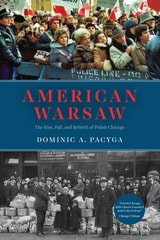
American Warsaw
The Rise, Fall, and Rebirth of Polish ChicagoDominic A. Pacyga
University of Chicago Press, 2019
Every May, a sea of 250,000 people decked out in red and white head to Chicago’s Loop to celebrate the Polish Constitution Day Parade. In the city, you can tune in to not one but four different Polish-language radio stations or jam out to the Polkaholics. You can have lunch at pierogi food trucks or pick up pączkis at the grocery store. And if you’re lucky, you get to take off work for Casimir Pulaski Day. For more than a century, Chicago has been home to one of the largest Polish populations outside of Poland, and the group has had an enormous influence on the city’s culture and politics. Yet, until now, there has not been a comprehensive history of the Chicago Polonia.
With American Warsaw, award-winning historian and Polish American Dominic A. Pacyga chronicles more than a century of immigration, and later emigration back to Poland, showing how the community has continually redefined what it means to be Polish in Chicago. He takes us from the Civil War era until today, focusing on how three major waves of immigrants, refugees, and fortune seekers shaped and then redefined the Polonia. Pacyga also traces the movement of Polish immigrants from the peasantry to the middle class and from urban working-class districts dominated by major industries to suburbia. He documents Polish Chicago’s alignments and divisions: with other Chicago ethnic groups; with the Catholic Church; with unions, politicians, and city hall; and even among its own members. And he explores the ever-shifting sense of Polskość, or “Polishness.”
Today Chicago is slowly being eclipsed by other Polish immigrant centers, but it remains a vibrant—and sometimes contentious—heart of the Polish American experience. American Warsaw is a sweeping story that expertly depicts a people who are deeply connected to their historical home and, at the same time, fiercely proud of their adopted city. As Pacyga writes, “While we were Americans, we also considered ourselves to be Poles. In that strange Chicago ethnic way, there was no real difference between the two.”
American Women in World War I
They Also ServedLettie Gavin
University Press of Colorado, 1997
American Women of Letters and the Nineteenth-Century Sciences
Styles of AffiliationBaym, Nina
Rutgers University Press, 2001
Choice Outstanding Academic Title
During the nineteenth century, the content and institutional organization of the sciences evolved dramatically, altering the public's understanding of knowledge. As science grew in importance, many women of letters tried to incorporate it into a female worldview. Nina Baym explores the responses to science displayed in a range of writings by American women. Conceding that they could not become scientists, women insisted, however, that they were capable of understanding science and participating in its discourse. They used their access to publishing to advocate the study and transmission of scientific information to the general public.
Bayms book includes biographies and a full exploration of these women's works. Among those considered are:
• Almira Phelps, author of Familiar Lectures on Botany (it sold 350,000 copies)
• Sarah Hale, who filled Godey's Lady's Book with science articles
• Catharine Esther Beecher, who based her domestic advice on scientific information
• Elizabeth Cary Agassiz, the actual ghostwriter of her husband's popular science essays
• Emily Dickinson, whose poetry is replete with scientific images.
Baym also investigates science in women's novels, writing by and about women doctors, and the scientific claims advanced by women's spiritualist movements. This book truly breaks new ground, outlining a field of inquiry that few have noted exists.
American and British Writers in Mexico, 1556-1973
By Drewey Wayne Gunn
University of Texas Press, 1974
American and British Writers in Mexico is the study that laid the foundation upon which subsequent examinations of Mexico’s impact upon American and British letters have built. Chosen by the Mexican government to be placed, in translation, in its public libraries, the book was also referenced by Nobel Laureate Octavio Paz in an article in the New Yorker, “Reflections—Mexico and the United States.” Drewey Wayne Gunn demonstrates how Mexican experiences had a singular impact upon the development of English writers, beginning with early British explorers who recorded their impressions for Hakluyt’s Voyages, through the American Beats, who sought to escape the strictures of American culture.
Among the 140 or so writers considered are Stephen Crane, Ambrose Bierce, Langston Hughes, D. H. Lawrence, Somerset Maugham, Katherine Anne Porter, Hart Crane, Malcolm Lowry, John Steinbeck, Graham Greene, Tennessee Williams, Saul Bellow, William Carlos Williams, Robert Lowell, Ray Bradbury, Allen Ginsberg, William Burroughs, and Jack Kerouac.
Gunn finds that, while certain elements reflecting the Mexican experience—colors, landscape, manners, political atmosphere, a sense of the alien—are common in their writings, the authors reveal less about Mexico than they do about themselves. A Mexican sojourn often marked the beginning, the end, or the turning point in a literary career. The insights that this pioneering study provide into our complex cultural relationship with Mexico, so different from American and British authors’ encounters with Continental cultures, remain vital. The book is essential for anyone interested in understanding the full range of the impact of the expatriate experience on writers.

American-Australian Relations
Werner Levi
University of Minnesota Press, 1947
American-Australian Relations was first published in 1947. Minnesota Archive Editions uses digital technology to make long-unavailable books once again accessible, and are published unaltered from the original University of Minnesota Press editions.
This new study fills a wide gap in the story of American-Australian relations and is a timely addition to the literature in this field. There has been no comprehensive treatment of the topic before, and it will be of interest to those seeking information that the thorough documentation includes wide use of reports of the American consuls in Australia, and material from Australian parliamentary debates and Australian and American newspapers.
Australia has emerged from the war as an important world power that demands a prominent role in the south and southwest Pacific. At the same time the United States has become more and more deeply involved in Far Eastern affairs. The book gives the background of the development and shows the gradual enlargement of spheres of mutual interest between the two countries, both political and economic, from the end of the eighteenth century down to the problems presented by postwar developments in the Pacific.
Emphasis is placed on the economic and political ambitions of the two countries, and on their resulting agreements and disagreements both in their direct relations and in their relations with the whole Far Eastern region. Dr. Levi points out that the new importance of the Pacific resulting from World War II has proved to both nations their mutual dependence, but at the same time has increased their national interest in ever-widening and overlapping spheres in the Pacific area.

American-Designed Shopping Malls in China
Charlie Qiuli Xue and Arwen Yingting Chen
Hong Kong University Press, 2026
How shopping malls transformed China’s urban landscapes and the consumer patterns of their residents.
China’s remarkable journey from poverty to becoming the world’s second-largest economic power is marked by extraordinary urban growth and the booming consumption capacity of urban populations. Central to this development are multifunctional commercial complexes and shopping malls, which are now key features of modern urban districts. Shopping malls, originally introduced to China by American architects in the 1980s, have since flourished on an even larger scale than their American counterparts.
This book delves into the origins of shopping mall development in the United States after World War II, tracing how American architects exported this building type into China’s rapidly evolving urban landscapes, particularly in Beijing, Shanghai, Chengdu, Kunming, and Guangzhou. Using primary sources, statistical analyses, and illustrated case studies, American-Designed Shopping Malls in China explores the evolution of shopping malls as a consequence of China’s profound economic, social, and cultural change over the past four decades. The book also highlights the impact of American consumerism on the everyday lives of Chinese people, altering not only consumer patterns but also local architectural practices. This tale of transformation is essential reading for anyone interested in China’s rapid urban development.
Americanization, Acculturation, and Ethnic Identity
The Nisei Generation in HawaiiEileen H. Tamura
University of Illinois Press, 1994
Wartime hysteria over "foreign" ways fueled a movement for Americanization that swept the United States during and after World War I. Eileen H. Tamura examines the forms that hysteria took in Hawai'i, where the Nisei (children of Japanese immigrants) were targets of widespread discrimination.
Tamura analyzes Hawaii's organized effort to force the Nisei to adopt "American" ways, discussing it within the larger phenomenon of Nisei acculturation. While racism was prevalent in "paradise," the Nisei and their parents also performed as active agents in their own lives, with the older generation attempting to maintain Japanese cultural ways and the younger wishing to become "true Americans." Caucasian "Americanizers," often associated with powerful agricultural interests, wanted labor to remain cheap and manageable; they lobbied for racist laws and territorial policies, portending the treatment of ethnic Japanese on the U.S. mainland during World War II.
Tamura offers a wealth of original source material, using personal accounts as well as statistical data to create an essential resource for students of American ethnic history and U.S. race and class relations.
Americans Abroad
Two Centuries of European TravelFoster Rhea Dulles
University of Michigan Press, 1964
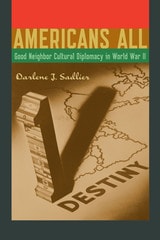
Americans All
Good Neighbor Cultural Diplomacy in World War IIBy Darlene J. Sadlier
University of Texas Press, 2012
Cultural diplomacy—“winning hearts and minds” through positive portrayals of the American way of life—is a key element in U.S. foreign policy, although it often takes a backseat to displays of military might. Americans All provides an in-depth, fine-grained study of a particularly successful instance of cultural diplomacy—the Office of the Coordinator of Inter-American Affairs (CIAA), a government agency established by President Franklin D. Roosevelt in 1940 and headed by Nelson A. Rockefeller that worked to promote hemispheric solidarity and combat Axis infiltration and domination by bolstering inter-American cultural ties.
Darlene J. Sadlier explores how the CIAA used film, radio, the press, and various educational and high-art activities to convince people in the United States of the importance of good neighbor relations with Latin America, while also persuading Latin Americans that the United States recognized and appreciated the importance of our southern neighbors. She examines the CIAA’s working relationship with Hollywood’s Motion Picture Society of the Americas; its network and radio productions in North and South America; its sponsoring of Walt Disney, Orson Welles, John Ford, Gregg Toland, and many others who traveled between the United States and Latin America; and its close ties to the newly created Museum of Modern Art, which organized traveling art and photographic exhibits and produced hundreds of 16mm educational films for inter-American audiences; and its influence on the work of scores of artists, libraries, book publishers, and newspapers, as well as public schools, universities, and private organizations.
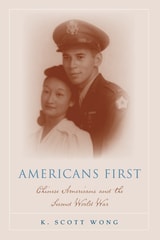
Americans First
Chinese Americans and the Second World WarK. Scott Wong
Temple University Press, 2008
In Americans First, K. Scott Wong uses archival research and oral histories to provide the first detailed account of Chinese Americans in the American military. Wong traces the history of the 14th Air Service Group, a segregated outfit of Chinese Americans sent to China in support of the American Army Air Corps and the Chinese Air Force. His ethnic history of inclusion shows how this new generation of Chinese Americans was more socially accepted, moving from the margins of society into the American mainstream during a time of pervasive racism.
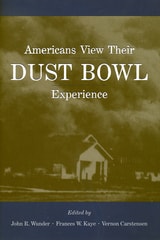
Americans View Their Dust Bowl Experience
John R. Wunder
University Press of Colorado, 2001
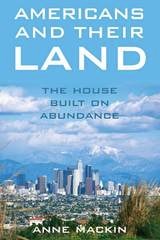
Americans and Their Land
The House Built on AbundanceAnne Mackin
University of Michigan Press, 2006
—James Carroll, author of House of War and An American Requiem, winner of the National Book Award
“Anne Mackin has taken a fresh and provocative look at that most fascinating of relationships: the one between the American people and the American land.”
—Michael Pollan, Knight Professor of Journalism and Director of the Knight Program in Science and Environmental Journalism at University of California Berkeley, contributing writer to the New York Times Magazine, and author of The Omnivore's Dilemma and The Botany of Desire
“Anne Mackin has given us a valuable and less-used lens to view the development of our neighborhoods, towns and cities: the land itself. Our relationship to the earth beneath our feet—how we dig it, buy it, sell it, zone it, pave it, spoil it or pamper it—helps explain what is produced on top of the land in our nation, from farms to homes to skyscrapers. All in all, Mackin takes us on a novel and erudite journey, from one coast to the other, and from Colonial times to the present. This valuable book marks a significant and lasting contribution to the way we see and understand our landscape and ourselves.”
—Alex Marshall, author of How Cities Work: Suburbs, Sprawl, and the Roads Not Taken
“To really understand the origins of the range war now raging between smart growth and property rights advocates over the future of the American land, you need to read this exceptional book.”
—Robert D. Yaro, President Regional Plan Association and Professor in Practice, University of Pennsylvania
Thomas Malthus once said, “The happiness of the Americans depended much less upon their peculiar degree of civilization than . . . upon their having a great plenty of fertile uncultivated land.”
Malthus knew. Lord MacCaulay knew. Albert Gallatin knew. America and its people would change as a growing population whittled away the supply of land.
Nothing has shaped the American character like the abundance of land that met the colonist, the pioneer, and the early suburbanite. With today’s political and economic institutions shaped by the largesse of yesteryear, how will Americans fare in the new landscape of water wars, expensive housing, rising fuel prices, environmental and property rights battles, and powerful industrial lobbies?
Why is land the key to American democracy? How can we protect our democracy as more people and industries compete more intensively for our remaining resources? Americans and Their Land begins an important, overdue discussion of these questions. Anne Mackin takes the reader story by story from frontier history to the present and shows how land shaped the American political landscape. She shows how our evolving traditions of apportioning resources have allowed diminished supplies to create our present, increasingly unequal society, and she asks how 300 million Americans living in the new American landscape of growing competition can better share those resources.
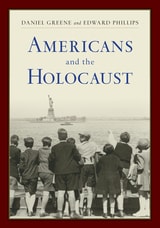
Americans and the Holocaust
A ReaderDaniel Greene
Rutgers University Press, 2021
Americans and the Holocaust explores these enduring questions by gathering together more than one hundred primary sources that reveal how Americans debated their responsibility to respond to Nazism. Drawing on groundbreaking research conducted for the United States Holocaust Memorial Museum’s Americans and the Holocaust exhibition, these carefully chosen sources help readers understand how Americans’ responses to Nazism were shaped by the challenging circumstances in the United States during the 1920s, 1930s, and 1940s, including profound economic crisis, fear of communism, pervasive antisemitism and racism, and widespread isolationism.
Collecting newspaper and magazine articles, popular culture materials, and government records, Americans and the Holocaust is a valuable resource for students and historians seeking to shed light on this dark era in world history.
To explore further, visit the United States Holocaust Memorial Museum's digital exhibit, available here: https://exhibitions.ushmm.org/americans-and-the-holocaust
Published in association with the United States Holocaust Memorial Museum.
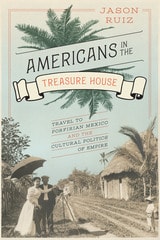
Americans in the Treasure House
Travel to Porfirian Mexico and the Cultural Politics of EmpireBy Jason Ruiz
University of Texas Press, 2014
When railroads connected the United States and Mexico in 1884 and overland travel between the two countries became easier and cheaper, Americans developed an intense curiosity about Mexico, its people, and its opportunities for business and pleasure. Indeed, so many Americans visited Mexico during the Porfiriato (the long dictatorship of Porfirio Díaz, 1876–1911) that observers on both sides of the border called the hordes of tourists and business speculators a “foreign invasion,” an apt phrase for a historical moment when the United States was expanding its territory and influence.
Americans in the Treasure House examines travel to Mexico during the Porfiriato, concentrating on the role of travelers in shaping ideas of Mexico as a logical place for Americans to extend their economic and cultural influence in the hemisphere. Analyzing a wealth of evidence ranging from travelogues and literary representations to picture postcards and snapshots, Jason Ruiz demonstrates that American travelers constructed Mexico as a nation at the cusp of modernity, but one requiring foreign intervention to reach its full potential. He shows how they rationalized this supposed need for intervention in a variety of ways, including by representing Mexico as a nation that deviated too dramatically from American ideals of progress, whiteness, and sexual self-control to become a modern “sister republic” on its own. Most importantly, Ruiz relates the rapid rise in travel and travel discourse to complex questions about national identity, state power, and economic relations across the U.S.–Mexico border.
Americas Jews
Chaim Waxman
Temple University Press, 1983
The book is a social history and sociology of American Jewry. It provides an up-to-date analysis of the contemporary American Jewish community, an analysis that includes educational, occupational, income, and political patterns of American Jews; the American Jewish family; anti-semitism; the relationship between American Jews and Israel; and the recent immigration of Soviet, Israeli, and Iranian Jews to the USA.
In synthesizing a vast array of empirical studies, the author argues that while American Jews have been successful in their quest to integrate into the American social system, recent developments both in the American social and cultural system, at large, and within the Jewish community, in particular, indicate that this ethno-religious group is confronting the challenge to its continuity and its manifesting survivalist strengths which were not readily apparent in earlier generations.
America's Jews in Transition should interest students in a wide range of fields, among them sociology, ethnic studies, Jewish studies, American studies, and religious studies. Because of its breadth and the freshness of its material, the book should also appeal to the general reader.
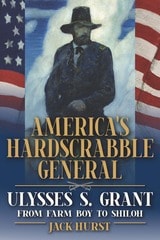
America’s Hardscrabble General
Ulysses S. Grant, from Farm Boy to ShilohJack Hurst
Southern Illinois University Press, 2022
Renowned for his skill, courage, and indomitability during the Civil War, Ulysses S. Grant is considered a model for outstanding American generalship. However, unlike most of his fellow officers, Grant came from humble Midwestern beginnings and experienced a number of professional failures before rising to military prominence.
Grant grew up on a farm on the Ohio frontier and reluctantly attended West Point, where he finished in the middle of his class. In his early army career, he was often underestimated by his peers despite valiant service. After the Mexican War Grant’s “Hardscrabble” farm outside St. Louis failed, and when he decided to rejoin the U.S. army, he was given the unenviable command of a rowdy volunteer regiment, the 21st Illinois.
How did Grant—an average student, failed farmer, and common man—turn the 21st Illinois into a showcase regiment and become a successful general? In this engaging analysis, Jack Hurst argues that Grant’s military brilliance stemmed not from his West Point education but rather from his roots in America’s lower middle class and its commonsense values. His upbringing in the antebellum rural Midwest undergirded his military skill and helped him develop an innate humility, sense of justice, and ability to focus, leading him to form close relationships with his men.
Through a detailed account of Grant’s early years, from boyhood through the Battle of Shiloh, Hurst explores how Grant’s modest start and experiences in the Mexican War prefigured his greatest military triumphs. Ultimately Grant abandoned the traditional military practice of his time, which relied upon maneuver, and instead focused on fighting. His strategy to always move forward, win or lose, turned even his losses into essential elements of victory and characterized the aggressive, relentless approach that would ultimately win the Civil War and save the Union.
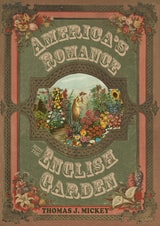
America’s Romance with the English Garden
Thomas J. Mickey
Ohio University Press, 2013
Named one of “the year’s best gardening books” by The Spectator (UK, Nov. 2014)
The 1890s saw a revolution in advertising. Cheap paper, faster printing, rural mail delivery, railroad shipping, and chromolithography combined to pave the way for the first modern, mass-produced catalogs. The most prominent of these, reaching American households by the thousands, were seed and nursery catalogs with beautiful pictures of middle-class homes surrounded by sprawling lawns, exotic plants, and the latest garden accessories—in other words, the quintessential English-style garden.
America’s Romance with the English Garden is the story of tastemakers and homemakers, of savvy businessmen and a growing American middle class eager to buy their products. It’s also the story of the beginnings of the modern garden industry, which seduced the masses with its images and fixed the English garden in the mind of the American consumer. Seed and nursery catalogs delivered aspirational images to front doorsteps from California to Maine, and the English garden became the look of America.
Amerikanuak
Basques In The New WorldWilliam A. Douglass
University of Nevada Press, 2005

Amherst in the World
Martha Saxton
Amherst College Press, 2020
Contributions by Martha Saxton, Gary J. Kornblith, David W. Wills, Frederick E. Hoxie, Trent Maxey, Nicholas L. Syrett, Wendy H. Bergoffen, Rick López, Matthew Alexander Randolph, Daniel Levinson Wilk, K. Ian Shin, David S. Reynolds, Jane F. Thrailkill, Julie Dobrow, Richard F. Teichgraeber III, Debby Applegate, Michael E. Jirik, Bruce Laurie, Molly Michelmore, and Christian G. Appy.
Ami and Amile
A Medieval Tale of Friendship, Translated from the Old FrenchSamuel N. Rosenberg and Samuel Danon
University of Michigan Press, 1996
This prose translation of the medieval French verse narrative Ami and Amile recounts the legendary friendship of two valiant knights who are as indistinguishable as twin brothers. Ami and Amile serve Charlemagne together, face together the hatred of an archetypal villain, confront the daunting challenges of women and love, and accept extraordinary sacrifices for each other's sake. Miracles mark the end of their lives, and their shared tomb becomes a pilgrims' shrine. The compelling translation by Samuel N. Rosenberg and Samuel Danon is accompanied by an introduction on the background, genre, and general sense of the tale. The volume also includes an afterword by David Konstan, which examines the medieval work's concept of friendship within a perspective extending back to classical antiquity. This translation will reveal Ami and Amile as a major work of the French Middle Ages. In elegant and forceful prose, it weaves together the themes of friendship and love and the status of women, of sin and punishment, the moral problem of doing wrong for the right reason, and the mythic affliction of leprosy. The work will foster lively literary and philosophical discussion. Ami and Amile is of interest to a wide range of readers, including students of history, comparative literature, and gender studies. Medievalists will find it a welcome addition to their libraries and a captivating experience for their students.
Amid the Fall, Dreaming of Eden
Du Bois, King, Malcolm X, and Emancipatory CompositionBradford T. Stull
Southern Illinois University Press, 1999
Whom, or what, does composition—defined here as an intentional process of study, either oral or written—serve? Bradford T. Stull contends that composition would do well to articulate, in theory and practice, what could be called "emancipatory composition." He argues that emancipatory composition is radically theopolitical: it roots itself in the foundational theological and political language of the American experience while it subverts this language in order to emancipate the oppressed and, thereby, the oppressors.
To articulate this vision, Stull looks to those who compose from an oppressed place, finding in the works of W. E. B. Du Bois, Martin Luther King Jr., and Malcolm X radical theopolitical practices that can serve as a model for emancipatory composition. While Stull acknowledges that there are many sites of oppression, he focuses on what Du Bois has called the problem of the twentieth century: the color line, positing that the unique and foundational nature of the color line provides a fecund place in which, from which, a theory and practice of emancipatory composition might be elucidated.
By focusing on four key theopolitical tropes—The Fall, The Orient, Africa, and Eden—that inform the work of Du Bois, King, and Malcolm X, Stull discovers the ways in which these civil rights leaders root themselves in the vocabulary of the American experience in order to subvert it so that they might promote emancipation for African Americans, and thus all Americans.
In drawing on the work of Paulo Freire, Kenneth Burke, Edward Said, Christopher Miller, Ernst Bloch, and others, Stull also locates this study within the larger cultural context. By reading Du Bois, King, and Malcolm X together in a way that they have never before been read, Stull presents a new vision of composition practice to the African American studies community and a reading of African American emancipatory composition to the rhetoric and composition community, thus extending the question of emancipatory composition into new territory.
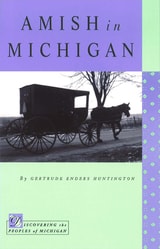
Amish in Michigan
Gertrude Enders Huntington
Michigan State University Press, 2001
Driving the rural roads of Michigan one might suddenly come upon a black buggy driven by a bonneted woman or a bearded Amish man. In 1955 there were fewer than five hundred Amish in Michigan—in 2000 there were more than seven thousand. The Amish, with their unique life-style, are found only in North America where approximately 170,000 live in twenty-four states and one Canadian province. This sensitive and fascinating volume explores the Amish historical background, immigration into Michigan, occupations, marriage patterns, cultural conflicts, community-financed schools, medical practices, and cultural survival.
Amkoullel, the Fula Boy
Amadou Hampâté Bâ
Duke University Press, 2021
Among Women
From the Homosocial to the Homoerotic in the Ancient WorldEdited by Nancy Sorkin Rabinowitz and Lisa Auanger
University of Texas Press, 2002
Women's and men's worlds were largely separate in ancient Mediterranean societies, and, in consequence, many women's deepest personal relationships were with other women. Yet relatively little scholarly or popular attention has focused on women's relationships in antiquity, in contrast to recent interest in the relationships between men in ancient Greece and Rome. The essays in this book seek to close this gap by exploring a wide variety of textual and archaeological evidence for women's homosocial and homoerotic relationships from prehistoric Greece to fifth-century CE Egypt.
Drawing on developments in feminist theory, gay and lesbian studies, and queer theory, as well as traditional textual and art historical methods, the contributors to this volume examine representations of women's lives with other women, their friendships, and sexual subjectivity. They present new interpretations of the evidence offered by the literary works of Sappho, Ovid, and Lucian; Bronze Age frescoes and Greek vase painting, funerary reliefs, and other artistic representations; and Egyptian legal documents.

Among the Afghans
Arthur Bonner
Duke University Press, 1987
Bonner therefore brings both recent experience and the sharp eye of a veteran journalist to an analysis of the Afghan situation: the tenacity and courage of the resistance, the massive emmigration, and the toll taken by the seemingly endless conflict on the country and its people.
The author has seen both the great and small of Afghanistan--both the seared flesh of the hand that an Afghan mujahidin held in the fire to demonstrate his courage and the geopolitical reasons that impelled the former Soviet Union of set its might and treasure against a people who resisted with a fierce and sometimes (to Western eyes) thoughtless courage. This is the story of these antagonists--sobering, chilling, and finally enlightening.
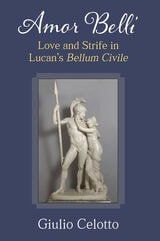
Amor Belli
Love and Strife in Lucan's Bellum CivileGiulio Celotto
University of Michigan Press, 2022
Compelled by the emperor Nero to commit suicide at age 25 after writing uncomplimentary poems, Latin poet Lucan nevertheless left behind a significant body of work, including the Bellum Civile (Civil War). Sometimes also called the Pharsalia, this epic describes the war between Julius Caesar and Pompey.Author Giulio Celotto provides an interpretation of this civil war based on the examination of an aspect completely neglected by previous scholarship: Lucan’s literary adaptation of the cosmological dialectic of Love and Strife.
According to a reading that has found favor over the last three decades, the poem is an unconventional epic that does not conform to Aristotelian norms: Lucan composes a poem characterized by fragmentation and disorder, lacking a conventional teleology, and whose narrative flow is constantly delayed. Celotto’s study challenges this interpretation by illustrating how Lucan invokes imagery of cosmic dissolution, but without altogether obliterating epic norms. The poem transforms them from within, condemning the establishment of the Principate and the Julio-Claudian dynasty.
Amoral Gower
Language, Sex, and PoliticsDiane Watt
University of Minnesota Press, 2003
An innovative reading of John Gower’s work and an exciting new approach to medieval vernacular texts
“Moral Gower” he was called by friend and sometime rival Geoffrey Chaucer, and his “Confessio Amantis” has been viewed as an uncomplicated analysis of the universe, combining erotic narratives with ethical guidance and political commentary. Diane Watt offers the first sustained reading of John Gower’s “Confessio” to argue that this early vernacular text offers no real solutions to the ethical problems it raises—and in fact actively encourages perverse readings.
Drawing on a combination of queer and feminist theory, ethical criticism, and psychoanalytic, historicist, and textual criticism, Watt focuses on the language, sex, and politics in Gower’s writing. How, she asks, is Gower’s “Confessio” related to contemporary controversies over vernacular translation and debates about language politics? How is Gower’s treatment of rhetoric and language gendered and sexualized, and what bearing does this have on the ethical and political structure of the text? What is the relationship between the erotic, ethical, and political sections of “Confessio Amantis”? Watt demonstrates that Gower engaged in the sort of critical thinking more commonly associated with Chaucer and William Langland at the same time that she contributes to modern debates about the ethics of criticism.
Amphibious Campaign For West Florida and Louisiana
Wilburt S. Brown
University of Alabama Press, 1969
Strategy, sea, and swamp—redefining the battle that shaped America’s Gulf frontier.
Amphibious Campaign for West Florida and Louisiana, 1814–1815 is a definitive military history of the Gulf Coast operations that culminated in the Battle of New Orleans, one of the most pivotal engagements of the War of 1812. Written by retired Marine Corps Major General Wilburt S. Brown, this book offers a deeply analytical and interpretive account of the campaign, grounded in a meticulous review of primary sources and informed by modern military doctrine.
Brown examines the strategic decisions, logistical challenges, and tactical maneuvers of both British and American forces as they vied for control of West Florida and Louisiana. He reconstructs the complex amphibious operations, the coordination between naval and land forces, and the leadership of figures such as Andrew Jackson and Sir Edward Pakenham. With military precision and narrative clarity, Brown brings to life the suspense and significance of the campaign, emphasizing its broader implications for American sovereignty and military development.
This volume stands out not only for its scholarly rigor but also for its ability to engage readers with the drama and urgency of historical warfare. It remains one of the most authoritative accounts of the Gulf Coast theater and is essential reading for historians, military scholars, and anyone interested in the evolution of American defense strategy.
Amplifications of Black Sound from Colonial Mexico
Vocality and BeyondSarah Finley
Vanderbilt University Press, 2024
Amplifications of Black Sound from Colonial Mexico is the first extensive study of Afro-descendant sonorities in New Spain or elsewhere in colonial Latin America. In this context, it attends to Black sounds through a framework that remixes Jacques Derrida’s reading of the ear’s anatomy with theories like Gilroy’s lower frequencies or Fred Moten’s phonic materiality. Sarah Finley’s aim is to unsettle the divide between self and other so the auditory archive might emerge as a polyphonic record that exceeds dichotomies of sounding object / listening subject. Through sampling the Afro-descendant sounds of this archive, this book recovers and rearticulates Black voices and auditory practices in New Spain.

Amy Biehl’s Last Home
A Bright Life, a Tragic Death, and a Journey of Reconciliation in South AfricaSteven D. Gish
Ohio University Press, 2018
In 1993, white American Fulbright scholar Amy Biehl was killed in a racially motivated attack near Cape Town, after spending months working to promote democracy and women’s rights in South Africa. The ironic circumstances of her death generated enormous international publicity and yielded one of South Africa’s most heralded stories of postapartheid reconciliation. Amy’s parents not only established a humanitarian foundation to serve the black township where she was killed, but supported amnesty for her killers and hired two of the young men to work for the Amy Biehl Foundation. The Biehls were hailed as heroes by Nelson Mandela, Desmond Tutu, and many others in South Africa and the United States—but their path toward healing was neither quick nor easy.
Granted unrestricted access to the Biehl family’s papers, Steven Gish brings Amy and the Foundation to life in ways that have eluded previous authors. He is the first to place Biehl’s story in its full historical context, while also presenting a gripping portrait of this remarkable young woman and the aftermath of her death across two continents.
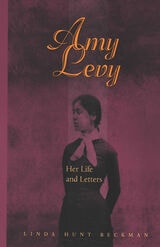
Amy Levy
Critical EssaysLinda Hunt Beckman
Ohio University Press, 2000
Amy Lowell, American Modern
Bradshaw, Melissa
Rutgers University Press, 2004
For decades, the work of one of America’s most influential poets, 1925 Pulitzer Prize–winner Amy Lowell (1874–1925), has been largely overlooked. This vigorous, courageous poet gave voice to an erotic, thoroughly American sensibility. Cigar-smoker, Boston Brahmin, lesbian, impresario, entrepreneur, and prolific poet, Lowell heralded the rush of an American poetic flowering. A best-selling poet as well as a wildly popular lecturer (autograph-seeking fans were sometimes so boisterous that she required a police escort), she was a respected authority on modern poetry, forging the path that led to the works of Allen Ginsberg, May Sarton, Sylvia Plath, and beyond. Yet, since her death, her work has suffered critical neglect.
This volume presents an essential revaluation of Lowell, and builds a solid critical basis for evaluating her poetry, criticism, politics, and influence. Essays explore the varied contributions of Lowell as a woman poet, a modernist, and a significant force of the literary debates of early twentieth-century poetics. In addition to placing Lowell in her proper historical context, contributors demonstrate her centrality to current critical and theoretical discussions: feminist, gay and lesbian, and postcolonial, in as well as in disability, American, and cultural studies. The book includes a transatlantic group of literary critics and scholars.
Amy Lowell, American Modern offers the most sustained examination of Lowell to date. It returns her to conversation and to literary history where she belongs.
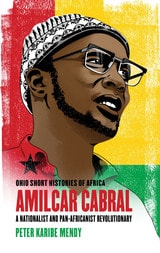
Amílcar Cabral
A Nationalist and Pan-Africanist RevolutionaryPeter Karibe Mendy
Ohio University Press, 2019
Amílcar Cabral was an agronomist who led an armed struggle that ended Portuguese colonialism in Guinea-Bissau and Cabo Verde. The uprising contributed significantly to the collapse of a fascist regime in Lisbon and the dismantlement of Portugal’s empire in Africa. Assassinated by a close associate with the deep complicity of the Portuguese colonial authorities, Cabral not only led one of Africa’s most successful liberation movements, but was the voice and face of the anticolonial wars against Portugal.
A brilliant military strategist and astute diplomat, Cabral was an original thinker who wrote innovative and inspirational essays that still resonate today. His charismatic and visionary leadership, his active pan-Africanist solidarity and internationalist commitment to “every just cause in the world,” remain relevant to contemporary struggles for emancipation and self-determination. Peter Karibe Mendy’s compact and accessible biography is an ideal introduction to his life and legacy.
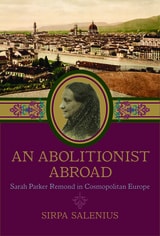
An Abolitionist Abroad
Sarah Parker Remond in Cosmopolitan EuropeSirpa Salenius
University of Massachusetts Press, 2016
Remond's extensive travels and diverse acquaintances demonstrate that the nineteenth-century grand tour of Europe was not exclusively the privilege of white intellectuals but included African American travelers, among them women. This biography, based on international archival research, tells the fascinating story of how Remond forged a radical path, establishing relationships with fellow activists, artists, and intellectuals across Europe.