Results by title
22279 books match the query 'Social Science' and 1819 start with a
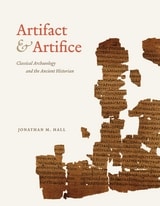
Artifact and Artifice
Classical Archaeology and the Ancient HistorianJonathan M. Hall
University of Chicago Press, 2013
Artifact
Encounters with the Campus Shooting ArchivesJulija Šukys
West Virginia University Press, 2025
2026 IPPY Awards Bronze Medal Winner, Current Events - Social Issues/Humanitarian
2026 PROSE Award Finalist, Humanities: Literature
Artifact is about the stories we tell ourselves after mass shootings. Each college campus shooting leaves a record: archival collections, monuments to the dead, government-led inquiries, internal university investigations, and lawsuits. Artifact: Encounters with the Campus Shooting Archives seeks to understand university and college campus shootings that involve students and faculty of those institutions. The book examines the aftermaths of such attacks by moving between university archives, memorials to victims, conversations with survivors, and beyond.
Julija Šukys examines a series of five North American university and college campus shootings between 1966 and 2015: the École Polytechnique in Montreal, Concordia University in Montreal, Virginia Tech, University of Alabama–Huntsville, and Umpqua Community College in Roseburg, Oregon. These attacks involved students and faculty as both victims and perpetrators—that is, all the shooters were either faculty members or (in one case, would-be) students of the institution where the killings took place.
Šukys arrives at each site long after the killings have taken place: by now, the teddy bears, flowers, and crosses have been cleared away. Prying journalists are long gone. She sorts through myriad objects left at makeshift memorial sites. She talks for hours with a professor who survived an attack only because her colleague’s gun jammed as it was pointed at her head. She wanders and documents the reconfigured buildings made unrecognizable after the horrors that occurred within them. She reads tedious court transcripts, officious government-commissioned reports, and a troubling memoir written by a shooter’s mother and sifts through the mathematics papers that one campus shooter publishes from his prison cell.
Artifact weighs what it means to live in a place where students and their teachers are gunned down on a seemingly regular basis. It asks how we can continue to learn, teach, and live when nothing changes in response to these deaths. It attempts to speak into silence, to look at the pain of those who have come through trauma, and to meet their gazes without platitudes or triumphalism. The result is a searching book about care, memory, forgiveness, and survival.
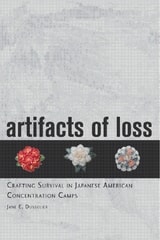
Artifacts of Loss
Crafting Survival in Japanese American Concentration CampsDusselier, Jane E
Rutgers University Press, 2008
In Artifacts of Loss, Jane E. Dusselier looks at the lives of these internees through the lens of their art. These camp-made creations included flowers made with tissue paper and shells, wood carvings of pets left behind, furniture made from discarded apple crates, gardens grown next to their housingùanything to help alleviate the visual deprivation and isolation caused by their circumstances. Their crafts were also central in sustaining, re-forming, and inspiring new relationships. Creating, exhibiting, consuming, living with, and thinking about art became embedded in the everyday patterns of camp life and helped provide internees with sustenance for mental, emotional, and psychic survival.
Dusselier urges her readers to consider these often overlooked folk crafts as meaningful political statements which are significant as material forms of protest and as representations of loss. She concludes briefly with a discussion of other displaced people around the globe today and the ways in which personal and group identity is reflected in similar creative ways.
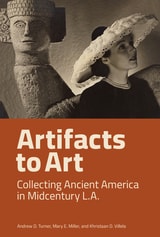
Artifacts to Art
Collecting Ancient America in Midcentury L.A.Andrew D. Turner
J. Paul Getty Trust, The, 2026
By the mid-twentieth century, ancient Mexican artifacts had undergone a striking transformation. Once dismissed as anthropological curiosities, sought after more for their ethnographic value than aesthetic merit, they had become prized artworks that were prominently displayed in major US museums, featured in advertisements and Hollywood films, and shown adorning the homes of celebrities.
At the center of this shift was Earl Stendahl, a savvy Los Angeles art dealer who played a pivotal role in shaping public and institutional perceptions of these objects. Through strategic marketing and a keen eye for opportunity, he repositioned these artifacts, selling them to an elite clientele that included movie stars, wealthy collectors, and museum curators. In doing so, he helped define a new canon of “ancient American art.”
Beneath this glamorous facade, however, lies a darker narrative of the looting, smuggling, and forgery that fueled this midcentury craze, exposing how the desire for authenticity and prestige often came at the expense of ethical collecting practices and cultural heritage. This book brings together art history, museum studies, and the politics of the antiquities trade, offering both a social history and a critical examination of how ancient Mexico’s past was sold in twentieth-century America.
This volume is published to accompany an exhibition on view at the Getty Research Institute at the Getty Center from June 23 to October 18, 2026.
Artifactual
Forensic and Documentary KnowingElizabeth Anne Davis
Duke University Press, 2023
Artificial Humanities
A Fictional Perspective on Language in AINina Beguš
University of Michigan Press, 2025
Highlighting the impact of human-like AI design, from gendered virtual assistants to romanticized social robots, the book shows how these technologies intersect with longstanding humanistic questions about the concepts of creativity and language as well as the relations between humans and machines. Additionally, the book explores AI’s applications in medical fields, particularly psychiatry and neurotechnology, including how AI interacts with the human body and mind to address conditions like paralysis. By emphasizing the philosophical and cultural implications of these technologies, Beguš highlights the need for responsible innovation that prioritizes human well-being as well as machine potential outside of human imitation. Accessible and thought-provoking, Artificial Humanities offers tools for analyzing and assessing technologies while they are being developed and invites readers to see how the humanities can guide us toward a more thoughtful future for AI.
Artificial Intelligence and the Internet of Things
UK Policy Opportunities and ChallengesMercedes Bunz and Laima Janciute
University of Westminster Press, 2018
Through algorithms and artificial intelligence (AI), objects and digital services now demonstrate new skills they did not have before, right up to replacing human activity through pre-programming or by making their own decisions. As part of the internet of things, AI applications are already widely used today, for example in language processing, image recognition and the tracking and processing of data.
This policy brief illustrates the potential negative and positive impacts of AI and reviews related policy strategies adopted by the UK, US, EU, as well as Canada and China. Based on an ethical approach that considers the role of AI from a democratic perspective and considering the public interest, the authors make policy recommendations that help to strengthen the positive impact of AI and to mitigate its negative consequences.

Artificial Intelligence, Art and Indigeneity
Between Dreams and HallucinationsEdited by Thea Pitman, Sandra De Berduccy, and Andreas Rauh
University of London Press, 2026
This book explores the cultural and ethical implications of generative AI through the lens of Indigenous visual culture in Latin America.
Responding to the rise of tools like DALL·E 2 and Midjourney, this groundbreaking volume documents the AIAI project (2023–), which invited a group of Indigenous artists and writers from Argentina, Bolivia, Brazil, Chile, and Peru to critically engage with image generation technologies. Through collaborative experimentation with a range of both commercial and bespoke tools, contributors reflect on the promises and pitfalls of AI—from its potential for ‘dreaming,’ for imagining Indigenous futures, to the frustration of its ability to ‘hallucinate,’ to distort, and misrepresent Indigenous cultures.
Bringing together artists, writers, and scholars, the book challenges dominant narratives around AI and representation, using a decolonial framework rooted in Indigenous epistemologies. Structured in three parts—context and theory, creative reflections, and generative critique—it foregrounds multivocal and multilingual perspectives, resisting homogenization and reframing participatory research. This is the first book-length study of generative AI’s impact on Indigenous visual culture in Latin America, making a timely and vital contribution to global debates on AI, art, and cultural sovereignty.

Artificial Paradise
Science Fiction and American RealitySharona Ben-Tov
University of Michigan Press, 1995

Artificial Women
The 1970s, Mass Culture, and FeminismVictoria Hesford
Duke University Press, 2027
Artisans and Cooperatives
Developing Alternative Trade for the Global EconomyKimberly M. Grimes
University of Arizona Press, 2000
With new markets opening up for goods produced by artisans from all parts of the world, craft commercialization and craft industries have become key components of local economies. Now with the emergence of the Fair Trade movement and public opposition to sweatshop labor, many people are demanding that artisans in third world countries not be exploited for their labor.
Bringing together case studies from the Americas and Asia, this timely collection of articles addresses the interplay among subsistence activities, craft production, and the global market. It contributes to current debates on economic inequality by offering practical examples of the political, economic, and cultural issues surrounding artisan production as an expressive vehicle of ethnic and gender identity.
Striking a balance between economic and ethnographic analyses, the contributors observe what has worked and what hasn't in a range of craft cooperatives and show how some artisans have expanded their entrepreneurial role by marketing crafts in addition to producing them. Among the topics discussed are the accommodation of craft traditions in the global market, fair trade issues, and the emerging role of the anthropologist as a proactive agent for artisan groups.
As the gap between rich and poor widens, the fate of subsistence economies seems more and more uncertain. The artisans in this book show that people can and do employ innovative opportunities to develop their talents, and in the process strengthen their ethnic identities.
ContentsIntroduction: Facing the Challenges of Artisan Production in the Global Market / Kimberly M. Grimes and B. Lynne Milgram
Democratizing International Production and Trade: North American Alternative Trading Organizations / Kimberly M. Grimes
Building on Local Strengths: Nepalese Fair Trade Textiles / Rachel MacHenry
"That They Be in the Middle, Lord": Women, Weaving, and Cultural Survival in Highland Chiapas, Mexico / Christine E. Eber
The International Craft Market: A Double-Edged Sword for Guatemalan Maya Women / Martha Lynd
Of Women, Hope, and Angels: Fair Trade and Artisan Production in a Squatter Settlement in Guatemala City / Brenda Rosenbaum
Reorganizing Textile Production for the Global Market: Women’s Craft Cooperatives in Ifugao, Upland Philippines / B. Lynne Milgram
Textile Production in Rural Oaxaca, Mexico, and the Complexities of the Global Market for Handmade Crafts / Jeffrey H. Cohen
"Part-Time for Pin Money": The Legacy of Navajo Women’s Craft Production / Kathy M’Closkey
The Hard Sell: Anthropologists as Brokers of Crafts in the Global Marketplace / Andrew Causey
Postscript: To Market, To Market / June Nash
Artistry in Bronze
The Greeks and Their Legacy XIXth International Congress on Ancient BronzesJens M Daehner
J. Paul Getty Trust, The, 2017
www.getty.edu/publications/artistryinbronze
Artists and the People
Ideologies of Art in IndonesiaElly Kent
National University of Singapore Press, 2022
Exploring the work of established and emerging artists in Indonesia’s vibrant art world, this book examines why so many artists in the world’s largest archipelagic nation choose to work directly with people in their art practices. While the social dimension of Indonesian art makes it distinctive in the globalized world of contemporary art, Elly Kent is the first to explore this engagement in Indonesian terms. What are the historical, political, and social conditions that lie beneath these polyvalent practices? How do formal and informal institutions, communities, and artist-run initiatives contribute to the practices and discourses behind socially engaged art in Indonesia? Drawing on interviews with artists, translations of archival material, visual analyses, and participation in artists’ projects, this book presents a unique, interdisciplinary examination of ideologies of art in Indonesia.
Arts in Earnest
North Carolina FolklifeDaniel W. Patterson and Charles G. Zugg, III, eds.
Duke University Press, 1990
Personal interviews are an important element in the book. Laura Lee, an elderly black woman from Chatham County, describes the quilts she made from funeral flower ribbons; witnesses and friends each remember varying details of the Duke University football player who single-handedly vanquished a gang of would-be muggers; Clyde Jones leads a safari through his backyard, which is filled with animals made of wood and cement that represent nontraditional folk art; the songs and sermon of a Primitive Baptist service flow together as one—“it tills you up all over”; Durham bluesman Willie Trice, one of a handful of Durham musicians who recorded in the 1930s and early 1940s, remembers when the active tobacco warehouses offered ready audiences—“They’d tip us a heap of change to play some music”; and Goldsboro tobacco auctioneer H. L. “Speed” Riggs chants 460 words per minute, five to six times faster than a normal conversational rate.
Arts of the Political
New Openings for the LeftAsh Amin and Nigel Thrift
Duke University Press, 2013

Aryan Cowboys
White Supremacists and the Search for a New Frontier, 1970–2000By Evelyn A. Schlatter
University of Texas Press, 2006
During the last third of the twentieth century, white supremacists moved, both literally and in the collective imagination, from midnight rides through Mississippi to broadband-wired cabins in Montana. But while rural Montana may be on the geographical fringe of the country, white supremacist groups were not pushed there, and they are far from "fringe elements" of society, as many Americans would like to believe. Evelyn Schlatter's startling analysis describes how many of the new white supremacist groups in the West have co-opted the region's mythology and environment based on longstanding beliefs about American character and Manifest Destiny to shape an organic, home-grown movement.
Dissatisfied with the urbanized, culturally progressive coasts, disenfranchised by affirmative action and immigration, white supremacists have found new hope in the old ideal of the West as a land of opportunity waiting to be settled by self-reliant traditional families. Some even envision the region as a potential white homeland. Groups such as Aryan Nations, The Order, and Posse Comitatus use controversial issues such as affirmative action, anti-Semitism, immigration, and religion to create sympathy for their extremist views among mainstream whites—while offering a "solution" in the popular conception of the West as a place of freedom, opportunity, and escape from modern society. Aryan Cowboys exposes the exclusionist message of this "American" ideal, while documenting its dangerous appeal.
Aryan and Non-Aryan in India
Madhav M. Deshpande and Peter E. Hook, Editors
University of Michigan Press, 1979

As American as Mom, Baseball, and Apple Pie
Constructing Community in Contemporary American Horror FictionLinda J. Holland-Toll
University of Wisconsin Press, 2001
As French as Everyone Else?
A Survey of French Citizens of Maghrebin, African, and Turkish OriginAuthored by Sylvain Brouard and Vincent Tiberj
Temple University Press, 2011
France is often depicted as the model of assimilationist or republican integration in the international literature on immigration. However, rarely have surveys drilled down to provide individual responses from a double representative sample. In As French as Everyone Else?, Sylvain Brouard and Vincent Tiberj provide a comprehensive assessment of the state of integration in France and challenge the usual crisis of integration by systematically comparing the "new French" immigrants, as well as their children and grandchildren born in France, with a sample of the French general population.
The authors' survey considers a wide range of topics, including religious affiliation and religiosity, political attitudes and political efficacy, value systems (including gender roles, work ethics, and anti-Semitism), patterns of integration, multiple identities and national belongings, and affirmative action. As the authors show, despite existing differences, immigrants of Maghrebin, African, and Turkish origin share a wide scope of commonality with other French citizens.
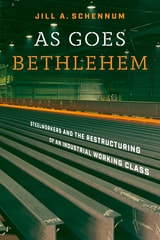
As Goes Bethlehem
Steelworkers and the Restructuring of an Industrial Working ClassJill A. Schennum
Vanderbilt University Press, 2023
Through the experiences and reflections of steelworkers, Jill A. Schennum demonstrates the significance of work, and particularly of industrial work, in giving meaning to people’s lives, identities, and sense of worth. She uses workers’ narratives and voices to show the importance of work space, time, and social relations, rejecting dominant interpretations of blue-collar workers as alienated from their work but well-paid and co-opted by a middle-class standard of living. Schennum covers thirty-five years of investment and disinvestment, managerial initiatives, transfer decisions, layoffs and downsizings, external transfers, the eventual bankruptcy of the Bethlehem Steel Corporation, and movement into retirement, unemployment, and new postindustrial jobs.
The very solidarities, rights of citizenship, and rule of law forged in the mill and built on by the union were constructed, in part, through exclusions based on race, ethnicity, gender, and region. These lines of fracture were mobilized to undermine working-class strength in the postindustrial period. Through the experiences of African American, Puerto Rican, coal country, and women workers in the steel mills, this book explores these issues of fracture and solidarity.
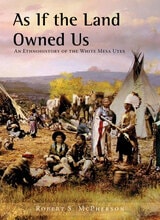
As If the Land Owned Us
An Ethnohistory of the White Mesa UtesRobert S. McPherson
University of Utah Press, 2011
The Ute people of White Mesa have a long, colorful, but neglected history in the Four Corners region. Although they ranged into the Great Basin, Southwest, and parts of the Rocky Mountains as hunters, gatherers, and warriors, southeastern Utah was home. There they adapted culturally and physically to the austere environment while participating in many of the well-known events of their times.
In As If the Land Owned Us, Robert McPherson has gathered the wisdom of White Mesa elders as they imparted knowledge about their land—place names, uses, teachings, and historic events tied to specific sites—providing a fresh insight into the lives of these little-known people. While there have been few published studies about the Southern Utes, this ethnohistory is the first to mix cultural and historic events. The book illustrates the life and times of the White Mesa Utes as they faced multiple changes to their lifeways. It is time for their history to be told in their terms.
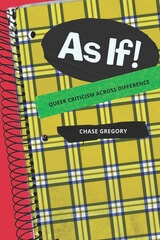
As If!
Queer Criticism Across DifferenceChase Gregory
Duke University Press, 2025
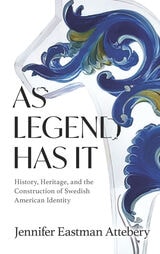
As Legend Has It
History, Heritage, and the Construction of Swedish American IdentityJennifer Eastman Attebery
University of Wisconsin Press, 2023
The legends Swedish Americans tell about their past are both similar to and distinct from those of others who migrated westward; they participated in settler colonialism while maintaining a sense of their specific, Swedish ethnicity. Unlike racial minority groups, Swedish Americans could claim membership in a majority white community without abandoning their cultural heritage. Their legends and local histories reflect that positioning. Attebery reveals how Swedish American legends are embedded within local history writing, how ostension and rhetoric operate in historical legends, and how vernacular local history writing works in tandem with historical legends to create a common message about a communal past. This impeccably researched study points to ways in which legends about the past possess qualities unique to their subgenre yet can also operate similarly to contemporary legends in their social impact.
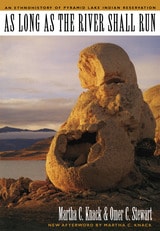
As Long As The River Shall Run
An Ethnohistory Of Pyramid Lake Indian ReservationMartha C. Knack
University of Nevada Press, 1999
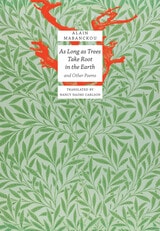
As Long As Trees Take Root in the Earth
and Other PoemsAlain Mabanckou
Seagull Books, 2025
These compelling poems by novelist and essayist Alain Mabanckou conjure nostalgia for an African childhood where the fauna, flora, sounds, and smells evoke snapshots of a life forever gone. Mabanckou’s poetry is frank and forthright, urging his compatriots to no longer be held hostage by the civil wars and political upheavals that have ravaged their country and to embrace a new era of self-determination where the village roosters can sing again.
These music-infused texts, beautifully translated by Nancy Naomi Carlson and supported by a grant from the National Endowment for the Arts, appear together in English for the first time. In these pages, Mabanckou pays tribute to his beloved mother, as well as to the regenerative power of nature, especially of trees, whose roots are a metaphor for the poet’s roots, anchored in the red earth of his birthplace. Mabanckou’s yearning for the land of his ancestors is even more poignant because he has been declared persona non grata in his homeland, now called Congo-Brazzaville, due to his biting criticism of the country’s regime. Despite these barriers, his poetry exudes hope that nature’s resilience will lead humankind on the path to redemption and reconciliation.

As Long as the Rivers Run
Hydroelectric Development and Native CommunitiesJames B. Waldram
University of Manitoba Press, 1993

As Told By Herself
Women’s Childhood Autobiography, 1845-1969Lorna Martens
University of Wisconsin Press, 2022
Stopping just before second-wave feminism brought an explosion in women's childhood autobiographical writing, As Told by Herself explores the genre's roots and development from the mid-nineteenth century, and recovers many works that have been neglected or forgotten. The result illustrates how previous generations of women—in a variety of places and circumstances—understood themselves and their upbringing, and how they thought to present themselves to contemporary and future readers.
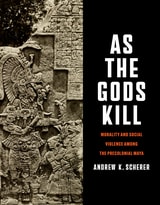
As the Gods Kill
Morality and Social Violence among the Precolonial MayaAndrew K. Scherer
University of Texas Press, 2025
An exploration of war, violence, and sacrifice in precolonial Maya culture and its importance in religious practices.
As the Gods Kill delivers new insights into warfare, weaponry, violence, and human sacrifice among the ancient Maya. While attending to the particularity of a singular historical context, anthropologist and archaeologist Andrew Scherer also suggests that Maya practices have something to tell us about human propensities toward violence more broadly.
Focusing on moral frameworks surrounding deliberate injury and killing, Scherer examines Maya justifications of violence—in particular the obligations to one another, to ancestors, and to the gods that made violence not only permissible but necessary. The analysis isolates key themes underpinning the morality of violence—including justice, vengeance, payment, and costumbre (ritual)—and explores the ethics of violent agents, including warriors, ritual specialists, and the gods. Finally, Scherer addresses motivations for warfare, including the acquisition of spoils, tribute, captives, and slaves. An interdisciplinary case study of morality in an ancient society, As the Gods Kill synthesizes scholarship on an important dimension of precolonial American culture while taking stock of its implications for the social sciences at large.

Asegi Stories
Cherokee Queer and Two-Spirit MemoryQwo-Li Driskill
University of Arizona Press, 2016
As the first full-length work of scholarship to develop a tribally specific Indigenous Queer or Two-Spirit critique, Asegi Stories examines gender and sexuality in Cherokee cultural memory, how they shape the present, and how they can influence the future.
The theoretical and methodological underpinnings of Asegi Stories derive from activist, artistic, and intellectual genealogies, referred to as “dissent lines” by Maori scholar Linda Tuhiwai Smith. Driskill intertwines Cherokee and other Indigenous traditions, women of color feminisms, grassroots activisms, queer and Trans studies and politics, rhetoric, Native studies, and decolonial politics. Drawing from oral histories and archival documents in order to articulate Cherokee-centered Two-Spirit critiques, Driskill contributes to the larger intertribal movements for social justice.
Asexual Erotics
Intimate Readings of Compulsory SexualityEla Przybylo
The Ohio State University Press, 2019
Through a wide-ranging analysis of pivotal queer, feminist, and anti-racist movements; television and film; art and photography; and fiction, nonfiction, and theoretical texts, each chapter explores asexual erotics and demonstrates how asexuality has been vital to the formulation of intimate ways of knowing and being. Asexual Erotics assembles a compendium of asexual possibilities that speaks against the centralization of sex and sexuality, asking that we consider the ways in which compulsory sexuality is detrimental not only to asexual and nonsexual people but to all.
Ashes Taken for Fire
Aesthetic Modernism and the Critique of IdentityKevin M. Bell
University of Minnesota Press, 2007
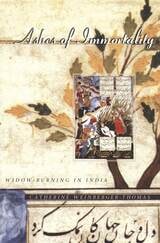
Ashes of Immortality
Widow-Burning in IndiaCatherine Weinberger-Thomas
University of Chicago Press, 1999
Ashes of Immortality attempts to see the satis through Hindu eyes, providing an extensive experiential and psychoanalytic account of ritual self-sacrifice and self-mutilation in South Asia. Based on fifteen years of fieldwork in northern India, where the state-banned practice of sati reemerged in the 1970s, as well as extensive textual analysis, Weinberger-Thomas constructs a radically new interpretation of satis. She shows that their self-immolation transcends gender, caste and class, region and history, representing for the Hindus a path to immortality.
Ashes of the Mind
War and Memory in Northern Literature, 1865-1900Martin Griffin
University of Massachusetts Press, 2009
The memory of the American Civil War took many forms over the decades after the conflict ended: personal, social, religious, and political. It was also remembered and commemorated by poets and fiction writers who understood that the war had bequeathed both historical and symbolic meanings to American culture. Although the defeated Confederacy became best known for producing a literature of nostalgia and an ideological defensiveness intended to protect the South's own version of history, authors loyal to the Union also confronted the question of what the memory of the war signified, and how to shape the literary response to that individual and collective experience.
In Ashes of the Mind, Martin Griffin examines the work of five Northerners—three poets and two fiction writers—who over a period of four decades tried to understand and articulate the landscape of memory in postwar America, and in particular in that part of the nation that could, with most justification, claim the victory of its beliefs and values. The book begins with an examination of the rhetorical grandeur of James Russell Lowell's Harvard Commemoration Ode, ranges across Herman Melville's ironic war poetry, Henry James's novel of North-South reconciliation, The Bostonians, and Ambrose Bierce's short stories, and ends with the bitter meditation on race and nation presented by Paul Laurence Dunbar's elegy “Robert Gould Shaw.” Together these texts reveal how a group of representative Northern writers were haunted in different ways by the memory of the
conflict and its fraught legacy.
Griffin traces a concern with individual and community loss, ambivalence toward victory, and a changing politics of commemoration in the writings of Lowell, Melville, James, Bierce, and Dunbar. What links these very different authors is a Northern memory of the war that became more complex and more compromised as the century went on, often replacing a sense of justification and achievement with a perception of irony and failed promise.

Asia/Pacific Cinemas
A Spectral Surface, Volume 9Esther C. M. Yau and Kyung Hyun Kim, eds.
Duke University Press, 0
Contributors examine how specific films—including Haplos (1982), Chilsu and Mansu (1988), Fresh Kill (1994), and Princess Mononoke (1997)—rework folktales, literary sources, popular memory, lived experience, and history. Some of the films examined here incorporate supernatural elements and/or gay and lesbian narratives that provide an escape from the sexism, racism, homophobia, environmental destruction, and urban alienation that the filmmakers see as the defining characteristics of the postcolonial world.
Asia/Pacific Cinema posits that film, with its ability to play with memory, fate, and linear time, creates a space in which to consider alternatives to the dominant cultural, economic, and social norms.
Contributors. Jonathan Beller, Joan Kee, Kyung Hyun Kim, Helen Hok-sze Leung, Bliss Cau Lim, Gina Marchetti, Susan Napier, Esther C. M. Yau
AsiaPacifiQueer
Rethinking Genders and SexualitiesEdited by Fran Martin, Peter A. Jackson, Mark McLelland, and Audrey Yue
University of Illinois Press, 2007
Asian America
Forming New Communities, Expanding BoundariesLing, Huping
Rutgers University Press, 2009
Asian America is the first comprehensive look at post-1960s Asian American communities in the United States and Canada. From Chinese Americans in Chicagoland to Vietnamese Americans in Orange County, this multi-disciplinary collection spans a wide comparative and panoramic scope. Contributors from an array of academic fields focus on global views of Asian American communities as well as on territorial and cultural boundaries.
Presenting groundbreaking perspectives, Asian America revises worn assumptions and examines current challenges Asian American communities face in the twenty-first century.
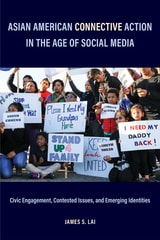
Asian American Connective Action in the Age of Social Media
Civic Engagement, Contested Issues, and Emerging IdentitiesJames S. Lai
Temple University Press, 2022
Social media provides ethno-racial immigrant groups—especially those who cannot vote due to factors such as lack of citizenship and limited English proficiency—the ability to mobilize and connect around collective issues. Online spaces and discussion forums have encouraged many Asian Americans to participate in public policy debates and take action on social justice issues. This form of digital group activism serves as an adaptive political empowerment strategy for the fastest-growing and largest foreign-born population in America. Asian American Connective Action in the Age of Social Media illuminates how associating online can facilitate and amplify traditional forms of political action.
James Lai provides diverse case studies on contentious topics ranging from affirmative action debates to textbook controversies to emphasize the complexities, limitations, and challenges of connective action that is relevant to all racial groups. Using a detailed multi-methods approach that includes national survey data and Twitter hashtag analysis, he shows how traditional immigrants, older participants, and younger generations create online consensus and mobilize offline to foment political change. In doing so, Lai provides a nuanced glimpse into the multiple ways connective action takes shape within the Asian American community.
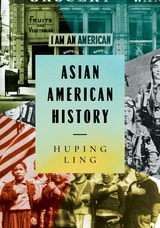
Asian American History
Huping Ling
Rutgers University Press, 2023
Asian American History provides a comprehensive historical dive into Asian immigration to the United States, exploring it in international and domestic contexts and alongside the significant elements that define Asian America: imperialism and global capitalist expansion; labor and capital; race and ethnicity; immigration and exclusion; family and work; community and gender roles; assimilation and multiculturalism; panethnicity and identity; transnationalism and globalization; and new challenges and opportunities. Huping Ling traces the roots of Asian immigration from the late 1700s through intervening centuries of racial prejudice, wartime experiences, legal restrictions, and social mobility into the 2010s. It is an up-to-date and easily accessible resource for high school and college students as well as anyone who is interested in Asian American history.
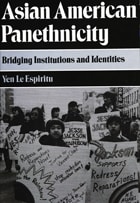
Asian American Panethnicity
Bridging Institutions and IdentitiesYen Espiritu
Temple University Press, 1993
Yen Le Espiritu explores the construction of large-scale affiliations, in which previously unrelated groups submerge their differences and assume a common identity. Making use of extensive interviews and statistical data, she examines how Asian panethnicity protects the rights and interests of all Asian American groups, including those, like the Vietnamese and Cambodians, which are less powerful and prominent than the Chinese and Japanese. By citing specific examples—educational discrimination, legal redress, anti-Asian violence, the development of Asian American Studies programs, social services, and affirmative action—the author demonstrates how Asian Americans came to understand that only by cooperating with each other would they succeed in fighting the racism they all faced.
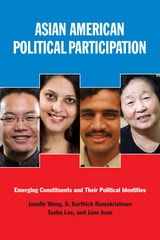
Asian American Political Participation
Emerging Constituents and Their Political IdentitiesJanelle S. Wong
Russell Sage Foundation, 2012
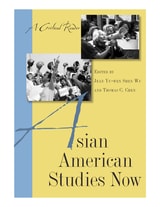
Asian American Studies Now
A Critical ReaderWu, Jean Yu-Wen Shen
Rutgers University Press, 2010
Jean Yu-wen Shen Wu and Thomas C. Chen have selected essays for the significance of their contribution to the field and their clarity, brevity, and accessibility to readers with little to no prior knowledge of Asian American studies. Featuring both reprints of seminal articles and groundbreaking texts, as well as bold new scholarship, Asian American Studies Now addresses the new circumstances, new communities, and new concerns that are reconstituting Asian America.

Asian American Studies
A ReaderEdited by Jean Yu-Wen Shen Wu and Min Song
Rutgers University Press, 2000
The reader is organized into two parts: "The Documented Past" and "Social Issues and Literature." Within these broad divisions, the subjects covered include Chinatown stories, nativist reactions, exclusionism, citizenship, immigration, community growth, Asia American ethnicities, racial discourse and the Civil Rights movement, transnationalism, gender, refugees, anti-Asian American violence, legal battles, class polarization, and many more.
Among the contributors are such noted scholars as Gary Okihiro, Michael Omi, Yen Le Espiritu, Lisa Lowe, and Ronald Takaki; writers such as Sui Sin Far, Bienvenido Santos, Sigrid Nunez, and R. Zamora Linmark, as well as younger, emerging scholars in the field.
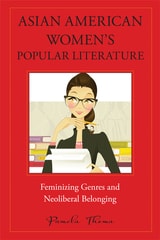
Asian American Women's Popular Literature
Feminizing Genres and Neoliberal BelongingPamela Thoma
Temple University Press, 2013
A volume in the American Literatures Initiative.
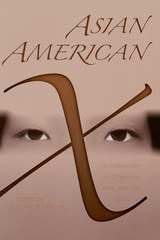
Asian American X
An Intersection of Twenty-First Century Asian American VoicesArar Han and John Y. Hsu, Editors
University of Michigan Press, 2004
-Eric Liu, author of The Accidental Asian
"There's fury, dignity, and self-awareness in these essays. I found the voices to be energetic and the ideas exciting."
-Diana Son, playwright (Stop Kiss) and co-producer (Law & Order: Criminal Intent)
This refreshing and timely collection of coming-of-age essays, edited and written by young Asian Americans, powerfully captures the joys and struggles of their evolving identities as one of the fastest-growing groups in the nation and poignantly depicts the many oft-conflicting ties they feel to both American and Asian cultures. The essays also highlight the vast cultural diversity within the category of Asian American, yet ultimately reveal how these young people are truly American in their ideals and dreams.
Asian American X is more than a book on identity; it is required reading both for young Asian Americans who seek to understand themselves and their social group, and for all who are interested in keeping abreast of the changing American social terrain.
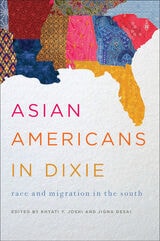
Asian Americans in Dixie
Race and Migration in the SouthEdited by Jigna Desai and Khyati Y. Joshi
University of Illinois Press, 2013
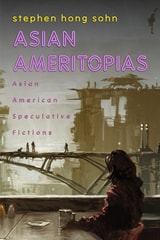
Asian Ameritopias
Asian American Speculative FictionsStephen Hong Sohn
Temple University Press, 2026
Asian American writers have long produced literary works of speculative fiction, the supergenre that employs science fictional, fantastical, or supernatural elements. Stephen Hong Sohn’s Asian Ameritopias is the first book-length study to consider how these aesthetically complex and wildly imaginative representations offer writers a way to explore themes of race and identity, as well as alternate futures and other planets.
Sohn examines how various novels and stories enable Asian American writers to engage with and reimagine issues of social justice, revisualize the bounds of social collectives, and create new pathways for precarious subjects. Asian Ameritopias assesses speculative fictions that spotlight supernatural horror and fantasy, such as ghosts and magical objects, to excavate racialized histories of oppression. Moving to science fiction, Sohn shows how Asian American cyborgs employ their technological powers to offer protection for socially marginalized groups, including sex workers, the undocumented, the poor, and the injured. He ends by analyzing three novels featuring extraterrestrials who look like Asian Americans in order to address issues of xenophobia and ostracization.
The speculative fictions Sohn unpacks in Asian Ameritopias provide a ripe opportunity to reflect on and confront our current, turbulent reality.
Asian Biotech
Ethics and Communities of FateAihwa Ong and Nancy N. Chen, eds.
Duke University Press, 2010
Contributors
Vincanne Adams
Nancy N. Chen
Stefan Ecks
Kathleen Erwin
Phuoc V. Le
Jennifer Liu
Aihwa Ong
Margaret Sleeboom-Faulkner
Kaushik Sunder Rajan
Wen-Ching Sung
Charis Thompson
Ara Wilson
Asian Celebrity Cultures in the Digital Age
Edited by Jian Xu, Glen Donnar, and Divya Garg
Hong Kong University Press, 2025
Asian Celebrity Cultures in the Digital Age represents the first comprehensive study on the transformations of celebrity cultures in increasingly globalized and digitalized Asian societies. It discusses relations between Asian celebrities and digital media across emerging phenomena in celebrity practices, cultures, politics, fandom, and economies. Highlighting original case studies from prominent Asian societies, including India, China, Hong Kong, the Philippines, Singapore, Vietnam, Indonesia, Thailand, South Korea, and Japan, this book sheds much-needed light on the de-Westernization and internationalization of celebrity studies and is essential reading for scholars and students in celebrity, fandom, digital media and communication, and cultural studies.
Asian Girlhood in the Shadows of US Empire
Sharon N. Tran
University of Minnesota Press, 2026
How the “Asian girl” is central to the story of US imperialism and the formation of Asian America
Representations of the “Asian girl” as lucky objects of humanitarian rescue and rehabilitation have been used to advance America’s imperial ambitions from World War II to the wars in Korean and Viet Nam. In this compelling work, Sharon N. Tran traces the production and instrumentalization of this figure through an examination of state documents, military newspapers, documentary photographs, and other archival materials. Theorizing “Asian girlhood” as a technology of imperial power, Tran exposes how the Asian girl is invoked as a shield that protects the innocence of US empire while she is excluded from innocence herself—relegated instead to a precarious position between child and adult, human and nonhuman, plaything and laborer.
Offering fresh insight into how imperial power operates, Tran analyzes figures such as the Japanese American school-girl in the context of World War II incarceration, the elusive “camptown girl,” and the objectified image of the “Napalm Girl.” Her innovative feminist approach interrogates the tendency to reclaim innocence for the Asian girl or to reframe her as an empowered woman. She engages the work of writers and artists such as Kiku Hughes, Nora Okja Keller, Aimee Phan, and lê thi diem thúy to demonstrate how Asian American literature offers rich theoretical interventions for critiquing the child–adult dichotomy that underpins key structures of imperial domination, illuminating more capacious conceptions of girlhood.
Restoring the dignity and agency of a figure too often denied both, Asian Girlhood in the Shadows of US Empire is a groundbreaking intersectional contribution to studies of gender, race, childhood, and state power.
Retail e-book files for this title are screen-reader friendly with images accompanied by short alt text and/or extended descriptions.

Asian Mythologies
Edited by Yves Bonnefoy
University of Chicago Press, 1993
"The almost 100 contributors combine, with characteristic precision and élan, the arts of science and poetry, of analysis and translation. The result is a treasury of information, brilliant guesswork, witty asides, and revealing digressions. This is a work of genuine and enduring excitement."—Thomas D'Evelyn, Christian Science Monitor