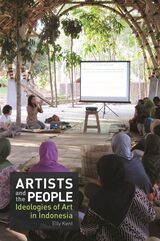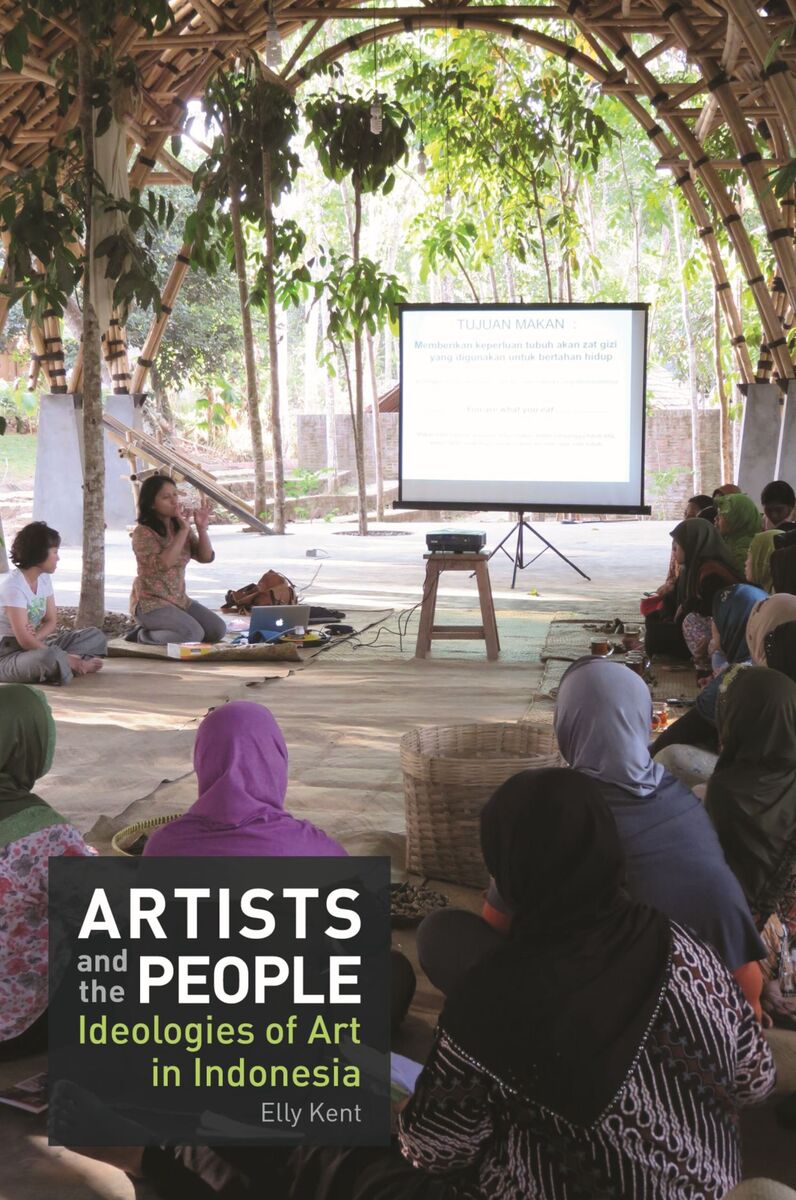
Artists and the People: Ideologies of Art in Indonesia
National University of Singapore Press, 2022
Paper: 978-981-325-163-2 | eISBN: 978-981-325-203-5 (ePub) | eISBN: 978-981-325-194-6 (PDF)
Library of Congress Classification N7326.K46 2022
Dewey Decimal Classification 709.598
Paper: 978-981-325-163-2 | eISBN: 978-981-325-203-5 (ePub) | eISBN: 978-981-325-194-6 (PDF)
Library of Congress Classification N7326.K46 2022
Dewey Decimal Classification 709.598
ABOUT THIS BOOK | AUTHOR BIOGRAPHY | REVIEWS | TOC
ABOUT THIS BOOK
Gets to the heart of what is unique about Indonesian art.
Exploring the work of established and emerging artists in Indonesia’s vibrant art world, this book examines why so many artists in the world’s largest archipelagic nation choose to work directly with people in their art practices. While the social dimension of Indonesian art makes it distinctive in the globalized world of contemporary art, Elly Kent is the first to explore this engagement in Indonesian terms. What are the historical, political, and social conditions that lie beneath these polyvalent practices? How do formal and informal institutions, communities, and artist-run initiatives contribute to the practices and discourses behind socially engaged art in Indonesia? Drawing on interviews with artists, translations of archival material, visual analyses, and participation in artists’ projects, this book presents a unique, interdisciplinary examination of ideologies of art in Indonesia.
Exploring the work of established and emerging artists in Indonesia’s vibrant art world, this book examines why so many artists in the world’s largest archipelagic nation choose to work directly with people in their art practices. While the social dimension of Indonesian art makes it distinctive in the globalized world of contemporary art, Elly Kent is the first to explore this engagement in Indonesian terms. What are the historical, political, and social conditions that lie beneath these polyvalent practices? How do formal and informal institutions, communities, and artist-run initiatives contribute to the practices and discourses behind socially engaged art in Indonesia? Drawing on interviews with artists, translations of archival material, visual analyses, and participation in artists’ projects, this book presents a unique, interdisciplinary examination of ideologies of art in Indonesia.
See other books on: Art and society | Artists | Ideologies | Indonesia | People
See other titles from National University of Singapore Press