Results by title
4917 books match the query 'Philosophy' and 406 start with a
Adventures of the Dialectic
Maurice Merleau-Ponty
Northwestern University Press, 1973
Aesop's Anthropology
A Multispecies ApproachJohn Hartigan Jr.
University of Minnesota Press, 0
Forerunners: Ideas First is a thought-in-process series of breakthrough digital publications. Written between fresh ideas and finished books, Forerunners draws on scholarly work initiated in notable blogs, social media, conference plenaries, journal articles, and the synergy of academic exchange. This is gray literature publishing: where intense thinking, change, and speculation take place in scholarship.
Aesthesis and Perceptronium
On the Entanglement of Sensation, Cognition, and MatterAlexander Wilson
University of Minnesota Press, 2019
A new speculative ontology of aesthetics
In Aesthesis and Perceptronium, Alexander Wilson presents a theory of materialist and posthumanist aesthetics founded on an original speculative ontology that addresses the interconnections of experience, cognition, organism, and matter. Entering the active fields of contemporary thought known as the new materialisms and realisms, Wilson argues for a rigorous redefining of the criteria that allow us to discriminate between those materials and objects where aesthesis (perception, cognition) takes place and those where it doesn’t.
Aesthesis and Perceptronium negotiates between indiscriminately pluralist views that attribute mentation to all things and eliminative views that deny the existence of mentation even in humans. By recasting aesthetic questions within the framework of “epistemaesthetics,” which considers cognition and aesthetics as belonging to a single category that can neither be fully disentangled nor fully reduced to either of its terms, Wilson forges a theory of nonhuman experience that avoids this untenable dilemma.
Through a novel consideration of the evolutionary origins of cognition and its extension in technological developments, the investigation culminates in a rigorous reevaluation of the status of matter, information, computation, causality, and time in terms of their logical and causal engagement with the activities of human and nonhuman agents.
Aesthetic Subjects
Pamela R. Matthews
University of Minnesota Press, 2003
Demonstrates the remarkable resurgence of interest in the aesthetic
Recent calls for a return to aesthetics occur precisely at a moment when it is increasingly evident that nothing concerning aesthetics is self-evident anymore. Determined to recover the value of aesthetic experience for artistic, cultural, and social analysis, the contributors to this volume—prominent scholars in literature, philosophy, art history, architecture, history, and anthropology—begin from a shared recognition that ideological readings of the aesthetic have provided invaluable insights, in particular, that analyses of aesthetics within historical and social contexts tell us a great deal about the experience of aesthetic encounters.
From multiple and complementary perspectives, the contributors address topics as varied as Nabokov and Dickens, Caravaggio and Shelley Winters, gender and sexuality, advertising and AIDS. Taken together, their essays constitute a sustained and multifarious effort to resituate aesthetic pleasure in the mixed, impure conditions characteristic of every social practice and experience, however privileged or marginalized, and to ask what happens to the aesthetic if we consider it apart from—or at least in tension with—its historically dominant discursive formulations. As such, this volume establishes a renewed sense of aesthetic discourse and its usefulness as a tool for understanding culture. Contributors: Leo Bersani, U of California, Berkeley; Susan Bordo, U of Kentucky; Bill Brown, U of Chicago; Beatriz Colomina, Princeton U; Ulysse Dutoit, U of California, Berkeley; Lee Edelman, Tufts U; Maureen Harkin, Reed College; Howard Horwitz, U of Utah; Audrey Jaffe, U of California, Santa Cruz; Martin Jay, U of California, Berkeley; Kay Bea Jones, Ohio State U; Robert Kaufman, Stanford U; Alphonso Lingis, Pennsylvania State U; Joseph Litvak, Tufts U; Douglas Mao, Cornell U; Barbara Stafford, U of Chicago; Kathleen Stewart, U of Texas; Kathryn Bond Stockton, U of Utah; Judith Stoddart, Michigan State U; Michael Taussig, Columbia U.
Aesthetic Theory
Theodor W. Adorno Adorno
University of Minnesota Press, 1998
Aesthetic Theory
Edited by Dieter Mersch, Sandro Zanetti, and Sylvia Sasse
Diaphanes, 2019
Aesthetic Understanding
Roger Scruton
St. Augustine's Press, 1998
Brings together essays on the philosophy of art in which a philosophical theory of aesthetic judgment is tested and developed through its application to particular examples. Each essay approaches, from its own field of study, what Roger Scruton argues to be the central problems of aesthetics -- what is aesthetic experience, and what is its importance for human conduct?
The book is divided into four parts. The first contains a resume of modern analytical aesthetics, which also serves as an introduction to subsequent chapters. It also includes an essay that reviews current theories of literary criticism. The second part is devoted to musical aesthetics and contains the theoretical core of the work. Here Scruton describes the contours of aesthetic understanding, and defends the view that the object of aesthetic experience is inherently significant, even when it has no "content" that can be described in propositional terms. He rebuts the view that music is representational, and in the third part goes on to propose a theory of representation whereby to refute the suggestion that photography is a representational art. This third section also contains a study of film. The final part comprises essays relating aesthetic judgment to the understanding of culture, humor, and design. It covers many subjects, including the prose works of Samuel Beckett and the architecture of Leninism. The essays in this book form parts of a single intellectual enterprise, which is to give analytical foundations to the criticism of literature, visual art, music, and culture.
Aesthetics and Marxism
Chinese Aesthetic Marxists and Their Western ContemporariesKang Liu
Duke University Press, 2000
Far from being secondary considerations in Chinese Marxism, aesthetics and culture are in fact principal concerns. In this respect, such Marxists are similar to their Western counterparts, although Europeans have had little understanding of the Chinese experience. Liu traces the genealogy of aesthetic discourse in both modern China and the West since the era of classical German thought, showing where conceptual modifications and divergences have occurred in the two traditions. He examines the work of Mao Zedong, Lu Xun, Li Zehou, Qu Qiubai, and others in China, and from the West he discusses Kant, Schiller, Schopenhauer, and Marxist theorists including Horkheimer, Adorno, Benjamin, and Marcuse. While stressing the diversity of Marxist positions within China as well as in the West, Liu explains how ideas of culture and aesthetics have offered a constructive vision for a postrevolutionary society and have affected a wide field of issues involving the problems of modernity.
Forcefully argued and theoretically sophisticated, this book will appeal to students and scholars of contemporary Marxism, cultural studies, aesthetics, and modern Chinese culture, politics, and ideology.
Aesthetics and the Theory of Criticism
Selected Essays of Arnold IsenbergArnold Isenberg
University of Chicago Press, 1973
Aesthetics at Large
Volume 1: Art, Ethics, PoliticsThierry de Duve
University of Chicago Press, 2019
Central to de Duve’s re-reading of the Critique of Judgment is Kant’s idea of sensus communis, ultimately interpreted as the mere yet necessary idea that human beings are capable of living in peace with one another. De Duve pushes Kant’s skepticism to its limits by submitting the idea of sensus communis to various tests leading to questions such as: Do artists speak on behalf of all of us? Is art the transcendental ground of democracy? Or, Was Adorno right when he claimed that no poetry could be written after Auschwitz?
Loaded with de Duve’s trademark blend of wit and erudition and written without jargon, these essays radically renew current approaches to some of the most burning issues raised by modern and contemporary art. They are indispensable reading for anyone with a deep interest in art, art history, or philosophical aesthetics.
Aesthetics in Grief and Mourning
Philosophical Reflections on Coping with LossKathleen Marie Higgins
University of Chicago Press, 2024
In Aesthetics of Grief and Mourning, philosopher Kathleen Marie Higgins reflects on the ways that aesthetics aids people experiencing loss. Some practices related to bereavement, such as funerals, are scripted, but many others are recursive, improvisational, mundane—telling stories, listening to music, and reflecting on art or literature. Higgins shows how these grounding, aesthetic practices can ease the disorienting effects of loss, shedding new light on the importance of aesthetics for personal and communal flourishing.
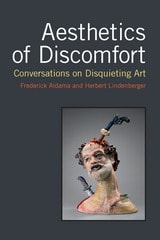
Aesthetics of Discomfort
Conversations on Disquieting ArtFrederick Aldama and Herbert Lindenberger
University of Michigan Press, 2016

Aesthetics of the Natural Environment
Emily Brady
University of Alabama Press, 2003
Aesthetic experience is one of the fundamental ways that we develop a relationship to our natural surroundings. Emily Brady provides a comprehensive study of this type of experience and the central philosophical issues related to it, developing her own original theory of aesthetic appreciation of nature. She provides useful background to the current debate and an up-to-date critical appraisal of contemporary theories.
The context of the contemporary debate is laid out through a discussion of aesthetic experience and aesthetic qualities; early theories of aesthetic appreciation of nature, including the beautiful, the sublime, and the picturesque; and differences between artistic and environmental appreciation and interpretation. Brady situates her own approach in relation to a set of noncognitive accounts of appreciation. Her "integrated aesthetic" brings together various features of appreciation, including the senses, emotion, and imagination, with a reappraisal of the concept of disinterestedness. These ideas are further developed within the more practical domains of aesthetic judgment and education of the environment and through an examination of the role of aesthetic value in environmental conservation.
Arnold Berleant of Long Island University, a pioneer in this area of research, has declared Brady’s work, “admirably comprehensive coverage of the subject.” Julie C. Van Camp of California State University, Long Beach, has said, “The bibliography is priceless. . . . The discussions of such philosophers as Kant and Dewey seem plausible and understandable to an audience of students and the educated public.” This book will be valuable to readers interested in such wide-ranging subjects as philosophy, aesthetics, ethics, ecology, conservation, environmental policy-making, geography, and landscape architecture.
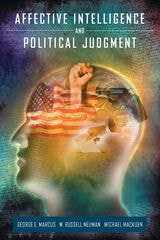
Affective Intelligence and Political Judgment
George E. Marcus, W. Russell Neuman, and Michael MacKuen
University of Chicago Press, 2000
The authors draw on research in neuroscience, physiology, and experimental psychology to conceptualize habit and reason as two mental states that interact in a delicate, highly functional balance controlled by emotion. Applying this approach to more than fifteen years of election results, they shed light on a wide range of political behavior, including party identification, symbolic politics, and negative campaigning.
Remarkably accessible, Affective Intelligence and Political Judgment urges social scientists to move beyond the idealistic notion of the purely rational citizen to form a more complete, realistic model that includes the emotional side of human judgment.
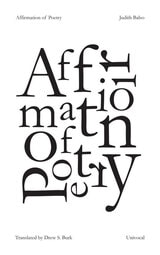
Affirmation of Poetry
Judith Balso
University of Minnesota Press, 2014
Since the times of Plato and Aristotle, the relation of poetry to philosophy has been controversial. For certain scholars, poetry should in no way be confused with philosophy. For others, poetry is at the heart of the possibility of thinking itself. In Affirmation of Poetry, Judith Balso defends the significance of poetry as a necessary practice for thinking. For Balso, if reading poetry properly has become an obscure task, poetry itself still carries with it a power of thinking: the efforts of the poets must continue. In analyzing the affirmation of thought found within the work of such poets as Osip Mandelstam, Wallace Stevens, Alberto Caeiro, and Giacomo Leopardi, Balso reestablishes poetry’s place as a site of thought.
Affirmative Action and the University
A Philosophical Inquiryedited by Steven M. Cahn
Temple University Press, 1995
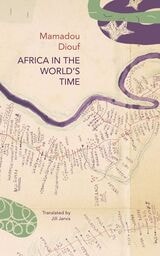
Africa in the World’s Time
Rewriting the Past Beyond Colonial NarrativesMamadou Diouf
Seagull Books, 2025
Mamadou Diouf unearths the intellectual and cultural traditions that have long defined Africa, proving that history was never just written about Africa, but also by it.
For too long, Africa has been framed as an afterthought in world history—a continent written into the margins of time. In Africa in the World’s Time, renowned historian Mamadou Diouf dismantles these colonial narratives and reclaims Africa’s rightful place at the center of global historical thought. Moving beyond Western frameworks, Diouf examines the continent’s intellectual traditions and demonstrates how African artists and historians have shaped and reshaped how we understand the past.
Tracing central debates from the independence era to today, Diouf examines figures like Cheikh Anta Diop and Samir Amin, as well as the vital role of literature and film in contesting predominant histories. He challenges the linear, Eurocentric timelines that have long governed historical discourse, and puts forward a vision of Africa as a force that has always been influencing and reimagining the world.
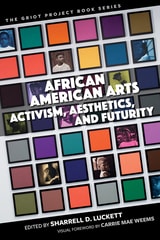
African American Arts
Activism, Aesthetics, and Futurityweems, carrie mae
Bucknell University Press, 2020
Contributors: Carrie Mae Weems, Carmen Gillespie, Rikki Byrd, Amber Lauren Johnson, Doria E. Charlson, Florencia V. Cornet, Daniel McNeil, Lucy Caplan, Genevieve Hyacinthe, Sammantha McCalla, Nettrice R. Gaskins, Abby Dobson, J. Michael Kinsey, Shondrika Moss-Bouldin, Julie B. Johnson, Sharrell D. Luckett, Jasmine Eileen Coles, Tawnya Pettiford-Wates, Rickerby Hinds.
Published by Bucknell University Press. Distributed worldwide by Rutgers University Press.
African American Political Thought
A Collected HistoryEdited by Melvin L. Rogers and Jack Turner
University of Chicago Press, 2021
While African American political thought is inextricable from the historical movement of American political thought, this volume stresses the individuality of Black thinkers, the transnational and diasporic consciousness, and how individual speakers and writers draw on various traditions simultaneously to broaden our conception of African American political ideas. This landmark volume gives us the opportunity to tap into the myriad and nuanced political theories central to Black life. In doing so, African American Political Thought: A Collected History transforms how we understand the past and future of political thinking in the West.
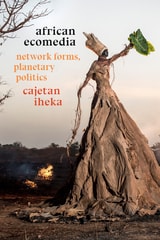
African Ecomedia
Network Forms, Planetary PoliticsCajetan Iheka
Duke University Press, 2021
African Meditations
Felwine Sarr
University of Minnesota Press, 2022
An influential thinker’s fascinating reflections and meditations on reacclimating to his native Senegal as a young academic after years of study abroad
The call to morning prayer. A group run at daybreak along the Corniche in Dakar. A young woman shedding tears on a beach as her friends take a boat to Europe. In African Meditations, paths to enlightenment collide with tales of loss and ruminations, musical gatherings, and the everyday sights and sounds of life in West Africa as a young philosopher and creative writer seeks to establish himself as a teacher upon his return to Senegal, his homeland, after years of study abroad.
A unique contemporary portrait of an influential, multicultural thinker on a spiritual quest across continents—reflecting on his multiple literary influences along with French, African Francophone, and Senegalese tribal cultural roots in a homeland with a predominantly Muslim culture—African Meditations is a seamless blend of autobiography, journal entries, and fiction; aphorisms and brief narrative sketches; humor and Zen reflections.
Taking us from Saint-Louis to Dakar, Felwine Sarr encounters the rhythms of everyday life as well as its disruptions such as teachers’ strikes and power outages while traversing a semi-surrealistic landscape. As he reacclimates to his native country after a life in France, we get candid glimpses, both vibrant and hopeful, sublime and mundane, into his Zen journey to resecure a foothold in his roots and to navigate academia, even while gleaning something of the good life, of joy, amid the struggles of life in Senegal.
African Philosophy, Culture, and Traditional Medicine
MIS AF#53M. Akin Makinde
Ohio University Press, 1988
Africana Studies
Theoretical FuturesEdited by Grant Farred
Temple University Press, 2022
As Africana Studies celebrates its fiftieth anniversary throughout the United States, this invigor ating collection presents possibilities for the future of the discipline’s theoretical paths. The essays in Africana Studies focus on philosophy, science, and technology; poetry, literature, and music; the crisis of the state; issues of colonialism, globalization, and neoliberalism; and the ever-expanding diaspora. The editor and contributors to this volume open exciting avenues for new narratives, philosophies, vision, and scale in this critical field of study—formed during the 1960s around issues of racial injustice in America—to show what Africana Studies is already in the process of becoming.
Africana Studies recognizes how the discipline has been shaped, changing over the decades as scholars have opened new modes of theoretical engagement such as addressing issues of gender and sexuality, politics, and cultural studies. The essays debate and (re)consider black and diasporic life to sustain, provoke, and cultivate Africana Studies as a singular yet polyvalent mode of thinking.
Contributors: Akin Adeṣọkan, John E. Drabinski, Zeyad El Nabolsy, Pierre-Philippe Fraiture, Kasareka Kavwahirehi, Gregory Pardlo, Radwa Saad, Sarah Then Bergh, and the editor
After Capitalism
Horizons of Finance, Culture, and CitizenshipFerguson, Kennan
Rutgers University Press, 2016
After Ethnos
Tobias Rees
Duke University Press, 2018
After God
Mark C. Taylor
University of Chicago Press, 2007
Religion, Mark C. Taylor argues in After God, is more complicated than either its defenders or critics think and, indeed, is much more influential than any of us realize. Our world, Taylor maintains, is shaped by religion even when it is least obvious. Faith and value, he insists, are unavoidable and inextricably interrelated for believers and nonbelievers alike.
The first comprehensive theology of culture since the pioneering work of Paul Tillich, After God redefines religion for our contemporary age. This volumeis a radical reconceptualization of religion and Taylor’s most pathbreaking work yet, bringing together various strands of theological argument and cultural analysis four decades in the making.
Praise for Mark C. Taylor
“The distinguishing feature of Taylor’s career is a fearless, or perhaps reckless, orientation to the new and to whatever challenges orthodoxy. . . . Taylor’s work is playful, perverse, rarefied, ingenious, and often brilliant.”—New York Times Magazine
After Jena
New Essays on Fichte's Later PhilosophyTom Rockmore
Northwestern University Press, 2008
The career of J. G. Fichte, a central figure in German idealism and in the history of philosophy, divides into two distinct phases: the first period, in which he occupied the chair of critical philosophy at the University of Jena (1794-1799); and the following period, after he left Jena for Berlin. Due in part to the inaccessibility of the German texts, Fichte scholarship in the English-speaking world has tended to focus on the Jena period, neglecting the development of this major thinker's mature development. The essays collected in this book begin to correct this imbalance. Concerned in a variety of ways with Fichte's post-Jena philosophy, these essays by distinguished and emerging scholars demonstrate the depth and breadth of Fichte scholarship being done in English.
With an introduction that locates the essays in philosophical and historical terms, the book divides into three related categories: Fichte’s development, his view of religion, and other aspects of his "popular" (or not-so-popular) philosophy. From a wide range of perspectives, the essays show how Fichte’s later development reflects the philosophical concerns of his time, the specific debates in which he engaged, and the complex events of his philosophical career.

After Life
Eugene Thacker
University of Chicago Press, 2010
In After Life, Eugene Thacker clears the ground for a new philosophy of life by recovering the twists and turns in its philosophical history. Beginning with Aristotle’s originary formulation of a philosophy of life, Thacker examines the influence of Aristotle’s ideas in medieval and early modern thought, leading him to the work of Immanuel Kant, who notes the inherently contradictory nature of “life in itself.” Along the way, Thacker shows how early modern philosophy’s engagement with the problem of life affects thinkers such as Gilles Deleuze, Georges Bataille, and Alain Badiou, as well as contemporary developments in the “speculative turn” in philosophy.
At a time when life is categorized, measured, and exploited in a variety of ways, After Life invites us to delve deeper into the contours and contradictions of the age-old question, “what is life?”
After Live
Possibility, Potentiality, and the Future of PerformanceDaniel Sack
University of Michigan Press, 2015
After Parmenides
Idealism, Realism, and Epistemic ConstructivismTom Rockmore
University of Chicago Press, 2021
In After Parmenides, Tom Rockmore takes us all the way back to the beginning of Western philosophy, when Parmenides asserted that thought and being are the same. This idea created a division between what the mind constructs as knowable entities and the idea that there is also a mind-independent real, which we can know or fail to know. Rockmore argues that we need to give up on the idea of knowing the real as it is, and instead focus on the objects of cognition that our mind constructs. Though we cannot know mind-independent objects as they “really” are, we can and do know objects as they appear to us.
After Parmenides charts the continual engagement with these ideas of the real and the knowable throughout philosophical history from Plato and Aristotle to Descartes, Kant, Fichte, Hegel, Schopenhauer, Marx, and others. This ambitious book shows how new connections can be made in the history of philosophy when it is reread through a new lens.

After Poststructuralism
Transitions and TransformationsEdited by Rosi Braidotti
University of Chicago Press, 2010
From Kant to Kierkegaard, from Hegel to Heidegger, continental philosophers have indelibly shaped the trajectory of Western thought since the eighteenth century. Although much has been written about these monumental thinkers, students and scholars lack a definitive guide to the entire scope of the continental tradition. The most comprehensive reference work to date, this eight-volume History of Continental Philosophy will both encapsulate the subject and reorient our understanding of it. Beginning with an overview of Kant’s philosophy and its initial reception, the History traces the evolution of continental philosophy through major figures as well as movements such as existentialism, phenomenology, hermeneutics, and poststructuralism. The final volume outlines the current state of the field, bringing the work of both historical and modern thinkers to bear on such contemporary topics as feminism, globalization, and the environment. Throughout, the volumes examine important philosophical figures and developments in their historical, political, and cultural contexts.
The first reference of its kind, A History of Continental Philosophy has been written and edited by internationally recognized experts with a commitment to explaining complex thinkers, texts, and movements in rigorous yet jargon-free essays suitable for both undergraduates and seasoned specialists. These volumes also elucidate ongoing debates about the nature of continental and analytic philosophy, surveying the distinctive, sometimes overlapping characteristics and approaches of each tradition. Featuring helpful overviews of major topics and plotting road maps to their underlying contexts, A History of Continental Philosophy is destined to be the resource of first and last resort for students and scholars alike.
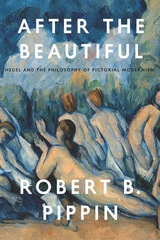
After the Beautiful
Hegel and the Philosophy of Pictorial ModernismRobert B. Pippin
University of Chicago Press, 2013
While Hegel could never engage modernist painting, he did have an understanding of modernity, and in it, art—he famously asserted—was “a thing of the past,” no longer an important vehicle of self-understanding and no longer an indispensable expression of human meaning. Pippin offers a sophisticated exploration of Hegel’s position and its implications. He also shows that had Hegel known how the social institutions of his day would ultimately fail to achieve his own version of genuine equality, a mutuality of recognition, he would have had to explore a different, new role for art in modernity. After laying this groundwork, Pippin goes on to illuminate the dimensions of Hegel’s aesthetic approach in the path-breaking works of Manet, the “grandfather of modernism,” drawing on art historians T. J. Clark and Michael Fried to do so. He concludes with a look at Cézanne, the “father of modernism,” this time as his works illuminate the relationship between Hegel and the philosopher who would challenge Hegel’s account of both modernity and art—Martin Heidegger.
Elegantly inter-weaving philosophy and art history, After the Beautiful is a stunning reassessment of the modernist project. It gets at the core of the significance of modernism itself and what it means in general for art to have a history. Ultimately, it is a testament, via Hegel, to the distinctive philosophical achievements of modernist art in the unsettled, tumultuous era we have inherited.
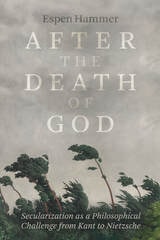
After the Death of God
Secularization as a Philosophical Challenge from Kant to NietzscheEspen Hammer
University of Chicago Press, 2025
The secularization thesis, which held that religious belief would gradually yield to rationality, has been thoroughly debunked. What, then, can we learn from philosophers for whom the death of God seemed so imminent? In this book, Espen Hammer offers a sweeping analysis of secularization in nineteenth-century German philosophy, arguing that the persistence of religion (rather than its absence) animated this tradition. Hammer shows that Kant, Hegel, Feuerbach, Marx, and Nietzsche, each in their own way, sought to preserve and transform religion’s ethical and communal aspirations for modern life. A renewed appreciation for this tradition’s generous thought, Hammer argues, can help us chart a path through needlessly destructive conflicts between secularists and fundamentalists today.
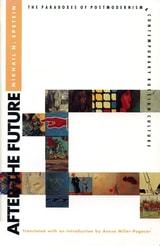
After the Future
The Paradoxes of Postmodernism & Contemporary Russian CultureMikhail N. Epstein
University of Massachusetts Press, 1995
This book brings together for the first time in English the major writings of Mikhail Epstein, one of post-Soviet Russia's most prominent theoreticians of cultural studies and postmodernism. Written from a non-Western point of view yet informed by a familiarity with Western literary theory, it offers a fresh, lucid perspective on the post-communist literary scene as well as a practical and theoretical introduction to the new discipline of Russian “culturology.”

Afterimages of Gilles Deleuze’s Film Philosophy
D. N. Rodowick
University of Minnesota Press, 2009
The French philosopher Gilles Deleuze was one of the most innovative and revolutionary thinkers of the twentieth century. Author of more than twenty books on literature, music, and the visual arts, Deleuze published the first volume of his two-volume study of film, Cinema 1: The Movement-Image, in 1983 and the second volume, Cinema 2: The Time-Image, in 1985. Since their publication, these books have had a profound impact on the study of film and philosophy. Film, media, and cultural studies scholars still grapple today with how they can most productively incorporate Deleuze's thought.
The first new collection of critical studies on Deleuze's cinema writings in nearly a decade, Afterimages of Gilles Deleuze's Film Philosophy provides original essays that evaluate the continuing significance of Deleuze's film theories, accounting systematically for the ways in which they have influenced the investigation of contemporary visual culture and offering new directions for research.
Contributors: Raymond Bellour, Centre Nationale de Recherches Scientifiques; Ronald Bogue, U of Georgia; Giuliana Bruno, Harvard U; Ian Buchanan, Cardiff U; James K. Chandler, U of Chicago; Tom Conley, Harvard U; Amy Herzog, CUNY; András Bálint Kovács, Eötvös Loránd U; Patricia MacCormack, Anglia Ruskin U; Timothy Murray, Cornell U; Dorothea Olkowski, U of Colorado; John Rajchman, Columbia U; Marie-Claire Ropars-Wuilleumier, U Paris VIII; Garrett Stewart, U of Iowa; Damian Sutton, Glasgow School of Art; Melinda Szaloky, UC Santa Barbara.
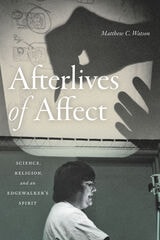
Afterlives of Affect
Science, Religion, and an Edgewalker’s SpiritMatthew C. Watson
Duke University Press, 2020
Against Abstraction
Notes from an Ex-Latin AmericanistBy Alberto Moreiras
University of Texas Press, 2020
In 2015, members of the philosophy department at the University of Madrid conducted an interview with Alberto Moreiras for the university’s digital archive. The resulting dialogues and the Spanish edition of this work, Marranismo e inscripción, o el abandono de la conciencia desdichada, are the basis for Against Abstraction, supplemented with an interview conducted for the Chilean journal Papel máquina. In these landmark conversations, Moreiras describes how, though he was initially committed to Latin American literary studies, he eventually transitioned to become an eminent scholar of critical theory, existential philosophy, and ultimately infrapolitics and posthegemony.
Blending intellectual autobiography with a survey of Hispanism as practiced in universities in the United States (including the schisms in Latin American subaltern studies that eventually led to Moreiras’s departure from Duke University), these narratives read like a picaresque and a polemic on the symbolic power of scholars. Drawing on the concept of marranism (originally a term for Iberian Jews and Muslims forced to convert to Christianity during the Middle Ages) to consider the situations and allegiances he has navigated over the years, Moreiras has produced a multifaceted self-portrait that will surely spark further discourse.
Against Aesthetic Exceptionalism
Arne De Boever
University of Minnesota Press, 2019
Reconsiders exceptionalism between aesthetics and politics
Here, Arne De Boever proposes the notion of aesthetic exceptionalism to describe the widespread belief that art and artists are exceptional. Against Aesthetic Exceptionalism challenges that belief by focusing on the sovereign artist as genius, as well as the original artwork as the foundation of the art market. Engaging with sculpture, conceptual artwork, and painting by emerging and established artists, De Boever proposes a worldly, democratic notion of unexceptional art as an antidote to the problems of aesthetic exceptionalism.
Forerunners: Ideas First
Short books of thought-in-process scholarship, where intense analysis, questioning, and speculation take the lead
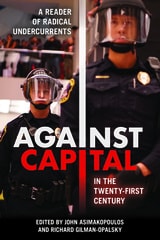
Against Capital in the Twenty-First Century
A Reader of Radical UndercurrentsJohn Asimakopoulos
Temple University Press, 2018
The problems of capitalism have been studied from Karl Marx to Thomas Piketty. The latter has recently confirmed that the system of capital is deeply bound up in ever-growing inequality without challenging the continuance of that system. Against Capital in the Twenty-First Century presents a diversity of analyses and visions opposed to the idea that capital should have yet another century to govern human and non-human resources in the interest of profit and accumulation. The editors and contributors to this timely volume present alternatives to the whole liberal litany of administered economies, tax policy recommendations, and half-measures. They undermine and reject the logic of capital, and the foregone conclusion that the twenty-first century should be given over to capital just as the previous two centuries were.
Providing a deep critique of capitalism, based on assessment from a wide range of cultural, social, political, and ecological thinking, Against Capital in the Twenty-First Century insists that transformative, revolutionary, and abolitionist responses to capital are even more necessary in the twenty-first century than they ever were.
Against Dogmatism
Dwelling in Faith and DoubtMadhuri Yadlapati
University of Illinois Press, 2013
Yadlapati traces religious perspectives on trust, humility, belonging, commitment, and lively skepticism as they relate to faith and doubt. Drawing on various doctrines, scriptures, and the writings of great religious thinkers such as C. S. Lewis, Søren Kierkegaard, Karl Barth, and Raimon Panikkar, Yadlapati demonstrates how doubt can serve to enhance faith, not hinder it. Defending the rich tapestry of faith and doubt against polarization, Against Dogmatism reveals an ecumenical middle way, a spiritual approach native to traditions in which faith and doubt are interwoven in constructive and dynamic ways.
Against Ecological Sovereignty
Ethics, Biopolitics, and Saving the Natural WorldMick Smith
University of Minnesota Press, 2011
Against Ecological Sovereignty is a passionate defense of radical ecology that speaks directly to current debates concerning the nature, and dangers, of sovereign power. Engaging the work of Bataille, Arendt, Levinas, Nancy, and Agamben, among others, Mick Smith reconnects the political critique of sovereign power with ecological considerations, arguing that ethical and political responsibilities for the consequences of our actions do not end with those defined as human.
Against Ecological Sovereignty is the first book to turn Agamben’s analysis of sovereignty and biopolitics toward an investigation of ecological concerns. In doing so it exposes limits to that thought, maintaining that the increasingly widespread biopolitical management of human populations has an unrecognized ecological analogue—reducing nature to a “resource” for human projects. Smith contends that a radical ecological politics must resist both the depoliticizing exercise of sovereign power and the pervasive spread of biopolitics in order to reveal new possibilities for creating healthy human and nonhuman communities.
Presenting a stinging critique of human claims to sovereignty over the natural world, Smith proposes an alternative way to conceive of posthumanist ecological communities—one that recognizes the utter singularity of the beings in them.
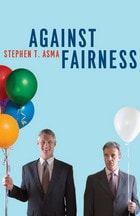
Against Fairness
Stephen T. Asma
University of Chicago Press, 2012
Watch an animated book trailer here: http://www.youtube.com/watch?v=GjPhTQ9zi5Q
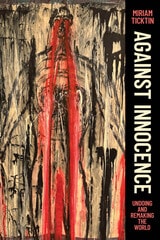
Against Innocence
Undoing and Remaking the WorldMiriam Ticktin
University of Chicago Press, 2025
In this timely and bold book, Miriam Ticktin explores how a concept that consistently appears as a moral good actually ends up creating harm for so many. Claims to innocence protect migrant children, but often at the expense of their parents; claims to the innocence of the fetus work to punish women. Ticktin shows how innocence structures political relationships, focusing on individual victims and saviors, while foreclosing forms of collective responsibility. Ultimately, she wants to understand how the discourse around innocence functions, what gives it such power, and why we are so compelled by it, while showing that alternative political forms already exist. She examines this process across various domains, from migration, science, and environmentalism to racial and reproductive justice.
Throughout the book, Ticktin shows how the concept of innocence intimately shapes why, how, and for whom we should care and whose lives matter—and how this can have devastating consequences when only an exceptional few can qualify as innocent. A politics grounded on innocence justifies a world built on inequality, designating most people—especially the racialized poor—as unworthy, undeserving, and less than human. As an alternative, she explores the aesthetics and politics of “commoning”—a collective regime of living that refuses a liberal politics of individual identity and victimhood.
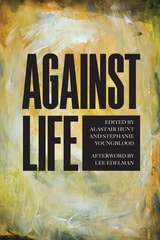
Against Life
Edited by Alastair Hunt and Stephanie Youngblood, with an afterword by Lee Edelman
Northwestern University Press, 2015
The contributors to Against Life think critically about the turn to life in theory and culture and especially about its redemptive tendencies. Editors Alastair Hunt and Stephanie Youngblood shape their collection to provocatively challenge an assumption rife in the humanities, mainly that the idea of redeeming life might hinder important ethical conversations.
They and their contributors question whether it is intelligent—or even necessary— to orient our collective ethico-political projects from figures of life, and to posit forms of equality and freedom that might emerge if we did not organize being-together under the sign of life. Taken together the essays in Against Life mark an important turn in the ethico-political work of the humanities.
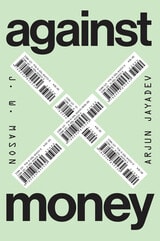
Against Money
J. W. Mason and Arjun Jayadev
University of Chicago Press, 2026
A powerful deconstruction of humanity’s most influential invention, from the acclaimed economists J. W. Mason and Arjun Jayadev.
Money is everywhere in our daily lives. It lurks in the swipe of a card at the grocery store, in looming student-loan debts, in the prices of things we want, and in our subconscious navigation of the modern world. Money is an invisible convenience that saves us, as a society, the hassle of bartering for goods and services—a reflection, in our pockets and on our phones, of the hard facts of scarcity and desire. Or is it something more?
In this revelatory book, economists J. W. Mason and Arjun Jayadev explain how and why money is so deeply misunderstood by the world it dominates—as well as the dangerous social implications of this misunderstanding. Against Money tackles the most dearly held “truths” of economics, arguing that the world of money has never been an impartial representation of the world of things. Instead, its existence in different forms—debt, capital, liquidity, and interest—increasingly shapes events in the real world rather than just reflecting them. Sometimes money enables new forms of cooperation; more oftenit facilitates domination. Human existence is not just facilitated by money but also governed by it.
In the tradition of works by Thomas Piketty and David Graeber, Against Money is an erudite, disruptive exposé of the illusions and tyrannies of money. Mason and Jayadev present a radically different way of thinking about money—imagining a hopeful future in which it no longer dictates the possibilities of our collective existence.

Against Purity
Living Ethically in Compromised TimesAlexis Shotwell
University of Minnesota Press, 2016
The world is in a terrible mess. It is toxic, irradiated, and full of injustice. Aiming to stand aside from the mess can produce a seemingly satisfying self-righteousness in the scant moments we achieve it, but since it is ultimately impossible, individual purity will always disappoint. Might it be better to understand complexity and, indeed, our own complicity in much of what we think of as bad, as fundamental to our lives? Against Purity argues that the only answer—if we are to have any hope of tackling the past, present, and future of colonialism, disease, pollution, and climate change—is a resounding yes. Proposing a powerful new conception of social movements as custodians for the past and incubators for liberated futures, Against Purity undertakes an analysis that draws on theories of race, disability, gender, and animal ethics as a foundation for an innovative approach to the politics and ethics of responding to systemic problems.
Being against purity means that there is no primordial state we can recover, no Eden we have desecrated, no pretoxic body we might uncover through enough chia seeds and kombucha. There is no preracial state we could access, no erasing histories of slavery, forced labor, colonialism, genocide, and their concomitant responsibilities and requirements. There is no food we can eat, clothes we can buy, or energy we can use without deepening our ties to complex webbings of suffering. So, what happens if we start from there?
Alexis Shotwell shows the importance of critical memory practices to addressing the full implications of living on colonized land; how activism led to the official reclassification of AIDS; why we might worry about studying amphibians when we try to fight industrial contamination; and that we are all affected by nuclear reactor meltdowns. The slate has never been clean, she reminds us, and we can’t wipe off the surface to start fresh—there’s no fresh to start. But, Shotwell argues, hope found in a kind of distributed ethics, in collective activist work, and in speculative fiction writing for gender and disability liberation that opens new futures.

Against War
Views from the Underside of ModernityNelson Maldonado-Torres
Duke University Press, 2008
Considering Levinas’s critique of French liberalism and Nazi racial politics, and the links between them, Maldonado-Torres identifies a “master morality” of dominion and control at the heart of western modernity. This master morality constitutes the center of a warring paradigm that inspires and legitimizes racial policies, imperial projects, and wars of invasion. Maldonado-Torres refines the description of modernity’s war paradigm and the Levinasian critique through Fanon’s phenomenology of the colonized and racial self and the politics of decolonization, which he reinterprets in light of the Levinasian conception of ethics. Drawing on Dussel’s genealogy of the modern imperial and warring self, Maldonado-Torres theorizes race as the naturalization of war’s death ethic. He offers decolonial ethics and politics as an antidote to modernity’s master morality and the paradigm of war. Against War advances the de-colonial turn, showing how theory and ethics cannot be conceived without politics, and how they all need to be oriented by the imperative of decolonization in the modern/colonial and postmodern world.

Agape Love
Tradition In Eight World ReligionsSir John Templeton
Templeton Press, 1999
The tradition of agape, or unconditional love, is not exclusive to any religion. It is a primary underlying principle found in religions worldwide. The concept of altruistic love challenges the spiritual person to "love your enemies" or to "love without thought of return." It is a love that flows out to others through compassion, kindness, tenderness, and charitable giving.
Buddhists have a path of compassion, where caring for others becomes the motivating force behind existence. Hindus have a branch of yoga, the heart-centered path, that leads to enlightenment through an overwhelming love for God that takes the form of loving all humanity. Eastern religions, such as Taoism and Confucianism, see transcendent love as essential to true wisdom.
Love is a universal theme of love found in all religious traditions, Buddhist, Christian, Islam, or others. As we realize that all religions have this spiritual principle of love at their core, we can develop a sense of shared humanity. The religious tradition of agape love examined in this book will inspire those who are learning to grow in compassion and love for all people.
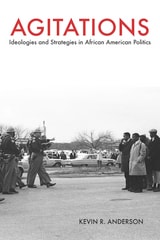
Agitations
Ideologies and Strategies in African American PoliticsKevin R. Anderson
University of Arkansas Press, 2010
Though the activities of the National Association for the Advancement of Colored People (NAACP), the Southern Christian Leadership Conference (SCLC), and the Student Nonviolent Coordinating Committee (SNCC) were unified in their common idea of resistance to oppression, these groups fought their battles on multiple fronts. The NAACP filed lawsuits and aggressively lobbied Congress and state legislatures, while Martin Luther King Jr. and SCLC challenged the racial status quo through nonviolent mass action, and the SNCC focused on community empowerment activities. In Agitations, Kevin Anderson studies these various activities in order to trace the ideological foundations of these groups and to understand how diversity among African Americans created multiple political strategies.
Agitations goes beyond the traditionally acknowledged divide between integrationist and accommodationist wings of African American politics to explore the diverse fundamental ideologies and strategic outcomes among African American activists that still define, influence, and complicate political life today.

Agnes Heller
A Moralist in the Vortex of HistoryJohn Grumley
Pluto Press, 2005
Hungarian by birth, she was one of the best known dissident Marxists in central Europe in the 1960's and 1970's. Since her forced immigration she has held visiting lectureships all over the world and has been the Hannah Arendt Professor of Philosophy at the New School in New York for the last twenty years.
This introduction to her thought is ideal for all students of philosophy, political theory and sociology. Grumley explores Heller's early work, elaborating her relation to Lukacs and the evolution of her own version of Marxism. He examines the subsequent break with Marxism and the initial development of an alternative radical philosophy. Finally, he explains and assesses her mature reflective post-modernism, a perspective that is both sceptical and utopian, that upholds a critical humanist perspective just as it critiques contemporary democratic culture.