Results by title
3027 books match the query 'Sociology' and 223 start with a

American Journal of Sociology, volume 129 number 3 (November 2023)
The University of Chicago Press
University of Chicago Press Journals, 2023

American Journal of Sociology, volume 129 number 4 (January 2024)
The University of Chicago Press
University of Chicago Press Journals, 2024

American Journal of Sociology, volume 129 number 5 (March 2024)
The University of Chicago Press
University of Chicago Press Journals, 2024

American Journal of Sociology, volume 129 number 6 (May 2024)
The University of Chicago Press
University of Chicago Press Journals, 2024
American Journal of Sociology, volume 130 number 1 (July 2024)
The University of Chicago Press
University of Chicago Press Journals, 2024

American Journal of Sociology, volume 130 number 2 (September 2024)
The University of Chicago Press
University of Chicago Press Journals, 2024

American Journal of Sociology, volume 130 number 3 (November 2024)
The University of Chicago Press
University of Chicago Press Journals, 2024

American Journal of Sociology, volume 130 number 4 (January 2025)
The University of Chicago Press
University of Chicago Press Journals, 2025

American Journal of Sociology, volume 130 number 5 (March 2025)
The University of Chicago Press
University of Chicago Press Journals, 2025

American Journal of Sociology, volume 130 number 6 (May 2025)
The University of Chicago Press
University of Chicago Press Journals, 2025

American Journal of Sociology, volume 131 number 1 (July 2025)
The University of Chicago Press
University of Chicago Press Journals, 2025

American Journal of Sociology, volume 131 number 2 (September 2025)
The University of Chicago Press
University of Chicago Press Journals, 2025

American Journal of Sociology, volume 131 number 3 (November 2025)
The University of Chicago Press
University of Chicago Press Journals, 2025

American Journal of Sociology, volume 131 number 4 (January 2026)
The University of Chicago Press
University of Chicago Press Journals, 2026

American Journal of Sociology, volume 131 number 5 (March 2026)
The University of Chicago Press
University of Chicago Press Journals, 2026

American Journal of Sociology, volume 131 number 6 (May 2026)
The University of Chicago Press
University of Chicago Press Journals, 2026

American Journal of Sociology, volume 132 number 1 (July 2026)
The University of Chicago Press
University of Chicago Press Journals, 2026

American Kinship
A Cultural AccountDavid M. Schneider
University of Chicago Press, 1980

American Suicide
Kushner, Howard
Rutgers University Press, 1991
By the 1890s, however, the consensus about the causes of suicide became unglued as a bacteriological medicine and the rise of the social sciences jointly served to call into question eclectic diagnoses. The renewed doctrine of specific causation of disease quickly spilled over into a constellation of explanataions for social behavior. The rise of specialization, which followed the bacteriological revolution of the 1880s, made the moral treatment appear scientifically suspect.
The goal of American Suicide is to demonstrate how the apparent contradictions among sociological, psychoanalytic, and neurobiological explanations of the etiology of suicide may be resolved. Only througha reintegration of culture, psychology, and biology can we begin to construct a satisfactory answer to the questions first raised by Durkheim, Freud, and Kraepelin.

American Value
Migrants, Money, and Meaning in El Salvador and the United StatesDavid Pedersen
University of Chicago Press, 2012

Americas Jews
Chaim Waxman
Temple University Press, 1983
The book is a social history and sociology of American Jewry. It provides an up-to-date analysis of the contemporary American Jewish community, an analysis that includes educational, occupational, income, and political patterns of American Jews; the American Jewish family; anti-semitism; the relationship between American Jews and Israel; and the recent immigration of Soviet, Israeli, and Iranian Jews to the USA.
In synthesizing a vast array of empirical studies, the author argues that while American Jews have been successful in their quest to integrate into the American social system, recent developments both in the American social and cultural system, at large, and within the Jewish community, in particular, indicate that this ethno-religious group is confronting the challenge to its continuity and its manifesting survivalist strengths which were not readily apparent in earlier generations.
America's Jews in Transition should interest students in a wide range of fields, among them sociology, ethnic studies, Jewish studies, American studies, and religious studies. Because of its breadth and the freshness of its material, the book should also appeal to the general reader.

Amigas y Amantes
Sexually Nonconforming Latinas Negotiate FamilyAcosta, Katie L
Rutgers University Press, 2013
2014 Choice Outstanding Academic Title
Amigas y Amantes (Friends and Lovers) explores the experiences of sexually nonconforming Latinas in the creation and maintenance of families. It is based on forty-two in-depth ethnographic interviews with women who identify as lesbian, bisexual, or queer (LBQ). Additionally, it draws from fourteen months of participant observation at LBQ Latina events that Katie L. Acosta conducted in 2007 and 2008 in a major northeast city. With this data, Acosta examines how LBQ Latinas manage loving relationships with the families who raised them, and with their partners, their children, and their friends.
Acosta investigates how sexually nonconforming Latinas negotiate cultural expectations, combat compulsory heterosexuality, and reconcile tensions with their families. She offers a new way of thinking about the emotion work involved in everyday lives, which highlights the informal, sometimes invisible, labor required in preserving family ties. Acosta contends that the work LBQ Latinas take on to preserve connections with biological families, lovers, and children results in a unique way of doing family.
Paying particular attention to the negotiations that LBQ Latinas undertake in an effort to maintain familial order, Amigas y Amantes explores how they understand femininity, how they negotiate their religious faiths, how they face the unique challenges of being in interracial/interethnic relationships, and how they raise their children while integrating their families of origin.

An American Obsession
Science, Medicine, and Homosexuality in Modern SocietyJennifer Terry
University of Chicago Press, 1999
Terry's overarching argument is compelling: that homosexuality served as a marker of the "abnormal" against which malleable, tenuous, and often contradictory concepts of the "normal" were defined. One of the few histories to take into consideration homosexuality in both women and men, Terry's work also stands out in its refusal to erase the agency of people classified as abnormal. She documents the myriad ways that gays, lesbians, and other sexual minorities have coauthored, resisted, and transformed the most powerful and authoritative modern truths about sex. Proposing this history as a "useable past," An American Obsession is an indispensable contribution to the study of American cultural history.

An Arkansas Folklore Sourcebook
W.K. McNeil
University of Arkansas Press, 1992
Arkansas’s rich folk tradition is shown by the variety of its manifestations: a 250-year-old ballad, an archaic method of hewing railroad crossties with a broadax, the use of poultices and toddies to treat the common cold, and swamps of evil repute are all parts of the tradition that constitutes Arkansas folklore. In fact, as the essays selected by W.K. McNeil and William M. Clements show, these few examples only begin to tell the story.
Starting with a working description of folklore as “cultural material that is traditional and unofficial” and characterized by a pattern of oral transmission, variation, formulaic structures, and usually uncertain origin, the authors survey in detail a wide array of folk objects, activities, beliefs, and customs. Among the rich offerings in this sourcebook are a discussion of the history of folklore research in Arkansas, an examination of some of the traditional songs and music still being preformed, a thoughtful exploration of the serious side of “tall tales” and “windies,” an investigation of folk architecture in Arkansas and what it reveals about our cultural origins, a study of many traditional foods and there preparation methods, an analysis of superstitions and beliefs, and a description of festivals and celebrations that are observed to this day.
Complemented by biographies of reference works and audio and video recordings of the state’s folk materials, An Arkansas Folklore Sourcebook is the first complete guide to the study of one state’s “unofficial culture.”

An Artificial History of Natural Intelligence
Thinking with Machines from Descartes to the Digital AgeDavid W. Bates
University of Chicago Press, 2024
We imagine that we are both in control of and controlled by our bodies—autonomous and yet automatic. This entanglement, according to David W. Bates, emerged in the seventeenth century when humans first built and compared themselves with machines. Reading varied thinkers from Descartes to Kant to Turing, Bates reveals how time and time again technological developments offered new ways to imagine how the body’s automaticity worked alongside the mind’s autonomy. Tracing these evolving lines of thought, An Artificial History of Natural Intelligence offers a new theorization of the human as a being that is dependent on technology and produces itself as an artificial automaton without a natural, outside origin.
An Atlantic City Reader
The Rise and Decline of an American ResortLouis J. Parascandola
Rutgers University Press, 2026
As Atlantic City grew to become one of the largest tourist destinations on the East Coast, it loomed ever larger in the imaginations of American writers. Generation upon generation of novelists, journalists, musicians, and poets visited Atlantic City and left with vivid impressions of its kaleidoscopic delights and its seedy underbelly.
This new reader collects all of these diverse perspectives on the city in one place, including accounts of Atlantic City by such famous visitors as Walt Whitman, William Carlos Williams, Fanny Hurst, Arthur Conan Doyle, Damon Runyon, Langston Hughes, Elmore Leonard, and Bruce Springsteen. Arranged chronologically, the anthology traces the city’s history from its humble beginnings as a quiet health resort to its rapid ascent to the world’s playground, its gradual decline, and its hopeful if tenuous future. Together, the pieces in this collection take us inside the city’s glitz, glamor, and gambling palaces, but they also don’t shy away from its troubling histories of racial discrimination, political corruption, and urban decay. Compiling fiction, poetry, drama, memoirs, newspaper stories, and magazine reports, The Atlantic City Reader presents an engaging and multifaceted portrait of this iconic resort town.

An Invitation to Reflexive Sociology
Pierre Bourdieu and Loïc J. D. Wacquant
University of Chicago Press, 1992
Over the last three decades, the French sociologist Pierre Bourdieu has produced one of the most imaginative and subtle bodies of social theory and research of the postwar era. Yet, despite the influence of his work, no single introduction to his wide-ranging oeuvre is available. This book, intended for an English-speaking audience, offers a systematic and accessible overview, providing interpretive keys to the internal logic of Bourdieu's work by explicating thematic and methodological principles underlying his work.
The structure of Bourdieu's theory of knowledge, practice, and society is first dissected by Loic Wacquant; he then collaborates with Bourdieu in a dialogue in which they discuss central concepts of Bourdieu's work, confront the main objections and criticisms his work has met, and outline Bourdieu's views of the relation of sociology to philosophy, economics, history, and politics. The final section captures Bourdieu in action in the seminar room as he addresses the topic of how to practice the craft of reflexive sociology. Throughout, they stress Bourdieu's emphasis on reflexivity—his inclusion of a theory of intellectual practice as an integral component of a theory of society—and on method—particularly his manner of posing problems that permits a transfer of knowledge from one area of inquiry into another.
Amplified by notes and an extensive bibliography, this synthetic view is essential reading for both students and advanced scholars.
An Ugly Word
Rethinking Race in Italy and the United StatesAnn Morning
Russell Sage Foundation, 2022
Morning and Maneri interviewed over 150 people across the two countries about differences among what they refer to as “descent-based groups.” Using this concept allowed them to sidestep the language of “race” and “ethnicity,” which can be unnecessarily narrow, poorly defined, or even offensive to some. Drawing on these interviews, the authors find that while ways of speaking about group difference vary considerably across the Atlantic, underlying beliefs about it do not. The similarity in American and Italian understandings of difference was particularly evident when discussing sports. Both groups relied heavily on traditional stereotypes of Black physicality to explain Black athletes’ overrepresentation in sports like U.S. football and their underrepresentation in sports like swimming – contradicting the claims that a biological notion of race is a distinctly American phenomenon.
While American and Italian concepts of difference may overlap extensively, they are not identical. Interviews in Italy were more likely to reveal beliefs about groups’ innate, unchangeable temperaments, such as friendly Senegalese and dishonest Roma. And where physical difference was seen by Italians as superficial and unimportant, cultural difference was perceived as deeply meaningful and consequential. In contrast, U.S. interviewees saw cultural difference as supremely malleable—and often ascribed the same fluidity to racial identity, which they believed stemmed from culture as well as biology. In light of their findings, Morning and Maneri propose a new approach to understanding cross-cultural beliefs about descent-based difference that includes identifying the traits people believe differentiate groups, how they believe those traits are acquired, and whether they believe these traits can change.
An Ugly Word is an illuminating, cross-national examination of the ways in which people around the world make sense of race and difference.
An Unexpected Minority
White Kids in an Urban SchoolMorris, Edward
Rutgers University Press, 2005
In An Unexpected Minority, sociologist Edward Morris addresses these far-reaching questions by exploring attitudes about white identity in a Texas middle school composed predominantly of African Americans, Latinos, and Asians. Based on his ethnographic research, Morris argues that lower-income white students in urban schools do not necessarily maintain the sort of white privilege documented in other settings. Within the student body, African American students were more frequently the "cool" kids, and white students adopted elements of black culture-including dress, hairstyle, and language-to gain acceptance. Morris observes, however, that racial inequalities were not always reversed. Stereotypes that cast white students as better behaved and more academically gifted were often reinforced, even by African American teachers.
Providing a new and timely perspective to the significant role that non-whites play in the construction of attitudes about whiteness, this book takes an important step in advancing the discussion of racial inequality and its future in this country.
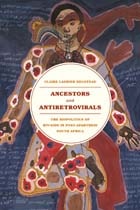
Ancestors and Antiretrovirals
The Biopolitics of HIV/AIDS in Post-Apartheid South AfricaClaire Laurier Decoteau
University of Chicago Press, 2013
In Ancestors and Antiretrovirals, Claire Laurier Decoteau backs up Tutu’s assertion with powerful arguments about how this came to pass. Decoteau traces the historical shifts in health policy after apartheid and describes their effects, detailing, in particular, the changing relationship between biomedical and indigenous health care, both at the national and the local level. Decoteau tells this story from the perspective of those living with and dying from AIDS in Johannesburg’s squatter camps. At the same time, she exposes the complex and often contradictory ways that the South African government has failed to balance the demands of neoliberal capital with the considerable health needs of its population.

And Justice for All
Families & the Criminal Justice System: Groves Monographs on Marriage and Family (Volume 4)Tessa le Roux
Michigan Publishing Services, 0
Groves Monographs on Marriage and Family is an edited book series based on the annual meetings of the Groves Conference on Marriage and Family, an interdisciplinary, interprofessional organization of limited invited membership founded in 1934. Groves Monographs publishes work on the leading edges of theory development and empirical research in the field of family studies. Individual volumes are edited by the chairs of the annual Groves Conferences and include peer-reviewed chapters by the conference presenters and invited authors. Topics are timely and provocative with diverse themes.

And They Lived Happily Ever After
Norms and Everyday Practices of Family and Parenthood in Russia and Eastern EuropeHelene Carlback
Central European University Press, 2012

Animal Intimacies
Interspecies Relatedness in India's Central HimalayasRadhika Govindrajan
University of Chicago Press, 2018
Built on extensive ethnographic fieldwork in the mountain villages of India’s Central Himalayas, Radhika Govindrajan’s book explores the number of ways that human and animal interact to cultivate relationships as interconnected, related beings. Whether it is through the study of the affect and ethics of ritual animal sacrifice, analysis of the right-wing political project of cow-protection, or examination of villagers’ talk about bears who abduct women and have sex with them, Govindrajan illustrates that multispecies relatedness relies on both difference and ineffable affinity between animals. Animal Intimacies breaks substantial new ground in animal studies, and Govindrajan’s detailed portrait of the social, political and religious life of the region will be of interest to cultural anthropologists and scholars of South Asia as well.

Animal Rights
History and Scope of a Radical Social MovementHarold D. Guither
Southern Illinois University Press, 1998
In the past decade, philosopher Bernard Rollin points out, we have "witnessed a major revolution in social concern with animal welfare and the moral status of animals." Adopting the stance of a moderate, Harold Guither attempts to provide an unbiased examination of the paths and goals of the members of the animal rights movement and of its detractors.
Given the level of confusion, suspicion, misunderstanding, and mistrust between the two sides, Guither admits the difficulty in locating, much less staying in, the middle of the road. The philosophical conflict, however, is fairly clear: those who resist reform, fearing that radical change in the treatment of animals will infringe on their business and property rights, versus the new activists who espouse a different set of moral and ethical obligations toward animals.
From his position as a moderate, Guither presents a brief history of animal protection and the emergence of animal rights, describes the scope of the movement, and identifies major players such as Paul and Linda McCartney and organizations such as People for the Ethical Treatment of Animals that are actively involved in the movement. He concentrates on what is actually happening in the 1990s, discussing in detail the possible consequences of the current debate for those who own, use, or enjoy animals in entertainment and leisure pursuits. A reference work for students in animal sciences and veterinary medicine, the book also poses questions for philosophers, sociologists, and public policymakers as well as animal owners, animal and biomedical researchers, and manufacturers and distributors of animal equipment and supplies.

Animated Urbanism
Bringing Cities to Smart Digital LifeGillian Rose
University of Minnesota Press, 2027
A critical examination of the digital imagery and visualization tools that mediate urban life
Animated Urbanism explores the ways urban life is increasingly mediated by digital visualization tools, from elaborate marketing productions to specialized techniques of urban planning that rely on the collection of large datasets. By developing a critical vocabulary for these forms of digital imagery, Gillian Rose investigates the implications of using digital technology to manage the spatial and temporal organization of life in cities.
Pushing back against the so-called smartness mandate, which sees urban existence and its infrastructure as necessarily governed by big data, automation, and artificial intelligence, Animated Urbanism is a nuanced examination of the various types of media structuring urban life and their propensity to replicate highly gendered and racialized forms of human embodiment. From smartphone apps to special effects in movies to sophisticated “fly-through” videos of cities created by urban developers, Rose analyzes the corporate imaginaries that are being created, building on the influential theories of Donna Haraway, among others, concerning the interrelation of technology, power, and human life.
While recent digital analysis often focuses on the political economy of tech platforms or the efficacy of data in smart cities, Rose emphasizes the role of human subjectivity in the shifting configurations of these new urban landscapes. With an incisive, feminist approach to the imagery enabled by software and handheld devices, Animated Urbanism invites us to question how human life emerges from these complex entanglements of technology and visual culture.
Retail e-book files for this title are screen-reader friendly with images accompanied by short alt text and/or extended descriptions.
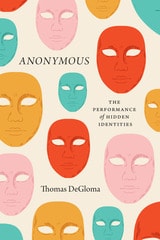
Anonymous
The Performance of Hidden IdentitiesThomas DeGloma
University of Chicago Press, 2023
In recent years, anonymity has rocked the political and social landscape. There are countless examples: An anonymous whistleblower was at the heart of President Trump’s first impeachment, an anonymous group of hackers compromised more than 77 million Sony accounts, and best-selling author Elena Ferrante resolutely continued to hide her real name and identity. In Anonymous, Thomas DeGloma draws on a fascinating set of contemporary and historical cases to build a sociological theory that accounts for the many faces of anonymity. He asks a number of pressing questions about the social conditions and effects of anonymity. What is anonymity, and why, under various circumstances, do individuals act anonymously? How do individuals accomplish anonymity? How do they use it, and, in some situations, how is it imposed on them?
To answer these questions, DeGloma tackles anonymity thematically, dedicating each chapter to a distinct type of anonymous action, including ones he dubs protective, subversive, institutional, and ascribed. Ultimately, he argues that anonymity and pseudonymity are best understood as performances in which people obscure personal identities as they make meaning for various audiences. As they bring anonymity and pseudonymity to life, DeGloma shows, people work to define the world around them to achieve different goals and objectives.

Another Arabesque
Syrian-Lebanese Ethnicity in Neoliberal BrazilJohn Tofik Karam
Temple University Press, 2006

Answer the Call
Virtual Migration in Indian Call CentersAimee Carrillo Rowe
University of Minnesota Press, 2013
What happens over time to Indians who spend their working hours answering phone calls from Americans—and acting like Americans themselves? To find out, the authors of Answer the Call conducted long-term interviews with forty-five agents, trainers, managers, and CEOs at call centers in Bangalore and Mumbai from 2003 to 2012. For nine or ten hours every day, workers in call centers are not quite in India or America but rather in a state of “virtual migration.” Encouraged to steep themselves in American culture from afar, over time the agents come to internalize and indeed perform Americanness for Americans—and for each other.
Call center agents “migrate” through time and through the virtual spaces generated by voice and information sharing. Drawing from their rich interviews, the authors show that the virtual migration agents undergo has no geographically distant point of arrival, yet their perception of moving is not merely abstract. Over the duration of the job, agents’ sense of place and time changes: agents migrate but still remain, leaving them somewhere in between—between India and America, experience and imagination, class mobility and consumption, tradition and modernity, here and there, then and now, past and future.
However tangible and elastic their virtual mobility might seem in these relatively lucrative jobs, it is also suspended within the confines of the very boundaries they migrate across. Having engaged with these vivid and often poignant interviews, readers will never again be indifferent to an Indian agent’s greeting at the other end of a toll-free call: “Hello, my name is Roxanne. How may I help you?”
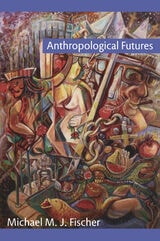
Anthropological Futures
Michael M. J. Fischer
Duke University Press, 2009
Fischer is particularly concerned with cultural anthropology’s interactions with science studies, and throughout the book he investigates how emerging knowledge formations in molecular biology, environmental studies, computer science, and bioengineering are transforming some of anthropology’s key concepts including nature, culture, personhood, and the body. In an essay on culture, he uses the science studies paradigm of “experimental systems” to consider how the social scientific notion of culture has evolved as an analytical tool since the nineteenth century. Charting anthropology’s role in understanding and analyzing the production of knowledge within the sciences since the 1990s, he highlights anthropology’s aptitude for tracing the transnational collaborations and multi-sited networks that constitute contemporary scientific practice. Fischer investigates changing ideas about cultural inscription on the human body in a world where genetic engineering, robotics, and cybernetics are constantly redefining our understanding of biology. In the final essay, Fischer turns to Kant’s philosophical anthropology to reassess the object of study for contemporary anthropology and to reassert the field’s primacy for answering the largest questions about human beings, societies, culture, and our interactions with the world around us. In Anthropological Futures, Fischer continues to advance what Clifford Geertz, in reviewing Fischer’s earlier book Emergent Forms of Life and the Anthropological Voice, called “a broad new agenda for cultural description and political critique.”
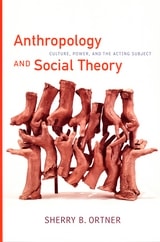
Anthropology and Social Theory
Culture, Power, and the Acting SubjectSherry B. Ortner
Duke University Press, 2006
Some of the essays reflect explicitly on theoretical concerns: the relationship between agency and power, the problematic quality of ethnographic studies of resistance, and the possibility of producing an anthropology of subjectivity. Others are ethnographic studies that apply Ortner’s theoretical framework. In these, she investigates aspects of social class, looking at the relationship between race and middle-class identity in the United States, the often invisible nature of class as a cultural identity and as an analytical category in social inquiry, and the role that public culture and media play in the creation of the class anxieties of Generation X. Written with Ortner’s characteristic lucidity, these essays constitute a major statement about the future of social theory from one of the leading anthropologists of our time.
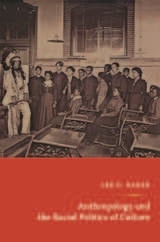
Anthropology and the Racial Politics of Culture
Lee D. Baker
Duke University Press, 2010
Baker argues that the concept of culture developed by ethnologists to understand American Indian languages and customs in the nineteenth century formed the basis of the anthropological concept of race eventually used to confront “the Negro problem” in the twentieth century. As he explores the implications of anthropology’s different approaches to African Americans and Native Americans, and the field’s different but overlapping theories of race and culture, Baker delves into the careers of prominent anthropologists and ethnologists, including James Mooney Jr., Frederic W. Putnam, Daniel G. Brinton, and Franz Boas. His analysis takes into account not only scientific societies, journals, museums, and universities, but also the development of sociology in the United States, African American and Native American activists and intellectuals, philanthropy, the media, and government entities from the Bureau of Indian Affairs to the Supreme Court. In Anthropology and the Racial Politics of Culture, Baker tells how anthropology has both responded to and helped shape ideas about race and culture in the United States, and how its ideas have been appropriated (and misappropriated) to wildly different ends.

Anthropology in the Meantime
Experimental Ethnography, Theory, and Method for the Twenty-First CenturyMichael M. J. Fischer
Duke University Press, 2018
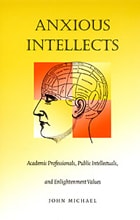
Anxious Intellects
Academic Professionals, Public Intellectuals, and Enlightenment ValuesJohn Michael
Duke University Press, 2000
As part of his investigation of intellectuals’ self-conceptions and their roles in society, Michael concentrates on several well-known contemporary African American intellectuals, including Henry Louis Gates Jr. and Cornel West. To illuminate public debates over pedagogy and the role of university, he turns to the work of Todd Gitlin, Michael Bérubé, and Allan Bloom. Stanley Fish’s pragmatic tome, Doing What Comes Naturally, along with a juxtaposition of Fredric Jameson and Samuel Huntington’s work, proves fertile ground for Michael’s argument that democratic politics without intellectuals is not possible. In the second half of Anxious Intellects, Michael relies on three popular conceptions of the intellectual—as critic, scientist, and professional—to discuss the work of scholars Constance Penley, Henry Jenkins, the celebrated physicist Stephen Hawking, and others, insisting that ambivalence, anxiety, projection, identification, hybridity, and various forms of psychosocial complexity constitute the real meaning of Enlightenment intellectuality. As a new and refreshing contribution to the recently emergent culture and science wars, Michael’s take on contemporary intellectuals and their place in society will enliven and redirect these ongoing debates.
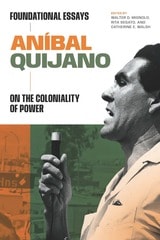
Aníbal Quijano
Foundational Essays on the Coloniality of PowerAnibal Quijano. Edited by Walter D. Mignolo, Rita Segato, and Catherine E. Walsh
Duke University Press, 2024

Appalachian Reckoning
A Region Responds to Hillbilly ElegyAnthony Harkins
West Virginia University Press, 2019
2020 American Book Award winner, Walter & Lillian Lowenfels Criticism Award
2019 Weatherford Award winner, nonfiction
With hundreds of thousands of copies sold, a Ron Howard movie in the works, and the rise of its author as a media personality, J. D. Vance’s Hillbilly Elegy: A Memoir of a Family and Culture in Crisis has defined Appalachia for much of the nation. What about Hillbilly Elegy accounts for this explosion of interest during this period of political turmoil? Why have its ideas raised so much controversy? And how can debates about the book catalyze new, more inclusive political agendas for the region’s future?
Appalachian Reckoning is a retort, at turns rigorous, critical, angry, and hopeful, to the long shadow Hillbilly Elegy has cast over the region and its imagining. But it also moves beyond Hillbilly Elegy to allow Appalachians from varied backgrounds to tell their own diverse and complex stories through an imaginative blend of scholarship, prose, poetry, and photography. The essays and creative work collected in Appalachian Reckoning provide a deeply personal portrait of a place that is at once culturally rich and economically distressed, unique and typically American. Complicating simplistic visions that associate the region almost exclusively with death and decay, Appalachian Reckoning makes clear Appalachia’s intellectual vitality, spiritual richness, and progressive possibilities.
Approaches to Social Theory
Stewart Lindenberg
Russell Sage Foundation, 1986
Appropriately Indian
Gender and Culture in a New Transnational ClassSmitha Radhakrishnan
Duke University Press, 2011
Radhakrishnan explains how this transnational class creates an Indian culture that is self-consciously distinct from Western culture, yet compatible with Western cosmopolitan lifestyles. She describes the material and symbolic privileges that accrue to India’s high-tech workers, who often claim ordinary middle-class backgrounds, but are overwhelmingly urban and upper caste. They are also distinctly apolitical and individualistic. Members of this elite class practice a decontextualized version of Hinduism, and they absorb the ideas and values that circulate through both Indian and non-Indian multinational corporations. Ultimately, though, global Indianness is rooted and configured in the gendered sphere of home and family.
Arabian Oasis City
The Transformation of 'UnayzahBy Soraya Altorki and Donald P. Cole
University of Texas Press, 1989
Vast social change has occurred in the Middle East since the oil boom of the mid-1970s. As the first anthropological study of an urban community in Saudi Arabia since that oil boom, Arabian Oasis City is also the first to document those changes.
Based on extensive interviews and participant observation with both men and women, the authors record and analyze the transformation that has occurred in this ancient oasis city throughout the twentieth century: the creation of the present Saudi Arabian state and of a new national economy based on the export of oil and the economic boom brought about by the dramatic increases in the price of oil following the October 1973 Arab-Israeli War. In addition, the authors reveal the changes brought about by the fall in the price of oil beginning in 1982 and analyze the problems confronting ‘Unayzah in its aftermath.
By demonstrating that the area was not exclusively dominated by tribalism and Bedouin nomads, this empirical case study destroys stereotypical views about Saudi Arabia. Indeed, it proves the existence—prior to the coming of the modern Saudi Arabian state— of surplus agricultural and craft production and the full development of local, regional, and long-distance trade networks. It shows that women, although veiled, played active roles in work outside the household. The social impact of change over the years is, however, profound—especially the gradual replacement of the extended family by the nuclear family, changing patterns of husband-wife relationships, the impact of self-earned income on the status of women, and the emergence of a new middle class of employees and entrepreneurs. Because of the high degree of gender segregation in this area of research, Altorki and Cole give us a fortunate collaboration between a Saudi Arabian female scholar and an American male scholar experienced in research in the Middle East.

Archaeology of Southern Urban Landscapes
Amy L Young
University of Alabama Press, 2000
Groundbreaking essays in urban archaeology highlight the impact of towns and cities on the southern landscape.
The rapid growth and development of urban areas in the South have resulted in an increase in the number of urban archaeology projects required by federal and state agencies. These projects provide opportunities not only to investigate marginal areas between the town and countryside but also to recover information long buried beneath the earliest urban structures. Such projects have also created a need for a one-volume update on archaeology as it is practiced in the urban areas of the southeastern United States.
Archaeology of Southern Urban Landscapes will assist practitioners and scholars in the burgeoning fields of urban and landscape archaeology by treating the South as a distinctive social, geographic, and material entity and by focusing on the urban South rather than the stereotypical South of rural plantations. The case studies in this volume span the entire southeastern United States, from Annapolis to New Orleans and from colonial times to the 19th century. The authors address questions involving the function of cities, interregional diversity, the evolution of the urban landscape, and the impact of the urban landscape on southern culture. By identifying the relationship between southern culture and the South's urban landscapes, this book will help us understand the built landscape of the past and predict future growth in the region.
Architecture for the Poor
An Experiment in Rural EgyptHassan Fathy
University of Chicago Press, 1976