Results by title
8642 books match the query '20th Century' and 836 start with a
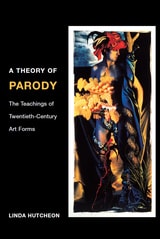
A Theory of Parody
The Teachings of Twentieth-Century Art FormsLinda Hutcheon
University of Illinois Press, 1985
Hutcheon identifies parody as one of the major forms of modern self-reflexivity, one that marks the intersection of invention and critique and offers an important mode of coming to terms with the texts and discourses of the past. Looking at works as diverse as Tom Stoppard's Rosenkrantz and Guildenstern Are Dead, Brian de Palma's Dressed to Kill, Woody Allen's Zelig, Karlheinz Stockhausen's Hymnen, James Joyce's Ulysses, and Magritte's This Is Not a Pipe, Hutcheon discusses the remarkable range of intent in modern parody while distinguishing it from pastiche, burlesque, travesty, and satire. She shows how parody, through ironic playing with multiple conventions, combines creative expression with critical commentary. Its productive-creative approach to tradition results in a modern recoding that establishes difference at the heart of similarity.
In a new introduction, Hutcheon discusses why parody continues to fascinate her and why it is commonly viewed as suspect-–for being either too ideologically shifty or too much of a threat to the ownership of intellectual and creative property.
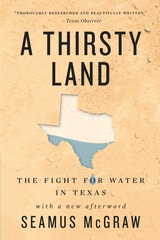
A Thirsty Land
The Fight for Water in TexasBy Seamus McGraw
University of Texas Press, 2018
As a changing climate threatens the whole country with deeper droughts and more furious floods that put ever more people and property at risk, Texas has become a bellwether state for water debates. Will there be enough water for everyone? Is there the will to take the steps necessary to defend ourselves against the sea? Is it in the nature of Americans to adapt to nature in flux?
The most comprehensive—and comprehensible—book on contemporary water issues, A Thirsty Land delves deep into the challenges faced not just by Texas but by the nation as a whole, as we struggle to find a way to balance the changing forces of nature with our own ever-expanding needs. Part history, part science, part adventure story, and part travelogue, this book puts a human face on the struggle to master that most precious and capricious of resources, water. Seamus McGraw goes to the taproots, talking to farmers, ranchers, businesspeople, and citizen activists, as well as to politicians and government employees. Their stories provide chilling evidence that Texas—and indeed the nation—is not ready for the next devastating drought, the next catastrophic flood. Ultimately, however, A Thirsty Land delivers hope. This deep dive into one of the most vexing challenges facing Texas and the nation offers glimpses of the way forward in the untapped opportunities that water also presents.
A Thousand and One Afternoons in Chicago
Ben Hecht
University of Chicago Press, 1992
“The hardboiled audacity and wit that became Hecht’s signature as Hollywood’s most celebrated screen-writer are conspicuous in these vignettes. Most of them are comic and sardonic, some strike muted tragic or somber atmospheric notes. . . . The best are timeless character sketches that have taken on an added interest as shards of social history.”—L. S. Klepp, Voice Literary Supplement
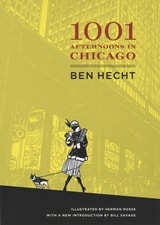
A Thousand and One Afternoons in Chicago
Ben Hecht
University of Chicago Press, 2009
“The hardboiled audacity and wit that became Hecht’s signature as Hollywood’s most celebrated screen-writer are conspicuous in these vignettes. Most of them are comic and sardonic, some strike muted tragic or somber atmospheric notes. . . . The best are timeless character sketches that have taken on an added interest as shards of social history.”—L. S. Klepp, Voice Literary Supplement
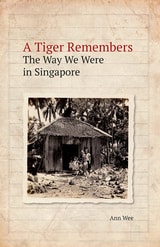
A Tiger Remembers
The Way We Were in SingaporeAnn Wee
National University of Singapore Press, 2017
Wee’s talent is for remembering and paying homage to the things history books often deem insignificant—things that can contain some of the most illuminating details about the day to day inner workings of families from many backgrounds, such as terms of endearment; the emotional nuance in social relations; questions of hygiene; the stories of convicts; tales of ghost wives and changeling babies; anecdotes from rural clan settlements and migrant dormitories; and the migration of families from squatter settlements into public housing. Affectionately observed and wittily narrated, with a deep appreciation of how far Singapore has come, this book brings to life generations of social change through a focus on the institution of the family.
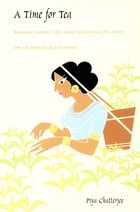
A Time for Tea
Women, Labor, and Post/Colonial Politics on an Indian PlantationPiya Chatterjee
Duke University Press, 2001
Allowing personal, scholarly, and artistic voices to speak in turn and in tandem, Chatterjee discusses the fetishization of women who labor under colonial, postcolonial, and now neofeudal conditions. In telling the overarching story of commodity and empire, A Time for Tea demonstrates that at the heart of these narratives of travel, conquest, and settlement are compelling stories of women workers. While exploring the global and political dimensions of local practices of gendered labor, Chatterjee also reflects on the privileges and paradoxes of her own “decolonization” as a Third World feminist anthropologist. The book concludes with an extended reflection on the cultures of hierarchy, power, and difference in the plantation’s villages. It explores the overlapping processes by which gender, caste, and ethnicity constitute the interlocked patronage system of villages and their fields of labor. The tropes of coercion, consent, and resistance are threaded through the discussion.
A Time for Tea will appeal to anthropologists and historians, South Asianists, and those interested in colonialism, postcolonialism, labor studies, and comparative or international feminism.
Designated a John Hope Franklin Center book by the John Hope Franklin Seminar Group on Race, Religion, and Globalization.

A Time of Youth
San Francisco, 1966–1967William Gedney
Duke University Press, 2021
A Time to Speak
The Story of a Young American Lawyer's Struggle for His City—and HimselfCharles Morgan Jr., With a New Foreword by Senator Doug Jones
University of Alabama Press, 2022
Brings back into print a classic account of courage and calamity in the long march toward racial justice in the South, and the nation
On September 15, 1963, a bomb exploded at the Sixteenth Street Baptist Church in Birmingham, Alabama, killing four young Black girls. The very next day, a prominent white lawyer named Charles Morgan Jr. was scheduled to speak at a luncheon held by the Young Men’s Business Club of Birmingham. A well-regarded figure in the city’s legal and business establishment, Morgan had been mentioned frequently as a candidate for political office. To the shock of his longtime friends and associates, Morgan deviated from his planned remarks, instead using his platform to place the blame for the murder of the four young girls squarely on the shoulders of the city’s white middle-class establishment, those seated before him.
As much as his stand was admired nationally, in Birmingham the results were destructive for him personally. Threats against his life and the lives of his family poured in daily by phone and mail, his political career was finished, and he was faced with financial ruin. Within weeks, he moved his family out of the state, and thenceforward committed himself to legal action in the name of racial justice. In 1964, he established the regional office of the ACLU in Atlanta. In the 1964 Supreme Court case Reynolds v. Sims, Morgan successfully argued that districts in state legislatures needed to be of nearly equal size, establishing the principle of “one man, one vote” to effectively end the use of gerrymandering.
A Time to Speak was originally published in 1964, a mere year after Morgan and his family fled Birmingham. The memoir recounts not only his speech, but his entire upbringing and the political, cultural, and social milieus in which he was raised and which gave rise to the cowardice, institutional silence, fear, and hate that those conditions nursed. This new edition features a foreword from US Senator Doug Jones.
A Tough Little Patch of History
Gone with the Wind and the Politics of MemoryJennifer W. Dickey
University of Arkansas Press, 2014
More than seventy-five years after its publication, Gone with the Wind remains thoroughly embedded in American culture. Margaret Mitchell’s novel and the film produced by David O. Selznick have melded with the broader forces of southern history, southern mythology, and marketing to become, and remain, a cultural phenomenon.
A Tough Little Patch of History (the phrase was coined by a journalist in 1996 to describe the Margaret Mitchell home after it was spared from destruction by fire) explores how Gone with the Wind has remained an important component of public memory in Atlanta through an analysis of museums and historic sites that focus on this famous work of fiction. Jennifer W. Dickey explores how the book and film threw a spotlight on Atlanta, which found itself simultaneously presented as an emblem of both the Old South and the New South. Exhibitions produced by the Atlanta History Center related to Gone with the Wind are explored, along with nearby Clayton County’s claim to fame as “the Home of Gone with the Wind,” a moniker bestowed on the county by Margaret Mitchell’s estate in 1969. There’s a recounting of the saga of “the Dump,” the tiny apartment in midtown Atlanta where Margaret Mitchell wrote the book, and how this place became a symbol for all that was right and all that was wrong with Mitchell’s writing.

A Transforming Faith
Explorations of Twentieth-Century American EvangelicalismDavid Harrington Watt
Rutgers University Press, 1991
Over the course of the twentieth century, evangelicals have in a variety of ways adjusted their world view to accommodate the changes in modern life. At the same time, there are important continuities between the ideas and attitudes of evangelicals in the 1920s and those of the late 1970s. Little attention has actually been paid to changes in this important social and political group since the Scopes trial and the election of 1976, when evangelical concerns played a major role in national politics. David Watt, in this readable and persuasive book, examines what happened in that fifty-year period. This book is an intellectual history of the evangelical movement in the period of its rise to prominence and power.
What Watt finds is that changes were more striking than continuities. Many of these changes manifested themselves in shifts of focus--from an emphasis on the second coming of Christ to the family, from privatization to politicization of religious concerns, from an antipathy to therapeutic practices to an acceptance of many of the assumptions of modern psychology. Watt believes that evangelicalism, as every other "ism," is subject to the influence of conflicting ideologies.
The book explores ideas and attitudes, not practice. It is based on the popular literature produced by evangelicals. In many ways it does not develop and prove a thesis; rather, it puts what we think we know about the experience of evangelicalism in this country into the context of the lives of evangelicals themselves.
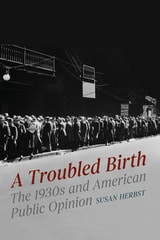
A Troubled Birth
The 1930s and American Public OpinionSusan Herbst
University of Chicago Press, 2021
Herbst contends that the idea that there was a public—whose opinions mattered—emerged during the Great Depression, with the diffusion of radio, the devastating impact of the economic collapse on so many people, the appearance of professional pollsters, and Franklin Roosevelt’s powerful rhetoric. She argues that public opinion about issues can only be seen as a messy mixture of culture, politics, and economics—in short, all the things that influence how people live. Herbst deftly pins down contours of public opinion in new ways and explores what endures and what doesn’t in the extraordinarily troubled, polarized, and hyper-mediated present. Before we can ask the most important questions about public opinion in American democracy today, we must reckon yet again with the politics and culture of the 1930s.
A Troubled Dream
The Promise and Failure of School Desegregation in LouisianaCarl L. Bankston
Vanderbilt University Press, 2002
Winner, Louisiana Literary Award 2003
Fifty years after Brown v. Board of Education, the United States still has a long way to go to attain true integration of our educational system.
Using extensive interviews and a wealth of statistical information, Bankston and Caldas examine the failed desegregation efforts in Louisiana as a case study to show how desegregation has followed the same unsuccessful pattern across the United States. Strong supporters of the dream of integration, Bankston and Caldas show that the practical difficulty with desegregation is that academic environments are created by all the students in a school from the backgrounds that all the students bring with them. Unfortunately, the disadvantages that minority children have to overcome affect schools more than schools can help remedy these disadvantages.
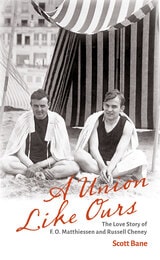
A Union Like Ours
The Love Story of F. O. Matthiessen and Russell CheneyScott Bane
University of Massachusetts Press, 2022
After a chance meeting aboard the ocean liner Paris in 1924, Harvard University scholar and activist F. O. Matthiessen and artist Russell Cheney fell in love and remained inseparable until Cheney’s death in 1945. During the intervening years, the men traveled throughout Europe and the United States, achieving great professional success while contending with serious personal challenges, including addiction, chronic disease, and severe depression.
During a hospital stay, years into their relationship, Matthiessen confessed to Cheney that “never once has the freshness of your life lost any trace of its magic for me. Every day is a new discovery of your wealth.” Situating the couple’s private correspondence alongside other sources, Scott Bane tells the remarkable story of their relationship in the context of shifting social dynamics in the United States. From the vantage point of the present day, with marriage equality enacted into law, Bane provides a window into the realities faced by same-sex couples in the early twentieth century, as they maintained relationships in the face of overt discrimination and the absence of legal protections.
A Union for Appalachian Healthcare Workers
The Radical Roots and Hard Fights of Local 1199John Hennen
West Virginia University Press, 2021
The union of hospital workers usually referred to as the 1199 sits at the intersection of three of the most important topics in US history: organized labor, health care, and civil rights. John Hennen’s book explores the union’s history in Appalachia, a region that is generally associated with extractive industries but has seen health care grow as a share of the overall economy.
With a multiracial, largely female, and notably militant membership, 1199 was at labor’s vanguard in the 1970s, and Hennen traces its efforts in hospitals, nursing homes, and healthcare centers in West Virginia, eastern Kentucky, and Appalachian Ohio. He places these stories of mainly low-wage women workers within the framework of shake-ups in the late industrial and early postindustrial United States, relying in part on the words of Local 1199 workers and organizers themselves. Both a sophisticated account of an overlooked aspect of Appalachia’s labor history and a key piece of context for Americans’ current concern with the status of “essential workers,” Hennen’s book is a timely contribution to the fields of history and Appalachian studies and to the study of social movements.
A Village with My Name
A Family History of China's Opening to the WorldScott Tong
University of Chicago Press, 2017
A Village with My Name offers a unique perspective on the transitions in China through the eyes of regular people who have witnessed such epochal events as the toppling of the Qing monarchy, Japan’s occupation during World War II, exile of political prisoners to forced labor camps, mass death and famine during the Great Leap Forward, market reforms under Deng Xiaoping, and the dawn of the One Child Policy. Tong’s story focuses on five members of his family, who each offer a specific window on a changing country: a rare American-educated girl born in the closing days of the Qing Dynasty, a pioneer exchange student, an abandoned toddler from World War II who later rides the wave of China’s global export boom, a young professional climbing the ladder at a multinational company, and an orphan (the author’s daughter) adopted in the middle of a baby-selling scandal fueled by foreign money. Through their stories, Tong shows us China anew, visiting former prison labor camps on the Tibetan plateau and rural outposts along the Yangtze, exploring the Shanghai of the 1930s, and touring factories across the mainland.
With curiosity and sensitivity, Tong explores the moments that have shaped China and its people, offering a compelling and deeply personal take on how China became what it is today.
A Violent Peace
Media, Truth, and Power at the League of NationsCarolyn N. Biltoft
University of Chicago Press, 2021
An exploration of instability in information systems, the allure of fascism, and the contradictions at the heart of a global modernity, A Violent Peace paints a rich portrait of the emergence of the age of information—and all its attendant problems.

A Visitable Past
Views of Venice by American Artists, 1860-1915Margaretta M. Lovell
University of Chicago Press, 1988
A Vocabulary of Thinking
Gertrude Stein and Contemporary North American Women's Innnovative WritingDeborah M. Mix
University of Iowa Press, 2007
Arguing that these authors have received relatively little attention because of the difficulty in categorizing them, Mix brings the writing of women of color, lesbians, and collaborative writers into the discussion of experimental writing. Thus, rather than exploring conventional lines of influence, she departs from earlier scholarship by using Stein and her work as a lens through which to read the ways these authors have renegotiated tradition, authority, and innovation.
Building on the tradition of experimental or avant-garde writing in the United States, Mix questions the politics of the canon and literary influence, offers close readings of previously neglected contemporary writers whose work doesn't fit within conventional categories, and by linking genres not typically associated with experimentalism-lyric, epic, and autobiography-challenges ongoing reevaluations of innovative writing.
A Voice in Their Own Destiny
Reagan, Thatcher, and Public Diplomacy in the Nuclear 1980sAnthony M. Eames
University of Massachusetts Press, 2023
On June 8, 1982, Ronald Reagan delivered a historic address to the British Parliament, promising that the United States would give people around the world “a voice in their own destiny” in the struggle against Soviet totalitarianism. While British Prime Minister Margaret Thatcher celebrated Reagan’s visit and thanked him for putting “freedom on the offensive,” over 100,000 Britons marched from Hyde Park to Trafalgar Square to protest his arrival and call for nuclear disarmament. Reagan’s homecoming was equally eventful, with 1,000,000 protesters marking his return with a rally for nuclear disarmament in Central Park—the largest protest in American history up to that point.
Employing a wide range of previously unexamined primary sources, Anthony M. Eames demonstrates how the Reagan and Thatcher administrations used innovations in public diplomacy to build back support for their foreign policy agendas at a moment of widespread popular dissent. A Voice in Their Own Destiny traces how competition between the governments of Reagan and Thatcher, the Anglo-American antinuclear movement, and the Soviet peace offensive sparked a revolution in public diplomacy.
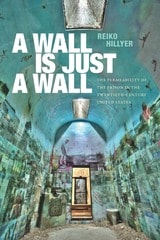
A Wall Is Just a Wall
The Permeability of the Prison in the Twentieth-Century United StatesReiko Hillyer
Duke University Press, 2024
A War for the Soul of America, Second Edition
A History of the Culture WarsAndrew Hartman
University of Chicago Press, 2019
“As a guide to the late twentieth-century culture wars, Hartman is unrivalled. . . . Incisive portraits of individual players in the culture wars dramas. . . . Reading Hartman sometimes feels like debriefing with friends after a raucous night out, an experience punctuated by laughter, head-scratching, and moments of regret for the excesses involved.”—New Republic
A War for the Soul of America
A History of the Culture WarsAndrew Hartman
University of Chicago Press, 2015
Buchanan’s fiery speech marked a high point in the culture wars, but as Andrew Hartman shows in this richly analytical history, their roots lay farther back, in the tumult of the 1960s—and their significance is much greater than generally assumed. Far more than a mere sideshow or shouting match, the culture wars, Hartman argues, were the very public face of America’s struggle over the unprecedented social changes of the period, as the cluster of social norms that had long governed American life began to give way to a new openness to different ideas, identities, and articulations of what it meant to be an American. The hot-button issues like abortion, affirmative action, art, censorship, feminism, and homosexuality that dominated politics in the period were symptoms of the larger struggle, as conservative Americans slowly began to acknowledge—if initially through rejection—many fundamental transformations of American life.
As an ever-more partisan but also an ever-more diverse and accepting America continues to find its way in a changing world, A War for the Soul of America reminds us of how we got here, and what all the shouting has really been about.
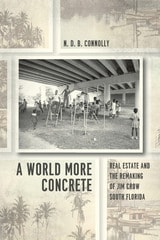
A World More Concrete
Real Estate and the Remaking of Jim Crow South FloridaN. D. B. Connolly
University of Chicago Press, 2014
A World More Concrete argues that black and white landlords, entrepreneurs, and even liberal community leaders used tenements and repeated land dispossession to take advantage of the poor and generate remarkable wealth. Through a political culture built on real estate, South Florida’s landlords and homeowners advanced property rights and white property rights, especially, at the expense of more inclusive visions of equality. For black people and many of their white allies, uses of eminent domain helped to harden class and color lines. Yet, for many reformers, confiscating certain kinds of real estate through eminent domain also promised to help improve housing conditions, to undermine the neighborhood influence of powerful slumlords, and to open new opportunities for suburban life for black Floridians.
Concerned more with winners and losers than with heroes and villains, A World More Concrete offers a sober assessment of money and power in Jim Crow America. It shows how negotiations between powerful real estate interests on both sides of the color line gave racial segregation a remarkable capacity to evolve, revealing property owners’ power to reshape American cities in ways that can still be seen and felt today.

A World in Flames
A Concise Military History of World War IIMartha Byrd
University of Alabama Press, 2008
An essential, accessible guide to the greatest conflict in human history.
A World in Flames by Martha Byrd offers a clear, compelling, and comprehensive chronicle of World War II, guiding readers through the defining battles, strategies, and turning points that reshaped the modern world. Emphasizing the military history of the conflict, Byrd structures the narrative as a battle‑by‑battle survey, covering major campaigns including Stalingrad, Omaha Beach, and the Battle of the Atlantic, each presented with clarity and precision.
Beginning with the prelude to war and the rising tensions across Europe and Asia, the book traces Germany’s swift subjugation of Holland, Belgium, and France before shifting to Britain’s determined resistance. As the conflict expands, Byrd explores Japan’s entry into the war, the rapid advances across the Pacific, and the United States’ pivotal role in reversing Axis momentum.
Byrd’s accessible style makes complex military operations understandable without sacrificing depth, offering readers both a broad overview and meaningful detail. Maps, campaign analyses, and vivid summaries of naval, air, and ground operations provide context for the global scale of the conflict. From the brutal Eastern Front to the island‑hopping campaigns of the Pacific, the book highlights the strategic decisions and human costs that defined the war’s progression.
Concluding with the collapse of Axis power and the war’s final climactic battles in Europe and the Pacific, A World in Flames stands as an excellent introduction for readers seeking a concise but thorough account of World War II—one praised for its balance of readability, accuracy, and narrative drive.
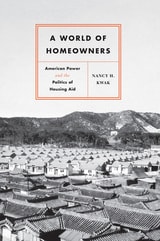
A World of Homeowners
American Power and the Politics of Housing AidNancy H. Kwak
University of Chicago Press, 2015
A World of Homeowners charts the emergence of democratic homeownership in the postwar landscape and booming economy; its evolution as a tool of foreign policy and a vehicle for international investment in the 1950s, ’60s, and ’70s; and the growth of lower-income homeownership programs in the United States from the 1960s to today. Kwak unravels all these threads, detailing the complex stories and policy struggles that emerged from a particularly American vision for global democracy and capitalism. Ultimately, she argues, the question of who should own homes where—and how—is intertwined with the most difficult questions about economy, government, and society.
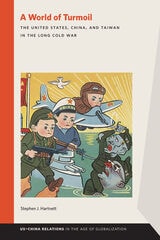
A World of Turmoil
The United States, China, and Taiwan in the Long Cold Warstephen hartnett
Michigan State University Press, 2021

A Year In Place
W Scott Olsen
University of Utah Press, 2001
W. Scott Olsen and Bret Lott invited a dozen friends to consider one particular calendar month in the place they call home. The result is A Year in Place, a captivating collection of new writing by twelve eminent American writers.
More than a montage of voices and experiences, A Year in Place illustrates, as Olsen and Lott explain in their introduction, the trends in American thinking about who we are and what we care about. Rick Bass takes us to the Yaak Valley of Montana in June, where fawns are arriving, "newly-emerged, knocked-legged and groggy, legs still unfolding from that long sleeping passage." Peggy Shumaker explores the special social and cultural time that is March in Fairbanks, Alaska, where a long winter has whetted the psychic despair of inhabitants who find in the "sky’s unbearable brightness . . . a waking pain beyond endurance." Michael Martone transports us through memory to Indiana in the 1950s where each May a blimp "yawed and floated up," wallowing above a suburban neighborhood on its way to the Indianapolis 500.
These and nine other contributions yield an unforgettable book about "the places we find ourselves blessed enough to be."
A Year at the Supreme Court
Neal Devins and Davison M. Douglas, eds.
Duke University Press, 2004
Some essays consider the role of “swing” Justices Sandra Day O’Connor and Anthony Kennedy within a Court that divides 5–4 more than any other group of Justices in the nation’s history. Others examine the political reaction to and legal context of the Court’s Lawrence v. Texas decision declaring a Texas law criminalizing homosexual sodomy unconstitutional. Contributors analyze the Court’s rulings on affirmative action and reassess its commitment to states’ rights. Considering the Court’s practices, one advocate explores the use and utility of amicus curiae, or “friend of the court” briefs, while another reflects on indications of an increased openness by the Court to public scrutiny. Two advocates who argued cases before the Court—one related to hate speech and the other to a “three strikes and you’re out” criminal statute—offer vivid accounts of their experiences. Intended for general readers, A Year at the Supreme Court is for all those who want to understand the Rehnquist Court and its momentous 2002–03 term.
Contributors
Erwin Chemerinsky
Neal Devins
Davison M. Douglas
David J. Garrow
Dahlia Lithwick
Tony Mauro
Carter Phillips
Ramesh Ponnuru
Jeffrey Rosen
David G. Savage
Rodney A. Smolla
Stuart Taylor Jr.

A Young Palestinian's Diary, 1941–1945
The Life of Sami 'AmrTranslated, annotated, and with an introduction by Kimberly Katz
University of Texas Press, 2009
Writing in his late teens and early twenties, Sāmī ‘Amr gave his diary an apt subtitle: The Battle of Life, encapsulating both the political climate of Palestine in the waning years of the British Mandate as well as the contrasting joys and troubles of family life. Now translated from the Arabic, Sāmī's diary represents a rare artifact of turbulent change in the Middle East.
Written over four years, these ruminations of a young man from Hebron brim with revelations about daily life against a backdrop of tremendous transition. Describing the public and the private, the modern and the traditional, Sāmī muses on relationships, his station in life, and other universal experiences while sharing numerous details about a pivotal moment in Palestine's modern history. Making these never-before-published reflections available in translation, Kimberly Katz also provides illuminating context for Sāmī's words, laying out biographical details of Sāmī, who kept his diary private for close to sixty years. One of a limited number of Palestinian diaries available to English-language readers, the diary of Sāmī ‘Amr bridges significant chasms in our understanding of Middle Eastern, and particularly Palestinian, history.
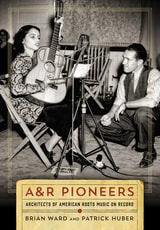
A&R Pioneers
Architects of American Roots Music on RecordBrian Ward
Vanderbilt University Press, 2018
A&R Pioneers offers the first comprehensive account of the diverse group of men and women who pioneered artists-and-repertoire (A&R) work in the early US recording industry. In the process, they helped create much of what we now think of as American roots music. Resourceful, innovative, and, at times, shockingly unscrupulous, they scouted and signed many of the singers and musicians who came to define American roots music between the two world wars. They also shaped the repertoires and musical styles of their discoveries, supervised recording sessions, and then devised marketing campaigns to sell the resulting records. By World War II, they had helped redefine the canons of American popular music and established the basic structure and practices of the modern recording industry. Moreover, though their musical interests, talents, and sensibilities varied enormously, these A&R pioneers created the template for the job that would subsequently become known as "record producer."
Without Ralph Peer, Art Satherley, Frank Walker, Polk C. Brockman, Eli Oberstein, Don Law, Lester Melrose, J. Mayo Williams, John Hammond, Helen Oakley Dance, and a whole army of lesser known but often hugely influential A&R representatives, the music of Bessie Smith and Bob Wills, of the Carter Family and Count Basie, of Robert Johnson and Jimmie Rodgers may never have found its way onto commercial records and into the heart of America's musical heritage. This is their story.
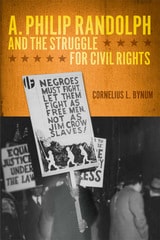
A. Philip Randolph and the Struggle for Civil Rights
Cornelius L. Bynum
University of Illinois Press, 2010
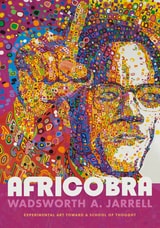
AFRICOBRA
Experimental Art toward a School of ThoughtWadsworth A. Jarrell
Duke University Press, 2020
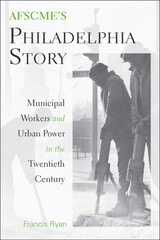
AFSCME's Philadelphia Story
Municipal Workers and Urban Power in the Twentieth CenturyFrancis Ryan
Temple University Press, 2011
AFSCME's Philadelphia Story provides the most comprehensive account of the early years of the American Federation of State, County and Municipal Employees, which is one of the nation’s largest and most politically powerful unions in the AFL-CIO. Author Francis Ryan details the emergence of the Quaker City's interracial union, charting its beginnings in the political patronage system of one of the nation's most notorious political machines to the first decade of the twenty-first century. Ryan provides new insight into the working class origins of African American political power in the late twentieth century as well as a thorough overview of the role the municipal state played in the urban economy of one of the nation's largest cities.
Ryan describes the work processes and how they changed, and uses workers' testimonies to ground the detailed accounts of issues and negotiations. Beginning in the 1920s and ending in the 2000s, Ryan's study offers a long-term analysis of the growth of a single union in a major American city.
ANY FRIEND OF THE MOVEMENT
NETWORKING FOR BIRTH CONTROL 1920-1940JIMMY ELAINE WILKINS MEYER
The Ohio State University Press, 2004

ASML and Dutch Physics
A History of the Advanced Research Center for Nanolithography (ARCNL), 2014-2024Hein Brookhuis
Amsterdam University Press, 2025
ASML and Dutch Physics draws on archival research and interviews to offer insight into how science and industry interact, the motivations that drive such partnerships, and how scientific and technological perspectives are balanced. It reveals how the political and societal context of the twenty-first century imposes new demands on contemporary scientists.
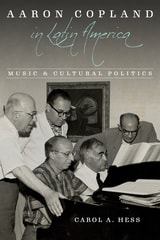
Aaron Copland in Latin America
Music and Cultural PoliticsCarol A. Hess
University of Illinois Press, 2023
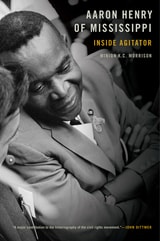
Aaron Henry of Mississippi
Inside AgitatorMinion K. C. Morrison
University of Arkansas Press, 2015
When Aaron Henry returned home to Mississippi from World War II service in 1946, he was part of wave of black servicemen who challenged the racial status quo. He became a pharmacist through the GI Bill, and as a prominent citizen, he organized a hometown chapter of the NAACP and relatively quickly became leader of the state chapter.
From that launching pad he joined and helped lead an ensemble of activists who fundamentally challenged the system of segregation and the almost total exclusion of African Americans from the political structure. These efforts were most clearly evident in his leadership of the integrated Mississippi Freedom Democratic Party delegation, which, after an unsuccessful effort to unseat the lily-white Democratic delegation at the Democratic National Convention in 1964, won recognition from the national party in 1968.
The man who the New York Times described as being “at the forefront of every significant boycott, sit-in, protest march, rally, voter registration drive and court case” eventually became a rare example of a social-movement leader who successfully moved into political office. Aaron Henry of Mississippi covers the life of this remarkable leader, from his humble beginnings in a sharecropping family to his election to the Mississippi house of representatives in 1979, all the while maintaining the social-change ideology that prompted him to improve his native state, and thereby the nation.
Abandoning the Black Hero
Sympathy and Privacy in the Postwar African American White-Life NovelCharles, John C
Rutgers University Press, 2012
Abandoning the Black Hero is the first book to examine the postwar African American white-life novel—novels with white protagonists written by African Americans. These fascinating works have been understudied despite having been written by such defining figures in the tradition as Richard Wright, Zora Neale Hurston, James Baldwin, Ann Petry, and Chester Himes, as well as lesser known but formerly best-selling authors Willard Motley and Frank Yerby.
John C. Charles argues that these fictions have been overlooked because they deviate from two critical suppositions: that black literature is always about black life and that when it represents whiteness, it must attack white supremacy. The authors are, however, quite sympathetic in the treatment of their white protagonists, which Charles contends should be read not as a failure of racial pride but instead as a strategy for claiming creative freedom, expansive moral authority, and critical agency.
In an era when “Negro writers” were expected to protest, their sympathetic treatment of white suffering grants these authors a degree of racial privacy previously unavailable to them. White writers, after all, have the privilege of racial privacy because they are never pressured to write only about white life. Charles reveals that the freedom to abandon the “Negro problem” encouraged these authors to explore a range of new genres and themes, generating a strikingly diverse body of novels that significantly revise our understanding of mid-twentieth-century black writing.
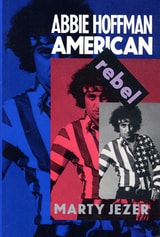
Abbie Hoffman
American RebelJezer, Marty
Rutgers University Press, 1993
"... Abbie, more than any other radical, showed potheads how to demonstrate and radicals how to dance." -- Chicago Tribune
"... deeply sympathetic and scrupulously detached-a triumph of judicious empathy." -- MARTIN DUBERMAN, Distinguished Professor of History, Lehman/The Graduate School, C.U.N.Y.
"... details Hoffman's humor, manic energy, depressive spells, political skills, and above all, his Incurable and still contagious optimism." -- Entertainment Weekly
"Here's the Abbie I knew and loved! Marty Jezer has captured him in all his complexity, dedication, humor, and heart." -- ANITA HOFFMAN
Aberrations In Black
Toward a Queer of Color CritiqueRoderick A. Ferguson
University of Minnesota Press, 2003
A hard-hitting look at the regulation of sexual difference and its role in circumscribing African American culture
The sociology of race relations in America typically describes an intersection of poverty, race, and economic discrimination. But what is missing from the picture—sexual difference—can be as instructive as what is present. In this ambitious work, Roderick A. Ferguson reveals how the discourses of sexuality are used to articulate theories of racial difference in the field of sociology. He shows how canonical sociology—Gunnar Myrdal, Ernest Burgess, Robert Park, Daniel Patrick Moynihan, and William Julius Wilson—has measured African Americans’s unsuitability for a liberal capitalist order in terms of their adherence to the norms of a heterosexual and patriarchal nuclear family model. In short, to the extent that African Americans’s culture and behavior deviated from those norms, they would not achieve economic and racial equality.
Aberrations in Black tells the story of canonical sociology’s regulation of sexual difference as part of its general regulation of African American culture. Ferguson places this story within other stories—the narrative of capital’s emergence and development, the histories of Marxism and revolutionary nationalism, and the novels that depict the gendered and sexual idiosyncrasies of African American culture—works by Richard Wright, Ralph Ellison, James Baldwin, Audre Lorde, and Toni Morrison. In turn, this book tries to present another story—one in which people who presumably manifest the dysfunctions of capitalism are reconsidered as indictments of the norms of state, capital, and social science. Ferguson includes the first-ever discussion of a new archival discovery—a never-published chapter of Invisible Man that deals with a gay character in a way that complicates and illuminates Ellison’s project.
Unique in the way it situates critiques of race, gender, and sexuality within analyses of cultural, economic, and epistemological formations, Ferguson’s work introduces a new mode of discourse—which Ferguson calls queer of color analysis—that helps to lay bare the mutual distortions of racial, economic, and sexual portrayals within sociology.
Abortion at Work
Ideology and Practice in a Feminist ClinicSimonds, Wendy
Rutgers University Press, 1996
These are the questions that drive Wendy Simonds' Abortion at Work. Simonds documents the ways in which workers at a feminist clinic construct compelling feminist visions, and also watch their ideals fall short in practice. Simonds interprets these women's narratives to get at how abortion works on feminism, and to show what feminism can gain by rethinking abortion utilizing these activists' terms. In thoroughly engaging prose, Simonds frames her analysis with a moving account of her own personal understanding of the issues.
Abortion, Choice, and Contemporary Fiction
The Armageddon of the Maternal InstinctJudith Wilt
University of Chicago Press, 1990
In the opening of the book, Wilt discusses real case histories of several women. After studying the ambiguities of their decisions, she turns to their counterpoints depicted in contemporary fiction. Working from a feminist perspective, Wilt traces the theme of maternal choice in works by Margaret Atwood, Margaret Drabble, Joan Didion, Mary Gordon, Alice Walker, Toni Morrison, Gloria Naylor, Marge Piercy, Thomas Keneally, Graham Swift, Ernest Hemingway, William Faulkner, John Barth, John Irving, and others.
Behind the political, medical, and moral debates on abortion, Wilt argues, is a profound psychocultural shock at the recognition that maternity is passing from the domain of instinct to that of conscious choice. Although never wholly instinctual, maternity's potential capture by consciousness raises complex questions. The novels Wilt discusses portray worlds in which principles are endangered by sexual inequality, male power and hidden male fear of abandonment, impotence, female submission, and covert rage, and, in the case of black maternity, the hideous aftermath of slavery.
Wilt provides a resonant new context for debates—whether political or personal—on the issue of abortion and maternal choice. Ultimately she enables us to rethink how we shape our own identities and lives.
Above All, We Are Jews
A Biography of Rabbi Alexander SchindlerMichael A. Meyer
Central Conference of American Rabbis, 2025
Above the Fray
The Red Cross and the Making of the Humanitarian NGO SectorShai M. Dromi
University of Chicago Press, 2020
Drawing on archival research, Dromi traces the genesis of the Red Cross to a Calvinist movement working in mid-nineteenth-century Geneva. He shows how global humanitarian policies emerged from the Red Cross founding members’ faith that an international volunteer program not beholden to the state was the only ethical way to provide relief to victims of armed conflict. By illustrating how Calvinism shaped the humanitarian field, Dromi argues for the key role belief systems play in establishing social fields and institutions. Ultimately, Dromi shows the immeasurable social good that NGOs have achieved, but also points to their limitations and suggests that alternative models of humanitarian relief need to be considered.
Abraham Epstein
The Forgotten Father of Social SecurityPierre Epstein
University of Missouri Press, 2006
Abraham Lincoln in the Post-Heroic Era
History and Memory in Late Twentieth-Century AmericaBarry Schwartz
University of Chicago Press, 2008
Abstract Expressionism
The International ContextMarter, Joan
Rutgers University Press, 2007
Bringing together fifteen original and path-breaking essays by world-class authorities on Abstract Expressionism as well as by younger scholars, this anthology looks beyond the canonical painters to explore the broader connections among abstract artists of the post–World War II era. Moving from the margins to the center, the essays recognize the contributions of artists working far beyond New York City. Topics include Jackson Pollock’s contact with Mexican muralists and the legacy of Abstract Expressionism for leftist artists in Latin America, the relevance of Jean-Paul Sartre and Samuel Beckett as sources of philosophical thought, the significance of northern European CoBrA painters such as Asger Jorn, the impact of Japanese Gutai artists, and connections with the revolutionary art of Italy, Belgium, and France. Abstract Expressionism is also described as a model for contemporaneous developments in the former Soviet Union.
As the first book to consider the movement in relation to post–World War II abstraction on four continents, this book brings a fresh perspective to this widely studied school of painting. Scholars and students alike will find this anthology essential reading in creating a more complete and nuanced understanding of Abstract Expressionism.
Abstraction in Reverse
The Reconfigured Spectator in Mid-Twentieth-Century Latin American ArtAlexander Alberro
University of Chicago Press, 2017
Alexander Alberro demonstrates that artists such as Tomás Maldonado, Jesús Soto, Julio Le Parc, and Lygia Clark, in breaking with the core tenets of the form of abstract art known as Concrete art, redefined the role of both the artist and the spectator. Instead of manufacturing autonomous art, these artists produced artworks that required the presence of the spectator to be complete. Alberro also shows the various ways these artists strategically demoted regionalism in favor of a new modernist voice that transcended the traditions of the nation-state and contributed to a nascent globalization of the art world.

Abuela in Shadow, Abuela in Light
Rigoberto González
University of Wisconsin Press, 2022
González travels to his abuela’s birthplace, Michoacán, Mexico, and along the way recovers his memories of a past he had tried to leave behind. A complex woman who was forced to take on maternal roles and suffered years of abuse, his grandmother simultaneously resisted traditional gender roles; she was kind yet unaffectionate, and she kept many secrets in a crowded household with little personal space. Sifting through family histories and anecdotes, González pieces together the puzzling life story of a woman who was present in her grandson’s life yet absent during his emotional journey as a young man discovering his sexuality and planning his escape from a toxic and abusive environment.
From fragments of memory and story, González ultimately creates a portrait of an unconventional yet memorable grandmother, a hard-working Indigenous Mexican woman who remained an enigma while she was alive. A grandmother, he shows, is more than what her descendants remember; she is also all that has been forgotten or never known. Through this candid exploration of his own family, González explores how we learn to remember and honor those we’ve lost.
Abuse of Power
How Cold War Surveillance and Secrecy Policy Shaped the Response to 9/11Authored by Athan Theoharis
Temple University Press, 2011
Athan Theoharis, long a respected authority on surveillance and secrecy, established his reputation for meticulous scholarship with his work on the loyalty security program developed under Truman and McCarthy. In Abuse of Power, Theoharis continues his investigation of U.S. government surveillance and historicizes the 9/11 response.
Criticizing the U.S. government's secret activities and policies during periods of "unprecedented crisis," he recounts how presidents and FBI officials exploited concerns about foreign-based internal security threats.
Drawing on information sequestered until recently in FBI records, Theoharis shows how these secret activities in the World War II and Cold War eras expanded FBI surveillance powers and, in the process, eroded civil liberties without substantially advancing legitimate security interests.
Passionately argued, this timely book speaks to the costs and consequences of still-secret post-9/11 surveillance programs and counterintelligence failures. Ultimately, Abuse of Power makes the case that the abusive surveillance policies of the Cold War years were repeated in the government's responses to the September 11 attacks.