Results by title
3576 books match the query 'American' and 350 start with a
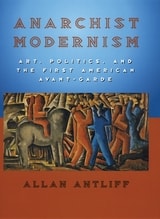
Anarchist Modernism
Art, Politics, and the First American Avant-GardeAllan Antliff
University of Chicago Press, 2001
By situating American art's evolution in the progressive politics of the time, Antliff offers a richly illustrated chronicle of the anarchist movement and also revives the creative agency of those who shaped and implemented modernism for radical ends.
Ancient Creek
A FolktaleGurney Norman
Ohio University Press, 2012
And All These Roads Be Luminous
Poems Selected and NewAngela Jackson
Northwestern University Press, 1997
And Her Soul Out Of Nothing
Olena Kalytiak Davis
University of Wisconsin Press, 1997
Both contemporary and other-worldly, Davis's lyrical poetry is a fearless expression of the spirit which defines the very essence of our beings.
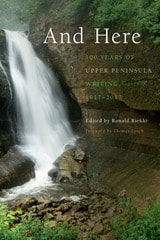
And Here
100 Years of Upper Peninsula Writing, 1917–2017Ronald Riekki
Michigan State University Press, 2017
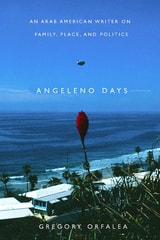
Angeleno Days
An Arab American Writer on Family, Place, and PoliticsGregory Orfalea
University of Arizona Press, 2009
Populated with fascinating characters—the Angelenos of Orfalea’s life—these essays tell the story of the author’s trials. He returns to Los Angeles to teach, trying to reconcile the LA of his childhood with the city he now faces. He takes on progressively more difficult and painful subjects, finally confronting the memories of the shocking tragedy that took the lives of his father and sister.
With more than 400,000 Arab Americans in Los Angeles—probably surpassing Detroit as the largest contingent in America—Orfalea also explores his own community and its political and social concerns. He agonizes over another destruction of Lebanon and examines in searing detail a massacre of civilians in Iraq.
Angeleno Days takes the memoir and personal essay to rare heights. Orfalea is a deeply human writer who reveals not only what it means to be human in America now, but also what it will take to remain human in the days to come. These essays soar, confound, reveal, and strike at our senses and sensibilities, forcing us to think and feel in new ways.
Anglo-American Feminist Challenges to the Rhetorical Traditions
Virginia Woolf, Mary Daly, Adrienne RichKrista Ratcliffe
Southern Illinois University Press, 1996
Although women and men have different relationships to language and to each other, traditional theories of rhetoric do not foreground such gender differences. Krista Ratcliffe argues that because feminists generally have not conceptualized their language theories from the perspective of rhetoric and composition studies, rhetoric and composition scholars must construct feminist theories of rhetoric by employing a variety of interwoven strategies: recovering lost or marginalized texts; rereading traditional rhetoric texts; extrapolating rhetorical theories from such nonrhetoric texts as letters, diaries, essays, cookbooks, and other sources; and constructing their own theories of rhetoric.
Focusing on the third option, Ratcliffe explores ways in which the rhetorical theories of Virginia Woolf, Mary Daly, and Adrienne Rich may be extrapolated from their Anglo-American feminist texts through examination of the interrelationship between what these authors write and how they write. In other words, she extrapolates feminist theories of rhetoric from interwoven claims and textual strategies. By inviting Woolf, Daly, and Rich into the rhetorical traditions and by modeling the extrapolation strategy/methodology on their writings, Ratcliffe shows how feminist texts about women, language, and culture may be reread from the vantage point of rhetoric to construct feminist theories of rhetoric. She also outlines the pedagogical implications of these three feminist theories of rhetoric, thus contributing to ongoing discussions of feminist pedagogies.
Traditional rhetorical theories are gender-blind, ignoring the reality that women and men occupy different cultural spaces and that these spaces are further complicated by race and class, Ratcliffe explains. Arguing that issues such as who can talk, where one can talk, and how one can talk emerge in daily life but are often disregarded in rhetorical theories, Ratcliffe rereads Roland Barthes’ "The Old Rhetoric" to show the limitations of classical rhetorical theories for women and feminists. Discovering spaces for feminist theories of rhetoric in the rhetorical traditions, Ratcliffe invites readers not only to question how women have been located as a part of— and apart from—these traditions but also to explore the implications for rhetorical history, theory, and pedagogy.
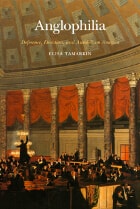
Anglophilia
Deference, Devotion, and Antebellum AmericaElisa Tamarkin
University of Chicago Press, 2008
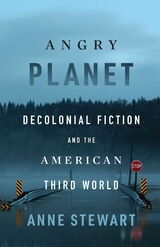
Angry Planet
Decolonial Fiction and the American Third WorldAnne Stewart
University of Minnesota Press, 2022
Before the idea of the Anthropocene, there was the angry planet
How might we understand an earthquake as a complaint, or erosion as a form of protest—in short, the Earth as an angry planet? Many novels from the end of the millennium did just that, centering around an Earth that acts, moves, shapes human affairs, and creates dramatic, nonanthropogenic change.
In Angry Planet, Anne Stewart uses this literature to develop a theoretical framework for reading with and through planetary motion. Typified by authors like Colson Whitehead, Octavia Butler, and Leslie Marmon Silko, whose work anticipates contemporary critical concepts of entanglement, withdrawal, delinking, and resurgence, angry planet fiction coalesced in the 1990s and delineated the contours of a decolonial ontology. Stewart shows how this fiction brought Black and Indigenous thought into conversation, offering a fresh account of globalization in the 1990s from the perspective of the American Third World, construing it as the era that first made connections among environmental crises and antiracist and decolonial struggles.
By synthesizing these major intersections of thought production in the final decades of the twentieth century, Stewart offers a recent history of dissent to the young movements of the twenty-first century. As she reveals, this knowledge is crucial to incipient struggles of our contemporary era, as our political imaginaries grapple with the major challenges of white nationalism and climate change denial.
Animate Literacies
Literature, Affect, and the Politics of HumanismNathan Snaza
Duke University Press, 2019

Anne & Alpheus, 1842–1882
Joe Survant
University of Arkansas Press, 1996
Chosen by Rachel Hadas as the winner of the Arkansas Poetry Award, Anne & Alpheus: 1842–1882 is a compelling duet of monologues between a frontier man and woman surviving the hardships and recording the small triumphs of life in rural nineteenth-century Kentucky.
Ambitious in breadth and scope, these poems chart the loves and losses of early marriage, the terrors of civilian life during the Civil War, and the universal sorrows of aging, loneliness, and death. Through the distinct voices of Anne and Alpheus Waters, Joe Survant has fashioned a collection with all the sweep of a novel, all the dramatic intensity, poem by poem, of short fiction, and all the earthy, human lyricism of the dramatic monologue. These poems take us into the tobacco sheds, put us behind the plow, let us smell the soil, and
carry us under the stars where Anne and Alpheus walked.
Another Day on Earth
Timothy Dekin
Northwestern University Press, 2002

Another Hill
AN AUTOBIOGRAPHICAL NOVELMilton Wolff
University of Illinois Press, 1994
Another Kind of Travel
Paul Lake
University of Chicago Press, 1988
"Lake is not content with simply being precise and original with his descriptions. He possesses another gift of the poetic mind: the ability to make his images, his simple scenes, resonate with meaning."—Wes Ziegler, Arkansas Democrat
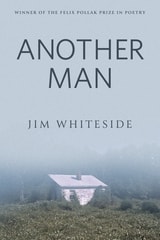
Another Man
Jim Whiteside
University of Wisconsin Press, 2026
Part reckoning with a father’s chronic illness, part coming of age in the Upper South, part meditation on the slow, painful accumulation of adulthood, Another Man considers issues of family, care, and inheritance. These powerful poems capture unexpected moments of lucidity among the desire and heartbreak of becoming oneself.
In his debut collection, Jim Whiteside astonishes with turns of phrases that pinpoint the beauty in the mundane—the “waterfalling bodies” of fish while stocking a pond—and the mundane in the tragic, as with the realization following his father’s death that “in the end so much is paperwork.” In revealing his origin story, Whiteside redefines the queer poem in a more nuanced and contemporary way, acknowledging queer life beyond conventional narratives. Filled with a zeal for life, a yearning for joy, and moments of sublime satisfaction, this collection shimmers with longing and freedom.
Another Part of a Long Story
Literary Traces of Eugene O'Neill and Agnes BoultonWilliam Davies King
University of Michigan Press, 2010
---Stephen Wilmer, Trinity College, Dublin
Biographers of American playwright Eugene O'Neill have been quick to label his marriage to actress Carlotta Monterey as the defining relationship of his illustrious career. But in doing so, they overlook the woman whom Monterey replaced---Agnes Boulton, O'Neill's wife of over a decade and mother to two of his children. O'Neill and Boulton were wed in 1918---a time when she was a successful pulp novelist and he was still a little-known writer of one-act plays. During the decade of their marriage, he gained fame as a Broadway dramatist who rejected commercial compromise, while she mapped that contentious territory known as the literary marriage. His writing reflected her, and hers reflected him, as they tried to realize progressive ideas about what a marriage should be. But after O'Neill left the marriage, he and new love Carlotta Monterey worked diligently to put Boulton out of sight and mind---and most O'Neill biographers have been quick to follow suit.
William Davies King has brought Agnes Boulton to light again, providing new perspectives on America's foremost dramatist, the dynamics of a literary marriage, and the story of a woman struggling to define herself in the early twentieth century. King shows how the configuration of O'Neill and Boulton's marriage helps unlock many of O'Neill's plays. Drawing on more than sixty of Boulton's published and unpublished writings, including her 1958 memoir, Part of a Long Story, and an extensive correspondence, King rescues Boulton from literary oblivion while offering the most radical revisionary reading of the work of Eugene O'Neill in a generation.
William Davies King is Professor of Theater at the University of California, Santa Barbara, and author of several books, most recently Collections of Nothing, chosen by Amazon.com as one of the Best Books of 2008.
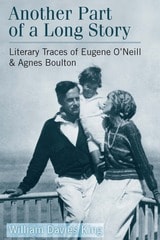
Illustration: Eugene O'Neill, Shane O'Neill, and Agnes Boulton ca. 1923. Eugene O'Neill Collection, Beinecke Rare Book and Manuscript Library, Yale University.
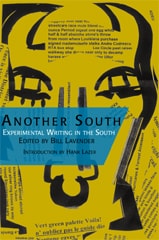
Another South
Experimental Writing in the SouthEdited by Bill Lavender, with an introduction by Hank Lazer
University of Alabama Press, 2002
Another South is an anthology of poetry from contemporary southern writers who are working in forms that are radical, innovative, and visionary. Highly experimental and challenging in nature, the poetry in this volume, with its syntactical disjunctions, formal revolutions, and typographic playfulness, represents the direction of a new breed of southern writing that is at once universal in its appeal and regional in its flavor.
Focusing on poets currently residing in the South, the anthology includes both emerging and established voices in the national and international literary world. From the invocations of Andy Young’s “Vodou Headwashing Ceremony” to the blues-informed poems of Lorenzo Thomas and Honorée Jeffers, from the different voicings of John Lowther and Kalamu ya Salaam to the visual, multi-genre art of Jake Berry, David Thomas Roberts, and Bob Grumman, the poetry in Another South is rich in variety and enthusiastic in its explorations of new ways to embody place and time. These writers have made the South lush with a poetic avant-garde all its own, not only redefining southern identity and voice but also offering new models of what is possible universally through the medium of poetry.
Hank Lazer’s introductory essay about “Kudzu textuality” contextualizes the work by these contemporary innovators. Like the uncontrollable runaway vine that entwines the southern landscape, their poems are hyperfertile, stretching their roots and shoots relentlessly, at once destructive and regenerative. In making a radical departure from nostalgic southern literary voices, these poems of polyvocal abundance are closer in spirit to "speaking in tongues" or apocalyptic southern folk art—primitive, astonishing, and mystic.
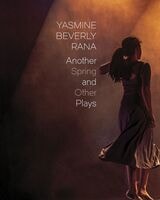
Another Spring
and Other PlaysYasmine Beverly Rana
Seagull Books, 2025
In Another Spring and Other Plays, Yasmine Beverly Rana crafts an intricate tapestry of survival and memory in the wake of war and displacement. Spanning years and continents, these five plays trace the intimate wounds of conflict as they echo through generations. In The Fallen and Another Spring, the ghosts of war haunt the living, forcing them to navigate love, loss, and the shifting landscapes of post-war existence. At the Barre and Icarus and Amina depict the power of art as both sanctuary and rebellion against the forces of migration and exile. The collection concludes with After Rome, where two childhood friends reunite on the eve of the 25th anniversary of the siege of Sarajevo, confronting the long shadows of history.
With poetic and unwavering dialogue, Rana’s plays display the universally resonant struggles of those shaped by war. Another Spring is not just a collection of plays—it is a reflection on resilience and how trauma and art become intertwined in the search for meaning.
Answering the Ruins
PoemsGregory Fraser
Northwestern University Press, 2009
Antebellum American Women's Poetry
A Rhetoric of SentimentWendy Dasler Johnson
Southern Illinois University Press, 2016
Considering the logos, ethos, and pathos—aims, writing personae, and audience appeal—of poems by African American abolitionist Frances Watkins Harper, working-class prophet Lydia Huntley Sigourney, and feminist socialite Julia Ward Howe, Wendy Dasler Johnson demonstrates that sentimental poetry was an inportant component of antebellum social activism. She articulates the ethos of the poems of Harper, who presents herself as a properly domestic black woman, nevertheless stepping boldly into Northern pulpits to insist slavery be abolished; the poetry of Sigourney, whose speaker is a feisty, working-class, ambiguously gendered prophet; and the works of Howe, who juggles her fame as the reformist “Battle Hymn” lyricist and motherhood of five children with an erotic Continental sentimentalism.
Antebellum American Women's Poetry makes a strong case for restoration of a compelling system of persuasion through poetry usually dismissed from studies of rhetoric. This remarkable book will change the way we think about women’s rhetoric in the nineteenth century, inviting readers to hear and respond to urgent, muffled appeals for justice in our own day.
Antebellum at Sea
Maritime Fantasies in Nineteenth-Century AmericaJason Berger
University of Minnesota Press, 2012
In the antebellum years, the Western world’s symbolic realities were expanded and challenged as merchant, military, and scientific activity moved into Pacific and Arctic waters. In Antebellum at Sea, Jason Berger explores the roles that early nineteenth-century maritime narratives played in conceptualizing economic and social transitions in the developing global market system and what these chronicles disclose about an era marked by immense change.
Focusing on the work of James Fenimore Cooper and Herman Melville, Berger enhances our understanding of how the nineteenth century negotiated its own tenuous progress by portraying how a wide range of maritime stories lays bare disturbing experiences of the new. Berger draws on Slavoj Žižek’s Lacanian notion of fantasy in order to reconsider the complex way maritime accounts operated in the political landscape of antebellum America, examining topics such as the function of maritime labor know-how within a transformation of scientific knowledge, anxiety produced by conflict between gender-specific and culture-specific forms of enjoyment, and how legal practices illuminate troubling juridical paradoxes at the heart of Polk-era political life.
Addressing the ideas of the antebellum age from unexpected and revealing perspectives, Berger calls on the conception of fantasy to consider how antebellum maritime literature disputes conventional views of American history, literature, and national identity.
Anthem Speed
Christopher Bolin
University of Iowa Press, 2023
This collection evokes the vividly mysterious remnants of a lost civilization. Its preoccupations are unnervingly familiar: war, injustice, brutalization of land, air, water, and species, technologies of terror and dehumanization. Simultaneously antique and space-age, inhabiting a world of elemental rites and of artificial imaginations, Bolin tests the acoustics of operating rooms, battlefields, courtrooms, and mountainsides, and envisions—with animal acuity—a world imperiled and empowered by its leaders and myths.
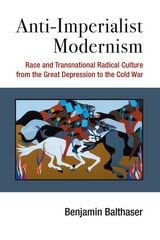
Anti-Imperialist Modernism
Race and Transnational Radical Culture from the Great Depression to the Cold WarBenjamin Balthaser
University of Michigan Press, 2015
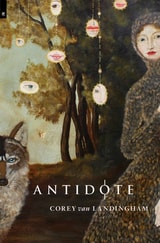
Antidote
Corey Van Landingham
The Ohio State University Press, 2013
In Antidote—the award-winning debut from Guggenheim Fellow and Levis Reading Prize winner Corey Van Landingham—love equates with disease, valediction becomes a contact sport, the moon turns lunatic, and someone is always watching. Here, the uncanny presses up against the intimate, so each poem undergoes a simultaneous making and unmaking, born and bound in exquisite strangeness.
Van Landingham reinvents elegy through a speaker both transgressive and tender, revealing how grief destabilizes the self and reorders perception. She tips the world upside down, shakes loose the debris, and says, I can make something with this.
Wild and surreal, driven by loss, Antidote embraces the beautiful and the brutal in equal measure, offering startling claims about love—its likeness to hibernation, a car crash, a parasite. Time, landscape, and geography dissolve, leaving behind the raw terrains of departure. Ultimately, the book insists there is no cure for heartbreak, that love can mirror violence, and that goodbye never becomes easier.
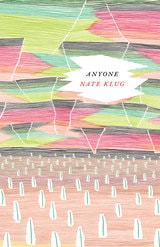
Anyone
Nate Klug
University of Chicago Press, 2015
Where I-95 meets The Pike,
a ponderous thunderhead flowered—
stewed a minute, then flipped
like a flash card, tattered
edges crinkling in, linings so dark
with excessive bright
that, standing, waiting, at the overpass edge,
the onlooker couldn’t decide
until the end, or even then,
what was revealed and what had been hidden.
Using a variety of forms and achieving a range of musical effects, Nate Klug’s Anyone traces the unraveling of astonishment upon small scenes—natural and domestic, political and religious—across America’s East and Midwest. The book’s title foregrounds the anonymity it seeks through several means: first, through close observation (a concrete saw, a goshawk, a bicyclist); and, second, via translation (satires from Horace and Catullus, and excerpts from Virgil’s Aeneid). Uniquely among contemporary poetry volumes, Anyone demonstrates fluency in the paradoxes of a religious existence: “To stand sometime / outside my faith . . . or keep waiting / to be claimed in it.” Engaged with theology and the classics but never abstruse, all the while the poems remain grounded in the phenomenal, physical world of “what it is to feel: / moods, half moods, / swarming, then darting loose.”
Apocalypse South
Judgment, Cataclysm, and Resistance in the Regional ImaginaryAnthony Dyer Hoefer
The Ohio State University Press, 2012
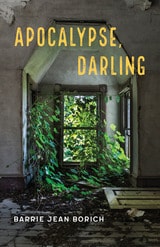
Apocalypse, Darling
Barrie Jean Borich
The Ohio State University Press, 2018
From award-winning author Barrie Jean Borich comes Apocalypse, Darling, a narrative, lyric exploration of the clash between old and new. Set in the steel mill regions of Chicago and in Northwest Indiana, the story centers on Borich’s return to a decimated landscape for a misbegotten wedding in which her spouse’s father marries his high school sweetheart. The book is a lilting journey into an ill-fated moment, where families attempt to find communion in tense gathering spaces and across their most formative disappointments. Borich tells the story of the industrial heartland that produced the steel that made American cities, but also one of the most toxic environmental sites in the world.
As concise as a poem and as sweeping as an epic novel, Apocalypse, Darling explores the intersection of American traditional and self-invented social identities and the destruction and re-greening of industrial cityscapes. Borich asks: can toxic landscapes actually be remediated and can patriarchal fathers ever really be forgiven? In a political climate where Borich is forced to daily re-enter the toxic wastelands she thought she’d long left behind, Apocalypse, Darling is an urgent collision of broken spaces, dysfunctional affections, and the reach toward familial and environmental repair.
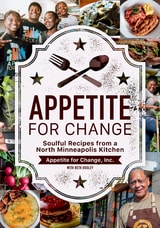
Appetite for Change
Soulful Recipes from a North Minneapolis KitchenBeth Appetite for Change
University of Minnesota Press, 2024
The delicious recipes and community spirit that have made Appetite for Change a force for good in North Minneapolis
Feed someone a delicious meal, and you've satisfied a moment’s hunger. Show someone how to cultivate, cook, and share good food, and you satisfy the hungry soul of a whole community. Feeding the soul is what Appetite for Change does, working to improve the foodscape in its Northside community through youth-led urban gardens and farmers markets, cooking workshops and a meal box delivery service, and the Breaking Bread Cafe. Sharing both enticing recipes and heartfelt stories of sustenance, Appetite for Change is filled with soul food classics that feature light twists and local touches and show how multiple cultures can commingle within one cookbook—and even one plate.
There are recipes here for everyone: side dishes like Caribbean Coleslaw, Okra Succotash, and Curried Potato Bites; salads, including Purple Rain Salad and Beet It Salad, both created by AFC youth members to sell at Twins baseball games; small plates, from Jackfruit Nachos to Fried Green Tomatoes; and family-favorite soups and stews, like Lentil Sweet Potato Stew and Jambalaya. There are even breakfast options—including Jerk Shrimp and Cheese Grits, Banana Pecan Bread, and a Big, Beautiful Frittata—and desserts ranging from Flourless Chocolate Cake to Cranberry Cream Cheese Bars. And when it’s time to feed a crowd, look no further than the “Community Feasts” chapter, chock-full of recipes as familiar as Fried Chicken and as singular as Delicata Black Bean Tacos.
Healthy, affordable, easy, and delicious, all of the recipes shared here connect with stories of how the people and purpose behind Appetite for Change have brought nourishing hope and new life to an entire community.
Apple Betty and Sloppy Joe
Stirring Up the Past with Family Recipes and StoriesSusan Sanvidge
Wisconsin Historical Society Press, 2007
Compiled by four sisters and based on their recollections of their childhood in Oshkosh, Wisconsin, Apple Betty & Sloppy Joe captures the glow of memories formed while growing up in a midwestern kitchen. From Lemon Meringue Pie to Tomato Soup Cake, from Mom's Chicken Pie to Grandma Noffke's Sliced Cucumber Pickles, this charming book features hundreds of recipes (some classic, some quirky), plus dozens of food and cooking-related anecdotes, memories, humorous asides, and period photos that transport readers back to Mom's or Grandma's kitchen, circa 1950.
The Sanvidges share a legacy of beloved dishes and food memories that resonate not just for their family, but for readers everywhere who grew up in a small midwestern town - or wish they had. Nostalgic, funny, and warmhearted, Apple Betty & Sloppy Joe celebrates the ways food and food memories link us to our past, and to each other. A delightful gift for food lovers of any generation.
Approaching the Millennium
Essays on Angels in AmericaDeborah R. Geis and Steven F. Kruger, Editors
University of Michigan Press, 1997
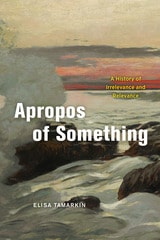
Apropos of Something
A History of Irrelevance and RelevanceElisa Tamarkin
University of Chicago Press, 2022
Before 1800 nothing was irrelevant. So argues Elisa Tamarkin’s sweeping meditation on a key shift in consciousness: the arrival of relevance as the means to grasp how something that was once disregarded, unvalued, or lost to us becomes interesting and important. When so much makes claims to our attention every day, how do we decide what is most valuable right now?
Relevance, Tamarkin shows, was an Anglo-American concept, derived from a word meaning “to raise or to lift up again,” and also “to give relief.” It engaged major intellectual figures, including Ralph Waldo Emerson and pragmatists and philosophers—William James, Alain Locke, John Dewey, and Alfred North Whitehead—as well as a range of critics, phenomenologists, linguists, and sociologists. Relevance is a struggle for recognition, especially in the worlds of literature, art, and criticism. Poems and paintings in the nineteenth century could now be seen as pragmatic works that make relevance and make interest—that reveal versions of events that feel apropos of our lives the moment we turn to them.
Vividly illustrated with paintings by Winslow Homer, Henry Ossawa Tanner, and others, Apropos of Something is a searching philosophical and poetic study of relevance—a concept calling for shifts in both attention and perceptions of importance with enormous social stakes. It remains an invitation for the humanities and for all of us who feel tasked every day with finding the point.
Archetypal Light
PoemsElizabeth Dodd
University of Nevada Press, 2001
Archipelagic American Studies
Brian Russell Roberts and Michelle Ann Stephens, editors
Duke University Press, 2017
Birte Blascheck, J. Michael Dash, Paul Giles, Susan Gillman, Matthew Pratt Guterl, Hsinya Huang, Allan Punzalan Isaac, Joseph Keith, Yolanda Martínez-San Miguel, Brandy Nālani McDougall, Ifeoma Kiddoe Nwankwo, Craig Santos Perez, Brian Russell Roberts, John Carlos Rowe, Cherene Sherrard-Johnson, Ramón E. Soto-Crespo, Michelle Ann Stephens, Elaine Stratford, Etsuko Taketani, Alice Te Punga Somerville, Teresia Teaiwa, Lanny Thompson, Nicole A. Waligora-Davis

Architect
Alison Thumel
University of Arkansas Press, 2024
Finalist, 2025 Kate Tufts Discovery Award
“When he died, my brother became the architect of the rest of my life,” writes Alison Thumel in Architect, which interweaves poems, lyric essays, and visual art to great emotional effect. In this debut collection, the buildings of Frank Lloyd Wright become a blueprint for elegy, as Thumel overlays the language of architecture with the language of grief to raze and reconstruct memories, metaphors, and myths. With obsessive and exacting focus, the poet leads us through room after room in a search to answer whether it is possible to rebuild in the wake of loss. Meanwhile, the midwestern landscape beyond these rooms—the same landscape that infuses the low, horizontal forms of Wright’s Prairie Style buildings—shapes the figures in Architect as well as their fates: “For years after my brother’s death, I collected news articles on people who died young and tragically in landlocked states. Prairie Style deaths—boys sucked down into grain silos or swept up by tornadoes or fallen through a frozen pond. The boys I didn’t know, but the landscape I did. The dread of it. How many miles you can look ahead. For how long you see what is coming.”
Archive of Style
New and Selected PoemsCheryl Clarke
Northwestern University Press, 2024
Award-winning poet and essayist Cheryl Clarke’s illustrious career has spanned more than four decades and culminates in Archive of Style: New and Selected Poems, a long-awaited retrospective of the indelible work of a Black feminist, community and LGBTQ activist, and educator. This collection features carefully curated poems from Narratives: Poems in the Tradition of Black Women (1982), Living as a Lesbian (1986), The Days of Good Looks: Prose and Poetry 1980-2005 (2006), By My Precise Haircut (2016), and Targets (2019). Together these works show a brilliant thinker who has profoundly impacted generations of writers and activists.
Clarke’s poetry and essays, centered around the Black, lesbian, feminist experience, have attracted an audience around the world. Her essays, “Lesbianism: an Act of Resistance” and “The Failure to Transform: Homophobia in the Black Community” revolutionized the thinking about lesbians of color and the struggle against homophobia. Her poetry and non-fiction have been reprinted in numerous anthologies and assigned in women and sexuality courses globally. Having published since 1977, Clarke and her work have become a foundational part of LGBTQ literature and activism. Archive of Style is a celebration and homage to one of American literature’s Black Women literary warriors.
Archives of American Art Journal, volume 60 number 1 (Spring 2021)
The University of Chicago Press
University of Chicago Press Journals, 2021

Archives of American Art Journal, volume 60 number 2 (Fall 2021)
The University of Chicago Press
University of Chicago Press Journals, 2021
Archives of American Art Journal, volume 61 number 1 (Spring 2022)
The University of Chicago Press
University of Chicago Press Journals, 2022
Archives of American Art Journal, volume 61 number 2 (Fall 2022)
The University of Chicago Press
University of Chicago Press Journals, 2022
Archives of American Art Journal, volume 62 number 1 (Spring 2023)
The University of Chicago Press
University of Chicago Press Journals, 2023

Archives of American Art Journal, volume 62 number 2 (Fall 2023)
The University of Chicago Press
University of Chicago Press Journals, 2023
Archives of American Art Journal, volume 63 number 1 (Spring 2024)
The University of Chicago Press
University of Chicago Press Journals, 2024
Archives of American Art Journal, volume 63 number 2 (Fall 2024)
The University of Chicago Press
University of Chicago Press Journals, 2024
Archives of American Art Journal, volume 64 number 1 (Spring 2025)
The University of Chicago Press
University of Chicago Press Journals, 2025
Archives of American Art Journal, volume 64 number 2 (Fall 2025)
The University of Chicago Press
University of Chicago Press Journals, 2025
Archives of American Art Journal, volume 65 number 1 (Spring 2026)
The University of Chicago Press
University of Chicago Press Journals, 2026
Archives of Labor
Working-Class Women and Literary Culture in the Antebellum United StatesLori Merish
Duke University Press, 2017
Are You Experienced? Baby Boom Poets At Midlife
Pamela Gemin
University of Iowa Press, 2003
In this timely and reflective anthology, the generation that sought to stay forever young reveals that midlife should mean more than jokes about thinning hair, creaking joints, and thickening waistlines. Midlife's insights—whether they be physical, spiritual, or emotional—are indeed startling, and who better than poets to deliver them?
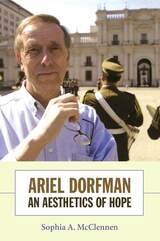
Ariel Dorfman
An Aesthetics of HopeSophia A. McClennen
Duke University Press, 2010
To illuminate Dorfman’s thematic concerns, McClennen chronicles the writer’s life, including his experiences working with Salvador Allende and his exile from Chile during the dictatorship of Augusto Pinochet, and she provides a careful account of his literary and cultural influences. Tracing his literary career chronologically, McClennen interprets Dorfman’s less-known texts alongside his most well-known works, which include How to Read Donald Duck, the pioneering critique of Western ideology and media culture co-authored with Armand Mattelart, and the award-winning play Death and the Maiden. In addition, McClennen provides two valuable appendices: a chronology documenting important dates and events in Dorfman’s life, and a full bibliography of his work in English and in Spanish.
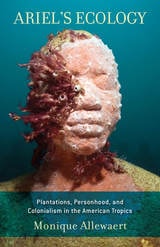
Ariel's Ecology
Plantations, Personhood, and Colonialism in the American TropicsMonique Allewaert
University of Minnesota Press, 2013
What happens if we abandon the assumption that a person is a discrete, world-making agent who acts on and creates place? This, Monique Allewaert contends, is precisely what occurred on eighteenth-century American plantations, where labor practices and ecological particularities threatened the literal and conceptual boundaries that separated persons from the natural world.
Integrating political philosophy and ecocriticism with literary analysis, Ariel’s Ecology explores the forms of personhood that developed out of New World plantations, from Georgia and Florida through Jamaica to Haiti and extending into colonial metropoles such as Philadelphia. Allewaert’s examination of the writings of naturalists, novelists, and poets; the oral stories of Africans in the diaspora; and Afro-American fetish artifacts shows that persons in American plantation spaces were pulled into a web of environmental stresses, ranging from humidity to the demand for sugar. This in turn gave rise to modes of personhood explicitly attuned to human beings’ interrelation with nonhuman forces in a process we might call ecological.
Certainly the possibility that colonial life revokes human agency haunts works from Shakespeare’s Tempest and Montesquieu’s Spirit of the Laws to Spivak’s theories of subalternity. In Allewaert’s interpretation, the transformation of colonial subjectivity into ecological personhood is not a nightmare; it is, rather, a mode of existence until now only glimmering in Che Guevara’s dictum that postcolonial resistance is synonymous with “perfect knowledge of the ground.”