Results by title
4413 books match the query 'Anthropology' and 363 start with a

Animals as Neighbors
The Past and Present of Commensal AnimalsTerry O'Connor
Michigan State University Press, 2013
In this fascinating book, Terry O’Connor explores a distinction that is deeply ingrained in much of the language that we use in zoology, human-animal studies, and archaeology—the difference between wild and domestic. For thousands of years, humans have categorized animals in simple terms, often according to the degree of control that we have over them, and have tended to see the long story of human-animal relations as one of increasing control and management for human benefit. And yet, around the world, species have adapted to our homes, our towns, and our artificial landscapes, finding ways to gain benefit from our activities and so becoming an important part of our everyday lives. These commensal animals remind us that other species are not passive elements in the world around us but intelligent and adaptable creatures. Animals as Neighbors shows how a blend of adaptation and opportunism has enabled many species to benefit from our often destructive footprint on the world. O’Connor investigates the history of this relationship, working back through archaeological records. By requiring us to take a multifaceted view of human-animal relations, commensal animals encourage a more nuanced understanding of those relations, both today and throughout the prehistory of our species.

Animate Planet
Making Visceral Sense of Living in a High-Tech Ecologically Damaged WorldKath Weston
Duke University Press, 2017
Anonimo Mexicano
Richley Crapo and Bonnie Glass-Coffin
Utah State University Press, 2005

Antarcticness
Inspirations and ImaginariesEdited by Ilan Kelman
University College London, 2022
Antarcticness brings together disciplines, communication approaches, and ideas to explore meanings and depictions of Antarctica. Personal and professional words in poetry and prose, plus images, present and represent Antarctica, as presumed and as imagined, alongside what is experienced around the continent and by those watching from afar. These understandings explain how the Antarctic is viewed and managed while identifying aspects that should be more prominent in policy and practice.
The authors and artists featured in the book place Antarctica, and the perceptions and knowledge through Antarcticness, within inspirations and imaginations, without losing sight of the multiple interests pushing the continent’s governance as it goes through rapid political and environmental changes. Because of the diversity and disparity of the influences and changes the continent faces, the book’s contributions are carefully connected to provide a more coherent and encompassing perspective of how society views Antarctica, scientifically and artistically, and what the continent provides and could provide politically, culturally, and environmentally.
Anthrohistory
Unsettling Knowledge, Questioning DisciplineChandra Bhimull, David William Cohen, Fernando Coronil, Edward L. Murphy, Monica Patterson, and Julie Skurski, Editors
University of Michigan Press, 2011
Stretching back to the 1950s, interdisciplinary work between anthropology and history has taken diverse expressions. Yet it has developed with more coherence since the 1980s, largely in response to the declining promise of global modernity and the rise of poststructuralism and deconstructionism. Through a critical and contemporary engagement with this wave of scholarship, this volume challenges readers to think of work at the crossroads of anthropology and history as transdisciplinary and anthrohistorical, moving beyond a partial integration of the disciplines as it critically evaluates their assumptions and trajectories.
This approach permits Anthrohistory: Unsettling Knowledge, Questioning Discipline to present a broader perspective that unsettles the constraints of existing academic practice. The volume does not offer a blueprint for fulfilling this goal, but rather a variety of positions taken by anthrohistorians who work in diverse contexts. Adopting an innovative and accessible style, Anthrohistory opens a provocative window into broader questions of interdisciplinarity, representation, epistemology, methodology, and social commitment.
Edward Murphy is Assistant Professor of History and Global Urban Studies at Michigan State University.
David William Cohen is Professor Emeritus of Anthropology and Professor Emeritus of History, College of Literature, Science, and the Arts, University of Michigan.
Chandra D. Bhimull is Assistant Professor in the Department of Anthropology and the African-American Studies Program at Colby College.
Fernando Coronil is Presidential Professor at the Graduate Center at the City University of New York and Professor Emeritus of Anthropology and Professor Emeritus of History, College of Literature, Science, and the Arts, University of Michigan.
Monica Eileen Patterson is Postdoctoral Fellow at the Centre for Ethnographic Research and Exhibition in the Aftermath of Violence at Concordia University in Montreal.
Julie Skurski is Distinguished Lecturer in Anthropology at the Graduate Center at the City University of New York.
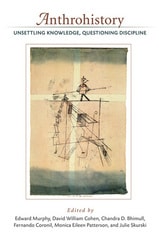
Cover art: Paul Klee, Tightrope Walker (1923), © Artists Rights Society (ARS), New York / VG Bild-Kunst, Bonn

Anthropological Demography
Toward a New SynthesisEdited by David I. Kertzer and Tom Fricke
University of Chicago Press, 1997
Showing that the two disciplines have much to offer each other, this book bridges the demography/anthropology divide. The editors begin the volume with an in-depth historical account of the relations between the fields. Eminent contributors from both disciplines then examine the major issues and controversies in anthropological demography, including the demographic implications of differing family and kinship systems; the influence of new developments in cultural, gender, and identity theory on population study; the limits of quantitative approaches in demographic study; and demographers' views of the limits of anthropological methods.
Anthropological Futures
Michael M. J. Fischer
Duke University Press, 2009
Fischer is particularly concerned with cultural anthropology’s interactions with science studies, and throughout the book he investigates how emerging knowledge formations in molecular biology, environmental studies, computer science, and bioengineering are transforming some of anthropology’s key concepts including nature, culture, personhood, and the body. In an essay on culture, he uses the science studies paradigm of “experimental systems” to consider how the social scientific notion of culture has evolved as an analytical tool since the nineteenth century. Charting anthropology’s role in understanding and analyzing the production of knowledge within the sciences since the 1990s, he highlights anthropology’s aptitude for tracing the transnational collaborations and multi-sited networks that constitute contemporary scientific practice. Fischer investigates changing ideas about cultural inscription on the human body in a world where genetic engineering, robotics, and cybernetics are constantly redefining our understanding of biology. In the final essay, Fischer turns to Kant’s philosophical anthropology to reassess the object of study for contemporary anthropology and to reassert the field’s primacy for answering the largest questions about human beings, societies, culture, and our interactions with the world around us. In Anthropological Futures, Fischer continues to advance what Clifford Geertz, in reviewing Fischer’s earlier book Emergent Forms of Life and the Anthropological Voice, called “a broad new agenda for cultural description and political critique.”
Anthropological Intelligence
The Deployment and Neglect of American Anthropology in the Second World WarDavid H. Price
Duke University Press, 2008
Anthropological Intelligence is based on interviews with anthropologists as well as extensive archival research involving many Freedom of Information Act requests. Price looks at the role played by the two primary U.S. anthropological organizations, the American Anthropological Association and the Society for Applied Anthropology (which was formed in 1941), in facilitating the application of anthropological methods to the problems of war. He chronicles specific projects undertaken on behalf of government agencies, including an analysis of the social effects of postwar migration, the design and implementation of OSS counterinsurgency campaigns, and the study of Japanese social structures to help tailor American propaganda efforts. Price discusses anthropologists’ work in internment camps, their collection of intelligence in Central and South America for the FBI’s Special Intelligence Service, and their help forming foreign language programs to assist soldiers and intelligence agents. Evaluating the ethical implications of anthropological contributions to World War II, Price suggests that by the time the Cold War began, the profession had set a dangerous precedent regarding what it would be willing to do on behalf of the U.S. government.
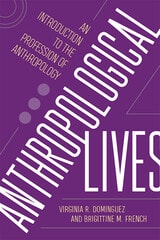
Anthropological Lives
An Introduction to the Profession of AnthropologyVirginia R Dominguez
Rutgers University Press, 2020
Anthropologists profiled: Leslie Aiello, Lee Baker, João Biehl, Tom Boellstorff, Jacqueline Comito, Shannon Dawdy, Virginia R. Dominguez, T.J. Ferguson, Brigittine French, Agustín Fuentes, Amy Goldenberg, Mary Gray, Sarah Green, Monica Heller, Douglas Hertzler, Ed Liebow, Mariano Perelman, Jeremy Sabloff, Carolyn Sargent, Marilyn Strathern, Nandini Sundar, Alaka Wali.

Anthropological Perspectives on Kinship
Ladislav Holy
Pluto Press, 1996
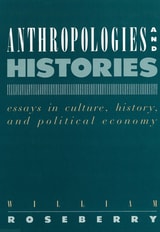
Anthropologies and Histories
Essays in Culture, History, and Political EconomyRoseberry, William
Rutgers University Press, 1989
"An extremely stimulating volume . . . rich and provocative, and codifies a new depature point."--Choice
"As a critic . . . Roseberry writes with sustained force and clarity. . . . his principal points emerge with a directness that will make this book attractive to a wide range of readers."--American Anthropologist
"Roseberry in among the most astute, careful, and theoretically cogent of the anthropologists of his generation. . . . [This book] illustrates well the breadth and coherence of his thinking and guides the reader through the complicated intersections of anthropology with history, political economy, Marxism, and Latin American studies."--Jane Schneider, CUNY In Anthropologies and Histories,
William Roseberry explores some of the cultural and political implications of an anthropological political economy. In his view, too few of these implications have been explored by authors who dismiss the very possibility of a political economic understanding of culture. Within political economy, readers are offered sophisticated treatments of uneven development, but when authors turn to culture and politics, they place contradictory social experiences within simplistic class or epochal labels. Within cultural anthropology, history is often little more than new terrain for extending anthropological practice. Roseberry places culture and history in relation to each other, in the context of a reflection on the political economy of uneven development. In the first half of this books, he looks at and critiques a variety of anthropological understandings of culture, arguing for an approach that sees culture as socially constituted and socially constitutive. Beginning with a commentary on Clifford Geertz's seminal essay on the Balinese cockfight, Roseberry argues that Geertz and his followers pay insufficient attention to cultural differentiation, to social and political inequalities that affect actors' different understandings of the world, other people, and of themselves. Sufficient attention to such questions, Roseberry argues, requires a concern for political economy. In the second half of the book, Roseberry explores the assumptions and practices of political economy, indicates the kind of problems that should be central to such an approach, and reviews some of the inadequacies of anthropological studies. William Roseberry is a professor of anthropology at the New School for Social Research.
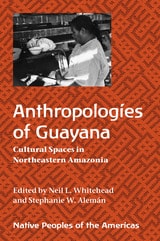
Anthropologies of Guayana
Cultural Spaces in Northeastern AmazoniaEdited by Neil L. Whitehead and Stephanie Alemán
University of Arizona Press, 2009
This is an important collection that brings together the work of scholars from North America, South America, and Europe to reveal the anthropological significance of Guayana, the ancient realm of El Dorado and still the scene of gold and diamond mining. Beginning with the earliest civilizations of the region, the chapters focus on the historical ecology of the rain forest and the archaeological record up to the sixteenth century, as well as ethnography, ethnology, and perceptions of space. The book features extensive discussions of the history of a range of indigenous groups, such as the Waiwai, Trio, Wajãpi, and Palikur. Contributions analyze the emergence of a postcolonial national society, the contrasts between the coastlands and upland regions, and the significance of race and violence in contemporary politics.
A noteworthy study of the prehistory and history of the region, the book also provides a useful survey of the current issues facing northeastern Amazonia. The chapters extend the anthropological agenda beyond the conventional focus on the “indigenous” even as contributors describe how Guayanese languages, mythologies, and social structures have remained resilient in the face of intense outside pressures.
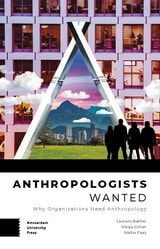
Anthropologists Wanted
Why Organizations Need AnthropologyLaurens Bakker
Amsterdam University Press, 2021
Anthropologists Wanted includes portraits of anthropologists and their diverse occupations, interviews with employers and academic counsellors' answers to frequently asked questions about degree programmes, anthropological skills, and tips to help you land that job.
Anthropologists and Indians in the New South
Edited by Rachel Bonney and J. Anthony Paredes; Foreword by Raymond D. Fogelson
University of Alabama Press, 2001
A clear assessment of the growing mutual respect and strengthening bond between modern Native Americans and the researchers who explore their past
Southern Indians have experienced much change in the last half of the 20th century. In rapid succession since World War II, they have passed through the testing field of land claims litigation begun in the 1950s, played upon or retreated from the civil rights movement of the 1960s, seen the proliferation of “wannabe” Indian groups in the 1970s, and created innovative tribal enterprises—such as high-stakes bingo and gambling casinos—in the 1980s. The Native American Graves Protection and Repatriation Act of 1990 stimulated a cultural renewal resulting in tribal museums and heritage programs and a rapprochement with their western kinsmen removed in “Old South” days.
Anthropology in the South has changed too, moving forward at the cutting edge of academic theory. This collection of essays reflects both that which has endured and that which has changed in the anthropological embrace of Indians from the New South. Beginning as an invited session at the 30th-anniversary meeting of the Southern Anthropological Society held in 1996, the collection includes papers by linguists, archaeologists, and physical anthropologists, as well as comments from Native Americans.
This broad scope of inquiry—ranging in subject from the Maya of Florida, presumed biology, and alcohol-related problems to pow-wow dancing, Mobilian linguistics, and the “lost Indian ancestor” myth—results in a volume valuable to students, professionals, and libraries. Anthropologists and Indians in the New South is a clear assessment of the growing mutual respect and strengthening bond between modern Native Americans and the researchers who explore their past.

Anthropologists in the Public Sphere
Speaking Out on War, Peace, and American PowerEdited by Roberto J. González
University of Texas Press, 2004
Anthropologists have a long tradition of prescient diagnoses of world events. Possessing a knowledge of culture, society, and history not always shared by the media's talking heads, anthropologists have played a crucial role in educating the general reader on the public debates from World War I to the second Gulf War.
This anthology collects over fifty commentaries by noted anthropologists such as Margaret Mead, Franz Boas, and Marshall Sahlins who seek to understand and explain the profound repercussions of U.S. involvement in the Middle East, Asia, Africa, and Latin America. Frequently drawing on their own fieldwork, the anthropologists go beyond the headlines to draw connections between indigenous cultures, corporate globalization, and contemporary political and economic crises. Venues range from the op-ed pages of internationally renowned newspapers such as the New York Times and the Washington Post to magazine articles and television interviews. Special sections entitled "Prelude to September 11" and "Anthropological Interpretations of September 11" include articles that provided many Americans with their first substantial introduction to the history of Islam, Central Asia, and the Middle East. Each article includes a brief introduction contextualizing the commentary.
Anthropologists in the Stock Exchange
A Financial History of Victorian ScienceMarc Flandreau
University of Chicago Press, 2016
Flandreau argues that finance and science were at the heart of a new brand of imperialism born during Benjamin Disraeli’s first term as Britain’s prime minister in the 1860s. As anthropologists advocated the study of Miskito Indians or stated their views on a Jamaican rebellion, they were in fact catering to the impulses of the stock exchange—for their own benefit. In this way the very development of the field of anthropology was deeply tied to issues relevant to the financial market—from trust to corruption. Moreover, this book shows how the interplay between anthropology and finance formed the foundational structures of late nineteenth-century British imperialism and helped produce essential technologies of globalization as we know it today.
Anthropology At the Dawn of the Cold War
The Influence of Foundations, Mccarthyism and the CIAEdited by Dustin M. Wax
Pluto Press, 2008
This book breaks new ground in the history of anthropology, opening up an explicit examination of anthropology in the Cold War era. With historical distance, Cold War anthropology has begun to emerge as a distinct field within the discipline. This book brings a number of different approaches to bear on the questions raised by anthropology's Cold War history.
The contributors show how anthropologists became both tools and victims of the Cold War state during the rise of the United States in the post-War period. Examining the intersection between science and power, this book is a compelling read for anthropologists, historians, sociologists, and anyone interested in the way in which colonial and neo-colonial knowledge is produced and constructed.
Anthropology Goes to War
Professional Ethics and Counterinsurgency in ThailandEric Wakin
University of Wisconsin Press, 1998
Now back in print, Eric Wakin's Anthropology Goes to War is the first comprehensive study of what became known as the Thailand Controversy—and a timely reminder of a debate whose echoes may be heard in our own time.

Anthropology and Antihumanism in Imperial Germany
Angela Elisabeth Zimmerman
University of Chicago Press, 2001
Drawing on sources ranging from scientific papers and government correspondence to photographs, pamphlets, and police reports of "freak shows," Zimmerman demonstrates how German imperialism opened the door to antihumanism. As Germans interacted more frequently with peoples and objects from far-flung cultures, they were forced to reevaluate not just those peoples, but also the construction of German identity itself. Anthropologists successfully argued that their discipline addressed these issues more productively—and more accessibly—than humanistic studies.
Scholars of anthropology, European and intellectual history, museum studies, the history of science, popular culture, and colonial studies will welcome this book.
Anthropology and Development
Challenges for the Twenty-First CenturyKaty Gardner and David Lewis
Pluto Press, 2015
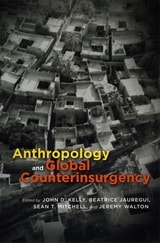
Anthropology and Global Counterinsurgency
Edited by John D. Kelly, Beatrice Jauregui, Sean T. Mitchell, and Jeremy Walton
University of Chicago Press, 2010
Global events of the early twenty-first century have placed new stress on the relationship among anthropology, governance, and war. Facing prolonged insurgency, segments of the U.S. military have taken a new interest in anthropology, prompting intense ethical and scholarly debate. Inspired by these issues, the essays in Anthropology and Global Counterinsurgency consider how anthropologists can, should, and do respond to military overtures, and they articulate anthropological perspectives on global war and power relations.
This book investigates the shifting boundaries between military and civil state violence; perceptions and effects of American power around the globe; the history of counterinsurgency doctrine and practice; and debate over culture, knowledge, and conscience in counterinsurgency. These wide-ranging essays shed new light on the fraught world of Pax Americana and on the ethical and political dilemmas faced by anthropologists and military personnel alike when attempting to understand and intervene in our world.
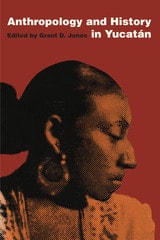
Anthropology and History in Yucatán
Edited by Grant D. Jones
University of Texas Press, 1977
Anthropology and History in Yucatán is a collection of ten essays that offer new evidence and interpretations of the survival and adaptation of lowland Maya culture from its earliest contact with the Spanish to the 1970s. These case studies reflect a growing interest in the use of historical approaches in the development of models of cultural change that will integrate archaeological, historical, and ethnographic data.
The portrait of the Maya emerging from this collection is that of a remarkably vital people who have skillfully resisted total incorporation with their neighbors and who continue even today to emphasize their cultural independence and historical uniqueness. In his introduction, Grant D. Jones synthesizes previous studies of the anthropological history of Yucatán and summarizes the theoretical issues underlying the volume. Section I, which focuses on continuity and change in the boundaries of Maya ethnicity in Yucatán, includes contributions by the late Sir Eric Thompson, France V. Scholes, and O. Nigel Bolland. Section II presents comparative regional perspectives of Maya adaptations to external forces of change and contains essays by D. E. Dumond, Grant D. Jones, James W. Ryder, and Anne C. Collins. In the closing section, three articles, by Victoria Reifler Bricker, Allan F. Burns, and Irwin Press, treat Maya concepts of their own history.
Throughout the book, the authors demonstrate that models far more complex than Robert Redfield’s folk-urban continuum must be developed to account for the great regional variations in responses by the Maya to the pressures of economic, cultural, and political control as exerted by Spanish, Mexican, Guatemalan, and British authorities over the past four centuries. The essays demonstrate a variety of methodological approaches that will be of interest to historians, ethnohistorians, ethnologists, archaeologists, and those who have a general interest in the survival of Maya culture.
Anthropology and Politics
Visions, Traditions, and TrendsJoan Vincent
University of Arizona Press, 1990
Anthropology and Radical Humanism
Native and African American Narratives and the Myth of RaceJack Glazier
Michigan State University Press, 2020
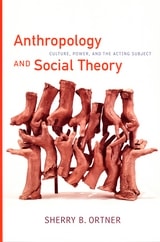
Anthropology and Social Theory
Culture, Power, and the Acting SubjectSherry B. Ortner
Duke University Press, 2006
Some of the essays reflect explicitly on theoretical concerns: the relationship between agency and power, the problematic quality of ethnographic studies of resistance, and the possibility of producing an anthropology of subjectivity. Others are ethnographic studies that apply Ortner’s theoretical framework. In these, she investigates aspects of social class, looking at the relationship between race and middle-class identity in the United States, the often invisible nature of class as a cultural identity and as an analytical category in social inquiry, and the role that public culture and media play in the creation of the class anxieties of Generation X. Written with Ortner’s characteristic lucidity, these essays constitute a major statement about the future of social theory from one of the leading anthropologists of our time.

Anthropology and the Dance
TEN LECTURES (2D ED.)Drid WIlliams
University of Illinois Press, 1991
Williams examines subjects ranging from Aboriginal and African dances to the Royal Ballet, and makes a compelling case for moving beyond the Western view of the dance as mere entertainment, locating human movement firmly and irrefutably within the sphere of serious study.
Anthropology and the Dance: Ten Lectures is the thoroughly rewritten second edition of Ten Lectures on Theories of the Dance (1991). Included are a glossary of terms, indexes and notes, an updated bibliography, and an appendix, "An Exercise in Applied Personal Anthropology."
Anthropology and the Politics of Representation
Gabriela Vargas-Cetina
University of Alabama Press, 2013
In Anthropology and the Politics of Representation volume editor Gabriela Vargas-Cetina brings together a group of international scholars who, through their fieldwork experiences, reflect on the epistemological, political, and personal implications of their own work. To do so, they focus on such topics as ethnography, anthropologists’ engagement in identity politics, representational practices, the contexts of anthropological research and work, and the effects of personal choices regarding self-involvement in local causes that may extend beyond purely ethnographic goals.
Such reflections raise a number of ethnographic questions: What are ethnographic goals? Who sets the agenda for ethnographic writing? How does fieldwork change the anthropologist’s identity? Do ethnography and ethnographers have an impact on local lives and self-representation? How do anthropologists balance long-held respect for cultural diversity with advocacy for local people? How does an author choose what to say and write, and what not to disclose? Should anthropologists support causes that may require going against their informed knowledge of local lives?
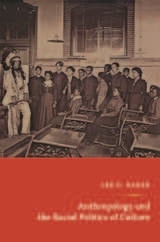
Anthropology and the Racial Politics of Culture
Lee D. Baker
Duke University Press, 2010
Baker argues that the concept of culture developed by ethnologists to understand American Indian languages and customs in the nineteenth century formed the basis of the anthropological concept of race eventually used to confront “the Negro problem” in the twentieth century. As he explores the implications of anthropology’s different approaches to African Americans and Native Americans, and the field’s different but overlapping theories of race and culture, Baker delves into the careers of prominent anthropologists and ethnologists, including James Mooney Jr., Frederic W. Putnam, Daniel G. Brinton, and Franz Boas. His analysis takes into account not only scientific societies, journals, museums, and universities, but also the development of sociology in the United States, African American and Native American activists and intellectuals, philanthropy, the media, and government entities from the Bureau of Indian Affairs to the Supreme Court. In Anthropology and the Racial Politics of Culture, Baker tells how anthropology has both responded to and helped shape ideas about race and culture in the United States, and how its ideas have been appropriated (and misappropriated) to wildly different ends.
Anthropology and the Will to Meaning
A Postcolonial CritiqueVassos Argyrou
Pluto Press, 2002
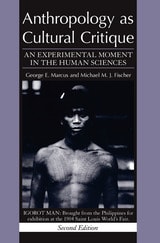
Anthropology as Cultural Critique
An Experimental Moment in the Human SciencesGeorge E. Marcus and Michael M. J. Fischer
University of Chicago Press, 1999
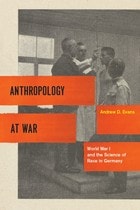
Anthropology at War
World War I and the Science of Race in GermanyAndrew D. Evans
University of Chicago Press, 2010
Between 1914 and 1918, German anthropologists conducted their work in the midst of full-scale war. The discipline was relatively new in German academia when World War I broke out, and, as Andrew D. Evans reveals in this illuminating book, its development was profoundly altered by the conflict. As the war shaped the institutional, ideological, and physical environment for anthropological work, the discipline turned its back on its liberal roots and became a nationalist endeavor primarily concerned with scientific studies of race.
Combining intellectual and cultural history with the history of science, Anthropology at War examines both the origins and consequences of this shift. Evans locates its roots in the decision to allow scientists access to prisoner-of-war camps, which prompted them to focus their research on racial studies of the captives. Caught up in wartime nationalism, a new generation of anthropologists began to portray the country’s political enemies as racially different. After the war ended, the importance placed on racial conceptions and categories persisted, paving the way for the politicization of scientific inquiry in the years of the ascendancy of National Socialism.

Anthropology at the Front Lines of Gender-Based Violence
Jennifer R. Wies
Vanderbilt University Press, 2011
Anthropology from a Pragmatic Point of View
Immanuel Kant. Translated by Victor Lyle Dowdell. Revised and Edited by Hans H. Rudnick
Southern Illinois University Press, 1996
In the fall semester of 1772/73 at the Albertus University of Königsberg, Immanuel Kant, metaphysician and professor of logic and metaphysics, began lectures on anthropology, which he continued until 1776, shortly before his retirement from public life. His lecture notes and papers were first published in 1798, eight years after the publication of the Critique of Judgment, the third of his famous Critiques. The present edition of the Anthropology is a translation of the text found in volume 7 of Kants gesammelte Schriften, edited by Oswald Külpe.
Kant describes the Anthropology as a systematic doctrine of the knowledge of humankind. (He does not yet distinguish between the academic discipline of anthropology as we understand it today and the philosophical.) Kant’s lectures stressed the "pragmatic" approach to the subject because he intended to establish pragmatic anthropology as a regular academic discipline. He differentiates the physiological knowledge of the human race—the investigation of "what Nature makes of man"—from the pragmatic—"what man as a free being makes of himself, what he can make of himself, and what he ought to make of himself." Kant believed that anthropology teaches the knowledge of humankind and makes us familiar with what is pragmatic, not speculative, in relation to humanity. He shows us as world citizens within the context of the cosmos.
Summarizing the cloth edition of the Anthropology, Library Journal concludes: "Kant’s allusions to such issues as sensation, imagination, judgment, (aesthetic) taste, emotion, passion, moral character, and the character of the human species in regard to the ideal of a cosmopolitan society make this work an important resource for English readers who seek to grasp the connections among Kant’s metaphysics of nature, metaphysics of morals, and political theory. The notes of the editor and translator, which incorporate material from Ernst Cassirer’s edition and from Kant’s marginalia in the original manuscript, shed considerable light on the text."
Anthropology in the Meantime
Experimental Ethnography, Theory, and Method for the Twenty-First CenturyMichael M. J. Fischer
Duke University Press, 2018
Anthropology of Landscape
The Extraordinary in the OrdinaryChristopher Tilley and Kate Cameron-Daum
University College London, 2017
Anthropology of the Self
The Individual in Cultural PerspectiveBrian Morris
Pluto Press, 1994
Anthropology without Informants
Collected Works in Paleoanthropology by L.G. FreemanL. G. Freeman
University Press of Colorado, 2009
A socio-cultural anthropologist who became a behavioral paleoanthropologist late in his career, Freeman took a unique approach, employing statistical or mathematical techniques in his analysis of archaeological data. All the papers in this collection blend theoretical statements with the archeological facts they are intended to help the reader understand.
Although he taught at the University of Chicago for the span of his 40-year career, Freeman is not well-known among Anglophone scholars, because his primary fieldwork and publishing occurred in Cantabrian, Spain. However, he has been a major player in Paleolithic prehistory, and this volume will introduce his work to more American Archaeologists.
This collection brings the work of an expert scholar, to a broad audience, and will be of interest to archaeologists, their students, and lay readers interested in the Paleolithic era.
Anthropology's World
Life in a Twenty-First-Century DisciplineUlf Hannerz
Pluto Press, 2010
In this masterly, state of the art work, Ulf Hannerz maps the contemporary social world of anthropologists and its relation to the wider world in which they carry out their work.
Raising fundamental questions such as 'What is anthropology really about?', 'How does the public understand, or misunderstand, anthropology?' and 'What and where do anthropologists study now, and for whom do they write?' Hannerz invites anthropologists to think again about where their discipline is going.
Full of insights and practical advice from Hannerz's long experience at the top of the discipline, this book is essential for all anthropologists who want their craft to survive and develop in a volatile world, and contribute to new understandings of its ever-changing diversity and interconnections.
Anthropology, Economics, and Choice
By Michael Chibnik
University of Texas Press, 2011
In the midst of global recession, angry citizens and media pundits often offer simplistic theories about how bad decisions lead to crises. Many economists, however, base their analyses on rational choice theory, which assumes that decisions are made by well-informed, intelligent people who weigh risks, costs, and benefits. Taking a more realistic approach, the field of anthropology carefully looks at the underlying causes of choices at different times and places.
Using case studies of choices by farmers, artisans, and bureaucrats drawn from Michael Chibnik's research in Mexico, Peru, Belize, and the United States, Anthropology, Economics, and Choice presents a clear-eyed perspective on human actions and their economic consequences. Five key issues are explored in-depth: choices between paid and unpaid work; ways people deal with risk and uncertainty; how individuals decide whether to cooperate; the extent to which households can be regarded as decision-making units; and the "tragedy of the commons," the theory that social chaos may result from unrestricted access to commonly owned property.
Both an accessible primer and an innovative exploration of economic anthropology, this interdisciplinary work brings fresh insight to a timely topic.

Anthropology, Film Industries, Modularity
Ramyar D. Rossoukh and Steven C. Caton, editors
Duke University Press, 2021
Contributors. Steven C. Caton, Jessica Dickson, Kevin Dwyer, Tejaswini Ganti, Lotte Hoek, Amrita Ibrahim, Sylvia J. Martin, Ramyar D. Rossoukh
Anthropology
A Continental PerspectiveChristoph Wulf
University of Chicago Press, 2013

Anthropometric Standards for the Assessment of Growth and Nutritional Status
A. Roberto Frisancho
University of Michigan Press, 1990

Anthropos and the Material
Penny Harvey, Christian Krohn-Hansen, and Knut Nustad, editors
Duke University Press, 2019

Anti-Crisis
Janet Roitman
Duke University Press, 2013

Ants For Breakfast
James Skibo
University of Utah Press, 1999
A view from the remote Philippine highlands where the author’s time in the kalinga homeland was packed with the elements of a thriller novel: mystery, danger, sex, violence, death—and research too!
Ants for Breakfast is about the adventure of modern archaeology. Seeking insight into prehistoric pottery manufacture and use, archaeologist James Skibo traveled to the remote Phillippine highlands to live with the Kalinga people, once headhunters, and one of the few groups in the world who still use ceramics for cooking.
Even as he looked for clues to the past in the practices of the present, the author’s time in the Kalinga homeland was packed with excitment: mystery, danger, sex, violence, and death. It was also an opportunity to taste a world both subtly and vastly different, while adding a new perspective to his own. In the course of his narrative, Skibo seizes every opportunity to link his experiences to the development of modern archaeology, and to such topics as human evolution, the peopling of the world, animal domestication, cultural logic, food taboos, basketball, Indiana Jones, and even Imelda Marcos.

Anxiety in and about Africa
Multidisciplinary Perspectives and ApproachesAndrea Mariko Grant
Ohio University Press, 2021
How does anxiety impact narratives about African history, culture, and society?
This volume demonstrates the richness of anxiety as an analytical lens within African studies. Contributors call attention to ways of thinking about African spaces—physical, visceral, somatic, and imagined—as well as about time and temporality. Through a multidisciplinary approach, the volume also brings histories of anxiety in colonial settings into conversation with work on the so-called negative emotions in disciplines beyond history. While anxiety has long been acknowledged for its ability to unsettle colonial narratives, to reveal the vulnerability of the colonial enterprise, this volume shows it can equally complicate contemporary narratives, such as those of sustainable development, migration, sexuality, and democracy. These essays therefore highlight the need to take emotions seriously as contemporary realities with particular histories that must be carefully mapped out.
Apologies to Thucydides
Understanding History as Culture and Vice VersaMarshall Sahlins
University of Chicago Press, 2004
Sahlins begins by confronting Thucydides' account of the Peloponnesian War with an analogous "Polynesian War," the fight for the domination of the Fiji Islands (1843-55) between a great sea power (like Athens) and a great land power (like Sparta). Sahlins draws parallels between the conflicts with an eye to their respective systems of power and sovereignty as well as to Thucydides' alternation between individual (Pericles, Themistocles) and collective (the Athenians, the Spartans) actors in the making of history. Characteristic of most histories ever written, this alternation between the agency of "Great Men" and collective entities leads Sahlins to a series of incisive analyses ranging in subject matter from Bobby Thomson's "shot heard round the world" for the 1951 Giants to the history-making of Napoleon and certain divine kings to the brouhaha over Elián Gonzalez. Finally, again departing from Thucydides, Sahlins considers the relationship between cultural order and historical contingency through the recounting of a certain royal assassination that changed the course of Fijian history, a story of fratricide and war worthy of Shakespeare.
In this most convincing presentation yet of his influential theory of culture, Sahlins experiments with techniques for mixing rich narrative with cultural explication in the hope of doing justice at once to the actions of persons and the customs of people. And he demonstrates the necessity of taking culture into account in the creation of history—with apologies to Thucydides, who too often did not.

Appetites
Food and Sex in Post-Socialist ChinaJudith Farquhar
Duke University Press, 2002
From eating well in improving economic times to memories of the late 1950s famine, from the flavors of traditional Chinese medicine to modernity’s private sexual passions, this book argues that embodiment in all its forms must be invented and sustained in public reflections about personal and national life. As much at home in science studies and social theory as in the details of life in Beijing, this account uses anthropology, cultural studies, and literary criticism to read contemporary Chinese life in a materialist and reflexive mode. For both Maoist and market reform periods, this is a story of high culture in appetites, desire in collective life, and politics in the body and its dispositions.
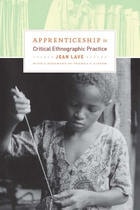
Apprenticeship in Critical Ethnographic Practice
Jean Lave
University of Chicago Press, 2011
In this extended meditation, Jean Lave interweaves analysis of the process of apprenticeship among the Vai and Gola tailors of Liberia with reflections on the evolution of her research on those tailors in the late 1970s. In so doing, she provides both a detailed account of her apprenticeship in the art of sustained fieldwork and an insightful overview of thirty years of changes in the empirical and theoretical facets of ethnographic practice. Examining the issues she confronted in her own work, Lave shows how the critical questions raised by ethnographic research erode conventional assumptions, altering the direction of the work that follows.
As ethnography takes on increasing significance to an ever widening field of thinkers on topics from education to ecology, this erudite but accessible book will be essential to anyone tackling the question of what it means to undertake critical and conceptually challenging fieldwork. Apprenticeship in Critical Ethnographic Practice explains how to seriously explore what it means to be human in a complex world—and why it is so important.
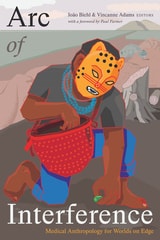
Arc of Interference
Medical Anthropology for Worlds on EdgeJoão Biehl and Vincanne Adams, editors
Duke University Press, 2023
Contributors. Vincanne Adams, João Biehl, Davíd Carrasco, Lawrence Cohen, Jean Comaroff, Robert Desjarlais, Paul Farmer, Marcia Inhorn, Janis H. Jenkins, David S. Jones, Salmaan Keshavjee, Arthur Kleinman, Margaret Lock, Adriana Petryna