Results by title
5550 books match the query 'Biography & Autobiography' and 577 start with a
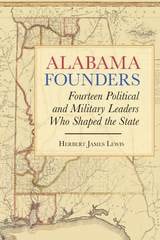
Alabama Founders
Fourteen Political and Military Leaders Who Shaped the StateHerbert James Lewis
University of Alabama Press, 2018
While much has been written about the significant events in the history of early Alabama, there has been little information available about the people who participated in those events. In Alabama Founders:Fourteen Political and Military Leaders Who Shaped the State Herbert James Lewis provides an important examination of the lives of fourteen political and military leaders. These were the men who opened Alabama for settlement, secured Alabama’s status as a territory in 1817 and as a state in 1819, and helped lay the foundation for the political and economic infrastructure of Alabama in its early years as a state.
While well researched and thorough, this book does not purport to be a definitive history of Alabama’s founding. Lewis has instead narrowed his focus to only those he believes to be key figures—in clearing the territory for settlement, serving in the territorial government, working to achieve statehood, playing a key role at the Constitutional Convention of 1819, or being elected to important offices in the first years of statehood.
The founders who readied the Alabama Territory for statehood include Judge Harry Toulmin, Henry Hitchcock, and Reuben Saffold II. William Wyatt Bibb and his brother Thomas Bibb respectively served as the first two governors of the state, and Charles Tait, known as the “Patron of Alabama,” shepherded Alabama’s admission bill through the US Senate. Military figures who played roles in surveying and clearing the territory for further settlement and development include General John Coffee, Andrew Jackson’s aide and land surveyor, and Samuel Dale, frontiersman and hero of the “Canoe Fight.” Those who were instrumental to the outcome of the Constitutional Convention of 1819 and served the state well in its early days include John W. Walker, Clement Comer Clay, Gabriel Moore, Israel Pickens, and William Rufus King.
Alabama's Outlaw Sheriff, Stephen S. Renfroe
William Warren Rogers Sr.
University of Alabama Press, 2005
Among the villains, heroes, rogues and demigods who inhabit Southern folklore, Stephen S. Renfroe deserves a place. In the twentieth-century a few popular magazine and newspaper articles have been written about Renfroe, while Carl Carmer’s Stars Fell on Alabama, published in 1934, devoted several pages to him. Other than this, all is previously know about the enigmatic sheriff who because an outlaw is in the form of a legend.
In general, Renfroe appeared in the Black Belt town of Livingston, Alabama in the late 1860s and quickly became a member of the Ku Klux Klan. Allegedly playing a major role in driving out carpetbaggers and ridding Sumter County of Radical Republican rule, he was awarded with the office of sheriff. However, he reverted to a pattern of crime that earned him disgrace and ostracism.
As to his origins, his background, and the details of his career—much has been speculated but little has been documented. Although no statue commemorates Renfroe’s role as a statesman, educator, or solider (his highest military rank was that of private), a case can be made that he helped shape the course of politics in Alabama’s Black Belt.
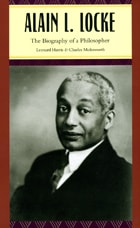
Alain L. Locke
The Biography of a PhilosopherLeonard Harris and Charles Molesworth
University of Chicago Press, 2008
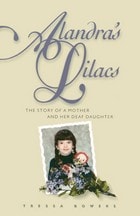
Alandra's Lilacs
The Story of a Mother and Her Deaf DaughterTressa Bowers
Gallaudet University Press, 1999
When, in 1968, 19-year-old Tressa Bowers took her baby daughter to an expert on deaf children, he pronounced that Alandra was “stone deaf,” she most likely would never be able to talk, and she probably would not get much of an education because of her communication limitations. Tressa refused to accept this stark assessment of Alandra’s prospects. Instead, she began the arduous process of starting her daughter’s education.
Economic need forced Tressa to move several times, and as a result, she and Alandra experienced a variety of learning environments: a pure oralist approach, which discouraged signing; Total Communication, in which the teachers spoke and signed simultaneously; a residential school for deaf children, where Signed English was employed; and a mainstream public school that relied upon interpreters. Changes at home added more demands, from Tressa’s divorce to her remarriage, her long work hours, and the ongoing challenge of complete communication within their family. Through it all, Tressa and Alandra never lost sight of their love for each other, and their affection rippled through the entire family. Today, Tressa can triumphantly point to her confident, educated daughter and also speak with pride of her wonderful relationship with her deaf grandchildren. Alandra’s Lilacs is a marvelous story about the resiliency and achievements of determined, loving people no matter what their circumstances might be.
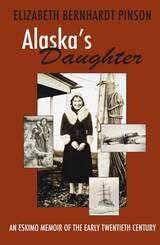
Alaska's Daughter
An Eskimo Memoir of the Early Twentieth CenturyElizabeth Pinson
Utah State University Press, 2004
Elizabeth B. Pinson shares with us her memories of Alaska's emergence into a new and modern era, bearing witness to history in the early twentieth century as she recalls it. She draws us into her world as a young girl of mixed ethnicity, with a mother whose Eskimo family had resided on the Seward Peninsula for generations and a father of German heritage. Growing up in and near the tiny village of Teller on the Bering Strait, Elizabeth at the age of six, despite a harrowing, long midwinter sled ride to rescue her, lost both her legs to frostbite when her grandparents, with whom she was spending the winter in their traditional Eskimo home, died in the 1918 influenza epidemic.
Fitted with artificial legs financed by an eastern benefactor, Elizabeth kept journals of her struggles, triumphs, and adventures, recording her impressions of the changing world around her and experiences with the motley characters she met. These included Roald Amundsen, whose dirigible landed in Teller after crossing the Arctic Circle; the ill-fated 1921 British colonists of Wrangel Island in the Arctic; trading ship captains and crews; prospectors; doomed aviators; and native reindeer herders. Elizabeth moved on to boarding school, marriage, and the state of Washington, where she compiled her records into this memoir and where, now in her 90s, she lives.
Albert A. Peña Jr.
Dean of Chicano PoliticsJosé Angel Gutiérrez
Michigan State University Press, 2017
Albert Camus, Jean Sénac, or The Rebel Son
Hamid Nacer-Khodja
Michigan State University Press, 2019
Albert Camus
The Artist in the ArenaEmmett Parker
University of Wisconsin Press, 1966
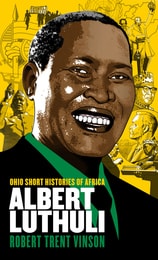
Albert Luthuli
Robert Trent Vinson
Ohio University Press, 2018
In an excellent addition to the Ohio Short Histories of Africa series, Robert Trent Vinson recovers the important but largely forgotten story of Albert Luthuli, Africa’s first Nobel Peace Prize winner and president of the African National Congress from 1952 to 1967. One of the most respected African leaders, Luthuli linked South African antiapartheid politics with other movements, becoming South Africa’s leading advocate of Mahatma Gandhi’s nonviolent civil disobedience techniques. He also framed apartheid as a crime against humanity and thus linked South African antiapartheid struggles with international human rights campaigns.
Unlike previous studies, this book places Luthuli and the South African antiapartheid struggle in new global contexts, and aspects of Luthuli’s leadership that were not previously publicly known: Vinson is the first to use new archival evidence, numerous oral interviews, and personal memoirs to reveal that Luthuli privately supported sabotage as an additional strategy to end apartheid. This multifaceted portrait will be indispensable to students of African history and politics and nonviolence movements worldwide.
Albert Maysles
Joe McElhaney
University of Illinois Press, 2008
Albert Murray and the Aesthetic Imagination of a Nation
Edited by Barbara A. Baker
University of Alabama Press, 2010
Reimagining America Through the Blues, Jazz, and the Cultural Vision of Albert Murray.
This collection consists of essays written by prominent African American literature, jazz, and Albert Murray scholars, reminiscences from Murray protégés and associates, and interviews with Murray himself. It illustrates Murray’s place as a central figure in African American arts and letters and as an American cultural pioneer.
Born in Nokomis, Alabama, and raised in Mobile, Albert Murray graduated from Tuskegee University, where he later taught, but he has long resided in New York City. He is the author of many critically acclaimed novels, memoirs, and essay collections, among them The Omni-Americans, South to a Very Old Place, Train Whistle Guitar, The Spyglass Tree, and The Seven League Boots. He is also a critic and visual artist, as well as a lifelong friend of and collaborator with artistic luminaries such as Ralph Ellison, Duke Ellington, and Romare Bearden. As such, his life and work are testaments to the centrality of southern and African American aesthetics in American art. Murray is widely viewed as a figure who, through his art and criticism, transforms the “fakelore” of white culture into a new folklore that illustrates the centrality of the blues and jazz idioms and reveals the black vernacular as what is most distinct about American art.
Alchemical Laboratory Notebooks and Correspondence
George Starkey
University of Chicago Press, 2004
The editors present in this volume transcriptions of Starkey's texts, their translations, and valuable commentary for the modern reader. Dispelling the myth that alchemy was an irrational enterprise, this remarkable collection of laboratory notebooks and correspondence reveals the otherwise hidden methodologies of one of the seventeenth century's most influential alchemists.
Aldo Leopold
His Life and WorkCurt D. Meine
University of Wisconsin Press, 2010
This biography of Aldo Leopold follows him from his childhood as a precocious naturalist to his profoundly influential role in the development of conservation and modern environmentalism in the United States. This edition includes a new preface by author Curt Meine and an appreciation by acclaimed Kentucky writer and farmer Wendell Berry.

Aldo Leopold
His Life and WorkCurt D. Meine
University of Wisconsin Press, 1991
This biography of Aldo Leopold follows him from his childhood as a precocious naturalist to his profoundly influential role in the development of conservation and modern environmentalism in the United States.
Aldus Manutius
The Invention of the PublisherOren Margolis
Reaktion Books, 2023
Now in paperback, a fresh reading of Aldus Manutius, preeminent in the history of the printed book.
Aldus Manutius is perhaps the greatest figure in the history of the printed book: in Venice, Europe’s capital of printing, he invented the italic type and issued more first editions of the classics than anyone before or since, as well as Hypnerotomachia Poliphili, the most beautiful and mysterious printed book of the Italian Renaissance.
This is the first monograph in English on Aldus Manutius in over forty years. It shows how Aldus redefined the role of a book printer, from mere manual laborer to a learned publisher. As a consequence, Aldus participated in the same debates as contemporaries such as Leonardo da Vinci and Erasmus of Rotterdam, making this book an insight into their world too.
Alec Wilder
Philip Lambert
University of Illinois Press, 2013
Alejandro González Iñárritu
Celestino Deleyto and Maria del Mar Azcona
University of Illinois Press, 2010
Alejo Carpentier
The Pilgrim at HomeBy Roberto González Echevarría
University of Texas Press, 1990
Alejo Carpentier was one of the greatest Latin American novelists of the twentieth century, as well as a musicologist, journalist, cultural promoter, and diplomat. His fictional world issues from an encyclopedic knowledge of the history, art, music, and literature of Latin America and Europe. Carpentier’s novels and stories are the enabling discourse of today’s Latin American narrative, and his interpretation of Latin American history has been among the most influential. Carpentier was the first to provide a comprehensive view of Caribbean history that centered on the contribution of Africans, above and beyond the differences created by European cultures and languages. Alejo Carpentier: The Pilgrim at Home, first published in 1977 and updated for this edition, covers the life and works of the great Cuban novelist, offering a new perspective on the relationship between the two.
González Echevarría offers detailed readings of the works La música en Cuba, The Kingdom of This World, The Lost Steps, and Explosion in a Cathedral. In a new concluding chapter, he takes up Carpentier’s last years, his relationship with the Cuban revolutionary regime, and his last two novels, El arpa y la sombra and La consagración de la primavera, in which Carpentier reviewed his life and career.
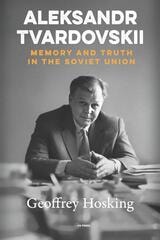
Aleksandr Tvardovskii
Memory and Truth in the Soviet UnionGeoffrey Hosking
Central European University Press, 2025
By giving a balanced account of his strengths and weaknesses, his achievements and failures, the author succeeds in giving the fullest picture available anywhere of a controversial man who turns out to be more complex than he has been portrayed so far. To understand him better is to understand why the Soviet intelligentsia changed so fundamentally in the USSR’s final decades, a change that helps to explain the rise of Gorbachev twenty years later. The study—which includes an in-depth analysis of Tvardovskii’s major works—also helps to better understand the fate of culture under an authoritarian regime and the intricacies of the struggle against censorship.
Aleksandur Stamboliiski
BulgariaRichard Crampton
Haus Publishing, 2009
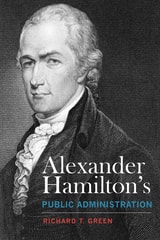
Alexander Hamilton's Public Administration
Richard T. Green
University of Alabama Press, 2019
Examines how Hamilton’s thoughts and experiences about public administration theory and practice have shaped the nation
American public administration inherited from Alexander Hamilton a distinct republican framework through which we derive many of our modern governing standards and practices. His administrative theory flowed from his republican vision, prescribing not only the how of administration but also what should be done and why. Administration and policy merged seamlessly in his mind, each conditioning the other. His Anti-Federalist detractors clearly saw this and fought his vision tooth and nail.
That conflict endures to this day because Americans still have not settled on just one vision of the American republic. That is why, Richard Green argues, Hamilton is a pivotal figure in our current reckoning. If we want to more fully understand ourselves and our ways of governing today, we must start by understanding Hamilton, and we cannot do that without exploring his administrative theory and practice in depth.
Alexander Hamilton’s Public Administration considers Hamilton both as a founder of the American republic, steeped in the currents of political philosophy and science of his day, and as its chief administrative theorist and craftsman, deeply involved in establishing the early institutions and policies that would bring his interpretation of the written Constitution to life. Accordingly, this book addresses the complex mix of classical and modern ideas that informed his vision of a modern commercial and administrative republic; the administrative ideas, institutions, and practices that flowed from that vision; and the substantive policies he deemed essential to its realization. Green’s analysis grows out of an immersion in Hamilton’s extant papers, including reports, letters, pamphlets, and essays. Readers will find a comprehensive explanation of his theoretical contributions and a richly detailed account of his ideas and practices in historical context.
Alexander Hamilton
From Obscurity to GreatnessJohn P. Kaminski
Wisconsin Historical Society Press, 2016
Editor John P. Kaminski has gathered a remarkable collection of quotations by and about Alexander Hamilton that paint for us a nuanced portrait of a complex man. Through his own words and the words of his contemporaries -- including the man who killed him in a duel, Aaron Burr -- we can gain a better understanding of this fascinating man who rose from anonymity on a small Caribbean island to the corridors of power.
Alexander Robey Shepherd
The Man Who Built the Nation’s CapitalJohn P. Richardson
Ohio University Press, 2016
With Alexander Robey Shepherd, John P. Richardson gives us the first full-length biography of his subject, who as Washington, D.C.’s, public works czar (1871–74) built the infrastructure of the nation’s capital in a few frenetic years after the Civil War. The story of Shepherd is also the story of his hometown after that cataclysm, which left the city with churned-up streets, stripped of its trees, and exhausted.
An intrepid businessman, Shepherd became president of Washington’s lower house of delegates at twenty-seven. Garrulous and politically astute, he used every lever to persuade Congress to realize Peter L’Enfant’s vision for the capital. His tenure produced paved and graded streets, sewer systems, trees, and gaslights, and transformed the fetid Washington Canal into one of the city’s most stately avenues. After bankrupting the city, a chastened Shepherd left in 1880 to develop silver mines in western Mexico, where he lived out his remaining twenty-two years.
In Washington, Shepherd worked at the confluence of race, party, region, and urban development, in a microcosm of the United States. Determined to succeed at all costs, he helped force Congress to accept its responsibility for maintenance of its stepchild, the nation’s capital city.
Alexander Watkins Terrell
Civil War Soldier, Texas Lawmaker, American DiplomatBy Lewis L. Gould
University of Texas Press, 2004
Alexander Terrell's career placed him at the center of some of the most pivotal events in nineteenth- and early twentieth-century history, ranging from the Civil War to Emperor Maximilian's reign over Mexico and an Armenian genocide under the Ottoman Empire. Alexander Watkins Terrell at last provides the first complete biographical portrait of this complex figure.
Born in Virginia in 1827, Terrell moved to Texas in 1852, rising to the rank of Confederate brigadier general when the Civil War erupted. Afterwards, he briefly served in Maximilian's army before returning to Texas, where he was elected to four terms in the state Senate and three terms in the House. President Grover Cleveland appointed him minister to the Ottoman Empire, dispatching him to Turkey and the Middle East for four years while the issues surrounding the existence of Christians in a Muslim empire stoked violent confrontations there. His other accomplishments included writing legislation that created the Texas Railroad Commission and what became the Permanent University Fund (the cornerstone of the University of Texas's multibillion-dollar endowment).
In this balanced exploration of Terrell's life, Gould also examines Terrell's views on race, the impact of the charges of cowardice in the Civil War that dogged him, and his spiritual searching beyond the established religions of his time. In his rich and varied life, Alexander Watkins Terrell experienced aspects of nineteenth-century Texas and American history whose effects have continued down to the present day.
Alexander William Doniphan
Portrait of a Missouri ModerateRoger D. Launius
University of Missouri Press, 1997
Alexander William Doniphan (1808-1887)--Missouri attorney, military figure, politician, and businessman--is one of the most significant figures in antebellum Missouri. From the 1830s to the 1880s, Doniphan was active in a variety of affairs in Missouri and held firm to several underlying principles, including loyalty, hard work, the sanctity of the republic, and commitment to Christian charity. However, the key to Doniphan's importance was his persistent moderation on the critical issues of his day.
Doniphan became a household name when he served as the commanding officer of the famed First Missouri Mounted Volunteers during the Mexican-American War. It was during this time that he won two battles, established an Anglo-American-based democracy in New Mexico, and paved the way for the annexation of the territory that became New Mexico and Arizona. He is also recognized by the Mormons for his assistance to their beleaguered church during Missouri's "Mormon War" and for his refusal to execute Joseph Smith when ordered to do so by his commanding officer.
Although Doniphan was a slaveholding unionist, he sought a middle ground to stave off war in the 1850s and early 1860s and served as a delegate to the Washington Peace Conference in 1861. When conflict escalated along the western border of Missouri in 1862, Doniphan moved to St. Louis, where he worked as a lawyer with the Missouri Claims Commission, seeking pensions for refugees.
Doniphan early adopted the Whig ideal of the "positive liberal state" and sought to use the power of government to remake society into something better. Once he saw the heavy-handed use of state power during Reconstruction, however, Doniphan reversed his views on the role of the government in society. For the rest of his life, he resisted government incursions into the lives of the people and sought to restore a healthy Union.
Alexander William Doniphan will be of interest to academic specialists and general readers alike, especially those interested in Mormon studies, Missouri history, military history, and Western history.
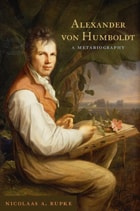
Alexander von Humboldt
A MetabiographyNicolaas A. Rupke
University of Chicago Press, 2008
This volume, the first metabiography of the great scientist, traces Humboldt’s biographical identities through Germany’s collective past to shed light on the historical instability of our scientific heroes.
“Rupke’s study . . . will doubtless become a standard reference for the Humboldt industry and for writers of scientific metabiographies to come.”—Isis
“Engaging. . . . Rupke’s meticulous analysis is fascinating on many scores.”—Times Higher Education Supplement (UK)
“A study borne of considerable scholarship and one with important methodological implications for historians of geography.”—Charles W. J. Withers, Progress in Human Geography
Alfonso Reyes and Spain
His Dialogue with Unamuno, Valle-Inclán, Ortega y Gasset, Jiménez, and Gómez de la SernaBy Barbara Bockus Aponte
University of Texas Press, 1972
Alfonso Reyes, the great humanist and man of letters of contemporary Spanish America, began his literary career just before the outbreak of the Mexican Revolution of 1910. He spearheaded the radical shift in Mexico's cultural and philosophical orientation as a leading member of the famous "Athenaeum Generation."
The crucial years of his literary formation, however, were those he spent in Spain (1914-1924). He arrived in Madrid unknown and unsure of his future. When he left, he had achieved both professional maturity and wide acclaim as a writer. This book has, as its basis, the remarkable correspondence between Reyes and some of the leading spirits of the Spanish intellectual world, covering not only his years in Spain but also later exchanges of letters.
Although Reyes always made it clear that he was a Mexican and a Spanish American, he became a full-fledged member of the closed aristocracy of Spanish literature. It was the most brilliant period in Spain's cultural history since the Golden Age, and it is richly represented here by Reyes' association with five of its most important figures: Miguel de Unamuno and Ramón del Valle-Inclán were of the great "Generation of 98"; among the younger writers were José Ortega y Gasset, essayist and philosopher; the Nobel poet Juan Ramón Jiménez; and Ramón Gómez de la Serna, a precursor of surrealism.
Alfonso Reyes maintained lifelong friendships with these men, and their exchanges of letters are of a dual significance. They reveal how the years in Spain allowed Reyes to pursue his vocation independently, thereby prompting him to seek universal values. Coincidentally, they provide a unique glimpse into the inner world of those friends—and their dreams of a new Spain.
Alfred Bester
Jad Smith
University of Illinois Press, 2016
Jad Smith traces the career of the unlikeliest of SF icons. Winner of the first Hugo Award for The Demolished Man, Bester also worked in comics, radio, and TV, and his intermittent SF writing led some critics to brand him a dabbler. In the 1960s, however, New Wave writers championed his work, and his reputation grew. Smith follows Bester's journey from consummate outsider to an artist venerated for foundational works that influenced the New Wave and cyberpunk revolutions. He also explores the little-known roots of a wayward journey fueled by curiosity, disappointment with the SF mainstream, and an artist's determination to go his own way.

Alfred the Great
The King and His EnglandEleanor Shipley Duckett
University of Chicago Press, 1958
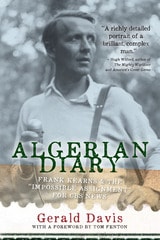
Algerian Diary
Frank Kearns and the "Impossible Assignment" for CBS NewsGerald Davis
West Virginia University Press, 2016
Frank Kearns was the go-to guy at CBS News for danger- ous stories in Africa and the Middle East in the 1950s, ‘60s, and early ‘70s. By his own account, he was nearly killed 114 times. He took stories that nobody else wanted to cover and was challenged to get them on the air when nobody cared about this part of the world. But his stories were warning shots for conflicts that play out in the headlines today.
In 1957, Senator John Kennedy described America’s view of the Algerian war for independence as the Eisenhower Administration’s “head in the sand policy.” So CBS News decided to find out what was really happening there and to determine where Algeria’s war for independence fit into the game plan for the Cold War. They sent Frank Kearns to find out.
Kearns took with him cameraman Yousef (“Joe”) Masraff and 400 pounds of gear, some of which they shed, and they hiked with FLN escorts from Tunisia, across a wide “no-man’s land,” and into the Aures Mountains of eastern Algeria, where the war was bloodiest. They carried no passports or visas. They dressed as Algerians. They refused to bear weapons. And they knew that if captured, they would be executed and left in unmarked graves. But their job as journalists was to seek the truth whatever it might turn out to be.
This is Frank Kearns’s diary.
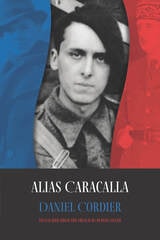
Alias Caracalla
Daniel Cordier
Swan Isle Press, 2024
Daniel Cordier’s fascinating, intimate memoir is a major contribution to our understanding of the fraught and historic relations between General Charles de Gaulle’s Free French and the fractious resistance movements under the Occupation during World War II. As the first young secretary to legendary Jean Moulin, one of the leaders of Conseil National de la Résistance, Cordier recounts Moulin’s tense negotiations to bring together the resistance movements and persuade them to join forces under de Gaulle’s banner between 1942 and ‘43. Cordier was a lookout on the fateful day the National Resistance Council was created, confirming de Gaulle’s legitimacy in the eyes of the French people and, crucially, in the eyes of Roosevelt and the Allied leadership. Later in life, Cordier penned his first-hand account of his role in the creation of Jean Moulin’s secretariat in Lyon and then Paris. Alias Caracalla is a brave and passionate story of action and self-discovery in times of war, with a sensitive and nuanced translation by Rupert Swyer.
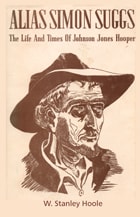
Alias Simon Suggs
The Life and Times of Johnson Jones HooperWilliam Stanley Hoole
University of Alabama Press, 2008
Alias Simon Suggs is a study in the life and writings of Johnson J. Hooper of Alabama, and is a masterful contribution to American biography and to American literature.
Extensively documented with illuminating footnotes and revealing references, its style is direct and captivating and will appeal to those who enjoy entertaining biography will relish the privilege of reading it.
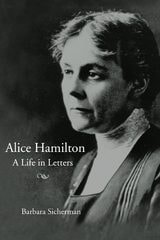
Alice Hamilton
A LIFE IN LETTERSBarbara Sicherman
University of Illinois Press, 2003
This legendary figure now comes to life in an integrated work of biography and letters that reveals the personal as well as the professional woman. In documenting Hamilton's evolution from a childhood of privilege to a life of social advocacy, the volume opens a window on women reformers and their role in Progressive Era politics and reform. Because Hamilton was a keen observer and vivid writer, her letters--more than 100 are included here--bring an unmatched freshness and immediacy to a range of subjects, such as medical education; personal relationships and daily life at Hull House; the women's peace movement; struggles for the protection of workers' health; academic life at Harvard; politics and civil liberties during the cold war; and the process of growing old. Her story takes the reader from the Gilded Age to the Vietnam War.
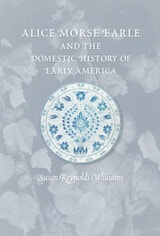
Alice Morse Earle and the Domestic History of Early America
Susan Reynolds Williams
University of Massachusetts Press, 2013
Author, collector, and historian Alice Morse Earle (1851–1911) was among the most important and prolific writers of her day. Between 1890 and 1904, she produced seventeen books as well as numerous articles, pamphlets, and speeches about the life, manners, customs, and material culture of colonial New England. Earle's work coincided with a surge of interest in early American history, genealogy, and antique collecting, and more than a century after the publication of her first book, her contributions still resonate with readers interested in the nation's colonial past.
An intensely private woman, Earle lived in Brooklyn, New York, with her husband and four children and conducted much of her research either by mail or at the newly established Long Island Historical Society. She began writing on the eve of her fortieth birthday, and the impressive body of scholarship she generated over the next fifteen years stimulated new interest in early American social customs, domestic routines, foodways, clothing, and childrearing patterns.
Written in a style calculated to appeal to a wide readership, Earle's richly illustrated books recorded the intimate details of what she described as colonial “home life.” These works reflected her belief that women had played a key historical role, helping to nurture communities by constructing households that both served and shaped their families. It was a vision that spoke eloquently to her contemporaries, who were busily creating exhibitions of early American life in museums, staging historical pageants and other forms of patriotic celebration, and furnishing their own domestic interiors.
Alice and Eleanor
A Contrast in Style and PurposeSandra R. Curtis
University of Wisconsin Press, 0
Alice in Space
The Sideways Victorian World of Lewis CarrollGillian Beer
University of Chicago Press, 2016
Gillian Beer explores Carroll’s work through the speculative gaze of Alice, for whom no authority is unquestioned and everything can speak. Parody and Punch, evolutionary debates, philosophical dialogues, educational works for children, math and logic, manners and rituals, dream theory and childhood studies—all fueled the fireworks. While much has been written about Carroll’s biography and his influence on children’s literature, Beer convincingly shows him at play in the spaces of Victorian cultural and intellectual life, drawing on then-current controversies, reading prodigiously across many fields, and writing on multiple levels to please both children and adults in different ways.
With a welcome combination of learning and lightness, Beer reminds us that Carroll’s books are essentially about curiosity, its risks and pleasures. Along the way, Alice in Space shares Alice’s exceptional ability to spark curiosity in us, too.

Alien Heart
The Life and Work of Margaret LaurenceLyall Powers
University of Manitoba Press, 2005
Lyall Powers is both a respected scholar of literature and a lifelong friend of Laurence's, having met her when they were students together at Winnipeg's United College in the 1940s. Alien Heart is the first full-length biography of Margaret that combines personal knowledge and insights about Laurence with a study of her work, which often paralleled the events and concerns in her own life.
Drawing on letters, personal correspondence, journals, and interviews, Lyall Powers discusses the struggles and triumphs Laurence experienced in her efforts to understand herself in the roles of writer, wife, mother, and public figure. He portrays a deeply compassionate and courageous woman, who yet felt troubled by conflicting demands. While Laurence's work is not directly autobiographical, Powers illustrates how her writing expressed many of the same dilemmas, and how the resolution her characters achieved in the novels and stories had an impact on Laurence's own life.
Powers provides an in-depth analysis of all Laurence's work, including the early African essays, fiction, and translations, and her books for children, as well as the beloved Manawaka fiction. The study clearly shows the progression and expression of Laurence as a writer of great humanity and conscience.
Alien
Reflections on Being an ImmigrantSandro Galea
University of Chicago Press, 2026
A personal treatise from distinguished social scientist Sandro Galea on the indelible effects of being an immigrant—and what it means for the greater good.
“I am one of the lucky ones,” writes Sandro Galea. Galea left home in Malta at fourteen with his parents and sister as the island was rocked by political turmoil. The family made their way to Canada and Galea, in turn, eventually made his way to the United States. This is the story of Galea’s long, surreal journey of forging a life in a series of new and unfamiliar places.
With spare and deeply affecting prose, Alien is a poignant exploration of what it means to build a life across borders—and why it’s important for all of us. Galea’s intimate and personal story frames the experience of being an immigrant in terms of its indelible lessons on adaptation, identity, belonging, and shared generosity. Galea also captures at once the joys and the uncertainties that define the process of uprooting one life to begin another abroad. His is a reflection on empathy, on precarity, and on the effect of immigrating, in which one becomes keenly aware of how quickly life—and the world—can change.
Blending philosophical inquiry and personal story, Alien bridges the gap between storytelling and scholarship and, in doing so, gifts us an essential aperture on the world not everyone experiences—and the value of having those who do.
All Abroad
A Memoir of Travel and ObsessionGeoffrey Weill
University of Wisconsin Press, 2021
All Abroad is the memoir of a man hungry for the logistics of travel: getting there, staying there, and feeling at home on any continent. Woven into his entertaining anecdotes is an informative account of a lost era in travel. As a witness to compelling and monumental changes in the industry, Weill offers a unique view into how our vacations have been shaped deeply by human trends, tragedies, and technologies. While some long for the grandeur of tourism from decades ago, Weill insists that travel—the conveyances and hotels that await journey’s end—remains as glamorous as ever.
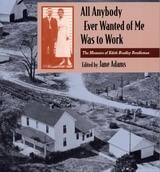
All Anybody Ever Wanted of Me Was to Work
The Memoirs of Edith Bradley RendlemanEdith Bradley Rendleman. Edited by Jane Adams
Southern Illinois University Press, 1996
From All Anybody Ever Wanted of Me Was to Work...
"Starting around 1950, people stopped raising chickens, milking cows, and raising hogs. They just buy it at the store, ready to eat. A lot buy a steer and have it processed in Dongola and put it in their freezer. What a difference! Girls have got it so easy now. They don't even know what it was like to start out. And I guess my mother's life, when she started out, was as hard again as mine, because they had to make everything by hand. I don't know if it could get any easier for these girls. But they don't know what it was like, and they never will. Everything is packaged. All you do is go to the store and buy you a package and cook it. Automatic washers and dryers. I'm glad they don't have to work like I did. Very glad."
Edith Bradley Rendleman's story of her life in southern Illinois is remarkable in many ways. Recalling the first half of the twentieth century in great detail, she vividly cites vignettes from her childhood as her family moved from farm to farm until settling in 1909 in the Mississippi bottoms of Wolf Lake. She recounts the lives and times of her family and neighbors during an era gone forever.
Remarkable for the vivid details that evoke the past, Rendleman's account is rare in another respect: memoirs of the time—usually written by people from elite or urban families—often reek of nostalgia. But Rendleman's memoir differs from the norm. Born poor in rural southern Illinois, she tells an unvarnished tale of what it was really like growing up on a tenant farm early this century.
All God's Dangers
The Life of Nate ShawTheodore Rosengarten
University of Chicago Press, 2000
All I Ever Wanted
A Rock 'n' Roll MemoirBy Kathy Valentine
University of Texas Press, 2021
Runner-up, Carr P. Collins Award for Best Book of Non-Fiction, 2021
Go-Go’s bassist Kathy Valentine’s story is a roller coaster of sex, drugs, and of course, music; it’s also a story of what it takes to find success and find yourself, even when it all comes crashing down.
At twenty-one, Kathy Valentine was at the Whisky in Los Angeles when she met a guitarist from a fledgling band called the Go-Go’s—and the band needed a bassist. The Go-Go’s became the first multi-platinum-selling, all-female band to play instruments themselves, write their own songs, and have a number one album. Their debut, Beauty and the Beat, spent six weeks at the top of the Billboard 200 and featured the hit songs “We Got the Beat” and “Our Lips Are Sealed.” The record's success brought the pressures of a relentless workload and schedule culminating in a wild, hazy, substance-fueled tour that took the band from the club circuit to arenas, where fans, promoters, and crew were more than ready to keep the party going.
For Valentine, the band's success was the fulfillment of a lifelong dream—but it’s only part of her story. All I Ever Wanted traces the path that took her from her childhood in Texas—where she all but raised herself—to the height of rock n’ roll stardom, devastation after the collapse of the band that had come to define her, and the quest to regain her sense of self after its end. Valentine also speaks candidly about the lasting effects of parental betrayal, abortion, rape, and her struggles with drugs and alcohol—and the music that saved her every step of the way. Populated with vivid portraits of Valentine’s interactions during the 1980s with musicians and actors from the Police and Rod Stewart to John Belushi and Rob Lowe, All I Ever Wanted is a deeply personal reflection on a life spent in music.
All My Mothers and Fathers
A MemoirMichael Blumenthal
West Virginia University Press, 2016
As fate would have it, his adoptive father, a German-Jewish refugee raised by a loveless and embittered stepmother after his own mother died in childbirth, has inflicted on his stepson a fate uncannily—and terrifyingly—similar to his own: Having first adopted Michael, in part, to help his dying wife, he then imposes on him the same sort of penurious and loveless stepmother whom he himself had had to survive. With these revelations, the "mysteries" that seem to have permeated Michael's childhood are laid bare, triggering a quest for belonging that will infiltrate the author's entire adult life.
All They Will Call You
Tim Z. Hernandez
University of Arizona Press, 2017
All They Will Call You is the harrowing account of “the worst airplane disaster in California’s history,” which claimed the lives of thirty-two passengers, including twenty-eight Mexican citizens—farmworkers who were being deported by the U.S. government. Outraged that media reports omitted only the names of the Mexican passengers, American folk icon Woody Guthrie penned a poem that went on to become one of the most important protest songs of the twentieth century, “Plane Wreck at Los Gatos (Deportee).” It was an attempt to restore the dignity of the anonymous lives whose unidentified remains were buried in an unmarked mass grave in California’s Central Valley. For nearly seven decades, the song’s message would be carried on by the greatest artists of our time, including Pete Seeger, Dolly Parton, Bruce Springsteen, Bob Dylan, and Joan Baez, yet the question posed in Guthrie’s lyrics, “Who are these friends all scattered like dry leaves?” would remain unanswered—until now.
Combining years of painstaking investigative research and masterful storytelling, award-winning author Tim Z. Hernandez weaves a captivating narrative from testimony, historical records, and eyewitness accounts, reconstructing the incident and the lives behind the legendary song. This singularly original account pushes narrative boundaries, while challenging perceptions of what it means to be an immigrant in America, but more importantly, it renders intimate portraits of the individual souls who, despite social status, race, or nationality, shared a common fate one frigid morning in January 1948.
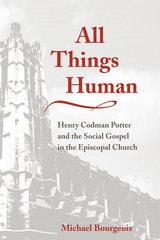
All Things Human
Henry Codman Potter and the Social Gospel in the Episcopal ChurchMichael Bourgeois
University of Illinois Press, 2004
In addition to being the sixth bishop of the Diocese of New York, Henry Codman Potter (1835-1908) was a prominent voice in the Social Gospel movement of the late nineteenth and early twentieth centuries. This book, the first in-depth study of Potter's life and work, examines his career in the Episcopal church as well as the origins and legacy of his progressive social views.
As industrialization and urbanization spread in the nineteenth century, the Social Gospel movement sought to apply Christian teachings to effect improvements in the lives of the less fortunate. Potter was firmly in this tradition, concerning himself especially with issues of race, the place of women in society, questions of labor and capital, and what he called "political righteousness." Placing Potter against the wider backdrop of nineteenth-century American Protestantism, Bourgeois explores the experiences and influences that led him to espouse these socially conscious beliefs, to work for social reform, and to write such works as Sermons of the City (1881) and The Citizen in His Relation to the Industrial Situation (1902).
In telling Potter's remarkable story, All Things Human stands as a valuable contribution to intellectual and religious history as well as an exploration of the ways in which religion and society interact.
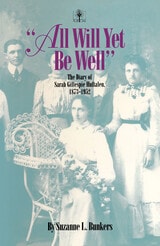
All Will Yet Be Well
The Diary of Sarah Gillespie Huftalen, 1873-1952Suzanne L. Bunkers
University of Iowa Press, 1993
Sarah Gillespie Huftalen led an unconventional life for a rural midwestern woman of her time. Born in 1865 near Manchester, Iowa, she was a farm girl who became a highly regarded country school and college teacher; she married a man older than either of her parents, received a college degree later in life, and was committed to both family and career. A gifted writer, she crafted essays, teacher-training guides, and poetry while continuing to write lengthy, introspective entries in her diary, which spans the years from 1873 to 1952. In addition, she gathered extensive information about the quietly tragic life of her mother, Emily, and worked to preserve Emily's own detailed diary.
In more than 3,500 pages, Sarah writes about her multiple roles as daughter, sister, wife, teacher, family historian, and public figure. Her diary reflects the process by which she was socialized into these roles and her growing consciousness of the ways in which these roles intersected. Not only does her diary embody the diverse strategies used by one woman to chart her life's course and to preserve her life's story for future generations, it also offers ample evidence of the diary as a primary form of private autobiography for individuals whose lives do not lend themselves to traditional definitions of autobiography.
Taken together, Emily's and Sarah's extraordinary diaries span nearly a century and thus form a unique mother/daughter chronicle of daily work and thoughts, interactions with neighbors and friends and colleagues, and the destructive family dynamics that dominated the Gillespies. Sarah's consciousness of the abusive relationship between her mother and father haunts her diary, and this dramatic relationship is duplicated in Sarah's relationship with her brother, Henry, Suzanne Bunkers' skillful editing and analysis of Sarah's diary reveal the legacy of a caring, loving mother reflected in her daughter's work as family member, teacher, and citizen.
The rich entries in Sarah Gillespie Huftalen's diary offer us brilliant insights into the importance of female kinship networks in American life, the valued status of many women as family chroniclers, and the fine art of selecting, piecing, stitching, and quilting that characterizes the many shapes of women's autobiographies. Read Sarah's dairy to discover why "all will yet be well."
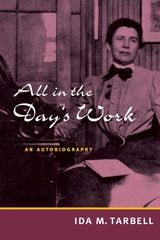
All in the Day's Work
AN AUTOBIOGRAPHYIda M. Tarbell
University of Illinois Press, 2003
Tarbell was the only woman in her class of forty students at Allegheny College, and upon graduation she began an internship at The Chautauquan, which was the start of a lifelong immersion in the world of journalism. She further honed her skills during a three-year stint in Paris, but the breakthrough came in 1894 when she was hired as a full-time writer for McClure's Magazine.
It was at McClure's--where, again, she was the only woman on staff--that Tarbell made her name as a determined journalist, one of the fearless brigade of truth-seekers famously chastised by Theodore Roosevelt, who coined the term ‘muckraker' in order to discredit those who attacked senators in print. Tarbell wrote serialized biographies of Napoleon and Abraham Lincoln, as well as a landmark series of articles on Standard Oil and John D. Rockefeller.
In All in the Day's Work, Tarbell turns her keen eye on herself, recalling the events of her fascinating life with the same honesty, verve, and scrupulous accuracy she brought to her journalistic work, offering insight along the way into the people, places, and issues of her time.
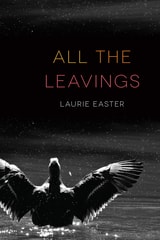
All the Leavings
Laurie Easter
Oregon State University Press, 2021
Whether recounting the home birth of her second child, encounters with cougars, the fraught dynamics of mother-daughter relationships, the destructive power of wildfires, or the community bonds challenged by a tragic suicide, Easter’s writing is firmly grounded in place. She takes readers deep into the heart of a still-wild Oregon, perilous yet rich with natural beauty.
Written from one woman’s perspective as a mother, wife, and friend, All the Leavings is ultimately a book about love—for the child who faces a health crisis, for the friend dying of AIDS, for the one entangled by addiction who then disappears. Long after the final page is turned, it will resonate with readers interested in essays, memoir, alternative lifestyles, and the literature of the West.
All the Lost Girls
Confessions of a Southern DaughterPatricia Foster
University of Alabama Press, 2002
Patricia Foster’s lyrical yet often painful memoir explores the life of a white middle-class girl who grew up in rural south Alabama in the 1950s and 1960s, a time and place that did not tolerate deviation from traditional gender roles. Her mother raised Foster and her sister as “honorary boys,” girls with the ambition of men but the temperament of women.
An unhappy, intelligent woman who kept a heartbreaking secret from everyone close to her, Foster's mother was driven by a repressed rage that fed her obsession for middle-class respectability. By the time Foster reached age fifteen, her efforts to reconcile the contradictory expectations that she be at once ambitious and restrained had left her nervous and needy inside even while she tried to cultivate the appearance of the model student, sister, and daughter. It was only a psychological and physical breakdown that helped her to realize that she couldn't save her driven, complicated mother and must struggle instead for both understanding and autonomy.
All the News Is Fit to Print
Profile of a Country EditorChad Stebbins
University of Missouri Press, 1998
For nearly half a century, Arthur Aull captivated a rural Missouri town and a national audience with his sensationalistic, all-the- news-is-fit-to-print approach to journalism. As editor and publisher of the Lamar Democrat from 1900 to 1948, he disregarded most of the traditional rules of news coverage. Every scandal and piece of gossip he could turn up helped fill the pages of his newspaper, an afternoon daily in a town of about 2,300. His tales of grisly accidents, murders, rapes, juvenile crime, suicides, and sensational divorces reminded skeptics of the earlier yellow journalism era.
Aull embellished nearly all of his stories with a personal, homespun flavor, and that's what caught the attention of syndicated columnists O. O. McIntyre and Ted Cook in the late 1920s. They started sprinkling their columns with curious items from the Democrat, and soon after unusual stories from the paper began showing up in the New York Times, the New York World-Telegram, the New Yorker, and even the Journal of the American Medical Association. Feature stories about Aull appeared in Publishers' Auxiliary, the Chicago Daily News, Life, Time, Newsweek, American Magazine, and Harper's. Aull became known coast to coast as one of the most colorful figures in country journalism, and the Democrat attracted subscribers in all forty-eight states plus Canada and England. Even President Truman, who was born in Lamar, noted Aull's death on May 7, 1948, declaring that an "able and picturesque figure in American journalism has passed on."
Despite the national acclaim, Aull remained an unpretentious small- town editor. He had his own code of ethics, which he refused to modify to reflect the changing times. He was sued for libel three times, assaulted with a club, threatened with other kinds of bodily harm, and cursed by many. Yet, he persisted in scouring the town of Lamar for any news that would help him sell a few more copies of the Democrat.
Although the influence of country journalism on American society cannot be disputed, relatively little has been written on the vital role country journalists play. All the News Is Fit to Print, which traces Aull's transformation from a struggling schoolteacher to one of the best-known small-town newspapermen in America, will help remedy that oversight. Anyone with an interest in the history of journalism or small-town life will find this work fascinating.