Results by title
3258 books match the query 'Art' and 405 start with a
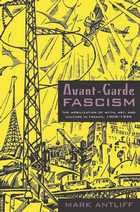
Avant-Garde Fascism
The Mobilization of Myth, Art, and Culture in France, 1909–1939Mark Antliff
Duke University Press, 2007
Antliff considers three French fascists: Georges Valois, Philippe Lamour, and Thierry Maulnier, demonstrating how they appropriated the avant-garde aesthetics of cubism, futurism, surrealism, and the so-called Retour à l’Ordre (“Return to Order”), and, in one instance, even defined the “dynamism” of fascist ideology in terms of Soviet filmmaker Sergei Eisenstein’s theory of montage. For these fascists, modern art was the mythic harbinger of a regenerative revolution that would overthrow existing governmental institutions, inaugurate an anticapitalist new order, and awaken the creative and artistic potential of the fascist “new man.”
In formulating the nexus of fascist ideology, aesthetics, and violence, Valois, Lamour, and Maulnier drew primarily on the writings of the French political theorist Georges Sorel, whose concept of revolutionary myth proved central to fascist theories of cultural and national regeneration in France. Antliff analyzes the impact of Sorel’s theory of myth on Valois, Lamour, and Maulnier. Valois created the first fascist movement in France; Lamour, a follower of Valois, established the short-lived Parti Fasciste Révolutionnaire in 1928 before founding two fascist-oriented journals; Maulnier forged a theory of fascism under the auspices of the journals Combat and Insurgé.
Avant-Garde Museology
e-flux classicsArseny Zhilyaev
University of Minnesota Press, 2015
The museum of contemporary art might be the most advanced recording device ever invented. It is a place for the storage of historical grievances and the memory of forgotten artistic experiments, social projects, or errant futures. But in late nineteenth and early twentieth-century Russia, this recording device was undertaken by artists and thinkers as a site for experimentation.
Arseny Zhilyaev’s Avant-Garde Museology presents essays documenting the wildly encompassing progressivism of this period by figures such as Nikolai Fedorov, Aleksandr Rodchenko, Kazimir Malevich, Alexander Bogdanov, and others—many which are translated from the Russian for the first time. Here the urgent question is: How might the contents of the museum be reanimated so as to transcend even the social and physical limits imposed on humankind?
Contributors: David Arkin; Vladimir Bekhterev; Alexander Bogdanov; Osip Brik; Vasiliy Chekrygin; Leonid Chetyrkin; Nikolai Druzhinin; Nikolai Fedorov; Pavel Florensky; R. N. Frumkina; M. S. Ilkovskiy; V. I. Karmilov; V. Karpov; Valentin Kholtsov; P. N. Khrapov; Yuriy Kogan; Natalya Kovalenskaya; Nadezhda Krupskaya; S. P. Lebedyansky; A. F. Levitsky; Vera Leykina (Leykina-Svirskaya); Ivan Luppol; Kazimir Malevich; Andrey Platonov; Nikolay Punin; Aleksandr Rodchenko; Yuriy Samarin; I. F. Sheremet; Andrey Shestakov; Natan Shneerson; Ivan Skulenko; M. Vorobiev; N. Vorontsovsky; Boris Zavadovsky; I. M. Zykov.
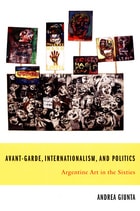
Avant-Garde, Internationalism, and Politics
Argentine Art in the SixtiesAndrea Giunta
Duke University Press, 2007
The renowned Argentine art historian and critic Andrea Giunta analyzes projects specifically designed to internationalize Argentina’s art and avant-garde during the 1960s: the importation of exhibitions of contemporary international art, the sending of Argentine artists abroad to study, the organization of prize competitions involving prestigious international art critics, and the export of exhibitions of Argentine art to Europe and the United States. She looks at the conditions that made these projects possible—not least the Alliance for Progress, a U.S. program of “exchange” and “cooperation” meant to prevent the spread of communism through Latin America in the wake of the Cuban Revolution—as well as the strategies formulated to promote them. She describes the influence of Romero Brest, prominent art critic, supporter of abstract art, and director of the Centro de Artes Visuales del Instituto Tocuato Di Tella (an experimental art center in Buenos Aires); various group programs such as Nueva Figuración and Arte Destructivo; and individual artists including Antonio Berni, Alberto Greco, León Ferrari, Marta Minujin, and Luis Felipe Noé. Giunta’s rich narrative illuminates the contentious postwar relationships between art and politics, Latin America and the United States, and local identity and global recognition.
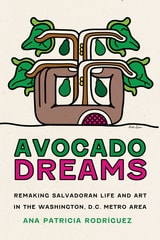
Avocado Dreams
Remaking Salvadoran Life and Art in the Washington, D.C. Metro AreaAna Patricia Rodríguez
University of Arizona Press, 2025
In Avocado Dreams, Ana Patricia Rodríguez draws from her own positionality as a Salvadoran transplant to examine the construction of the unique Salvadoran cultural imaginary made in the greater D.C. area. Through a careful reading of the creative works of local writers, performers, artists, and artivists, Rodríguez demonstrates how the people have remade themselves in relation to the cultural, ethnoracial, and sociolinguistic diversity of the area. She discusses how Salvadoran people have developed unique, intergenerational Salvadoreñidades, manifested in particular speech and symbolic acts, ethnoracial embodiments, and local identity formations in relation to the diverse communities, most notably Black Washingtonians, who co-inhabit the region.
This timely and relevant work not only enriches our understanding of Salvadoran diasporic experiences but also contributes significantly to broader discussions on migration, identity, and cultural production in the United States.
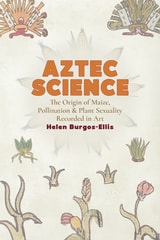
Aztec Science
The Genetic Origin of Maize, Pollination, and Plant Sexuality Recorded in ArtHelen Burgos-Ellis
University Press of Colorado, 2026
Supported with ample iconographic, ethnohistoric, etymological, and scientific evidence, Aztec Science is a groundbreaking endeavor introducing a new and radical approach to the study of Aztec art. It demonstrates that the Indigenous peoples of ancient Mesoamerica recorded scientific information about plants in their material culture. The detailed analysis of plant imagery in Aztec art, including in manuscripts such as the Codex Borgia, reveals that the cultural importance of maize and other plants was closely linked to scientific concepts that were well known in central Mexico centuries before they were subsequently “discovered” in Europe.
For the Nahua, Helen Burgos-Ellis argues, maize’s significance went far beyond economic value and religious importance. In Nahua art, references to maize, grass, and Quetzalcoatl reflect historic and scientifically relevant information. These images and glyphs, when studied against the ethnohistoric and scientific record of central Mexicans’ vast knowledge of plants, indicate that the Nahua understood key concepts about the maize plant, including its genetic origin from a common grass, pollination process, life cycle, and sexual reproduction. Consequently, the cultural significance of maize for the Nahuas was deeply intertwined with scientific understanding.
Aztec Science is a radical departure from bulk of the scholarship on the Codex Borgia, which has primarily been understood to contain calendrical and ritual information rather than botanical content, and is of significant interest to Pre-Columbianists and students and scholars of ethnohistory, Indigenous history and culture, traditional ecological knowledge, art history, and the history of science and botany.