Results by title
312 books match the query 'African American authors' and 35 start with b
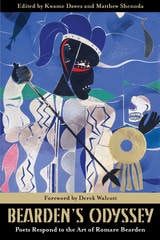
Bearden's Odyssey
Poets Respond to the Art of Romare BeardenEdited by Kwame Dawes and Matthew Shenoda, Foreword by Derek Walcott
Northwestern University Press, 2017
Borrowing from Romare Bearden’s aesthetic palette and inspired by his Odysseus series, Bearden’s Odyssey gathers, for the first time, poems from thirty-five of the most revered African diaspora poets in the United States. Poetic echoes come forth in themes of inspiration with historical intersections of one of the greatest visual artists of the twentieth century.
The award-winning editors, Kwame Dawes and Matthew Shenoda, assemble an esteemed literary congregation, with original poems by Chris Abani, Rita Dove, Lyrae Van Clief-Stefanon, Ed Roberson, Aracelis Girmay, Yusef Komunyakaa, and more. With a powerful foreword by Nobel laureate Derek Walcott and stunning visual reproductions of select Bearden masterpieces, this anthology fuses art and literature, standing as a testament to Romare Bearden’s power and influence in the contemporary artistic world.
Beautiful Bottom, Beautiful Shame
Where "Black" Meets "Queer"Kathryn Bond Stockton
Duke University Press, 2006
Stockton engages the domains of African American studies, queer theory, psychoanalysis, film theory, photography, semiotics, and gender studies. She brings together thinkers rarely, if ever, read together in a single study—James Baldwin, Radclyffe Hall, Jean Genet, Toni Morrison, Robert Mapplethorpe, Eldridge Cleaver, Todd Haynes, Norman Mailer, Leslie Feinberg, David Fincher, and Quentin Tarantino—and reads them with and against major theorists, including Georges Bataille, Sigmund Freud, Eve Kosofsky Sedgwick, Jacques Lacan, Roland Barthes, and Leo Bersani. Stockton asserts that there is no clear, mirrored relation between the terms “black” and “queer”; rather, seemingly definitive associations attached to each are often taken up or crossed through by the other. Stockton explores dramatic switchpoints between these terms: the stigmatized “skin” of some queers’ clothes, the description of blacks as an “economic bottom,” the visual force of interracial homosexual rape, the complicated logic of so-called same-sex miscegenation, and the ways in which a famous depiction of slavery (namely, Morrison’s Beloved) seems bound up with depictions of AIDS. All of the thinkers Stockton considers scrutinize the social nature of shame as they examine the structures that make debasements possible, bearable, pleasurable, and creative, even in their darkness.
Beside You in Time
Sense Methods and Queer Sociabilities in the American Nineteenth CenturyElizabeth Freeman
Duke University Press, 2019
Best Black Plays
The Theodore Ward Prize for African American PlaywritingChuck Smith
Northwestern University Press, 2007
Carefully selected by a director and educator who has been affiliated with the contest for eighteen of its twenty years, these three works have themes that range from the sordid shenanigans of a Depression-era "South Side Burial Society" (Leslie Lee's Sundown Names and Night-Gone Things) to a single mother's heartbreaking battle to save her children's souls (Mark Clayton Southers' Ma Noah) to a poignant and achingly funny reunion of three sisters after their parents' death (Kim Euell's The Diva Daughters DuPree). Their publication answers a growing demand for the work of African American playwrights even as it affords deep and varied insights into African American culture in our era.
Beyond the Color Line and the Iron Curtain
Reading Encounters between Black and Red, 1922-1963Kate A. Baldwin
Duke University Press, 2002
Langston Hughes, W. E. B. Du Bois, Claude McKay, and Paul Robeson each lived or traveled extensively in the Soviet Union between the 1920s and the 1960s, and each reflected on Communism and Soviet life in works that have been largely unavailable, overlooked, or understudied. Kate A. Baldwin takes up these writings, as well as considerable material from Soviet sources—including articles in Pravda and Ogonek, political cartoons, Russian translations of unpublished manuscripts now lost, and mistranslations of major texts—to consider how these writers influenced and were influenced by both Soviet and American culture. Her work demonstrates how the construction of a new Soviet citizen attracted African Americans to the Soviet Union, where they could explore a national identity putatively free of class, gender, and racial biases. While Hughes and McKay later renounced their affiliations with the Soviet Union, Baldwin shows how, in different ways, both Hughes and McKay, as well as Du Bois and Robeson, used their encounters with the U. S. S. R. and Soviet models to rethink the exclusionary practices of citizenship and national belonging in the United States, and to move toward an internationalism that was a dynamic mix of antiracism, anticolonialism, social democracy, and international socialism.
Recovering what Baldwin terms the "Soviet archive of Black America," this book forces a rereading of some of the most important African American writers and of the transnational circuits of black modernism.
Black Atlas
Geography and Flow in Nineteenth-Century African American LiteratureJudith Madera
Duke University Press, 2015
Black Bostonians and the Politics of Culture, 1920-1940
Lorraine Elena Roses
University of Massachusetts Press, 2017
In the 1920s and 1930s Boston became a rich and distinctive site of African American artistic production, unfolding at the same time as the Harlem Renaissance and encompassing literature, theater, music, and visual art. Owing to the ephemeral nature of much of this work, many of the era's primary sources have been lost.
In this book, Lorraine Elena Roses employs archival sources and personal interviews to recover this artistic output, examining the work of celebrated figures such as Dorothy West, Helene Johnson, Meta Warrick Fuller, and Allan Rohan Crite, as well as lesser-known artists including Eugene Gordon, Ralf Coleman, Gertrude “Toki” Schalk, and Alvira Hazzard. Black Bostonians and the Politics of Culture, 1920–1940 demonstrates how this creative community militated against the color line not solely through powerful acts of civil disobedience but also by way of a strong repertoire of artistic projects.
Black Bourgeois
Class and Sex in the FleshCandice M. Jenkins
University of Minnesota Press, 2019
Exploring the forces that keep black people vulnerable even amid economically privileged lives
At a moment in U.S. history with repeated reminders of the vulnerability of African Americans to state and extralegal violence, Black Bourgeois is the first book to consider the contradiction of privileged, presumably protected black bodies that nonetheless remain racially vulnerable. Examining disruptions around race and class status in literary texts, Candice M. Jenkins reminds us that the conflicted relation of the black subject to privilege is not, solely, a recent phenomenon.
Focusing on works by Toni Morrison, Spike Lee, Danzy Senna, Rebecca Walker, Reginald McKnight, Percival Everett, Colson Whitehead, and Michael Thomas, Jenkins shows that the seemingly abrupt discursive shift from post–Civil Rights to Black Lives Matter, from an emphasis on privilege and progress to an emphasis on vulnerability and precariousness, suggests a pendulum swing between two interrelated positions still in tension. By analyzing how these narratives stage the fraught interaction between the black and the bourgeois, Jenkins offers renewed attention to class as a framework for the study of black life—a necessary shift in an age of rapidly increasing income inequality and societal stratification.
Black Bourgeois thus challenges the assumed link between blackness and poverty that has become so ingrained in the United States, reminding us that privileged subjects, too, are “classed.” This book offers, finally, a rigorous and nuanced grasp of how African Americans live within complex, intersecting identities.
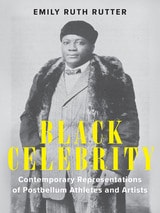
Black Celebrity
Contemporary Representations of Postbellum Athletes and ArtistsEmily Ruth Rutter
University of Delaware Press, 2022
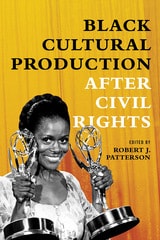
Black Cultural Production after Civil Rights
Edited by Robert J. Patterson
University of Illinois Press, 2019
This collection's fascinating spectrum of topics begins with the literary and cinematic representations of slavery from the 1970s to the present. Other authors delve into visual culture from Blaxploitation to the art of Betye Saar to stage works like A Movie Star Has to Star in Black and White as well as groundbreaking literary works like Corregidora and Captain Blackman. A pair of concluding essays concentrate on institutional change by looking at the Seventies surge of black publishing and by analyzing Ntozake Shange's for colored girls. . . in the context of current controversies surrounding sexual violence. Throughout, the writers reveal how Seventies black cultural production anchors important contemporary debates in black feminism and other issues while spurring the black imagination to thrive amidst abject social and political conditions.
Contributors: Courtney R. Baker, Soyica Diggs Colbert, Madhu Dubey, Nadine Knight, Monica White Ndounou, Kinohi Nishikawa, Samantha Pinto, Jermaine Singleton, Terrion L. Williamson, and Lisa Woolfork

Black Gathering
Art, Ecology, Ungiven LifeSarah Jane Cervenak
Duke University Press, 2021
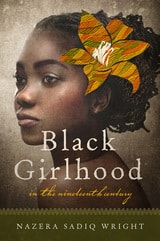
Black Girlhood in the Nineteenth Century
Nazera Sadiq Wright
University of Illinois Press, 2016
As Wright shows, the figure of the black girl in African American literature provided a powerful avenue for exploring issues like domesticity, femininity, and proper conduct. The characters' actions, however fictional, became a rubric for African American citizenship and racial progress. At the same time, their seeming dependence and insignificance allegorized the unjust treatment of African Americans. Wright reveals fascinating girls who, possessed of a premature knowing and wisdom beyond their years, projected a courage and resiliency that made them exemplary representations of the project of racial advance and citizenship.
Black Internationalist Feminism
Women Writers of the Black Left, 1945-1995Cheryl Higashida
University of Illinois Press, 2013
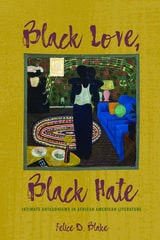
Black Love, Black Hate
Intimate Antagonisms in African American LiteratureFelice D. Blake
The Ohio State University Press, 2018
Most importantly, the book shows how literature constitutes an alternative public sphere for Black people. In a society largely controlled by white supremacist actors and institutions, Black authors have conjured fiction into a space where hard questions can be asked and answered and where the work of combatting collective, racist suppression can occur without replicating oppressive hierarchies. Intimate Antagonisms uncovers a key theme in Black fiction and argues that literature itself is a vital institutional site within Black life. Through the examination of intimate conflicts in a wide array of twentieth- and twenty-first-century novels, Blake demonstrates the centrality of intraracial relations to the complexity and vision of Black social movements and liberation struggles and the power and promise of Black narrative in reshaping struggle.
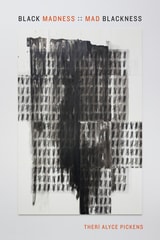
Black Madness
: Mad BlacknessTherí Alyce Pickens
Duke University Press, 2019
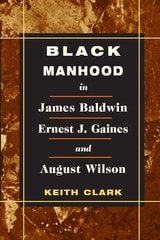
Black Manhood in James Baldwin, Ernest J. Gaines, and August Wilson
Keith Clark
University of Illinois Press, 2002
Challenging the standard portrayals of Black men in African American literature
From Frederick Douglass to the present, the preoccupation of black writers with manhood and masculinity is a constant. Black Manhood in James Baldwin, Ernest J. Gaines, and August Wilson explores how in their own work three major African American writers contest classic portrayals of black men in earlier literature, from slave narratives through the great novels of Richard Wright and Ralph Ellison.
Keith Clark examines short stories, novels, and plays by Baldwin, Gaines, and Wilson, arguing that since the 1950s the three have interrupted and radically dismantled the constricting literary depictions of black men who equate selfhood with victimization, isolation, and patriarchy. Instead, they have reimagined black men whose identity is grounded in community, camaraderie, and intimacy.
Delivering original and startling insights, this book will appeal to scholars and students of African American literature, gender studies, and narratology.
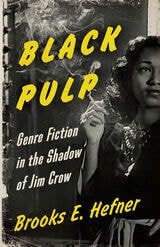
Black Pulp
Genre Fiction in the Shadow of Jim CrowBrooks E. Hefner
University of Minnesota Press, 2021
A deep dive into mid-century African American newspapers, exploring how Black pulp fiction reassembled genre formulas in the service of racial justice
In recent years, Jordan Peele’s Get Out, Marvel’s Black Panther, and HBO’s Watchmen have been lauded for the innovative ways they repurpose genre conventions to criticize white supremacy, celebrate Black resistance, and imagine a more racially just world—important progressive messages widely spread precisely because they are packaged in popular genres. But it turns out, such generic retooling for antiracist purposes is nothing new.
As Brooks E. Hefner’s Black Pulp shows, this tradition of antiracist genre revision begins even earlier than recent studies of Black superhero comics of the 1960s have revealed. Hefner traces it back to a phenomenon that began in the 1920s, to serialized (and sometimes syndicated) genre stories written by Black authors in Black newspapers with large circulations among middle- and working-class Black readers. From the pages of the Pittsburgh Courier and the Baltimore Afro-American, Hefner recovers a rich archive of African American genre fiction from the 1920s through the mid-1950s—spanning everything from romance, hero-adventure, and crime stories to westerns and science fiction. Reading these stories, Hefner explores how their authors deployed, critiqued, and reassembled genre formulas—and the pleasures they offer to readers—in the service of racial justice: to criticize Jim Crow segregation, racial capitalism, and the sexual exploitation of Black women; to imagine successful interracial romance and collective sociopolitical progress; and to cheer Black agency, even retributive violence in the face of white supremacy.
These popular stories differ significantly from contemporaneous, now-canonized African American protest novels that tend to represent Jim Crow America as a deterministic machine and its Black inhabitants as doomed victims. Widely consumed but since forgotten, these genre stories—and Hefner’s incisive analysis of them—offer a more vibrant understanding of African American literary history.
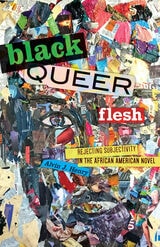
Black Queer Flesh
Rejecting Subjectivity in the African American NovelAlvin J. Henry
University of Minnesota Press, 2021
A groundbreaking examination of how twentieth-century African American writers use queer characters to challenge and ultimately reject subjectivity
Black Queer Flesh reinterprets key African American novels from the Harlem Renaissance to Black Modernism to contemporary literature, showing how authors have imagined a new model of Black queer selfhood. African American authors blame liberal humanism’s model of subjectivity for double consciousness and find that liberal humanism’s celebration of individual autonomy and agency is a way of disciplining Black queer lives. These authors thus reject subjectivity in search of a new mode of the self that Alvin J. Henry names “Black queer flesh”—a model of selfhood that is collective, plural, fluctuating, and deeply connected to the Black queer past.
Henry begins with early twentieth-century authors such as Jessie Redmon Fauset and James Weldon Johnson. These authors adapted the Bildungsroman, the novel of self-formation, to show African Americans gaining freedom and agency by becoming a liberal, autonomous subjects. These authors, however, discovered that the promise of liberal autonomy held out by the Bildungsroman was yet another tool of antiblack racism. As a result, they tentatively experimented with repurposing the Bildungsroman to throw off subjectivity and its attendant double consciousness. In contrast, Nella Larsen, Henry shows, was the first author to fully reject subjectivity. In Quicksand and Passing, Larsen invented a new genre showing her queer characters—characters whose queerness already positioned them on the margins of subjectivity—escaping subjectivity altogether. Using Ralph Ellison’s archival drafts, Henry then powerfully rereads Invisible Man, revealing that the protagonist as a queer, disabled character taught by the novel’s many other queer, disabled characters to likewise seek a selfhood beyond subjectivity. Although Larsen and Ellison sketch glimpses of this selfhood beyond subjectivity, only Saidiya Hartman’s Wayward Lives, Beautiful Experiments shows a protagonist fully inhabiting Black queer flesh—a new mode of selfhood that is collective, plural, always evolving, and no longer alienated from the black past.
Black Queer Flesh is an original and necessary contribution to Black literary studies, offering new ways to understand and appreciate the canonical texts and far more.

Black Regions of the Imagination
African American Writers between the Nation and the WorldEve Dunbar
Temple University Press, 2012
Zora Neale Hurston, Richard Wright, James Baldwin, and Chester Himes were all pressured by critics and publishers to enlighten mainstream (white) audiences about race and African American culture. Focusing on fiction and non-fiction they produced between the Harlem Renaissance and the Black Arts Movement, Eve Dunbar’s important book, Black Regions of the Imagination, examines how these African American writers—who lived and traveled outside the United States—both document and re-imagine their “homegrown” racial experiences within a worldly framework.
From Hurston’s participant-observational accounts and Wright’s travel writing to Baldwin’s Another Country and Himes’ detective fiction, these writers helped develop the concept of a “region” of blackness that resists boundaries of genre and geography. Each writer represents—and signifies—blackness in new ways and within the larger context of the world. As they negotiated issues of “belonging,” these writers were more critical of social segregation in America as well as increasingly resistant to their expected roles as cultural “translators.”
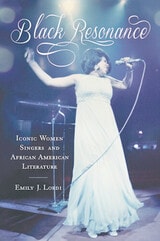
Black Resonance
Iconic Women Singers and African American LiteratureLordi, Emily J.
Rutgers University Press, 2013
Ever since Bessie Smith’s powerful voice conspired with the “race records” industry to make her a star in the 1920s, African American writers have memorialized the sounds and theorized the politics of black women’s singing. In Black Resonance, Emily J. Lordi analyzes writings by Richard Wright, Ralph Ellison, James Baldwin, Gayl Jones, and Nikki Giovanni that engage such iconic singers as Bessie Smith, Billie Holiday, Mahalia Jackson, and Aretha Franklin.
Focusing on two generations of artists from the 1920s to the 1970s, Black Resonance reveals a musical-literary tradition in which singers and writers, faced with similar challenges and harboring similar aims, developed comparable expressive techniques. Drawing together such seemingly disparate works as Bessie Smith’s blues and Richard Wright’s neglected film of Native Son, Mahalia Jackson’s gospel music and Ralph Ellison’s Invisible Man, each chapter pairs one writer with one singer to crystallize the artistic practice they share: lyricism, sincerity, understatement, haunting, and the creation of a signature voice. In the process, Lordi demonstrates that popular female singers are not passive muses with raw, natural, or ineffable talent. Rather, they are experimental artists who innovate black expressive possibilities right alongside their literary peers.
The first study of black music and literature to centralize the music of black women, Black Resonance offers new ways of reading and hearing some of the twentieth century’s most beloved and challenging voices.
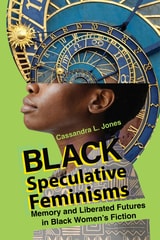
Black Speculative Feminisms
Memory and Liberated Futures in Black Women's FictionCassandra L. Jones
The Ohio State University Press, 2024
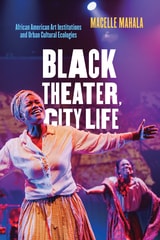
Black Theater, City Life
African American Art Institutions and Urban Cultural EcologiesMacelle Mahala
Northwestern University Press, 2022
Black Theater, City Life looks at Karamu House Theatre, the August Wilson African American Cultural Center, Pittsburgh Playwrights’ Theatre Company, the Lorraine Hansberry Theatre, the African American Shakespeare Company, the Atlanta Black Theatre Festival, and Kenny Leon’s True Colors Theatre Company to demonstrate how each organization articulates the cultural specificities, sociopolitical realities, and histories of African Americans. These companies have faced challenges that mirror the larger racial and economic disparities in arts funding and social practice in America, while their achievements exemplify such institutions’ vital role in enacting an artistic practice that reflects the cultural backgrounds of their local communities. Timely, significant, and deeply researched, this book spotlights the artistic and civic import of Black theaters in American cities.
Black Women Writing Autobiography
A Tradition Within a TraditionJoanne Braxton
Temple University Press, 1990
Black Women, Identity, and Cultural Theory
(Un)Becoming the SubjectKevin Everod Quashie
Rutgers University Press, 2004
In Black Women, Identity, and Cultural Theory, Kevin Everod Quashie explores the metaphor of the “girlfriend” as a new way of understanding three central concepts of cultural studies: self, memory, and language. He considers how the work of writers such as Toni Morrison, Ama Ata Aidoo, Dionne Brand, photographer Lorna Simpson, and many others, inform debates over the concept of identity. Quashie argues that these authors and artists replace the notion of a stable, singular identity with the concept of the self developing in a process both communal and perpetually fluid, a relationship that functions in much the same way that an adult woman negotiates with her girlfriend(s). He suggests that memory itself is corporeal, a literal body that is crucial to the process of becoming. Quashie also explores the problem language poses for the black woman artist and her commitment to a mastery that neither colonizes nor excludes.
The analysis throughout interacts with schools of thought such as psychoanalysis, postmodernism, and post-colonialism, but ultimately moves beyond these to propose a new cultural aesthetic, one that ultimately aims to center black women and their philosophies.
Black Writing from Chicago
In the World, Not of It?Edited by Richard R. Guzman. Foreword by Carolyn M. Rodgers
Southern Illinois University Press, 2006
Black Writing from Chicago: In the World, Not of It? takes readers on a cultural trip through Chicago’s literary history. Editor Richard R. Guzman compiles the first comprehensive collection of the works of Chicago’s black writers from 1861 to the present day. The anthology, which includes works from newspaper writing, poetry, fiction, drama, essays, and historical and social commentary, seeks not only to represent a broad range of writings but also to focus tightly on such themes as hope and despair, racism and equality, spirituality and religion. More than sixty writers, from the anonymous “J. W. M. (Colored)” to Ken Green, unfold a story that reflects the literary periods in black American history. Each author’s selection is preceded by a biographical and a bibliographical introduction. Readers interested in Chicago, race relations, and literature, as well as scholars of history, sociology, urban studies, and cultural studies, will find the collection invaluable.
Black, White, and in Color
Essays on American Literature and CultureHortense J. Spillers
University of Chicago Press, 2003
Black, White, and in Color offers a long-awaited collection of major essays by Hortense Spillers, one of the most influential and inspiring black critics of the past twenty years. Spanning her work from the early 1980s, in which she pioneered a broadly poststructuralist approach to African American literature, and extending through her turn to cultural studies in the 1990s, these essays display her passionate commitment to reading as a fundamentally political act-one pivotal to rewriting the humanist project.
Spillers is best known for her race-centered revision of psychoanalytic theory and for her subtle account of the relationships between race and gender. She has also given literary criticism some of its most powerful readings of individual authors, represented here in seminal essays on Ralph Ellison, Gwendolyn Brooks, and William Faulkner. Ultimately, the essays collected in Black, White, and in Color all share Spillers's signature style: heady, eclectic, and astonishingly productive of new ideas. Anyone interested in African American culture and literature will want to read them.
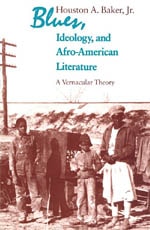
Blues, Ideology, and Afro-American Literature
A Vernacular TheoryHouston A. Baker Jr.
University of Chicago Press, 1987
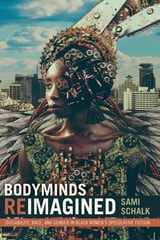
Bodyminds Reimagined
(Dis)ability, Race, and Gender in Black Women's Speculative FictionSami Schalk
Duke University Press, 2018
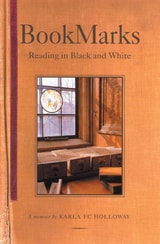
Bookmarks
Reading in Black and White, First Paperback EditionKarla F. Holloway
Rutgers University Press, 2006
"BookMarks is a moving and revelatory memoir... a work of fiercely intelligent scholarship." - Susan Larson,
"Erudite and emotional in turns, [BookMarks] is full of truths that appeal to the head and the heart." - Charlotte News Observer"
What are you reading? What books have been important to you? Whether you are interviewing for a job, chatting with a friend or colleague, or making small talk, these questions arise almost unfailingly. Some of us have stock responses, which may or may not be a fiction of our own making. Others gauge their answers according to who is asking the question. Either way, the replies that we give are thoughtfully crafted to suggest the intelligence, worldliness, political agenda, or good humor that we are hoping to convey. We form our answers carefully because we know that our responses say a lot.
But what exactly do our answers say? In BookMarks, Karla FC Holloway explores the public side of reading, and specifically how books and booklists form a public image of African Americans. Revealing her own love of books and her quirky passion for their locations in libraries and on bookshelves, Holloway reflects on the ways that her parents guided her reading when she was young and her bittersweet memories of reading to her children. She takes us on a personal and candid journey that considers the histories of reading in children’s rooms, prison libraries, and “Negro” libraries of the early twentieth century, and that finally reveals how her identity as a scholar, a parent, and an African American woman has been subject to judgments that public cultures make about race and our habits of reading.
Holloway is the first to call our attention to a remarkable trend of many prominent African American writers—including Maya Angelou, W.E.B. Du Bois, Henry Louis Gates, Malcolm X, and Zora Neale Hurston. Their autobiographies and memoirs are consistently marked with booklists—records of their own habits of reading. She examines these lists, along with the trends of selection in Oprah Winfrey’s popular book club, raising the questions: What does it mean for prominent African Americans to associate themselves with European learning and culture? How do books by black authors fare in the inevitable hierarchy of a booklist?
BookMarks provides a unique window into the ways that African Americans negotiate between black and white cultures. This compelling rumination on reading is a book that everyone should add to their personal collections and proudly carry “cover out.”
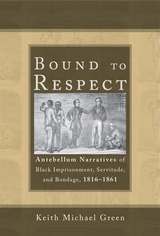
Bound to Respect
Antebellum Narratives of Black Imprisonment, Servitude, and Bondage, 1816–1861Keith Michael Green
University of Alabama Press, 2015
WINNER OF THE ELIZABETH AGEE PRIZE IN AMERICAN LITERATURE
Challenges the commonplace narrative that the African American experience of captivity in the United States is reducible to the legal institution of slavery, a status remedied through emancipation
In Bound to Respect: Antebellum Narratives of Black Imprisonment, Servitude, and Bondage, 1816–1861, Keith Michael Green examines key texts that illuminate forms of black bondage and captivity that existed within and alongside slavery. In doing so, he restores to antebellum African American autobiographical writing the fascinating heterogeneity lost if the historical experiences of African Americans are attributed to slavery alone.
The book’s title is taken from the assertion by US Supreme Court chief justice Roger B. Taney in his 1857 Dred Scott decision that blacks had no rights that whites were “bound to respect.” This allusion highlights Green’s critical assertion that the dehumanizing absurdities to which defenders of slavery resorted to justify slavery only brought into more stark relief the humanity of African Americans.
A gifted storyteller, Green examines four forms of captivity: incarceration, enslavement to Native Americans, child indentured servitude, and maritime capture. By illuminating this dense penumbra of captivity beyond the strict definitions of slavery, he presents a fluid and holistic network of images, vocabulary, narratives, and history. By demonstrating how these additional forms of confinement flourished in the era of slavery, Green shows how they persisted beyond emancipation, in such a way that freed slaves did not in fact partake of “freedom” as white Americans understood it. This gap in understanding continues to bedevil contemporary American society, and Green deftly draws persuasive connections between past and present.
A vital and convincing offering to readers of literary criticism, African American studies, and American history, Green’s Bound to Respect brings fresh and nuanced insights to this fundamental chapter in the American story.
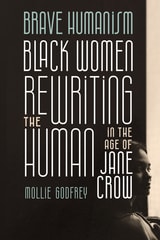
Brave Humanism
Black Women Rewriting the Human in the Age of Jane CrowMollie Godfrey
The Ohio State University Press, 2025
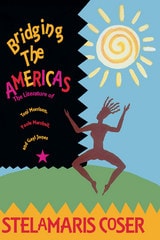
Bridging The Americas
The Literature of Paule Marshall, Toni Morrison, and Gayl JonesStelamaris Coser
Temple University Press, 1994
A literary study of three important black women writers, this book examines the "inter-American" characteristics in the work of Marshall, Morrison, and Jones, including detailed discussions of Morrison's Song of Solomon and Tar Baby, Jones's Corregidora and Song of Anninho, and Marshall's The Chose Place, The Timeless People.
Coser defines the inter-American characteristics in these authors' novels as a connection based on a common African heritage and a shared legacy of colonialism and racism. These three authors redefine the boundaries between the Americas, bridging the "extended Caribbean" that stretches from the U.S. Atlantic coast to Brazil. Their work reinterprets ethnic and sexual identity. Issues of race, class, and nationality overlap. History and identity are reinvented.
To explore the collective forms of resistance and cultural processes in Brazil, the Caribbean, and the United States, Coser also makes provocative connections between the visibility of black women writers and the popularity of male Latin American novelists like Carlos Fuentes and Gabriel Garcia Marquéz.

Broken Silences
Interviews with Black and White Women WritersEdited by Shirley M Jordan
Rutgers University Press, 1993
In these 20 interviews with women writers of fiction, Jordan, who teaches at Hampton University in Virginia, attempts to plumb the relations between black and white women in fiction and in life, and to explore the creative process. Although the book suffers from lengthy discussions of somewhat obscure work, the interviewees, most of whom have portrayed female characters of a race other than their own, offer intriguing, often conflicting observations about the primacy of race, gender or class. Kaye Gibbons ( Ellen Foster ) suggests that rural locations offer commonality to black and white Southern women; Marita Golden ( Long Distance Life ) observes that white writers emphasize female beauty while black writers focus on character. This book may be a useful supplement to literature courses.
From Library Journal
The message derived from the candid and articulate women interviewed here is, as Belva Plain states, "you learn as you live together." Editor Jordan (Hampton Univ., Virginia) has opened a dialog on writing and race relations by publishing these interviews with 20 significant contemporary black and white women writers, from Alice Childress and Joyce Carol Oates to Mildred Pitts Walker. The substance of these writers' thoughts is that the commonality of women's experience informs the genuine portrayal of a character as much as does the writer's understanding of her blackness or whiteness. This special book, so different from others that examine the writing process, is likely to stimulate dialog among women and to provoke serious study of many excellent women writers working today. Recommended for all collections supporting the study of literature, women's studies, and race relations.
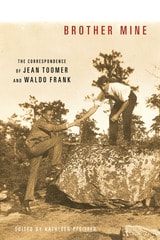
Brother Mine
The Correspondence of Jean Toomer and Waldo FrankEdited by Kathleen Pfeiffer
University of Illinois Press, 2010
The friendship of Jean Toomer and Waldo Frank was one of the most emotionally intense, racially complicated, and aesthetically significant relationships in the history of American literary modernism. Waldo Frank was an established white writer who advised and assisted the younger African American Jean Toomer as he pursued a literary career. They met in 1920, began corresponding regularly in 1922, and were estranged by the end of 1923, the same year that Toomer published his ambitiously modernist debut novel, Cane.
While individual letters between Frank and Toomer have been published separately on occasion, they have always been presented out of context. This volume presents for the first time their entire correspondence in chronological order, comprising 121 letters ranging from 200 to 800 words each. Kathleen Pfeiffer annotates and introduces the letters, framing the correspondence and explaining the literary and historical allusions in the letters themselves.
Reading like an epistolary novel, Brother Mine captures the sheer emotional force of the story that unfolds in these letters: two men discover an extraordinary friendship, and their intellectual and emotional intimacy takes shape before our eyes. This unprecedented collection preserves the raw honesty of their exchanges, together with the developing drama of their ambition, their disappointments, their assessment of their world, and ultimately, the betrayal that ended the friendship.
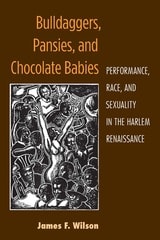
Bulldaggers, Pansies, and Chocolate Babies
Performance, Race, and Sexuality in the Harlem RenaissanceJames F. Wilson
University of Michigan Press, 2011
—David Krasner, author of A Beautiful Pageant: African American Theatre, Drama, and Performance in the Harlem Renaissance, 1910-1927