Results by title
336 books match the query 'Age' and 13 start with b
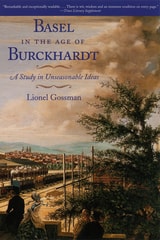
Basel in the Age of Burckhardt
A Study in Unseasonable IdeasLionel Gossman
University of Chicago Press, 2000
This remarkable history tells the story of the independent city-republic of Basel in the nineteenth century, and of four major thinkers who shaped its intellectual history: the historian Jacob Burckhardt, the philologist and anthropologist Johann Jacob Bachofen, the theologian Franz Overbeck, and the philosopher Friedrich Nietzsche.
"Remarkable and exceptionally readable . . . There is wit, wisdom and an immense erudition on every page."—Jonathan Steinberg, Times Literary Supplement
"Gossman's book, a product of many years of active contemplation, is a tour de force. It is at once an intellectual history, a cultural history of Basel and Europe, and an important contribution to the study of nineteenth-century historiography. Written with a grace and elegance that many aspire to, few seldom achieve, this is model scholarship."—John R. Hinde, American Historical Review
[more]

Becoming Citizens in the Age of Television
How Americans Challenged the Media and Seized Political Initiative during the Iran-Contra DebateDavid Thelen
University of Chicago Press, 1996
An inspired, original argument about the nature of democracy in American society, Becoming Citizens in the Age of Television explores a political process out of touch with everyday needs and concerns of citizens. Instead of focusing on polls and election results, historian David Thelen listens to Americans through their calls and letters to congressmen in which citizens define for themselves the issues they want to raise and the ways they want to be seen and heard.
Thelen argues that the self-referential world of politics and journalism during elections excludes the concerns and voices of Americans, resulting in lower voter turnouts and increased voter apathy. Televised hearings and trials, however—from O. J. Simpson to Anita Hill vs. Clarence Thomas to Oliver North and Iran-Contra—have ignited storms of controversy and public debate. Focusing upon the spontaneous, unmediated reactions of American citizens to these events, Thelen discovers a new kind of political participation in which Americans shape their interventions.
Through an analysis of a remarkable documentary collection—the correspondence sent by citizens to the House Select Committee on Iran-Contra in the wake of the Oliver North testimony—Thelen explains how Americans are reclaiming the political process. Examining more than 5,000 letters and telegrams, Thelen uncovers the anger and resolve of a vocal public insulted by the media and opinion-managers who have misrepresented them as mindless supporters of "Olliemania."
Concluding with suggestions on how citizens can reclaim their voice from the opinion managing industries, this work promises to provoke the kind of public discourse on which democracy depends.
[more]
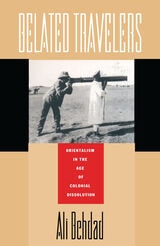
Belated Travelers
Orientalism in the Age of Colonial DissolutionAli Behdad
Duke University Press, 1994
In Belated Travelers, Ali Behdad offers a compelling cultural critique of nineteenth-century travel writing and its dynamic function in European colonialism. Arriving too late to the Orient, at a time when tourism and colonialism had already turned the exotic into the familiar, late nineteenth-century European travelers to the Middle East experienced a sense of belatedness, of having missed the authentic experience once offered by a world that was already disappearing. Behdad argues that this nostalgic desire for the other contains an implicit critique of Western superiority, a split within European discourses of otherness. Working from these insights and using analyses of power derived from Foucault, Behdad engages in a new critique of orientalism. No longer viewed as a coherent and unified phenomenon or a single developmental tradition, it is seen as a complex and shifting field of practices that has relied upon its own ambivalence and moments of discontinuity to ensure and maintain its power as a discourse of dominance.
Through readings of Flaubert, Nerval, Kipling, Blunt, and Eberhardt, and following the transition in travel literature from travelog to tourist guide, Belated Travelers addresses the specific historical conditions of late nineteenth-century orientalism implicated in the discourses of desire and power. Behdad also views a broad range of issues in addition to nostalgia and tourism, including transvestism and melancholia, to specifically demonstrate the ways in which the heterogeneity of orientalism and the plurality of its practice is an enabling force in the production and transformation of colonial power.
An exceptional work that provides an important critique of issues at the forefront of critical practice today, Belated Travelers will be eagerly awaited by specialists in nineteenth-century British and French literatures, and all concerned with colonial and postcolonial discourse.
[more]
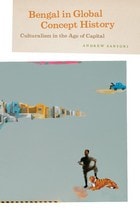
Bengal in Global Concept History
Culturalism in the Age of CapitalAndrew Sartori
University of Chicago Press, 2008
Today people all over the globe invoke the concept of culture to make sense of their world, their social interactions, and themselves. But how did the culture concept become so ubiquitous? In this ambitious study, Andrew Sartori closely examines the history of political and intellectual life in nineteenth- and twentieth-century Bengal to show how the concept can take on a life of its own in different contexts.
Sartori weaves the narrative of Bengal’s embrace of culturalism into a worldwide history of the concept, from its origins in eighteenth-century Germany, through its adoption in England in the early 1800s, to its appearance in distinct local guises across the non-Western world. The impetus for the concept’s dissemination was capitalism, Sartori argues, as its spread across the globe initiated the need to celebrate the local and the communal. Therefore, Sartori concludes, the use of the culture concept in non-Western sites was driven not by slavish imitation of colonizing powers, but by the same problems that repeatedly followed the advance of modern capitalism. This remarkable interdisciplinary study will be of significant interest to historians and anthropologists, as well as scholars of South Asia and colonialism.
Sartori weaves the narrative of Bengal’s embrace of culturalism into a worldwide history of the concept, from its origins in eighteenth-century Germany, through its adoption in England in the early 1800s, to its appearance in distinct local guises across the non-Western world. The impetus for the concept’s dissemination was capitalism, Sartori argues, as its spread across the globe initiated the need to celebrate the local and the communal. Therefore, Sartori concludes, the use of the culture concept in non-Western sites was driven not by slavish imitation of colonizing powers, but by the same problems that repeatedly followed the advance of modern capitalism. This remarkable interdisciplinary study will be of significant interest to historians and anthropologists, as well as scholars of South Asia and colonialism.
[more]
Berlioz and His Century
An Introduction to the Age of RomanticismJacques Barzun
University of Chicago Press, 1982
In this abridgment of his monumental study, Berlioz and the Romantic Century, Jacques Barzun recounts the events and extraordinary achievements of the great composer's life against the background of the romantic era. As the author eloquently demonstrates, Berloiz was an archetype whose destiny was the story of an age, the incarnation of an artistic style and a historical spirit. "In order to understand the nineteenth century, it is essential to understand Berlioz," notes W. H. Auden, "and in order to understand Berlioz, it is essential to read Professor Barzun."
[more]
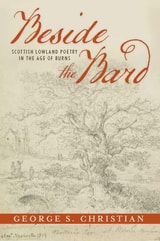
Beside the Bard
Scottish Lowland Poetry in the Age of BurnsGeorge S. Christian
Bucknell University Press, 2020
Beside the Bard argues that Scottish poetry in the age of Burns reclaims not a single past, dominated and overwritten by the unitary national language of an elite ruling class, but a past that conceptualizes the Scottish nation in terms of local self-identification, linguistic multiplicity, cultural and religious difference, and transnational political and cultural affiliations. This fluid conception of the nation may accommodate a post-Union British self-identification, but it also recognizes the instrumental and historically contingent nature of “Britishness.” Whether male or female, loyalist or radical, literati or autodidacts, poets such as Alexander Wilson, Carolina Olyphant, Robert Tannahill, and John Lapraik, among others, adamantly refuse to imagine a single nation, British or otherwise, instead preferring an open, polyvocal field, on which they can stage new national and personal formations and fight new revolutions. In this sense, “Scotland” is a revolutionary category, always subject to creative destruction and reformation.
Published by Bucknell University Press. Distributed worldwide by Rutgers University Press.
Published by Bucknell University Press. Distributed worldwide by Rutgers University Press.
[more]

Black Dogs and Blue Words
Depression and Gender in the Age of Self-CareKimberly K. Emmons
Rutgers University Press, 2014
His "black dog"--that was how Winston Churchill referred to his own depression. Today, individuals with feelings of sadness and irritability are encouraged to "talk to your doctor." These have become buzz words in the aggressive promotion of wonder-drug cures since 1997, when the Food and Drug Administration changed its guidelines for the marketing of prescription pharmaceuticals.
Black Dogs and Blue Words analyzes the rhetoric surrounding depression. Kimberly K. Emmons maintains that the techniques and language of depression marketing strategies--vague words such as "worry," "irritability," and "loss of interest"--target women and young girls and encourage self-diagnosis and self-medication. Further, depression narratives and other texts encode a series of gendered messages about health and illness.
As depression and other forms of mental illness move from the medical-professional sphere into that of the consumer-public, the boundary at which distress becomes disease grows ever more encompassing, the need for remediation and treatment increasingly warranted. Black Dogs and Blue Words demonstrates the need for rhetorical reading strategies as one response to these expanding and gendered illness definitions.
[more]
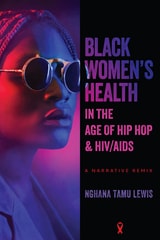
Black Women’s Health in the Age of Hip Hop and HIV/AIDS
A Narrative RemixNghana tamu Lewis
The Ohio State University Press, 2025
In Black Women’s Health in the Age of Hip Hop and HIV/AIDS, Nghana tamu Lewis chronicles the work of five black women creators to demonstrate how hip hop feminism operates as a vital tool for interpreting and building knowledge about the lived experiences of black women and girls. Between 1996 and 2006, novelists Sapphire and Sister Souljah, television producer Mara Brock Akil, and playwrights Nikkole Salter and Danai Gurira addressed the neglect of black women’s health in mainstream biomedical and public health discourses. At a time when responses to the HIV/AIDS epidemic largely focused on gay white men, Lewis argues, these creators deployed the strategies of hip hop feminism to frame and untangle issues of self-care, risk, and the ways that caregiving roles place black women and girls at disproportionate risk of adverse health outcomes. Building on previous intersectionality and social justice advocacy scholarship, Lewis argues that Sapphire, Souljah, Brock Akil, and Salter and Gurira both documented the effects of the epidemic on black women and girls and equipped the masses with solutions-oriented responses to the crisis, thus intervening in ways that mainstream biomedical and public health research has yet to do.
[more]
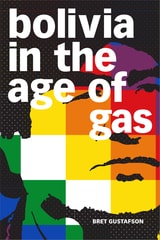
Bolivia in the Age of Gas
Bret Gustafson
Duke University Press, 2020
Evo Morales, Bolivia's first Indigenous president, won reelection three times on a leftist platform championing Indigenous rights, anti-imperialism, and Bolivian control over the country's natural gas reserves. In Bolivia in the Age of Gas, Bret Gustafson explores how the struggle over natural gas has reshaped Bolivia, along with the rise, and ultimate fall, of the country's first Indigenous-led government. Rethinking current events against the backdrop of a longer history of oil and gas politics and military intervention, Gustafson shows how natural gas wealth brought a measure of economic independence and redistribution, yet also reproduced political and economic relationships that contradicted popular and Indigenous aspirations for radical change. Though grounded in the unique complexities of Bolivia, the volume argues that fossil-fuel political economies worldwide are central to the reproduction of militarism and racial capitalism and suggests that progressive change demands moving beyond fossil-fuel dependence and the social and ecological ills that come with it.
[more]
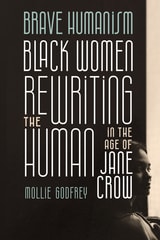
Brave Humanism
Black Women Rewriting the Human in the Age of Jane CrowMollie Godfrey
The Ohio State University Press, 2025
In Brave Humanism, Mollie Godfrey argues that long before the post-1960s critiques of Western humanism emerged, an earlier generation of Black women writers were committed to reclaiming and redefining the human on their own terms. For the writers under study here—Pauline Hopkins, Nella Larsen, Zora Neale Hurston, Ann Petry, Gwendolyn Brooks, and Lorraine Hansberry—narrative forms offered intellectual space to challenge the white supremacist and patriarchal logics of Western humanism that underwrote de jure segregation. Through these narratives, they worked toward their own visions of humanity and human freedom—visions that would come to inspire later generations of Black feminists. By recovering Jane Crow–era Black women writers’ undervalued intellectual work of critique and creation, Godfrey also intervenes in critical conversations about the relationships between Black creative work, Black women’s intellectual work, and our ideas about human agency and collectivity. In recovering this hidden intellectual genealogy, this book offers a more nuanced history of Black women’s engagement with the idea of the human and places a longer history of Black women’s writing at the heart of humanist and posthumanist study.
[more]
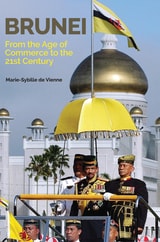
Brunei
From the Age of Commerce to the 21st CenturyMarie-Sybille de Vienne
National University of Singapore Press, 2015
Now an energy-rich sultanate, for centuries a important trading port in the South China Sea, Brunei has taken a different direction than its Persian Gulf peers. Immigration is restricted, and Brunei’s hydrocarbon wealth is invested conservatively, mostly outside the country.
Today home to some 393,000 inhabitants and comprising 5,765 square kilometers in area, Brunei first appears in the historical record at the end of the 10th century. After the Spanish attack of 1578, Brunei struggled to regain and expand its control on coastal West Borneo and to remain within the trading networks of the South China Sea. It later fell under British sway, and a residency was established in 1906, but it took the discovery of oil in Seria in 1929 before the colonial power began to establish the bases of a modern state.
Governed by an absolute monarchy, Bruneians today nonetheless enjoy a high level of social protection and rule of law. Ranking second (after Singapore) in Southeast Asia in terms of standards of living, the sultanate is implementing an Islamic penal code for the first time of its history. Focusing on Brunei’s political economy, history and geography, this book aims to understand the forces behind Brunei’s to-and-fro of tradition and modernisation.
[more]
Brutes or Angels
Human Possibility in the Age of BiotechnologyJames T. Bradley
University of Alabama Press, 2013
A guide to the rapidly progressing Age of Biotechnology, Brutes or Angels provides basic information on a wide array of new technologies in the life sciences, along with the ethical issues raised by each
With stem cell research, Dolly the cloned sheep, in vitro fertilization, age retardation, and pharmaceutical mind enhancement, humankind is now faced with decisions that it has never before had to consider. The thoughtfulness, or lack of it, that we bring to those decisions will largely determine the future character of the living world.
Brutes or Angels will facilitate informed choice making about the personal use of biotechnologies and the formulation of public policies governing their development and use. Ten biotechnologies that impact humans are considered: stem cell research, embryo selection, human genomics, gene therapies, human reproductive cloning, age retardation, cognition enhancement, the engineering of nonhuman organisms, nanobiology, and synthetic biology.
With deft and assured use of metaphors, analogies, diagrams, and photographs, James T. Bradley introduces important biological principles and the basic procedures used in biotechnology. Various ethical issues--personhood, personal identity, privacy, ethnic discrimination, distributive justice, authenticity and human nature, and the significance of mortality in the human life cycle--are presented in a clear and unbiased manner. Personal reflection and group dialogue are encouraged by questions at the end of each chapter, making this book not only a general guide to better informed and nuanced thinking on these complex and challenging topics but also an appropriate text for bioethics courses in university science departments and for adult education classes.
Standing at the beginning of the twenty-first century, with burgeoning abilities to enhance and even create life in ways unimaginable just a few decades ago, humans have an awesome responsibility to themselves and other species. Brutes or Angels invites us to engage each other in meaningful dialogue by listening, gathering information, formulating thoughtful views, and remaining open to new knowledge and ethical argumentation.
[more]

Building for the Army in the Age of Empires
Modern Military Infrastructure and the Urban ExperienceDragan Damjanovic
Central European University Press, 2027
This volume focuses on a still too little appreciated aspect of urban history of the modern period—the impact of the military on the development, perception, and functioning of European cities. It contains ten contributions from Europe—primarily Central and Eastern Europe, that is, from areas that belonged to the Russian, German, and Austro-Hungarian Empires—and centers on the nineteenth and twentieth centuries. During this period, the process of rationalizing army maintenance led soldiers of huge militaries, often operating in far-flung countries, to relocate to modern barracks concentrated in towns and cities. These mainly urban settlements had the potential to harbor new, place-consuming infrastructure. How these precise circumstances impacted and changed European cities is the driving subject of this book.
[more]