Results by title
239 books match the query 'Agriculture' and 8 start with b

BLACK SWAMP FARM
Howard E. Good
The Ohio State University Press, 1997
Good remembers playing shinny with clamp-on skates and a tin can that had been stomped until it could whiz across the ice given just the right combination of speed and accuracy. He tells of the boom of the steam engine as it pulled the threshing machine to a neighboring farm on a hot summer day, and of the excitement of riding high on a wagonload of hay, gazing down on the horses’ broad, shining backs. He describes the springtime task of making soap, the ritual of the shivaree, and the pleasure of the church ice-cream social. He remembers well—and chronicles for the reader—the unproclaimed achievements of men and women whose courage and grueling toil brought them rich rewards.
First published in 1967, this reprint makes available once again a faithful portrayal of Black Swamp—a place that no longer exists—and provides a treasure trove of history for Ohioans.
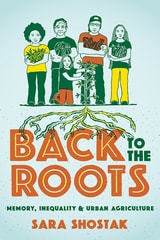
Back to the Roots
Memory, Inequality, and Urban AgricultureSara Shostak
Rutgers University Press, 2021

Balsam Fir
A Monographic ReviewE.V. Bakuzis and H.L. Hansen
University of Minnesota Press, 1965
Balsam Fir was first published in 1965. Minnesota Archive Editions uses digital technology to make long-unavailable books once again accessible, and are published unaltered from the original University of Minnesota Press editions.
Professors Bakuzis and Hansen, with the assistance of a number of co-authors of individual chapters, present an exhaustive survey of the literature on the balsam fir, providing a coherent picture of the species and its place in nature and forestry practice. The balsam fir is used extensively in the pulp and paper industry, and it is known to millions as a traditional Christmas tree. In North America it is a major tree species in Canada, in the northeastern United States, and in the Great Lakes region.
In the search of the literature, over 2000 sources were consulted and considerably more than half of them are cited in the book. The references, organized in an ecological framework, cover the period from the seventeenth century to the present. The authors have reviewed and integrated these data in a unified, but multipurposed, book. In the integration of the source material the authors also made contributions of their own. The book contains the following chapters: Botanical Foundations, Geography and Synecology, Ecological Factors, Microbiology, Entomology, Reproduction, Stand Development, Growth and Yield, and Utilization. Appendixes list fungi and myxomycetes and insects associated with balsam fir. There are 30 illustrations, including a frontispiece drawing by the noted nature artist Francis Lee Jaques.
The book will appeal to a wide range of readers specifically concerned with forestry, including research workers, educators, entomologists, pathologists, and managing foresters, as well as conservationists and wildlife biologist in general.
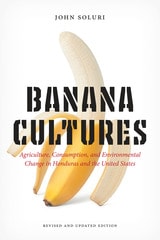
Banana Cultures
Agriculture, Consumption, and Environmental Change in Honduras and the United StatesBy John Soluri
University of Texas Press, 2021
Bananas, the most frequently consumed fresh fruit in the United States, have been linked to Miss Chiquita and Carmen Miranda, "banana republics," and Banana Republic clothing stores—everything from exotic kitsch, to Third World dictatorships, to middle-class fashion. But how did the rise in banana consumption in the United States affect the banana-growing regions of Central America? In this lively, interdisciplinary study, John Soluri integrates agroecology, anthropology, political economy, and history to trace the symbiotic growth of the export banana industry in Honduras and the consumer mass market in the United States.
Beginning in the 1870s, when bananas first appeared in the U.S. marketplace, Soluri examines the tensions between the small-scale growers, who dominated the trade in the early years, and the shippers. He then shows how rising demand led to changes in production that resulted in the formation of major agribusinesses, spawned international migrations, and transformed great swaths of the Honduran environment into monocultures susceptible to plant disease epidemics that in turn changed Central American livelihoods. Soluri also looks at labor practices and workers' lives, changing gender roles on the banana plantations, the effects of pesticides on the Honduran environment and people, and the mass marketing of bananas to consumers in the United States. His multifaceted account of a century of banana production and consumption adds an important chapter to the history of Honduras, as well as to the larger history of globalization and its effects on rural peoples, local economies, and biodiversity.
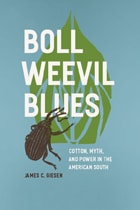
Boll Weevil Blues
Cotton, Myth, and Power in the American SouthJames C. Giesen
University of Chicago Press, 2011
Between the 1890s and the early 1920s, the boll weevil slowly ate its way across the Cotton South from Texas to the Atlantic Ocean. At the turn of the century, some Texas counties were reporting crop losses of over 70 percent, as were areas of Louisiana, Arkansas, and Mississippi. By the time the boll weevil reached the limits of the cotton belt, it had destroyed much of the region’s chief cash crop—tens of billions of pounds of cotton, worth nearly a trillion dollars.
As staggering as these numbers may seem, James C. Giesen demonstrates that it was the very idea of the boll weevil and the struggle over its meanings that most profoundly changed the South—as different groups, from policymakers to blues singers, projected onto this natural disaster the consequences they feared and the outcomes they sought. Giesen asks how the myth of the boll weevil’s lasting impact helped obscure the real problems of the region—those caused not by insects, but by landowning patterns, antiquated credit systems, white supremacist ideology, and declining soil fertility. Boll Weevil Blues brings together these cultural, environmental, and agricultural narratives in a novel and important way that allows us to reconsider the making of the modern American South.

Breeds of Empire
The Invention of the Horse in Southeast Asia and Southern Africa 1500-1950Edited by Greg Bankoff and Sandra Swart
National University of Singapore Press, 2007

British Atlantic, American Frontier
Spaces of Power in Early Modern British AmericaStephen J. Hornsby
University Press of New England, 2004
Broken Heartland
The Rise of America's Rural GhettoOsha Gray Davidson
University of Iowa Press, 1996
Between 1940 and the mid 1980s, farm production expenses in America's Heartland tripled, capital purchases quadrupled, interest payments jumped tenfold, profits fell by 10 percent, the number of farmers decreased by two-thirds, and nearly every farming community lost population, businesses, and economic stability. Growth for these desperate communities has come to mean low-paying part-time jobs, expensive tax concessions, waste dumps, and industrial hog farming, all of which come with environmental and psychological price tags. In Broken Heartland, Osha Gray Davidson chronicles the decline of the Heartland and its transformation into a bitterly divided and isolated regional ghetto. Through interviews with more than two hundred farmers, social workers, government officials, and scholars, he puts a human face on the farm crisis of the 1980s.
In this expanded edition Davidson emphasizes the tenacious power of far-right-wing groups; his chapter on these burgeoning rural organizations in the original edition of Broken Heartland was the first in-depth look—six years before of the Oklahoma City bombing—at the politics of hate they nurture. He also spotlights NAFTA, hog lots, sustainable agriculture, and the other battles and changes over the past six years in rural America.