Results by title
167 books match the query 'Artists, Architects, Photographers' and 11 start with b
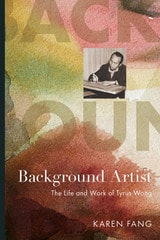
Background Artist
The Life and Work of Tyrus WongKaren Fang
Rutgers University Press, 2025
Chinese American Librarians Association Best Book Award (Honorary Mention, Adult Non-fiction category)
You might not know the name Tyrus Wong, but you probably know some of the images he created, including scenes from the beloved Disney classic Bambi. Yet when he came to this country as a child, Tyrus was an illegal immigrant locked up in an offshore detention center. How did he go on to a long and prosperous career drawing animation cels, storyboards, and greeting cards that shaped the American imagination?
Background Artist shares the inspiring story of Tyrus Wong’s remarkable 106-year life and showcases his wide array of creative work, from the paintings and fine art prints he made working for Roosevelt’s Works Progress Administration to the unique handmade kites he designed and flew on the Santa Monica beach. It tells how he came to the United States as a ten-year-old boy in 1920, at a time when the Chinese Exclusion Act barred him from legal citizenship. Yet it also shows how Wong found American communities that welcomed him and nurtured his artistic talent. Covering everything from his work as a studio sketch artist for Warner Bros. to the best-selling Christmas cards he designed for Hallmark and other greeting card companies, this book celebrates a multitalented Asian American artist and pioneer.
Larry Potash (WGN News) and "The artist who saved a Hollywood classic from never being made" (https://www.youtube.com/watch?v=P471NdY7TdE)
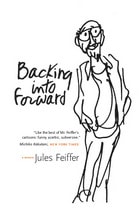
Backing into Forward
A MemoirJules Feiffer
University of Chicago Press, 2012
Subversive, funny, and effortlessly droll, Jules Feiffer’s cartoons were all over New York in the 1960s and ’70s—featured in the Village Voice, but also cut out and pinned to bulletin boards in offices and on refrigerators at home. Feiffer describes himself as “lucking into the zeitgeist,” and there’s some truth to the sentiment; Feiffer’s brand of satire reflected Americans’ ambivalence about the Vietnam War, changing social mores, and much more.
Feiffer’s memoir, Backing into Forward, like his cartoons, is sharply perceptive with a distinctive bite of mordant humor. Beginning with his childhood in Brooklyn, Feiffer paints a picture of a troubled kid with an overbearing mother and a host of crippling anxieties. From there, he discusses his apprenticeship with his hero, Will Eisner, and his time serving in the military during the Korean War, which saw him both feigning a breakdown and penning a cartoon narrative called “Munro” that solidified his distinctive aesthetic as an artist. While Feiffer’s voice grounds the book, the sheer scope of his artistic accomplishment, from his cartoons turning up in the New Yorker, Playboy, and the Nation to his plays and film scripts, is remarkable and keeps the narrative bouncing along at a speedy clip. A compelling combination of a natural sense of humor and a ruthless dedication to authenticity, Backing into Forward is full of wit and verve, often moving but never sentimental.
“Jules Feiffer’s original and neurotic voice. . . . reinvented comics in the 1950s and made possible what’s now called the ‘graphic novel.’ His engaging new memoir is told in that same witty and perceptive New York cadence, mellowed and laced with wisdom. He’s an inspiration.”—Art Spiegelman

Before Pictures
Douglas Crimp
University of Chicago Press, 2016
Before Pictures tells the story of Crimp’s life as a young gay man and art critic in New York City during the late 1960s through the turbulent 1970s. Crimp participated in all of what made the city so stimulating in that vibrant decade. The details of his professional and personal life are interwoven with this the particularly rich history of New York City at that time, producing a vivid portrait of both the critic and his adopted city. The book begins with his escape from his hometown in Idaho, and we quickly find Crimp writing criticism for ArtNews while working at the Guggenheim—where, as a young curatorial assistant, he was one of the few to see Daniel Buren’s Peinture-Sculpture before it was removed amid cries of institutional censorship. We also travel to the Chelsea Hotel (where Crimp helped the down-on-his-luck couturier Charles James organize his papers) through to his days as a cinephile and balletomane to the founding of the art journal October, where he remained a central figure for many years. As he was developing his reputation as a critic, he was also partaking of the New York night life, from drugs and late nights alongside the Warhol crowd at the Max’s Kansas City to discos, roller-skating, and casual sex with famous (and not-so-famous) men. As AIDS began to ravage the closely linked art and gay communities, Crimp eventually turned his attention to activism dedicated to rethinking AIDS.
Part biography and part cultural history, Before Pictures is a courageous account of an exceptional period in both Crimp’s life and the life of New York City. At the same time, it offers a deeply personal and engaging point of entry into important issues in contemporary art.
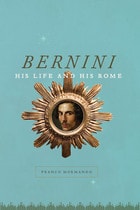
Bernini
His Life and His RomeFranco Mormando
University of Chicago Press, 2011
Sculptor, architect, painter, playwright, and scenographer, Gian Lorenzo Bernini (1598–1680) was the last of the great universal artistic geniuses of early modern Italy, placed by both contemporaries and posterity in the same exalted company as Leonardo, Raphael, and Michelangelo. And his artistic vision remains palpably present today, through the countless statues, fountains, and buildings that transformed Rome into the Baroque theater that continues to enthrall tourists today.
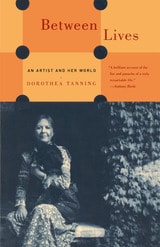
Between Lives
An Artist and Her WorldDorothea Tanning
Northwestern University Press, 2003
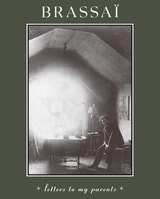
Brassai
Letters to My ParentsBrassaï
University of Chicago Press, 1997
"[Brassaï] is probably the only photographer—at least in France—to have acquired such a vast audience and mastered his material to such a degree that he can express himself with a flexibility and apparent ease that is almost literary in its nature."—Jean Gallien, Photo-Monde
"The letters that Brassaï wrote to his parents between 1920 and 1940 chronicle the sometimes painful stages by which this gifted man hauled himself from penury to celebrity."—Peter Hamilton, Times Literary Supplement
"In these proud, protective, occasionally conscience-stricken missives, the young man full of eager dreams emerges as one of the century's pioneering photographers, revered for his lushly atmospheric portraits of Paris after dark."—Elle
"A fascinating insight into how a bright individual slowly found his calling."—Christine Schwartz Hartley, New York Times Book Review
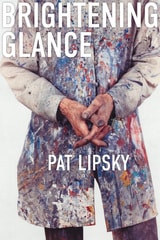
Brightening Glance
Art and LifePat Lipsky
University of Iowa Press, 2025
Brightening Glance offers a stunningly self-revealing portrait of the struggles and sacrifices, joys and excitement inherent in a modern painter’s life, and captures the evergreen allure of New York’s art world between 1970 and 2010. In stripped down, elegant prose, Lipsky summons a New York that no longer exists and ponders why we love (and hate) the art world. Ultimately, it’s a story of a contemporary woman, a mother, and a painter, who dares a career in a field where only a handful of women have succeeded.
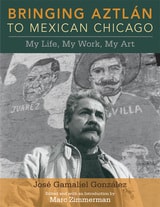
Bringing Aztlan to Mexican Chicago
My Life, My Work, My ArtJose Gamaliel Gonzalez, Edited and with an Introduction by Marc Zimmerman
University of Illinois Press, 2010
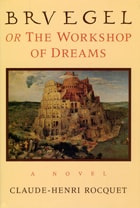
Bruegel, or the Workshop of Dreams
A NovelClaude-Henri Rocquet
University of Chicago Press, 1991
Building Taliesin
Frank Lloyd Wright’s Home of Love and LossRon McCrea
Wisconsin Historical Society Press, 2012
Burnham of Chicago
Architect and Planner, Second EditionThomas S. Hines
University of Chicago Press, 2008
“In every sense this is the definitive biography.”—Harry Weese, Chicago Tribune