Results by title
131 books match the query 'Baseball' and 32 start with b
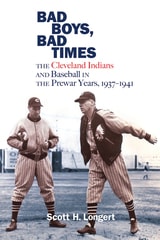
Bad Boys, Bad Times
The Cleveland Indians and Baseball in the Prewar Years, 1937–1941Scott H. Longert
Ohio University Press, 2019
In 1937, the Great Depression was still lingering, but at baseball parks across the country there was a sense of optimism. Major League attendance was on a sharp rise. Tickets to an Indians game at League Park on Lexington and East 66th were $1.60 for box seats, $1.35 for reserve seats, and $.55 for the bleachers. Cleveland fans were particularly upbeat—Bob Feller, the teenage phenomenon, was a farm boy with a blistering fast ball. Night games were an exciting development. Better days were ahead.
But there were mounting issues facing the Indians. For one thing, it was rumored that the team had illegally signed Feller. Baseball Commissioner Judge Kenesaw Mountain Landis was looking into that matter and one other. Issues with an alcoholic catcher, dugout fights, bats thrown into stands, injuries, and a player revolt kept things lively.
In Bad Boys, Bad Times: The Cleveland Indians and Baseball in the Prewar Years, 1937–1941—the follow-up to his No Money, No Beer, No Pennants: The Cleveland Indians and Baseball in the Great Depression—baseball historian Scott H. Longert writes about an exciting period for the team, with details and anecdotes that will please fans all over.

Ball, Bat and Bishop
THE ORIGIN OF BALL GAMESRobert W. Henderson
University of Illinois Press, 1947
Henderson traces the origins of ball sports to religious rites in ancient Egypt, where the ball (perhaps a shrunken head) represented a fertility symbol and opposing teams engaged in mock combat signifying the struggle of good against evil. Centuries later, pagan fertility rites featuring the ball were adapted by the Christian church as rituals symbolic of Easter and the Resurrection. Court tennis was also firmly rooted in the church, the earliest players being the bishops, canons, and clerics who played it in their cloistered courtyards.
Henderson overturns the popular belief that the game of racquets originated in the debtors' prison on Fleet Street in the early nineteenth century. He also notes that polo, the most ancient of games played with stick and ball, originated in Persia and migrated to China and India, where it was eventually embraced by English imperialists. Other sports discussed include football, lawn tennis, cricket, and golf.
The most substantial portion of Henderson's study is devoted to the game of baseball. Providing copious evidence of early forms of baseball played in England and the United States before 1829, he offers a meticulous account of the legerdemain by which Abner Doubleday, the famous Civil War general, came to be identified as the inventor in 1839 of a game that was already at least two centuries old.
The new foreword by Leonard Koppett affirms the significance of this classic work of sports history, which was the first to dismantle the Doubleday/Cooperstown myth.
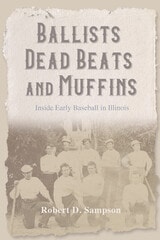
Ballists, Dead Beats, and Muffins
Inside Early Baseball in IllinoisRobert D. Sampson
University of Illinois Press, 2023
Baseball’s spread across Illinois paralleled the sport’s explosive growth in other parts of the country.Robert D. Sampson taps a wealth of archival research to transport readers to an era when an epidemic of “base ball on the brain” raged from Alton to Woodstock. Focusing on the years 1865 to 1869, Sampson offers a vivid portrait of a game where local teams and civic ambition went hand in hand and teams of paid professionals displaced gentlemen’s clubs devoted to sporting fair play. This preoccupation with competition sparked rules disputes and controversies over imported players while the game itself mirrored society by excluding Black Americans and women. The new era nonetheless brought out paying crowds to watch the Rock Island Lively Turtles, Fairfield Snails, and other teams take the field up and down the state.
A first-ever history of early baseball in Illinois, Ballists, Dead Beats, and Muffins adds the Prairie State game’s unique shadings and colorful stories to the history of the national pastime.

Banking On It
Inside Baseball, Hardball Politics, and Building the Best Era in Phillies HistoryPaul Hagen with Kevin Cooney
Temple University Press, 2027
When Citizens Bank Park opened on April 3, 2024, it was the result of twelve years (and many false starts) of maneuvering for the venue to replace Veterans Stadium as the home to the Philadelphia Phillies. Banking On It describes the politicking that took place, from conflicts between the Phillies and the Philadelphia Eagles resulting from sharing a venue, to decisions about where to build the new ballpark, who would pay for it, and where the outfield fences would be placed.
Paul Hagen and Kevin Cooney recount the setbacks, frustrations, missteps, political machinations, and angst the team surmounted as the process played out. But Banking On It also details the benefits of all these efforts—the Phillies became a powerhouse franchise after settling into their new home. The new stadium helped the team elevate its game by generating money to attract and keep better players, including Jim Thome, Ryan Howard, and Kyle Schwarber taking advantage of groundwork laid by scouts and managers. The Phillies have had their most successful two decades in franchise history playing at Citizens Bank Park.
Banking On It celebrates the game, the team, and the stadium that helped create a championship era.
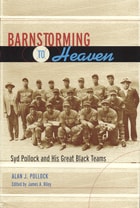
Barnstorming to Heaven
Syd Pollock and His Great Black TeamsAlan J. Pollock
University of Alabama Press, 2006
The Indianapolis Clowns were a black touring baseball team that featured an entertaining mix of comedy, showmanship, and skill. Sometimes referred to as the Harlem Globetrotters of baseball—though many of the Globetrotters’ routines were borrowed directly from the Clowns—they captured the affection of Americans of all ethnicities and classes. Author Alan Pollock was the son of the Clowns' owner Syd Pollock, who owned a series of black barnstorming teams that crisscrossed the country from the late 1920s until the mid-1960s. They played every venue imaginable, from little league fields to Yankee Stadium, and toured the South, the Northeast, the Midwest, the Canadian Rockies, the Dakotas, the Southwest, the Far West—anywhere there was a crowd willing to shell out a few dollars for an unforgettable evening.
Alan grew up around the team and describes in vivid detail the comedy routines of Richard “King Tut” King, “Spec Bebob” Bell, Reece “Goose” Tatum; the “warpaint” and outlandish costumes worn by players in the early days; and the crowd-pleasing displays of amazing skill known as pepperball and shadowball. These men were entertainers, but they were also among the most gifted athletes of their day, making a living in sports the only way a black man could. They played to win.
More than just a baseball story, these recollections tell the story of great societal changes in America from the roaring twenties, through the years of the Great Depression and World War II, and into the Civil Rights era.
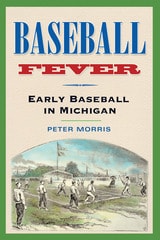
Baseball Fever
Early Baseball in MichiganPeter Morris
University of Michigan Press, 2003
Baseball seems tailor-made for the historian, yet even today, after almost a century and a half of organized play, baseball's origins remain unclear. Most accounts focus on Eastern teams and the advent of professionals, but how the game spread across a predominantly rural America to become our national pastime is a question still largely unresolved.
In this well-researched study of Michigan baseball from the 1830s to the 1870s, baseball scholar Peter Morris offers many answers. Drawing on such sources as personal memoirs, period photographs, and an extensive, often hilarious variety of newspaper accounts, he paints a vivid portrait of a game that was widely---if erratically---played well before the Civil War and gradually evolved from an informal amusement into an activity for local groups of young men and finally into a serious, organized sport.
Baseball began with pick-up "raisin'" games---so called because they took place after rural roof-raisings---played purely for fun by any number of participants, with myriad local variations. The first amateur clubs appeared in the 1850s and were often ridiculed for playing a child's game---"baseball fever" was then a term of mockery---but as they persevered and issued challenges to other teams from nearby towns, rivalries developed, rules began to conform, and a tradition started to take shape.
Tournaments, often connected with county fairs, and increased newspaper coverage gave the game new momentum after the Civil War, and what had been sociable matches became serious contests, sometimes marred by bad blood. Enclosed grounds changed the nature of the game--most notably with respect to home runs--and allowed teams to charge admission, which introduced a new element of commercialism, community involvement, and a heightened sense of competition. Ultimately, it brought about a level of play that made the best "amateur" clubs able to challenge professional teams from the East when they toured the country.
As he traces the exploits of clubs like the Excelsiors, the Wahoos, and the Unknowns, season by season and often game by game, Morris adds a wealth of new detail to the story of baseball's early days, showing how decades of at least nominally amateur play prepared the way for the advent of the National League in the 1870s, and with it the true beginnings of the professional sport we know today. In the process, he also paints a fascinating portrait of the attitudes, values, and lives of rural Americans in the mid-nineteenth century.
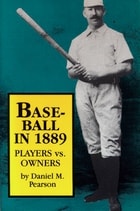
Baseball In 1889
Players vs. OwnersDaniel M. Pearson
University of Wisconsin Press, 1993

Baseball and Country Music
Don Cusic
University of Wisconsin Press, 2003
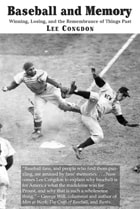
Baseball and Memory
Winning, Losing, and the Remembrance of Things PastLee Congdon
St. Augustine's Press, 2011
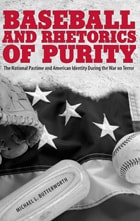
Baseball and Rhetorics of Purity
The National Pastime and American Identity During the War on TerrorMichael L. Butterworth
University of Alabama Press, 2010
An investigation into the culture and mythology of baseball, a study of its limits and failures, and an invitation to remake the game in a more democratic way.
Baseball has long been considered America’s “national pastime,” touted variously as a healthy diversion, a symbol of national unity, and a model of democratic inclusion. But, according to Michael Butterworth, such favorable rhetoric belies baseball’s complicity in the rhetorical construction of a world defined by good and evil.
Baseball and Rhetorics of Purity is an investigation into the culture and mythology of baseball, a study of its limits and failures, and an invitation to remake the game in a more democratic way. It pays special attention to baseball’s role in the reconstruction of American identity after September 11, 2001. This study is framed by a discussion that links the development of baseball to the discourses of innocence and purity in 19th-century America. From there, it examines ritual performances at baseball games; a traveling museum exhibit sponsored by the National Baseball Hall of Fame and Museum; the recent debate about the use of performance-enhancing drugs; the return of Major League Baseball to Washington, D.C., in 2005; and the advent of the World Baseball Classic in 2006.
Butterworth argues that by promoting myths of citizenship and purity, post-9/11 discourse concerning baseball ironically threatens the health of the democratic system and that baseball cannot be viewed as an innocent diversion or escape. Instead, Butterworth highlights how the game on the field reflects a more complex and diverse worldview, and makes a plea for the game’s recovery, both as a national pastime and as a site for celebrating the best of who we are and who we can be.
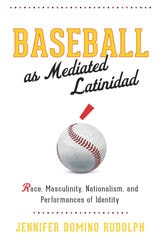
Baseball as Mediated Latinidad
Race, Masculinity, Nationalism, and Performances of IdentityJennifer Domino Rudolph
The Ohio State University Press, 2020
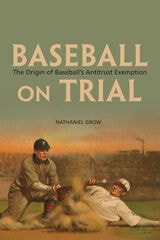
Baseball on Trial
The Origin of Baseball's Antitrust ExemptionNathaniel Grow
University of Illinois Press, 2014
Currently a billion dollar enterprise, professional baseball teams crisscross the country while the games are broadcast via radio, television, and internet coast to coast. The sheer scope of this activity would seem to embody the phrase "interstate commerce." Yet baseball is the only professional sport--indeed the sole industry--in the United States that currently benefits from a judicially constructed antitrust immunity. How could this be?
Drawing upon recently released documents from the National Baseball Hall of Fame, Grow analyzes how the Supreme Court reached this seemingly peculiar result by tracing the Federal Baseball litigation from its roots in 1914 to its resolution in 1922, in the process uncovering significant new details about the proceedings. Grow observes that while interstate commerce was measured at the time by the exchange of tangible goods, baseball teams in the 1910s merely provided live entertainment to their fans, while radio was a fledgling technology that had little impact on the sport. The book ultimately concludes that, despite the frequent criticism of the opinion, the Supreme Court's decision was consistent with the conditions and legal climate of the early twentieth century.
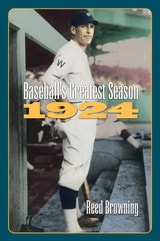
Baseball's Greatest Season, 1924
Reed Browning
University of Massachusetts Press, 2003
On the eve of the return of major league baseball to Washington, D.C., Baseball's Greatest Season recovers the memory of the one and only time when the championship of the national pastime resided in the nation's capital.

Baseball's Greatest Series
Yankees, Mariners, and the 1995 Matchup That Changed HistoryDonnelly, Chris
Rutgers University Press, 2010
This division series was not simply about two teams playing five postseason games. It was about Ken Griffey Jr., Lou Piniella, Buck Showalter, Gene Michael, Jim Leyritz, Randy Johnson, Wade Boggs, Tony Fernandez, Pat Kelly, Dion James, Darryl Strawberryùand many others who changed the course of baseball history . . .
A team playing to keep baseball alive in the Pacific Northwest
A manager who was literally managing for his job
A New York sports icon who for one week reminded everybody of the dominating player he had been a decade earlier
Chris Donnelly's replay of this entire season reminds readers that it was a time when grown men cried their eyes out after defeat, and others, just a few hundred feet away, poured beer and champagne over one another while 57,000 people in Seattle's Kingdome celebrated. Five games they were. Five games that reminded people, after the devastating players' strike in 1994, how great a game baseball is because comebacks are always possible, no matter how great the obstacles may seem.
From Don Mattingly's only postseason home run, which caused a near riot, to Edgar Martinez's legendary eleventh inning series-clinching double, Donnelly chronicles the earlier struggles of both teams during the 1980s, their mid-1990s resurgence, all five heart-stopping games of the series, and the dramatic and long-lasting effects of Seattle's victory. Simply stated, Baseball's Greatest Series hits a home run.
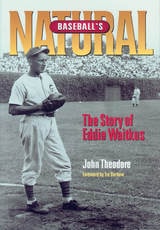
Baseball's Natural
The Story of Eddie WaitkusJohn Theodore. Foreword by Ira Berkow
Southern Illinois University Press, 2002
Baseball’s Natural: The Story of Eddie Waitkus is John Theodore’s true account of the slick-fielding first baseman who played for the Cubs and Phillies in the 1940s and became an immortalized figure in baseball lore as the inspiration for Roy Hobbs in Bernard Malamud’s The Natural.
The son of Lithuanian immigrants, Edward Stephen Waitkus (1919–1972) grew up in Boston and served in the Pacific during World War II. His army service in some of the war’s bloodiest combat earned him four Bronze Stars. Following the war, Waitkus became one of the most popular players of his era. As a rookie he led the Cubs in hitting in 1946 and quickly established himself as one of the best first basemen in the National League. To the disappointment of fans, the Cubs traded Waitkus to the Phillies in December of 1948. When he returned to Chicago in a Philadelphia uniform in June of the following year, he was hitting .306 and seemed destined for the All Star team.
On the night of June 14 at the Edgewater Beach Hotel, Waitkus’s bright career took an infamously tragic turn. He received a cryptic note summoning him to meet a young fan, Ruth Steinhagen. When Waitkus entered her hotel room, she proclaimed, “I have a surprise for you,” and then she just as quickly shot him in the chest. Steinhagen, then only nineteen, was one of the many young women—called “Baseball Annies”–who were fanatic about the game and its players, though her obsession proved more dangerous than most. A criminal court indicted Steinhagen and confined her to a state mental hospital for nearly three years.
Waitkus survived the shooting, made an inspirational return to baseball in 1950, and led the Phillies to the World Series. While Waitkus triumphed over his assault, he could not conquer his private demons. Depression stemming from the attack led to a severe problem with alcohol, a failed marriage, and a nervous breakdown. Waitkus found some happiness in his final summers working with youngsters at the Ted Williams baseball camp. Cancer claimed him in 1972, just days after his fifty-third birthday.
Through interviews with Waitkus’s family, fellow servicemen, former ballplayers, and childhood friends, and aided by fifteen photographs, Theodore chronicles Waitkus’s remarkable comeback as well as the difficult years following his eleven-year major league career.
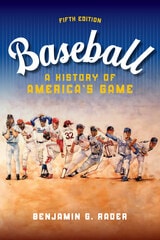
Baseball
A HIstory of America's GameBenjamin G. Rader
University of Illinois Press, 2025
Analytics, technology, and the most ambitious rewrite of the rulebook in fifty years have reshaped baseball. Benjamin G. Rader’s account of the American pastime moves from diamonds scratched out of commons and corn fields to the multimedia theme parks doubling as today’s baseball stadiums. The fifth edition follows the long arc of the game’s history into the third decade of the twenty-first century, an era rich in innovation but even richer from revenue streams undreamt-of by the plutocrats of old. Rader brings readers up to date with looks at the Astros cheating scandal, on-the-field changes from power pitchers to ghost runners, data-driven player development and career rebirth, and the one-of-a-kind Shohei Ohtani.
Engrossing and complete, Baseball, Fifth Edition, offers a comprehensive tour of the game and its place within American society and culture.
Baseball
A History of America's GameBenjamin G. Rader
University of Illinois Press, 2007
Baseball
A History of America's GameBenjamin G. Rader
University of Illinois Press, 2018
Batting Cleanup Bill Conlin
Kevin Kerrane
Temple University Press, 1997
In making the selections for this volume, editor Kevin Kerrane reveals how Conlin's playfulness with language and ideas has led to creative nicknames -- like "The Lowly Grim Giant" for Georgetown basketball coach John Thompson -- and tho entire stories based on outrageous premises. Who else would report a baseball game from the viewpoint of a space alien? Who else would interview God to find out what He really thinks about Randall Cunningham?
Conlin's columns deal with just about everything. Or maybe it just seems that way because he brings just about everything to bear on a topic that interests him: lessons from military history, characters from Shakespeare, personal experiences, persistent reporting, amusing one-liners, and laugh-out-loud jokes. His "King of the World" columns offer a fantasy of poetic justice in which fools and knaves are skewered, but with humor rather than heavy-handed moralizing. This humor, insight, keen intelligence, and a true love of sport has made Conlin a cult figure among sports fans. Kerrane explains such admiration this way: "It's not just because of Conlin's fierce honesty, or broad curiosity, or Irish wit, it's also because of his deep feeling for the values of sport -- which baseball, in his telling, crystallizes so beautifully.
Beep
Inside the Unseen World of Baseball for the BlindDavid Wanczyk
Ohio University Press, 2018
In Beep, David Wanczyk illuminates the sport of blind baseball to show us a remarkable version of America’s pastime. With balls tricked out to squeal three times per second, and with bases that buzz, this game of baseball for the blind is both innovative and intense. And when the best beep baseball team in America, the Austin Blackhawks, takes on its international rival, Taiwan Homerun, no one’s thinking about disability. What we find are athletes playing their hearts out for a championship.
Wanczyk follows teams around the world and even joins them on the field to produce a riveting inside narrative about the game and its players. Can Ethan Johnston, kidnapped and intentionally blinded as a child in Ethiopia, find a new home in beep baseball, and a spot on the all-star team? Will Taiwan’s rookie MVP Ching-kai Chen—whose superhuman feats on the field have left some veterans suspicious—keep up his incredible play? And can Austin’s Lupe Perez harness his competitive fire and lead his team to a long-awaited victory in the beep baseball world series?
Beep is the first book about blind baseball.
Before They Were Cardinals
Major League Baseball in Nineteenth-Century St. LouisJon David Cash
University of Missouri Press, 2002
Mark McGwire, Ozzie Smith, Lou Brock. These famous Cardinals are known by baseball fans around the world. But who and what were the predecessors of these modern-day players and their team? In Before They Were Cardinals, Jon David Cash examines the infancy of major-league baseball in St. Louis during the last quarter of the nineteenth century. His in-depth analysis begins with an exploration of the factors that motivated civic leaders to form the city's first major-league ball club. Cash delves into the economic trade rivalry between Chicago and St. Louis and examines how St. Louis's attempt to compete with Chicago led to the formation of the St. Louis Brown Stockings in 1875. He then explains why, three years later, despite its initial success, St. Louis baseball quickly vanished from the big-league map.
St. Louis baseball was revived with the arrival of German immigrant saloon owner Chris Von der Ahe. Cash explains how Von der Ahe, originally only interested in concession rights, purchased a controlling interest in the Brown Stockings. His riveting account follows the team after Von der Ahe's purchase, from the formation of the American Association, to its merger in 1891 with the rival National League. He chronicles Von der Ahe's monetary downturn, and the club's decline as well, following the merger.
Before They Were Cardinals provides vivid portraits of the ball players and the participants involved in the baseball war between the National League and the American Association. Cash points out significant differences, such as Sunday games and beer sales, between the two Leagues. In addition, excerpts taken from Chicago and St. Louis newspapers make the on-field contests and off-field rivalries come alive. Cash concludes this lively historical narrative with an appendix that traces the issue of race in baseball during this period.
The excesses of modern-day baseball—players jumping contracts or holding out for more money, gambling on games, and drinking to excess; owners stealing players and breaking agreements—were all present in the nineteenth-century sport. Players were seen then, as they are now, as an embodiment of their community. This timely treatment of a fascinating period in St. Louis baseball history will appeal to both baseball aficionados and those who want to understand the history of baseball itself.
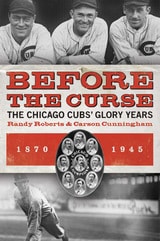
Before the Curse
The Chicago Cubs' Glory Years, 1870-1945Edited by Randy Roberts and Carson Cunningham
University of Illinois Press, 2012
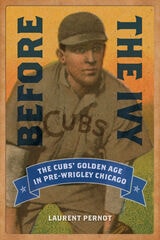
Before the Ivy
The Cubs' Golden Age in Pre-Wrigley ChicagoLaurent Pernot
University of Illinois Press, 2015
BEHOLD the 1871 team as it plays for the title in nine different borrowed uniforms after losing everything in the Great Chicago Fire
ATTEND West Side Grounds at Polk and Wolcott with its barbershop quartet
MARVEL as superstar Cap Anson hits .399, makes extra cash running a ballpark ice rink, and strikes out as an elected official
WONDER at experiments with square bats and corked balls, the scandal of Sunday games and pre-game booze-ups, the brazen spitters and park dimensions changed to foil Ty Cobb
RAZZ Charles Comiskey as he adopts a Cubs hand-me-down moniker for his team's name
THRILL to the poetic double-play combo of Tinker, Evers, and Chance even as they throw tantrums at umpires and punches at each other
CHEER as Merkle's Boner and the Cubs' ensuing theatrics send the team to the 1908 World Series
Rich with Hall of Fame personalities and oddball stories, Before the Ivy opens a door to Chicago's own field of dreams and serves as every Cub fan's guide to a time when thoughts of "next year" filled rival teams with dread.
Bill Giles and Baseball
John B Lord
Temple University Press, 2014
Bill Giles oversaw one of the greatest eras of winning that the Philadelphia Phillies ever enjoyed. In Bill Giles and Baseball, John Lord chronicles Giles' remarkable career--which includes 44 years with the Phillies--to provide an insider's view of the business of the sport, which takes place off the field.
Based on extensive interviews, Bill Giles and Baseball spans Giles' life from his childhood growing up in the game to the tumultuous years he spent as the president and managing partner of the Phillies. Purchasing the team in 1981, when baseball experienced its first serious labor stoppages, Giles also watched baseball add franchises, grapple with franchise fees, realign the leagues, and restructure baseball's postseason. Yet Giles, the public face of the Phillies championship teams of 1980, 1983, and 1993, is best remembered for his critical role in creating innovative TV deals, and leading the efforts to build the Phillies' beautiful new ballpark.
A book about the business of baseball as seen through the eyes of one of the architects of the game, Bill Giles and Baseball captures the spectacle of the sport through fascinating behind-the-scenes stories of our national pastime.
Bill Veeck's Crosstown Classic
Bill Veeck and Ed Linn
University of Chicago Press, 1962
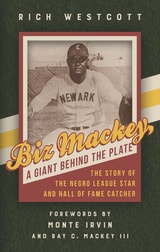
Biz Mackey, a Giant behind the Plate
The Story of the Negro League Star and Hall of Fame CatcherRich Westcott
Temple University Press, 2020
“The best all-around catcher in black baseball history”—Cumberland Posey, Owner of the Homestead Grays
National Baseball Hall of Fame catcher James Raleigh “Biz” Mackey’s professional career spanned nearly three decades in the Negro Leagues and elsewhere. He distinguished himself as a defensive catcher who also had an impressive batting average and later worked as a manager of the Newark Eagles and the Baltimore Elite Giants.
Using archival materials and interviews with former Negro League players, baseball historian Rich Westcott chronicles the catcher’s life and remarkable career in Biz Mackey, a Giant behind the Plate as well as providing an in-depth look at Philadelphia Negro League history. Westcott traces Mackey’s childhood in Texas as the son of sharecroppers to his success on the baseball diamond where he displayed extraordinary defensive skills and an exceptional ability to hit and to handle pitchers. Mackey spent one third of his career playing in Philadelphia, winning championships with the Hilldale Daisies and the Philadelphia Stars. Mackey also mentored famed catcher Roy Campanella and had an unlikely role in the story of baseball’s development in Japan.
A celebrated ballplayer before African Americans were permitted to join Major League Baseball, Biz Mackey ranks as one of the top catchers ever to play the game. With Biz Mackey, he finally gets the biography he deserves.
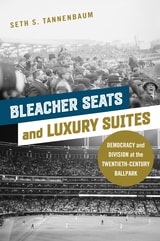
Bleacher Seats and Luxury Suites
Democracy and Division at the Twentieth-Century BallparkSeth S. Tannenbaum
University of Illinois Press, 2026
Major League Baseball owners and executives masked exclusion and division by touting the game’s accessibility and instituting few overtly discriminatory policies. Affluent white males enjoyed a comfortable, safe space that reinforced their status as the prototypical American citizen. At the same time, ballparks relocated in response to how these favored fans felt about cities. Tannenbaum traces this journey from the urban locales of the Polo Grounds and Yankee Stadium through the suburban-oriented Dodger Stadium and Houston Astrodome to the cloistered fantasy of city life offered by Camden Yards. As he shows, owners’ pursuit of greater profits incorporated existing barriers that helped shape the structure of modern parks.
A revealing social history, Bleacher Seats and Luxury Suites revises the persistent myth of the ballpark as an egalitarian melting pot.
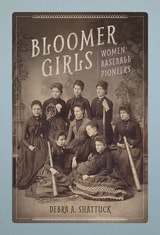
Bloomer Girls
Women Baseball PioneersDebra A Shattuck
University of Illinois Press, 2017
Debra A. Shattuck pulls from newspaper accounts and hard-to-find club archives to reconstruct a forgotten era in baseball history. Her fascinating social history tracks women players who organized baseball clubs for their own enjoyment and even found roster spots on men's teams. Entrepreneurs, meanwhile, packaged women's teams as entertainment, organizing leagues and barnstorming tours. If the women faced financial exploitation and indignities like playing against men in women's clothing, they and countless ballplayers like them nonetheless staked a claim to the nascent national pastime. Shattuck explores how the determination to take their turn at bat thrust female players into narratives of the women's rights movement and transformed perceptions of women's physical and mental capacity.
Vivid and eye-opening, Bloomer Girls is a first-of-its-kind portrait of America, its women, and its game.
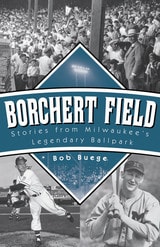
Borchert Field
Stories from Milwaukee’s Legendary BallparkBob Buege
Wisconsin Historical Society Press, 2017
Someone lucky enough to live on Milwaukee’s near north side between 1888 and 1952 could experience the world without ever leaving the neighborhood. Nestled between North Seventh and Eighth Streets and West Chambers and Burleigh, Borchert Field was Milwaukee’s major sports venue for 64 years. In this rickety wooden stadium (originally called Athletic Park), Wisconsin residents had a close-up view of sports history in the making, along with rodeos, thrill shows, and even multiple eruptions of Mount Vesuvius. In Borchert Field, baseball historian Bob Buege introduces the famous and fascinating athletes who dazzled audiences in Milwaukee’s venerable ballpark. All the legendary baseball figures—the Bambino, Satchel Paige, Ty Cobb, Joltin’ Joe, Jackie Robinson, the Say Hey Kid—played there. Olympic heroes Jim Thorpe, Babe Didrikson, and Jesse Owens displayed their amazing talents in Borchert. Knute Rockne’s Fighting Irish competed there, and Curly Lambeau’s Green Bay Packers took the field 10 times. Buege tells stories of other monumental moments at Borchert as well, including a presidential visit, women ballplayers, the arrival of television broadcasting, the 1922 national balloon race, and an appearance by scat-singing bandleader Cab Calloway. Borchert Field is long gone, but every page of this book takes readers back to the sights, sounds, and spectacle of its heyday.
Bottom of the Ninth
Great Contemporary Baseball Short StoriesEdited and with an Introduction by John McNally. Foreword by Richard Russo
Southern Illinois University Press, 2003
Skillfully edited by John McNally, Bottom of the Ninth: Great Contemporary Baseball Short Stories collects nineteen contemporary baseball short stories from a successful mix of well-established writers, lesser-knowns, and a few up-and-comers. These stories are characterized by the same dramatic elements that draw people to the sport itself—the mythologizing of players, the obsessions and romance of the game, the bonds between players and fans, parents and children. From a key play, a missed catch, a chance lost, these are tales of characters facing high stakes and calls to action, metaphorically and literally, in the bottom of the ninth.
Breaking Babe Ruth
Baseball's Campaign Against Its Biggest StarEdmund F. Wehrle
University of Missouri Press, 2025
Breaking into Baseball
Women and the National PastimeJean Hastings Ardell. Foreword by Ila Borders
Southern Illinois University Press, 2005
While baseball is traditionally perceived as a game to be played, enjoyed, and reported from a masculine perspective, it has long been beloved among women—more so than any other spectator sport. Breaking into Baseball: Women and the National Pastime upends baseball’s accepted history to at last reveal just how involved women are, and have always been, in the American game.
Through provocative interviews and deft research, Jean Hastings Ardell devotes a detailed chapter to each of the seven ways women participate in the game—from the stands as fans, on the field as professionals or as amateur players, behind the plate as umpires, in the front office as executives, in the press box as sportswriters and reporters, or in the shadows as Baseball Annies. From these revelatory vantage points, Ardell invites overdue appreciation for the affinity and talent women bring to baseball at all levels and shows us our national game anew.
From its ancient origins in spring fertility rituals through contemporary marketing efforts geared toward an ever-increasing female fan base, baseball has always had a feminine side, and generations of women have sought—and been sought after—to participate in the sport, even when doing so meant challenging the cultural mores of their era. In that regard, women have been breaking into baseball from the very beginning. But recent decades have witnessed great strides in legitimizing women’s roles on the diamond as players and umpires as well as in vital management and media roles. In her thoughtfully organized and engagingly written survey, Ardell offers a chance for sports enthusiasts and historians of both genders to better appreciate the storied and complex relationship women have so long shared with the game and to glimpse the future of women in baseball.
Breaking into Baseball is augmented by twenty-four illustrations and a foreword from Ila Borders, the first woman to play more than three seasons of men’s professional baseball.