81 books match the query 'Belonging' and 17 start with b
cover of BITS of Belonging: Information Technology, Water, and Neoliberal Governance in India

BITS of Belonging

Information Technology, Water, and Neoliberal Governance in India

Simanti Dasgupta

Temple University Press, 2015

India’s global success in the Information Technology industry has also prompted the growth of neoliberalism and the re-emergence of the middle class in contemporary urban areas, such as Bangalore. In her significant study, BITS of Belonging, Simanti Dasgupta shows that this economic shift produces new forms of social inequality while reinforcing older ones. She investigates this economic disparity by looking at IT and water privatization to explain how these otherwise unrelated domains correspond to our thinking about citizenship, governance, and belonging. 

Dasgupta’s ethnographic study shows how work and human processes in the IT industry intertwine to meet the market stipulations of the global economy. Meanwhile, in the recasting of water from a public good to a commodity, the middle class insists on a governance and citizenship model based upon market participation. Dasgupta provides a critical analysis of the grassroots activism involved in a contested water project where different classes lay their divergent claims to the city.
[more]
cover of Barriers and Belonging: Personal Narratives of Disability

Barriers and Belonging

Personal Narratives of Disability

Michelle Jarman

Temple University Press, 2017

What is the direct impact that disability studies has on the lives of disabled people today? The editors and contributors to this essential anthology, Barriers and Belonging, provide thirty-seven personal narratives thatexplore what it means to be disabled and why the field of disability studies matters. 

The editors frame the volume by introducing foundational themes of disability studies. They provide a context of how institutions—including the family, schools, government, and disability peer organizations—shape and transform ideas about disability. They explore how disability informs personal identity, interpersonal and community relationships, and political commitments. In addition, there are heartfelt reflections on living with mobility disabilities, blindness, deafness, pain, autism, psychological disabilities, and other issues. Other essays articulate activist and pride orientations toward disability, demonstrating the importance of reframing traditional narratives of sorrow and medicalization. 

The critical, self-reflective essays in Barriers and Belonging provide unique insights into the range and complexity of disability experience.

[more]
cover of Beautiful Cosmos: Performance and Belonging in the Caribbean Diaspora

Beautiful Cosmos

Performance and Belonging in the Caribbean Diaspora

Tina K. Ramnarine

Pluto Press, 2007

What are the musical sounds that people remember in the diaspora? What are the sounds they create? Recognizing the importance that people attach to musical performances, this book explores the significance of widespread Caribbean genres in diaspora politics. Ramnarine uses ethnographic approaches to unravel creative processes of memory, innovation and production and to interrogate geographies of musical canons, hybridity discourses and culture theory. She challenges us to rethink diaspora as only being about displacement, to move beyond the limits of marginalization and otherness, and to imagine the possibilities of "beautiful cosmos". Asking "where is home in the diaspora?" this book presents radical perspectives in the study of diaspora.
[more]
cover of Being and Belonging: Muslims in the United States since 9/11

Being and Belonging

Muslims in the United States since 9/11

Katherine Pratt Ewing

Russell Sage Foundation, 2008

The terrorist attacks of September 11, 2001, instantly transformed many ordinary Muslim and Arab Americans into suspected terrorists. In the weeks and months following the attacks, Muslims in the United States faced a frighteningly altered social climate consisting of heightened surveillance, interrogation, and harassment. In the long run, however, the backlash has been more complicated. In Being and Belonging, Katherine Pratt Ewing leads a group of anthropologists, sociologists, and cultural studies experts in exploring how the events of September 11th have affected the quest for belonging and identity among Muslims in America—for better and for worse. From Chicago to Detroit to San Francisco, Being and Belonging takes readers on an extensive tour of Muslim America—inside mosques, through high school hallways, and along inner city streets.  Jen'nan Ghazal Read compares the experiences of Arab Muslims and Arab Christians in Houston and finds that the events of 9/11 created a "cultural wedge" dividing Arab Americans along religious lines. While Arab Christians highlighted their religious affiliation as a means of distancing themselves from the perceived terrorist sympathies of Islam, Muslims quickly found that their religious affiliation served as a barrier, rather than a bridge, to social and political integration. Katherine Pratt Ewing and Marguerite Hoyler document the way South Asian Muslim youth in Raleigh, North Carolina, actively contested the prevailing notion that one cannot be both Muslim and American by asserting their religious identities more powerfully than they might have before the terrorist acts, while still identifying themselves as fully American. Sally Howell and Amaney Jamal distinguish between national and local responses to terrorism. In striking contrast to the erosion of civil rights, ethnic profiling, and surveillance set into motion by the federal government, well-established Muslim community leaders in Detroit used their influence in law enforcement, media, and social services to empower the community and protect civil rights. Craig Joseph and Barnaby Riedel analyze how an Islamic private school in Chicago responded to both September 11 and the increasing ethnic diversity of its student body by adopting a secular character education program to instruct children in universal values rather than religious doctrine. In a series of poignant interviews, the school's students articulate a clear understanding that while 9/11 left deep wounds on their community, it also created a valuable opportunity to teach the nation about Islam. The rich ethnographies in this volume link 9/11 and its effects to the experiences of a group that was struggling to be included in the American mainstream long before that fateful day. Many Muslim communities never had a chance to tell their stories after September 11. In Being and Belonging, they get that chance.
[more]
cover of Belonging

Belonging

Virginia Tibbs-Brelje

Gallaudet University Press, 1986
"A 1987 Outstanding Book for Young Adults" --University of Iowa Poll "Gustie Blaine is 15 when she contracts meningitis. After a long recovery period during which she loses the small amount of residual hearing she had seemed to retain, Gustie tries to pick up the pieces of her life. Her parents are unrealistic and over protective; her best friend rejects her; her teachers run the gamut from being convinced Gustie cannot function in the mainstream to being supportive... through a new boyfriend who has a deaf brother and sister-in-law, and through Gustie's visit with an understanding special education teacher to a class of predominately congenitally deaf students, readers are made aware of the tremendous range of difference among deaf and hard of hearing people, the ways in which they communicate and the technical aids available to them. Realistic and involving...[Young Adults] will identify with Gustie and her wish to belong; the book should touch them and be popular." --School Library Journal Virginia M. Scott is a writer. Like Gustie, the main character in her novel, Ms. Scott became deaf as an adolescent.
[more]
[more]
cover of Belonging and Betrayal: How Jews Made the Art World Modern

Belonging and Betrayal

How Jews Made the Art World Modern

Charles Dellheim

Brandeis University Press, 2021

The story of dealers of Old Masters, champions of modern art, and victims of Nazi plunder.
 
Since the late 1990s, the fate of Nazi-stolen art has become a cause célèbre. In Belonging and Betrayal, Charles Dellheim turns this story on its head by revealing how certain Jewish outsiders came to acquire so many old and modern masterpieces in the first place—and what this reveals about Jews, art, and modernity. This book tells the epic story of the fortunes and misfortunes of a small number of eminent art dealers and collectors who, against the odds, played a pivotal role in the migration of works of art from Europe to the United States and in the triumph of modern art.

Beautifully written and compellingly told, this story spans both sides of the Atlantic from the late nineteenth century to the present. It is set against the backdrop of critical transformations, among them the gradual opening of European high culture, the ambiguities of Jewish acculturation, the massive sell-off of aristocratic family art collections, the emergence of different schools of modern art, the cultural impact of World War I, and the Nazi war against the Jews.
 

[more]
cover of Belonging and Identity in STEM Higher Education

Belonging and Identity in STEM Higher Education

Edited by Camille Kandiko Howson and Martyn Kingsbury

University College London, 2024

Recommendations for enhancing belonging in STEM higher education.

In Belonging and Identity in STEM Higher Education, Camille Kandiko Howson and Martyn Kingsbury examine the role of science, technology, engineering, and mathematics (STEM) pedagogies in facilitating belonging, variable impacts across student characteristics, and the experiences of STEM students in higher education. Through case study contributions, the book analyzes the unique educational environments for STEM staff and students throughout Europe and Asia, challenging the assumptions that STEM fields are inherently unemotional and impersonal disciplines.
 
[more]
cover of Belonging in an Adopted World: Race, Identity, and Transnational Adoption

Belonging in an Adopted World

Race, Identity, and Transnational Adoption

Barbara Yngvesson

University of Chicago Press, 2010

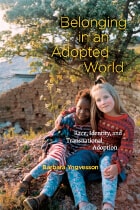
Since the early 1990s, transnational adoptions have increased at an astonishing rate, not only in the United States, but worldwide. In Belonging in an Adopted World, Barbara Yngvesson offers a penetrating exploration of the consequences and implications of this unprecedented movement of children, usually from poor nations to the affluent West. Yngvesson illuminates how the politics of adoption policy has profoundly affected the families, nations, and children involved in this new form of social and economic migration.

Starting from the transformation of the abandoned child into an adoptable resource for nations that give and receive children in adoption, this volume examines the ramifications of such gifts, especially for families created through adoption and later, the adopted adults themselves. Bolstered by an account of the author’s own experience as an adoptive parent, and fully attuned to the contradictions of race that shape our complex forms of family, Belonging in an Adopted World explores the fictions that sustain adoptive kinship, ultimately exposing the vulnerability and contingency behind all human identity.
[more]
cover of Belonging, Identity, and Conflict in the Central African Republic

Belonging, Identity, and Conflict in the Central African Republic

Gino Vlavonou

University of Wisconsin Press, 2023

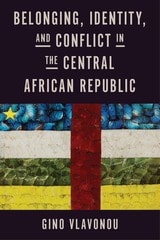
Political conflict in many parts of the world has been shaped by notions of who rightfully belongs to a place. The concept of autochthony—that a true, original people are born of a land and belong to it above all others—has animated struggles across postcolonial Africa. But is this sense of rootedness from time immemorial necessary to assertions of original being and thus political supremacy? Belonging, Identity, and Conflict in the Central African Republic examines how political conflict unfolds when the language of autochthony is detached from historical land claims. 

Focusing on violent struggles in the Central African Republic between 2012 and 2019, Gino Vlavonou explores the social practices, discursive strategies, and government policies that emerged in the relentless project of African state building. Conflict pitted Christian-animist communities, loosely organized as vigilante groups under the name anti-Balaka, against Muslim rebels known as the Séléka. Fighters of the anti-Balaka claimed that they were autochthonous, the “true Central Africans,” reframing their Muslim neighbors as foreigners to be expelled. While the country had previously witnessed episodes of violence, both peoples had lived together relatively peacefully and intermarried. The speed and ferocity with which identity was weaponized puzzled many observers. To understand this phenomenon, Vlavonou probes autochthony as a category of identity that differs from ethnicity in important ways. He argues that elites and ordinary citizens alike mobilize the language of original belonging as “identity capital,” a resource to be deployed. The value of that capital is lodged in what people say and do every day to give meaning to their identity, and its content changes across time and space. 

[more]
cover of Belonging: Poems

Belonging

Poems

Dick Davis

Ohio University Press, 2002

There are worlds within our own in which even the smallest victories are hard won, the tender moment is almost unbearable, and the understated rings like a bell. Belonging, a new collection by British poet Dick Davis, is an extended visit to these worlds. Deepened by his dry wit and the formal rigor of his verse, the poems of Belonging negotiate their way among personal and political divides—generations in a family, man and woman, and the tentative present and our inherited pasts. But behind much of the writing there is also a desire for a kind of idealized belonging—to a clerisy of civilized and humane decency which can be found intermittently in all cultures and is the monopoly of none. Davis’s own cosmopolitan background provides the context for many of the poems, yet he is concerned always to find the humanly universal within the local and anecdotal—a hope realized in these careful and incandescent poems.
[more]
cover of Betrayal U: The Politics of Belonging in Higher Education

Betrayal U

The Politics of Belonging in Higher Education

Edited by Rebecca G. Martínez and Monica J. Casper

University of Arizona Press, 2025

Higher education is in trouble, and not only due to a decline of public trust. As a microcosm of our broader culture, universities are inequitable and often harmful, especially for marginalized people. This is despite the democratic promise of higher education as a path for learning and social mobility. Women, people of color, First Gen, disabled, LGBTQ+, and other minoritized groups are disproportionately harmed in educational institutions that are hierarchical and reproduce inequality. Efforts to foster belonging for faculty, staff, and students may be highly effective but are under attack.
 
Betrayal U intervenes in this context with a diverse, rich collection of essays, art, poetry, and research that explores these inequities through the lens of institutional betrayal, theorized by psychologist Jennifer Freyd. Edited by Rebecca G. Martínez and Monica J. Casper, this collection brings together thirty-six contributors who share personal experiences covering a range of topics in higher education. The work spans five thematic sections that examine the complexities of belonging and exclusion in academic settings.
 
The contributors share their lived experiences of academic life from diverse vantage points, showing the ways minoritized groups are made to feel unwelcome, further marginalized, and often positioned as the problem. Exhibiting courage, compassion, and a commitment to better futures, the voices in this collection offer both a searing indictment of higher education and pathways to alternative practices and structures. They shine a spotlight on academia today, including the promise of inclusion and the perils of exclusion.

Contributors
Celeste Atkins
Jasmine Banks
Krista L. Benson
Jessica Bishop-Royse
Samit Dipon Bordoloi
Monica J. Casper
Aparajita De
Kathy Diehl
Taylor Marie Doherty
Reshmi Dutt-Ballerstadt
Alma Flores
Alanna Gillis
C. Goldberg
Jennifer M. Gómez
Kristina Gupta
Jasmine L. Harris
Susan Hillock
Doreen Hsu
Jennifer Lai
Amy Andrea Martinez
Rebecca G. Martínez
Shantel Martinez
Sara A. Mata
Rachael McCollum
Wang Ping
Emily Rosser
Angélica Ruvalcaba
Brandy L. Simula
Rashna Batliwala Singh
Cierra Raine Sorin
Connor Spencer
Chantelle Spicer
James M. Thomas
Mercedes Valadez
Meg A. Warren
Matthew Wills

 
[more]
cover of Bhangra and Asian Underground: South Asian Music and the Politics of Belonging in Britain

Bhangra and Asian Underground

South Asian Music and the Politics of Belonging in Britain

Falu Bakrania

Duke University Press, 2013
Asian Underground music—a fusion of South Asian genres with western breakbeats created for the dance club scene by DJs and musicians of Indian, Pakistani, and Bangladeshi descent—went mainstream in the U.K. in the late 1990s. Its success was unprecedented: British bhangra, a blend of Punjabi folk music with hip-hop musical elements, was enormously popular among South Asian communities but had yet to become mainstream. For many, the widespread attention to Asian Underground music signaled the emergence of a supposedly new, tolerant, and multicultural Britain that could finally accept South Asians. Interweaving ethnography and theory, Falu Bakrania examines the social life of British Asian musical culture to reveal a more complex and contradictory story of South Asian belonging in Britain. Analyzing the production of bhangra and Asian Underground music by male artists and its consumption by female club-goers, Bakrania shows that gender, sexuality, and class intersected in ways that profoundly shaped how young people interpreted “British” and “Asian” identity and negotiated, sometimes violently, contests about ethnic authenticity, sexual morality, individual expression, and political empowerment.


[more]
cover of Black Space: Negotiating Race, Diversity, and Belonging in the Ivory Tower

Black Space

Negotiating Race, Diversity, and Belonging in the Ivory Tower

Sherry L. Deckman

Rutgers University Press, 2022
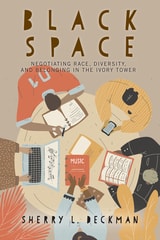
Protests against racial injustice and anti-Blackness have swept across elite colleges and universities in recent years, exposing systemic racism and raising questions about what it means for Black students to belong at these institutions. In Black Space, Sherry L. Deckman takes us into the lives of the members of the Kuumba Singers, a Black student organization at Harvard with racially diverse members, and a self-proclaimed safe space for anyone but particularly Black students. Uniquely focusing on Black students in an elite space where they are the majority, Deckman provides a case study in how colleges and universities might reimagine safe spaces. Through rich description and sharing moments in students’ everyday lives, Deckman demonstrates the possibilities and challenges Black students face as they navigate campus culture and the refuge they find in this organization. This work illuminates ways administrators, faculty, student affairs staff, and indeed, students themselves, might productively address issues of difference and anti-Blackness for the purpose of fostering critically inclusive campus environments.
 
[more]
cover of Body Problems: What Intersex Priest Sally Gross Teaches Us About Embodiment, Justice, and Belonging

Body Problems

What Intersex Priest Sally Gross Teaches Us About Embodiment, Justice, and Belonging

M. Wolff

Duke University Press, 2025

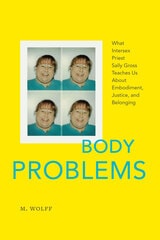
In Body Problems, M. Wolff offers groundbreaking insight into Sally Gross, a South African intersex priest and activist whose body was continuously policed and politicized. Gross’s role in founding Intersex South Africa and her involvement with the African National Congress are celebrated in the Apartheid Museum, but the complex dimensions of her life—from her Jewish heritage to her Christian priesthood and Buddhist practices—remain largely unexplored. Wolff illuminates these lesser-known aspects of Gross’s spirituality and theorizes her resistance to the regulation of intersexuality. The book urges readers to rethink bodies and belonging, particularly as they relate to formations of gender and religion. Wolff presents Gross’s life as a guide for discerning our commitments to social justice and responsible relations. Body Problems is a timely and expansive contribution to ongoing discourses on the medical, religious, and political construction of bodies.
[more]
cover of Born to Belonging: Writings on Spirit and Justice

Born to Belonging

Writings on Spirit and Justice

Mab Segrest

Rutgers University Press, 2002
Veteran activist Mab Segrest takes readers along on her travels to view a world experiencing extraordinary change. As she moves from place to place, she speculates on the effects of globalization and urban development on individuals, examines the struggles for racial, economic, and sexual equality, and narrates her own history as a lesbian in the American South. From the principle that we all belong to the human community, Segrest uses her personal experience as a filter for larger political and cultural issues. Her writings bring together such groups as the Ku Klux Klan in North Carolina, fledging gay rights activists in Zimbabwe, and resistance fighters in El Salvador. Segrest expertly plumbs her own personal experiences for organizing principles and maxims to combat racism, homophobia, sexism, and economic exploitation.


[more]
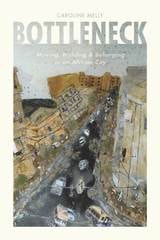
cover of Bottleneck: Moving, Building, and Belonging in an African City

Bottleneck

Moving, Building, and Belonging in an African City

Caroline Melly

University of Chicago Press, 2017

In Bottleneck, anthropologist Caroline Melly uses the problem of traffic bottlenecks to launch a wide-ranging study of mobility in contemporary urban Senegal—a concept that she argues is central to both citizens' and the state's visions of a successful future.
 
Melly opens with an account of the generation of urban men who came of age on the heels of the era of structural adjustment, a diverse cohort with great dreams of building, moving, and belonging, but frustratingly few opportunities to do so. From there, she moves to a close study of taxi drivers and state workers, and shows how bottlenecks—physical and institutional—affect both. The third section of the book covers a seemingly stalled state effort to solve housing problems by building large numbers of concrete houses, while the fourth takes up the thousands of migrants who attempt, sometimes with tragic results, to cross the Mediterranean on rickety boats in search of new opportunities. The resulting book offers a remarkable portrait of contemporary Senegal and a means of theorizing mobility and its impossibilities far beyond the African continent.
[more]