Results by title
277 books match the query 'Biology' and 20 start with b
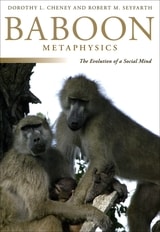
Baboon Metaphysics
The Evolution of a Social MindDorothy L. Cheney and Robert M. Seyfarth
University of Chicago Press, 2007
“The vivid narrative is like a bush detective story.”—Steven Poole, Guardian
“Baboon Metaphysics is a distillation of a big chunk of academic lives. . . . It is exactly what such a book should be—full of imaginative experiments, meticulous scholarship, limpid literary style, and above all, truly important questions.”—Alison Jolly, Science
“Cheney and Seyfarth found that for a baboon to get on in life involves a complicated blend of short-term relationships, friendships, and careful status calculations. . . . Needless to say, the ensuing political machinations and convenient romantic dalliances in the quest to become numero uno rival the bard himself.”—Science News
“Through ingenious playback experiments . . . Cheney and Seyfarth have worked out many aspects of what baboons used their minds for, along with their limitations. Reading a baboon’s mind affords an excellent grasp of the dynamics of baboon society. But more than that, it bears on the evolution of the human mind and the nature of human existence.”—Nicholas Wade, New York Times
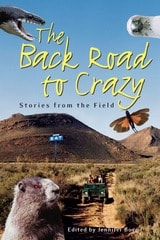
Back Road To Crazy
Stories From The FieldJennifer Bove
University of Utah Press, 2005
During five years of working in snake-ridden sloughs and rough northern seas, Jennifer Bové often asked herself 'Why am I doing this?' Realizing her own experiences were only the tip of the iceberg, she invited friends and colleagues to answer the same question. The result is stories that include deadly snakebites, a plague of marmots, special delivery skunk oil, bald eagle wrangling, and a mountain goat loose in the galley of a research vessel. These adventures are the details behind the data collected by these men and women driven to unlock nature’s truths. In The Back Road to Crazy, seasoned researchers and novices alike reveal the impulse to trade the comfort of a more sheltered career for demanding physical labor, whims of weather, and the company of unruly creatures.

Bark Beetles in North American Conifers
A System for the Study of Evolutionary BiologyEdited by Jeffry B. Mitton and Kareen B. Sturgeon
University of Texas Press, 1982
Because they prey upon a wide variety of conifers, bark beetles have a major impact upon western forests. In most of the western states, for example, we have witnessed bark beetles in epidemic outbreaks, attacking and damaging ponderosa pine, limber pine, and other hosts.
The ecosystem of bark beetle and host tree is a highly coevolved community of organisms in which the evolution of one member of the community significantly influences the evolution of the other. Largely because of the enormous economic impact these insects exert on the management of our forests, few other such communities have been studied so extensively. Bark Beetles in North American Conifers brings together in one volume both theory and a wealth of empirical data gathered by researchers from all the fields in which bark beetles are studied: ecology, evolutionary biology, population genetics, entomology, and forestry.
Topics covered include the life cycle of bark beetles and their population dynamics, their genetic variation and evolutionary mechanisms, the evolution and systematics of the major groups of bark beetles, pheromone production and its implications for coevolution among these organisms, the interaction between bark beetles and their predators, host resistance and susceptibility, the relationship of parasites and symbiotic micro-organisms in general, and management and control of bark beetles based on sound ecological and evolutionary concepts. The concluding section of the book summarizes the dynamics of the coevolved system of bark beetle and host tree and discusses controversial issues for which this system may provide important answers.
Beasts of the Earth
Animals, Humans, and DiseaseTorrey, E. Fuller
Rutgers University Press, 2014
Humans have lived in close proximity to other animals for thousands of years. Recent scientific studies have even shown that the presence of animals has a positive effect on our physical and mental health. People with pets typically have lower blood pressure, show fewer symptoms of depression, and tend to get more exercise.
But there is a darker side to the relationship between animals and humans. Animals are carriers of harmful infectious agents and the source of a myriad of human diseases. In recent years, the emergence of high-profile illnesses such as AIDS, SARS, West Nile virus, and bird flu has drawn much public attention, but as E. Fuller Torrey and Robert H. Yolken reveal, the transfer of deadly microbes from animals to humans is neither a new nor an easily avoided problem.
Beginning with the domestication of farm animals nearly 10,000 years ago, Beasts of the Earth traces the ways that human-animal contact has evolved over time. Today, shared living quarters, overlapping ecosystems, and experimental surgical practices where organs or tissues are transplanted from non-humans into humans continue to open new avenues for the transmission of infectious agents. Other changes in human behavior like increased air travel, automated food processing, and threats of bioterrorism are increasing the contagion factor by transporting microbes further distances and to larger populations in virtually no time at all.
While the authors urge that a better understanding of past diseases may help us lessen the severity of some illnesses, they also warn that, given our increasingly crowded planet, it is not a question of if but when and how often animal-transmitted diseases will pose serious challenges to human health in the future.
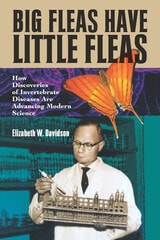
Big Fleas Have Little Fleas
How Discoveries of Invertebrate Diseases Are Advancing Modern ScienceElizabeth W. Davidson
University of Arizona Press, 2006
In this book, Elizabeth Davidson shares amazing stories about diseases of insects and other invertebrates important to people—and about the scientists who learned to use those diseases to control pests and create products beneficial to humans. Focusing on insect-microbial interactions crucial to public health, she tells detective stories ranging across global history, from the silkworm farms of nineteenth-century Japan to the research labs of modern America. In these fascinating accounts, Davidson shows us how human health often comes down to a contest of bug against bug. Even habitats seething with bacteria, such as the runoff from cattle farms or sewage treatment plants, are also teeming with invertebrate life—animals that, like ourselves, have ways of fighting infection.
Scientific curiosity about what allows creatures as simple as water fleas to survive in such polluted environments has led to the discovery of chemicals with remarkable properties and potential usefulness to humankind. From diseases of shellfish to parasites of bees, Davidson opens a window on a world most of us never stop to consider—but which matters to all of us more than we might ever imagine. In our present era of pandemic scares, Big Fleas Have Little Fleas is a sweeping historical review that’s as timely as tomorrow’s headlines, showing us that the most exciting discoveries can emerge from the smallest sources.
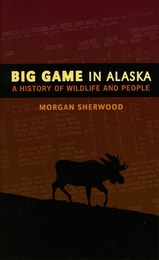
Big Game in Alaska
A History of Wildlife and PeopleMorgan Sherwood
University of Alaska Press, 2008
In concise and clear prose, Sherwood charts the history of this environmental and political conflict, examining the creation of the Alaska Game Commission in the early 1930s, the use of distorted science and menacing technologies, the antipathy of farmers and fishermen toward animals, and the prevailing belief in man’s right to shoot wild animals at will. An incisive historical study of the flawed attempts to govern big game predation, Big Game in Alaska will be essential reading for historians and environmentalists alike.
Bioaesthetics
Making Sense of Life in Science and the ArtsCarsten Strathausen
University of Minnesota Press, 2017
In recent years, bioaesthetics has used the latest discoveries in evolutionary studies and neuroscience to provide new ways of looking at art and aesthetics. Carsten Strathausen’s remarkable exploration of this emerging field is the first comprehensive account of its ideas, as well as a timely critique of its limitations.
Strathausen familiarizes readers with the basics of bioaesthetics, grounding them in its philosophical underpinnings while articulating its key components. Importantly, he delves into the longstanding problem of the “two cultures” that separate the arts and the sciences. Seeking to make bioaesthetics a more robust way of thinking, Strathausen then critiques it for failing to account for science’s historical and cultural assumptions. At its worst, he says, biologism reduces artworks to mere automatons that rubber-stamp pre-established scientific truths.
Written with a sensitive understanding of science’s strengths, and willing to refute its best arguments, Bioaesthetics helps readers separate the sensible from the specious. At a time when humanities departments are shrinking—and when STEM education is on the rise—Bioaesthetics makes vital points about the limitations of science, while lodging a robust defense of the importance of the humanities.
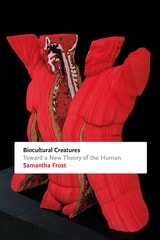
Biocultural Creatures
Toward a New Theory of the HumanSamantha Frost
Duke University Press, 2016

Biohackers
The Politics of Open ScienceAlessandro Delfanti
Pluto Press, 2013
Biohackers explores fundamental changes occuring in the circulation and ownership of scientific information. Alessandro Delfanti argues that the combination of the ethos of 20th century science, the hacker movement and the free software movement is producing an open science culture which redefines the relationship between researchers, scientific institutions and commercial companies.
Biohackers looks at the emergence of the citizen biology community ‘DIYbio’, the shift to open access by the American biologist Craig Venter and the rebellion of the Italian virologist Ilaria Capua against WHO data-sharing policies.
Delfanti argues that these biologists and many others are involved in a transformation of both life sciences and information systems, using open access tools and claiming independence from both academic and corporate institutions.
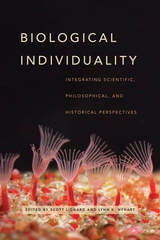
Biological Individuality
Integrating Scientific, Philosophical, and Historical PerspectivesEdited by Scott Lidgard and Lynn K. Nyhart
University of Chicago Press, 2017
Bringing together biologists, historians, and philosophers, this book provides a multifaceted exploration of biological individuality that identifies leading and less familiar perceptions of individuality both past and present, what they are good for, and in what contexts. Biological practice and theory recognize individuals at myriad levels of organization, from genes to organisms to symbiotic systems. We depend on these notions of individuality to address theoretical questions about multilevel natural selection and Darwinian fitness; to illuminate empirical questions about development, function, and ecology; to ground philosophical questions about the nature of organisms and causation; and to probe historical and cultural circumstances that resonate with parallel questions about the nature of society. Charting an interdisciplinary research agenda that broadens the frameworks in which biological individuality is discussed, this book makes clear that in the realm of the individual, there is not and should not be a direct path from biological paradigms based on model organisms through to philosophical generalization and historical reification.
Biology Takes Form
Animal Morphology and the German Universities, 1800-1900Lynn K. Nyhart
University of Chicago Press, 1995
Although there were neither professors of morphology nor a morphologists' society, morphologists achieved influence by "colonizing" niches in a variety of disciplines. Scientists in anatomy, zoology, natural history, and physiology considered their work morphological, and the term encompassed research that today might be classified as embryology, systematics, functional morphology, comparative physiology, ecology, behavior, evolutionary theory, or histology. Nyhart draws on research notes, correspondence, and other archival material to examine how these scientists responded to new ideas and to the work of colleagues. She examines the intertwined histories of morphology and the broader biological enterprise, demonstrating that the study of form was central to investigations of such issues as the relationships between an animal's structure and function, between an organism and its environment, and between living species and their ancestors.
Biology and Ideology from Descartes to Dawkins
Edited by Denis R. Alexander and Ronald L. Numbers
University of Chicago Press, 2010
Over the course of human history, the sciences, and biology in particular, have often been manipulated to cause immense human suffering. For example, biology has been used to justify eugenic programs, forced sterilization, human experimentation, and death camps—all in an attempt to support notions of racial superiority. By investigating the past, the contributors to Biology and Ideology from Descartes to Dawkins hope to better prepare us to discern ideological abuse of science when it occurs in the future.
Denis R. Alexander and Ronald L. Numbers bring together fourteen experts to examine the varied ways science has been used and abused for nonscientific purposes from the fifteenth century to the present day. Featuring an essay on eugenics from Edward J. Larson and an examination of the progress of evolution by Michael J. Ruse, Biology and Ideology examines uses both benign and sinister, ultimately reminding us that ideological extrapolation continues today. An accessible survey, this collection will enlighten historians of science, their students, practicing scientists, and anyone interested in the relationship between science and culture.

Biology and Management of Noxious Rangeland Weeds
Roger L. Sheley
Oregon State University Press, 1999

Biology of the Arctic Charr
Proceedings of the International Symposium on Arctic CharrLionel Johnson
University of Manitoba Press, 1984
Biology's First Law
The Tendency for Diversity and Complexity to Increase in Evolutionary SystemsDaniel W. McShea and Robert N. Brandon
University of Chicago Press, 2010
Life on earth is characterized by three striking phenomena that demand explanation: adaptation—the marvelous fit between organism and environment; diversity—the great variety of organisms; and complexity—the enormous intricacy of their internal structure. Natural selection explains adaptation. But what explains diversity and complexity? Daniel W. McShea and Robert N. Brandon argue that there exists in evolution a spontaneous tendency toward increased diversity and complexity, one that acts whether natural selection is present or not. They call this tendency a biological law—the Zero-Force Evolutionary Law, or ZFEL. This law unifies the principles and data of biology under a single framework and invites a reconceptualization of the field of the same sort that Newton’s First Law brought to physics.
Biology’s First Law shows how the ZFEL can be applied to the study of diversity and complexity and examines its wider implications for biology. Intended for evolutionary biologists, paleontologists, and other scientists studying complex systems, and written in a concise and engaging format that speaks to students and interdisciplinary practitioners alike, this book will also find an appreciative audience in the philosophy of science.

Bioscientific Terminology
Words from Latin and Greek StemsDonald M. Ayers
University of Arizona Press, 1972
Separate sections on Latin and Greek derivations. Each section has 20 lessons—with assignments following each lesson—giving the user a vast technical vocabulary and increased word-recognition ability.
A Definitive Reference:
Hundreds of Greek and Latin stems, prefixes, and suffixes show the precise application of the classical languages to biological and medical usage. Topic-organized bibliography, index of bases.
Biosemiotics
An Examination into the Signs of Life and the Life of SignsJesper Hoffmeyer
University of Scranton Press, 2008

Breeding Bio Insecurity
How U.S. Biodefense Is Exporting Fear, Globalizing Risk, and Making Us All Less SecureLynn C. Klotz and Edward J. Sylvester
University of Chicago Press, 2009
In the years since the 9/11 attacks—and the subsequent lethal anthrax letters—the United States has spent billions of dollars on measures to defend the population against the threat of biological weapons. But as Lynn C. Klotz and Edward J. Sylvester argue forcefully in Breeding Bio Insecurity, all that money and effort hasn’t made us any safer—in fact, it has made us more vulnerable.
Breeding Bio Insecurity reveals the mistakes made to this point and lays out the necessary steps to set us on the path toward true biosecurity. The fundamental problem with the current approach, according to the authors, is the danger caused by the sheer size and secrecy of our biodefense effort. Thousands of scientists spread throughout hundreds of locations are now working with lethal bioweapons agents—but their inability to make their work public causes suspicion among our enemies and allies alike, even as the enormous number of laboratories greatly multiplies the inherent risk of deadly accidents or theft. Meanwhile, vital public health needs go unmet because of this new biodefense focus. True biosecurity, the authors argue, will require a multipronged effort based in an understanding of the complexity of the issue, guided by scientific ethics, and watched over by a vigilant citizenry attentive to the difference between fear mongering and true analysis of risk.
An impassioned warning that never loses sight of political and scientific reality, Breeding Bio Insecurity is a crucial first step toward meeting the evolving threats of the twenty-first century.
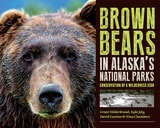
Brown Bears in Alaska's National Parks
Conservation of a Wilderness IconGrant V. Hilderbrand
University of Alaska Press, 2025
Brown bears are powerful symbols of wilderness, thriving in the vast, untamed ecosystems of Alaska’s remote national parks. Brown Bears in Alaska’s National Parks is a unique and thorough exploration of the conservation, ecology, and management of brown bears in these parks, including examinations of bear biology, human-bear interactions, population estimation methods, and the effects of climate change on bear populations. This lavishly illustrated volume offers fresh perspectives about the complex challenges that bears and humans face as they navigate coexistence in the evolving wilderness of Alaska.
Through park-specific chapters, the authors clearly present the current understanding of brown bear ecology across a wide range of ecosystems—from the sparse and frigid Gates of the Arctic, entirely above the Arctic Circle, to the bountiful coast of Katmai, where the marine and terrestrial systems converge. In Glacier Bay, bears roam newly exposed ecosystems shaped by retreating glaciers, while the interior landscapes of Lake Clark and Denali provide a mix of boreal forests, tundra, rivers, and towering mountains.
Brown bears—and the many species that share their habitats—face numerous challenges, with climate change among the greatest threats. The warming climate intensifies other pressures, such as industrial development, both within and around park boundaries. Management actions may also reduce native brown bear populations and, in turn, threaten healthy and naturally functioning ecosystems. The adaptability of brown bears, in concert with thoughtful and science-based management, is essential for the conservation of these majestic creatures and the wilderness landscapes on which they depend.
Written by the wildlife biologists and anthropologists who have dedicated their careers to studying brown (grizzly) bears and their relationship to people, Brown Bears in Alaska’s National Parks is a premier reference for bear enthusiasts, biologists, managers, and academics, as well as advocates for wild things and wild places.
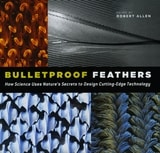
Bulletproof Feathers
How Science Uses Nature's Secrets to Design Cutting-Edge TechnologyEdited by Robert Allen
University of Chicago Press, 2010
Fabrics that are not only stain resistant but actually clean themselves. Airplane wings that change shape in midair to take advantage of shifts in wind currents. Hypodermic needles that use tiny serrations to render injections virtually pain free.
Though they may sound like the stuff of science fiction, in fact such inventions represent only the most recent iterations of natural mechanisms that are billions of years old—the focus of the rapidly growing field of biomimetics. Based on the realization that natural selection has for countless eons been conducting trial-and-error experiments with the laws of physics, chemistry, material science, and engineering, biomimetics takes nature as its laboratory, looking to the most successful developments and strategies of an array of plants and animals as a source of technological innovation and ideas. Thus the lotus flower, with its waxy, water-resistant surface, gives us stainproofing; the feathers of raptors become transformable airplane wings; and the nerve-deadening serrations on a mosquito’s proboscis are adapted to hypodermics.
With Bulletproof Feathers, Robert Allen brings together some of the greatest minds in the field of biomimetics to provide a fascinating—at times even jaw-dropping—overview of cutting-edge research in the field. In chapters packed with illustrations, Steven Vogel explains how architects and building engineers are drawing lessons from prairie dogs, termites, and even sand dollars in order to heat and cool buildings more efficiently; Julian Vincent goes to the very building blocks of nature, revealing how different structures and arrangements of molecules have inspired the development of some fascinating new materials, such as waterproof clothing based on shark skin; Tomonari Akamatsu shows how sonar technology has been greatly improved through detailed research into dolphin communication; Yoseph Bar-Cohen delves into the ways that robotics engineers have learned to solve design problems through reference to human musculature; Jeannette Yen explores how marine creatures have inspired a new generation of underwater robots; and Robert Allen shows us how cooperative behavior between birds, fish, and insects has inspired technological innovations in fields ranging from Web hosting to underwater exploration.
A readable, yet authoritative introduction to a field that is at the forefront of design and technology—and poised to become even more important in the coming decades as population pressures and climate change make the need for efficient technological solutions more acute—Bulletproof Feathers offers adventurous readers a tantalizing peek into the future, by way of our evolutionary past.