Results by title
81 books match the query 'Boston' and 12 start with b
Beyond Betrayal
The Priest Sex Abuse Crisis, the Voice of the Faithful, and the Process of Collective IdentityPatricia Ewick and Marc W. Steinberg
University of Chicago Press, 2019
Beyond Betrayal charts a nationwide identity shift through the story of one chapter of Voice of the Faithful (VOTF), an organization founded in the scandal’s aftermath. VOTF had three goals: helping survivors of abuse; supporting priests who were either innocent or took risky public stands against the wrongdoers; and pursuing a broad set of structural changes in the church. Patricia Ewick and Marc W. Steinberg follow two years in the life of one of the longest-lived and most active chapters of VOTF, whose thwarted early efforts at ecclesiastical reform led them to realize that before they could change the Catholic Church, they had to change themselves. The shaping of their collective identity is at the heart of Beyond Betrayal, an ethnographic portrait of how one group reimagined their place within an institutional order and forged new ideas of faith in the wake of widespread distrust.

Bird Strike
The Crash of the Boston ElectraMichael N. Kalafatas
Brandeis University Press, 2010
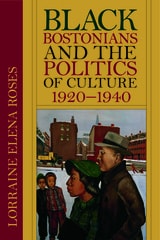
Black Bostonians and the Politics of Culture, 1920-1940
Lorraine Elena Roses
University of Massachusetts Press, 2017
In the 1920s and 1930s Boston became a rich and distinctive site of African American artistic production, unfolding at the same time as the Harlem Renaissance and encompassing literature, theater, music, and visual art. Owing to the ephemeral nature of much of this work, many of the era's primary sources have been lost.
In this book, Lorraine Elena Roses employs archival sources and personal interviews to recover this artistic output, examining the work of celebrated figures such as Dorothy West, Helene Johnson, Meta Warrick Fuller, and Allan Rohan Crite, as well as lesser-known artists including Eugene Gordon, Ralf Coleman, Gertrude “Toki” Schalk, and Alvira Hazzard. Black Bostonians and the Politics of Culture, 1920–1940 demonstrates how this creative community militated against the color line not solely through powerful acts of civil disobedience but also by way of a strong repertoire of artistic projects.
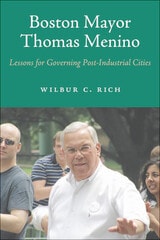
Boston Mayor Thomas Menino
Lessons for Governing Post-Industrial CitiesWilbur C. Rich
University of Massachusetts Press, 2023
Hailed as one of Boston’s most beloved mayors and its longest serving, Thomas Menino (1942–2014) deftly managed the city’s finances and transformed Boston into the hub of innovation that it is today. During his time in office, Boston embraced modern industrial growth and moved forward with noteworthy developments that altered neighborhoods, while also facing ongoing racial strife, challenges of unaffordable housing, and significant public union negotiations.
Mayors in modern American cities occupy unique positions as government leaders who need to remain active parts of their communities in addition to being tasked with fixing neighborhood issues, managing crises, and keeping schools and public infrastructure on course. Situating news coverage alongside interviews with the mayor and his administration, political scientist Wilbur C. Rich chronicles Menino’s time in office while also considering his personal and professional background, his larger-than-life personality, and his ambitions. Menino’s approach to these challenges and opportunities offers enduring lessons to anyone interested in urban government and political leadership.
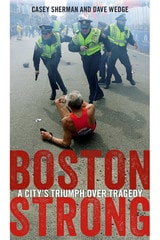
Boston Strong
A City's Triumph over TragedyCasey Sherman and Dave Wedge
University Press of New England, 2015
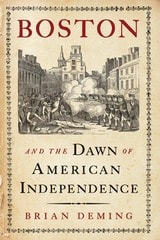
Boston and the Dawn of American Independence
Brian Deming
Westholme Publishing, 2013
In 1760, no one could imagine the American colonies revolting against Great Britain. The colonists were not hungry peasants groaning under the whip of a brute. They lived well. Land was cheap, wages were good, opportunities abounded. While many colonists had been in the New World for generations, they identified with Britain, and England was still “home.” Yet in the space of just fifteen years these sturdy bonds snapped. Boston—a town of just 16,000—lit the fire for American Independence. Brian Deming explains how and why in his lucid, lively, and deeply researched Boston and the Dawn of American Independence.
To dodge British taxes, Boston merchants for as long as anyone could remember had routinely smuggled in molasses from French and Spanish possessions in the Caribbean. Boston distillers transformed this sweet cargo into rum, the liquid gold traded around the world. But British authorities cracked down on smuggling and imposed the Sugar Act to help pay for the debts incurred during their wars against France. Then came the hated Stamp Act, a tax on documents, newspapers, and printed materials of all kinds. In courtrooms, in the press, and in the streets, Bostonians rallied in protest against taxation without representation. As anger swept America, Boston was at the center of the storm, which burst forth with the infamous massacre and the Boston Tea Party. By 1775, open warfare erupted at Lexington, Concord, and Bunker Hill. Boston and the Dawn of American Independence ties these scenes together with the people of the time, including John and Sam Adams, John Hancock, and Paul Revere, as well as Thomas Hutchinson, the beleaguered Massachusetts royal governor, and James Otis, the bombastic, unstable early patriot. Readers hear their voices, but also those of many amazing, colorful, and memorable personalities— feisty mob leaders, defiant Tories, terrified townspeople. Deming illuminates this epic story with views of everyday life inside taverns, outside newspaper offices, and along the wharves, and the political dramas in London and Philadelphia that shaped the destiny of an empire and gave rise to the world’s first modern democracy.
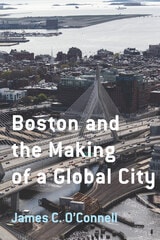
Boston and the Making of a Global City
James C. O’Connell
University of Massachusetts Press, 2025
In the late twentieth century the American and global economy shifted from manufacturing toward a knowledge industry. Following an economic low point several decades earlier, the city of Boston took advantage of the new era of globalization, fueled by dramatic advances in telecommunications, computer power, and air and sea travel, as well as its own impressive intellectual capital.
Boston and the Making of a Global City pulls together scholarship, media stories, personal interviews, and city planning documents to tell the story of Boston’s historical trajectory, as it quickly became a competitive global hub. Starting with its role as a colonial port and nineteenth-century maritime power, but moving quickly forward, the book describes how Boston capitalized on its strengths in higher education and such innovation sectors as life sciences, healthcare, information technology, and finance. Author James O’Connell traces the historical sweep of global flows—trade and supply chains, innovation and the dissemination of knowledge, investment, transportation, tourism, telecommunications, and immigration—that have shaped the city and region’s development. This volume also addresses the economic, social, and environmental challenges that Boston currently faces and how it is strategically positioned to confront them going forward.
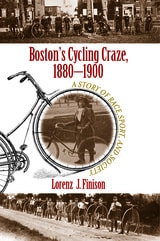
Boston's Cycling Craze, 1880-1900
A Story of Race, Sport, and SocietyLorenz J. Finison
University of Massachusetts Press, 2014
Lorenz J. Finison explores the remarkable rise of Boston cycling through the lives of several participants, including Kittie Knox, a biracial twenty-year-old seamstress who challenged the color line; Mary Sargent Hopkins, a self-proclaimed expert on women's cycling and publisher of The Wheelwoman; and Abbot Bassett, a longtime secretary of the League of American Wheelman and a vocal cycling advocate for forty years. Finison shows how these riders and others interacted on the road and in their cycling clubhouses, often constrained by issues of race, class, religion, and gender. He reveals the challenges facing these riders, whether cycling for recreation or racing, in a time of segregation, increased immigration, and debates about the rights of women.
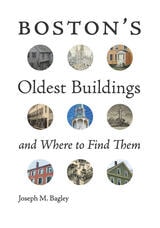
Boston's Oldest Buildings and Where to Find Them
Joseph M. Bagley
Brandeis University Press, 2021
As Boston approaches its four-hundredth anniversary, it is remarkable that it still maintains its historic character despite constant development. The fifty buildings featured in this book all pre-date 1800 and illustrate Boston’s early history. This is the first book to survey Boston’s fifty oldest buildings and does so through an approachable narrative which will appeal to nonarchitects and those new to historic preservation. Beginning with a map of the buildings’ locations and an overview of the historic preservation movement in Boston, the book looks at the fifty buildings in order from oldest to most recent. Geographically, the majority of the buildings are located within the downtown area of Boston along the Freedom Trail and within easy walking distance from the core of the city. This makes the book an ideal guide for tourists, and residents of the city will also find it interesting as it includes numerous properties in the surrounding neighborhoods. The buildings span multiple uses from homes to churches and warehouses to restaurants. Each chapter features a building, a narrative focusing on its historical significance, and the efforts made to preserve it over time. Full color photos and historical drawings illustrate each building and area. Boston’s Oldest Buildings and Where to Find Them presents the ideals of historic preservation in an approachable and easy-to-read manner appropriate for the broadest audience. Perfect for history lovers, architectural enthusiasts, and tourists alike.
Boston's Twentieth-Century Bicycling Renaissance
Cultural Change on Two WheelsLorenz J. Finison
University of Massachusetts Press, 2019
Finison traces the city's cycling history, chronicling the activities of environmental and social justice activists, stories of women breaking into male-dominated professions by becoming bike messengers and mechanics, and challenges faced by African American cyclists. Making use of newspaper archives, newly discovered records of local biking organizations, and interviews with Boston-area bicyclists and bike builders, Boston's Twentieth-Century Bicycling Renaissance brings these voices and battles back to life.
Boston
Voices and VisionsShaun O'Connell
University of Massachusetts Press, 2010
“New England was founded consciously, and in no fit of absence of mind,” observed historian Samuel Eliot Morison on the establishment of the Bay Colony in 1630 on the narrow, mountainous Shawmut peninsula of what became Massachusetts. That self-conscious presence of mind has endured for four centuries. Boston has been shaped and sustained by observation, imagination, and interpretation. As a result, the evolving vision of Boston has yielded a compelling literary record.
In this wide-ranging anthology, Shaun O'Connell includes a generous sampling of those who have recorded, revised, and redefined the vision of Boston. Anne Bradstreet, Nathaniel Hawthorne, Henry James, W. E. B. Du Bois, Mary Antin, Edwin O'Connor, John Updike, and many others eloquently evoke and explain Boston in these pages.
From John Winthrop's “city upon a hill” sermon, delivered aboard the Arbella before his followers landed in 1630 in the place they would call Boston, to Robert Lowell's “For the Union Dead,” a poem delivered in Boston's Public Garden in 1960, writers have continued to invoke the high purposes for which the city was founded, sometimes in praise of the city, but often in what Robert Frost named a “lover's quarrel,” in works that called attention to the city's failures to fulfill its promises. In the twenty-first century some writers continue to celebrate or to castigate the city, while others look back to Boston's origins to reassess its founders and renew its covenant of high purpose.
This is an interpretive anthology—one that includes commentary as well as writings. Section introductions provide historical and biographical context, offer analysis that stresses the thematic relevance of each selection, and explore the pattern of their relations. Rather than present a random array of writers who happen to have been Greater Bostonians, O'Connell focuses on those authors who possessed a commitment to the sense of place, those who addressed Boston not only as a geographical, social, and political entity but as an image, idea, and site of symbolic values.
Building Victorian Boston
The Architecture of Gridley J.F. BryantRoger G. Reed
University of Massachusetts Press, 2007
In Building Victorian Boston, Roger Reed focuses on representative projects by Bryant, presenting them in a chronological narrative that both illuminates the trajectory of his career and creates a portrait of the profession of architecture during a defining period of New England history. Bryant designed more major buildings in Boston from 1840 to 1880 than any other architect. He also undertook commissions throughout New
England, especially in towns linked to Boston by newly constructed railroad lines. In many ways, his practice presaged aspects of modern architectural firms. His ability to work with a variety of designers, his expertise in construction management, and his exceptional talent for self-promotion all contributed to his success. Although by the time of his death his work was no longer fashionable, newspaper accounts noted the passing of the "Famed Bostonian" and "Great Builder" whose career had had such a dramatic impact on the face of the city.
For this volume, Reed has tracked down hundreds of Bryant's drawings as well as specifications, letters, newspaper articles, published renderings, and historical photographs. These materials are amply represented in this book, the definitive study of a quintessential Victorian architect.