Results by title
134 books match the query 'Business' and 13 start with b
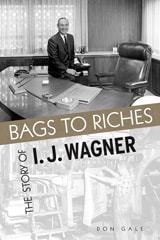
Bags to Riches
The Story of I J WagnerGale, Don
University of Utah Press, 2007
His sense of humor was legendary. His tenacity in pursuit of goals was unwavering. His grasp of past, present, and future opportunities was profound. Bags to Riches shows the personal side of an 'outsider' who became an 'insider' through congeniality, good humor, and integrity.
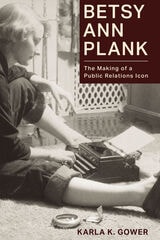
Betsy Ann Plank
The Making of a Public Relations IconKarla K. Gower
University of Missouri Press, 2022
Beyond Market Value
A Memoir of Book Collecting and the World of Venture CapitalBy Annette Campbell-White
University of Texas Press, 2019
Beyond Market Value chronicles Annette Campbell-White’s remarkable life, from a childhood spent in remote mining camps throughout the British Commonwealth, where books created an imaginary home; to her early adulthood in London, where she first discovered a vocation as a book collector; to Silicon Valley, where she built a pioneering career as a formidable venture capitalist. She recalls the impulsive purchase of the first book in her collection, T. S. Eliot’s A Song for Simeon, and her pursuit of rare editions of all one hundred titles listed in Cyril Connolly’s The Modern Movement. Campbell-White’s collecting and career peaked in 2005, when she acquired the last of the Connolly titles and was first named to Forbes’ Midas List, the annual ranking of the most successful dealmakers in venture capital.
In 2007, out of concern for their preservation, Campbell-White rashly sold the Connolly titles she had spent more than twenty years assembling, leading to a new appreciation of what remained of her collection and, going forward, a broader focus on collecting modernist letters, manuscripts, and ephemera. Beyond Market Value is both a loving tribute to literary collecting and a telling account of the challenges of being a woman in the male-dominated world of finance.
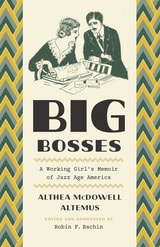
Big Bosses
A Working Girl’s Memoir of Jazz Age AmericaAlthea McDowell Altemus
University of Chicago Press, 2016
Beginning with her employment as a private secretary to James Deering of International Harvester, whom she describes as “probably the world’s oldest and wealthiest bachelor playboy,” Altemus tells us much about high society during the time, taking us inside Deering’s glamorous Miami estate, Vizcaya, an Italianate mansion worthy of Gatsby himself. Later, we meet her other notable employers, including Samuel Insull, president of Chicago Edison; New York banker S. W. Straus; and real estate developer Fred F. French. We cinch up our trenchcoats and head out sleuthing in Chicago, hired by the wife of a big boss to find out how he spends his evenings (with, it turns out, a mistress hidden in an apartment within his office, no less). Altemus was also a struggling single mother, a fact she had to keep secret from her employers, and she reveals the difficulties of being a working woman at the time through glimpses into women’s apartments, their friendships, and the dangers—sexual and otherwise—that she and others faced. Throughout, Altemus entertains with a tart and self-aware voice that combines the knowledge of an insider with the wit and clarity of someone on the fringe.
Anchored by extensive annotation and an afterword from historian Robin F. Bachin, which contextualizes Altemus’s narrative, Big Bosses provides a one-of-a-kind peek inside the excitement, extravagances, and the challenges of being a working woman roaring through the ’20s.
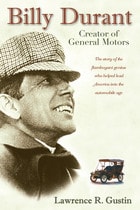
Billy Durant
Creator of General MotorsLawrence R. Gustin
University of Michigan Press, 2012
Praise for the first edition:
"A fascinating book [and] a sympathetic look at the man who glued General Motors together and in the process made Flint one of the great industrial centers of America."
---Detroit Free Press
"It is refreshing to report that Billy Durant is one of the best researched books dealing with an automotive giant."
---Antique Automobile
"Billy Durant fills in a masterly way the only important void remaining concerning the work of the motorcar pioneers."
---Richard Crabb, author of Birth of a Giant: The Men and Incidents That Gave America the Motorcar
What explains Billy Durant's powerful influence on the auto industry during its early days? And why, given Durant's impact, has he been nearly forgotten for decades?
In search of answers to these questions, Lawrence Gustin interviewed Durant's widow, who provided a wealth of previously unpublished autobiographical notes, letters, and personal papers. Gustin also interviewed two of Durant's personal secretaries and others who had known and worked with the man who created General Motors. The result is the amazing account of the mastermind behind what would become, as the twentieth century progressed, the world's largest company.
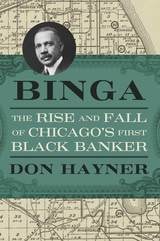
Binga
The Rise and Fall of Chicago's First Black BankerDon Hayner
Northwestern University Press, 2020
Binga is the definitive full-length biography of Jesse Binga, the first black banker in Chicago. Born into a large family in Detroit, Binga arrived in Chicago in 1892 in his late twenties with virtually nothing. Through his wits and resourcefulness, he rose to wealth and influence as a real estate broker, and in 1908 he founded the Binga Bank, the first black-owned bank in the city. But his achievements were followed by an equally notable downfall. Binga recounts this gripping story about race, history, politics, and finance.
The Black Belt, where Binga’s bank was located, was a segregated neighborhood on Chicago’s South Side—a burgeoning city within a city—and its growth can be traced through the arc of Binga’s career. He preached and embodied an American gospel of self-help and accrued wealth while expanding housing options and business opportunities for blacks. Devout Roman Catholics, he and his wife Eudora supported church activities and various cultural and artistic organizations; their annual Christmas party was the Black Belt’s social event of the year. But Binga’s success came at the price of a vicious backlash. After he moved his family into a white neighborhood in 1917, their house was bombed multiple times, his offices were attacked twice, and he became a lightning rod for the worst race riots in Chicago history, which took place in 1919. Binga persevered, but, starting with the stock market crash of October 1929, a string of reversals cost him his bank, his property, and his fortune.
A quintessentially Chicago story, Binga tells the history of racial change in one of the most segregated cities in America and how an extraordinary man stood as a symbol of hope in a community isolated by racial animosity.

Bonds of Enterprise
John Murray Forbes and Western Development in America's Railway AgeJohn Lauritz Larson
University of Iowa Press, 2001
Building Nature's Market
The Business and Politics of Natural FoodsLaura J. Miller
University of Chicago Press, 2017
Building Nature’s Market shows how the meaning of natural foods was transformed as they changed from a culturally marginal, religiously inspired set of ideas and practices valorizing asceticism to a bohemian lifestyle to a mainstream consumer choice. Laura J. Miller argues that the key to understanding this transformation is to recognize the leadership of the natural foods industry. Rather than a simple tale of cooptation by market forces, Miller contends the participation of business interests encouraged the natural foods movement to be guided by a radical skepticism of established cultural authority. She challenges assumptions that private enterprise is always aligned with social elites, instead arguing that profit-minded entities can make common cause with and even lead citizens in advocating for broad-based social and cultural change.
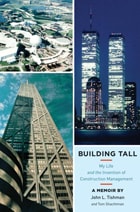
Building Tall
My Life and the Invention of Construction ManagementJohn L. Tishman and Tom Shachtman
University of Michigan Press, 2011
"John Tishman is a true pioneer in the Construction Management industry. Through his CM leadership, some of America's most well-known buildings have been brought to successful completion."
---Bruce D'Agostino, president and chief executive, Construction Management Association of America
"Building Tall will provide readers with insights into John Tishman's career as a visionary engineer, landmark builder, and great businessman. Responsible for some of the construction world's most magnificent projects, John is one of the preeminent alumni in the history of Michigan Engineering. His perspectives have helped me throughout my time as dean, and his impact will influence generations of Construction Management professionals and students."
---David C. Munson, Jr., Robert J. Vlasic Dean of Engineering, University of Michigan
In this memoir, University of Michigan graduate John L. Tishman recounts the experiences and rationale that led him to create the entirely new profession now recognized and practiced as Construction Management. It evolved from his work as the construction lead of the "owner/builder" firm Tishman Realty and Construction, and his personal role as hands-on Construction Manager in the building of an astonishing array of what were at the time the world's tallest and most complex projects. These include
- The world's first three 100-story towers---the original "twin towers" of the World Trade Center in Manhattan and the Hancock Tower in Chicago.
- The Epcot Center at Disney World.
- The Renaissance Center in Detroit.
- New York's Madison Square Garden.
Tishman interweaves the stories behind the construction of these and many other important buildings and projects with personal reminiscences of his dealings with Henry Ford, Jr., Disney's Michael Eisner, casino magnate Steve Wynn, and many others into a practical history of the field of Construction Management, which he pioneered.
This book will be of interest not only to a general public interested in the stories and personalities behind many of the most iconic construction projects of the post–World War II period in the United States but to students of engineering and architecture and members of the new field of Construction Management.
Business Confronts Terrorism
Risks and ResponsesDean C. Alexander
University of Wisconsin Press, 2004
These scenarios could be part of a future Hollywood movie. Sadly, they are representative of previous terror attacks against industry and government interests worldwide. Moreover, they are harbingers of global terror threats.
Industry constitutes a prime target of contemporary terrorism. This timely book analyzes the threats companies face due to terrorism, industry responses to these dangers, and terrorism’s effects on conducting business in the post-9/11 environment. Dean C. Alexander details the conventional and unconventional terror capabilities facing industry. He describes the activities of terrorists in the economic system and the ways they finance their operations.
Alexander discusses how companies can reduce terrorist threats and that corporate security can minimize political violence. He outlines the dynamics of the public-private partnership against terrorism: government aiding industry, business supporting government, and tensions between the two. He also delineates terrorism’s effects—financial, physical, and emotional—on workers and employers. He highlights the negative financial and economic consequences of terrorism. He discusses the impact of terrorism on traditional business practices and concludes with an assessment of future trends.
Business Of Jews In Louisiana, 1840–1875
Elliot Ashkenazi
University of Alabama Press, 1988
Goes beyond institutional history to concentrate on commercial and social matters
The author’s findings imply that Jewish immigrants to the South in the first half of the 19th century came from particular locales with similar social, economic, and religious backgrounds, and they chose to live in the South because of those traditions. The experience of Jews with commercial capitalism, rather than landowning, in agricultural societies, gave the Jews of Louisiana a comparable niche in America, and they participated in the commercial aspects of a regional economy based on agricultural production. Commercial and family connections with other Jewish groups facilitated their development into a settled community. In growth and decline, Jewish communities in Louisiana and elsewhere became permanent features of the landscape and influenced, and were influenced, by the areas in which they lived.

Business Of Practicing Law
Carroll Seron
Temple University Press, 1996
Business as Usual
How Sponsored Media Sold American Capitalism in the Twentieth CenturyCaroline Jack
University of Chicago Press, 2024
Business as Usual reveals how American capitalism has been promoted in the most ephemeral of materials: public service announcements, pamphlets, educational films, and games—what Caroline Jack calls “sponsored economic education media.” These items, which were funded by corporations and trade groups who aimed to “sell America to Americans,” found their way into communities, classrooms, and workplaces, and onto the airwaves, where they promoted ideals of “free enterprise” under the cloaks of public service and civic education. They offered an idealized vision of US industrial development as a source of patriotic optimism, framed business management imperatives as economic principles, and conflated the privileges granted to corporations by the law with foundational political rights held by individuals. This rhetoric remains dominant—a harbinger of the power of disinformation that so besets us today. Jack reveals the funding, production, and distribution that together entrenched a particular vision of corporate responsibility—and, in the process, shut out other hierarchies of value and common care.