Results by title
547 books match the query 'California' and 26 start with b

Bad Nature
How Rat Control Shapes Human and Nonhuman WorldsAndrew McCumber
University of Chicago Press, 2025
Apart from the occasional pet owner who has rats, most people regard rats as disease-carrying nocturnal pests, scurrying around dumpsters and dragging slices of pizza through New York City subways. Since rats are seemingly omnipresent in human life, why do we harbor such negative feelings about them, and why are they among the creatures most frequently targeted for systematic extermination?
In Bad Nature, sociologist Andrew McCumber draws out the cultural underpinnings of rat extermination across three countries and two continents. Drawing from ethnographic, interview, and textual data from the frigid prairie of Alberta, Canada; the heart of downtown Los Angeles, California; and the iconic Galápagos Islands of Ecuador, McCumber studies how humans have sought to suppress and exterminate rat populations in a variety of environmental, social, and political situations. He shows how, in these disparate locations, rat control is a social practice that draws and clarifies the spatial and symbolic boundaries between “good” and “bad” forms of nature. Rats are near the bottom of a symbolic hierarchy of species that places human life at the top, companion animals and majestic wildlife just below them, and the “invasive species” that call for systematic extermination at the very bottom. This hierarchy of living things that places rats at the bottom, McCumber argues, mirrors human systems of social inequalities and power dynamics.
Both original and engaging, Bad Nature urges readers to consider, when charting a just and sustainable future, where will the rats be placed in the worlds we envision?
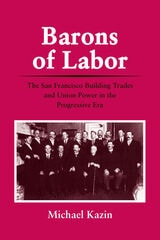
Barons of Labor
The San Francisco Building Trades and Union Power in the Progressive EraMichael Kazin
University of Illinois Press, 1989
Barrio Gangs
Street Life and Identity in Southern CaliforniaBy James Diego Vigil
University of Texas Press, 1988
Within the Mexican American barrios of Los Angeles, gang activity, including crime and violent acts, has grown and flourished. In the past, community leaders and law enforcement officials have approached the problem, not as something that needs to be understood, but only as something to be gotten rid of. Rejecting that approach, James D. Vigil asserts that only by understanding the complex factors that give birth and persistence to gangs can gang violence be ended.
Drawing on many years of experience in the barrios as a youth worker, high school teacher, and researcher, Vigil identifies the elements from which gangs spring: isolation from the dominant culture, poverty, family stress and crowded households, peer pressure, and the adolescent struggle for self-identity. Using interviews with actual gang members, he reveals how the gang often functions as parent, school, and law enforcement in the absence of other role models in the gang members' lives. And he accounts for the longevity of gangs, sometimes over decades, by showing how they offer barrio youth a sense of identity and belonging nowhere else available.
Barrio Rhythm
Mexican American Music in Los AngelesSteven Loza
University of Illinois Press, 1993
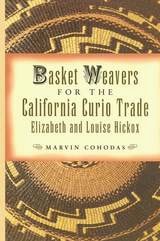
Basket Weavers for the California Curio Trade
Elizabeth and Louise HickoxMarvin Cohodas
University of Arizona Press, 1997
Marvin Cohodas now explores the various forces that influenced Elizabeth Hickox, analyzing her relationship with the curio trade, and specifically with dealer Grace Nicholson, to show how those associations affected the development and marketing of baskets. He explains the techniques and patterns that Hickox created to meet the challenge of weaving design into changig three-dimensional forms. In addition to explicating the Hickoxes' basketry, Cohodas interprets its uniqueness as a form of intersocietal art, showing how Elizabeth first designed her distinctive trinket basket to convey a particular view of the curio trade and its effect on status within her community.
Through its close examination of these superb practitioners of basketry, Basket Weavers for the California Curio Trade addresses many of today's most pressing questions in Native American art studies concerning individuality, patronage, and issues of authenticity. Graced with historic photographs and full-color plates, it reveals the challenges faced by early-twentieth-century Native weavers.
Published with the assistance of The Southwest Museum, Los Angeles.

Bastion by the Bay
The Presidio of San Francisco, from Outpost of Empire to Magnificent ParkJohn P. Langellier
University of North Texas Press, 2026
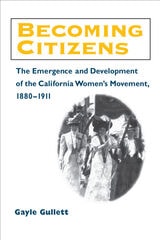
Becoming Citizens
The Emergence and Development of the California Women's Movement, 1880-1911Gayle Gullett
University of Illinois Press, 2000
In 1880, Californians believed a woman safeguarded the Republic by maintaining a morally sound home. Scarcely forty years later, women in the state won full-fledged citizenship and voting rights by stepping outside the home to engage in robust activism.
Gayle Gullett reveals how this enormous transformation came about and the ways women's search for a larger public life led to a flourishing women's movement in California. Though voters rejected women's radical demand for citizenship in 1896, women rebuilt the movement in the early years of the twentieth century and forged critical bonds between activist women and the men involved in the urban Good Government movement. This alliance formed the basis of progressivism, with male Progressives helping to legitimize women's new public work by supporting their civic campaigns, appointing women to public office, and placing a suffrage referendum before the male electorate in 1911.
Placing local developments in a national context, Becoming Citizens illuminates the links between women's reform movements and progressivism in the American West.
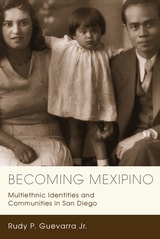
Becoming Mexipino
Multiethnic Identities and Communities in San DiegoGuevarra, Rudy P
Rutgers University Press, 2012
Through racially restrictive covenants and other forms of discrimination, both groups, regardless of their differences, were confined to segregated living spaces along with African Americans, other Asian groups, and a few European immigrant clusters. Within these urban multiracial spaces, Mexicans and Filipinos coalesced to build a world of their own through family and kin networks, shared cultural practices, social organizations, and music and other forms of entertainment. They occupied the same living spaces, attended the same Catholic churches, and worked together creating labor cultures that reinforced their ties, often fostering marriages. Mexipino children, living simultaneously in two cultures, have forged a new identity for themselves. Their lives are the lens through which these two communities are examined, revealing the ways in which Mexicans and Filipinos interacted over generations to produce this distinct and instructive multiethnic experience. Using archival sources, oral histories, newspapers, and personal collections and photographs, Guevarra defines the niche that this particular group carved out for itself.
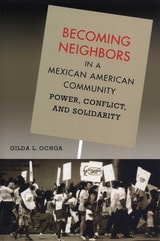
Becoming Neighbors in a Mexican American Community
Power, Conflict, and SolidarityBy Gilda L. Ochoa
University of Texas Press, 2004
On the surface, Mexican Americans and Mexican immigrants to the United States seem to share a common cultural identity but often make uneasy neighbors. Discrimination and assimilationist policies have influenced generations of Mexican Americans so that some now fear that the status they have gained by assimilating into American society will be jeopardized by Spanish-speaking newcomers. Other Mexican Americans, however, adopt a position of group solidarity and work to better the social conditions and educational opportunities of Mexican immigrants.
Focusing on the Mexican-origin, working-class city of La Puente in Los Angeles County, California, this book examines Mexican Americans' everyday attitudes toward and interactions with Mexican immigrants—a topic that has so far received little serious study. Using in-depth interviews, participant observations, school board meeting minutes, and other historical documents, Gilda Ochoa investigates how Mexican Americans are negotiating their relationships with immigrants at an interpersonal level in the places where they shop, worship, learn, and raise their families. This research into daily lives highlights the centrality of women in the process of negotiating and building communities and sheds new light on identity formation and group mobilization in the U.S. and on educational issues, especially bilingual education. It also complements previous studies on the impact of immigration on the wages and employment opportunities of Mexican Americans.
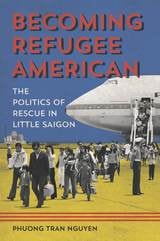
Becoming Refugee American
The Politics of Rescue in Little SaigonPhuong Nguyen
University of Illinois Press, 2017
Phuong Tran Nguyen examines the phenomenon of refugee nationalism among Vietnamese Americans in Southern California. Here, the residents of Little Saigon keep alive nostalgia for the old regime and, by extension, their claim to a lost statehood. Their refugee nationalism is less a refusal to assimilate than a mode of becoming, in essence, a distinct group of refugee Americans. Nguyen examines the factors that encouraged them to adopt this identity. His analysis also moves beyond the familiar rescue narrative to chart the intimate yet contentious relationship these Vietnamese Americans have with their adopted homeland. Nguyen sets their plight within the context of the Cold War, an era when Americans sought to atone for broken promises but also saw themselves as providing a sanctuary for people everywhere fleeing communism.
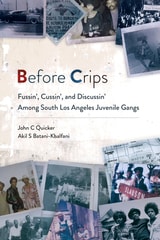
Before Crips
Fussin', Cussin', and Discussin' among South Los Angeles Juvenile GangsJohn C. Quicker and Akil S. Batani-Khalfani
Temple University Press, 2022
This groundbreaking book opens the door on the missing record of South Los Angeles juvenile gangs. It is the result of the unique friendship that developed between John Quicker and Akil Batani-Khalfani, aka Bird, who collaborated to show how structural marginality transformed hang-out street groups of non-White juveniles into gangs, paving the way for the rise of the infamous Crips and Bloods. Before Crips uses a macro historical analysis to sort through political and economic factors to explain the nature of gang creation.
The authors mine a critical archive, using direct interviews with original gang members as well as theory and literature reviews, to contextualize gang life and gang formation. They discuss (and fuss and cuss about) topics ranging from the criminal economy and conceptions of masculinity to racial and gendered politics and views of violence. Their insider/outsider approach not only illuminates gang values and organization, but what they did and why, and how they grew in a backdrop of inequality and police brutality that came to a head with the 1965 Watts Rebellion.
Providing an essential understanding of early South Los Angeles gang life, Before Crips explains what has remained constant, what has changed, and the roots of the violence that continues.
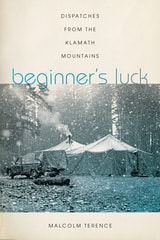
Beginner's Luck
Dispatches from the Klamath MountainsMalcolm Terence
Oregon State University Press, 2018
In the late 1960s, Malcolm Terence left his job as a reporter for the Los Angeles Times to look for adventure and may have found more than he bargained for. The era had triggered unprecedented social and political changes in America, tectonic shifts that challenged war and the social order that oppressed people along lines of class, gender, and race. One branch was a back-to-the-land movement, and Terence, who had just traveled for a year managing a rock band, strayed into Black Bear Ranch, a commune just starting in a remote corner of the Klamath Mountains near the California-Oregon border.
Black Bear Ranch still exists, but many of its early residents eventually returned to urban civilization. A few, Terence among them, stayed on in neighboring river towns. Some tried logging, others gold mining, and some tried growing marijuana, all with mixed success. The local mining and timber communities had a checkered opinion of their new hippie neighbors, as did the Native tribes, but it was the kind of place where people helped each other out, even if they didn’t always agree.
When wildfires grew large, Terence and other veterans of the commune joined the fire crews run by the US Forest Service. In between, the Black Bear expats built homesteads, planted gardens, delivered babies, and raised their children. They gradually overcame the skepticism of the locals and joined them in political battles against the use of herbicides in the forest and the Forest Service’s campaign to close all the mining claims. As in the best of organizing efforts, the organizers learned as much as they led.
Beginner’s Luck will appeal to anyone who experienced life on a commune in the 1960s–1970s or who wants to learn about this chapter in modern American history. Terence offers insight into environmental activism and the long history of conflict between resource exploitation and Native American rights without lecturing or pontificating. With wit, humor, and humility, his anecdotal essays chronicle a time and place where disparate people came together to form an unlikely community.
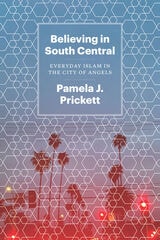
Believing in South Central
Everyday Islam in the City of AngelsPamela J. Prickett
University of Chicago Press, 2021
Prickett offers deep insights into the day-to-day lived religion of the Muslims who call this community home, showing how the mosque provides a system of social support and how believers deepen their spiritual practice not in spite of, but through, conditions of poverty. Prickett breaks past the stigmas of urban poverty, revealing a complex and vibrant community by telling the stories of longstanding residents of South Central—like Sister Ava, who offers food to the local unhoused people and finds the sacred in her extensive DVD collection. In addition to her portraits of everyday life among Muslims in South Central, Prickett also provides vivid and accessible descriptions of Ramadan and histories of the mosque, situates this community within the larger story of the Nation of Islam, explores gender issues, and unpacks the interaction between African American Muslims and South Asian and Arab American Muslims, revealing both the global and local significance of this religious tradition.
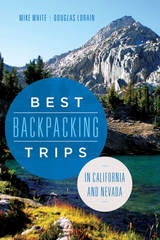
Best Backpacking Trips in California and Nevada
Mike White
University of Nevada Press, 2015
The guide includes thirteen detailed trail descriptions, along with information on additional resources, governing agencies, and permits and fees. It also provides listings of the nearest airports, outdoor retailers, campgrounds, transportation, and amenities and attractions. Accompanying the specific information on each trip are captivating historical vignettes and entertaining personal essays, enhancing the reader’s understanding of the area. Whether journeying from near or far, Best Backpacking Trips of California and Nevada is the most complete resource for turning a dream trip into reality.
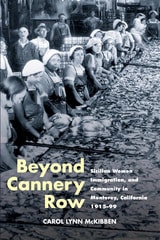
Beyond Cannery Row
Sicilian Women, Immigration, and Community in Monterey, California, 1915-99Carol Lynn McKibben
University of Illinois Press, 2005
McKibben's analysis of gender and gender roles shows that it was the women in this community who had the insight, the power, and the purpose to respond and even prosper amid changing economic conditions. Vividly evoking the immigrants' everyday experiences through first-person accounts and detailed description, McKibben demonstrates that the cannery work done by Sicilian immigrant women was crucial in terms of the identity formation and community development. These changes allowed their families to survive the challenges of political conflicts over citizenship in World War II and intermarriage with outsiders throughout the migration experience. The women formed voluntary associations and celebrated festas that effectively linked them with each other and with their home villages in Sicily. Continuous migration created a strong sense of transnationalism among Sicilians in Monterey, which has enabled them to continue as a viable ethnic community today.
Beyond the Barricades
The Sixties Generation Grows UpJack Whalen
Temple University Press, 1990
Birds of the Lower Colorado River Valley
Kenneth V. Rosenberg, Robert D. Ohmart, William C. Hunter, and Bertin W. Anderson
University of Arizona Press, 1991
"A tremendous amount of information is included in this book for banders, birders, and people working to restore the 'Nile of the American Southwest.'" —North American Bird Bander
"A report on several years of scientific research undertaken to investigate the ecological relationships among desert riparian wildlife. . . . Well writen and very informative book." —The Canadian Field Naturalist
"This work is a great achievment." —Birding
Black Arts West
Culture and Struggle in Postwar Los AngelesDaniel Widener
Duke University Press, 2010
Along with the politicization of black culture, Widener explores the rise of a distinctive regional Black Arts Movement. Originating in the efforts of wartime cultural activists, the movement was rooted in the black working class and characterized by struggles for artistic autonomy and improved living and working conditions for local black artists. As new ideas concerning art, racial identity, and the institutional position of African American artists emerged, dozens of new collectives appeared, from the Watts Writers Workshop, to the Inner City Cultural Center, to the New Art Jazz Ensemble. Spread across generations of artists, the Black Arts Movement in Southern California was more than the artistic affiliate of the local civil-rights or black-power efforts: it was a social movement itself. Illuminating the fundamental connections between expressive culture and political struggle, Black Arts West is a major contribution to the histories of Los Angeles, black radicalism, and avant-garde art.
Blood Loss
A Love Story of AIDS, Activism, and ArtKeiko Lane
Duke University Press, 2024
Blowin' Up
Rap Dreams in South CentralJooyoung Lee
University of Chicago Press, 2016
While most books on rap are written from the perspective of listeners and the market, Blowin’ Up looks specifically at the creative side of rappers. As Lee shows, learning how to rap involves a great deal of discipline, and it takes practice to acquire the necessary skills to put on a good show. Along with Lee—who is himself a pop-locker—we watch as the rappers at Project Blowed learn the basics, from how to hold a microphone to how to control their breath amid all those words. And we meet rappers like E. Crimsin, Nocando, VerBS, and Flawliss as they freestyle and battle with each other. For the men at Project Blowed, hip hop offers a creative alternative to the gang lifestyle, substituting verbal competition for physical violence, and provides an outlet for setting goals and working toward them.
Engagingly descriptive and chock-full of entertaining personalities and real-life vignettes, Blowin’ Up not only delivers a behind-the-scenes view of the underground world of hip hop, but also makes a strong case for supporting the creative aspirations of young, urban, black men, who are often growing up in the shadow of gang violence and dead-end jobs.
Bodie’s Gold
Tall Tales and True History from a California Mining TownMarguerite Sprague
University of Nevada Press, 2011
Break the System
Criminalized Black Mothers and the Reproductive Politics of AbolitionSusila Gurusami
University of Chicago Press, 2026
Upends the “broken systems” myth and reveals how the law deliberately criminalizes and punishes Black women, inflicting lasting harm on Black communities in the process.
The United States has one of the highest rates of incarceration in the world, with Black Americans representing a disproportionate share of theimprisoned. Many view this statistic as evidence of a broken system. But sociologist Susila Gurusami argues that the carceral system that so disproportionately harms Black families is not broken at all. In fact, it works just as it was intended. Looking closely at the lives of formerly incarcerated Black mothers, Gurusami shows how state institutions—the criminal-legal, child welfare, and healthcare systems—keep Black mothers from their families, harming Black communities in the process. She also shows how Black women work towards conditions that seem impossible—and even utopian—as part of their everyday mothering labor, but find themselves criminalized for these same actions.
Drawing on ethnographic data and interviews with formerly incarcerated Black women in South Los Angeles, Gurusami challenges dominant assumptions about mothering and criminal justice reform. Gurusami finds that criminalized Black women endure multigenerational political, social, and embodied assaults–what she calls “reproductive warfare”— and still, they build networks, practices, and theories of radical care that protect Black maternal life, legacies, and futures. With incarcerated, formerly incarcerated, and system-impacted Black mothers at the forefront of the growing movement to abolish prisons and jails, Gurusami demonstrates how their everyday mothering work—what she calls “abolitionist motherwork”—is essential to imagining the end of incarceration and ultimately achieving it.
Written with a tender and honest voice, Break the System shares moving vignettes that underscore why we must break the system, rather than reform it, and why we must imagine a future that is radically different than the one we’re told we must accept or salvage.
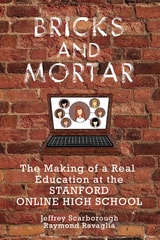
Bricks and Mortar
The Making of a Real Education at the Stanford Online High SchoolJeffrey Scarborough and Raymond Ravaglia
CSLI, 2014
This volume shows how a group of online-learning believers built the best high school in the world without laying a single brick: the Stanford Online High School (SOHS). By chronicling SOHS’s distinctive approach to curriculum, gifted education, and school community over SOHS’s first seven years, Bricks and Mortar makes the case that the dynamic use of technology and the best traditional methodologies in education are not, in fact, mutually exclusive. Indeed, while SOHS has redefined what is possible online, a great education is ultimately the product of an interactive community of teachers and students.
Bristlecone Pine in the White Mountains of California
Growth and Ring-Width CharacteristicsHarold C. Fritts
University of Arizona Press, 1969
Papers of the Laboratory of Tree-Ring Research, No. 4
Broke
The Racial Consequences of Underfunding Public UniversitiesLaura T. Hamilton and Kelly Nielsen
University of Chicago Press, 2021
In Broke, Laura T. Hamilton and Kelly Nielsen examine virtually all aspects of campus life to show how the new economic order in public universities, particularly at two campuses in the renowned University of California system, affects students. For most of the twentieth century, they show, less affluent families of color paid with their taxes for wealthy white students to attend universities where their own offspring were not welcome. That changed as a subset of public research universities, some quite old, opted for a “new” approach, making racially and economically marginalized youth the lifeblood of the university. These new universities, however, have been particularly hard hit by austerity. To survive, they’ve had to adapt, finding new ways to secure funding and trim costs—but ultimately it’s their students who pay the price, in decreased services and inadequate infrastructure.
The rise of new universities is a reminder that a world-class education for all is possible. Broke shows us how far we are from that ideal and sets out a path for how we could get there.
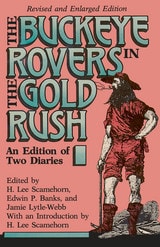
Buckeye Rovers in the Gold Rush
An Edition of Two DiariesH. Lee Scamehorn
Ohio University Press, 1989
When “California Fever” raced through southeastern Ohio in the spring of 1849, a number of residents of Athens County organized a cooperative venture for traveling overland to the mines. Known as the “Buckeye Rovers,” the company began its trip westward in early April. The Buckeye Rovers, along with thousands who traveled the overland route to California, endured numerous hardships and the seemingly constant threat of attacks from hostile Indians. On reaching their destination, the Ohioans discovered that rich deposits of gold were extremely rare, and that except for a few lucky fortune–seekers, mining required hard physical labor and yielded small rewards. They persisted nonetheless and most of the company returned to Athens in late 1851 or early 1852 with modest fortunes.
The arduous experiences of the overland trek were recorded by two Buckeye Rover diarists. The more compete account was compiled by John Banks. He wrote effusively while on the trail and throughout his stay of more than two years in the gold regions. J. Elza Armstrong, by contrast, was brief, even laconic, and his journal ended upon reaching California. The contrast between the two brings into focus the divergent personalities who were drawn to California by the lure of gold.
A nine–month segment of Bank’s diary, from February to November, 1851, had been missing at the time the story of the Buckeye Rovers was first published in 1965. This revised and enlarged edition contains the complete diaries. They offer valuable record of the Buckeyes’ adventures from the time they left home until the time they departed California for the return trip to Ohio.