Results by title
332 books match the query 'Canada' and 9 start with b

Barn Quilts and the American Quilt Trail Movement
Suzi Parron
Ohio University Press, 2012
The story of the American Quilt Trail, featuring the colorful patterns of quilt squares painted large on barns throughout North America, is the story of one of the fastest-growing grassroots public arts movements in the United States and Canada. In Barn Quilts and the American Quilt Trail Movement Suzi Parron takes us to twenty-five states as well as Canada to visit the people and places that have put this movement on America’s tourist and folk art map.
Through dozens of interviews with barn quilt artists, committee members, and barn owners, Parron documents a journey that began in 2001 with the founder of the movement, Donna Sue Groves. Groves’s desire to honor her mother with a quilt square painted on their barn became a group effort that eventually grew into a county-wide project. Today, quilt squares form a long imaginary clothesline, appearing on more than three thousand barns scattered along one hundred and twenty driving trails.
With more than eighty full-color photographs, Parron documents here a movement that combines rural economic development with an American folk art phenomenon.
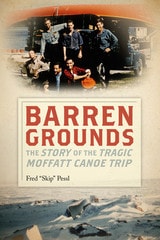
Barren Grounds
The Story of the Tragic Moffatt Canoe TripSkip Pessl
Dartmouth College Press, 2014

Beheading the Saint
Nationalism, Religion, and Secularism in QuebecGeneviève Zubrzycki
University of Chicago Press, 2016
In Beheading the Saint, Geneviève Zubrzycki studies that transformation through a close investigation of the annual Feast of St. John the Baptist of June 24. The celebrations of that national holiday, she shows, provided a venue for a public contesting of the dominant ethno-Catholic conception of French Canadian identity and, via the violent rejection of Catholic symbols, the articulation of a new, secular Québécois identity. From there, Zubrzycki extends her analysis to the present, looking at the role of Québécois identity in recent debates over immigration, the place of religious symbols in the public sphere, and the politics of cultural heritage—issues that also offer insight on similar debates elsewhere in the world.

Being German Canadian
History, Memory, GenerationsAlexander Freund
University of Manitoba Press, 2021
Between the Lines
South Asians and Postcolonialityedited by Deepika Bahri and Mary Vasudeva
Temple University Press, 1996
This ground-breaking collection of new interviews, critical essays, and commentary explores South Asian identity and culture. Sensitive to the false homogeneity implied by "South Asian," "diaspora," "postcolonial," and "Asian American," the contributors attempt to unpack these terms. By examining the social, economic, and historical particularities of people who live "between the lines"—on and between borders—they reinstate questions of power and privilege, agency and resistance. As South Asians living in the United States and Canada, each to some degree must reflect on the interaction of the personal "I," the collective "we," and the world beyond.
The South Asian scholars gathered together in this volume speak from a variety of theoretical perspectives; in the essays and interviews that cross the boundaries of conventional academic disciplines, they engage in intense, sometimes contentious, debate.
Contributors: Meena Alexander, Gauri Viswanathan, Gayatri Chakravorty Spivak, Amritjit Singh, M. G. Vassanji, Sohail Inayatullah, Ranita Chatterjee, Benita Mehta, Sanjoy Majumder, Mahasveta Barua, Sukeshi Kamra, Samir Dayal, Pushpa Naidu Parekh, Indrani Mitra, Huma Ibrahim, Amitava Kumar, Shantanu DuttaAhmed, Uma Parameswaran.
In the series Asian American History and Culture, edited by Sucheng Chan, David Palumbo-Liu, Michael Omi, K. Scott Wong, and Linda Trinh Võ.

Border Diplomacy
The Caroline and McLeod Affairs in Anglo-American-Canadian Relations, 1837-1842Kenneth R. Stevens
University of Alabama Press, 1989
Long after Americans and Britons signed treaties ending the Revolutionary War and the War of 1812, ill will between the two nations simmered under the surface of their relations and periodically boiled over. In the mid-nineteenth century, Americans, the British, and British subjects in Canada continued to dispute borders, sovereign rights and responsibilities, and the American republican experiment.
Some of the antagonism arose from a fundamental difference in attitude toward democracy. Britons believed that democratic government was inadequate to control the baser elements of a population. Further, they disliked the aggressiveness and arrogance of their former colonists. Americans sensed and resented this contempt; in turn, they regarded British aristocratic pretensions with scorn and believed that country sought world domination. In view of such attitudes, even relatively minor incidents threatened to erupt into violence between the two nations. Such was the case in 1837, when British troops set fire to the American steamer Caroline in American waters, killing a United States citizen, and in 1840, when the state of New York arrested a Canadian, Alexander McLeod, for the murder.
These events, taken together, are not simply examples of diplomatic relations or political problems for particular administrations. The dash of attitudes and loyalties along the American-Canadian frontier also demonstrates the instability of the border region, socially as well as politically, and conflicting motives of patriotism and political opportunism in both the American and British governments. Thus, the Caroline and McLeod affairs, occurring as they did at a pivotal moment in American history, reveal how the republic began to mature in its relations with its long-established forebear, refined its own definitions of state and federal powers, and established itself as a nation contributing to, as well as influenced by, international law.
Bridging National Borders in North America
Transnational and Comparative HistoriesBenjamin H. Johnson and Andrew R. Graybill, eds.
Duke University Press, 2010
The contributors engage topics such as how mixed-race groups living on the peripheries of national societies dealt with the creation of borders in the nineteenth century, how medical inspections and public-health knowledge came to be used to differentiate among bodies, and how practices designed to channel livestock and prevent cattle smuggling became the model for regulating the movement of narcotics and undocumented people. They explore the ways that U.S. immigration authorities mediated between the desires for unimpeded boundary-crossings for day laborers, tourists, casual visitors, and businessmen, and the restrictions imposed by measures such as the Chinese Exclusion Act of 1882 and the 1924 Immigration Act. Turning to the realm of culture, they analyze the history of tourist travel to Mexico from the United States and depictions of the borderlands in early-twentieth-century Hollywood movies. The concluding essay suggests that historians have obscured non-national forms of territoriality and community that preceded the creation of national borders and sometimes persisted afterwards. This collection signals new directions for continental dialogue about issues such as state-building, national expansion, territoriality, and migration.
Contributors: Dominique Brégent-Heald, Catherine Cocks, Andrea Geiger, Miguel Ángel González Quiroga, Andrew R. Graybill, Michel Hogue, Benjamin H. Johnson, S. Deborah Kang, Carolyn Podruchny, Bethel Saler, Jennifer Seltz, Rachel St. John, Lissa Wadewitz
Published in cooperation with the William P. Clements Center for Southwest Studies, Southern Methodist University.

Brown Girls, Grown Up
StoriesSima Qadeer
Northwestern University Press, 2026
A poignant and graceful story collection about the clash and harmony of finding one’s place in an adult world that feels “other”
Brown Girls, Grown Up shines a light on the nuances of modern womanhood with grace, honesty, and charm. The stories in Qadeer’s debut collection delve into the subtleties and blatant struggles of navigating shifting identities as one matures, into the joys and challenges of intimacy and aging, and into the changing tides of motherhood. Middle-aged Amira takes radical action after meeting a new friend who lulls her into feeling safe and accepted; Hanna enrolls her biracial children in a local Sunday school after worrying they have no real connection to her Muslim heritage; betrayals and secrets come to light when a group of college friends reunite to take stock and compare achievements. Filled with humor and heartache, this collection offers a fresh and profoundly relatable perspective on the lifelong search for belonging in a world shaped by tradition, modernity, and individual ambition.
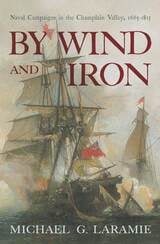
By Wind and Iron
Naval Campaigns in the Champlain Valley, 1665–1815Michael Laramie
Westholme Publishing, 2027
For more than 150 years, the natural invasion route along the waterways of the Champlain and Richelieu valleys into northeastern North America was among the most fiercely contested in the history of the continent. Whether the French and their Indian allies attacking British forts and settlements during the Seven Years’ War, the American Continentals striking north into Canada during the American Revolution, or the British battling French and later American forces in these wars and the War of 1812, it was clear to policy makers in Quebec, London, Paris, Philadelphia, and Washington that whoever controlled this corridor and its lakes and rivers, controlled the heart of the continent. In By Wind and Iron: Naval Campaigns in the Champlain Valley, 1665–1815, Michael G. Laramie details the maritime history of this region from the first French fortifications along the Richelieu River in the late seventeenth century through the tremendous American victory over the British at the Battle of Plattsburgh on Lake Champlain in 1814. Using period letters, journals, and other primary source materials, the author examines the northeastern waterways and their tributaries within the framework of the soldiers and sailors who faced the perils of the campaigns, while at the same time clarifying the key role played by this region in the greater struggle for North America and American independence.
In support of the narrative, the book also contains appendices that include after action reports from various fleet commanders, tables of fleet strengths, additional battle maps, a glossary, and a dictionary of lake warships with notes on vessel types, typical armament, construction, deployment, and fates.