Results by title
662 books match the query 'China' and 24 start with b
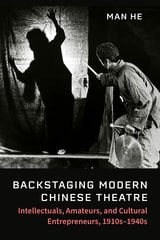
Backstaging Modern Chinese Theatre
Intellectuals, Amateurs, and Cultural Entrepreneurs, 1910s–1940sMan He
University of Michigan Press, 2025
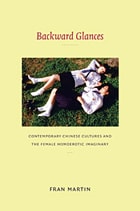
Backward Glances
Contemporary Chinese Cultures and the Female Homoerotic ImaginaryFran Martin
Duke University Press, 2010
As Martin explains, memorial schoolgirl love stories are popular throughout contemporary Chinese cultures. The same-sex attracted young woman appears in both openly homophobic and proudly queer-affirmative narratives, as well as in stories whose ideological valence is less immediately clear. Martin demonstrates that the stories, television programs, and films she analyzes are not idiosyncratic depictions of marginal figures, but manifestations of a broader, mainstream cultural preoccupation. Her investigation of representations of same-sex love between women sheds new light on contemporary Chinese understandings of sex, love, gender, marriage, and the cultural ordering of human life.
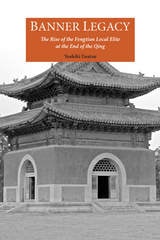
Banner Legacy
The Rise of the Fengtian Local Elite at the End of the QingYoshiki Enatsu
University of Michigan Press, 2004
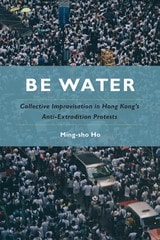
Be Water
Collective Improvisation in Hong Kong's Anti-Extradition ProtestsMing-sho Ho
Temple University Press, 2025
In Be Water, Ming-sho Ho examines the dynamics of the city-wide uprising from the perspective of agency power. He seeks to understand how numerous and anonymous Hongkongers contributed to this epoch-making campaign as well as how they responded to the full-scale state repression that enveloped them. Ho praises and questions the durability of the inventive Be Water Revolution and how the activists encouraged protests spontaneously, through interpersonal networks and by voluntarily collaborating with strangers at great personal risk.
Ho posits a new concept of “collective improvisation” to make sense of such a decentralized yet creative way of protesting. Be Water seeks to understand the rise and long afterlife of this movement and illustrate its efficacy. As Ho shows, these dynamics of collective improvisation have implications for contemporary protest movements around the world.
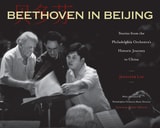
Beethoven in Beijing
Stories from the Philadelphia Orchestra's Historic Journey to ChinaJennifer Lin
Temple University Press, 2022
In 1973, Western music was banned in the People’s Republic of China. But in a remarkable breakthrough cultural exchange, the Philadelphia Orchestra conducted a tour of closed-off China, becoming the first American orchestra to visit the communist nation. Jennifer Lin’s Beethoven in Beijing provides a fabulous photo-rich oral history of this boundary-breaking series of concerts the orchestra performed under famed conductor Eugene Ormandy.
Lin draws from interviews, personal diaries, and news accounts to give voice to the American and Chinese musicians, diplomats, journalists, and others who participated in and witnessed this historic event. Beethoven in Beijing is filled with glorious images as well as anecdotes ranging from amusing sidewalk Frisbee sessions and acupuncture treatments for sore musicians to a tense encounter involving Madame Mao dictating which symphony was to be played at a concert.
A companion volume to the film of the same name, Beethoven in Beijing shows how this 1973 tour came at the dawn of a resurgence of interest in classical music in China—now a vital source of revenue for touring orchestras.
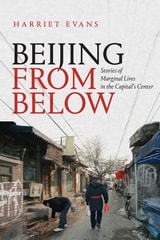
Beijing from Below
Stories of Marginal Lives in the Capital's CenterHarriet Evans
Duke University Press, 2020
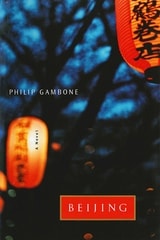
Beijing
A NovelPhilip Gambone
University of Wisconsin Press, 2003
Escaping his ghosts, AIDS widower David Masiello accepts a one-year position at a Western medical clinic in Beijing. Lonely but excited, he sets out to explore the city—both its bustling street life and its clandestine gay subculture.
David chronicles his adventures in China as he wrestles with cultural dislocation, loneliness, and sexual and spiritual longing. After a series of both comic and poignant encounters with gay Chinese men, he meets Bosheng, a handsome young artist. Though the attraction is strong, a difficult courtship ensues, during which Bosheng returns to his ancestral village to marry the girl his parents have chosen for him. Eventually, and quite unexpectedly, David and Bosheng reconnect and share an idyllic spring together. As the year ends, David must decide whether to say goodbye or face the uncertainties of a long-distance relationship.
Gambone’s novel is peopled with a host of wonderfully memorable characters: Owen, David’s forthright best friend back home; Auntie Chen, the clinic’s office mom, who wants to fix David up with a girlfriend; Stewart, David’s Beijing roommate, a graduate student doing research on Peking opera; Jiantao and Guoyang, two lovers who lecture David on the fleeting quality of American romance; and Tyson, the Australian doctor with a Chinese girlfriend, who hopes to teach David that love doesn’t need any explanations or justifications.
Being Chinese, Becoming Chinese American
Shehong Chen
University of Illinois Press, 2002
The 1911 revolution in China sparked debates that politicized and divided Chinese communities in the United States. People in these communities affirmed traditional Chinese values and expressed their visions of a modern China, while nationalist feelings emboldened them to stand up for their rights as an integral part of American society. When Japan threatened the China's young republic, the Chinese response in the United States revealed the limits of Chinese nationalism and the emergence of a Chinese American identity.
Shehong Chen investigates how Chinese immigrants to the United States transformed themselves into Chinese Americans during the crucial period between 1911 and 1927. Chen focuses on four essential elements of a distinct Chinese American identity: support for republicanism over the restoration of monarchy; a wish to preserve Confucianism and traditional Chinese culture; support for Christianity, despite a strong anti-Christian movement in China; and opposition to the Nationalist party's alliance with the Soviet Union and cooperation with the Chinese Communist Party.
Sensitive and enlightening, Being Chinese, Becoming Chinese American documents how Chinese immigrants survived exclusion and discrimination, envisioned and maintained Chineseness, and adapted to American society.
Best Practice
Management Consulting and the Ethics of Financialization in ChinaKimberly Chong
Duke University Press, 2018
Betting on Macau
Casino Capitalism and China's Consumer RevolutionTim Simpson
University of Minnesota Press, 2023
A comprehensive look into how Macau’s recent decades of gambling-related growth produced one of the wealthiest territories on the planet
Betting on Macau delves into the radical transformation of what was formerly the last remaining European territory in Asia, returned to the People’s Republic of China in 1999 after nearly half a millennium of Portuguese rule. Examining the unprecedented scale of its development and its key role in China’s economic revolution, Tim Simpson follows Macau’s emergence from historical obscurity to become the most profitable casino gaming locale in the world.
Identified as a UNESCO World Heritage Site and renowned for its unique blend of Chinese and Portuguese colonial-era architecture, contemporary Macau has metamorphosed into a surreal, hypermodern urban landscape augmented by massive casino megaresorts, including two of the world’s largest buildings. Simpson situates Macau’s origins as a strategic trading port and its ensuing history alongside the emergence of the global capitalist system, charting the massive influx of foreign investment, construction, and tourism in the past two decades that helped generate the territory’s enormous wealth.
Presented through a cross section of postcolonial studies and social theory with extensive insight into the global gambling industry, Betting on Macau uncovers the various roots of the territory’s lucrative casino capitalism. In turn, its trenchant analysis provides a distinctive view into China’s broader project of urbanization, its post-Mao economic reforms, and the continued rise of its consumer culture.
Between Families and Institutions
Mental Health and Biopolitical Paternalism in Contemporary ChinaZhiying Ma
Duke University Press, 2025
Between Foreign and Family
Return Migration and Identity Construction among Korean Americans and Korean ChineseLee, Helene K
Rutgers University Press, 2018
Between Foreign and Family explores the impact of inconsistent rules of ethnic inclusion and exclusion on the economic and social lives of Korean Americans and Korean Chinese living in Seoul. These actors are part of a growing number of return migrants, members of an ethnic diaspora who migrate “back” to the ancestral homeland from which their families emigrated. Drawing on ethnographic observations and interview data, Helene K. Lee highlights the “logics of transnationalism” that shape the relationships between these return migrants and their employers, co-workers, friends, family, and the South Korean state.
While Koreanness marks these return migrants as outsiders who never truly feel at home in the United States and China, it simultaneously traps them into a liminal space in which they are neither fully family, nor fully foreign in South Korea. Return migration reveals how ethnic identity construction is not an indisputable and universal fact defined by blood and ancestry, but a contested and uneven process informed by the interplay of ethnicity, nationality, citizenship, gender, and history.
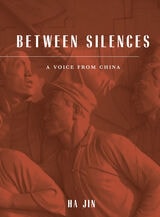
Between Silences
A Voice from ChinaHa Jin
University of Chicago Press, 1990
"In these poems Ha Jin gives voice to the millions whose lives were altered and whose tongues were silenced by the Cultural Revolution. . . .If Ha Jin speaks in tongues in these poems, we feel him behind those voices—the hidden director behind the scenes—never as a presence filled with stridency and self-congratulation; he brings a great empathy and compassion to his depiction of the fallible men and women whose acts and attitudes together make up history."—Roger Gilbert, Hungry Mind Review
Between Two Plenums
China’s Intraleadership Conflict, 1959–1962Ellis Joffe
University of Michigan Press, 1975
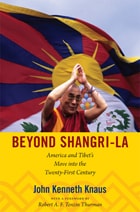
Beyond Shangri-La
America and Tibet's Move into the Twenty-First CenturyJohn Kenneth Knaus
Duke University Press, 2012
Since the late 1950s, the rugged resolve of the Dalai Lama and his people and the growing respect for their efforts to free their homeland from Chinese occupation have made Tibet's political and cultural status a pressing issue in international affairs. So has the realization by nations, including the United States, that their geopolitical interests would best be served by the defeat of the Chinese and the achievement of Tibetan self-determination. Beyond Shangri-La provides unique insight into the efforts of the U.S. government and committed U.S. citizens to support a free Tibet.
Beyond the Iron Rice Bowl
Regimes of Production and Industrial Relations in ChinaBoy Lüthje, Siqi Luo, and Hao Zhang
Campus Verlag, 2013
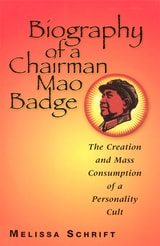
Biography of a Chairman Mao Badge
The Creation and Mass Consumption of a Personality CultMelissa Schrift
Rutgers University Press, 2001
As China now enters an era in which people can more openly express their views about the Cultural Revolution, these icons have taken on new meanings, and people are wearing and talking about them in subversive ways. Melissa Schrift suggests that the badges developed "lives" that far surpass the intentions of their creators, as the Chinese ironically commodified them, both during the Cultural Revolution and today. During the Mao years, people wore the objects to symbolize their unquestioned loyalty to Mao. Yet even then many Chinese subverted the badges' symbolic meaning. Using them in socially approved rituals, they gained a measure of political credibility that masked their practice of prohibited customary rites.
Biography of a Chairman Mao Badge is a work of cultural history that contributes to our understanding not only of Chinese society but, more generally, of strategies people employ in responding to and transforming the meaning of propaganda campaigns and symbols.
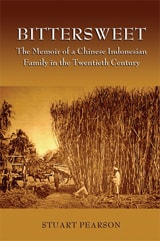
BitterSweet
The Memoir of a Chinese-Indonesian Family in the Twentieth CenturyStuart Pearson
Ohio University Press, 2008
BitterSweet is the account of one Chinese-Indonesian family whose story stretches over the generations as their fortunes waxed and waned through revolution, riots, war, depression, occupation, and finally emigration to yet another country—Australia.
BitterSweet offers a unique insight into a world rarely seen before. An Sudibjo’s memoir, written from a woman’s perspective, is a valuable resource for anyone studying Indonesian history or the Chinese Diaspora.
Blessings from Beijing
Inside China's Soft-Power War on TibetGreg C. Bruno
University Press of New England, 2018
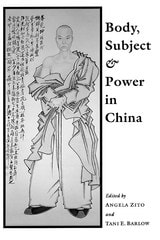
Body, Subject, and Power in China
Edited by Angela Zito and Tani E. Barlow
University of Chicago Press, 1994
Contributors investigate problems of bodiliness, engendered subjectivities, and discourses of power through a variety of sources that include written texts, paintings, buildings, interviews, and observations. Taken together, the essays show that bodies in China have been classified, represented, discussed, ritualized, gendered, and eroticized in ways as rich and multiple as those described in critical histories of the West. Silk robes, rocks, winds, gestures of bowing, yin yang hierarchies, and cross-dressing have helped create experiences of the body specific to Chinese historical life. By pointing to multiple examples of reimagining subjectivity and renegotiating power, the essays encourage scholars to avoid making broad generalizations about China and to rethink traditional notions of power, subject, and bodiliness in light of actual Chinese practices. Body, Subject, and Power in China is at once an example of the changing face of China studies and a work of importance to the entire discipline of cultural studies.
Borderland Dreams
The Transnational Lives of Korean Chinese WorkersJune Hee Kwon
Duke University Press, 2023
Borders of Chinese Civilization
Geography and History at Empire's EndD. R. Howland
Duke University Press, 1996
With Japan’s decision in the 1870s to modernize and westernize, China’s relationship with Japan underwent a crucial change—one that resulted in its decisive separation from Chinese civilization and, according to Howland, a destabilization of China’s worldview. His examination of the ways in which Chinese perceptions of Japan altered in the 1880s reveals the crucial choice faced by the Chinese of whether to interact with Japan as “kin,” based on geographical proximity and the existence of common cultural threads, or as a “barbarian,” an alien force molded by European influence.
By probing China’s poetic and expository modes of portraying Japan, Borders of Chinese Civilization exposes the changing world of the nineteenth century and China’s comprehension of it. This broadly appealing work will engage scholars in the fields of Asian studies, Chinese literature, history, and geography, as well as those interested in theoretical reflections on travel or modernism.

Brutal Ephemerality
Migrant Temporalities on China's Urban FringeYang Zhan
University of Michigan Press, 2027
How do you build a hopeful future when your present is designed to be temporary? Brutal Ephemerality reveals that the sprawling urban villages on the edge of megacities such as Beijing aren’t slums that grew by accident. Instead, urban villages are intentionally kept in a state of uncertainty, allowing the city to have a ready supply of cheap land and flexible labor to fuel its rapid growth. Yang Zhan proposes the concept of “migrant venturers” (chuǎngdàng de rén) and argues that “venturing” (chuǎngdàng) represents a distinct survival strategy of mobility, risk-taking, and opportunity seeking, rather than rooting oneself in a specific place or profession. This strategy is an active practice of “future-making”—an effort to project a meaningful future from an uncertain present.
Brutal Ephemerality demonstrates how time is not a neutral backdrop, but the central arena for political struggle, ethical practice, and imaginative creation among marginalized groups. Zhan shows how hope and suffering are paradoxically intertwined, and how the very struggle for a better life can, itself, become a source of harm.
Building Globalization
Transnational Architecture Production in Urban ChinaXuefei Ren
University of Chicago Press, 2011
From the years 2004 to 2008, Beijing and Shanghai witnessed the construction of an extraordinary number of new buildings, many of which were designed by architectural firms overseas. Combining ethnographic fieldwork, historical research, and network analysis, Building Globalization closely scrutinizes the growing phenomenon of transnational architecture and its profound effect on the development of urban space.
Roaming from construction sites in Shanghai to architects’ offices in Paris, Xuefei Ren interviews hundreds of architects, developers, politicians, residents, and activists to explore this issue. She finds that in the rapidly transforming cities of modern China, iconic designs from prestigious international architects help private developers to distinguish their projects, government officials to advance their careers, and the Chinese state to announce the arrival of modern China on the world stage.
China leads the way in the globalization of architecture, a process whose ramifications can be felt from Beijing to Dubai to Basel. Connecting the dots between real estate speculation, megaproject construction, residential displacement, historical preservation, housing rights, and urban activism, Building Globalization reveals the contradictions and consequences of this new, global urban frontier.