Results by title
205 books match the query 'City' and 9 start with b

Belfast
Segregation, Violence and the CityPeter Shirlow and Brendan Murtagh
Pluto Press, 2006
The book offers a vivid portrait of the human drama and brutality of the conflict in Belfast. The authors argue that the control of place remains the most important weapon in the politicization of communities and the reproduction of political violence. Segregation provides the laboratory within which sectarianism continues to grow. Examining the implications of these social divisions, the authors draw upon a wide international literature and provide insights that will be useful to students of geography, planning, politics, sociology and peace studies.
Believing in South Central
Everyday Islam in the City of AngelsPamela J. Prickett
University of Chicago Press, 2021
Prickett offers deep insights into the day-to-day lived religion of the Muslims who call this community home, showing how the mosque provides a system of social support and how believers deepen their spiritual practice not in spite of, but through, conditions of poverty. Prickett breaks past the stigmas of urban poverty, revealing a complex and vibrant community by telling the stories of longstanding residents of South Central—like Sister Ava, who offers food to the local unhoused people and finds the sacred in her extensive DVD collection. In addition to her portraits of everyday life among Muslims in South Central, Prickett also provides vivid and accessible descriptions of Ramadan and histories of the mosque, situates this community within the larger story of the Nation of Islam, explores gender issues, and unpacks the interaction between African American Muslims and South Asian and Arab American Muslims, revealing both the global and local significance of this religious tradition.
Beyond the City and the Bridge
East Asian Immigration in a New Jersey SuburbMatsumoto, Noriko
Rutgers University Press, 2018
Winner of the Richard P. McCormick Prize from the New Jersey Historical Association
Honorable Mention, 2019 American Sociological Association Book Award - Asia/Asian American Section
In recent decades, the American suburbs have become an important site for immigrant settlement. Beyond the City and the Bridge presents a case study of Fort Lee, Bergen County, on the west side of the George Washington Bridge connecting Manhattan and New Jersey. Since the 1970s, successive waves of immigrants from East Asia have transformed this formerly white community into one of the most diverse suburbs in the greater New York region. Fort Lee today has one of the largest concentrations of East Asians of any suburb on the East Coast, with Chinese, Japanese, and Koreans forming distinct communities while influencing the structure and everyday life of the borough. Noriko Matsumoto explores the rise of this multiethnic suburb—the complex processes of assimilation and reproduction of ethnicities, the changing social relationships, and the conditions under which such transformations have occurred.
Beyond the City
Resource Extraction Urbanism in South AmericaBy Felipe Correa
University of Texas Press, 2016
During the last decade, the South American continent has seen a strong push for transnational integration, initiated by the former Brazilian president Fernando Henrique Cardoso, who (with the endorsement of eleven other nations) spearheaded the Initiative for the Integration of Regional Infrastructure in South America (IIRSA), a comprehensive energy, transport, and communications network. The most aggressive transcontinental integration project ever planned for South America, the initiative systematically deploys ten east-west infrastructural corridors, enhancing economic development but raising important questions about the polarizing effect of pitting regional needs against the colossal processes of resource extraction. Providing much-needed historical contextualization to IIRSA’s agenda, Beyond the City ties together a series of spatial models and offers a survey of regional strategies in five case studies of often overlooked sites built outside the traditional South American urban constructs.
Implementing the term “resource extraction urbanism,” the architect and urbanist Felipe Correa takes us from Brazil’s nineteenth-century regional capital city of Belo Horizonte to the experimental, circular, “temporary” city of Vila Piloto in Três Lagoas. In Chile, he surveys the mining town of María Elena. In Venezuela, he explores petrochemical encampments at Judibana and El Tablazo, as well as new industrial frontiers at Ciudad Guayana. The result is both a cautionary tale, bringing to light a history of societies that were “inscribed” and administered, and a perceptive examination of the agency of architecture and urban planning in shaping South American lives.
Black on the Block
The Politics of Race and Class in the CityMary Pattillo
University of Chicago Press, 2007
“To see how diversity creates strange and sometimes awkward bedfellows . . . turn to Mary Pattillo's Black on the Block.”—Boston Globe
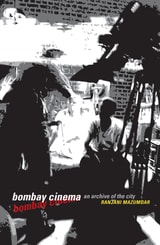
Bombay Cinema
An Archive of the CityRanjani Mazumdar
University of Minnesota Press, 2007
In this analysis of the cinematic city, Mazumdar reveals a complex postnationalist world, convulsed by the social crisis of the 1970s and transformed by the experience of globalization in the 1990s. She argues that the upheaval of postcolonial nationalism led to Bombay cinema’s articulation of urban life in entirely new terms. Specifically, the place of the village in the imaginary constitution of anticolonial nationalism gave way to a greater acknowledgment, even centrality, of urban space. Bombay Cinema takes the reader on an inventive journey through a cinematic city of mass crowds, violence, fashion, architectural fantasies, and subcultural identities. Moving through the world of gangsters and vamps, families and drifters, and heroes and villains, Bombay Cinema explores an urban landscape marked by industrial decline, civic crisis, working-class disenchantment, and diverse street life.Combining the anecdotal with the theoretical, the philosophical with the political, and the textual with the historical, Bombay Cinema leads the reader into the heart of the urban labyrinth in India, revising and deepening our understanding of both the city and the cinema.
"A landmark study—carefully researched, well organized and offering refreshingly uncondescending and strikingly insightful discussions of mainstream films—that deserves to be read by anyone interested in India's popular cinema or its contemporary urban life." —Journal of Asian Studies
"Bombay Cinema is an exciting and important contribution to a field that has, to date, been under researched and under theorized. Lively, provocative and richly suggestive, it will also serve as a surefire incentive to watch those films all over again." —Screen
"Here, at last, is a book length study on Cinema in India that does not get locked into a dance of hermetic closure between what transpires on screen and a set of stock off screen textual and cultural references, but more importantly, walks the streets where the films are set, looks at shop windows, publicity material, costumes, fashion, architecture, telecommunications and the concrete materiality that surrounds the film object." —Seminar
"Bombay Cinema is lucid, provocative, stylish and substantial. It is an illuminating scholarly study that spares no effort to bring Bombay cinema out of the academic closet." —The Book Review India
"Departing from the obsession that Film Studies in India has displayed with the idea of cinema as a national allegory, the book convincingly argues for the need to examine the city's hidden archive as one that cannot be subsumed within the sign of the national." —Biblio
"Mazumdar has a great capacity to discuss Indian cinema, with a brilliant grasp of its political, historical, and aesthetic developments, but equally she is well attuned to the interests and ruptures in the academic discourse of film and cinema studies."—Film International
"Mazumdar's experience as a filmmaker allowed her to offer significant readings of not just the narratives and character development in the films, but of the cinematography, mise-en-scene, and other technical and performance aspects of production." —Journal of Popular Culture
"At once about Hindi films, spatial practices, urban modernity and globalization . . . the strength of Bombay Cinema lies in bringing all of them together in a productive conversation.” —Economic and Political Weekly
"Bombay Cinema is methodologically challenging in its deployment of moments rather than discursiveformations of film as text. The book also refuses to read film alone, but interprets the medium alongside the detailed insights of people involved in making them, and with the recent history of Bombay, within which the film industry is located. In Mazumdar's evocative reading of the films she engages with, the cinematic city becomes the space of critique of the nation, the site of the ruin of the modern nationalist project." —Contemporary South Asia
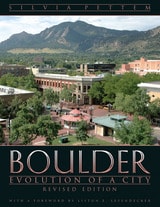
Boulder
Evolution of a City, Revised EditionSilvia Pettem
University Press of Colorado, 2006
Pettem devotes the first chapter to an introduction of the early photographers whose work appears throughout the book. Moving outward from the central business district as development did, each subsequent chapter focuses on a particular area in Boulder, with an introductory essay followed by historic and contemporary photographs with detailed captions.
Broadway Rhythm
Imaging the City in SongDominic Symonds
University of Michigan Press, 2017
Through musicological analyses of works by Gershwin, Bernstein, Copland, Sondheim and others, the author proposes that performance cartography is a versatile methodology for urban theory, and establishes a methodological approach that uses the idea of the map in three ways: as an impetus, a metaphor, and a tool for exploring the city.
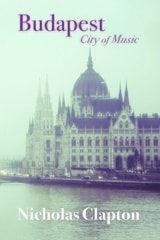
Budapest
City of MusicNicholas Clapton
Haus Publishing, 2017
With rich musical traditions, both classical and folk, and possessing a language like almost no other, Hungary is in the process of abandoning the trappings of its communist past while attempting to preserve its culture from creeping globalization. Clapton delights in the fact that certain old-fashioned attitudes of courtesy, at times stemming from the very structures of the Magyar tongue, are still deeply ingrained in Hungarian society. At the same time, despite its association with world-famous composers such as Bartók, Liszt, and Kodály, music is far from an activity enjoyed only by the elite. Including plenty of tips on food, drink, and sites of interest, Budapest describes the capital in uniquely melodic terms and will delight lovers of travel and music alike.