Results by title
188 books match the query 'City planning' and 8 start with b
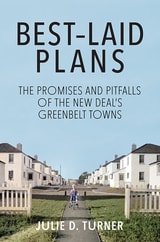
Best-Laid Plans
The Promises and Pitfalls of the New Deal Greenbelt TownsJulie D. Turner
University of Minnesota Press, 2022
In 1935, under the direction of the Resettlement Administration, the United States government embarked on a New Deal program to construct new suburban towns for the working class. Teams of architects, engineers, and city planners, along with thousands of workers, brought three such communities to life: Greenbelt, Maryland; Greendale, Wisconsin; and Greenhills, Ohio. President Franklin Roosevelt saw this as a way to create jobs. Resettlement Administration head Rexford Tugwell longed to improve the living conditions of the nation’s underclass.
In Best-Laid Plans, Julie Turner identifies where the Greenbelt Towns succeeded and where they failed. The program suffered under the burden of too many competing goals: maximum job creation at minimal cost, exquisite town planning that would provide modest residences for low-income families, progressive innovation that would serve to honor and reinforce traditional American values. Yet the Greenbelt program succeeded in one respect—providing new homes in well-planned communities that continue to welcome residents.
Town planning and suburbanization did not follow the blueprint of the Greenbelt model and instead took a turn toward the suburban sprawl we know today. The Greenbelt towns may represent an unrealistic dream, but they show an imagined way of American life that continues to appeal and hints at what might have been possible.
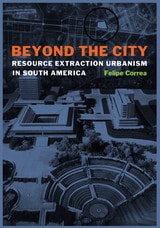
Beyond the City
Resource Extraction Urbanism in South AmericaBy Felipe Correa
University of Texas Press, 2016
During the last decade, the South American continent has seen a strong push for transnational integration, initiated by the former Brazilian president Fernando Henrique Cardoso, who (with the endorsement of eleven other nations) spearheaded the Initiative for the Integration of Regional Infrastructure in South America (IIRSA), a comprehensive energy, transport, and communications network. The most aggressive transcontinental integration project ever planned for South America, the initiative systematically deploys ten east-west infrastructural corridors, enhancing economic development but raising important questions about the polarizing effect of pitting regional needs against the colossal processes of resource extraction. Providing much-needed historical contextualization to IIRSA’s agenda, Beyond the City ties together a series of spatial models and offers a survey of regional strategies in five case studies of often overlooked sites built outside the traditional South American urban constructs.
Implementing the term “resource extraction urbanism,” the architect and urbanist Felipe Correa takes us from Brazil’s nineteenth-century regional capital city of Belo Horizonte to the experimental, circular, “temporary” city of Vila Piloto in Três Lagoas. In Chile, he surveys the mining town of María Elena. In Venezuela, he explores petrochemical encampments at Judibana and El Tablazo, as well as new industrial frontiers at Ciudad Guayana. The result is both a cautionary tale, bringing to light a history of societies that were “inscribed” and administered, and a perceptive examination of the agency of architecture and urban planning in shaping South American lives.
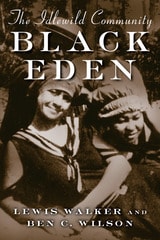
Black Eden
The Idlewild CommunityLewis Walker
Michigan State University Press, 2002
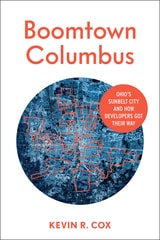
Boomtown Columbus
Ohio’s Sunbelt City and How Developers Got Their WayKevin R. Cox
The Ohio State University Press, 2021
How have development interests become entwined with government? How has a policy of annexation reformed the city’s map? Why have airline service and major league prestige lagged behind its status as a regional center? And what, if anything, makes this city with a reputation for being average stand apart? In Boomtown Columbus, Cox applies both scholarly expertise and his personal experience as a long-time resident of the city to look at the real-life costs of policy. The resulting narrative will fascinate not only locals but anyone with a stake in understanding American cities and a path toward urban livability for all.
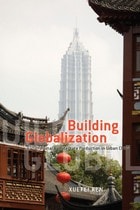
Building Globalization
Transnational Architecture Production in Urban ChinaXuefei Ren
University of Chicago Press, 2011
From the years 2004 to 2008, Beijing and Shanghai witnessed the construction of an extraordinary number of new buildings, many of which were designed by architectural firms overseas. Combining ethnographic fieldwork, historical research, and network analysis, Building Globalization closely scrutinizes the growing phenomenon of transnational architecture and its profound effect on the development of urban space.
Roaming from construction sites in Shanghai to architects’ offices in Paris, Xuefei Ren interviews hundreds of architects, developers, politicians, residents, and activists to explore this issue. She finds that in the rapidly transforming cities of modern China, iconic designs from prestigious international architects help private developers to distinguish their projects, government officials to advance their careers, and the Chinese state to announce the arrival of modern China on the world stage.
China leads the way in the globalization of architecture, a process whose ramifications can be felt from Beijing to Dubai to Basel. Connecting the dots between real estate speculation, megaproject construction, residential displacement, historical preservation, housing rights, and urban activism, Building Globalization reveals the contradictions and consequences of this new, global urban frontier.
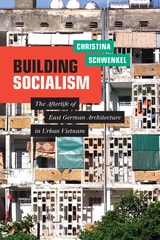
Building Socialism
The Afterlife of East German Architecture in Urban VietnamChristina Schwenkel
Duke University Press, 2020
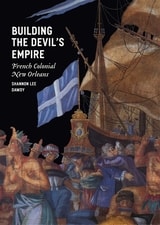
Building the Devil's Empire
French Colonial New OrleansShannon Lee Dawdy
University of Chicago Press, 2008
Building the Devil’s Empire is the first comprehensive history of New Orleans’s early years, tracing the town’s development from its origins in 1718 to its revolt against Spanish rule in 1768. Shannon Lee Dawdy’s picaresque account of New Orleans’s wild youth features a cast of strong-willed captives, thin-skinned nobles, sharp-tongued women, and carousing travelers. But she also widens her lens to reveal the port city’s global significance, examining its role in the French Empire and the Caribbean, and she concludes that by exemplifying a kind of rogue colonialism—where governments, outlaws, and capitalism become entwined—New Orleans should prompt us to reconsider our notions of how colonialism works.
"[A] penetrating study of the colony's founding."—Nation
“A brilliant and spirited reinterpretation of the emergence of French New Orleans. Dawdy leads us deep into the daily life of the city, and along the many paths that connected it to France, the North American interior, and the Greater Caribbean. A major contribution to our understanding of the history of the Americas and of the French Atlantic, the work is also a model of interdisciplinary research and analysis, skillfully bringing together archival research, archaeology, and literary analysis.”—Laurent Dubois, Duke University
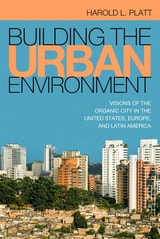
Building the Urban Environment
Visions of the Organic City in the United States, Europe, and Latin AmericaHarold L Platt
Temple University Press, 2015
Building the Urban Environment is a comparative study of the contestation among planners, policymakers, and the grassroots over the production and meaning of urban space. Award-winning historian Harold Platt presents case studies of seven cities, including Rotterdam, Chicago, and Sao Paulo, to show how, over time, urban life created hybrid spaces that transformed people, culture, and their environments.
As Platt explains, during the post-1945 race to technological modernization, policymakers gave urban planners of the International Style extraordinary influence to build their utopian vision of a self-sustaining “organic city.” However, in the 1960s, they faced a revolt of the grassroots. Building the Urban Environment traces the rise and fall of the Modernist planners during an era of Cold War, urban crisis, unnatural disasters, and global restructuring in the wake of the oil-energy embargo of the ’70s.
Ultimately, Platt provides a way to measure different visions of the postwar city against actual results in terms of the built environment, contrasting how each city created a unique urban space.