Results by title
341 books match the query 'Cooking' and 20 start with b

Baking Powder Wars
The Cutthroat Food Fight that Revolutionized CookingLinda Civitello
University of Illinois Press, 2017
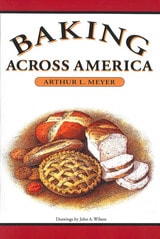
Baking across America
By Arthur L. Meyer
University of Texas Press, 1998
Whether it's a slice of warm bread and butter, a Thanksgiving pumpkin pie, or a piece of cake, baked goods have been among America's favorite comfort foods ever since the Pilgrims arrived. From the days of hand mixing and baking on the hearth to today's use of food processors and electric ranges, American cooks have created an amazing variety of breads and baked goods that are as distinctive as the cultures from which we came.
Spanning colonial times to the present and every region of the United States, this book is a comprehensive guide to baking in America. Certified master baker Arthur L. Meyer brings together some 700 kitchen-tested recipes for America's favorite breads, pies, cakes, and cookies. Compiled from almost 300 regional cookbooks dating from the 1890s to the 1980s, these are the authentic recipes for the traditional baked goods of every part of our country. In these pages, you'll find regional specialties such as Appalachian Buttermilk Cracklin' Bread and Hawaiian Pineapple-Macadamia Bread, as well as old family recipes.
In addition to the recipes, Meyer offers a fascinating overview of the history of baking in America, complete with descriptions of early breads, pies, cakes, and cookies. Whether you're a home or professional baker, a food historian, or someone who just enjoys reading cookbooks, you're sure to find lots of tasty treats here. Let Baking across America become your basic source for all the baked goodies Americans love to eat.
Baking, Bourbon, and Black Drink
Foodways Archaeology in the American SoutheastEdited by Tanya M. Peres and Aaron Deter-Wolf
University of Alabama Press, 2018
Discover the deep cultural roots of Southern cuisine through archaeology.
Understanding and explaining societal rules surrounding food and foodways have been the foci of anthropological studies since the early days of the discipline. Baking, Bourbon, and Black Drink: Foodways Archaeology in the American Southeast, however, is the first collection devoted exclusively to southeastern foodways analyzed through archaeological perspectives. These essays examine which foods were eaten and move the discussion of foodstuffs into the sociocultural realm of why, how, and when they were eaten.
Editors Tanya M. Peres and Aaron Deter-Wolf present a volume that moves beyond basic understandings, applying new methods or focusing on subjects not widely discussed in the Southeast to date. Chapters are arranged using the dominant research themes of feasting, social and political status, food security and persistent places, and foodways histories. Contributors provide in-depth examination of specific food topics such as bone marrow, turkey, Black Drink, bourbon, earth ovens, and hominy.
Contributors bring a broad range of expertise to the collection, resulting in an expansive look at all of the steps taken from field to table, including procurement, production, cooking, and consumption, all of which have embedded cultural meanings and traditions. The scope of the volume includes the diversity of research specialties brought to bear on the topic of foodways as well as the temporal and regional breadth and depth, the integration of multiple lines of evidence, and, in some cases, the reinvestigation of well-known sites with new questions and new data.

Balzac's Omelette
A Delicious Tour of French Food and Culture with Honore de BalzacAnkha Muhlstein
Haus Publishing, 2012
It is not a coincidence that Balzac was the first in French literature to tackle this appetizing topic. Before the French Revolution, a traveller in France was apt to find local food scarce, tasteless and of dubious appearance. Restaurants did not even exist! Just as the art of the table became a centrepiece of French mores, Balzac used it as a connecting thread in his novels, showing how food can evoke character, atmosphere, class and social pretensions. Full of insights, Balzac’s Omelette invites you to taste anew French literature and cuisine.
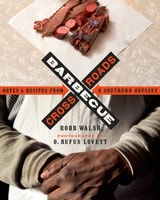
Barbecue Crossroads
Notes and Recipes from a Southern OdysseyBy Robb Walsh
University of Texas Press, 2013
In stories, recipes, and photographs, James Beard Award–winning writer Robb Walsh and acclaimed documentary photographer O. Rufus Lovett take us on a barbecue odyssey from East Texas to the Carolinas and back. In Barbecue Crossroads, we meet the pitmasters who still use old-fashioned wood-fired pits, and we sample some of their succulent pork shoulders, whole hogs, savory beef, sausage, mutton, and even some barbecued baloney. Recipes for these and the side dishes, sauces, and desserts that come with them are painstakingly recorded and tested.
But Barbecue Crossroads is more than a cookbook; it is a trip back to the roots of our oldest artisan food tradition and a look at how Southern culture is changing. Walsh and Lovett trace the lineage of Southern barbecue backwards through time as they travel across a part of the country where slow-cooked meat has long been part of everyday life. What they find is not one story, but many. They visit legendary joints that don’t live up to their reputations—and discover unknown places that deserve more attention. They tell us why the corporatizing of agriculture is making it difficult for pitmasters to afford hickory wood or find whole hogs that fit on a pit.
Walsh and Lovett also remind us of myriad ways that race weaves in and out of the barbecue story, from African American cooking techniques and recipes to the tastes of migrant farmworkers who ate their barbecue in meat markets, gas stations, and convenience stores because they weren’t welcome in restaurants. The authors also expose the ways that barbecue competitions and TV shows are undermining traditional barbecue culture. And they predict that the revival of the community barbecue tradition may well be its salvation.
Barbecue
The History of an American InstitutionRobert F. Moss
University of Alabama Press, 2010
The history of barbecue in the United States has until now remained virtually untold. Barbecue has a long, rich history—a history that could be found only through scattered references in old letters, journals, newspapers, diaries, and travel narratives until this book was written.
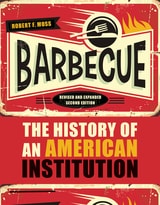
Barbecue
The History of an American Institution, Revised and Expanded Second EditionRobert F. Moss
University of Alabama Press, 2020
The definitive history of an iconic American food, with new chapters, sidebars, and updated historical accounts.
Expert Robert F. Moss researched hundreds of sources—newspapers, letters, journals, diaries, and travel narratives—to document the origins and evolution of barbecue from its origins among Native Americans to its present status as an icon of American culture. In this definitive guide, he maps out the development of the rich array of regional barbecue styles, chronicles the rise of barbecue restaurants, and profiles the famed pitmasters who made the tradition what it is today.
Barbecue is the story not just of a dish but also of a social institution that helped shape many regional cultures of the United States. The history begins with British colonists’ adoption of barbecuing techniques from Native Americans in the 17th and 18th centuries, moves to barbecue’s establishment as the preeminent form of public celebration in the 19th century, and is carried through to barbecue’s ubiquitous standing today.
From the very beginning, barbecues were powerful social magnets, drawing together people from a wide range of classes and geographic backgrounds. Barbecue played a key role in three centuries of American history, both reflecting and influencing the direction of an evolving society. By tracing the story of barbecue from its origins to today, Barbecue: The History of an American Institution traces the very thread of American social history.
Moss has made significant updates in this new edition, offering a wealth of new historical research, sources, illustrations, and anecdotes.
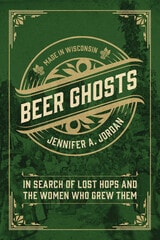
Beer Ghosts
In Search of Lost Hops and the Women Who Grew ThemJennifer A. Jordan
University of Chicago Press, 2026
The little-known story of the young women who played a vital role in the rise of America’s great breweries.
Water, malt, yeast, and hops: these are essential ingredients of beer. Hops, specifically, play an outsized role in determining its flavor and aroma. In Beer Ghosts, Jennifer Jordan takes us back to a brief but pivotal moment in the nineteenth century when Wisconsin produced much of the hops grown in the United States. Yet those long-ago hops are not the only ghosts in Jordan’s story. Haunting the pages of this book are the young women whose work at harvest time was key to the rise of the American beer industry.
Until the early twentieth century, the work of picking hops was a time-consuming process that could only be done by hand, one cone at a time. In nineteenth-century Wisconsin, that work was performed almost exclusively by women and girls, who traveled to hop farms in droves as summer came to a close and the harvest began. At the height of the hop boom in the 1860s, farmers and their families laid out beds and prepared food for tens of thousands of seasonal laborers, and hosted parties and dances well into the night. Despite the scale of Wisconsin’s hop boom (and subsequent crash), the industry left behind little trace aside from local records and archives. And it is that barely discernible trace that lures Jordan to dig deeper.
Jordan’s vivid prose takes us back to this era by drawing on a rich trove of archival sources, from the thousands of hop farmers in the agricultural census to the extraordinary diary of a single hop picker, a young woman named Ella. The history of beer is incomplete without the history of Ella and the others who labored in the hop fields and in the houses that hosted them. In this book, Jordan gives life and voice to these beer ghosts who call to us from the past, showing the rich connections between a nation’s beer and the lives that made it possible.
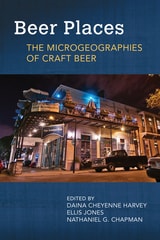
Beer Places
The Microgeographies of Craft BeerDaina Cheyenne Harvey
University of Arkansas Press, 2023
With insight from social scientists, beer bloggers, travel writers, and food entrepreneurs who recount their experiences of taprooms, breweries, and bottle shops from North Carolina to Zimbabwe, Beer Places reveals differences in the craft beer scene across multiple geographies. Situating craft beer as an emerging and important component of food studies, the essays in this volume attest to the singular power of craft beer to connect people and places.
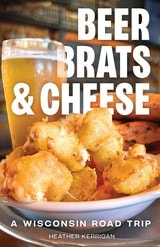
Beer, Brats, and Cheese
A Wisconsin Road TripHeather Kerrigan
University of Wisconsin Press, 2025
To thoroughly research this book, Heather Kerrigan undertook a twenty-six-hundred-mile road trip crisscrossing the Badger State, seeking the hidden gems that locals frequent. She visited Wisconsin’s best restaurants, creameries, breweries, butcher shops, and cheesemongers. In Beer, Brats, and Cheese, Kerrigan highlights the innovative flavors and unexpected delights found in these spots. Great beer isn’t made only in Milwaukee, Sheboygan doesn’t have a lock on the best bratwurst, and excellent cheeses don’t just come from Monroe County. In fact, there are towns large and small, from the far north to the Illinois border, from Door County to the Mississippi River, that contribute to the state’s amazing culinary experiences.
Whether you’re planning a bite-by-bite day trip or simply looking for a great place to eat or drink near home, this guide has you covered.
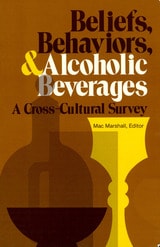
Beliefs, Behaviors, and Alcoholic Beverages
A Cross-Cultural SurveyMac Marshall, Editor
University of Michigan Press, 1979
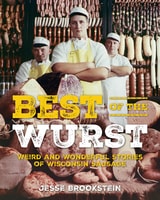
Best of the Wurst
Weird and Wonderful Stories of Wisconsin SausageJesse Brookstein
Wisconsin Historical Society Press, 2026
Sink your teeth into a big, bold, and unabashed celebration of a quintessential Wisconsin food.
Wisconsin is famous for its world-class cheeses and its “beer state” moniker. But every Wisconsinite knows that no tailgate party or backyard barbecue is complete without a grill full of sizzling hot brats. Or Polish sausages. Or good ol’ Oscar Mayer wieners. From charcuterie boards to chorizo, sausage is an essential ingredient in the state’s cultural identity. In this lively, comprehensive ode to the link, writer and storyteller Jesse Brookstein embarks on a quest to show why Wisconsin is the sausage maker to the world.
Best of the Wurst traces the long arc of sausage making in the state, starting with First Nations communities who used pemmican as a staple food source. It features subsequent immigrant groups—German, Polish, Italian, Thai, Mexican, and more—who brought their own sausage recipes and traditions, and lands squarely on today’s bustling sausage scene. A final chapter, “The Future of Sausage,” explores emerging trends, tastes, and technologies—offering a peek at what’s next for Wisconsin’s revered food.
Brookstein travels the state to meet the people behind the links and captures the culture, craft, and quirks that make Wisconsin sausages unlike those found anywhere else. Profiles of standout producers are threaded throughout, from household names like Usinger’s and Johnsonville to family-run shops that have fed communities for generations. Brookstein also highlights the professionals shaping the field today, including graduates of UW–Madison’s Master Meat Crafter Program and chefs who feature local sausage in their menus with pride.
Readers will get insights from master butchers, small-town sausage savants, big-name producers, and superfans reflecting on hotly debated topics like seasonings, casings, and the eternal question: “Should you parboil?” And memorable traditions—such as Sheboygan’s double brat on a hard roll, the ceremonial slicing of La Crosse’s Golden Brat, Madison’s world’s largest Brat Fest, and the show-stealing Milwaukee Brewers’ Famous Racing Sausages—showcase the sausage’s indelible mark on the state.
Featuring 150 color photos and packed with humor and an insider’s appreciation for the art of stuffing a perfect link, Best of the Wurst encases these stories, people, and places in a perfect blend of history and heart. Wisconsinites love eating sausages—and now you can enjoy reading about them too.

Black Hunger
Soul Food And AmericaDoris Witt
University of Minnesota Press, 2004
Explores the complex relationship between food and African American history
In 1889, the owners of a pancake mix witnessed the vaudeville performance of a white man in blackface and drag playing a character called Aunt Jemima. This character went on to become one of the most pervasive stereotypes of black women in the United States, embodying not only the pancakes she was appropriated to market but also post–Civil War race and gender hierarchies—including the subordination of African American women as servants and white fantasies of the nurturing mammy.
Using the history of Aunt Jemima as a springboard for exploring the relationship between food and African Americans, Black Hunger focuses on debates over soul food since the 1960s to illuminate a complex web of political, economic, religious, sexual, and racial tensions between whites and blacks and within the black community itself. Celebrated by many African Americans as a sacramental emblem of slavery and protest, soul food was simultaneously rejected by others as a manifestation of middle-class black “slumming.”
Highlighting the importance of food for men as well as women, Doris Witt traces the promotion of soul food by New York Times food writer Craig Claiborne and its prohibition by Nation of Islam leader Elijah Muhammad and comedian-turned-diet guru Dick Gregory. A discussion of cookbook author Vertamae Grosvenor, who distanced herself from the myth of plantation mammy by reimagining soul food as "vibration cooking," sets the stage for Witt's concluding argument that the bodies and appetites of African American women should be viewed as central to contemporary conversations about eating disorders and reproductive rights.
Witt draws on vaudeville, literature, film, visual art, and cookbooks to explore how food has been used both to perpetuate and to challenge racial stereotypes. Raising her fist in a Black Power salute, wielding her spatula like a sword, Aunt Jemima steps off the pancake box in a righteous fury.

Books and My Food
Literary Quotations and Recipes for Every YearElisabeth L. Cary
University of Iowa Press, 1997
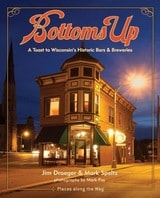
Bottoms Up
A Toast to Wisconsin's Historic Bars and BreweriesJim Draeger
Wisconsin Historical Society Press, 2017
Bottoms Up celebrates Wisconsin’s taverns and the breweries that fueled them. Beginning with inns and saloons, the book explores the rise of taverns and breweries, the effects of temperance and Prohibition, and attitudes about gender, ethnicity, and morality. It traces the development of the megabreweries, dominance of the giants, and the emergence of microbreweries. Contemporary photographs of unusual and distinctive bars and breweries of all eras, historical photos, postcards, advertisements, and breweriana illustrate the story of how Wisconsin came to dominate brewing—and the place that bars and beer hold in our social and cultural history.
Seventy featured taverns and breweries represent diverse architectural styles, from the open-air Tom’s Burned Down Cafe on Madeline Island to the Art Moderne Casino in La Crosse, and from Club 10, a 1930s roadhouse in Stevens Point, to the well-known Wolski’s Tavern in Milwaukee. There are bars in barns and basements and brewpubs in former ice cream factories and railroad depots. Bottoms Up also includes a heady mix of such beer-related topics as ice harvesting, barrel making, bar games, Old-Fashioneds, bar fixtures, and the queen of the bootleggers. Now in paperback for the first time!

Bread of Dreams
Food and Fantasy in Early Modern EuropePiero Camporesi
University of Chicago Press, 1989
"Camporesi is as much a poet as a historian. . . . His appeal is to the senses as well as to the mind. . . . Fascinating in its details and compelling in its overall message."—Vivian Nutton, Times Literary Supplement
"It is not often that an academic monograph in history is also a book to fascinate the discriminating general reader. Bread of Dreams is just that."—Kenneth McNaught, Toronto Star
"Not religion but bread was the opiate of the poor, Mr. Camporesi argues. . . . Food has always been a social and mythological construct that conditions what we vainly imagine to be matters of personal taste. Our hunger for such works should tell us that food is not only good but essential to think and to read as if our lives depended on it, which they do."—Betty Fussell, New York Times Book Review
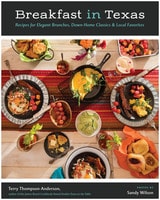
Breakfast in Texas
Recipes for Elegant Brunches, Down-Home Classics, and Local FavoritesBy Terry Thompson-Anderson, with photos by Sandy Wilson
University of Texas Press, 2017
Texans love the morning meal, whether it’s bacon and eggs (often eaten in a breakfast taco) or something as distinctively nontraditional as saag paneer omelets, pon haus, or goat curry. A Lone Star breakfast can be a time for eating healthy, or for indulging in decadent food and drink. And with Texas’s rich regional and cultural diversity, an amazing variety of dishes graces the state’s breakfast and brunch tables. The first Texas cookbook dedicated exclusively to the morning meal, Breakfast in Texas gathers nearly one hundred recipes that range from perfectly prepared classics to the breakfast foods of our regional cuisines (Southern, Mexican, German, Czech, Indian, and Asian among them) to stand-out dishes from the state’s established and rising chefs and restaurants.
Terry Thompson-Anderson organizes the book into sections that cover breakfast and brunch libations (with and without alcohol); simple, classic, and fancy egg presentations; pancakes, French toast, and waffles; meat lover’s dishes; seafood and shellfish; vegan dishes and sides; and pastries. The recipes reference locally sourced ingredients whenever possible, and Thompson-Anderson provides enjoyable notes about the chefs who created them or the cultural history they represent. She also offers an expert primer on cooking eggs, featuring an encounter with Julia Child, as well as a selection of theme brunches (the boozy brunch, the make-ahead brunch, New Year’s Day brunch, Mother’s Day brunch with seasonal ingredients, teenage daughter’s post-slumber party breakfast, and more). Sandy Wilson’s color photographs of many of the dishes and the chefs and restaurants who serve them provide a lovely visual counterpoint to the appetizing text.
Breweries of Wisconsin
Jerry Apps
University of Wisconsin Press, 2005
The story of the Dairy State’s other major industry—beer! From the immigrants who started brewing here during territorial days to the modern industrial giants, this is the history, the folklore, the architecture, the advertising, and the characters that made Wisconsin the nation’s brewing leader. Updated with the latest trends on the Wisconsin brewing scene.
"Apps adeptly combines diligent scholarship with fascinating anecdotes, vividly portraying brewmasters, beer barons, saloonkeepers, and corporate raiders. All this plus color reproductions of popular beer labels and a detailed recipe for home brew."—Wisconsin Magazine of History
"In a highly readable style Apps links together ethnic influence, agriculture, geography, natural resources, meteorology, changing technology, and transportation to explore some of the mystique, romance and folklore associated with beer from antiquity to the present day in Wisconsin."—The Brewers Bulletin
Brewing Arizona
A Century of Beer in the Grand Canyon StateEd Sipos
University of Arizona Press, 2013
Since 1864, the state’s breweries have had a history as colorful as the state. With an eye like a historian, the good taste of a connoisseur, and the tenacity of a dedicated collector, author Ed Sipos serves up beer history with gusto. Brewing Arizona is the first book of Arizona beer. It includes every brewery known to have operated in the state, from the first to the latest, from crude brews to craft brews, from mass beer to microbrews. This eye-opening chronicle is encyclopedic in scope but smooth in its delivery. Like a fine beer, the contents are deep and rich, with a little froth on top.
With more than 250 photographs—200 in full color—Brewing Arizona is as beautiful as it is tasty. So put up your feet, grab a cold one, and sip to your heart’s delight.
Building Nature's Market
The Business and Politics of Natural FoodsLaura J. Miller
University of Chicago Press, 2017
Building Nature’s Market shows how the meaning of natural foods was transformed as they changed from a culturally marginal, religiously inspired set of ideas and practices valorizing asceticism to a bohemian lifestyle to a mainstream consumer choice. Laura J. Miller argues that the key to understanding this transformation is to recognize the leadership of the natural foods industry. Rather than a simple tale of cooptation by market forces, Miller contends the participation of business interests encouraged the natural foods movement to be guided by a radical skepticism of established cultural authority. She challenges assumptions that private enterprise is always aligned with social elites, instead arguing that profit-minded entities can make common cause with and even lead citizens in advocating for broad-based social and cultural change.