Results by title
459 books match the query 'Criminology' and 17 start with b
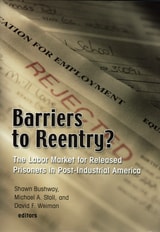
Barriers to Reentry?
The Labor Market for Released Prisoners in Post-Industrial AmericaShawn D. Bushway
Russell Sage Foundation, 2007

Been a Heavy Life
Stories of Violent MenLois Presser
University of Illinois Press, 2007
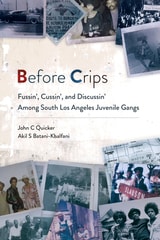
Before Crips
Fussin', Cussin', and Discussin' among South Los Angeles Juvenile GangsJohn C. Quicker and Akil S. Batani-Khalfani
Temple University Press, 2022
This groundbreaking book opens the door on the missing record of South Los Angeles juvenile gangs. It is the result of the unique friendship that developed between John Quicker and Akil Batani-Khalfani, aka Bird, who collaborated to show how structural marginality transformed hang-out street groups of non-White juveniles into gangs, paving the way for the rise of the infamous Crips and Bloods. Before Crips uses a macro historical analysis to sort through political and economic factors to explain the nature of gang creation.
The authors mine a critical archive, using direct interviews with original gang members as well as theory and literature reviews, to contextualize gang life and gang formation. They discuss (and fuss and cuss about) topics ranging from the criminal economy and conceptions of masculinity to racial and gendered politics and views of violence. Their insider/outsider approach not only illuminates gang values and organization, but what they did and why, and how they grew in a backdrop of inequality and police brutality that came to a head with the 1965 Watts Rebellion.
Providing an essential understanding of early South Los Angeles gang life, Before Crips explains what has remained constant, what has changed, and the roots of the violence that continues.
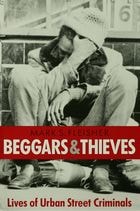
Beggars and Thieves
Lives of Urban Street CriminalsMark S. Fleisher
University of Wisconsin Press, 1995
As the incidence of violent crime rises in the United States, so does the public demand for a solution. But what will work?
Mark S. Fleisher has spent years among inmates in jails and prisons and on the streets with thieves, gang members, addicts, and life-long criminals in Seattle and other cities across the country. In Beggars and Thieves, he writes about how and why they become and remain offenders, and about the actual role of jails and prisons in efforts to deter crime and rehabilitate criminals. Fleisher shows, with wrenching firsthand accounts, that parents who are addicts, abusers, and criminals beget irreversibly damaged children who become addicts, abusers, and criminals. Further, Fleisher contends that many well-intentioned educational and vocational training programs are wasted because they are offered too late to help. And, he provides sobering evidence that many youthful and adult offenders find themselves better off in prison—with work to do, medical care, a clean place to sleep, regular meals, and stable social ties—than they are in America’s cities.
Fleisher calls for anti-crime policies that are bold, practical, and absolutely imperative. He prescribes life terms for violent offenders, but in prisons structured as work communities, where privileges are earned through work in expanded, productive industries that reduce the financial burden of incarceration on the public. But most important, he argues that the only way to prevent street crime, cut prison growth, and reduce the waste of money and human lives is to permanently remove brutalized children from criminal, addicted, and violent parents.
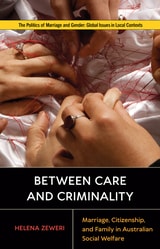
Between Care and Criminality
Marriage, Citizenship, and Family in Australian Social WelfareHelena Zeweri
Rutgers University Press, 2024
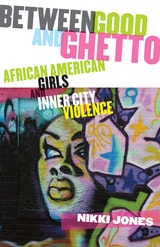
Between Good and Ghetto
African American Girls and Inner-City ViolenceNikki Jones
Rutgers University Press, 2009
Drawing on personal encounters, traditions of urban ethnography, Black feminist thought, gender studies, and feminist criminology, Nikki Jones gives readers a richly descriptive and compassionate account of how African American girls negotiate schools and neighborhoods governed by the so-called "code of the street"ùthe form of street justice that governs violence in distressed urban areas. She reveals the multiple strategies they use to navigate interpersonal and gender-specific violence and how they reconcile the gendered dilemmas of their adolescence. Illuminating struggles for survival within this group, Between Good and Ghetto encourages others to move African American girls toward the center of discussions of "the crisis" in poor, urban neighborhoods.

Beyond Criminology
Taking Harm SeriouslyEdited by Paddy Hillyard, Christina Pantazis, Dave Gordon and Steve Tombs
Pluto Press, 2004

Beyond Repair?
America's Death PenaltyStephen P. Garvey, ed.
Duke University Press, 2003
A number of the essays scrutinize thinking about capital punishment. They examine why, following almost two decades of strong public support for the death penalty, public opinion in favor of it has recently begun to decline. Beyond Repair? presents some of the findings of the Capital Jury Project, a nationwide research initiative that has interviewed over one thousand people who served as jurors in capital trials. It looks at what goes through the minds of jurors asked to consider imposing the death penalty, how qualified they are to make such an important decision, and how well they understand the judge’s instructions. Contributors also investigate the risk of executing the innocent, the role that race plays in determining which defendants are sentenced to death, and the effect of expanded restrictions on access to federal appellate relief. The postscript contemplates the peculiarities of our contemporary system of capital punishment, including the alarming variance in execution rates from state to state.
Filled with current insights and analysis, Beyond Repair? will provide valuable information to attorneys, political scientists, criminologists, and all those wanting to participate knowledgeably in the debates about the death penalty in America.
Contributors. Ken Armstrong, John H. Blume, Theodore Eisenberg, Phoebe C. Ellsworth, Stephen P. Garvey, Samuel R. Gross, Sheri Lynn Johnson, Steve Mills, William A. Schabas, Larry W. Yackle, Franklin E. Zimring
Beyond the Schoolhouse Gate
Free Speech and the Inculcation of ValuesRobert Wheeler Lane
Temple University Press, 1995
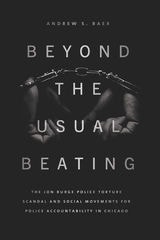
Beyond the Usual Beating
The Jon Burge Police Torture Scandal and Social Movements for Police Accountability in ChicagoAndrew S. Baer
University of Chicago Press, 2020
A story of institutionalized police brutality and how Chicago's public outcry led to long-lasting criminal justice reforms.
The malign and long-lasting influence of Chicago police commander Jon Burge cannot be overestimated, particularly as fresh examples of local and national criminal-justice abuse continue to surface with dismaying frequency. Burge’s decades-long tenure on the Chicago police force was marked by racist and barbaric interrogation methods, including psychological torture, burnings, and mock executions—techniques that went far “beyond the usual beating.” After being exposed in 1989, he became a symbol of police brutality and the unequal treatment of nonwhite people, and the persistent outcry against him led to reforms such as the abolition of the death penalty in Illinois.
But Burge hardly developed or operated in a vacuum, as Andrew S. Baer explores to stark effect here. He identifies the darkness of the Burge era as a product of local social forces, arising from a specific milieu beyond the nationwide racialized reactionary fever of the 1960s and 1970s. Similarly, the popular resistance movements that rallied in his wake actually predated Burge’s exposure but cohered with unexpected power due to the galvanizing focus on his crimes and abuses. For more than thirty years, a shifting coalition including torture survivors, their families, civil rights attorneys, and journalists helped to corroborate allegations of violence, free the wrongfully convicted, have Burge fired and incarcerated, and win passage of a municipal reparations package, among other victories. Beyond the Usual Beating reveals that though the Burge scandal underscores the relationship between personal bigotry and structural racism in the criminal justice system, it also shows how ordinary people held perpetrators accountable in the face of intransigent local power.
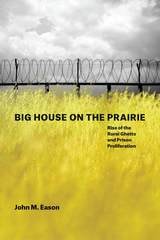
Big House on the Prairie
Rise of the Rural Ghetto and Prison ProliferationJohn M. Eason
University of Chicago Press, 2017
In 2007, John M. Eason moved his family to Forrest City, Arkansas, in search of answers to key questions about this trend: Why is America building so many prisons? Why now? And why in rural areas? Eason quickly learned that rural demand for prisons is complicated. Towns like Forrest City choose to build prisons not simply in hopes of landing jobs or economic wellbeing, but also to protect and improve their reputations. For some rural leaders, fostering a prison in their town is a means of achieving order in a rapidly changing world. Taking us into the decision-making meetings and tracking the impact of prisons on economic development, poverty, and race, Eason demonstrates how groups of elite whites and black leaders share power. Situating prisons within dynamic shifts that rural economies are undergoing and showing how racially diverse communities lobby for prison construction, Big House on the Prairie is a remarkable glimpse into the ways a prison economy takes shape and operates.

Big Prisons, Big Dreams
Crime and the Failure of America's Penal SystemMichael J. Lynch
Rutgers University Press, 2007
The American prison system has grown tenfold since the 1970s, but crime rates in the United States have not decreased. This doesn't surprise Michael J. Lynch, a critical criminologist, who argues that our oversized prison system is a product of our consumer culture, the public's inaccurate beliefs about controlling crime, and the government's criminalizing of the poor.
While deterrence and incapacitation theories suggest that imprisoning more criminals and punishing them leads to a reduction in crime, case studies, such as one focusing on the New York City jail system between 1993 and 2003, show that a reduction in crime is unrelated to the size of jail populations. Although we are locking away more people, Lynch explains that we are not targeting the worst offenders. Prison populations are comprised of the poor, and many are incarcerated for relatively minor robberies and violence. America's prison expansion focused on this group to the exclusion of corporate and white collar offenders who create hazardous workplace and environmental conditions that lead to deaths and injuries, and enormous economic crimes. If America truly wants to reduce crime, Lynch urges readers to rethink cultural values that equate bigger with better.
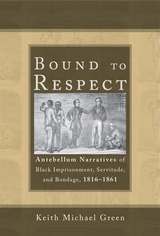
Bound to Respect
Antebellum Narratives of Black Imprisonment, Servitude, and Bondage, 1816–1861Keith Michael Green
University of Alabama Press, 2015
WINNER OF THE ELIZABETH AGEE PRIZE IN AMERICAN LITERATURE
Challenges the commonplace narrative that the African American experience of captivity in the United States is reducible to the legal institution of slavery, a status remedied through emancipation
In Bound to Respect: Antebellum Narratives of Black Imprisonment, Servitude, and Bondage, 1816–1861, Keith Michael Green examines key texts that illuminate forms of black bondage and captivity that existed within and alongside slavery. In doing so, he restores to antebellum African American autobiographical writing the fascinating heterogeneity lost if the historical experiences of African Americans are attributed to slavery alone.
The book’s title is taken from the assertion by US Supreme Court chief justice Roger B. Taney in his 1857 Dred Scott decision that blacks had no rights that whites were “bound to respect.” This allusion highlights Green’s critical assertion that the dehumanizing absurdities to which defenders of slavery resorted to justify slavery only brought into more stark relief the humanity of African Americans.
A gifted storyteller, Green examines four forms of captivity: incarceration, enslavement to Native Americans, child indentured servitude, and maritime capture. By illuminating this dense penumbra of captivity beyond the strict definitions of slavery, he presents a fluid and holistic network of images, vocabulary, narratives, and history. By demonstrating how these additional forms of confinement flourished in the era of slavery, Green shows how they persisted beyond emancipation, in such a way that freed slaves did not in fact partake of “freedom” as white Americans understood it. This gap in understanding continues to bedevil contemporary American society, and Green deftly draws persuasive connections between past and present.
A vital and convincing offering to readers of literary criticism, African American studies, and American history, Green’s Bound to Respect brings fresh and nuanced insights to this fundamental chapter in the American story.
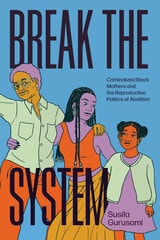
Break the System
Criminalized Black Mothers and the Reproductive Politics of AbolitionSusila Gurusami
University of Chicago Press, 2026
Upends the “broken systems” myth and reveals how the law deliberately criminalizes and punishes Black women, inflicting lasting harm on Black communities in the process.
The United States has one of the highest rates of incarceration in the world, with Black Americans representing a disproportionate share of theimprisoned. Many view this statistic as evidence of a broken system. But sociologist Susila Gurusami argues that the carceral system that so disproportionately harms Black families is not broken at all. In fact, it works just as it was intended. Looking closely at the lives of formerly incarcerated Black mothers, Gurusami shows how state institutions—the criminal-legal, child welfare, and healthcare systems—keep Black mothers from their families, harming Black communities in the process. She also shows how Black women work towards conditions that seem impossible—and even utopian—as part of their everyday mothering labor, but find themselves criminalized for these same actions.
Drawing on ethnographic data and interviews with formerly incarcerated Black women in South Los Angeles, Gurusami challenges dominant assumptions about mothering and criminal justice reform. Gurusami finds that criminalized Black women endure multigenerational political, social, and embodied assaults–what she calls “reproductive warfare”— and still, they build networks, practices, and theories of radical care that protect Black maternal life, legacies, and futures. With incarcerated, formerly incarcerated, and system-impacted Black mothers at the forefront of the growing movement to abolish prisons and jails, Gurusami demonstrates how their everyday mothering work—what she calls “abolitionist motherwork”—is essential to imagining the end of incarceration and ultimately achieving it.
Written with a tender and honest voice, Break the System shares moving vignettes that underscore why we must break the system, rather than reform it, and why we must imagine a future that is radically different than the one we’re told we must accept or salvage.
Brokered Subjects
Sex, Trafficking, and the Politics of FreedomElizabeth Bernstein
University of Chicago Press, 2018

Bruno
Conversations with a Brazilian Drug DealerRobert Gay
Duke University Press, 2015
Building the Prison State
Race and the Politics of Mass IncarcerationHeather Schoenfeld
University of Chicago Press, 2018
Reframing the story of mass incarceration, Heather Schoenfeld illustrates how the unfinished task of full equality for African Americans led to a series of policy choices that expanded the government’s power to punish, even as they were designed to protect individuals from arbitrary state violence. Examining civil rights protests, prison condition lawsuits, sentencing reforms, the War on Drugs, and the rise of conservative Tea Party politics, Schoenfeld explains why politicians veered from skepticism of prisons to an embrace of incarceration as the appropriate response to crime. To reduce the number of people behind bars, Schoenfeld argues that we must transform the political incentives for imprisonment and develop a new ideological basis for punishment.