Results by title
917 books match the query 'Economics' and 33 start with b
BRICS
An Anti-Capitalist CritiqueEdited by Patrick Bond and Ana Garcia
Pluto Press, 2015
Offering critical analyses of the rise of the BRICS economies within the framework of a predatory, exclusionary, and unequal global capitalism, the contributors tackle questions such as: Will the BRICS force social change and innovation on the established economic and political order? Do they herald a new opening for democracy and human rights, or are they likely to be forces of political repression? What should we expect in the coming years, especially as some of these economies face significant hurdles in the wake of the global financial crisis? A contrarian, anti-capitalist exploration of some of the most important national economies in the world today, BRICS offers a much-needed counterpoint to mainstream analysis.
Balancing Act
Motherhood, Marriage, and Employment Among American WomenDaphne Spain
Russell Sage Foundation, 1996
Banking on Reform
Political Parties and Central Bank Independence in the Industrial DemocraciesWilliam Bernhard
University of Michigan Press, 2002
Barriers to Reentry?
The Labor Market for Released Prisoners in Post-Industrial AmericaShawn D. Bushway
Russell Sage Foundation, 2007

Basic Income
The Material Conditions of FreedomDaniel Raventos
Pluto Press, 2007
Becoming a Mighty Voice
Daniel Cornfield
Russell Sage Foundation, 1989
Behavioral Public Finance
Edward J. McCaffery
Russell Sage Foundation, 2006
Behavioral Simulation Methods in Tax Policy Analysis
Edited by Martin Feldstein
University of Chicago Press, 1983
The principal focus of the project has been on the microsimulation of individual behavior. Thus, this volume includes studies of individual responses to an over reduction in tax rates and to changes in the highest tax rates; a study of alternative tax treatments of the family; and studies of such specific aspects of household behavior as tax treatment of home ownership, charitable contributions, and individual saving behavior. Microsimulation techniques are also used to estimate the effects of alternative policies on the long-run financial status of the social security program and to examine the effects of alternative tax rules on corporate investment and of foreign-source income on overseas investment.
The papers devoted to the development of general equilibrium simulation models to include an examination of the implications of international trade and capital flows, a study of the effects of capital taxation that uses a closed economy equilibrium model, and an examination of the effect of switching to an inflation-indexed tax system. In the volume's final paper, a life-cycle model in which individuals maximize lifetime utility subject to a lifetime budget constraint is used to simulate the effects of tax rules on personal savings.
Behavioral and Distributional Effects of Environmental Policy
Edited by Carlo Carraro and Gilbert E. Metcalf
University of Chicago Press, 2001
Better Health Economics
An Introduction for EveryoneTal Gross and Matthew J. Notowidigdo
University of Chicago Press, 2024
An ideal entry point into health economics for everyone from aspiring economists to healthcare professionals.
The economics of healthcare are messy. For most consumers, there’s little control over costs or services. Sometimes doctors are paid a lot; other times they aren’t paid at all. Insurance and drug companies are evil, except when they’re not. If economics is the study of market efficiency, how do we make sense of this?
Better Health Economics is a warts-and-all introduction to a field that is more exceptions than rules. Economists Tal Gross and Matthew J. Notowidigdo offer readers an accessible primer on the field’s essential concepts, a review of the latest research, and a framework for thinking about this increasingly imperfect market.
A love letter to a traditionally unlovable topic, Better Health Economics provides an ideal entry point for students in social science, business, public policy, and healthcare. It’s a reminder that healthcare may be a failed market—but it’s our failed market.
Better Health Economics
An Introduction for EveryoneTal Gross and Matthew J. Notowidigdo
University of Chicago Press, 2024
This is an auto-narrated audiobook version of this book.
An ideal entry point into health economics for everyone from aspiring economists to healthcare professionals.
The economics of healthcare are messy. For most consumers, there’s little control over costs or services. Sometimes doctors are paid a lot; other times they aren’t paid at all. Insurance and drug companies are evil, except when they’re not. If economics is the study of market efficiency, how do we make sense of this?
Better Health Economics is a warts-and-all introduction to a field that is more exceptions than rules. Economists Tal Gross and Matthew J. Notowidigdo offer readers an accessible primer on the field’s essential concepts, a review of the latest research, and a framework for thinking about this increasingly imperfect market.
A love letter to a traditionally unlovable topic, Better Health Economics provides an ideal entry point for students in social science, business, public policy, and healthcare. It’s a reminder that healthcare may be a failed market—but it’s our failed market.
Bettering Humanomics
A New, and Old, Approach to Economic ScienceDeirdre Nansen McCloskey
University of Chicago Press, 2021
Economic historian Deirdre Nansen McCloskey has distinguished herself through her writing on the Great Enrichment and the betterment of the poor—not just materially but spiritually. In Bettering Humanomics she continues her intellectually playful yet rigorous analysis with a focus on humans rather than the institutions. Going against the grain of contemporary neo-institutional and behavioral economics which privilege observation over understanding, she asserts her vision of “humanomics,” which draws on the work of Bart Wilson, Vernon Smith, and most prominently, Adam Smith. She argues for an economics that uses a comprehensive understanding of human action beyond behaviorism.
McCloskey clearly articulates her points of contention with believers in “imperfections,” from Samuelson to Stiglitz, claiming that they have neglected scientific analysis in their haste to diagnose the ills of the system. In an engaging and erudite manner, she reaffirms the global successes of market-tested betterment and calls for empirical investigation that advances from material incentives to an awareness of the human within historical and ethical frameworks. Bettering Humanomics offers a critique of contemporary economics and a proposal for an economics as a better human science.
Beyond Economic Man
Feminist Theory and EconomicsEdited by Marianne A. Ferber and Julie A. Nelson
University of Chicago Press, 1993
Beyond Economic Man raises questions about the discipline not because economics is too objective but because it is not objective enough. The contributors—nine economists, a sociologist, and a philosopher—discuss the extent to which gender has influenced both the range of subjects economists have studied and the way in which scholars have conducted their studies. They investigate, for example, how masculine concerns underlie economists' concentration on market as opposed to household activities and their emphasis on individual choice to the exclusion of social constraints on choice. This focus on masculine interests, the contributors contend, has biased the definition and boundaries of the discipline, its central assumptions, and its preferred rhetoric and methods. However, the aim of this book is not to reject current economic practices, but to broaden them, permitting a fuller understanding of economic phenomena.
These essays examine current economic practices in the light of a feminist understanding of gender differences as socially constructed rather than based on essential male and female characteristics. The authors use this concept of gender, along with feminist readings of rhetoric and the history of science, as well as postmodernist theory and personal experience as economists, to analyze the boundaries, assumptions, and methods of neoclassical, socialist, and institutionalist economics.
The contributors are Rebecca M. Blank, Paula England, Marianne A. Ferber, Nancy Folbre, Ann L. Jennings, Helen E. Longino, Donald N. McCloskey, Julie A. Nelson, Robert M. Solow, Diana Strassmann, and Rhonda M. Williams.
Beyond Positivism, Behaviorism, and Neoinstitutionalism in Economics
Deirdre Nansen McCloskey
University of Chicago Press, 2022
In Beyond Positivism, Behaviorism, and Neoinstitutionalism in Economics, Deirdre Nansen McCloskey zeroes in on the authoritarian cast of recent economics, arguing for a re-focusing on the liberated human. The behaviorist positivism fashionable in the field since the 1930s treats people from the outside. It yielded in Williamson and North a manipulative neo-institutionalism. McCloskey argues that institutions as causes are mainly temporary and intermediate, not ultimate. They are human-made, depending on words, myth, ethics, ideology, history, identity, professionalism, gossip, movies, what your mother taught you. Humans create conversations as they go, in the economy as in the rest of life.
In engaging and erudite prose, McCloskey exhibits in detail the scientific failures of neo-institutionalism. She proposes a “humanomics,” an economics with the humans left in. Humanomics keeps theory, quantification, experiment, mathematics, econometrics, though insisting on more true rigor than is usual. It adds what can be learned about the economy from history, philosophy, literature, and all the sciences of humans. McCloskey reaffirms the durability of “market-tested innovation” against the imagined imperfections to be corrected by a perfect government. With her trademark zeal and incisive wit, she rebuilds the foundations of economics.
Beyond the Boycott
Labor Rights, Human Rights, and Transnational ActivismGay W. Seidman
Russell Sage Foundation, 2007

Bifacial Photovoltaics
Technology, applications and economicsJoris Libal
The Institution of Engineering and Technology, 2019
Big Data for Twenty-First-Century Economic Statistics
Edited by Katharine G. Abraham, Ron S. Jarmin, Brian C. Moyer, and Matthew D. Shapiro
University of Chicago Press, 2022
The existing infrastructure for the production of key economic statistics relies heavily on data collected through sample surveys and periodic censuses, together with administrative records generated in connection with tax administration. The increasing difficulty of obtaining survey and census responses threatens the viability of existing data collection approaches. The growing availability of new sources of Big Data—such as scanner data on purchases, credit card transaction records, payroll information, and prices of various goods scraped from the websites of online sellers—has changed the data landscape. These new sources of data hold the promise of allowing the statistical agencies to produce more accurate, more disaggregated, and more timely economic data to meet the needs of policymakers and other data users. This volume documents progress made toward that goal and the challenges to be overcome to realize the full potential of Big Data in the production of economic statistics. It describes the deployment of Big Data to solve both existing and novel challenges in economic measurement, and it will be of interest to statistical agency staff, academic researchers, and serious users of economic statistics.
Big Structures, Large Processes, Huge Comparisons
Charles Tilly
Russell Sage Foundation, 1984

Bill Giles and Baseball
John B Lord
Temple University Press, 2014
Bill Giles oversaw one of the greatest eras of winning that the Philadelphia Phillies ever enjoyed. In Bill Giles and Baseball, John Lord chronicles Giles' remarkable career--which includes 44 years with the Phillies--to provide an insider's view of the business of the sport, which takes place off the field.
Based on extensive interviews, Bill Giles and Baseball spans Giles' life from his childhood growing up in the game to the tumultuous years he spent as the president and managing partner of the Phillies. Purchasing the team in 1981, when baseball experienced its first serious labor stoppages, Giles also watched baseball add franchises, grapple with franchise fees, realign the leagues, and restructure baseball's postseason. Yet Giles, the public face of the Phillies championship teams of 1980, 1983, and 1993, is best remembered for his critical role in creating innovative TV deals, and leading the efforts to build the Phillies' beautiful new ballpark.
A book about the business of baseball as seen through the eyes of one of the architects of the game, Bill Giles and Baseball captures the spectacle of the sport through fascinating behind-the-scenes stories of our national pastime.
Biocapital
The Constitution of Postgenomic LifeKaushik Sunder Rajan
Duke University Press, 2006
Sunder Rajan’s ethnography informs his theoretically sophisticated inquiry into how the contemporary world is shaped by the marriage of biotechnology and market forces, by what he calls technoscientific capitalism. Bringing Marxian theories of value into conversation with Foucaultian notions of biopolitics, he traces how the life sciences came to be significant producers of both economic and epistemic value in the late twentieth century and early twenty-first.
Bleakonomics
A Heartwarming Introduction to Financial Catastrophe, the Jobs Crisis and Environmental DestructionRob Larson
Pluto Press, 2012
Written for anyone who is wondering how we’ve come to this point, Rob Larson holds mainstream economic theory up against the grim reality of a planet in meltdown. He looks at scientists’ conclusions about climate change, the business world’s opinions about its own power, and reveals the fingerprints of finance on American elections.
With a unique and engaging approach to each crucial subject, students, academics and activists will find a lot to appreciate in this quiet call-to-arms for a saner and more stable world.
Boggs
A Comedy of ValuesLawrence Weschler
University of Chicago Press, 1999
"Lawrence Weschler, who evidently admires [Boggs]-something not difficult to do-has written what may be the most extraordinary biography imaginable: "weird," to use a favourite Boggs word. It does something towards changing our entire outlook on money and its uses. And the reader is left with an uneasy feeling that anything in this world can be created by drawing it." —Ruth Rendell, Daily Telegraph
"As ideal a subject matter as money is for Boggs' genius, Boggs is as ideal a topic for Weschler's considerable talents. . . . A writer any less lucid than Weschler would smudge the lines, making of Boggs a counterculture caricature or a high-art huckster. And a writer any less confident would knock the balance, making academic mud pies of Boggs' enlightened chaos." —Jonathon Keats, San Francisco Chronicle Book Review
"[A] witty and engaging chronicle. . . . Weschler's fascinating account of the artist as agent provocateur demonstrates both the significance of Boggs's art and his determination to continue his unusual critique of the idea of money." —Henry Wessells, Washington Post Book World
"[A] witty, excellently written account of a bizarre and fascinating snippet of modern life." —Paul Ormerod, Times Higher Education Supplement
"The book, like the artist, challenges people to pause and consider the extent to which the economic bedrock of everyday life is in part a confusing welter of artistic abstractions. It's a work that is at once informative, entertaining, and provocative-a reading experience, one might say, of rather good value." —Toby Lester, Atlantic Monthly
"[A] fascinating tale, especially in these days of fluctuating currency rates, the euro, and inexplicable Net-stock valuations." —Paul Lukas, Fortune
Lawrence Weschler, a recipient of the prestigious Lannan Literary Award for 1998, is the author of numerous books, including Calamities of Exile: Three Nonfiction Novellas, and Mr. Wilson's Cabinet of Wonder, which was a finalist for both the Pulitzer Prize and the National Book Critics Circle Award.
Border Economies
Cities Bridging the U.S.-Mexico DivideJames Gerber
University of Arizona Press, 2024
Enormous legal cross-border flows of people, goods, and finance are embedded in the region’s history and prompted by the need to respond to new opportunities and challenges that originate on the other side. In Border Economies James Gerber examines how the interactivity and sensitivity of communities to conditions across the border differentiates them from communities in the interiors of Mexico and the United States. Gerber explains what makes the region not only unique but uniquely interesting.
In Border Economies readers who want to understand the conditions that make the border controversial but also want to go beyond shallow political narratives will find an in-depth exploration of the economic forces shaping the region and an antidote to common prejudices and misunderstandings.
Bourgeois Dignity
Why Economics Can't Explain the Modern WorldDeirdre Nansen McCloskey
University of Chicago Press, 2010
The big economic story of our times is not the Great Recession. It is how China and India began to embrace neoliberal ideas of economics and attributed a sense of dignity and liberty to the bourgeoisie they had denied for so long. The result was an explosion in economic growth and proof that economic change depends less on foreign trade, investment, or material causes, and a whole lot more on ideas and what people believe.
Or so says Deirdre N. McCloskey in Bourgeois Dignity, a fiercely contrarian history that wages a similar argument about economics in the West. Here she turns her attention to seventeenth- and eighteenth-century Europe to reconsider the birth of the industrial revolution and the rise of capitalism. According to McCloskey, our modern world was not the product of new markets and innovations, but rather the result of shifting opinions about them. During this time, talk of private property, commerce, and even the bourgeoisie itself radically altered, becoming far more approving and flying in the face of prejudices several millennia old. The wealth of nations, then, didn’t grow so dramatically because of economic factors: it grew because rhetoric about markets and free enterprise finally became enthusiastic and encouraging of their inherent dignity.
An utterly fascinating sequel to her critically acclaimed book The Bourgeois Virtues, Bourgeois Dignity is a feast of intellectual riches from one of our most spirited and ambitious historians—a work that will forever change our understanding of how the power of persuasion shapes our economic lives.

Brazil and South Korea
Economic Crisis and RestructuringEdited by Edmund Amann and Ha-Joon Chang
University of London Press, 2003
Contributors include Andre Averburg (United Nations Development Programme/ Banco Nacional de Desenvolvimento Economico e Social, Brazil), Fabio Giambiagi (Banco Nacional de Desenvolvimento Economico e Social), Andrea Goldstein (OECD Development Centre), Louise Haagh (Department of Politics, University of York, USA), Tat Yan Kong (School of Oriental and African Studies, University of London, UK), Jose Ricardo Ramalho (Federal University of Rio de Janeiro, Brazil), Ben Ross Schneider (Center for International and Comparative Studies, Northwestern University, USA), and Jaang-Sup Shin (Department of Economics, National University of Singapore).
Bread and Work
The Experience of Unemployment 1918-39Matt Perry
Pluto Press, 2000
Looking beyond statistics and economic cycles, Perry investigates the human impact of unemployment. He uncovers the experience of being jobless from the perspective of those who lived through it, their employers and their communities. He uses oral history, memoirs, literary accounts, and newspaper articles to reveal the reality of unemployment.
Perry argues that the scale of the crisis has been minimised by historians who have tended to emphasise that prolonged unemployment was the problem of the distressed fringe.
Finally, Perry argues that the lessons of the 1930s have direct relevance today since the structural problems of industrial capitalism remain inherent.

Britain's War on Poverty
Jane Waldfogel
Russell Sage Foundation, 2010
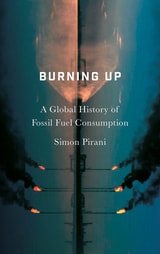
Burning Up
A Global History of Fossil Fuel ConsumptionSimon Pirani
Pluto Press, 2018
In Burning Up, Simon Pirani recounts the history of the relentless rise of fossil fuels in the past half century, and lays out the ways in which the expansion of the global capitalist economy has driven it forward. Dispelling common explanations that foreground Western consumerism, as well as arguments about unsustainable population growth, Pirani offers instead an insightful intervention in what is arguably the crisis of our time.
Business Cycles, Indicators, and Forecasting
Edited by James H. Stock and Mark W. Watson
University of Chicago Press, 1993
Business Cycles
Part IF. A. Hayek
University of Chicago Press, 2012
Business Cycles
Part IIF. A. Hayek
University of Chicago Press, 2012
Business Cycles
Theory, History, Indicators, and ForecastingVictor Zarnowitz
University of Chicago Press, 1992
With characteristic insight, Zarnowitz examines theories of the business cycle, including Keynesian and monetary theories and more recent rational expectation and real business cycle theories. He also measures trends and cycles in economic activity; evaluates the performance of leading indicators and their composite measures; surveys forecasting tools and performance of business and academic economists; discusses historical changes in the nature and sources of business cycles; and analyzes how successfully forecasting firms and economists predict such key economic variables as interest rates and inflation.
Buying and Believing
Sri Lankan Advertising and Consumers in a Transnational WorldSteven Kemper
University of Chicago Press, 2001
Drawing upon fieldwork conducted over thirty years, Kemper examines the Sri Lankan advertising industry to show how executives draw on their skills as folk ethnographers to "Sri Lankanize" commodities and practices to make them locally desirable, essentially producing new forms of Sri Lankan culture. Addressing many of the most pressing agendas of contemporary anthropology, Buying and Becoming breaks new ground in studies of culture and globalization.