Results by title
81 books match the query 'Educational equalization' and 2 start with b
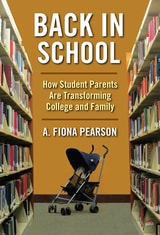
Back in School
How Student Parents Are Transforming College and FamilyA. Fiona Pearson
Rutgers University Press, 2019
Fifty years ago, students who were parents were a rarity in college classrooms, but by the beginning of the twenty-first century, over a quarter of all undergraduate students were parents. In Back in School, A. Fiona Pearson explores how these student parents navigate cultural norms and institutional resources, forging pathways as they journey to become better parents and successful students. Back in School examines how policy makers, professors, college administrators, counselors, and social workers provide or deny access to child care, tutoring, financial aid, or other campus- or community-based resources. Pearson further explores how social norms and governmental and organizational policies influence access to these resources and student parents’ experiences on campus and at home.
[more]
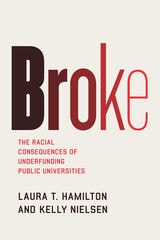
Broke
The Racial Consequences of Underfunding Public UniversitiesLaura T. Hamilton and Kelly Nielsen
University of Chicago Press, 2021
Public research universities were previously able to provide excellent education to white families thanks to healthy government funding. However, that funding has all but dried up in recent decades as historically underrepresented students have gained greater access, and now less prestigious public universities face major economic challenges.
In Broke, Laura T. Hamilton and Kelly Nielsen examine virtually all aspects of campus life to show how the new economic order in public universities, particularly at two campuses in the renowned University of California system, affects students. For most of the twentieth century, they show, less affluent families of color paid with their taxes for wealthy white students to attend universities where their own offspring were not welcome. That changed as a subset of public research universities, some quite old, opted for a “new” approach, making racially and economically marginalized youth the lifeblood of the university. These new universities, however, have been particularly hard hit by austerity. To survive, they’ve had to adapt, finding new ways to secure funding and trim costs—but ultimately it’s their students who pay the price, in decreased services and inadequate infrastructure.
The rise of new universities is a reminder that a world-class education for all is possible. Broke shows us how far we are from that ideal and sets out a path for how we could get there.
[more]