Results by title
9 books match the query 'Tyranny'
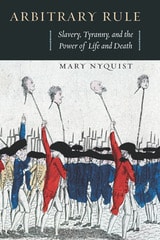
Arbitrary Rule
Slavery, Tyranny, and the Power of Life and DeathMary Nyquist
University of Chicago Press, 2013
Throughout, Nyquist demonstrates how principles relating to political slavery and tyranny are bound up with a Roman jurisprudential doctrine that sanctions the power of life and death held by the slaveholder over slaves and, by extension, the state, its representatives, or its laws over its citizenry.
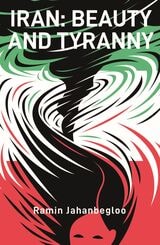
Iran
Beauty and TyrannyRamin Jahanbegloo
Gingko, 2026
Ramin Jahanbegloo turns to ancient philosophy as an antidote to contemporary authoritarianism in Iran.
From the rule of Cyrus the Great to the present day, Iran has been plagued by a recurrent syndrome of tyranny. For Ramin Jahanbegloo, the cure for this persistent cycle lies in a reengagement with the idea of a beautiful society. He presents beauty as an antidote to authoritarianism and as a methodology of freedom: one first taught by the philosophers of ancient Greece, who bound beauty and goodness together in the principle of kalokagathia, and later revived by the German Enlightenment.
A work of hope and faith in the people of Iran, this provocative and timely intervention from the author of The Idea of Persia turns to the past in order to imagine a way forward. Drawing on Hegel, Schiller, Arendt, Camus, and more, Jahanbegloo lays out a vision of how Iran and Iranians might come to live in beautiful freedom.
On Tyranny
Leo Strauss
University of Chicago Press, 2000
"Through [Strauss's] interpretation Xenophon appears to us as no longer the somewhat dull and flat author we know, but as a brilliant and subtle writer, an original and profound thinker. What is more, in interpreting this forgotten dialogue, Strauss lays bare great moral and political problems that are still ours." —Alexandre Kojève, Critique
"On Tyranny is a complex and stimulating book with its 'parallel dialogue' made all the more striking since both participants take such unusual, highly provocative positions, and so force readers to face substantial problems in what are often wholly unfamiliar, even shocking ways." —Robert Pippin, History and Theory
"Every political scientist who tries to disentangle himself from the contemporary confusion over the problems of tyranny will be much indebted to this study and inevitably use it as a starting point."—Eric Voegelin, The Review of Politics
Leo Strauss (1899-1973) was the Robert Maynard Hutchins Distinguished Service Professor of Political Science at the University of Chicago.
On Tyranny
Corrected and Expanded Edition, Including the Strauss-Kojève CorrespondenceLeo Strauss
University of Chicago Press, 2013
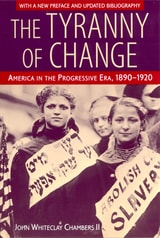
The Tyranny of Change
America in the Progressive Era, 1890-1920Chambers, John Whiteclay II
Rutgers University Press, 2000
Between 1890 and 1920, the forces accompanying industrialization sent the familiar nineteenth-century world plummeting toward extinction. The traditional countryside with its villages and family farms was eclipsed by giant corporations and sprawling cities. America appeared headed into an unknown future.
In lively, accessible prose, John Chambers incorporates the latest scholarship about the social, cultural, political, and economic changes which produced modern America. He illuminates the experiences of blacks, Asians, Latinos, as well as other working men and women in the cities and countryside as they struggled to improve their lives in a transformed economy. He explores the dimensions of the new consumer society and the new information and entertainment industries: newspapers, magazines, the movies. Striding these pages are many of the prominent individuals who shaped the attitudes and institutions of modern America: J. P. Morgan and corporate reorganization; Jane Addams and the origin of modern social work; Mary Pickford and the new star-oriented motion picture industry; and the radical labor challenge of “Big Bill” Haywood and the “Wobblies.”
While recognizing a “progressive ethos”—a mixture of idealistic vision and pragmatic reforms—which dominated the mainstream reforms that characterized the period, Chambers elaborates the role of civic volunteerism as well as the state in achieving directed social change. He also emphasizes the importance of radical and conservative political forces in shaping the so-called “Progressive Era.”
The revised edition in this classic work has an updated bibliography and a new preface, both of which incorporate particularly the new social and cultural research of the past decade.
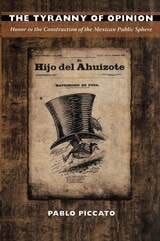
The Tyranny of Opinion
Honor in the Construction of the Mexican Public SpherePablo Piccato
Duke University Press, 2010
Tracing how notions of honor changed in nineteenth-century Mexico, Pablo Piccato examines legislation, journalism, parliamentary debates, criminal defamation cases, personal stories, urban protests, and the rise and decline of dueling in the 1890s. He highlights the centrality of notions of honor to debates over the nature of Mexican liberalism, describing how honor helped to define the boundaries between public and private life; balance competing claims of free speech, public opinion, and the protection of individual reputations; and motivate politicians, writers, and other men to enter public life. As Piccato explains, under the authoritarian rule of Porfirio Díaz, the state became more active in the protection of individual reputations. It implemented new restrictions on the press. This did not prevent people from all walks of life from defending their honor and reputations, whether in court or through violence. The Tyranny of Opinion is a major contribution to a new understanding of Mexican political history and the evolution of Mexican civil society.
Tyranny of the Market
A Critique of Theoretical FoundationsDouglas Vickers
University of Michigan Press, 1995
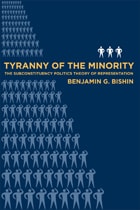
Tyranny of the Minority
The Subconstituency Politics Theory of RepresentationBenjamin G. Bishin
Temple University Press, 2009
Why do politicians frequently heed the preferences of small groups of citizens over those of the majority? Breaking new theoretical ground, Benjamin Bishin explains how the desires of small groups, which he calls “subconstituencies,” often trump the preferences of much larger groups.
Tyranny of the Minority provides a “unified theory of representation,” based in social psychology and identity theory, to explain how citizens’ intensity fosters knowledge and participation and drives candidates’ behavior in campaigns and legislators' behavior in Congress. Demonstrating the wide applicability of the theory, Bishin traces politicians' behavior in connection with a wide range of issues, including the Cuban trade embargo, the extension of hate-crimes legislation to protect gay men and lesbians, the renewal of the assault-weapons ban, abortion politics, and Congress's attempt to recognize the Armenian genocide. He offers a unique explanation of when, why, and how special interests dominate American national politics.

Tyranny of the Moment
Fast and Slow Time in the Information AgeThomas Hylland Eriksen
Pluto Press, 2001