Results by title
193 books match the query 'Empire' and 9 start with b
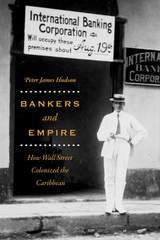
Bankers and Empire
How Wall Street Colonized the CaribbeanPeter James Hudson
University of Chicago Press, 2017
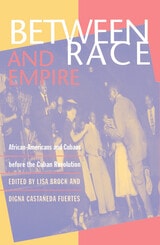
Between Race and Empire
African-Americans and Cubans before the Cuban RevolutionLisa Brock
Temple University Press, 1998
The eleven essays gathered here, written by scholars from both countries, heighten our appreciation of African-Americans as international actors and challenge the notion that Cubans had little or no race consciousness. This is the first study of the world capitalist system to track the international consciousness of working peoples, peoples of color, and women. With a focus on two sets of peoples not in state power, Between Race and Empire expands our understanding of "history from below," and reflects current trends in PanAfricanist and African Diaspora studies by tracing a little-studied linkage between two peoples of African descent.
Bioinsecurities
Disease Interventions, Empire, and the Government of SpeciesNeel Ahuja
Duke University Press, 2016
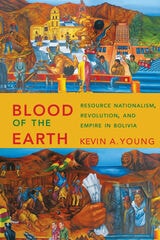
Blood of the Earth
Resource Nationalism, Revolution, and Empire in BoliviaBy Kevin A. Young
University of Texas Press, 2017
Conflicts over subterranean resources, particularly tin, oil, and natural gas, have driven Bolivian politics for nearly a century. “Resource nationalism”—the conviction that resource wealth should be used for the benefit of the “nation”—has often united otherwise disparate groups, including mineworkers, urban workers, students, war veterans, and middle-class professionals, and propelled an indigenous union leader, Evo Morales, into the presidency in 2006. Blood of the Earth reexamines the Bolivian mobilization around resource nationalism that began in the 1920s, crystallized with the 1952 revolution, and continues into the twenty-first century.
Drawing on a wide array of Bolivian and US sources, Kevin A. Young reveals that Bolivia became a key site in a global battle among economic models, with grassroots coalitions demanding nationalist and egalitarian alternatives to market capitalism. While US-supported moderates within the revolutionary regime were able to defeat more radical forces, Young shows how the political culture of resource nationalism, though often comprising contradictory elements, constrained government actions and galvanized mobilizations against neoliberalism in later decades. His transnational and multilevel approach to the 1952 revolution illuminates the struggles among Bolivian popular sectors, government officials, and foreign powers, as well as the competing currents and visions within Bolivia’s popular political cultures. Offering a fresh appraisal of the Bolivian Revolution, resource nationalism, and the Cold War in Latin America, Blood of the Earth is an ideal case study for understanding the challenges shared by countries across the Global South.
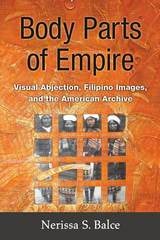
Body Parts of Empire
Visual Abjection, Filipino Images, and the American ArchiveNerissa S. Balce
University of Michigan Press, 2016
Rather than focusing on canonical American authors who wrote at the time of U.S. imperialism, this book examines abject texts—images of naked savages, corpses, clothed native elites, and uniformed American soldiers—as well as bodies of writing that document the goodwill and violence of American expansion in the Philippine colony. Contributing to the fields of American studies, Asian American studies, and gender studies, the book analyzes the actual archive of the Philippine-American War and how the racialization and sexualization of the Filipino colonial native have always been part of the cultures of America and U.S. imperialism. By focusing on the Filipino native as an abject body of the American imperial imaginary, this study offers a historical materialist optic for reading the cultures of Filipino America.
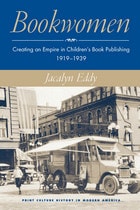
Bookwomen
Creating an Empire in Children’s Book Publishing, 1919–1939Jacalyn Eddy
University of Wisconsin Press, 2006
The most comprehensive account of the women who, as librarians, editors, and founders of the Horn Book, shaped the modern children's book industry between 1919 and 1939. The lives of Anne Carroll Moore, Alice Jordan, Louise Seaman Bechtel, May Massee, Bertha Mahony Miller, and Elinor Whitney Field open up for readers the world of female professionalization. What emerges is a vivid illustration of some of the cultural debates of the time, including concerns about "good reading" for children and about women's negotiations between domesticity and participation in the paid labor force and the costs and payoffs of professional life.
Published in collaboration among the University of Wisconsin Press, the Center for the History of Print Culture in Modern America (a joint program of the University of Wisconsin–Madison and the Wisconsin Historical Society), and the University of Wisconsin–Madison General Library System Office of Scholarly Communication.
Boys Abducted
The Homoerotics of Empire and Race in Early ModernityAbdulhamit Arvas
Duke University Press, 2025
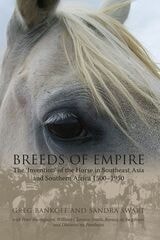
Breeds of Empire
The Invention of the Horse in Southeast Asia and Southern Africa 1500-1950Edited by Greg Bankoff and Sandra Swart
National University of Singapore Press, 2007
Brodsky Abroad
Empire, Tourism, NostalgiaSanna Turoma
University of Wisconsin Press, 2010
Expelled from the Soviet Union in 1972 and honored with the Nobel Prize fifteen years later, poet Joseph Brodsky in many ways fit the grand tradition of exiled writer. But Brodsky’s years of exile did not render him immobile: though he never returned to his beloved Leningrad, he was free to travel the world and write about it. In Brodsky Abroad, Sanna Turoma discusses Brodsky’s poems and essays about Mexico, Brazil, Turkey, and Venice. Challenging traditional conceptions behind Brodsky’s status as a leading émigré poet and major descendant of Russian and Euro-American modernism, she relocates the analysis of his travel texts in the diverse context of contemporary travel and its critique. Turoma views Brodsky’s travel writing as a response not only to his exile but also to the postmodern and postcolonial landscape that initially shaped the writing of these texts.
In his Latin American encounters, Brodsky exhibits disdain for third-world politics and invokes the elegiac genre to reject Mexico’s postcolonial reality and to ironically embrace the romanticism of an earlier Russian and European imperial age. In an essay on Istanbul he assumes Russia’s ambiguous position between East and West as his own to negotiate a distinct, and controversial, interpretation of Orientalism. And, Venice, the emblematic tourist city, becomes the site for a reinvention of his lyric self as more fluid, hybrid, and cosmopolitan.
Brodsky Abroad reveals the poet’s previously uncharted trajectory from alienated dissident to celebrated man of letters and offers new perspectives on the geopolitical, philosophical, and linguistic premises of his poetic imagination.