Results by title
304 books match the query 'Entertainment & Performing Arts' and 19 start with b
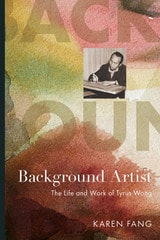
Background Artist
The Life and Work of Tyrus WongKaren Fang
Rutgers University Press, 2025
Chinese American Librarians Association Best Book Award (Honorary Mention, Adult Non-fiction category)
You might not know the name Tyrus Wong, but you probably know some of the images he created, including scenes from the beloved Disney classic Bambi. Yet when he came to this country as a child, Tyrus was an illegal immigrant locked up in an offshore detention center. How did he go on to a long and prosperous career drawing animation cels, storyboards, and greeting cards that shaped the American imagination?
Background Artist shares the inspiring story of Tyrus Wong’s remarkable 106-year life and showcases his wide array of creative work, from the paintings and fine art prints he made working for Roosevelt’s Works Progress Administration to the unique handmade kites he designed and flew on the Santa Monica beach. It tells how he came to the United States as a ten-year-old boy in 1920, at a time when the Chinese Exclusion Act barred him from legal citizenship. Yet it also shows how Wong found American communities that welcomed him and nurtured his artistic talent. Covering everything from his work as a studio sketch artist for Warner Bros. to the best-selling Christmas cards he designed for Hallmark and other greeting card companies, this book celebrates a multitalented Asian American artist and pioneer.
Larry Potash (WGN News) and "The artist who saved a Hollywood classic from never being made" (https://www.youtube.com/watch?v=P471NdY7TdE)
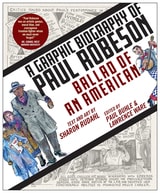
Ballad of an American
A Graphic Biography of Paul RobesonSharon Rudahl
Rutgers University Press, 2021
The first-ever graphic biography of Paul Robeson, Ballad of an American, charts Robeson’s career as a singer, actor, scholar, athlete, and activist who achieved global fame. Through his films, concerts, and records, he became a potent symbol representing the promise of a multicultural, multiracial American democracy at a time when, despite his stardom, he was denied personal access to his many audiences.
Robeson was a major figure in the rise of anti-colonialism in Africa and elsewhere, and a tireless campaigner for internationalism, peace, and human rights. Later in life, he embraced the civil rights and antiwar movements with the hope that new generations would attain his ideals of a peaceful and abundant world. Ballad of an American features beautifully drawn chapters by artist Sharon Rudahl, a compelling narrative about his life, and an afterword on the lasting impact of Robeson’s work in both the arts and politics. This graphic biography will enable all kinds of readers—especially newer generations who may be unfamiliar with him—to understand his life’s story and everlasting global significance.
Ballad of an American: A Graphic Biography of Paul Robeson is published in conjunction with Rutgers University’s centennial commemoration of Robeson’s 1919 graduation from the university.
Study guide for Ballad of an American: A Graphic Biography of Paul Robeson (https://d3tto5i5w9ogdd.cloudfront.net/wp-content/uploads/2021/05/10201015/YA_Adult-Study-Guide-for-A-Graphic-Biography-of-Paul-Robeson.pdf).
View the blad for Ballad of an American.
Bel Canto Bully
The Life and Times of the Legendary Opera Impresario Domenico BarbajaPhilip Eisenbeiss
Haus Publishing, 2013

Bert
The Life and Times of A. L. LloydDave Arthur
Pluto Press, 2012
Folk singer and folk music collector, writer, painter, journalist, art critic, whalerman, sheep station roustabout, Marxist, and much more - this is the story of A. L. (Bert) Lloyd's extraordinary life.
A. L. Lloyd played a key part in the folk music revival of the 1950s and 60s, but that is only part of his story. Dave Arthur documents how Lloyd became a member of the Communist Party, forceful antifascist, trade unionist and an important part of left-wing culture from the early 1930s to his death in 1982. Following his return from Australia as a 21-year-old, self-educated agricultural labourer, he was at the heart of the most important left-wing movements and highly respected for his knowledge in various fields.
Dave Arthur recounts the life of a creative, passionate and life-loving Marxist, and in so doing provides a social history of a turbulent twentieth century.
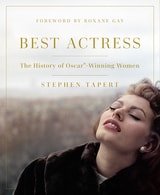
Best Actress
The History of Oscar®-Winning WomenStephen Tapert
Rutgers University Press, 2020
This lavishly illustrated coffee table book offers a vital examination of the first 75 women to have won the Best Actress Oscar over the span of 90 years. From inaugural recipient Janet Gaynor to Frances McDormand’s 2018 acceptance speech that assertively brought women to the forefront, Best Actress: The History of Oscar®-Winning Women serves to promote a new appreciation for the cinematic roles these women won for, as well as the real-life roles many of them played – and still play – in advancing women’s rights and equality. Stories range from Bette Davis’ groundbreaking battle against the studio system; to the cutting-edge wardrobes of Katharine Hepburn, Diane Keaton and Cher; to the historical significance of Halle Berry’s victory; to the awareness raised around sexual violence by the performances of Jodie Foster, Brie Larson, and others.
Showcasing a dazzling collection of 200 photographs, many of which have never before been seen or published, Best Actress honors the legacies of these revered and extraordinary women while scrutinizing the roadblocks that they continue to overcome.
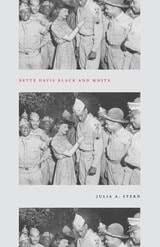
Bette Davis Black and White
Julia A. Stern
University of Chicago Press, 2021
Bette Davis was not only one of Hollywood’s brightest stars, but also one of its most outspoken advocates on matters of race. In Bette Davis Black and White, Julia A. Stern explores this largely untold facet of Davis’s brilliant career.
Bette Davis Black and White analyzes four of Davis’s best-known pictures—Jezebel (1938), The Little Foxes (1941), In This Our Life (1942), and What Ever Happened to Baby Jane? (1962)—against the history of American race relations. Stern also weaves in memories of her own experiences as a young viewer, coming into racial consciousness watching Davis’s films on television in an all-white suburb of Chicago.
Davis’s egalitarian politics and unique collaborations with her Black costars offer Stern a window into midcentury American racial fantasy and the efforts of Black performers to disrupt it. This book incorporates testimony from Davis’s Black contemporaries, including James Baldwin and C. L. R. James, as well as the African American fans who penned letters to Warner Brothers praising Davis’s work. A unique combination of history, star study, and memoir, Bette Davis Black and White allows us to contemplate cross-racial spectatorship in new ways.
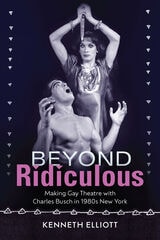
Beyond Ridiculous
Making Gay Theatre with Charles Busch in 1980s New YorkKenneth Elliott
University of Iowa Press, 2023
In Beyond Ridiculous, Elliott narrates in first-person the company’s Cinderella tale of fun, heartbreak, and dishy drama. At the center of the book is a young Charles Busch, an unforgettable personality fighting to be seen, be heard, and express his unique style as a writer-performer in plays such as Psycho Beach Party and The Lady in Question. The tragedy of AIDS among treasured friends in the company, the struggle for mainstream acceptance of LGBTQ+ theatre during the reign of President Ronald Reagan, and the exploration of new ways of being a gay theatre artist make the book a bittersweet and joyous ride.

Beyond the Mask
Gordon Craig, Movement, and the ActorIrene Eynat-Confino
Southern Illinois University Press, 1987
Eynat-Confino goes beyond the usual consideration of Craig’s purported theories of the actor, scenery, and the scene painter to get at the heart of Craig’s idea of theater.
She draws not only on the research of contemporary Craig scholars but on material hitherto unavailable—his writings and daybooks and the writings of friends. She ties Craig’s encounter with Isadora Duncan to a decisive modification in his notion of movement. To have an instrument more controllable than the actor, he invented the über-marionette, a giant puppet. Craig also invented the “Scene,” a kinetic stage, the “screens” that brought him worldwide fame were simply an adaptation of this concept.
Eynat-Confino argues that a scenario Craig wrote in 1905, here published for the first time, reveals a theosophical system like that of Blake, a system that was the main force motivating Craig’s artistic quest. In her final chapter, she carefully examines the psychological, aesthetic, and circumstantial factors that kept Craig from completing his work to bring “friendliness—humor—love—ease—peace” to the world.
Black Women Directors
Christina N. Baker
Rutgers University Press, 2022
Black women have long recognized the power of film for storytelling. For far too long, however, the cultural and historical narratives about film have not accounted for the contributions of Black women directors. This book remedies this omission by highlighting the trajectory of the culturally significant work of Black women directors in the United States, from the under-examined pioneers of the silent era, to the documentarians who sought to highlight the voices and struggles of Black women, and the contemporary Black women directors in Hollywood. Applying a Black feminist perspective, this book examines the ways that Black women filmmakers have made a way for themselves and their work by resisting the dominant cultural expectations for Black women and for the medium of film, as a whole.
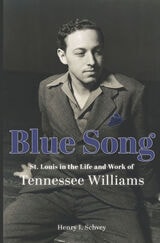
Blue Song
St. Louis in the Life and Work of Tennessee WilliamsHenry I. Schvey
University of Missouri Press, 2022
The question of this paradox lies at the heart of this book, an attempt not so much to correct the record about Williams’s well-chronicled dislike of the city, but rather to reveal how the city was absolutely indispensable to his formation and development both as a person and artist. Unlike the prevailing scholarly narrative that suggests that Williams discovered himself artistically and sexually in the deep South and New Orleans, Blue Song reveals that Williams remained emotionally tethered to St. Louis for a host of reasons for the rest of his life.
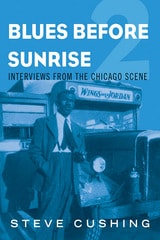
Blues Before Sunrise 2
Interviews from the Chicago SceneSteve Cushing
University of Illinois Press, 2019
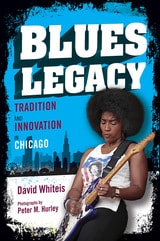
Blues Legacy
Tradition and Innovation in ChicagoDavid Whiteis
University of Illinois Press, 2019
David Whiteis delves into how the current and upcoming Chicago blues generations carry on this legacy. Drawing on in-person interviews, Whiteis places the artists within the ongoing social and cultural reality their work reflects and helps create. Beginning with James Cotton, Eddie Shaw, and other bequeathers, he moves through an all-star council of elders like Otis Rush and Buddy Guy and on to inheritors and today's heirs apparent like Ronnie Baker Brooks, Shemekia Copeland, and Nellie "Tiger" Travis.
Insightful and wide-ranging, Blues Legacy reveals a constantly adapting art form that, whatever the challenges, maintains its links to a rich musical past.
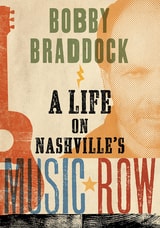
Bobby Braddock
A Life on Nashville’s Music RowBobby Braddock
Vanderbilt University Press, 2015
If you're looking for insight into Nashville, the life of music in this town, and the story of a force of nature on the Row to this day, Bobby Braddock will take you there.
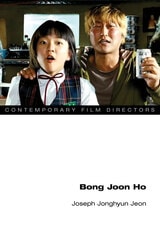
Bong Joon Ho
Joseph Jonghyun Jeon
University of Illinois Press, 2024
Insightful and engaging, Bong Joon Ho offers an up-to-date analysis of the genre-bending international director.
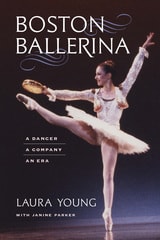
Boston Ballerina
A Dancer, a Company, an EraLaura Young and Janine Parker
University Press of New England, 2017

Bridger
By Bobby Bridger
University of Texas Press, 2009
Renowned for A Ballad of the West, his epic trilogy about the American West from the era of mountain man Jim Bridger to the closing of the frontier, Bobby Bridger has had a career in show business that spans the rockabilly-to-"Music City, USA" era in Nashville, the cosmic cowboy scene in Austin, the flowering of folk music, and even Broadway theater. His multifaceted talents have found expression in singing, acting, writing, painting, and sculpting. In this engrossing account of the personal and artistic journey that led him to create a new American art form, the epic ballad, Bridger touches on almost every major musical, entertainment, and cultural movement of the second half of the twentieth century, with a cast of characters that reads like a "Who's Who" of American popular culture.
Bridger's story begins in a small town in northeast Louisiana, where he first experienced the twin attractions of painting and music. He recounts his early efforts to become a successful Nashville singer-songwriter and his growing awareness that the commercial music business would never support his evolving desire to become a historical balladeer. Bridger recalls how his interest in folk music and folk ballads fired his ambition to tell the story of the American West. He movingly describes how this dream eventually became A Ballad of the West, an epic trilogy about Jim Bridger, the Lakota Sioux, and Buffalo Bill that has taken form in an acclaimed cycle of songs, a one-man show, books, full-cast stage performances, and other media.
Included in the book is a DVD that offers songs from A Ballad of the West and a sample from the forthcoming documentary Quest of an Epic Balladeer, based on Bobby Bridger's life and work.
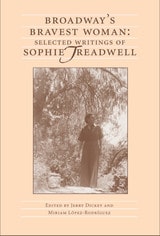
Broadway's Bravest Woman
Selected Writings of Sophie TreadwellEdited by Jerry Dickey and Miriam Lopez-Rodriguez
Southern Illinois University Press, 2006
This collection of plays, fiction, and journalistic essays by Sophie Treadwell provides an engaging portrait of one of America’s most innovative yet neglected feminists. Broadway’s Bravest Woman: Selected Writings of Sophie Treadwell is the first critical compilation of her prose and drama and highlights the most significant and formerly unavailable pieces of her work. Editors Jerry Dickey and Miriam López-Rodriguez place Treadwell within the context of the early twentieth century and outline four themes that infused her feminist ideology: the social positioning of women, ethnic identity in the United States, tensions between modern progressivism and conservatism, and the individual’s role in the face of social justice.
Treadwell’s critical reputation as a dramatist is largely based on the success of the 1928 expressionist drama Machinal, but little is known about her other dramas, much less her fiction and journalism. Drawing largely upon unpublished manuscripts, this volume documents the breadth of Treadwell’s work, from an investigative newspaper serial written in 1914 to selections from an autobiographical novel completed during World War II, which chronicled her development as a feminist.
In the introduction, Dickey and López-Rodriguez present a detailed portrait of Treadwell’s sensational but critically neglected journalistic career, from her 1915 serial on social welfare for prostitutes in San Francisco to her 1921 ground-breaking story on the Mexican revolutionary leader Pancho Villa. They also outline the personal and social factors that helped shape Treadwell’s feminist ideals.
Expanding the awareness of the feminist writer’s accomplishments, Broadway’s Bravest Woman is critical resource for students, scholars, and theatre artists. The collection, enhanced by six illustrations, not only offers the most complete portrait of Treadwell to date as a significant feminist voice in modern America but also provides a glimpse into the social life and international relations of the United States in the interwar period of the twentieth century.
Brother Dog
Southern Tales and Hollywood AdventuresHarry Thomason
Parkhurst Brothers, Inc., 2019
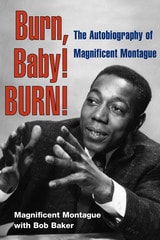
Burn, Baby! BURN!
The Autobiography of Magnificent MontagueMagnificent Montague with Bob Baker
University of Illinois Press, 2009
Like many black disc jockeys of his day, Montague played a role in his community beyond simply spreading the music of James Brown, Otis Redding, Aretha Franklin, and other prominent artists. Montague served as an unofficial spokesman for his black listeners, reflecting their beliefs and acting as a sounding board for their concerns.
Montague was based in Los Angeles in 1965 when the Watts rioters seized on his incendiary slogan, turning the shout of musical appreciation into a rallying cry for racial violence. In Burn, Baby! BURN! Montague recalls these tumultuous times, including the personal struggle he faced over whether to remain true to his listeners or bend to political pressure and stop shouting his suddenly controversial slogan.
Since the mid-1950s Montague had also expressed his passion for African American culture by becoming a zealous collector of artifacts of black history. He has built a monumental collection, taking time out from his collecting to become only the second African American to build his own radio station literally from the ground up.
A compelling account of a rich and varied life, Burn, Baby! BURN! gives an insider's view of half a century of black history, told with on-the-air zest by the DJ/historian who was there to see it unfold.