Results by title
434 books match the query 'Ethics & Moral Philosophy' and 13 start with b
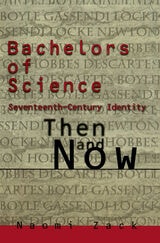
Bachelors of Science
Seventeenth Century Identity, Then and NowNaomi Zack
Temple University Press, 1996
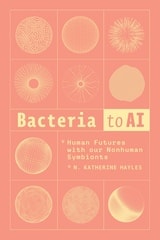
Bacteria to AI
Human Futures with Our Nonhuman SymbiontsN. Katherine Hayles
University of Chicago Press, 2025
A new theory of mind that includes nonhuman and artificial intelligences.
The much-lauded superiority of human intelligence has not prevented us from driving the planet into ecological disaster. For N. Katherine Hayles, the climate crisis demands that we rethink basic assumptions about human and nonhuman intelligences. In Bacteria to AI, Hayles develops a new theory of mind—what she calls an integrated cognitive framework (ICF)—that includes the meaning-making practices of lifeforms from bacteria to plants, animals, humans, and some forms of artificial intelligence. Through a sweeping survey of evolutionary biology, computer science, and contemporary literature, Hayles insists that another way of life, with ICF at its core, is not only possible but necessary to safeguard our planet’s future.
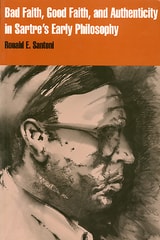
Bad Faith Good Faith
Ronald E. Santoni
Temple University Press, 1995
From the beginning to the end of his philosophizing, Sartre appears to have been concerned with "bad faith"—our "natural" disposition to flee from our freedom and to lie to ourselves. Virtually no aspect of his monumental system has generated more attention. Yet bad faith has been plagued by misinterpretation and misunderstanding. At the same time, Sartre's correlative concepts of "good faith" and "authenticity" have suffered neglect or insufficient attention, or been confused and wrongly identified by Sartre scholars, even by Sartre himself.
Ronald E. Santoni takes on the challenge of distinguishing these concepts, and of showing whether either or both existential "attitudes" afford deliverance from the hell of Sartre's bad faith. He offers the first fill-scale analysis, reconstruction, and differentiation of these ways of existing as they develop in Sartre's early works (1937-1947).
Although he attempts to redeem Sartre's slighted concept of good faith, Santoni warns that it must not be viewed interchangeably with authenticity. Further, in one of the earliest and most sustained studies of Sartre's Notebooks for an Ethics available in English, Santoni shows how Sartre's posthumously published notes for an "ethics of Salvation" confirm his differentiation and argument. The way out of Sartrean hell, Santoni insists, is authenticity—living "with fidelity" to our unjustifiable freedom and assuming responsibility for it.
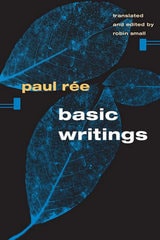
Basic Writings
Paul Rée
University of Illinois Press, 2003
Nietzsche scholars have often incorrectly attributed to him arguments and ideas that are Rée’s and have failed to detect responses to Rée’s works in Nietzsche’s writings. Rée’s thinking combined two strands: a pessimistic conception of human nature, presented in the French moralists’ aphoristic style that would become a mainstay of Nietzsche’s own writings, and a theory of morality derived from Darwin’s theory of natural selection. Rée’s moral Darwinism was a central factor prompting Nietzsche to write On the Genealogy of Morals and the groundwork for much of today’s “evolutionary ethics.”
In an illuminating critical introduction, Robin Small examines Rée’s life and work, locating his application of evolutionary concepts to morality within a broader history of Darwinism while exploring Rée’s theoretical and personal relationship with Nietzsche. In placing Nietzsche in his intellectual and social context, Small profoundly challenges the myth of Nietzsche as a solitary thinker.
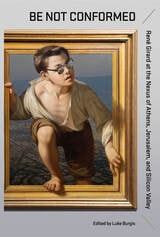
Be Not Conformed
Rene Girard at the Nexus of Athens, Jerusalem, and Silicon ValleyLuke Burgis
Catholic University of America Press, 2026

Before the Law
The Complete Text of PréjugésJacques Derrida
University of Minnesota Press, 2018
Thinking judgment in relation to the work of Jean-François Lyotard
“How to judge—Jean-François Lyotard?” It is from this initial question that one of France’s most heralded philosophers of the twentieth century begins his essay on the origin of the law, of judgment, and the work of his colleague Jean-François Lyotard. If Jacques Derrida begins with the term préjugés, it is in part because of its impossibility to be rendered properly in other languages and also contain all its meanings: to pre-judge, to judge before judging, to hold prejudices, to know “how to judge,” and more still, to be already prejudged oneself.
Striving to contain that which comes before the law, that is in front of the law and also prior to it, how to judge Jean-François Lyotard then becomes perhaps a beneficial attempt for Derrida to explore humanity’s rapport with judgment, origins, and naming. For how does one come to judge the author of the Differend? How does one abstain from judgment to accept the term préjugés as suspending judgment and at once as taking into account the impossibility of speaking before the law, prior to naming or judging? If this task indeed seems insurmountable, it is the site where Lyotard’s work itself is played out. Hence this sincere and intriguing essay presented by Jacques Derrida, published here for the first time in English.
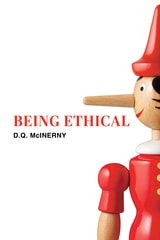
Being Ethical
D. Q. McInerny
St. Augustine's Press, 2020
The two biggest judgments one will make during life pertain to knowing what is good, what is bad, and the difference between the two. This bleeds into a study of morality and ethics when it pertains to concrete acts, but in reality all aspects of our lives bear on these judgments. “Being ethical is not simply a state of mind, it is a state of being, a way of living one’s life that reflects the fundamental principles of ethics [...] [it is one] who lives in a certain way.” Nevertheless, the subject of this book focuses on ethics––namely, the goodness or badness of human acts. McInerny’s great reason for writing this work is to teach the reader that he or she cannot properly tackle ethical questions (even if they are not identified as such) if one is not himself or herself actually ethical (living virtuously).
Writing very much as a teacher of teachers, McInerny relies on the foundations of Aristotle and Thomas Aquinas, as well as his late brother, Ralph McInerny, to reiterate the principles of ethics that inform both thought and act. To speak of ethics, then, is to admit a commitment to virtue and how the theoretical distinction of good and bad is necessarily practical. Acting well will lead to thinking better, but McInerny notes that culture has lost sight of the former and thereby the coherency to address ethical questions. Being Ethical aims to correct this disconnect in forty-eight cogent lessons.
Being Ethical is fundamentally intended to serve as a sequel to D. Q. McInerny’s Being Logical (Random House, 2004), which has remained in print and has been translated into six languages. Its style lends itself to being used as a textbook in liberal studies. More generally, it is a refreshing presentation of this topic and timely and timeless exhortation to readers of the necessity of a love of virtue for ethical thought. For friends and students of Aristotle, Thomas Aquinas and Ralph McInerny, this book bears a style and manner that is both familiar and much loved.
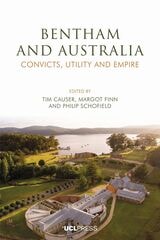
Bentham and Australia
Convicts, Utility and EmpireEdited by Tim Causer, Margot Finn, and Philip Schofield
University College London, 2022
This volume considers Jeremy Bentham’s Australian writings. In the first part of the volume, Bentham’s works are placed in their historical contexts, while the second part provides a critical assessment of the historical accuracy and plausibility of Bentham’s arguments against transportation from the British Isles. In the third part, attention turns to Bentham’s claim that New South Wales was founded illegally and to the imperial and colonial constitutional ramifications of that claim. The authors also discuss Bentham’s work of 1831 in which he supports the establishment of a free colony on the southern coast of Australia. In the final part, the authors shed light on the history of Bentham’s panopticon penitentiary scheme, his views on the punishment and reform of criminals and what role, if any, religion had to play in that regard, and discuss apparently panopticon-inspired institutions built in the Australian colonies.
This collection will appeal to readers interested in Bentham’s life and thought, the history of transportation from the British Isles and of British penal policy more generally, colonial and imperial history, Indigenous history, legal and constitutional history, and religious history.
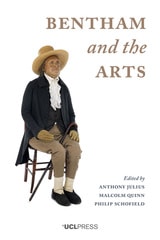
Bentham and the Arts
Edited by Anthony Julius, Malcolm Quinn, and Philip Schofield
University College London, 2020
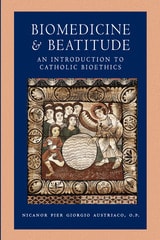
Biomedicine and Beatitude
An Introduction to Catholic BioethicsNicanor Pier Giorgio AUSTRIACO
Catholic University of America Press, 2011
Biopolitics from Below
Crisis, Conjuncture, RuptureRanabir Samaddar
Central European University Press, 2025
The current social turmoil enveloping the world has produced knee jerk reactions and a plethora of policy declarations. At the same time, the scenario is marked with response of those with low socioeconomic status to the worldwide chaos and precarious living conditions. In this context, how do we make sense of what is being described variously as a breakdown of democracy, its exhaustion, and the new challenges in the form of an alternative politics of life or a phenomenon that we may term as “biopolitics from below”?
The theme of the book is crisis, conjuncture, and rupture. It relates to the question of correlation of social and political forces in the emergence of certain events, presents certain events as illustrations, and takes a historiographical-analytical route to argue why certain things happen in the way they happen. Usually, crisis is the explanatory factor. This book seeks to go deeper and find out why some crises and not all produce unexpected outcomes. Or, as this book puts it differently, the essential gradient of a crisis is the correlation of forces at a particular time - and thus the question of conjuncture. The book seeks to open up to new adventures in thought, imagining new openings, and creating exits from the situation we find ourselves in.

Biotechnology and Society
An IntroductionHallam Stevens
University of Chicago Press, 2016
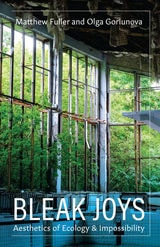
Bleak Joys
Aesthetics of Ecology and ImpossibilityMatthew Fuller
University of Minnesota Press, 2019
A philosophical and cultural distillation of the bleak joys in today’s ambivalent ecologies and patterns of life
Bleak Joys develops an understanding of complex entities and processes—from plant roots to forests to ecological damage and its calculation—as aesthetic. It is also a book about “bad” things, such as anguish and devastation, which relate to the ecological and technical but are also constitutive of politics, the ethical, and the formation of subjects.
Avidly interdisciplinary, Bleak Joys draws on scientific work in plant sciences, computing, and cybernetics, as well as mathematics, literature, and art in ways that are not merely illustrative of but foundational to our understanding of ecological aesthetics and the condition in which the posthumanities are being forged. It places the sensory world of plants next to the generalized and nonlinear infrastructure of irresolvability—the economics of indifference up against the question of how to make a home on Planet Earth in a condition of damaged ecologies. Crosscutting chapters on devastation, anguish, irresolvability, luck, plant, and home create a vivid and multifaceted approach that is as remarkable for its humor as for its scholarly complexity.
Engaging with Deleuze, Guattari, and Bakhtin, among others, Bleak Joys captures the modes of crises that constitute our present ecological and political condition, and reckons with the means by which they are not simply aesthetically known but aesthetically manifest.