Results by title
715 books match the query 'Ethnic relations' and 40 start with b
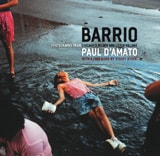
Barrio
Photographs from Chicago's Pilsen and Little VillagePaul D'Amato
University of Chicago Press, 2006
Barrio collects ninety of these striking color images along with D’Amato’s fascinating account of his time photographing Mexican Chicago and his acceptance—often grudging, after threatened violence—into the heart of the city’s Mexican community. Some of the photos here are beautifully composed and startling—visual narratives that are surreal and dreamlike, haunting and mythic. Others, like those D’Amato took while shadowing graffiti artists in the subway, are far more immediate and improvisational. With a foreword by author Stuart Dybek that places D’Amato’s work in the context of the Pilsen and Little Village that Dybek has elsewhere captured so memorably, this book offers a penetrating, evocative, and overall streetwise portrait of two iconic and enduring Hispanic neighborhoods.

Batos, Bolillos, Pochos, and Pelados
Class and Culture on the South Texas BorderBy Chad Richardson and Michael J. Pisani
University of Texas Press, 2017
A classic account of life on the Texas-Mexico border, Batos, Bolillos, Pochos, and Pelados offers the fullest portrait currently available of the people of the South Texas/Northern Mexico borderlands. First published in 1999, the book is now extensively revised and updated throughout to cover developments since 2000, including undocumented immigration, the drug wars, race relations, growing social inequality, and the socioeconomic gap between Latinos and the rest of American society—issues of vital and continuing national importance.
An outgrowth of the Borderlife Research Project conducted at the University of Texas Rio Grande Valley, Batos, Bolillos, Pochos, and Pelados uses the voices of several hundred Valley residents, collected by embedded student researchers and backed by the findings of sociological surveys, to describe the lives of migrant farmworkers, colonia residents, undocumented domestic servants, maquiladora workers, and Mexican street children. Likewise, it explores social, racial, and ethnic relations in South Texas among groups such as Latinos, Mexican immigrants, wealthy Mexican visitors, Anglo residents or tourists, and Asian and African American residents of South Texas. With this firsthand material and an explanatory focus that utilizes and applies social-science theoretical concepts, the book thoroughly addresses the future composition and integration of Latinos into the society and culture of the United States.
Because I Don't Have Wings
Stories of Mexican Immigrant LifePhilip Garrison
University of Arizona Press, 2006
Philip Garrison has spent most of his life in this region and shares in vivid prose tales of immigrant life, both contemporary and historical, revealing the dual lives of first-generation Mexican immigrants who move smoothly between the Yakima Valley and their homes in Mexico. And with a scholar’s eye he examines figures of speech that reflect mexicano feelings about immigrant life, offering glimpses of adaptation through offhand remarks, family spats, and town gossip.
Written with irony but bursting with compassion, Because I Don’t Have Wings features vivid characters, telling anecdotes, and poignant reflections on life, unfolding an immigrant’s world strikingly different from the one we usually read about. Adaptation, persistence, and survival, we learn, are traits that mexicano culture values. We also learn that, over time, mexicano immigrants don’t merely adapt to the culture of el norte, they transform it.
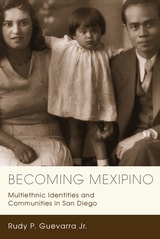
Becoming Mexipino
Multiethnic Identities and Communities in San DiegoGuevarra, Rudy P
Rutgers University Press, 2012
Through racially restrictive covenants and other forms of discrimination, both groups, regardless of their differences, were confined to segregated living spaces along with African Americans, other Asian groups, and a few European immigrant clusters. Within these urban multiracial spaces, Mexicans and Filipinos coalesced to build a world of their own through family and kin networks, shared cultural practices, social organizations, and music and other forms of entertainment. They occupied the same living spaces, attended the same Catholic churches, and worked together creating labor cultures that reinforced their ties, often fostering marriages. Mexipino children, living simultaneously in two cultures, have forged a new identity for themselves. Their lives are the lens through which these two communities are examined, revealing the ways in which Mexicans and Filipinos interacted over generations to produce this distinct and instructive multiethnic experience. Using archival sources, oral histories, newspapers, and personal collections and photographs, Guevarra defines the niche that this particular group carved out for itself.
Becoming New Yorkers
Ethnographies of the New Second GenerationPhilip Kasinitz
Russell Sage Foundation, 2004
Becoming Refugee American
The Politics of Rescue in Little SaigonPhuong Nguyen
University of Illinois Press, 2017
Phuong Tran Nguyen examines the phenomenon of refugee nationalism among Vietnamese Americans in Southern California. Here, the residents of Little Saigon keep alive nostalgia for the old regime and, by extension, their claim to a lost statehood. Their refugee nationalism is less a refusal to assimilate than a mode of becoming, in essence, a distinct group of refugee Americans. Nguyen examines the factors that encouraged them to adopt this identity. His analysis also moves beyond the familiar rescue narrative to chart the intimate yet contentious relationship these Vietnamese Americans have with their adopted homeland. Nguyen sets their plight within the context of the Cold War, an era when Americans sought to atone for broken promises but also saw themselves as providing a sanctuary for people everywhere fleeing communism.

Behind the Backlash
Muslim Americans After 9/11Lori Peek
Temple University Press, 2010
As the nation tried to absorb the shock of the 9/11 attacks, Muslim Americans were caught up in an unprecedented wave of backlash violence. Public discussion revealed that widespread misunderstanding and misrepresentation of Islam persisted, despite the striking diversity of the Muslim community.
Letting the voices of 140 ordinary Muslim American men and women describe their experiences, Lori Peek's path-breaking book, Behind the Backlash presents moving accounts of prejudice and exclusion. Muslims speak of being subjected to harassment before the attacks, and recount the discrimination they encountered afterwards. Peek also explains the struggles of young Muslim adults to solidify their community and define their identity during a time of national crisis.
Behind the Backlash seeks to explain why blame and scapegoating occur after a catastrophe. Peek sets the twenty-first century experience of Muslim Americans, who were vilified and victimized, in the context of larger sociological and psychological processes. Peek’s book will be of interest to those in disaster research studies, sociology of religion, and race and ethnic relations.

Behind the Bamboo Hedge
The Impact of the Homeland Politics in the Parisian Vietnamese CommunityGisele L. Bousquet
University of Michigan Press, 1991
Being Jewish in the New Germany
Being Jewish in the New Germany, First Paperback EditionJeffrey M. Peck
Rutgers University Press, 2007
Germany today boasts the fastest growing population of Jews in Europe. The streets of Berlin abound with signs of a revival of Jewish culture, ranging from bagel shops to the sight of worshipers leaving synagogue on Saturday. With the new energy infused by Jewish immigration from Russia and changes in immigration and naturalization laws in general, Jeffrey M. Peck argues that we must now begin considering how Jews live in Germany rather than merely asking why they would choose to do so.
In Being Jewish in the New Germany, Peck explores the diversity of contemporary Jewish life and the complex struggles within the community-and among Germans in general-over history, responsibility, culture, and identity. He provides a glimpse of an emerging, if conflicted, multicultural country and examines how the development of the European Community, globalization, and the post-9/11 political climate play out in this context. With sensitive, yet critical, insight into the nation's political and social life, chapters explore issues such as the shifting ethnic/national makeup of the population, changes in political leadership, and the renaissance of Jewish art and literature. Peck also explores new forms of anti-Semitism and relations between Jews and Turks-the country's other prominent minority population.
In this surprising description of the rebirth of a community, Peck argues that there is, indeed, a vibrant and significant future for Jews in Germany. Written in clear and compelling language, this book will be of interest to the general public and scholars alike.

Being and Belonging
Muslims in the United States since 9/11Katherine Pratt Ewing
Russell Sage Foundation, 2008

Belgians in Michigan
Bernard A. Cook
Michigan State University Press, 2007
At the beginning of the twenty-first century, Michigan was home to the second-largest Belgian population in the United States, and Detroit had one of the largest Belgian populations in the nation. Although immigration declined after World War I, the Belgian- American community is still prominent in the state. Political, religious, and economic conditions, including a nineteenth- century economic depression, helped motivate the move to America. Belgians brought with them the ability and willingness to innovate, as well as a tradition of hard work and devotion. The Gazette van Detroit, a Flemish-language newspaper first printed in Detroit in 1914, continues to be produced and distributed to subscribers throughout the United States and overseas. Belgian-Americans continue to incorporate traditional values with newfound American values, enabling them to forever preserve their heritage.
Belonging, Identity, and Conflict in the Central African Republic
Gino Vlavonou
University of Wisconsin Press, 2023
Focusing on violent struggles in the Central African Republic between 2012 and 2019, Gino Vlavonou explores the social practices, discursive strategies, and government policies that emerged in the relentless project of African state building. Conflict pitted Christian-animist communities, loosely organized as vigilante groups under the name anti-Balaka, against Muslim rebels known as the Séléka. Fighters of the anti-Balaka claimed that they were autochthonous, the “true Central Africans,” reframing their Muslim neighbors as foreigners to be expelled. While the country had previously witnessed episodes of violence, both peoples had lived together relatively peacefully and intermarried. The speed and ferocity with which identity was weaponized puzzled many observers. To understand this phenomenon, Vlavonou probes autochthony as a category of identity that differs from ethnicity in important ways. He argues that elites and ordinary citizens alike mobilize the language of original belonging as “identity capital,” a resource to be deployed. The value of that capital is lodged in what people say and do every day to give meaning to their identity, and its content changes across time and space.
Between Mussolini and Hitler
The Jews and the Italian Authorities in France and TunisiaDaniel Carpi
University Press of New England, 2002
Between Two Fires
Gypsy Performance and Romani Memory from Pushkin to Post-SocialismAlaina Lemon
Duke University Press, 2000
Lemon’s ethnographic study is based on extensive fieldwork in 1990s Russia and focuses on Moscow Romani Theater actors as well as Romani traders and metalworkers. Drawing from interviews with Roma and Russians, observations of performances, and conversations, as well as archives, literary texts, and media, Lemon analyzes the role of theatricality and theatrical tropes in Romani life and the everyday linguistics of social relations and of memory. Historically, the way Romani stage performance has been culturally framed and positioned in Russia has served to typecast Gypsies as “natural” performers, she explains. Thus, while theatrical and musical performance may at times empower Roma, more often it has reinforced and rationalized racial and social stereotypes, excluding them from many Soviet and Russian economic and political arenas. Performance, therefore, defines what it means to be Romani in Russia differently than it does elsewhere, Lemon shows. Considering formal details of language as well as broader cultural and social structures, she also discusses how racial categories relate to post-Soviet economic changes, how gender categories and Euro-Soviet notions of civility are connected, and how ontological distinctions between “stage art” and “real life” contribute to the making of social types. This complex study thus serves as a corrective to romantic views of Roma as detached from political forces.

Between the Eagle and the Sun
Traces of JapanIhab Hassan
University of Alabama Press, 1996
A fascinating memoir by Egypt-born American literary theorist and writer Ihab Hassan about his life in Japan. Part recollection, part cultural perception, Between the Eagle and the Sun records his journey, living and seeing himself sometimes as another, assaying always to read the hieroglyphs of his past in the scripts of Japan. As lucid as it is intensely felt, at once lyrical and critical, the work offers a beguiling vision of Japan and, by tacit contrast, of America. For writing, the author says, is more than praise or blame, it is also knowledge, empathy, and delight. These attributes are evident in Hassan's treatment of Japanese culture, its people and scenes. Indeed, the people, rendered in vibrant portraits throughout the book, abide when all the shadows of romance and exasperation have fled.
True to its moment, the work also reinvests the forms of memoir, travel, and quest. Cultural essays, travel anecdotes, autobiographical meditations, portraits of Japanese friends, a section titled "Entries, A to Z," fit into a tight frame, with clear transitions from one section to another. The style, however, alters subtly to suit topic, occasion, and mood.
Japan may not hold the key to this planet's future; no single nation does. Yet the continuing interest in its history, society, and people and the incresed awareness of its recent trends and growing global impact engage an expanding audience. Avoiding cliches, sympathetic to its subject yet analytical, unflinching in judgment, and withal highly personal, Between the Eagle and the Sun offers a unique image of its subject by a distinguished and well-traveled critic, at home in several cultures.
Beyond Germs
Native Depopulation in North AmericaEdited by Catherine M. Cameron, Paul Kelton, and Alan C. Swedlund
University of Arizona Press, 2015
Beyond Germs: Native Depopulation in North America challenges the “virgin soil” hypothesis that was used for decades to explain the decimation of the indigenous people of North America. This hypothesis argues that the massive depopulation of the New World was caused primarily by diseases brought by European colonists that infected Native populations lacking immunity to foreign pathogens. In Beyond Germs, contributors expertly argue that blaming germs lets Europeans off the hook for the enormous number of Native American deaths that occurred after 1492.
Archaeologists, anthropologists, and historians come together in this cutting-edge volume to report a wide variety of other factors in the decline in the indigenous population, including genocide, forced labor, and population dislocation. These factors led to what the editors describe in their introduction as “systemic structural violence” on the Native populations of North America.
While we may never know the full extent of Native depopulation during the colonial period because the evidence available for indigenous communities is notoriously slim and problematic, what is certain is that a generation of scholars has significantly overemphasized disease as the cause of depopulation and has downplayed the active role of Europeans in inciting wars, destroying livelihoods, and erasing identities.
Beyond Mosque, Church, and State
Alternative Narratives of the Nation in the BalkansYana Hashamova
Central European University Press, 2016

Beyond Pluralism
The Conception of Groups and Group Identities in AmericaEdited by Wendy F. Katkin, Ned Landsman, and Andrea Tyree
University of Illinois Press, 1998
melting pot, people come in all persuasions. This volume attempts to bridge
the gap that has developed between pluralists and multiculturalists, advocates
of the academic canon and defenders of diversity, celebrants of ethnic
heritage and critics of racial ascription. Contributors explore the nation's
pluralistic framework as a historical creation, looking at group relations
in the United States and how they have been conceptualized in the past.
Beyond Segregation
Multiracial And Multiethnic NeighborhoodsMichael T. Maly
Temple University Press, 2005
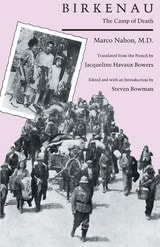
Birkenau, The Camp Of Death
Marco Nahon
University of Alabama Press, 1989

Birmingham's Rabbi
Morris Newfield and Alabama, 1895-1940Mark Cowett
University of Alabama Press, 1986
Taking a multidimensional approach, Cowett places Newfield's early life in the context of his Hungarian childhood and also relates Newfield’s career to those of fellow Hebrew Union College graduates and to national Reform Jewish history. The reader is made aware constantly of changing conditions in Birmingham, in Alabama, and in the south and how those changes affected Newfield’s congregants. Cowett illuminates Newfield’s efforts to help Jews maintain a sense of religious identity in a predominately Southern and Christian environment.
Based upon essential sources including interviews, newspapers, and manuscript collections in Alabama and at the American Jewish Archives in Cincinnati, Cowett shows Newfield’s struggle to support social welfare efforts in Alabama during the Progressive Era. He recognized the need for Jews to develop bonds with other American ethnic groups. Cowett portrays him as a mediator between not only Jew and Christian but also black and white, labor and capital, liberal and conservative—in short, within the full spectrum of political and social exchange in an industrial city of the New South.
Black Power, Jewish Politics
Reinventing the Alliance in the 1960sMarc Dollinger
Brandeis University Press, 2018

Black Star
Britain's Asian Youth MovementsAnandi Ramamurthy
Pluto Press, 2013
Black Star documents the vibrant Asian Youth Movements in 1970s and 80s Britain who struggled against the racism of the street and the state. Anandi Ramamurthy shows how they drew inspiration from Black Power movements as well as anti-imperialist and workers' struggles across the globe.
Drawing on her intimate knowledge and extensive research, Ramamurthy shows how the struggle to make Britain 'home' led to a broad-based identity where 'black' was a political colour inspiring unity amongst all those struggling against racism.
Ramamurthy documents how by the late 1980s this broad based black identity disintegrated as Islamophobia became a new form of racism. In the process the legacy of the Asian Youth Movements has been largely hidden. Black Star retrieves this history and demonstrates its importance for political struggles today.
Black and Green
The Fight For Civil Rights in Northern Ireland & Black AmericaBrian Dooley
Pluto Press, 1998
'Focusing on the period from the 1960s onward, Brian Dooley suggests that the black rights struggle in the US had a formative influence on Northern Ireland's civil rights movement which adopted similar tactics of protest marches and sit-ins ... A well researched book, written from an unusual angle that illuminates this understudied international influence on the Ulster conflict' Political Studies
Ties between political activists in Black America and Ireland span several centuries, from the days of the slave trade to the close links between Frederick Douglass and Daniel O’Connell, and between Marcus Garvey and Eamon de Valera. This timely book traces those historic links and examines how the struggle for black civil rights in America in the 1960s helped shape the campaign against discrimination in Northern Ireland. The author includes interviews with key figures such as Angela Davis, Bernadette McAliskey and Eamonn McCann.
Black-Brown Relations and Stereotypes
By Tatcho Mindiola, Jr., Yolanda Flores Niemann, and Nestor Rodriguez
University of Texas Press, 2002
Race relations in twenty-first-century America will not be just a black-and-white issue. The 2000 census revealed that Hispanics already slightly outnumber African Americans as the largest ethnic group, while together Blacks and Hispanics constitute the majority population in the five largest U.S. cities. Given these facts, black-brown relations could be a more significant racial issue in the decades to come than relations between minority groups and Whites.
Offering some of the first in-depth analyses of how African Americans and Hispanics perceive and interact with each other, this pathfinding study looks at black-brown relations in Houston, Texas, one of the largest U.S. cities with a majority ethnic population and one in which Hispanics outnumber African Americans. Drawing on the results of several sociological studies, the authors focus on four key issues: how each group forms and maintains stereotypes of the other, areas in which the two groups conflict and disagree, the crucial role of women in shaping their communities' racial attitudes, and areas in which Hispanics and African Americans agree and can cooperate to achieve greater political power and social justice.
Black-Brown Solidarity
Racial Politics in the New Gulf SouthBy John D. Márquez
University of Texas Press, 2014
Houston is the largest city in the Gulf South, a region sometimes referred to as the “black belt” because of its sizeable African American population. Yet, over the last thirty years, Latinos have become the largest ethnic minority in Houston, which is surpassed only by Los Angeles and New York in the number of Latino residents. Examining the history and effects of this phenomenon, Black-Brown Solidarity describes the outcomes of unexpected coalitions that have formed between the rapidly growing Latino populations and the long-held black enclaves in the region.
Together, minority residents have put the spotlight on prominent Old South issues such as racial profiling and police brutality. Expressions of solidarity, John D. Márquez argues, have manifested themselves in expressive forms such as hip-hop music, youth gang cultural traits, and the storytelling of ordinary residents in working-class communities. Contrary to a growing discourse regarding black-brown conflict across the United States, the blurring of racial boundaries reflects broader arguments regarding hybrid cultures that unsettle the orders established by centuries-old colonial formations. Accentuating what the author defines as a racial state of expendability—the lynchpin of vigilante violence and police brutality—the new hybridization has resulted in shared wariness of a linked fate. Black-Brown Solidarity also explores the ways in which the significance of African American history in the South has influenced the structures through which Latinos have endured and responded to expendability. Mining data from historical archives, oral histories, legal documents, popular media, and other sources, this work is a major contribution to urban studies, ethnic studies, and critical race theory.
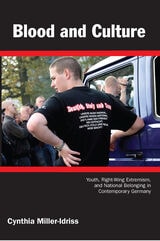
Blood and Culture
Youth, Right-Wing Extremism, and National Belonging in Contemporary GermanyCynthia Miller-Idriss
Duke University Press, 2009
Miller-Idriss describes a new understanding of national belonging emerging among young Germans—one in which cultural assimilation takes precedence over blood or ethnic heritage. Moreover, she argues that teachers’ well-intentioned, state-sanctioned efforts to counter nationalist pride often create a backlash, making radical right-wing groups more appealing to their students. Miller-Idriss argues that the state’s efforts to shape national identity are always tempered and potentially transformed as each generation reacts to the official conception of what the nation “ought” to be.
Blood and Religion
The Unmasking of the Jewish and Democratic StateJonathan Cook
Pluto Press, 2006
"An original and powerful book." --Ilan Pappe, Senior Lecturer in Political Science, Haifa University, and author of A Modern History of Palestine
"Very impressive. . . . Some of his findings will astound even the knowledgeable reader." --Salim Tamari, Director, Institute of Jerusalem Studies
What is Israel hoping to achieve with its recent withdrawal from Gaza and the buildiing of a 700 km wall? Journalist Jonathan Cook presents a lucid account of the motives. The heart of the issue, he argues, is demography. Israel fears the moment when the region's Palestinians--Israel's own Palestinian citizens and those in the Occupied Territories--become a majority. Inevitable omparisons with apartheid in South Africa will be drawn. The book charts Israel's increasingly desperate responses, including military repression of Palestinian dissent; a ban on marriages between Israel's Palestinian population and Palestinians living under occupation to prevent a right of return "through the back door;" and the redrawing of the Green Line to create an expanded state. Ultimately, the author concludes, these abuses will lead to a third, far deadlier intifada.
Jonathan Cook, a former staff journalist of the Guardian newspaper, has written for the Times, Le Monde diplomatique, the International Herald Tribune, al-Ahram Weekly, and Aljazeera.net. He is based in Nazareth.
Bohemia's Jews and Their Nineteenth Century
Texts, Contexts, ReassessmentsJindrich Toman
Karolinum Press, 2023
This book on Jewish culture and literature focuses on the “quiet” decades of the nineteenth century, a scarcely written-about period of time in Bohemian Jewish history. Using a myriad of sources, including travelers’ accounts, poems, essays, short stories, guides, and newspaper articles, the volume explores Jewish expression, Jewish-Czech relations, and the changing attitudes toward Jews between the 1820s and 1880s. It offers close readings of writers like Karel Havlíćek Borovský, Ján Kollár, Siegfried Kapper, and Jan Neruda, as well as lesser-known authors and sources. Combining skillful sustained analysis, judicious argumentation, and elegant writing, the book is a truly enriching reading experience.
Border Citizens
The Making of Indians, Mexicans, and Anglos in ArizonaBy Eric V. Meeks; foreword by Patricia Nelson Limerick
University of Texas Press, 2007
In Border Citizens, historian Eric V. Meeks explores how the racial classification and identities of the diverse indigenous, mestizo, and Euro-American residents of Arizona’s borderlands evolved as the region was politically and economically incorporated into the United States. First published in 2007, the book examines the complex relationship between racial subordination and resistance over the course of a century. On the one hand, Meeks links the construction of multiple racial categories to the process of nation-state building and capitalist integration. On the other, he explores how the region’s diverse communities altered the blueprint drawn up by government officials and members of the Anglo majority for their assimilation or exclusion while redefining citizenship and national belonging.
The revised edition of this highly praised and influential study features dozens of new images, an introductory essay by historian Patricia Nelson Limerick, and a chapter-length afterword by the author. In his afterword, Meeks details and contextualizes Arizona’s aggressive response to undocumented immigration and ethnic studies in the decade after Border Citizens was first published, demonstrating that the broad-based movement against these measures had ramifications well beyond Arizona. He also revisits the Yaqui and Tohono O’odham nations on both sides of the Sonora-Arizona border, focusing on their efforts to retain, extend, and enrich their connections to one another in the face of increasingly stringent border enforcement.
Border Dilemmas
Racial and National Uncertainties in New Mexico, 1848–1912Anthony Mora
Duke University Press, 2011
Borderless Borders
edited by Frank Bonilla, Edwin Meléndez, Rebecca Morales and María de los Angeles Torres
Temple University Press, 2000
Borderless Borders describes the structural processes and active interventions taking place inside and outside U.S. Latino communities. After a context-setting introduction by urban planner Rebecca Morales, the contributors focus on four themes. Economist Manuel Pastor Jr., urban sociologist Saskia Sassen, and political scientist Carol Wise look at emerging forms of global and transnational interdependence and at whether they are likely to produce individuals who are economically independent or simply more dependent. Sociologist Jorge Chapa, social anthropologist Maria P. Fernandez Kelly, and economist Edwin Melendez examine the negative impact of economic and political restructuring within the United States,especially within Latino communities. Performance artist Guillermo Gomez-Pena, legal scholar Gerald Torres, political scientist Maria de los Angeles Torres, and modern language specialist Silvio Torres-Saillant consider the implications -- for community formation, citizenship, political participation, and human rights -- of the fact that individuals are forced to construct identities for themselves in more than one sociopolitical setting. Finally, sociologist Jeremy Brecher, sociologist Frank Bonilla, and political scientist Pedro Caban speculate on new paths into international relations and issue-oriented social movements and organizations among these mobile populations. To supplement the written contributions, Painter Bibiana Suarez has chosen several artworks that contribute to the interdisciplinary scope of the book.
Bosnia the Good
Tolerance and TraditionRusmir Mahmutcehajic
Central European University Press, 2000
Bourdieu's Secret Admirer in the Caucasus
A World-System BiographyGeorgi M. Derluguian
University of Chicago Press, 2005
Exploring globalization, democratization, ethnic identity, and international terrorism, Derluguian contextualizes Shanib's personal trajectory from de-Stalinization through the nationalist rebellions of the 1990s, to the recent rise in Islamic militancy. He masterfully reveals not only how external economic and political forces affect the former Soviet republics but how those forces are in turn shaped by the individuals, institutions, ethnicities, and social networks that make up those societies. Drawing on the work of Charles Tilly, Immanuel Wallerstein, and, of course, Bourdieu, Derluguian's explanation of the recent ethnic wars and terrorist acts in Russia succeeds in illuminating the role of human agency in shaping history.
Brothers and Strangers
The East European Jew in German and German Jewish Consciousness, 1800–1923Steven E. Aschheim
University of Wisconsin Press, 1983
Brothers and Strangers traces the history of German Jewish attitudes, policies, and stereotypical images toward Eastern European Jews, demonstrating the ways in which the historic rupture between Eastern and Western Jewry developed as a function of modernism and its imperatives. By the 1880s, most German Jews had inherited and used such negative images to symbolize rejection of their own ghetto past and to emphasize the contrast between modern “enlightened” Jewry and its “half-Asian” counterpart. Moreover, stereotypes of the ghetto and the Eastern Jew figured prominently in the growth and disposition of German anti-Semitism. Not everyone shared these negative preconceptions, however, and over the years a competing post-liberal image emerged of the Ostjude as cultural hero. Brothers and Strangers examines the genesis, development, and consequences of these changing forces in their often complex cultural, political, and intellectual contexts.
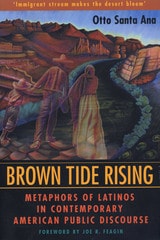
Brown Tide Rising
Metaphors of Latinos in Contemporary American Public DiscourseBy Otto Santa Ana
University of Texas Press, 2002
2002 – Best Book on Ethnic and Racial Political Ideology and/or Political Theory – Organized Section on Race, Ethnicity, and Politics of the American Political Science Association
"...awash under a brown tide...the relentless flow of immigrants..like waves on a beach, these human flows are remaking the face of America...." Since 1993, metaphorical language such as this has permeated mainstream media reporting on the United States' growing Latino population. In this groundbreaking book, Otto Santa Ana argues that far from being mere figures of speech, such metaphors produce and sustain negative public perceptions of the Latino community and its place in American society, precluding the view that Latinos are vested with the same rights and privileges as other citizens.
Applying the insights of cognitive metaphor theory to an extensive natural language data set drawn from hundreds of articles in the Los Angeles Times and other media, Santa Ana reveals how metaphorical language portrays Latinos as invaders, outsiders, burdens, parasites, diseases, animals, and weeds. He convincingly demonstrates that three anti-Latino referenda passed in California because of such imagery, particularly the infamous anti-immigrant measure, Proposition 187. Santa Ana illustrates how Proposition 209 organizers broadcast compelling new metaphors about racism to persuade an electorate that had previously supported affirmative action to ban it. He also shows how Proposition 227 supporters used antiquated metaphors for learning, school, and language to blame Latino children's speech—rather than gross structural inequity—for their schools' failure to educate them. Santa Ana concludes by calling for the creation of insurgent metaphors to contest oppressive U.S. public discourse about minority communities.
Building Filipino Hawai'i
Roderick Labrador
University of Illinois Press, 2015
In particular, Labrador speaks to the processes of identity making and the politics of representation among immigrant communities striving to resist marginalization in a globalized, transnational era. Critiquing the popular image of Hawai'i as a postracial paradise, he reveals how Filipino immigrants talk about their relationships to the place(s) they left and the place(s) where they've settled, and how these discourses shape their identities. He also shows how the struggle for community empowerment, identity territorialization, and the process of placing and boundary making continue to affect how minority groups construct the stories they tell about themselves, to themselves and others.
Building Sustainable Worlds
Latinx Placemaking in the MidwestEdited by Theresa Delgadillo, Ramon H. Rivera-Servera, Geraldo L. Cadava, and Claire F. Fox
University of Illinois Press, 2022
A rare and crucial perspective on Latina/o/x people in the Midwest, Building Sustainable Worlds reveals how expressive culture contributes to, and sustains, a sense of place in an uncertain era.
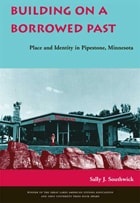
Building on a Borrowed Past
Place and Identity in Pipestone, MinnesotaSally J. Southwick
Ohio University Press, 2005
Why is there a national monument near a small town on the Minnesota prairie? Why do the town’s residents dress as Indians each summer and perform a historical pageant based on a Victorian-era poem? To answer such questions, Building on a Borrowed Past: Place and Identity in Pipestone, Minnesota shows what happens when one culture absorbs the heritage of another for civic advantage.
Founded in 1874, Pipestone was named for the quarries where regional tribes excavated soft stone for making pipes. George Catlin and Henry Wadsworth Longfellow described the place and its tribal history. Promotion by white residents of the quarries as central to America’s Indian heritage helped Pipestone obtain a federal Indian boarding school in the 1890s and a national monument in the 1930s. The annual “Song of Hiawatha” pageant attracted tourists after World War II. Sally J. Southwick’s prizewinning study demonstrates how average, small–town citizens contributed to the generic image of “the Indian” in American culture.
Examining oral histories, memoirs, newspapers, federal documents, civic group records, and promotional literature, Southwick focuses on the role of middle–class individuals in establishing a historical, place–based identity. Building on a Borrowed Past reveals how identities are formed through adaptation of cultural, spiritual, racial, and historical symbols.
Building the Devil's Empire
French Colonial New OrleansShannon Lee Dawdy
University of Chicago Press, 2008
Building the Devil’s Empire is the first comprehensive history of New Orleans’s early years, tracing the town’s development from its origins in 1718 to its revolt against Spanish rule in 1768. Shannon Lee Dawdy’s picaresque account of New Orleans’s wild youth features a cast of strong-willed captives, thin-skinned nobles, sharp-tongued women, and carousing travelers. But she also widens her lens to reveal the port city’s global significance, examining its role in the French Empire and the Caribbean, and she concludes that by exemplifying a kind of rogue colonialism—where governments, outlaws, and capitalism become entwined—New Orleans should prompt us to reconsider our notions of how colonialism works.
"[A] penetrating study of the colony's founding."—Nation
“A brilliant and spirited reinterpretation of the emergence of French New Orleans. Dawdy leads us deep into the daily life of the city, and along the many paths that connected it to France, the North American interior, and the Greater Caribbean. A major contribution to our understanding of the history of the Americas and of the French Atlantic, the work is also a model of interdisciplinary research and analysis, skillfully bringing together archival research, archaeology, and literary analysis.”—Laurent Dubois, Duke University