230 books match the query 'Ethnicity' and 16 start with b
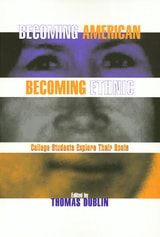
cover of Becoming American Becoming Ethnic

Becoming American Becoming Ethnic

edited by Thomas Dublin

Temple University Press, 1996

More than at any time since the 1920's the issues of immigration and ethnicity have become central to discussions of American society and identity. Becoming American, Becoming Ethnic addresses this contemporary debate, bringing together essays written over the past eighteen years by college students exploring their ethnic roots—from the experiences of their forbears to the place of ethnicity in their lives.

The students range from descendants of Europeans whose families immigrated several generations ago to Asian and Latin American immigrants of more recent decades to African-Americans and Hispanics—some have more than one ethnic heritage to grapple with, while others have migrated from one place to another within the United States. Together their voices create a dialogue about the interplay of ethnic traditions and values with American culture.

These are moving personal reflections on the continuities and changes in the ethnic experience in the United States and on the evolving meaning of ethnicity over time and across generations. Despite vocal concerns in recent years about ethnic divisiveness, these student writings show how much many young Americans share even in their differences.


In the series Critical Perspectives on the Past, edited by Susan Porter Benson, Stephen Brier, and Roy Rosenzweig.
 

[more]
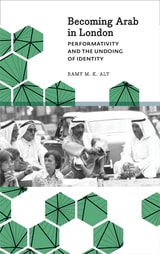
cover of Becoming Arab in London: Performativity and the Undoing of Identity

Becoming Arab in London

Performativity and the Undoing of Identity

Ramy M. K. Aly

Pluto Press, 2015

In this, the first ethnographic exploration of gender, race, and class practices among British-born or British-raised Arabs in London, Ramy M. K. Aly looks critically at the idea of “Arab-ness” and the ways in which London produces, marks, and understands ethnic subjects. Looking at everyday experiences, Becoming Arab in London explores the lives of young people and the ways in which they perform or achieve Arab ethnicity. Aly uncovers narratives of growing up in London, the codes of sociability at Shisha, and the sexual politics and ethnic self-portraits that construct British-Arab men and women.
            Drawing on the work of Judith Butler, Aly emphasizes the need to move away from the concept of identity and toward the idea of race, gender, and class as performance. Based on seven years of fieldwork, during which time the author immersed himself in London’s Arab community, Becoming Arab in London is an innovative and necessary contribution to the study of diaspora and difference in contemporary Britain.
[more]
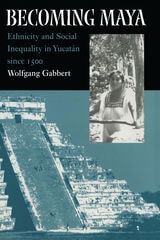
cover of Becoming Maya: Ethnicity and Social Inequality in Yucatán since 1500

Becoming Maya

Ethnicity and Social Inequality in Yucatán since 1500

Wolfgang Gabbert

University of Arizona Press, 2004
In Mexico's Yucatán peninsula, it is commonly held that the population consists of two ethnic communities: Maya Indians and descendants of Spanish conquerors. As a result, the history of the region is usually seen in terms of conflict between conquerors and conquered that too often ignores the complexity of interaction between these groups and the complex nature of identity within them. Yet despite this prevailing view, most speakers of the Yucatec Maya language reject being considered Indian and refuse to identify themselves as Maya. Wolfgang Gabbert maintains that this situation can be understood only by examining the sweeping procession of history in the region. In Becoming Maya, he has skillfully interwoven history and ethnography to trace 500 years of Yucatec history, covering colonial politics, the rise of plantations, nineteenth-century caste wars, and modern reforms—always with an eye toward the complexities of ethnic categorization. According to Gabbert, class has served as a self-defining category as much as ethnicity in the Yucatán, and although we think of caste wars as struggles between Mayas and Mexicans, he shows that each side possessed a sufficiently complex ethnic makeup to rule out such pat observations. Through this overview, Gabbert reveals that Maya ethnicity is upheld primarily by outsiders who simply assume that an ethnic Maya consciousness has always existed among the Maya-speaking people. Yet even language has been a misleading criterion, since many people not considered Indian are native speakers of Yucatec. By not taking ethnicity for granted, he demonstrates that the Maya-speaking population has never been a self-conscious community and that the criteria employed by others in categorizing Mayas has changed over time. Grounded in field studies and archival research and boasting an exhaustive bibliography, Becoming Maya is the first English-language study that examines the roles played by ethnicity and social inequality in Yucatán history. By revealing the highly nuanced complexities that underlie common stereotypes, it offers new insights not only into Mesoamerican peoples but also into the nature of interethnic relations in general.
[more]
cover of Becoming New Yorkers: Ethnographies of the New Second Generation

Becoming New Yorkers

Ethnographies of the New Second Generation

Philip Kasinitz

Russell Sage Foundation, 2004
More than half of New Yorkers under the age of eighteen are the children of immigrants. This second generation shares with previous waves of immigrant youth the experience of attempting to reconcile their cultural heritage with American society. In Becoming New Yorkers, noted social scientists Philip Kasinitz, John Mollenkopf, and Mary Waters bring together in-depth ethnographies of some of New York's largest immigrant populations to assess the experience of the new second generation and to explore the ways in which they are changing the fabric of American culture. Becoming New Yorkers looks at the experience of specific immigrant groups, with regard to education, jobs, and community life. Exploring immigrant education, Nancy López shows how teachers' low expectations of Dominican males often translate into lower graduation rates for boys than for girls. In the labor market, Dae Young Kim finds that Koreans, young and old alike, believe the second generation should use the opportunities provided by their parents' small business success to pursue less arduous, more rewarding work than their parents. Analyzing civic life, Amy Forester profiles how the high-ranking members of a predominantly black labor union, who came of age fighting for civil rights in the 1960s, adjust to an increasingly large Caribbean membership that sees the leaders not as pioneers but as the old-guard establishment. In a revealing look at how the second-generation views itself, Sherry Ann Butterfield and Aviva Zeltzer-Zubida point out that black West Indian and Russian Jewish immigrants often must choose whether to identify themselves alongside those with similar skin color or to differentiate themselves from both native blacks and whites based on their unique heritage. Like many other groups studied here, these two groups experience race as a fluid, situational category that matters in some contexts but is irrelevant in others. As immigrants move out of gateway cities and into the rest of the country, America will increasingly look like the multicultural society vividly described in Becoming New Yorkers. This insightful work paints a vibrant picture of the experience of second generation Americans as they adjust to American society and help to shape its future.
[more]
cover of Being Maasai: Ethnicity and Identity In East Africa

Being Maasai

Ethnicity and Identity In East Africa

Thomas Spear

Ohio University Press, 1993

Everyone “knows” the Maasai as proud pastoralists who once dominated the Rift Valley from northern Kenya to central Tanzania.

But many people who identity themselves as Maasai, or who speak Maa, are not pastoralist at all, but farmers and hunters. Over time many different people have “become” something else. And what it means to be Maasai has changed radically over the past several centuries and is still changing today.

This collection by historians, archaeologists, anthropologists and linguists examines how Maasai identity has been created, evoked, contested, and transformed from the time of their earliest settlement in Kenya to the present, as well as raising questions about the nature of ethnicity generally.
[more]
cover of Between Race and Ethnicity: Cape Verdean American Immigrants, 1860-1965

Between Race and Ethnicity

Cape Verdean American Immigrants, 1860-1965

Marilyn Halter

University of Illinois Press, 1993

Arriving in New England first as crew members of whaling vessels, Afro-Portuguese immigrants from Cape Verde later came as permanent settlers and took work in the cranberry industry, on the docks, and as domestic workers.

Marilyn Halter combines oral history with analyses of ships' records to chart the history and adaptation patterns of the Cape Verdean Americans. Though identifying themselves in ethnic terms, Cape Verdeans found that their African-European ancestry led their new society to view them as a racial group. Halter emphasizes racial and ethnic identity formation to show how Cape Verdeans set themselves apart from the African Americans while attempting to shrug off white society's exclusionary tactics. She also contrasts rural life on the bogs of Cape Cod with New Bedford’s urban community to reveal the ways immigrants established their own social and religious groups as they strove to maintain their Crioulo customs.
[more]
cover of Beyond C. L. R. James: Shifting Boundaries of Race and Ethnicity in Sports

Beyond C. L. R. James

Shifting Boundaries of Race and Ethnicity in Sports

John Nauright

University of Arkansas Press, 2014
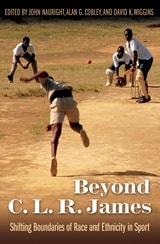
Beyond C. L. R. James brings together essays analyzing the intercon¬nections among race, ethnicity, and sport. Published in memory of C. L. R. James, the revolutionary sociologist and writer from Trinidad who penned the famous autobiographical account of cricket titled Beyond a Boundary, this collection of essays, many of which originated at the 2010 conference on race and ethnicity in sport at the University of West Indies, Cave Hill in Barbados, cover everything from Aborigines in sport and cricket and minstrel shows in Australia to Zulu stick fighting and football and racism in northern Ireland. The essays, divided into four sections that include introductory comments by each editor, are written by some of the more well-known sport historians in the world and characterized by a focus on the role of culture and sport in society in the context of both political economies and the state as well as colonial and postcolonial struggles. Included also are discussions on how sport at once brings people together, shapes the identities of its participants, and reflects the continuing search for social justice.
[more]
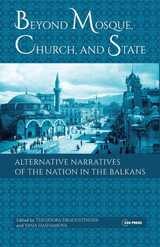
cover of Beyond Mosque, Church, and State: Alternative Narratives of the Nation in the Balkans

Beyond Mosque, Church, and State

Alternative Narratives of the Nation in the Balkans

Yana Hashamova

Central European University Press, 2016

Journalists and policy-makers in the West have often assumed that the religious and ethno-national heterogeneity of the Balkans is the underlying reason for the numerous problems the area has faced throughout the twentieth century. The multiple and turbulent political transitions in the area, the dynamics of the interaction between Christianity and Islam, the contradictory and constantly shifting nationality policies, and the fluctuating identities of the diverse populations continue to be seen as major challenges to the stability of the region. By exploring the development of intricate religious, linguistic, and national dynamics in a variety of case studies throughout the Balkans, this volume demonstrates the existence of alternatives and challenges to nationalism in the area. The authors analyze a variety of national, non-national, and anti-national(ist) encounters in four areas—Bosnia, Bulgaria, Macedonia, and Albania—traditionally seen as “hot-beds” of nationalist agitation and tension resulting from their populations' religious or ethno-national diversity. In their entirety, the contributions in this volume chart a more complex picture of the national dynamics. The authors recognize the existence of national tensions both in historical perspective and in contemporary times, but also suggest the possibility of different paths to the nation that did not involve violence but allowed for national accommodation and reconciliation.
[more]
cover of Beyond Pluralism: The Conception of Groups and Group Identities in America

Beyond Pluralism

The Conception of Groups and Group Identities in America

Edited by Wendy F. Katkin, Ned Landsman, and Andrea Tyree

University of Illinois Press, 1998

      Pluralist or multiculturalist, proudly ethnic or disappearing into the
        melting pot, people come in all persuasions. This volume attempts to bridge
        the gap that has developed between pluralists and multiculturalists, advocates
        of the academic canon and defenders of diversity, celebrants of ethnic
        heritage and critics of racial ascription. Contributors explore the nation's
        pluralistic framework as a historical creation, looking at group relations
        in the United States and how they have been conceptualized in the past.
 
[more]
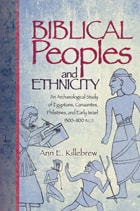
cover of Biblical Peoples and Ethnicity: An Archaeological Study of Egyptians, Canaanite

Biblical Peoples and Ethnicity

An Archaeological Study of Egyptians, Canaanite

Ann E. Killebrew

SBL Press, 2005

Ancient Israel did not emerge within a vacuum but rather came to exist alongside various peoples, including Canaanites, Egyptians, and Philistines. Indeed, Israel’s very proximity to these groups has made it difficult—until now—to distinguish the archaeological traces of early Israel and other contemporary groups. Through an analysis of the results from recent excavations in light of relevant historical and later biblical texts, this book proposes that it is possible to identify these peoples and trace culturally or ethnically defined boundaries in the archaeological record. Features of late second-millennium B.C.E. culture are critically examined in their historical and biblical contexts in order to define the complex social boundaries of the early Iron Age and reconstruct the diverse material world of these four peoples. Of particular value to scholars, archaeologists, and historians, this volume will also be a standard reference and resource for students and other readers interested in the emergence of early Israel.
[more]
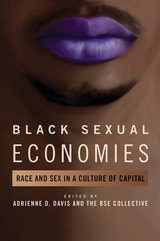
cover of Black Sexual Economies: Race and Sex in a Culture of Capital

Black Sexual Economies

Race and Sex in a Culture of Capital

Edited by Adrienne D. Davis and the BSE Collective

University of Illinois Press, 2019

A daring collaboration among scholars, Black Sexual Economies challenges thinking that sees black sexualities as a threat to normative ideas about sexuality, the family, and the nation. The essays highlight alternative and deviant gender and sexual identities, performances, and communities, and spotlights the sexual labor, sexual economy, and sexual agency to black social life. Throughout, the writers reveal the lives, everyday negotiations, and cultural or aesthetic interventions of black gender and sexual minorities while analyzing the systems and beliefs that structure the possibilities that exist for all black sexualities. They also confront the mechanisms of domination and subordination attached to the political and socioeconomic forces, cultural productions, and academic work that interact with the energies at the nexus of sexuality and race. Contributors: Marlon M. Bailey, Lia T. Bascomb, Felice Blake, Darius Bost, Ariane Cruz, Adrienne D. Davis, Pierre Dominguez, David B. Green Jr., Jillian Hernandez, Cheryl D. Hicks, Xavier Livermon, Jeffrey McCune, Mireille Miller-Young, Angelique Nixon, Shana L. Redmond, Matt Richardson, L. H. Stallings, Anya M. Wallace, and Erica Lorraine Williams
[more]
cover of Black behind the Ears: Dominican Racial Identity from Museums to Beauty Shops

Black behind the Ears

Dominican Racial Identity from Museums to Beauty Shops

Ginetta E. B. Candelario

Duke University Press, 2007

Black behind the Ears is an innovative historical and ethnographic examination of Dominican identity formation in the Dominican Republic and the United States. For much of the Dominican Republic’s history, the national body has been defined as “not black,” even as black ancestry has been grudgingly acknowledged. Rejecting simplistic explanations, Ginetta E. B. Candelario suggests that it is not a desire for whiteness that guides Dominican identity discourses and displays. Instead, it is an ideal norm of what it means to be both indigenous to the Republic (indios) and “Hispanic.” Both indigeneity and Hispanicity have operated as vehicles for asserting Dominican sovereignty in the context of the historically triangulated dynamics of Spanish colonialism, Haitian unification efforts, and U.S. imperialism. Candelario shows how the legacy of that history is manifest in contemporary Dominican identity discourses and displays, whether in the national historiography, the national museum’s exhibits, or ideas about women’s beauty. Dominican beauty culture is crucial to efforts to identify as “indios” because, as an easily altered bodily feature, hair texture trumps skin color, facial features, and ancestry in defining Dominicans as indios.

Candelario draws on her participant observation in a Dominican beauty shop in Washington Heights, a New York City neighborhood with the oldest and largest Dominican community outside the Republic, and on interviews with Dominicans in New York City, Washington, D.C., and Santo Domingo. She also analyzes museum archives and displays in the Museo del Hombre Dominicano and the Smithsonian Institution as well as nineteenth- and early-twentieth-century European and American travel narratives.
[more]
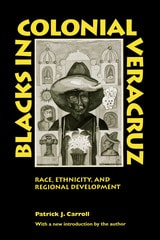
cover of Blacks in Colonial Veracruz: Race, Ethnicity, and Regional Development

Blacks in Colonial Veracruz

Race, Ethnicity, and Regional Development

By Patrick J. Carroll

University of Texas Press, 1991

Beginning with the Spanish conquest, Mexico has become a racially complex society intermixing Indian, Spanish, and African populations. Questions of race and ethnicity have fueled much political and scholarly debate, sometimes obscuring the experiences of particular groups, especially blacks. Blacks in Colonial Veracruz seeks to remedy this omission by studying the black experience in central Veracruz during virtually the entire colonial period.

The book probes the conditions that shaped the lives of inhabitants in Veracruz from the first European contact through the early formative period, colonial years, independence era, and the postindependence decade. While the primary focus is on blacks, Carroll relates their experience to that of Indians, Spaniards, and castas (racially hybrid people) to present a full picture of the interplay between local populations, the physical setting, and technological advances in the development of this important but little-studied region.
[more]
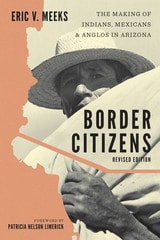
cover of Border Citizens: The Making of Indians, Mexicans, and Anglos in Arizona

Border Citizens

The Making of Indians, Mexicans, and Anglos in Arizona

By Eric V. Meeks; foreword by Patricia Nelson Limerick

University of Texas Press, 2007

In Border Citizens, historian Eric V. Meeks explores how the racial classification and identities of the diverse indigenous, mestizo, and Euro-American residents of Arizona’s borderlands evolved as the region was politically and economically incorporated into the United States. First published in 2007, the book examines the complex relationship between racial subordination and resistance over the course of a century. On the one hand, Meeks links the construction of multiple racial categories to the process of nation-state building and capitalist integration. On the other, he explores how the region’s diverse communities altered the blueprint drawn up by government officials and members of the Anglo majority for their assimilation or exclusion while redefining citizenship and national belonging.

The revised edition of this highly praised and influential study features dozens of new images, an introductory essay by historian Patricia Nelson Limerick, and a chapter-length afterword by the author. In his afterword, Meeks details and contextualizes Arizona’s aggressive response to undocumented immigration and ethnic studies in the decade after Border Citizens was first published, demonstrating that the broad-based movement against these measures had ramifications well beyond Arizona. He also revisits the Yaqui and Tohono O’odham nations on both sides of the Sonora-Arizona border, focusing on their efforts to retain, extend, and enrich their connections to one another in the face of increasingly stringent border enforcement.

[more]
cover of Borders, Human Itineraries, and All Our Relation

Borders, Human Itineraries, and All Our Relation

Dele Adeyemo, Natalie Diaz, Nadia Yala Kisukidi, and Rinaldo Walcott. With a Foreword by Christina Sharpe

Duke University Press, 2024
The first annual Alchemy Lecture brings four deep and agile writers from different geographies and disciplines into vibrant conversation on a topic of urgent relevance: humans and borders. Borders, Human Itineraries, and All Our Relation captures and expands those conversations in insightful, passionate ways. Architect, artist, and urban theorist Dele Adeyemo (UK/Nigeria) calls attention to the complexity of Black infrastructures, questioning how “the environments that surround us condition the possibility of our being.” Poet Natalie Diaz (US/Mojave/Akimel O’otham) writes, “Like story, migration is the sensual movement of knowledge,” and asks, “What is the language we need to live right now?” Philosopher Nadia Yala Kisukidi (France) suggests there is no diasporic life “without the dynamics of fabulation, where we pass down, from generation to generation, the stories of our ancestors who walked barefoot for many months.” And cultural theorist Rinaldo Walcott (Canada) asks us to consider inheritances beyond white supremacist logics: “What might it mean to live a life, if we can’t risk desiring and working towards utopia?” As each alchemist considers the legacies of anticolonial struggle, the future of the planet, and the textures of Black and Indigenous life, their essays speak to each other in multiple ways, creating something startling and revelatory: a vision of the world as it is, and as it could be.
[more]
cover of Brown on Brown: Chicano/a Representations of Gender, Sexuality, and Ethnicity

Brown on Brown

Chicano/a Representations of Gender, Sexuality, and Ethnicity

By Frederick Luis Aldama

University of Texas Press, 2005

Common conceptions permeating U.S. ethnic queer theory tend to confuse aesthetics with real-world acts and politics. Often Chicano/a representations of gay and lesbian experiences in literature and film are analyzed simply as propaganda. The cognitive, emotional, and narrational ingredients (that is, the subject matter and the formal traits) of those representations are frequently reduced to a priori agendas that emphasize a politics of difference.

In this book, Frederick Luis Aldama follows an entirely different approach. He investigates the ways in which race and gay/lesbian sexuality intersect and operate in Chicano/a literature and film while taking into full account their imaginative nature and therefore the specific kind of work invested in them. Also, Aldama frames his analyses within today's larger (globalized) context of postcolonial literary and filmic canons that seek to normalize heterosexual identity and experience. Throughout the book, Aldama applies his innovative approach to throw new light on the work of authors Arturo Islas, Richard Rodriguez, John Rechy, Ana Castillo, and Sheila Ortiz Taylor, as well as that of film director Edward James Olmos. In doing so, Aldama aims to integrate and deepen Chicano literary and filmic studies within a comparative perspective. Aldama's unusual juxtapositions of narrative materials and cultural personae, and his premise that literature and film produce fictional examples of a social and historical reality concerned with ethnic and sexual issues largely unresolved, make this book relevant to a wide range of readers.

[more]