Results by title
316 books match the query 'Ethnomusicology' and 16 start with b
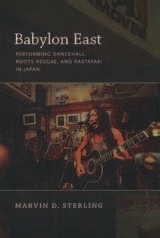
Babylon East
Performing Dancehall, Roots Reggae, and Rastafari in JapanMarvin D. Sterling
Duke University Press, 2010
Sterling provides a nuanced ethnographic analysis of the ways that many Japanese involved in reggae as musicians and dancers, and those deeply engaged with Rastafari as a spiritual practice, seek to reimagine their lives through Jamaican culture. He considers Japanese performances and representations of Jamaican culture in clubs, competitions, and festivals; on websites; and in song lyrics, music videos, reggae magazines, travel writing, and fiction. He illuminates issues of race, ethnicity, gender, sexuality, and class as he discusses topics ranging from the cultural capital that Japanese dancehall artists amass by immersing themselves in dancehall culture in Jamaica, New York, and England, to the use of Rastafari as a means of critiquing class difference, consumerism, and the colonial pasts of the West and Japan. Encompassing the reactions of Jamaica’s artists to Japanese appropriations of Jamaican culture, as well as the relative positions of Jamaica and Japan in the world economy, Babylon East is a rare ethnographic account of Afro-Asian cultural exchange and global discourses of blackness beyond the African diaspora.
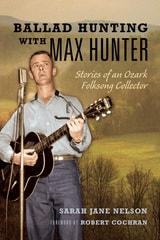
Ballad Hunting with Max Hunter
Stories of an Ozark Folksong CollectorSarah Jane Nelson; Foreword by Robert Cochran
University of Illinois Press, 2023
Sarah Jane Nelson chronicles Hunter’s song collecting adventures alongside portraits of the singers and mentors he met along the way. The guitar-strumming Hunter picked up the recording habit to expand his repertoire but almost immediately embraced the role of song preservationist. Being a local allowed Hunter to merge his native Ozark earthiness with sharp observational skills to connect--often more than once--with his singers. Hunter’s own ability to be present added to that sense of connection. Despite his painstaking approach, ballad collecting was also a source of pleasure for Hunter. Ultimately, his dedication to capturing Ozarks song culture in its natural state brought Hunter into contact with people like Vance Randolph, Mary Parler, and non-academic folklorists who shared his values.
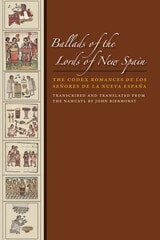
Ballads of the Lords of New Spain
The Codex Romances de los Senores de la Nueva EspanaTranscribed and translated from the Nahuatl by John Bierhorst
University of Texas Press, 2009
Compiled in 1582, Ballads of the Lords of New Spain is one of the two principal sources of Nahuatl song, as well as a poetical window into the mindset of the Aztec people some sixty years after the conquest of Mexico. Presented as a cancionero, or anthology, in the mode of New Spain, the ballads show a reordering—but not an abandonment—of classic Aztec values. In the careful reading of John Bierhorst, the ballads reveal in no uncertain terms the pre-conquest Aztec belief in the warrior's paradise and in the virtue of sacrifice.
This volume contains an exact transcription of the thirty-six Nahuatl song texts, accompanied by authoritative English translations. Bierhorst includes all the numerals (which give interpretive clues) in the Nahuatl texts and also differentiates the text from scribal glosses. His translations are thoroughly annotated to help readers understand the imagery and allusions in the texts. The volume also includes a helpful introduction and a larger essay, "On the Translation of Aztec Poetry," that discusses many relevant historical and literary issues.
In Bierhorst's expert translation and interpretation, Ballads of the Lords of New Spain emerges as a song of resistance by a conquered people and the recollection of a glorious past.
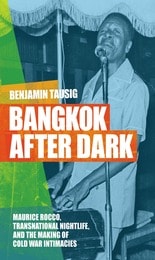
Bangkok after Dark
Maurice Rocco, Transnational Nightlife, and the Making of Cold War IntimaciesBenjamin Tausig
Duke University Press, 2025
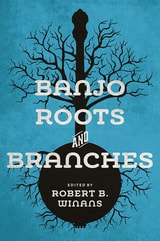
Banjo Roots and Branches
Edited by Robert B. Winans
University of Illinois Press, 2018
Wide-ranging and illustrated with twenty color images, Banjo Roots and Branches offers a wealth of new information to scholars of African American and folk musics as well as the worldwide community of banjo aficionados.
Contributors: Greg C. Adams, Nick Bamber, Jim Dalton, George R. Gibson, Chuck Levy, Shlomo Pestcoe, Pete Ross, Tony Thomas, Saskia Willaert, and Robert B. Winans.
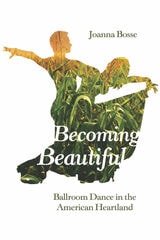
Becoming Beautiful
Ballroom Dance in the American HeartlandJoanna Bosse
University of Illinois Press, 2015
Bosse uses sensitive fieldwork as well as her own immersion in ballroom culture to lead readers into a community that springs up around ballroom dance. The result is a portrait of the real people who connect with others, change themselves, and join a world that foxtrots to its own rules, conventions, and rewards. Bosse's eye for revealing, humorous detail adds warmth and depth to discussions around critical perspectives on the experiences the dance hall provides, the nature of partnership and connection, and the notion of how dancing allows anyone to become beautiful.
Becoming Palestine
Toward an Archival Imagination of the FutureGil Z. Hochberg
Duke University Press, 2021
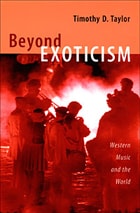
Beyond Exoticism
Western Music and the WorldTimothy D. Taylor
Duke University Press, 2007
Beginning with a focus on musical manifestations of colonialism and imperialism, Taylor discusses how the “discovery” of the New World and the development of an understanding of self as distinct from the other, of “here” as different from “there,” was implicated in the development of tonality, a musical system which effectively creates centers and margins. He describes how musical practices signifying nonwestern peoples entered the western European musical vocabulary and how Darwinian thought shaped the cultural conditions of early-twentieth-century music. In the era of globalization, new communication technologies and the explosion of marketing and consumption have accelerated the production and circulation of tropes of otherness. Considering western music produced under rubrics including multiculturalism, collaboration, hybridity, and world music, Taylor scrutinizes contemporary representations of difference. He argues that musical interpretations of the nonwestern other developed hundreds of years ago have not necessarily been discarded; rather they have been recycled and retooled.
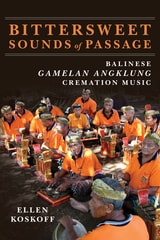
Bittersweet Sounds of Passage
Balinese Gamelan Angklung Cremation MusicEllen Koskoff
University of Illinois Press, 2025
Koskoff examines the history, cultural significance, and musical structures of contemporary gamelan angklung cremation music through the lens of three intertwined stories: existing scholarship on this music, written mostly by Western composers and scholars; the views of those performing and experiencing the music who regard it as dharma--ritual obligation, a basic concept in Balinese Hinduism; and the music itself, with a musical analysis focusing on changes in rasa--feeling, flavor and musical flow.
A journey inside a tradition, Bittersweet Sounds of Passage reveals the overlooked music of an important ritual in Balinese village life.
Black Song
A Manifesto for Music and JusticeThe Singing Justice Collective
University of Michigan Press, 2026
Black Song: A Manifesto for Music and Justice centers acts of musical creation and performance that emerge from Black experiences, affirm Black humanity, and connect to Black communities. Written for scholars, performers, and music fans, the book shows that learning about Black Song and its creation is central to understanding both American music and Black American experiences. By providing a more inclusive, just, and accurate understanding of the art of Black Song, the authors disrupt and expand musical canons.
Black Song shines a spotlight on the response, resistance, and community building that occur in musical creation in Black spaces, past and present. The authors explore histories and performances across musical styles—from classical to country to hip-hop to opera to jazz to gospel to many others. They offer practical advice on how to perform, research, teach, and listen to this music. As they center Black Song in American history and music, they show that this music is a valuable tool for promoting productive and healing dialogues about race, justice, and history. Encouraging empathy and understanding, Black Song shows how to approach Black music and spaces with knowledge and respect.
Black Women and Music
More Than the BluesEdited by Eileen M. Hayes and Linda F. Williams
University of Illinois Press, 2006
Individual essays concern the experiences of black women in classical music and in contemporary blues, the history of black female gospel-inflected voices in the Broadway musical, and "hip-hop feminism" and its complications. Focusing on under-examined contexts, authors introduce readers to the work of a prominent gospel announcer, women’s music festivals (predominantly lesbian), and to women’s involvement in an early avant-garde black music collective. In contradistinction to a compilation of biographies, this volume critically illuminates themes of black authenticity, sexual politics, access, racial uplift through music, and the challenges of writing (black) feminist biography. Black Women and Music is a strong reminder that black women have been and are both social actors and artists contributing to African American thought.
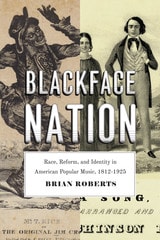
Blackface Nation
Race, Reform, and Identity in American Popular Music, 1812-1925Brian Roberts
University of Chicago Press, 2017
The Hutchinson Family Singers, the Northeast’s most popular middle-class singing group during the mid-nineteenth century, is perhaps the best example of the first strain of music. The group’s songs expressed an American identity rooted in communal values, with lyrics focusing on abolition, women’s rights, and socialism. Blackface minstrelsy, on the other hand, emerged out of an audience-based coalition of Northern business elites, Southern slaveholders, and young, white, working-class men, for whom blackface expressed an identity rooted in individual self-expression, anti-intellectualism, and white superiority. Its performers embodied the love-crime version of racism, in which vast swaths of the white public adored African Americans who fit blackface stereotypes even as they used those stereotypes to rationalize white supremacy. By the early twentieth century, the blackface version of the American identity had become a part of America’s consumer culture while the Hutchinsons’ songs were increasingly regarded as old-fashioned. Blackface Nation elucidates the central irony in America’s musical history: much of the music that has been interpreted as black, authentic, and expressive was invented, performed, and enjoyed by people who believed strongly in white superiority. At the same time, the music often depicted as white, repressed, and boringly bourgeois was often socially and racially inclusive, committed to reform, and devoted to challenging the immoralities at the heart of America’s capitalist order.
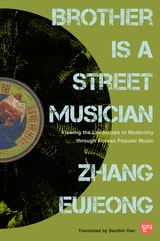
Brother Is a Street Musician
Viewing the Landscape of Modernity Through Korean Popular MusicZhang Eujeong
Rutgers University Press, 2026
The history of the Korean popular music industry dates back a century before the beginnings of K-Pop, to when the Korean peninsula was still under Japanese rule. Though Koreans didn’t have an independent country, they were still able to use recorded music to assert a distinct cultural identity.
Brother Is a Street Musician chronicles the development of Korean popular music over the first half of the twentieth century, examining both industry trends and talented composers and performers like Nam Insu and Yi Nanyǒng. Drawing from rare archives of gramophone records and lyric books, musicologist Zhang Eujeong shows how Korean musicians drew from folk traditions to create totally new genres, ranging from comic songs to Western-influenced jazz records. She also includes English translations and detailed analyses of lyrics from some of the era’s most popular songs.
A landmark study of Korean music, now available in English for the first time, Brother Is a Street Musician tells the inspiring story of how a colonized people developed their own form of popular music, planting the seeds for an industry that would grow to export Korean culture around the world.

Building Community Choirs in the Twenty-First Century
Re-imagining Identity through Singing in Northern IrelandSarah-Jane Gibson
Intellect Books, 2026
Building Community Choirs explores the under-researched practice of community choral singing in Northern Ireland. Sarah-Jane Gibson conducted ethnographic research with five choirs in various locations over the course of five years and illustrates how choirs reimagine identity through the ways they organize, rehearse, and perform. By actively rethinking conceptions of identities within their groups, Gibson’s study shows how gender, age, religious faith, and ethnic diversity can both influence structures of community in the region and be influenced by them.
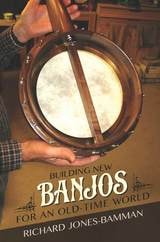
Building New Banjos for an Old-Time World
Richard Jones-Bamman
University of Illinois Press, 2017
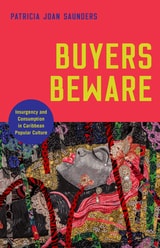
Buyers Beware
Insurgency and Consumption in Caribbean Popular CulturePatricia Joan Saunders
Rutgers University Press, 2022