375 books match the query 'Excavations (Archaeology)' and 15 start with b
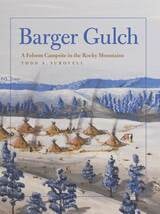
cover of Barger Gulch: A Folsom Campsite in the Rocky Mountains

Barger Gulch

A Folsom Campsite in the Rocky Mountains

Todd A. Surovell

University of Arizona Press, 2022

At the end of the last Ice Age in a valley bottom in the Rocky Mountains, a group of bison hunters overwintered. Through the analysis of more than 75,000 pieces of chipped stone, archaeologist Todd A. Surovell is able to provide one of the most detailed looks yet at the lifeways of hunter-gatherers from 12,800 years ago.

The best archaeological sites are those that present problems and inspire research, writes Surovell. From the start, the Folsom site called Barger Gulch Locality B was one of those sites; it was a problem-rich environment. Many Folsom sites are sparse scatters of stone and bone, a reflection of a mobile lifestyle that leaves little archaeological materials. The people at Barger Gulch left behind tens of thousands of pieces of chipped stone; they appeared to have spent quite a bit of time there in comparison to other places they inhabited.

Summarizing findings from nine seasons of excavations, Surovell explains that the site represents a congregation of mobile hunter-gatherers who spent winter along Barger Gulch, a tributary of the Colorado River. Surovell uses spatial patterns in chipped stone to infer the locations of hearths and house features. He examines the organization of household interiors and discusses differential use of interior and exterior spaces. Data allow inference about the people who lived at the site, including aspects of the identity of flintknappers and household versus group mobility. The site shows evidence of a Paleoindian camp circle, child flintknapping, household production of weaponry, and the fission/fusion dynamics of group composition that is typical of nomadic peoples.

Barger Gulch provides key findings on Paleoindian technological variation and spatial and social organization.
[more]
cover of Becoming Villagers: Comparing Early Village Societies

Becoming Villagers

Comparing Early Village Societies

Edited by Matthew S. Bandy and Jake R. Fox

University of Arizona Press, 2010

The shift from mobile hunting and gathering to more sedentary, usually agricultural, lifeways was one of the most significant milestones in the prehistory of humanity. This transformation was spurred by an alignment of social and ecological forces, pressures, and adaptations, and it took place in broadly comparable ways in many prehistoric settings.

Based on a Society for American Archaeology symposium and subsequent Amerind Advanced Seminar in 2006, Becoming Villagers examines this transformation at various places and times across the globe by focusing not on the origins of agriculture and village life but rather on their consequences. The goal of the volume is to identify regularities in the ways that societies developed in the centuries and millennia following a transition to village life. Using cases that range from China to Bolivia and from the Near East to the American Southwest, leading archaeologists situate their specific areas of specialization in a broad comparative context.

They consider the forces acting to divide and fragment early villages and the social technologies and practices by which those obstacles were, in some cases, overcome. Finally, the volume examines the long-term historical trajectories of these early village societies.

This transformative collection makes a powerful case for a renewed and invigorated archaeological focus on large-scale comparative studies. It will be an essential read for anyone interested not only in early village societies but also in the ways in which archaeology relates to anthropology, other social sciences, and history.

CONTENTS:
  1. “Becoming Villagers: The Evolution of Early Village Societies,” Matthew S. Bandy and Jake R. Fox
  2. “Population Growth, Village Fissioning, and Alternative Early Village Trajectories,” Matthew S. Bandy
  3. “A Scale Model of Seven Hundred Years of Farming Settlements in Southwestern Colorado,” Timothy A. Kohler and Mark D. Varien
  4. “‘Great Expectations,’ or the Inevitable Collapse of the Early Neolithic in the Near East,” Nigel Goring-Morris and Anna Belfer-Cohen
  5. “‘Ritualization’ in Early Village Society: The Case of the Lake Titicaca Basin Formative,” Amanda B. Cohen
  6. “The Sacred and the Secular Revisited: The Essential Tensions of Early Village Society in the Southeastern United States,” Thomas Pluckhahn
  7. “Substantial Structures, Few People, and the Question of Early Villages in the Mimbres Region of the North American Southwest,” Patricia A. Gilman
  8. “Sea Changes in Stable Communities: What Do Small Changes in Practices at Catalhoyuk and Chiripa Imply about Community Making?” Christine A. Hastorf
  9. “The Emergence of Early Villages in the American Southwest: Cultural Issues and Historical Perspectives,” Richard H. Wilshusen and James M. Potter
  10. “A Persistent Early Village Settlement System on the Bolivian Southern Altiplano,” Jake R. Fox
  11. “First Towns in the Americas: Searching for Agriculture, Population Growth, and Other Enabling Conditions,” John E. Clark, Jon L. Gibson, and James Zeidler
  12. “The Evolution of Early Yangshao Period Village Organization in the Middle Reaches of Northern China's Yellow River Valley,” Christian E. Peterson and Gideon Shelach
[more]
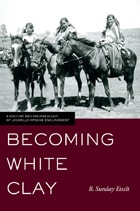
cover of Becoming White Clay: A History and Archaeology of Jicarilla Apache Enclavement

Becoming White Clay

A History and Archaeology of Jicarilla Apache Enclavement

B. Sunday Eiselt

University of Utah Press, 2012

The story of one of the longest-lived and most successful nomadic enclaves in North America provides a rare glimpse into the material expressions of Apache self-determination and survival. For nearly 200 years the Jicarilla Apache of New Mexico thrived in the interstices of Pueblo and Spanish settlements following their expulsion from the Plains. Critical to their success was their ability to extend key aspects of Plains-Pueblo exchange to Indian and mixed-blood communities on the fringes of colonial rule. More than other nomadic tribes, the Jicarilla played an enormous role in holding together the social fabric of New Mexican villages after the fall of the Spanish Empire.

This comprehensive study by Sunday Eiselt begins with the great Athapaskan migration out of Canada during prehis-toric times and ends with the forced settlement of the Jicarilla on the Dulce reservation in the 1880s. Eiselt combines archaeological and ethno­historical data in an examination of Jicarilla strategies for self-preservation. She reveals the ideological and political imperatives of “­belonging” that shaped their interactions with local communities and the state and that enabled them to avoid reservation life well into the 1880s. Throughout their long history, Jicarilla identity remained intact, distinctive, and discernable even as life on the reservation disrupted the intimate connections that once existed with their Hispanic and Pueblo neighbors.
 

[more]
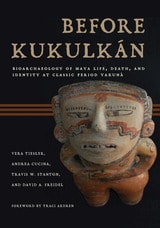
cover of Before Kukulkán: Bioarchaeology of Maya Life, Death, and Identity at Classic Period Yaxuná

Before Kukulkán

Bioarchaeology of Maya Life, Death, and Identity at Classic Period Yaxuná

Vera Tiesler, Andrea Cucina, Travis W. Stanton, and David A. Freidel; Foreword by Traci Ardren

University of Arizona Press, 2017

This volume illuminates human lifeways in the northern Maya lowlands prior to the rise of Chichén Itzá. This period and area have been poorly understood on their own terms, obscured by scholarly focus on the central lowland Maya kingdoms. Before Kukulkán is anchored in three decades of interdisciplinary research at the Classic Maya capital of Yaxuná, located at a contentious crossroads of the northern Maya lowlands.

Using bioarchaeology, mortuary archaeology, and culturally sensitive mainstream archaeology, the authors create an in-depth regional understanding while also laying out broader ways of learning about the Maya past. Part 1 examines ancient lifeways among the Maya at Yaxuná, while part 2 explores different meanings of dying and cycling at the settlement and beyond: ancestral practices, royal entombment and desecration, and human sacrifice. The authors close with a discussion of the last years of occupation at Yaxuná and the role of Chichén Itzá in the abandonment of this urban center.

Before Kukulkán provides a cohesive synthesis of the evolving roles and collective identities of locals and foreigners at the settlement and their involvement in the region’s trajectory. Theoretically informed and contextualized discussions offer unique glimpses of everyday life and death in the socially fluid Maya city. These findings, in conjunction with other documented series of skeletal remains from this region, provide a nuanced picture of the social and biocultural dynamics that operated successfully for centuries before the arrival of the Itzá.
 
[more]
cover of Belmont Castle: The Excavation of a Crusader Stronghold in the Kingdom of Jerusalem

Belmont Castle

The Excavation of a Crusader Stronghold in the Kingdom of Jerusalem

Richard Harper

Council for British Research in the Levant, 2000

This is the final publication of excavations conducted by the British School of Archaeology in Jerusalem on the Crusader castle of Belmont (Suba) between 1986 and 1989. The account of the excavation is accompanied by specialist reports and concludes with a discussion of the castle's architecture, its military functions, and its economic role.


Library of Congress subject headings for this publication:
Belmont Castle Site (West Bank)
Excavations (Archaeology) -- West Bank.
West Bank -- Antiquities.
Jerusalem -- History -- Latin Kingdom, 1099-1244.
[more]
cover of Belvoir: An Archaeology of Maryland Slavery

Belvoir

An Archaeology of Maryland Slavery

Julie M. Schablitsky

University of Alabama Press, 2025

Unearthed truths, buried lives: Belvoir reveals the pain, resilience, and reckoning found beneath the soil of a Maryland plantation.

Near Annapolis, Maryland, a former tobacco plantation dating to the 1730s holds centuries of untold history. In Belvoir: An Archaeology of Maryland Slavery, Julie M. Schablitsky leads readers on an archaeological narrative to unearth the lives and stories still buried there.The book begins with an introduction to the estate’s history, detailing its ownership by prominent families such as the Rosses, Scotts, Worthingtons, and Welshes. Schablitsky highlights the landscape of the estate, including the unique thirty-two-square-foot stone quarter built for enslaved people.

With sensitivity and scientific rigor, Schablitsky shifts focus to the enslaved people who lived and labored at Belvoir for more than eighty years. Through detailed excavation of the stone quarter and analysis of everyday artifacts—buttons, tobacco pipes, food remains, ceramics—she reconstructs the daily life, acts of resistance, and the cultural endurance of a community forced to navigate brutality.

Yet what makes Belvoir especially vital is its ethical compass. Schablitsky centers the voices of descendants, allowing their questions, memories, and presence to shape the narrative. The result is a groundbreaking archaeological case study and a blueprint for restorative justice at sites of enslavement. Scholars, archaeologists, and general readers alike will find Belvoir a deeply human, profoundly necessary book, one that confronts the past with clarity, care, and the hope of reconciliation.

[more]
cover of Beyond Collapse: Archaeological Perspectives on Resilience, Revitalization, and Transformation in Complex Societies

Beyond Collapse

Archaeological Perspectives on Resilience, Revitalization, and Transformation in Complex Societies

Edited by Ronald K. Faulseit

Southern Illinois University Press, 2015

The Maya. The Romans. The great dynasties of ancient China. It is generally believed that these once mighty empires eventually crumbled and disappeared. A recent trend in archaeology, however, focusing on what happened during and after the decline of once powerful societies has found social resilience and transformation instead of collapse. In Beyond Collapse: Archaeological Perspectives on Resilience, Revitalization, and Transformation in Complex Societies, editor Ronald K. Faulseit gathers scholars with diverse theoretical perspectives to present innovative approaches to understanding the decline and reorganization of complex societies.  
 
Essays in the book are arranged into five sections. The first section addresses previous research on the subject of collapse and reorganization as well as recent and historic theoretical trends. In the second section, contributors look at collapse and resilience through the concepts of collective action, eventful archaeology, and resilience theory. The third section introduces critical analyses of the effectiveness of resilience theory as a heuristic tool for modeling the phenomena of collapse and resilience. In the fourth section, contributors examine long-term adaptive strategies employed by prehistoric societies to cope with stresses. Essays in the fifth section make connections to contemporary research on post-decline societies in a variety of time periods and geographic locations.
 
Contributors consider collapse and reorganization not as unrelated phenomena but as integral components in the evolution of complex societies. Using archaeological data to interpret how ancient civilizations responded to various stresses—including environmental change, warfare, and the fragmentation of political institutions—contributors discuss not only what leads societies to collapse but also why some societies are resilient and others are not, as well as how societies reorganize after collapse. The implications of the fate of these societies for modern nations cannot be underestimated. Putting in context issues we face today, such as climate change, lack of social diversity, and the failure of modern states, Beyond Collapse is an essential volume for readers interested in human-environment interaction and in the collapse—and subsequent reorganization—of human societies.
 
[more]
cover of Beyond the Blockade: New Currents in Cuban Archaeology

Beyond the Blockade

New Currents in Cuban Archaeology

Edited by Susan Kepecs, L. Antonio Curet, and Gabino La Rosa Corzo

University of Alabama Press, 2011

An important collection of essays and scholarship by Cuban archaeologists about precontact human settlement on the island.

An important and timely collection of essays that greatly expands knowledge of the human settlement of Cuba and the activities of its indigenous peoples. The collection is a testament to the tenacity of Cuban and US scholars determined to dismantle the political and economic barriers that have impeded collaborative archaeological scholarship in Cuba. Despite economic and political challenges that have limited the pursuit of archaeological research in Cuba, these essays show that Cuban archaeology has made valuable contributions to understanding the cultural processes that have shaped life in the Caribbean in both prehispanic and historic periods and added significantly to our understanding of past Cuban peoples.

The collection, one of only a few studies of Cuban archaeology published in English in the United States, includes essays by both Cuban and US scholars that highlight trends in Cuban archaeology. It recognizes the past pioneers of joint Cuban-US archaeological projects and pays homage to those researchers, including Betty Meggers and Lourdes Dominguez, who sustained scholarly contact across the Florida Straits despite geopolitical roadblocks. 

[more]
cover of Beyond the Texts: An Archaeological Portrait of Ancient Israel and Judah

Beyond the Texts

An Archaeological Portrait of Ancient Israel and Judah

William G. Dever

SBL Press, 2017

A handbook for biblical scholars and historians of the Ancient Near East

William G. Dever offers a welcome perspective on ancient Israel and Judah that prioritizes the archaeological remains to render history as it was—not as the biblical writers argue it should have been. Drawing from the most recent archaeological data as interpreted from a nontheological point of view and supplementing that data with biblical material only when it converges with the archaeological record, Dever analyzes all the evidence at hand to provide a new history of ancient Israel and Judah that is accessible to all interested readers.

Features

  • A new approach to the history of ancient Israel
  • Extensive bibliography
  • More than eighty maps and illustrations
[more]
cover of Biblical Peoples and Ethnicity: An Archaeological Study of Egyptians, Canaanite

Biblical Peoples and Ethnicity

An Archaeological Study of Egyptians, Canaanite

Ann E. Killebrew

SBL Press, 2005

Ancient Israel did not emerge within a vacuum but rather came to exist alongside various peoples, including Canaanites, Egyptians, and Philistines. Indeed, Israel’s very proximity to these groups has made it difficult—until now—to distinguish the archaeological traces of early Israel and other contemporary groups. Through an analysis of the results from recent excavations in light of relevant historical and later biblical texts, this book proposes that it is possible to identify these peoples and trace culturally or ethnically defined boundaries in the archaeological record. Features of late second-millennium B.C.E. culture are critically examined in their historical and biblical contexts in order to define the complex social boundaries of the early Iron Age and reconstruct the diverse material world of these four peoples. Of particular value to scholars, archaeologists, and historians, this volume will also be a standard reference and resource for students and other readers interested in the emergence of early Israel.
[more]
cover of Bioarchaeology of the American Southeast: Approaches to Bridging Health and Identity in the Past

Bioarchaeology of the American Southeast

Approaches to Bridging Health and Identity in the Past

Edited by Shannon Chappell Hodge and Kristrina A. Shuler

University of Alabama Press, 2018

A timely update on the state of bioarchaeological research, offering contributions to the archaeology, prehistory, and history of the southeastern United States.
 
Building on the 1991 publication What Mean These Bones? Studies in Southeastern Bioarchaeology, this new edited collection from Shannon Chappell Hodge and Kristrina A. Shuler marks steady advances over the past three decades in the theory, methodology, and purpose of bioarchaeology in the southeastern United States and across the discipline. With a geographic scope that ranges from Louisiana to South Carolina and a temporal span from early prehistory through the nineteenth century, the coverage aims to be holistic.
 
Bioarchaeology of the American Southeast: Approaches to Bridging Health and Identity in the Past is organized into two main parts. The first, “Context and Culture History in Bioarchaeology,” focuses on the fundamentals of archaeology—figuring out who lived at an archaeological site, when they lived there, what they did, and how they lived their lives.
 
This builds the framework that allows archaeologists to answer deeper questions, such as the ones addressed in the second part, “Social Identities in Bioarchaeology.” Here contributors explore questions of identity, ethnicity, gender and the status of women, social status, class, power and exploitation, migration, and conflict. These chapters implement and contribute to anthropological theory and showcase improved methods, such as innovative statistical analyses, and incorporate newer technology, including a DNA and geographic information system applications.
[more]
cover of Bottle Creek: A Pensacola Culture Site in South Alabama

Bottle Creek

A Pensacola Culture Site in South Alabama

Edited by Ian W. Brown, with a foreword by David S. Brose

University of Alabama Press, 2002

The first comprehensive study and analysis of the most important Mississippian mound site on the north-central Gulf coast

Consisting of 18 earthen mounds and numerous additional habitation areas dating to A.D. 1250-1550, the Bottle Creek site was first professionally investigated in 1932 when David L. DeJarnette of the Alabama Museum of Natural History began work there to determine if the site had a cultural relationship with Moundville, connected to the north by a river system. Although partially mapped in the 1880s, Bottle Creek's location in the vast Mobile-Tensaw Delta of Baldwin County completely surrounded by swamp made it inaccessible and protected it from most of the plunder experienced by similar sites in the Southeast.

This volume builds on earlier investigations to present extensive recent data from major excavations conducted from 1991 to 1994 and supported in part by an NEH grant. Ten anthropologists examine various aspects of the site, including mound architecture, prehistoric diet, pottery classification, vessel forms, textiles used to make pottery impressions, a microlithic stone tool industry, water travel, the persistence of mound use into historic times, and the position of Bottle Creek in the protohistoric world.

The site is concluded to be the best remaining example of Pensacola culture, an archaeological variant of the widespread Mississippian tradition identified by a shell-tempered pottery complex and by its geographic association with the north-central coast of the Gulf of Mexico. Occupied for three centuries by a thriving native culture, Bottle Creek is an important remnant of North American peoples and as such is designated a National Historic Landmark. This published compilation of the research data should establish a base for future scholarly investigation and interpretation.

A Dan Josselyn Memorial Publication

[more]
cover of Buried Indians: Digging Up the Past in a Midwestern Town

Buried Indians

Digging Up the Past in a Midwestern Town

Laurie Hovell McMillin

University of Wisconsin Press, 2006

In Buried Indians, Laurie Hovell McMillin presents the struggle of her hometown, Trempealeau, Wisconsin, to determine whether platform mounds atop Trempealeau Mountain constitute authentic Indian mounds. This dispute, as McMillin subtly demonstrates, reveals much about the attitude and interaction-past and present-between the white and Indian inhabitants of this Midwestern town.

McMillin's account, rich in detail and sensitive to current political issues of American Indian interactions with the dominant European American culture, locates two opposing views: one that denies a Native American presence outright and one that asserts its long history and ruthless destruction. The highly reflective oral histories McMillin includes turn Buried Indians into an accessible, readable portrait of a uniquely American culture clash and a dramatic narrative grounded in people's genuine perceptions of what the platform mounds mean.

[more]
cover of Burnt Corn Pueblo: Conflict and Conflagration in the Galisteo Basin, A.D. 1250–1325

Burnt Corn Pueblo

Conflict and Conflagration in the Galisteo Basin, A.D. 1250–1325

Edited by James E. Snead and Mark W. Allen

University of Arizona Press, 2011

The Galisteo Basin of northern New Mexico has been a staple of archaeological research since it was first studied almost a century ago. This first book on the area since 1914 lays out an overview of the area, with research provided by the Tano Origins Project and funded by the National Science Foundation.

This volume covers the region’s history (including the Burnt Corn Pueblo, Petroglyph Hill, and Lodestar sites) during the Coalition Period (AD 1200–1300). Including chapters on architecture, ceramics, tree-ring samples, groundstone, and rock art, the book also addresses the stress that development has placed on the future of research in the area.
[more]
cover of Busayra excavations by Crystal-M. Bennett, 1971-1980

Busayra excavations by Crystal-M. Bennett, 1971-1980

Piotr Bienkowski

Council for British Research in the Levant, 2002

This volume is the long-awaited final report on the late Crystal Bennett's 1971-1980 excavations at Busayra, the major city of the Iron Age kingdom of Edom in southern Jordan. Dr. Bienkowski and specialist contributors describe and illustrate the architecture, stratigraphy, pottery and other finds of this impressive fortified administrative and religious center. The concluding chapter puts the nature and role of Busayra into its proper ancient context in the light of current research on tribal kingdoms.


Library of Congress subject headings for this publication:
Busayra Site (Bu�sayr�a, Jordan)
Excavations (Archaeology) -- Jordan -- Bu�sayr�a.
Iron age -- Jordan -- Bu�sayr�a.
[more]