Results by title
366 books match the query 'Family & Relationships' and 16 start with b
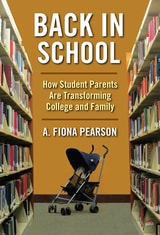
Back in School
How Student Parents Are Transforming College and FamilyA. Fiona Pearson
Rutgers University Press, 2019
Bad Cell
PoemsElizabeth Lindsey Rogers
Acre Books, 2027
Chronicling reproduction and parenting within a lesbian relationship, this poetry collection reveals both the anxieties and awe inspired by rearing children.
In her frank, vulnerable third book of poetry, Elizabeth Lindsey Rogers considers queer kinship through scientific, cultural, and personal lenses. Bad Cell presents perspectives on family and inheritance that are at once granular and comprehensive. From a pregnant woman being mistaken as a man by a store clerk to some “FAQs Re: Queers & Reproduction” that dispel stereotypes, the collection celebrates the fluidity of gender.
Early in the volume, Rogers addresses the emotional and physical complications of fertility treatment and pregnancy loss, a medical journey that, though harrowing, is gorgeously rendered in taut lyric language. Later, in forms like the abecedarian, definition poem, questionnaire, haibun, and a sonnet crown, the poet looks at how cells themselves—the stuff of life—divide and recombine. As in previous collections, Rogers leans into science-inspired verse, showcasing her talent for turning small-scale mechanics into meaningful metaphors.
The book also supports an openness to neurodivergence in children: “I want to assemble / something that can speak / for everyone,” says the speaker of “Apraxia.” And Rogers does, with the skill of a seasoned poet and essay writer, whose eye for the particularness of the world is encompassing and gives new insight into the experience of parenting: “But I’m not mom, I tell / writers who think I’ve gone soft, given up deeper subjects. As if these wild, / xenogeneic offspring aren’t a full-on wrestle with the deep.”
Battering States
The Politics of Domestic Violence in IsraelMadelaine Adelman
Vanderbilt University Press, 2017
The politics of domestic violence create novel entry points to understanding how, although women may be vulnerable to gender-based violence, they do not necessarily share the same kind of belonging to the state. This means that markers of identity and power, such as gender, nationality, ethnicity, religion and religiosity, and socio-economic and geographic location, matter when it comes to safety and pathways to justice.
The study centers on Israel, where a number of factors bring connections between the cultural politics of the state and domestic violence into stark relief: the presence of a contentious multinational and multiethnic population; competing and overlapping sets of religious and civil laws; a growing gap between the wealthy and the poor; and the dominant presence of a security state in people's everyday lives. The exact combination of these factors is unique to Israel, but they are typical of states with a diverse population in a time of globalization. In this way, the example of Israel offers insights wherever the political and personal impinge on one another.
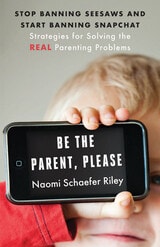
Be the Parent, Please
Stop Banning Seesaws and Start Banning Snapchat: Strategies for Solving the Real Parenting ProblemsNaomi Schaefer Riley
Templeton Press, 2018
Silicon Valley tech giants design their products to hook even the most sophisticated adults. Imagine, then, the influence these devices have on the developing minds of young people. Touted as tools of the future that kids must master to ensure a job in the new economy, they are, in reality, the culprits, stealing our children’s attention, making them anxious, agitated, and depressed.
What’s worse, schools across the country are going digital under the assumption that a tablet with a wi-fi connection is what’s lacking in our education system. Add to that the legion of dangers invited by unregulated access to the internet, and it becomes clear that our screen-saturated culture is eroding some of the essential aspects of childhood.
In Be the Parent, Please, former New York Post and Wall Street Journal writer Naomi Schaefer Riley draws from her experience as a mother of three and delves into the latest research on the harmful effects that excessive technology usage has on a child’s intellectual, social, and moral formation. Throughout each chapter, she backs up her discussion with “tough mommy tips”—realistic advice for parents who want to take back control from tech.
With the alluring array of gadgets, apps, and utopian promises expanding by the day, engulfing more and more of our lives, Be the Parent, Please is both a wake-up call and an indispensable guide for parents who care about the healthy development of their children.
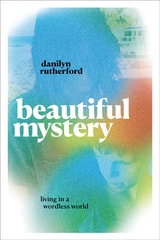
Beautiful Mystery
Living in a Wordless WorldDanilyn Rutherford
Duke University Press, 2025
Now in her twenties, Millie has never been able to express herself verbally, but she has a thriving social environment rooted in the people around her and in things her companions and family can see, hear, smell, and feel. Life in Millie’s world is far richer than might be immediately evident to those who think and communicate in conventional ways.
Beautiful Mystery explores what it means to be a person in the spaces between what we can and cannot say, and how we can fight to care for those we love when they don’t have the language to fight for themselves. Through her unique lens as a mother and an anthropologist, Rutherford tells the story of arriving in Millie’s world, what she found there, and how Millie showed her that words aren’t always what makes us human. Enlightening and deeply felt, Beautiful Mystery proves that you don’t have to understand someone to love them—a lesson that, if we all learned it, might allow us to live together in a fractured world.
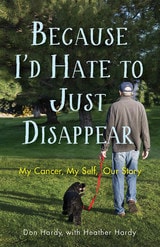
Because I'd Hate to Just Disappear
My Cancer, My Self, Our StoryDon Hardy
University of Nevada Press, 2018
Because I’d Hate to Just Disappear is a portrait of a husband and wife, Don and Heather Hardy, thrown into the physical and emotional machinery of Don being diagnosed with leukemia and going through chemotherapy and treatment over a period of close to two years.
In this thoughtful and exquisite account, Don and Heather narrate Don’s struggle in real-time. Disarmingly honest, they recount each intimate stage of a couple living through cancer together, the mental and physical struggles, the humor and visceral emotion to reveal how two very different personalities shape—and are shaped by—the experience of cancer and its treatment. Through these moments emerge a constant flow of human kindness and discovery that lifts them each day.
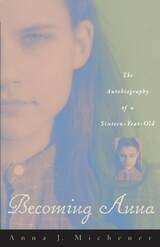
Becoming Anna
Anna J. Michener
University of Chicago Press, 1998
"A teen's raw, in-your-face chronicle of events almost as they were happening. As such, it's unforgettable. . . . Michener's story gives voice to the thousands of children and adolescents trapped in 'the system,' biding their time until their 18th birthdays. A candid and unstinting tell-all."—Kirkus Reviews
"Extraordinary. . . . Michener's expressive writing does justice to a topic that is clearly very disturbing to her personally and communicates a profoundly important message on behalf of all abused and neglected children."—Booklist
"An important book, painful to read, but essential if other children in similar situations are to be saved."—Library Journal
"An innocent child's account of 16 years in hell and of the terrible wrongs inflicted on children who are without rights or caring advocates."—Choice
"[Michener] emerges as a compelling and courageous advocate for children and their welfare—she's a young writer with an extraordinary voice."Feminist Bookstore News
"Quite simply one of the best, most compelling, well-written autobiographies published in years. . . . Remember the name. We have not heard the last of Anna Michener."—Myree Whitfield, Melbourne Herald-Sun, cover story

Beyond Conformity or Rebellion
Youth and Authority in AmericaGary Schwartz
University of Chicago Press, 1987
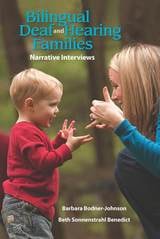
Bilingual Deaf and Hearing Families
Narrative InterviewsBarbara Bodner-Johnson
Gallaudet University Press, 2012
This study emphasizes the importance of family support for deaf members, particularly through the use of both American Sign Language (ASL) and spoken and/or written English. Research has shown how these factors influence such areas as a child’s development, performance in school, and relationships with brothers and sisters. In this volume, authors Barbara Bodner-Johnson and Beth S. Benedict concentrate on the vital, positive effects of bilingualism and how families that share their experiences with other families can enhance all of their children’s achievement and enrichment.
Bilingual Deaf and Hearing Families: Narrative Interviews describes the experiences of ten families who have at least one deaf family member. In five of the families, the parents are hearing and they have a deaf child; two of the children in these families have cochlear implants. In three families, both the parents and children are deaf. In one family, the parents are deaf and their daughter is hearing; and in one family, the parents and one child are deaf and they all have cochlear implants, and the deaf child’s twin is hearing.
The interviews were conducted in the families’ homes using set topics and questions. The family discussions cover a wide range of subjects: cochlear implants, where they live, their thoughts about family relationships, how they participate in the Deaf community, how they arrive at certain decisions, their children’s friendships, and the goals and resiliencies they have as a family.
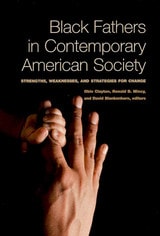
Black Fathers in Contemporary American Society
Strengths, Weaknesses, and Strategies for ChangeObie Clayton
Russell Sage Foundation, 2003

Bond
The Nature of UsJill Sission Quinn
University of Iowa Press, 2027
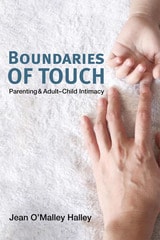
Boundaries of Touch
Parenting and Adult-Child IntimacyJean O'Malley Halley
University of Illinois Press, 2006
Discussing issues of parent-child contact ranging from breastfeeding to sexual abuse, Jean O'Malley Halley traces the evolution of mainstream ideas about touching between adults and children over the course of the twentieth century in the United States. Debates over when a child should be weaned and whether to allow a child to sleep in the parent's bed reveal deep differences in conceptions of appropriate adult-child contact.
Boundaries of Touch shows how arguments about adult-child touch have been politicized, simplified, and bifurcated into "naturalist" and "behaviorist" viewpoints, thereby sharpening certain binary constructions such as mind/body and male/female. Halley discusses the gendering of ideas about touch that were advanced by influential social scientists and parenting experts including Benjamin Spock, Alfred C. Kinsey, and Luther Emmett Holt. She also explores how touch ideology fared within and against the post-World War II feminist movements, especially with respect to issues of breastfeeding and sleeping with a child versus using a crib.
In addition to contemporary periodicals and self-help books on child rearing, Halley uses information gathered from interviews she conducted with mothers ranging in age from twenty-eight to seventy-three. Throughout, she reveals how the parent-child relationship, far from being a private or benign subject, continues as a highly contested, politicized affair of keen public interest.
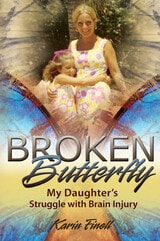
Broken Butterfly
My Daughter's Struggle with Brain InjuryKarin Finell
University of Missouri Press, 2012
“It all began with the bite of a mosquito. Yes, with a bite of this pesky, but seemingly so innocuous little insect that had been sucking her blood. Not just one, but hundreds had punctured her arms and legs with red marks which later swelled to small welts. Who would ever have thought that our family's life would become derailed, that its tightly woven fabric would eventually fray and break—all from the bite of a mosquito?”
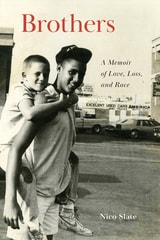
Brothers
A Memoir of Love, Loss, and RaceNico Slate
Temple University Press, 2023
Brothers is Nico Slate’s poignant memoir about Peter Slate, aka XL, a Black rapper and screenwriter whose life was tragically cut short. Nico and Peter shared the same White American mother but had different fathers. Nico’s was White; Peter’s was Black. Growing up in California in the 1980s and 1990s, Nico often forgot about their racial differences until one night in March 1994 when Peter was attacked by a White man in a nightclub in Los Angeles.
Nico began writing Brothers with the hope that investigating the attack would bring him closer to Peter. He could not understand that night, however, without grappling with the many ways race had long separated him from his brother.
This is a memoir of loss—the loss of a life and the loss at the heart of our racial divide—but it is also a memoir of love. The love between Nico and Peter permeates every page of Brothers. This achingly beautiful memoir presents one family’s resilience on the fault lines of race in contemporary America.
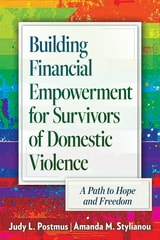
Building Financial Empowerment for Survivors of Domestic Violence
A Path to Hope and FreedomJudy L. Postmus
Rutgers University Press, 2023
Curiously, little of the research on domestic violence has sought to either fully understand the impact of financial abuse or to determine which intervention strategies are most effective for the financial empowerment of survivors. Building Financial Empowerment for Survivors of Domestic Violence aims to address this critical knowledge gap by providing those who work with survivors of domestic violence with practical knowledge on how to empower the financial well-being and stability of survivors. Specifically, every practitioner, human service provider, criminal justice practitioner, financial manager, and corporate supervisor should be screening the women they encounter for economic abuse, and when such abuse is found, they should work with the women toward developing financial safety plans and refer survivors to financial empowerment programs to assist survivors to become free from abuse.
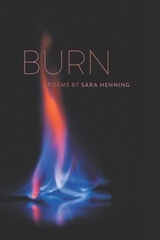
Burn
Sara Henning
Southern Illinois University Press, 2024
A lyrical meditation on time, survival, and merciful moments of joy
Sara Henning’s Burn draws readers deep into the moments that make us, focusing on instances of crisis and renewal to explore our relation to time and lived experience. In these poems, we follow a speaker as she works through the loss of young love, the death of her parents, marriage’s hardness and beauty, sexual assault, and the devastation of a pandemic—evolutions of trauma that fracture time and alter perception. Twinned with these extremes are shimmering manifestations of joy only an imperfect world can make possible.
Burn magnifies the way time leaves us both the victim and the victor of our realities. The blaze of her late-mother’s Tiffany lamps sends the speaker back to childhood, where she unearths mica from the schoolyard dirt. The devastation of an ecological crisis, the annihilating act of rape, and the unsolved disappearance of a caretaker all level the speaker’s world and upend her place in it, forcing her to reconstitute reality from what remains. In poems which summon the spirit of Stephen Hawking’s A Brief History of Time, this collection walks through the physics of temporality as refracted through love, loss, and grief, so we better understand its effect on our lives. Through this insight, Henning introduces a new way of being in the world.
A work of advocacy and uplift, Burn shines with the vibrant possibilities of narrative lyric poetry as it forges a path from grief to hope.