Results by title
52 books match the query 'Fantasy' and 5 start with b
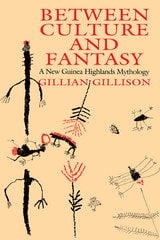
Between Culture and Fantasy
A New Guinea Highlands MythologyGillian Gillison
University of Chicago Press, 1993
Gillison shows how the themes expressed in Gimi myths—especially sexual hostility and an obsession with menstrual blood—are dramatized in the elaborate public rituals that accompany marriage, death, and other life crises. The separate myths of Gimi women and men seem to speak to one another, to protest, alter, and enlarge upon myths of the other sex. The sexes cast blame in the veiled imagery of myth and then play out their debate in joint rituals, cooperating in shows of conflict and resolution that leave men undefeated and accord women the greater blame for misfortune.
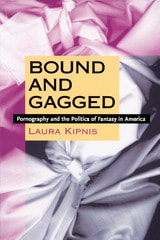
Bound and Gagged
Pornography and the Politics of Fantasy in AmericaLaura Kipnis
Duke University Press, 1998
Using this textbook example of social hysteria as a springboard, Kipnis argues that criminalizing fantasy—even perverse and unacceptable fantasy—has dire social consequences. Exploring the entire spectrum of pornography, she declares that porn isn’t just about gender and that fantasy doesn’t necessarily constitute intent. She reveals Larry Flynt’s Hustler to be one of the most politically outspoken and class-antagonistic magazine in the country and shows how fetishes such as fat admiration challenge our aesthetic prejudices and socially sanctioned disgust. Kipnis demonstrates that the porn industry—whose multibillion-dollar annual revenues rival those of the three major television networks combined—know precisely how to tap into our culture’s deepest anxieties and desires, and that this knowledge, more than all the naked bodies, is what guarantees its vast popularity.
Bound and Gagged challenges our most basic assumptions about America’s relationship with pornography and questions what the calls to eliminate it are really attempting to protect.

Bread of Dreams
Food and Fantasy in Early Modern EuropePiero Camporesi
University of Chicago Press, 1989
"Camporesi is as much a poet as a historian. . . . His appeal is to the senses as well as to the mind. . . . Fascinating in its details and compelling in its overall message."—Vivian Nutton, Times Literary Supplement
"It is not often that an academic monograph in history is also a book to fascinate the discriminating general reader. Bread of Dreams is just that."—Kenneth McNaught, Toronto Star
"Not religion but bread was the opiate of the poor, Mr. Camporesi argues. . . . Food has always been a social and mythological construct that conditions what we vainly imagine to be matters of personal taste. Our hunger for such works should tell us that food is not only good but essential to think and to read as if our lives depended on it, which they do."—Betty Fussell, New York Times Book Review

Brezhat
A NovellaMichael Holt
University of Alabama Press, 2027
Three Sams, one impossible building, and a mystery echoing across worlds, lifetimes, and dreams.
Brezhat is a thrilling, puzzle-like novella that unfolds across three overlapping worlds, all occurring within the same haunted building. In one timeline, the building is a school where children's dreams are recorded. In another, an orphanage tied to a glass factory. In the third, a postapocalyptic ruin inhabited by a community of eccentric survivors.
Within its shifting halls live three versions of the same person, all named Sam. Though separated by time and circumstance, the Sams share dreams, sensations, and fleeting encounters that bind their lives together in unsettling ways. As they wander through forgotten corridors and forbidden rooms, the Sams undertake tasks both ordinary and uncanny. They deliver life-saving serum, reassemble the body of a broken friend, talk with the dead, and bury dead mice. Along the way, they are guided, taught, and sometimes misled by an unforgettable cast of adults: teachers, nuns, scientists, artists, a librarian, and the inscrutable Mr. Jones, a janitor who seems to exist outside of time altogether. Threaded through each timeline is the shadow of a former friend whose acts of violence echo across worlds, causing old wounds to recur in new forms. Blending speculative fiction, psychological insight, and gothic atmosphere, Brezhat is a mesmerizing novella steeped in mystery, unraveling the stories we inherit, the selves we might have been, and the strange ways pain reverberates across a lifetime.

Bridges to Fantasy
Essays from the Eaton Conference on Science Fiction and Fantasy LiteratureGeorge E Slusser
Southern Illinois University Press, 1982
Thirteen original essays written specifically for the second Eaton Conference on Science Fiction and Fantasy Literature, held February 23–24, 1980, at the University of California, Riverside.
These essays demonstrate the variety of fantasy forms and their pervasiveness throughout the ages and will stimulate further study of this complex and elusive mode. The essays—by Harold Bloom, writer and DeVane Professor of the Humanities at Yale University; Larry McCaffery, Assistant Professor of English at San Diego State University; Marta E. Sánchez, Instructor of English at the University of California, San Diego; Arlen J. Hansen, Professor of English at the University of the Pacific, Stockton; David Clayton, Instructor of Comparative Literatureat the University of California, San Diego; Robert Sale, writer and Professor of English at the University of Washington; G. Richard Thompson, Professor of English at Purdue University, West Lafayette; Robert A. Collins, Coordinator of the annual Swann Conference on the Fantastic and Instructor at Florida Atlantic University, Boca Raton; John Gerlach, Associate Professor of English at Cleveland State University; David Ketterer, writer and Professor of English at Concordia University, Montreal; George R. Guffey, Professor of English at the University of California, Los Angeles; Jack P. Rawlins, Associate Professor of English at California State University, Chico; and Gary Kern, writer and translator of early Soviet literature—examine fantasy on many levels of interest: as an element of human thought, as a constant factor in the social and intellectual environment, and as a generator of form in art and literature.